Tag: iOS

  • Weekly Gaming: It’s Quiz Time (Xbox One)

    Weekly Gaming: It’s Quiz Time (Xbox One)

    It’s been a while since I last played a quiz game, especially one that I can play with family and friends. In fact, it’s thanks to my friends that It’s Quiz Time even come on my radar at all. After a great catch up around their house they proceeded to ask me if I enjoy quiz games and whether I’d be interested in playing one on the xbox, with my iPhone as the controller. Intrigued I jumped at the idea, and proceeded to have a great time answering questions and losing terribly, all in the name of catching up with old friends and having a good time.

    Fast forward a few weeks and another set of friends were wondering what we could do at a meet up. Thinking back, I recalled it’s quiz time, and how it’d be really useful at this encounter due to it’s control scheme of using each players mobile phone as the personal controller. So, £15 later we had bought the game and within another half an hour we were all playing it whilst drinking the night away.

    So what is It’s quiz time? As can probably be told by my introduction and the game’s title, it’s a quiz game for the Xbox One, with the main premise of the game being to download a standalone app on your respective phone, and then answer the question accordingly without no one else knowing. It’s Quiz Time comprises of over 25,000 questions, so it’s rare you’ll see the same question twice. An advantage the constant internet connection employs.

    As should now be obvious, I love the fact that each player uses their mobile phone as the controller. It makes It’s Quiz time feel all the more personal, especially since other players can’t see what answers you’re giving until it’s already on the TV. The fact as well that you each have your own usernames and the AI host recognises you from previous games just adds the cherry on the cake on personalising your experience. For example, in games where we had someone older than the rest, the AI would consistently comment on their age, saying they were a little older.

    But, a quiz game is only as good as it’s questions, and thankfully, It’s Quiz Time has done a fantastic job of customising the questions to your age group. For example, if you were to put your age as 60, your choice of questions could be anything from the last 60 years, but should you say you’re younger then you’ll only get more recent questions from pop culture. This differentiator makes the game so much more enjoyable, especially since you get to always feel like you’re participating in the game, regardless of your age or knowledge.

    The rounds of questions are pretty cool, and have enough variety that the game is a joy to play everytime. Some rounds require you deciding whether one player will be able to answer a question correctly, whilst others are general intelligence for everyone. It’s quite a nice variety, and is definitely enough to keep the game entertaining after quite a few replays.

    The mobile app is nice and responsive, and whilst it sucks that the app has to be connected to the internet rather than directly to the xbox itself, it does the job well. I could complain that it’s not like “That’s you”, which took advantage of the unique features mobile phones bring to consoles. I suppose that’s what you get for a cheap game, and one dedicated to quizzes and quizzes alone.

    So overall, if you need a party game to entertain guests, you can’t go wrong with It’s Quiz Time. It has to be said that this new trend of playing party games using mobile phones on a common console is something of an amazing invention. Almost everyone these days has a games console, and being able to sit around it with your phone and have a laugh is fantastic. So all in all, I enjoyed It’s Quiz Time, and would recommend it to anyone, especially due it’s low cost.

    4/5

  • Weekly Gaming: A good Snowman is Hard to Build (iOS)

    Weekly Gaming: A good Snowman is Hard to Build (iOS)

    Like clockwork, it’s another friday, so that means another game to review! This week I take a look at A Good Snowman is Hard to Build, a game I bought when it was on sale due to a snow day here in the UK. So without further ado, here’s my thoughts on the game.

    First up, AGSIHTB grabs your attention from the offset due to it’s absolutely charming design, and sweet animation. No matter how long you play the game, you’ll consistently be surprised at how cute the game is, especially given how few assets are on display here. Each snowman/woman you successfully create has its own unique look, leading you to believe they have their own personalities, despite them being technically inanimate objects. It’s charming, and down right amazing in your entire time with the game.

    So, I should probably at this point talk about the game’s core loop. So here’s to elevator pitch: AGSIHTB is a puzzle game where you must explore a maze, creating snowpeople as you go along. Each section of the maze will be a different shaped room, which restricts you in your ability to create the snowpeople, leading you to think of different ways to the solution. Each room usually starts off with 3 snowballs – roll a snowball over a patch of snow and it’ll create a slightly larger boulder. Roll once more and you’ll get the maximum size. You must pile 1 small, 1 medium, and 1 large snowball on top of each other to finish a room, which is a lot harder than it sounds.

    You see, medium sized snowballs CANNOT touch another piece of snow without becoming bigger, meaning you’re constantly watching and analysing rooms to see how you can make 1 large boulder, whilst avoiding snow to ensure the others don’t get any bigger. This complication can be irritating as hell at times, but the feeling of elation you get when solving a difficult room is exhilarating, enough to keep me playing throughout one day to the games completion.

    Outside of building snowpeople, there’s not much more to do around the environment. You can sit on benches, hug completed snowpeople, and look through telescopes to see the whole map, but other than that, you’re stuck with just solving puzzles.

    There’s not much to say in regards to the music – it’s cute, and is there, but otherwise, you’re more than welcome to play the game on silent on your mobile, or whilst listening to an audiobook. I personally played the game whilst watching youtube videos, which was perfect, as I was able to execute a guess at a puzzle, and whilst the person was animated in doing that action, I could then continue watching the TV.

    There’s no story to speak off – you wonder around, create snowpeople who each have names and different accessories, and finish the game once you’ve completed each puzzle. There’s more after you’ve completed it all, but I shan’t go into that as I don’t want to spoil the surprise.

    So overall, I know I haven’t written much, but that’s because AGSIHTB is to the point and genuinely lovely to play. Some would say the lack of anything else to do would be a detriment to the game, but I feel it made AGSIHTB all the more better for being a purely cute puzzle game. If you fancy a game on the go, and love puzzle games based on moving things around a given space, then A Good Snowman Is Hard to Build is the game for you.

    4/5

  • Weekly Gaming: Super Mario Run (iOS)

    Weekly Gaming: Super Mario Run (iOS)

    Nintendo’s first foray into mobile gaming may have been a massive hit (Pokemon Go) but their first premium game is certainly a mixed bag of weirdness. Super Mario Run costs the grand old price of £7.99, not an extravagant price when comparing it to the traditional games market, but certainly pricey on mobile platforms. So what do you get for your money? Let’s find out.

    First up, Super Mario Run is a running platofrmer, but because you can’t control a phone as easily as you would a traditional console and controller, the game is a forever runner – Mario himself moves forward regardless as to whether you actually press anything or not. This is a massive break from previous mario games, with their precise controls, but is understandable due to the constraints of mobile phone’s designs.

    Nintendo made a big point of advertising the fact you control Mario with only one hand, and whilst it works absolutely fine, it does change the players relationship with Mario. You see, Mario in most games is renowned for his precision – where you want him to go, he will go. This 1:1 relationship between what you do on the controller and Mario actually moving is one of the main reasons the Mario franchise has been so successful. The issue is, having Mario move himself forward makes it hard to judge when to actually jump, or the to tap the screen to make him kill an enemy.

    This disconnection between player and movement actually has far reaching consequences. I for one love mario games – they can be both simplistic, and extremely hard depending on your skill level. Super Mario 3D World for example, I managed to collect every single optional coin, and even completed the extra hard special levels, all because of how much I enjoyed controlling Mario. Yet, in super Mario Run, I struggled in even simple levels, accidentally making Mario fall to his death multiple times just because I mis-timed a jump or accidentally used my double-jump far too soon. It’s annoying, and actually made me walk away from the game for several months.

    But it’s not all bad, Super Mario Run actually distills the core of Mario games into a mobile platform quite well. Enemies we all know and love go about levels exactly as you’d expect, and are great to take on. There’s no new enemies to take on, but due to some of the level changes some enemies do move in new and different ways. Take the Boo’s for example – as Mario can’t change direction manually, they are usually used as obstacles on your path e.g. popping out of blocks, as opposed to enemies you can actively avoid and use to your advantage.

    As alluded to in the previous chapter, Mario’s new control system has resulted in some level design changes. The most dramatic ones are Bowser’s castle levels, and the haunted house levels. The former doesn’t entail having multiple levels (levels being platforms above and below the one you’re currently on), whilst the latter consists of very thin levels with lots of blocks that pause Mario and allow him to move again when tapping the screen. This is all fine and good and takes a little longer to get used to than usual, but results in some new gameplay that can get a bit confusing. 

    On the subject of levels, it has to be noted how few levels there actually are. In total, there’s 18 levels and 6 castle levels, all which can be completed in around 1 minute, resulting in a really short game. The way Nintendo goes about making the game longer is through collecting optional coins – each level contains 5 purple coins. Should you collect them all, you’ll unlock a new version of the level with 5 new coins. Do this 3 times, and you’ve collected everything that level has to offer. I’m usually a fan of these optional objectives, but genuinely had no interest in it here on Super Mario Run. Maybe it was because there’s no way to go back to collect a coin, meaning it’s more memory of the level than your actual skill, resulting if you having to repeat a level multiple times just to get a single coin, but I just couldn’t enjoy this aspect of the game.

    Thankfully, the graphics are just as good as ever, with Mario looking just as detailed, if not more so than on Nintendo’s own consoles themselves. Levels are lovely and detailed, and the amount of aliasing being used makes Super Mario Run look like a pixar film at times. It’s just so smooth and detailed, it’s genuinely lovely to look at.

    Unfortunately, it seems that Nintendo might have been in two minds when making Super Mario Run. You see, whilst it’s a premium game with a premium price tag, it’s completely cluttered with free to play elements, something that seems at odds with the game’s core design. You see, you start in a hub world where you must start to rebuild the mushroom kingdom using Toads earned through repeating levels in the game’s “Rally” mode, and coins earned in levels. Not only does this try to get you to repeat levels endlessly, it also proceeds to tally up how many enemies you’ve killed giving you special unlocks should you kill so many.

    This split personality of premium/free to play couldn’t help but make me feel…. gross for playing Super Mario Run. If the game would have been free-to-play, most of these mechanics would have been completely acceptable – Nintendo need to make money, so keep you coming back is the way to go. But, if I’ve paid a non-inconsequential fee to play the game, I don’t expect to be bombarded with all of this shit. I should be able to play the game as and when I want, and not pestered to spend more time in Mario’s world. It’s a weird mismatch of a game, and one that I wish Nintendo would have fully committed to one or the other.

    Overall, I’m glad Nintendo is foraying into brand new territory, but it needs to do so with some consistency. Trying to incorporate Free-to-play mechanics into a premium game makes it both annoying, but also is a subservience to fans of the series, and first-time players alike. It’s enjoyable for a few hours, but Super Mario Run is a weird mix of a platformer that alienates fans of the series, and becomes too expensive for the casual player. By all means give the game a download if you need to see everything Nintendo produces, but be warned that you may not find it as enjoyable as Nintendo games of yester-year.

    3/5

  • Weekly Gaming: Monument Valley 2 (iOS)

    Weekly Gaming: Monument Valley 2 (iOS)

    It’s been almost 3 years to the day since I reviewed Monument Valley; the fantastically gorgeous mobile indie game that absolutely blew me away, and made me look at mobile games in a whole new light. A year after that, I took on the game’s DLC, and found it evoking the same kind of feelings as the original, albeit at a much reduced price. This year I finally got my hands on the game’s secret sequel: Monument Valley 2.

    To be honest, the announcement of the sequel was something of a surprise. There I was just watching Apple’s WWDC keynote, and suddenly, the app store section was showing Monument Valley 2. Rushing to the app store, I found it by searching, and immediately gave Apple (and the developers at ustwo games) four whole pounds and 99 pennies for the pleasure of owning this great game.

    So first up, what is Monument Valley 2?

    Put simply, it’s another story set in the Monument Valley universe, whereby you play as multiple characters that wish to put the world back together again using the weird special powers they have in their hats. In this sequel, you play as a mother and daughter as the mother goes about doing her job with her daughter in tow, only for the daughter to have to go off on her own and do this job herself. It’s a simple premise, with lots and lots of animated hugs at the end of each stage, but does a good job of adding some emotion to a series that only made you have feelings for inanimate totem polls.

    The game comprises of the same puzzles you know and love from the original, with gorgeous aesthetics taking centre stage once again. The developers at ustwo games have taken things one step further in Monument Valley 2, with the landscapes being animated in new ways, as well as there being many FMV’s for you to watch in certain aspects of the game. These new environments, ideas and even cutscenes helps to make Monument Valley 2 one of the most visually appealing games on iOS today, so much so I’d go so far to say it’s probably more stunning then the vast majority of triple-A games too.

    The one thing I did want to mention is the strangeness the game evokes from normal human emotions. Take for example the two main characters: despite being fairly abstract, we can tell that they’re a mother and daughter purely from the mannerisms their animations evoke, as well as the size difference between the two. I suppose it helps that the game animates the two of them hugging a lot, but even without the hugs the abstract art doesn’t stop you from making these associations. I don’t know where I’m going with this point, I just really wanted to point it out that it was a groovy little thing ustwo games managed to pull off.

    Annoyingly, Monument Valley 2 was can easily be completed within an hour and a half. I say “annoyingly”, not because it’s bad value for money, but because of how much I wanted to continue playing the game. Maybe it’s because of how cynical I’m becoming in my old age, but I can’t help but feel this is so that they can sell us dlc at a later point…

    There is one thing that has changed for the worst; the games difficulty. It seems like ustwo games decided that the actual puzzle that made players feel like a genius for solving things in the previous instalment got in the way of them showing us more gorgeous landscapes. As such, I didn’t have a single issue with Monument Valley 2’s difficulty throughout the entire campaign. Whilst this may be good for making the game more mainstream, I couldn’t help but feel let down – I loved that some levels in the previous game made me feel like an idiot until I finally had the “Aha!” moment that solved the issue in front of me. Just simply walking through a world is all fine and good, but there needs to be substance to keep players coming back.

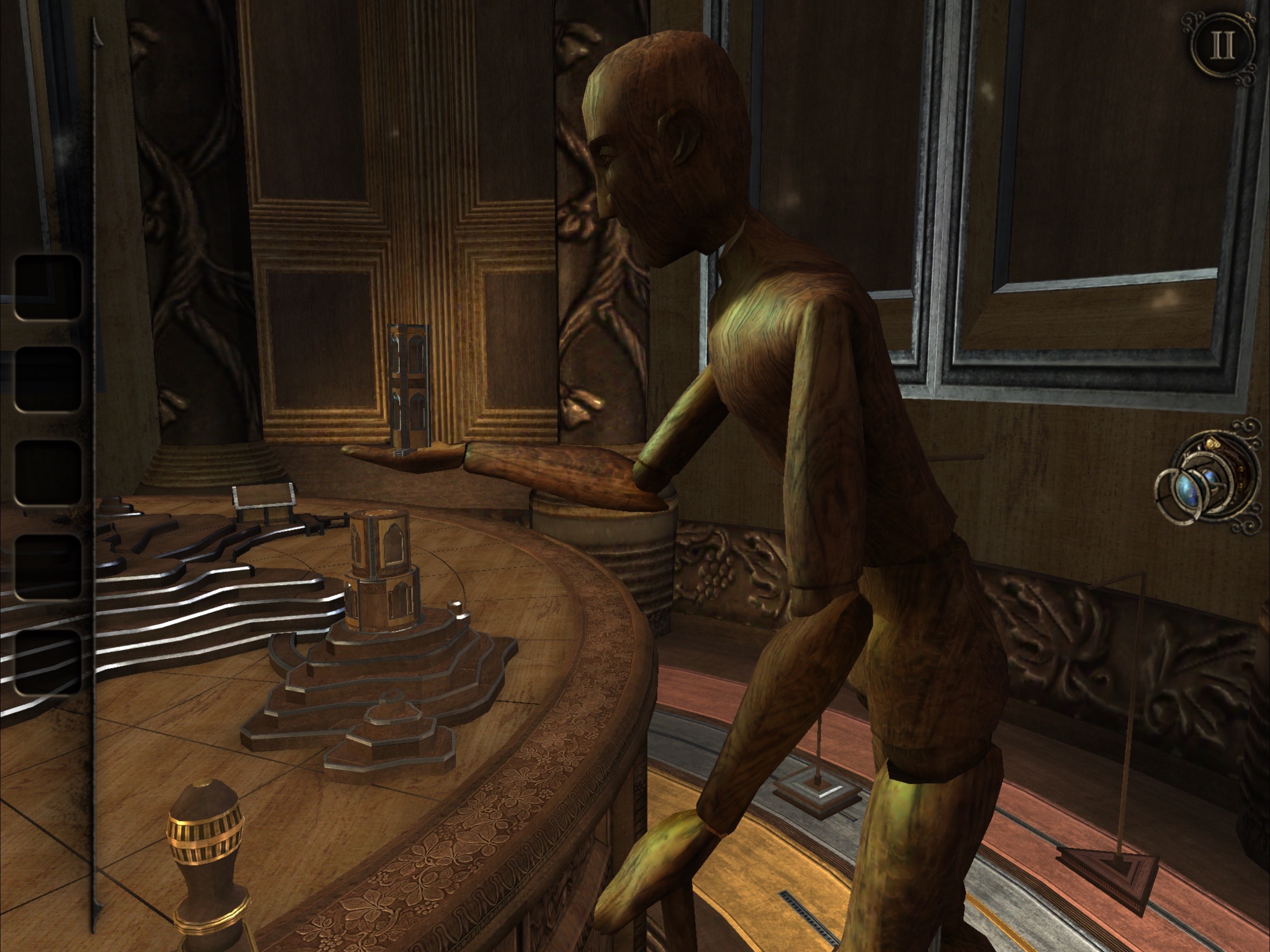
    Overall, Monument Valley 2 was a fantastic surprise. It’s more of the same, which can only be a good thing considering it’s one of the most visually stunning games on the market, and helps cement ustwo’s reputation as a fantastic little studio with plenty to give to the world in both art, and design.

    4/5

  • Weekly Gaming: The Room Three (iOS)

    Weekly Gaming: The Room Three (iOS)

    It’s been a mighty long time since I played The Room Two, and since (from what I can recall) I remember thoroughly enjoying the game I decided to give the latest instalment a download. From the offset I can say that The Room three’s price tag certainly helps in making that purchasing decision quick and painless. At a measly price of £3.99, I was stumped at how cheap it was considering how expensive indie games are getting these days on other platforms. Fireproof Games should be commended for keeping such a low price point when others in the industry are deciding to charge through the nose for the latest and greatest.

    IMG_0022

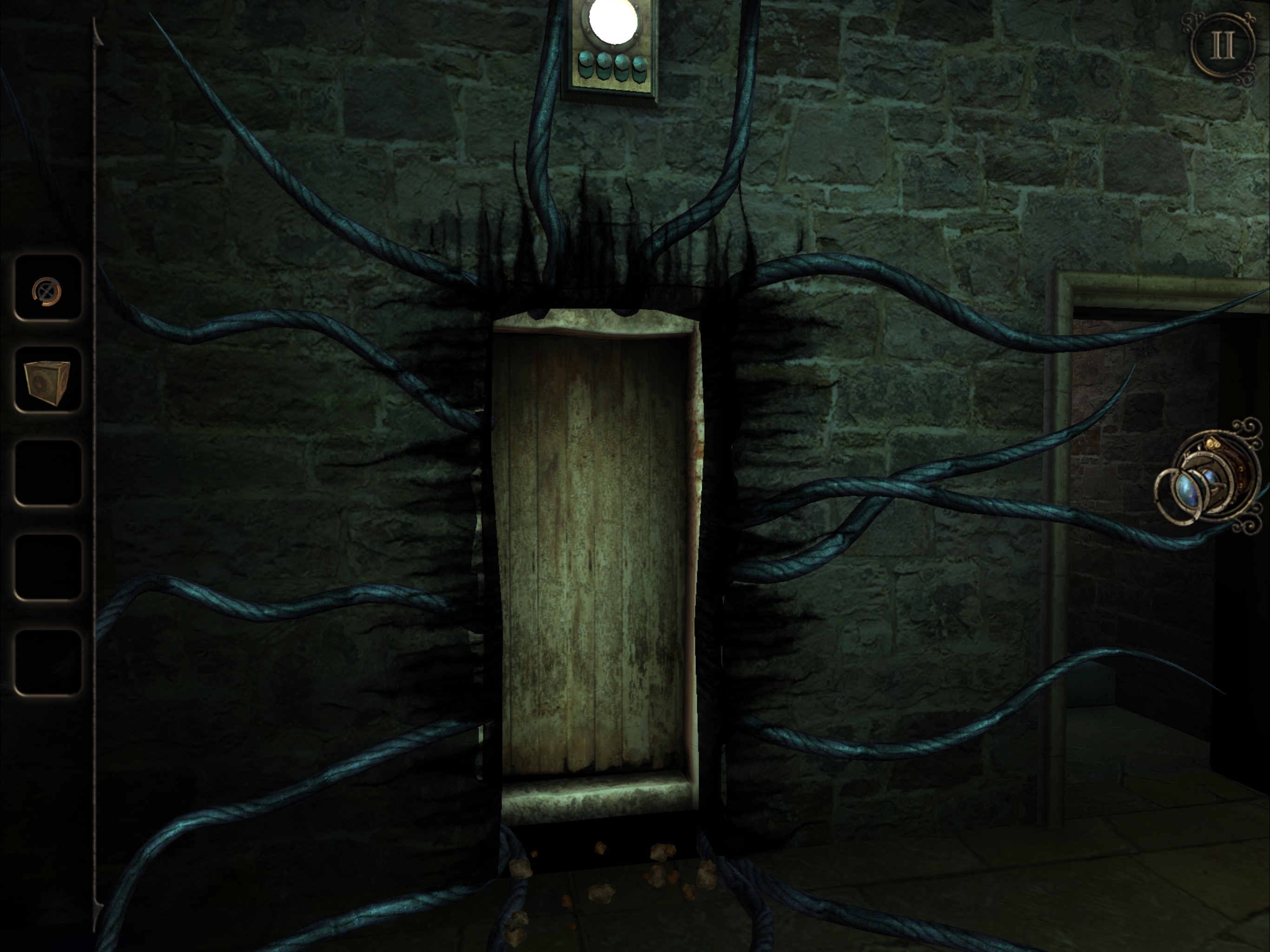
    Anyway, onto the game itself. Fans of the series should note that nothings really changed from the previous two games’ formula. You’re in a weird world where puzzles are hidden within puzzles, and must find your way between rooms to solve more puzzles before eventually reaching the games climax. I know that’s a massive over-simplification if there ever was one, but that’s seriously 100% of the game. A typical 5 minutes of the game plays out as follows:

    “ooo, there’s a new link on the box I’ve been staring at. I wonder what will happen if I move it”

    *Box proceeds to open, revealing a new item to collect*

    “okie dokey, I’ll be having that. Ooo there’s a puzzle here… hmmm, lets move all the gold things around”

    *Box shifts into itself again, revealing another puzzle with a suspicious shaped hole that seems to match the item I collected*

    “lets put the item in there then”

    *Box reveals yet another puzzle which expands on the first puzzle*

    Continue ad infinitum until the game is complete.

    That over-simplification isn’t to detract from the game, and for what it’s worth, Fireproof games do a bloody good job of keeping this formula varied enough that you’re constantly being pushed to solve the problem at hand. They do this through changing the style and feel of each area, changing up the art and the items you collect .

    IMG_0026

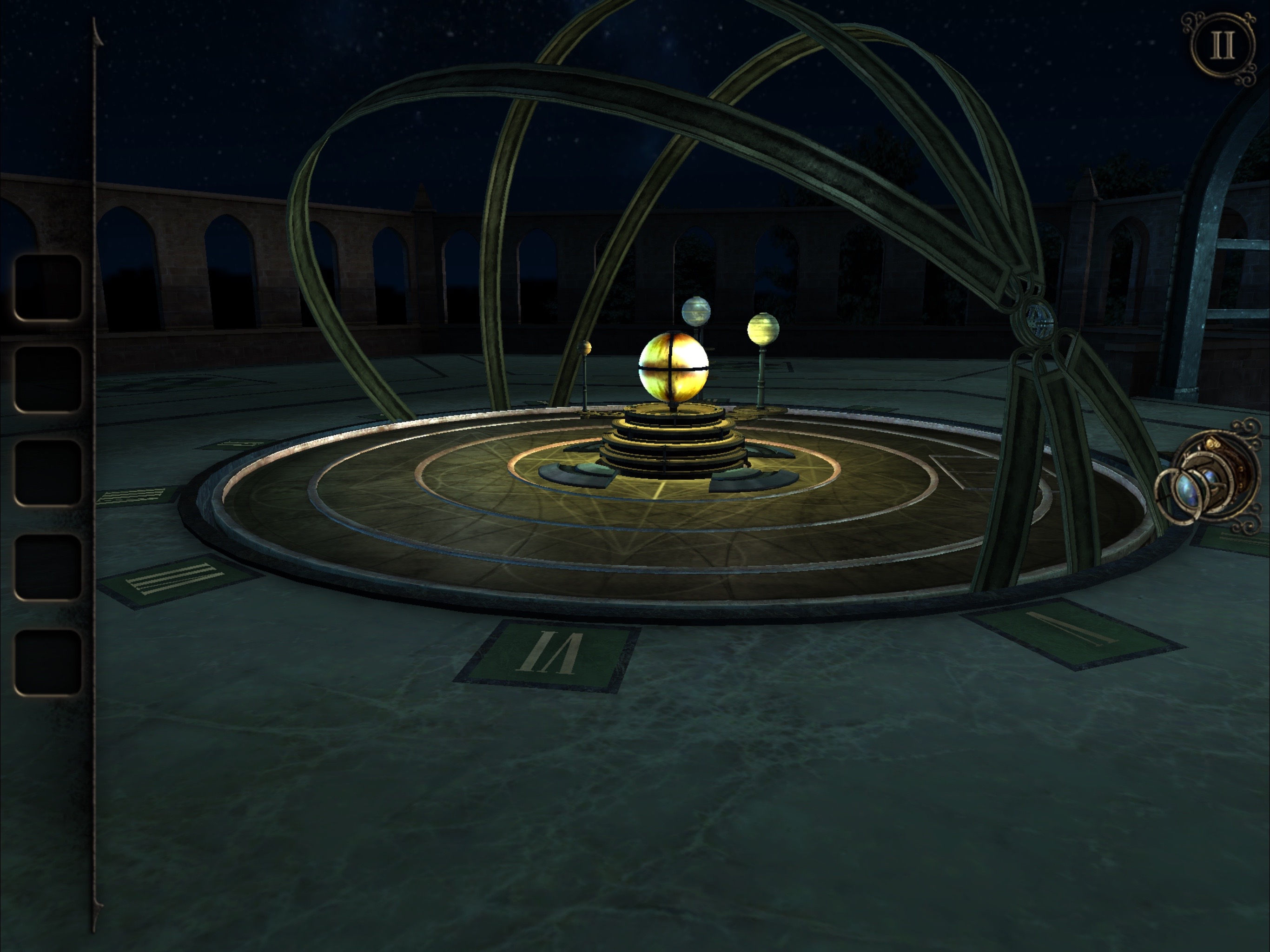
    Each chapter looks and feels distinctly varied, with each item you collect keeping with the general theme of your current location. My favourite chapter was easily one which played out in an outhouse that had a saw, a furnace, and all manner of other items spread throughout the area. It was here where you had to meld a key to use on the box in the centre of the room, which may sound simple on the surface, but when you have 16+ possible key types you could make, it soon becomes difficult. It was also here where I enjoyed the flexibility of the puzzles on offer; whilst most of the time puzzles are quite linear and have no fail states (they just require you to solve the puzzle at hand), the key modelling puzzle allowed you to rinse and repeat the puzzle until it was solved. Even when you’ve solved it once, it give the key back to you to use in several other puzzles. It was awesome to see such flexibility and consistency from one little gimmick.

    IMG_0028

    As for story, there’s not much expansion on previous games. You’ll get notes throughout the chapters explaining how you’re helping someone uncover a great mystery, but in the grand scheme of things you’re still left relatively clueless on what exactly happens throughout the last three games. There are multiple endings should you find and solve sub-puzzles throughout the games’ “hub” world, and whilst i didn’t personally play any further to experience them, I’m sure they’ll still leave a lot of questions hanging about just so Fireproof Games have the chance to make a fourth room should they desire. Not that this is going to be a detriment to the vast majority of players of The Room: most people are here for the puzzles alone.

    I’ve always praised Fireproof Games for their stellar work on presentation, and that holds up here in The Room Three. All manner of different textures are stunningly rendered on an iPad, and it’s genuinely insane how the devs can glean this much polish from a mobile platform. Regardless of how they do it, whichever device you use to play The Room Three, you’ll have a pleasant viewing experience.

    IMG_0031

    So, after 4 hours and 21 minutes of playing the game in one day, am I glad I finally finished the trilogy of Room games? Most definitely. Whilst the third game doesn’t add much original content to the tried and tested formula, it’s still a great way to sit down and waste some time. Fans of the original 2 games should definitely give it a go, and at only £3.99 (that’s its RRP, it’ll be cheaper on sales), you have no excuse not to invest your time into the game.

    3/5

  • Weekly Gaming: 1010 (iOS)

    Weekly Gaming: 1010 (iOS)

    I’ve been going around my friends house a lot lately and watching Fairy Tail with him and his sister. On one of these days, his sister happened to be playing a game that looked like Tetris on her iPad at the corner of my eye. Seeing her pic this intriguing game up now and then to give it another go piqued my interest, so I asked her what game it was and set about downloading it.

    FUCK THE NEATNESS
    It always starts off well like this, but it’s your own desire to keep everything neat and tidy that’ll be your downfall.


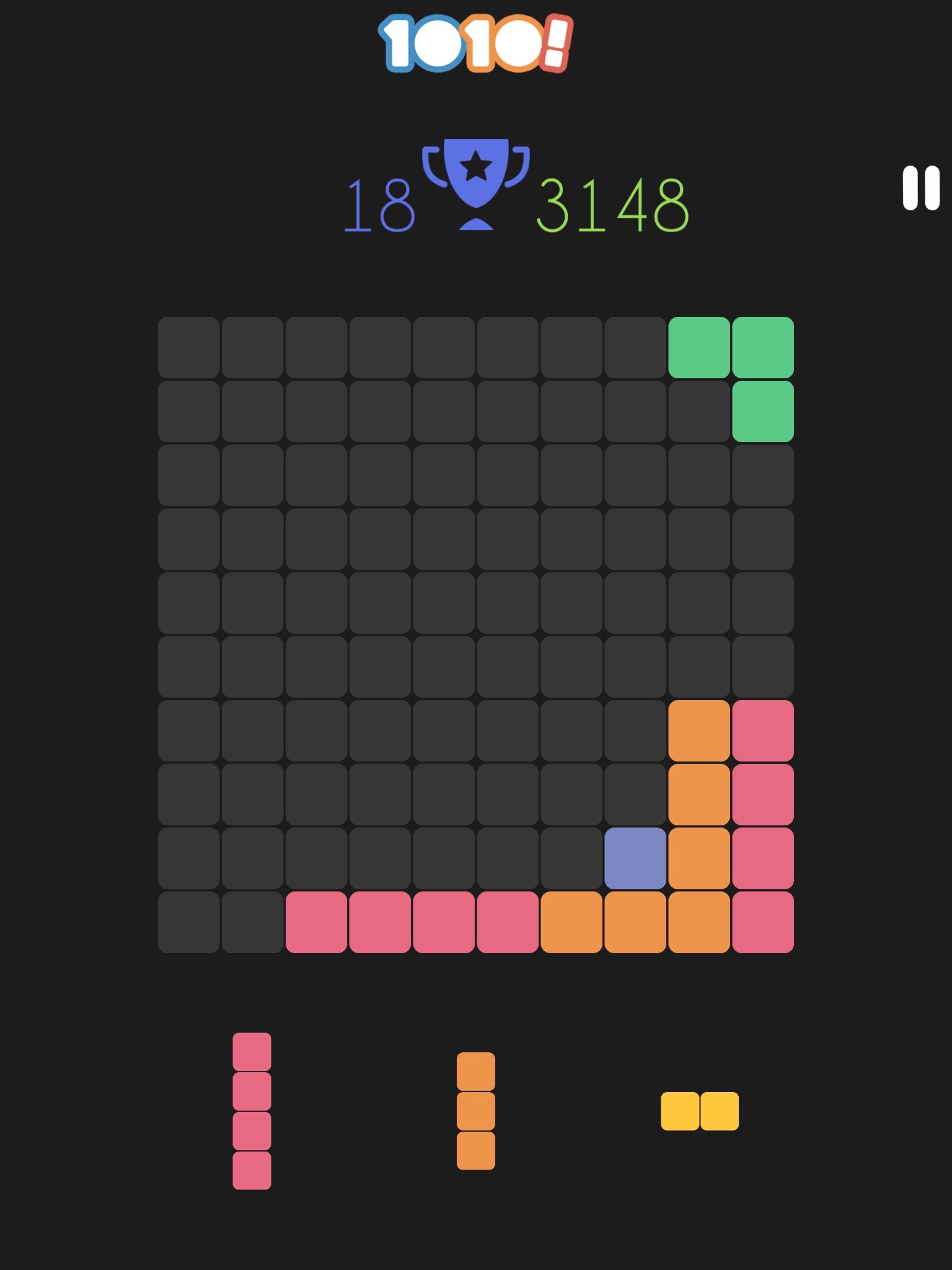
    That game in question is 1010!, a puzzle/strategy game where the only obstacle is yourself. The game starts off simple enough: you have a blank grid taking up theist majority of the screen, with three tetriminos at the bottom. It’s your task to put these tertiminos anywhere you would like on the screen, trying to make lines (either horizontally or vertically) to destroy them. Should you not be able to put a tetrimino on the grid its game over.

    The first couple of times you play the game, chances are you’ll try and sign everything up so it looks perfect and straight, just like you would in Tetris. Problem is (as you’ll soon find out) making everything look lovely does not mean you’ll have a good game. There were many times where I would make it so that all I needed was a straight piece, then find the next three tetriminos all being shapes other than I needed, ending the game.

    FUCK THE GAME OVERS
    Get used to this screen, you’ll be seeing it a lot

    You soon start to realise (and master) that in order to do well in 1010! you must get rid of lines as soon as they appear. Yes, in doing so you’ll have a messy board with shapes and remnants of tetriminos sticking out all over the place, but at the end of the day the more space you have to play with, the easier life will be when it comes to sticking the new tetriminos on the grid.

    It’s such a simple game, but is both a blast to play, and sticks to the design philosophy I love so much: keep it simple but hard. The only obstacle in this game is yourself; should you start organising everything neatly, you only have yourself to blame when the next random tile comes on screen that you can’t place.

    FUCK THE CROWDEDNESS
    This is getting a little too crowded for my comfort…

    Your score goes up for each tetrimino that you place on the grid, with destroying a line netting you more points. It’s your objective to last as long as possible, which is why being neat and tidy is not a good idea for survivability, and why I was finally able to beat my friends sisters high-score after a few hours of constant retrying.

    The games addictive, and it’s not hard to see why. It’s simple, but damn well bloody hard, and you only have yourself to blame should anything cock up. You might spend the first couple of tries blaming the game when you have nowhere else to place tetriminos, but you soon start to realise; it’s all you.

    1010! is free on iOS and Android, with the option to pay for the in-game ads to disappear. I found I needed to spend that £1.49, as the ads take up 5-10 seconds of your time between games, when all you want to do is jump straight back in after your own idiocy got you killed.

    4/5


  • Weekly Gaming: Desert Golf (iOS)

    Weekly Gaming: Desert Golf (iOS)

    I never imagined, in my wildest dreams, that I would be writing about an endless procedurally generated golf game. Even writing that last sentence feels weird. And yet, here I am, writing about a game I’ve become obsessed with.

    unnamed

    Like my first sentence alluded to, Desert Golf revolves around plain, 2D course, where holding your finger on the screen, moving it in a direction and releasing whacks the golf ball in a specific direction. The course is procedural, so you’ll get random geometry sticking out here and there, and once you’ve potted you ball, you’ll then proceed to the next stage, which simply encompasses the viewable screen moving to the right a certain distance and pushing your ball out of the hole to try again on the next course.

    That’s the entire game.

    I’m not even joking. The entire game encompasses what I described above ad nauseam.

    There’s no music to speak of, no change of scenery (albeit the colour of the ground slowly changes hue over the 250 holes I’ve so far played), and no change of mechanics.

    And yet, despite how little this game has to offer, I’m absolutely hooked.

    The simplicity of the levels can be a random mix of difficult shots (where you’ll need to use the curvature of the land to bounce the ball correctly) all the way to the mundane where a simple tap will suffice. It’s addictive to sink one hole after another, all the while your score at the top of the screen is increasing. the score is used as an indicator for how well (or bad) you’re doing, with a twitter icon appearing occasionally to share your progress with friends. I (thankfully) found I was 200 shots below a friend at the 200 mark, a massive achievement for myself, and one that helped in keeping me hooked to the game.

    IMG_5525

    So when will the madness end? Well I recall the Giantbomb crew talking about Desert Golf, and from what I remember, it really does never end, with many giving up after a few thousand holes.

    Is Desert Golf worth your time? Yes yes and hell yes. Looks can be deceiving, and for Desert Golf, that works in its favour, with a simple but challenging mechanic taking it far further than I could ever imagine. Time will only tell how far I actually get, but for now, I’m hooked.

    4/5


  • Weekly Gaming: Back to Bed (iOS)

    Weekly Gaming: Back to Bed (iOS)

    Hi all,

    So last week I reviewed a copy of Back to Bed that I managed to get on iOS. It was a nifty game, one that constantly reminded me of Monument Valley, a game I absolutely adored.

    To read the review, click the link below:

    http://www.gamrreview.com/review/91914/back-to-bed-ios

    This week I’ve been working on changing the main menu colours of my game to ensure that users on mobile can actually see the text. To say that grey text on a black background doesn’t work on mobiles in an understatement.

    Thanks again for all of your support!

    Dan

  • Weekly Gaming: Year Walk (iOS)

    Weekly Gaming: Year Walk (iOS)

    FUCK THE UNIQUE FONT
    The font choice here is fantastic for portraying the weirdness and unique setting Year Walk evokes.

    Having had Year Walk on my iPad for over a year, I decided it was time to see what all the fuss was about with this adventure/puzzle game many were saying was both revolutionary for the iPad/iPhone, but also scary as fuck.

    You start the game out like most indie titles and games nowadays – without no context on where you are, what you’re doing, and what you should be doing. This turns out (as I’ve said many times before) to be an extremely successful method in getting users entranced and involved with your game, with players touching the screen and experimenting with the game, causing them to in turn become more hooked as they play on. Year Walk is no different, and since it’s also a puzzle game you’ll be needing your notepad ready, as anything you come across in the game could be classed as a clue to use in the future, or an ordinary object.

    FUCK THE SNOWWWW
    Get used to the snow, you’ll be seeing a lot of it throughout your time in Year Walk

    You navigate the land of Sweden (where this game is based) by swiping the screen left and right to move on one “plane”, coming across entrances to places every now and then allowing you to swipe backwards or forwards to progress. It doesn’t take long until you’ve fully explored the land Year Walk has to offer, but its in all the little details and narration that you’ll find along the way which’ll make this world slowly become more filled out.

    Year Walking is the practice some people used to partake in, the game tells you at the start, where they would wonder through woods and forests eating and surviving on nothing to eventually come to the conclusion they could see into the past or future. Year Walk certainly makes you do a lot of exploring, and lives up to its name by making you find every single nook and cranny this forest has to offer. You could explore for 15 minutes and come across nothing, but suddenly, you take a different turn at a path and find yourself in a different area that has a different puzzle for you to solve, or even just a riddle that cannot be solved at that moment in time and instead is used as a clue for how to solve a future puzzle. It’s all a little bit mind bending, and its fantastic.

    FUCK THE JUMP SCARESSS
    Puzzles are both disturbing and essential in progressing throughout the world of Year Walk. Here, the game tries to jump scare you whilst you’re observing the riddle unfold.

    The game is pretty spooky, and definitely has an atmosphere about it. At first, you’re just lonely, and explore this wilderness until your hearts content, but eventually you’ll happen across huts or bunkers, upon which you’ll enter (cause, why the hell not, you’ve been seeing nothing but white snowy fields constantly) and get just a little more spooked out from a new puzzle you’ve encountered. I don’t want to spoil too much of the game, but take for example the first clue/puzzle you come across. Its a doll hanging from a noose; spinning its head enough makes it do a sequence of arm movements, and just before it finishes its little dance, it turns around to reveal a bloody face, with the games camera and sound effects coming to great use to scare you at an otherwise benign/normal stage.

    Characters you encounter throughout the game don’t help in making the game inviting, with an eerily silent woods occasionally giving way to intrinsic characters that are both spooky to look at, and scary to consider. Each mystical being you encounter will have their own sound effects and uniqueness about them, some may appear safe and nice to look at, but will soon make you question their presence in the game. Others are damn right freaky to look at in the first place, making you want to get away from them as soon as possible. They are there for a narrative reason though (not only to hamper your progress and give you more puzzles to solve), so its with these fantastically unique characters that you start to build a story for the game, ensuring you’re building your own narrative based on the limited amount of detail you’re given.

    FUCK THE CHARACTERS
    The characters you meet throughout the game are all unique, but all don’t make their intentions obvious, making them all the more mysterious.

    The soundtrack is creepy, and the graphics definitely help in evoking a desolate forest which is ripe for exploring. You may get freaked out at times because of the games ability to make you feel lonely, especially if you’re a fool like me and played the game in a pitch black room with headphones in. As much as I say I’m a fool for doing this, I’d hugely recommend that this is possibly the best way to play Year Walk, if not only to get just as immersed as you possible could do on a small portable display. And talking of small portable display, Year Walk pulls out all of the stops in being a mobile game like The Room by making you use all of the unique features the iPad has to offer. You’ll come across some puzzles or objects that require a novel way of thinking to solve, with these puzzles being some of the most interesting in the game by making you scratch your head for ages just to realise the simple solution.

    I thoroughly enjoyed my time with Year Walk, and I feel that if anyone can get it cheap enough they should definitely give it a go. It’s a surreal and weird experience to be played on your iPad or iPhone, and one that I feel a lot of people would enjoy. The adventure.puzzle elements work to the games advantage in pushing its narrative across to the player, and as much as lots of puzzles may seem random or annoyingly hard, they are perfectly integrated into the story and world, and will make players feel intelligent for solving them. I came away pleasantly surprised at the game, and now want to download the developers latest game, Device 6, to see how far Simogo can push the concept of lack of narration and puzzle adventure games.

    3/5

  • Weekly Gaming: Unpossible (iOS, Android)

    Weekly Gaming: Unpossible (iOS, Android)

    FUCK THE SKYBOX
    It can’t be denied, despite unpossibles simple style, it’s also extremely pretty. The skybox is beautiful, and allows for you to enjoy the style of the level you play.

    Given the nature of the game I’m currently developing, I decided it was time to delve into the mobile app market to see what competition is in the market, and what innovative/original ideas were out there. Whilst browsing, I came across a nifty little app that I liked the trailer of called Unpossible, an obstacle avoider game, similar to my own, which had a unique sound track and slightly different course structure in that you’re on a never ending tube that generates obstacles on the outside. Usually, tubing games stick you on the inside, so this definitely made the game stick out for me.

    FUCK THE OBSTACLES
    Levels start out easy, with obstacles being fairly easy to pass, but the difficulty soon ramps up, with obstacles coming at you faster than you can move to avoid them.

    The game starts you off on a tube where you’re constantly moving forwards, throwing obstacles at you which you need to avoid by strafing left and right around the tube. You’re stuck to the outside, so you don’t have much room to navigate, but it’s enough to keep the game tight in gameplay whilst also being loose in controls. You can choose to strafe by either touching either side of the screen, or by rotating the device to the side you’d like to move. I personally went for the touch controls as I felt they gave me more precision when navigating between lots of obstacles.

    The levels begin easy, with big pilons sticking out of the tube allowing 90% of the tube to avoid them, but they soon get faster, and the obstacles start grouping together, meaning that it becomes harder and harder to avoid them all. The difficulty I could say is inconsistent, with early levels being so easy you breeze through it and get scores of 2 minutes and over, with the second level ramping up the difficulty to the point I could rarely reach 30 seconds. This isn’t a detraction from the game, and if anything, adds to its addictive behaviour, but can become infuriating for many players looking to beat their friends on the scoreboards.

    FUCK THE OBSTACLES
    Although the levels may be hard, they can start to become a bit predictable, allowing you to know the patterns and how to avoid them. I was eventually able to get high scores on each level, but it takes a lot of trial and error.

    The game consists of 3 levels, and 3 daily levels, meaning the game doesn’t offer much in terms of content. Where it makes up for this though is its replay-ability, ensuring players replay levels time and time again until they finally beat their last score. It’s not as addictive as say… Super Hexagon, as there are times that you feel cheated like it was impossible for you to avoid something no matter what you done, but the game still allows you to become hooked to some extent to constantly strive for a better score.

    For £1.49, I certainly learnt a lot about my current competition on the market, and it makes me want to improve myself and my work for my upcoming game Twixel, with my game needing to be polished to Unpossibles level of detail. For £1.49, you really can’t go wrong with this addictive little game, and I must warn you: the soundtracks absolutely fantastic.

    3/5


  • Weekly Gaming: Rayman Fiesta Run (iOS)

    Weekly Gaming: Rayman Fiesta Run (iOS)

    FUCK THE THEMEEEE
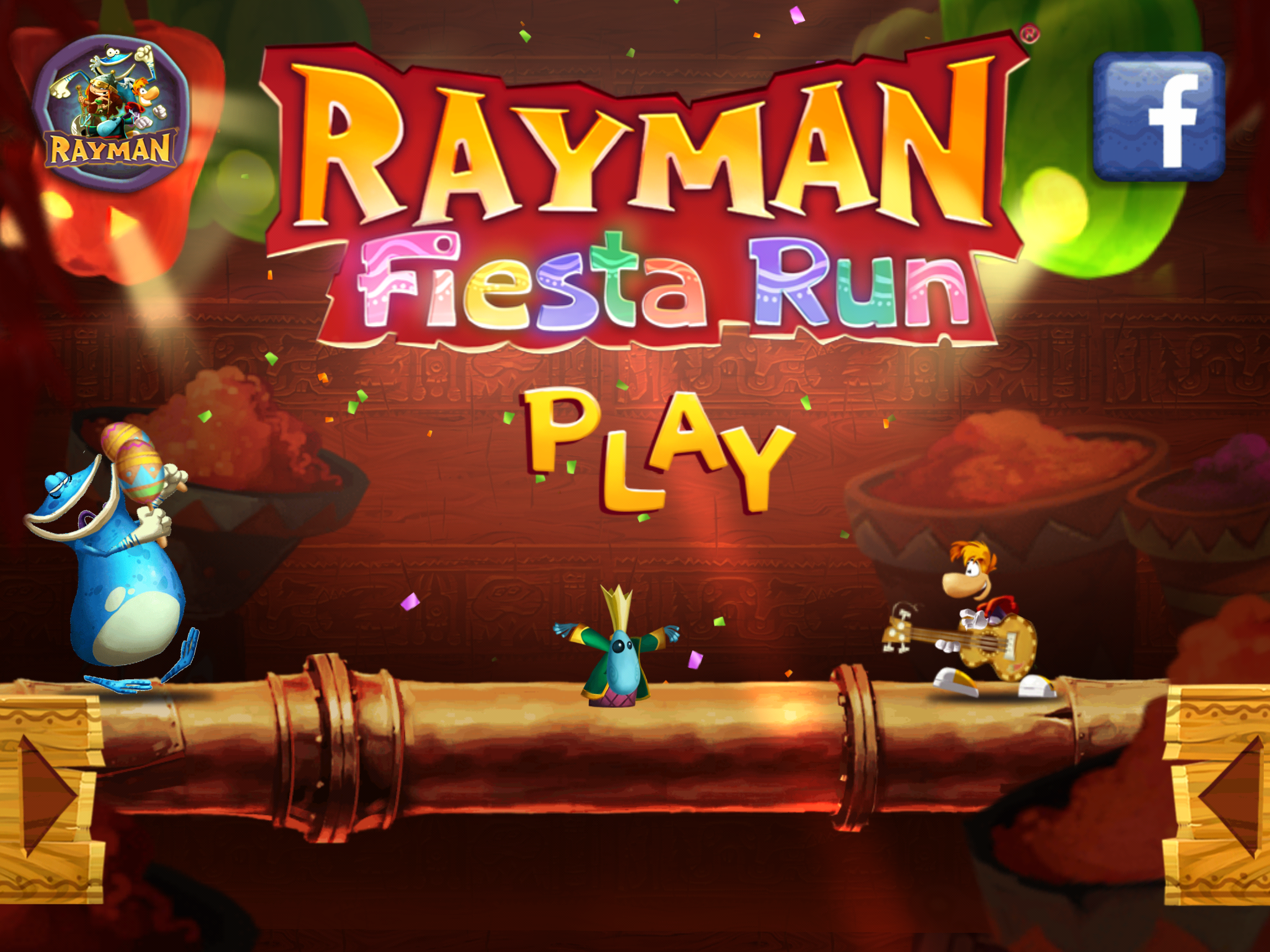
    Following on from the success of last years Rayman Jungle Run, Rayman Fiesta Run entails the same gorgeous, short worlds, but with a whole new theme.

    I loved Rayman Jungle Run when it was first released on iOS last year. I felt that the mechanics of a platformer translated perfectly to a touchscreen phone/tablet when you made sure the player was always moving on your behalf. Rayman Fiesta Run was released last fall, and along with it came a new urge within me to play this game to completion like I did the original. Does Fiesta Run manage to maintain Raymans recent high surge in production value? or does lightning really not strike twice?

    You start Rayman Fiesta run with only the ability to jump, just to ensure newbies are introduced to the game slowly and can get used to it before the levels get harder. Although this is easy, and does get boring, there’s at least something for more hardcore players in the collectibles on each level, with lums hiding in mysterious places out of sight you’ll be jumping and revisiting levels continuously trying to get 100 on each level.

    FUCK THE HELL
    Hell levels are some of the hardest in the game, requiring precision timing to ensure you don’t die.


    As the game progresses, you get the ability to hover in the air (by either using your hair if you’re Rayman, hands if you’re globox, and magic if you’re a teensie) and the ability to punch. These mechanics may sound easy and without challenge, but it’ll prove you wrong in a heart beat if you take it so lightly. Controls of each character are tight and well made, with your character automatically moving across the screen with no problems or glaringly obvious bugs to speak of. Althought the movement may not change, it’s the levels that do, and it’ll be your knowledge of these simple moves that’ll keep you going throughout the rest of the campaign.

    Levels are follow a traditional progression like they have in previous games, with the easier levels being in green fields with next to no dangers to your health, and later levels being in lava filled pits or hell itself, ensuring you know the difficulty of the stage just by looking at it or the colour scheme used. Each level is unique in their challenge and difficulty, meaning that most of the time you’ll need to retry after your countless deaths to ensure each level is mapped to your muscle memory. (muscle memory is for levels that require so fast reactions that you’ll have to remember what’s around each corner before you get there for fear of not reacting fast enough to avoid the danger). This pre-emptivity and muscle memory is needed to progress through Fiesta Run, as without it levels are just too difficult and impossible. With 72 levels in total, you’ll have quite a lot of time to practice and master the mechanics of Rayman Fiesta Run, as frustrating as they may be.

    Going around the map completing levels gives you lums to spend on extra characters and wallpapers. These characters are purely cosmetic, as the size of each character makes no difference on your collider. You will still hit walls or die on the pre-set collider thats around your character, which seems a little unfair at first, but you eventually learn it was done for the mechanics, meaning that no one has the advantage on leader boards across the world.

    Speaking of leaderboards and social features, did somebody say social platforms? because my god is Rayman scattered with Facebook likes and posts all over the place. Gone are the days you could play Jungle Run purely for the game itself, this time round Ubisoft wants you to use your own Facebook to advertise their game for you, with the incentive of getting extra lums to spend if you do. This doesn’t rear its ugly head until you perfect a level, asking you to brag to your friends about it by posting to your Facebook for an incentive of 100 extra lums. It may not seem intrusive, but when they are in every single menu and can be seen wherever you go, they are certainly annoying.

    FUCK THE PURCHASES
    The game is constantly asking you whether you want to spend your lums for items to be used on your one run. Lums can of course be purchased for real world money, which is a shame when you pay for the game up-front as well.

    At the start of each level you can purchase help throughout the level. You no longer get better items or help for playing the game like normal, with Fiesta run you now have to pay to get power ups. You get to pick from a heart which allows you to get hit once more (it’s normally insta-death), a golden heart which allows you to be invincible, a guide which shows you how to go across the track (and I mean, it literally tells you exactly when to jump and punch to get everything in each level), a glove that allows your punch to travel across the screen once and finally, a golden version of the glove which is unlimited. These items all cost anywhere from 10 to 80 lums (as of writing). It’s literally a fee-to-pay game, where you purchase the game for £1.99 at the start and then have to pay to get through levels.

    Rayman Fiesta Run is a fantastic sequel in its own right, and manages to get the same tight platforming feeling of the original so well. What lets Fiesta Run down is its reliance on purchases before levels, and it’s over-zealous use of social networking features, which makes for an otherwise frustrating game. If you enjoyed the original then by all means buy this one, but be warned; the constant social media drove me crazy.

    3/5


  • Weekly Gaming: The Room 2 (iOS)

    Weekly Gaming: The Room 2 (iOS)

    FUCK THE WATCHH
    Sticking to what Fireproof Studios are renowned for, The Room Two has some of the most detailed and beautiful objects you’ve ever seen in a game. This may be because of how close you get up to objects, but it’s still amazing, and a delight to behold as you probe deeper into each objects mystery.

    The Room One was a fantastic experience from Fireproof Studios, a newly formed company that comes from Guildford and where most staff members have had previous experience working on Little Big Planet’s content. It was a fantastically intrinsic puzzle game which seemingly come out of nowhere and managed to sell by the bucket load for its intuitive controls and mind bending puzzles. The sequel has a lot to live up to, with Fireproof games now having reputation rather than being a upcoming indie team, can they succeed in bringing a second hit?

    You start the room two like you did the original: being shown a box in the middle of a room which you must solve. What’s different this time, is your ability to go between two boxes within the same room, meaning that some puzzles are no longer related to the one item you see before you, and some exploration may be in order to find out your surroundings and where items will go to solve puzzles. Whilst the scale and scope of The Room 2 has changed to make everything more epic, the puzzles are still fairly tight, meaning you’ll be scratching your head at times as to where the solution may lay.

    FUCK THE BOATTT
    It’s pretty marvellous what Fireproof Studios can do when their creativity is allowed to blossom into different environments, but it’s also a shame that we’ve gone away from the simplicity of the first Room, centred and based entirely around one mysterious box.

    This new change in scope allows the team at fireproof a more liberal way in making fantastic set pieces. You’re teleported to different scenes multiple times in the game, from an Aztec cave to a Victorian photography studio, its all unique and gives a breath of freshness to an otherwise repetitive game mechanic. New scenes come with a new inherent understanding, which can be difficult for some players if you don’t know the stereotype of the room you are currently in. At one point, I was stuck trying to make a typewriter work as I didn’t know how to press “enter” to finish what I was writing. I suppose that’s some of the charm of The Room 2, it plays on your own knowledge of the world around you, ensuring you feel clever for something you’ve done in game which you know and have seen in real life.

    Puzzles follow the same constant rule as was the case with The Room, with puzzles unlocking a new piece of equipment that can then be used in a new location to unlock a new and even harder puzzle. There were more instances of myself getting lost though in this sequel, mainly because of the expanded scope of moving between multiple objects in a room to ensure you’ve done everything you possibly can at that given moment. One of the worse rooms for this was a Aztec level, which allowed you to play with 5 different items in the room. Usually, it’d just be a straightforward case of solving a puzzle on one item, then moving onto the next, but in here, there were so many different items that I ended up going in circles trying to locate the first thing I should solve. It can certainly be confusing, which works against The Room Two considering how straightforward and linear the first game was.

    FUCK THE EYEPIECE
    The eyepiece makes a reappearance in The Room 2, allowing you to see things not visible to the naked eye. You’ll need it to overcome some puzzles, but it’s not used as much as it was in the original. It does add new effects, allowing the developers to mess with your perception of space even more.

    There is a story to The Room 2, albeit one that’s only used as a topping, and isn’t why you’re playing the game. It’s similar to how RPG mechanics have found their way into almost every genre, the story is used purely to fill the game out. It’s delivered through notes you find as you traverse the world, so apart from the mini narrative taking place between yourself and someone who has travelled this route before you, you’re making the story up yourself as you go along. This isn’t a bad thing, many stories can be better when you use your own imagination rather than just being told whats happening, but it does leave a lot of questions as to what direction the series is going. I suppose only time will tell.

    The puzzles are coherent, but can take a while to get used to. For example, you may have ordinary drawers on a desk, but after a bit more exploration you find a button on the underside which enables a puzzle on the top. These type of puzzles are frequent, meaning you should always give something a once over before jumping to conclusions that there’s nothing to do or the game is glitched.

    FUCK THE NOTESSS
    You’ll happen across notes all the time in The Room 2, most are from a person who has come before you, but some may be from the time period you are currently based in.

    I have mixed feelings about The Room 2. On the one hand, Fireproof Studios have managed to increase the scale of the original, whilst keeping the puzzles addictive and coherent. The whole game is much more beautiful because of this variety, but I can’t help but feel something has been lost in this transition. The original had so much charm because of the confinement of playing within one box, one box that twisted the rules of reality mind you, but one box all the same. You uncovered little by little the secrets this box hid, and throughout the few hours you played it you felt you were learning more and more about the world through what you imagined. The Room Two on the other hand rips that feeling apart by plainly showing you the world you inhabit, with no mystery and intrigue left to guide you on. I will say, If you’ve played the original, you owe it to yourself to play The Room 2, but don’t be surprised if you don’t come away from the game with the same sense of awe that you came away from the original with.

    3/5


  • Weekly Gaming: Little Inferno (iOS + PC)

    Weekly Gaming: Little Inferno (iOS + PC)

    FUCK THE MATCH STICK!
    A game about settings things on fire ay? To some of you pyros out there, this’ll be the perfect game to make time fly by, with virtualised fire being just as mesmerising as the real thing, but with no pain!

    If you’d had given the pitch of a game where you can set things on fire, watch as items burn slowly and give coins after they demise, to a boardroom ten years ago, the executives in there would laugh you out of the room, claiming you were crazy and that it’d never make any money in a million years. Little Inferno is just that, but has been released in a time where it can be truly appreciated with the current indie renaissance. It’s a premise so crazy, you’d be surprised that Tomorrow Corporation could even make a game out of it, yet alone one with an intriguing and cute story.

    FUCK THE FLAMESSSS
    The Fire physics are something else in Little Inferno. Flames slowly destroy everything in their path, reacting differently depending on the item they’re burning. A picture doesn’t do this core game mechanic justice.

    You start off as the game means to go on: in front of a fire place called little inferno, sold to you by the Tomorrow Corporation (an in-game company that makes products of all shapes and sizes). Using coins collected from burning items, you can in turn buy more lavish items, creating different effects every time. It’s a perfect feedback system, which doesn’t require much thinking on the users part: you just spend the money, and watch the new animation/flame dynamic take place.

    There is a story and a point to all of this burning though, which will become apparent the more you progress through the game. The world is freezing, with a Winter that hasn’t ended for years, and with no sight of it ending, everyone stays at home burning precious items to keep themselves warm. Notes will be delivered every now and then, giving context to whats happening in the outside world at that given time to ensure you remember there is a world beyond the fireplace. The notes are only a  one way dialogue though, as you never get a chance to respond or reply, with your only feedback being to burn the letter itself, so expect quite a few jokes and childishness throughout this pleasant story.

    FUCK THE TOYYYSSSS
    Shopping for products is as easy as clicking the item you want, spending gold, then waiting for a given period of time for the item to be delivered. There are plenty of items to choose from, with each item giving more cash than it costs to purchase after being burned to the ground.

    For a game based around burning house hold items, oh boy do they make the burning a joy to behold. The game could have been sold as a virtual screensaver years ago, with flames dynamically dancing across items in realtime, giving a different effect every time, leaving you with nothing but charred remains of what used to be a usable item.

    The real beauty is in how Little Inferno manages to keep the game engaging after 4 hours of a main story. The answer is Items. Yes, all the items you can buy are all unique in their ability to burn. Some will statically burn, causing your flames to increase in size, whilst others will grasp for your attention, screaming dolls or coffee will always make me chuckle, but items that make your flames change colour or extinguish them altogether are certainly noteworthy.

    FUCKKK THE LETTERSSSS
    The story is told through letters given to you from friends and business newsletters (like the one above from the owner of the company). It’s a simple but effective way of giving you a sense of whats outside of your viewpoint, pushing you to wonder beyond the confines of your fireplace.

    The game gives variety in how you play it by challenging you to find different combinations of objects to burn together, with hilarious consequences in most cases. Burn someone else’s credit card along with someone else’s family portrait and you’ll get the someone else’s combo. Get more of these combos to unlock more books and in turn, more items to burn. It’s a never ending cycle, one that could have been easily monetised like most games these days with a simple game mechanic, but I’m thankful Tomorrow Corporation haven’t. Burning combos also gives you stamps, which you can use to get instant delivery of the items you’ve just bought. This gives you an incentive to continue with your hunt for the combo’s, as it helps the speed at which you can progress in the main campaign.

    Little inferno kept me hooked for hours, pushing me to ignore everyone and everything around me, instead focussing on burning as much as possible. In that sense, it made me a pyromaniac in the short time I invested into it. I wanted more, and even when I had burnt everything in the game, I would still go back in just to burn some more marshmallows or coffee (seriously, it’s hilarious to see them scream). I showed friends and family how cool I thought Little Inferno was, but unfortunately, it hasn’t caught on. This may be because it has a price tag, and although the gameplay accommodates and mimics free to play stereotypes, the price tag puts off a lot of potential customers. I respect Tomorrow Corporation for sticking to their guns and keeping the game focused with a traditional piecing model, but at the same time they may have shot themselves in the foot in doing so.

    I applaud anyone who goes out of their way to purchase little inferno. It’s pitch sounds ridiculous, and insane, and would have been laughed at by anyone in any business. But in todays market of casual and indie games with laser tight focus, Little Inferno strives with it’s hilarious and witty humour, along with addictive gameplay.

    4/5

  • Indie Spotlight: Clobbr (iOS)

    FUCK THE CLOBBINGGGG
    Clobbr’s cute animations and design certainly portray a simple and easy to play game, but there’s a lot of challenge and kick behind this beastly game.

    With Clobbr’s imminent release on Apple’s App Store, I managed to get a review copy from Czarcade, as I felt this lovely mobile game from a fellow indie studio would definitely be worth a look. The trailer looked quirky, and the screenshots certainly looked great in the time I’ve been following Czarcade on Twitter, so I had to jump head first into Clobbr, and bathe in this fellow indie’s beautifully polished game.

    As you start Clobbr, you’re introduced to your three main protagonists that will stay with you throughout the duration of the main 5 worlds. These are Clobbr (the blue gentleman at the top of the screen), the three mice, and the orange kitty. The main characters have a Tom & Jerry vibe going on, with each level pitting them in a similar situation: the kitty never learning from it’s mistakes, and Clobbr himself coming to the rescue of the poor defenceless mice. These simple characters are your back story as to why Clobbr needs to continue solving the puzzles, which is a well thought out and lovely trio of personalities that ensure you aren’t bored by just solving mazes on every level, giving personality to an otherwise simple representation of a puzzle game.

    FUCK THE TIMERRRRR
    Levels get quite difficult with the introduction of new items that allow your boulder to travel farther, adding a new challenge to an already cluttered and healthily hard game, especially with only 20 seconds on the clock.

    The game mechanics are pretty simple, with each level consisting of a different maze that must be moved around to provide a rock a chance to knock the cat out. The maze consists of different blocks, some of these are straightforward, like the arrows which just make the boulder go in the diffraction they face, where as others really change the dynamic of the mechanics, with mousetraps propelling the boulder to the end of the stage. It’s definitely a game that stays true to itself, with simple mechanics that get progressively harder as you make your way through the 100 levels on offer.

    Each level must be completed within 20 seconds, which adds a nice sense of urgency to everything you’re doing, making some levels extremely difficult as you trace exactly where your boulder will go along the path you have created for it. If you complete the level sooner and find it easy, you can always click the log at the top of the screen to get Clobbr to start the boulder moving sooner. This’ll give you additional points, which may not be worth much right now (there are no leaderboards at this time), but could become appealing in future updates (imagine trying to beat all your friends scores in a fashion not far from Cut The Rope, it’d be pretty addictive). The 20 second time limit also helps the game become a perfect travelling companion, meaning that no matter where you’re playing on your phone or tablet (the bus, taxi, train, waiting at the doctors etc.) you won’t go long between levels so you aren’t distracted for hours on end.

    FUCK THE KITTTYYYYY
    I found trampolines some of the hardest objects to predict, having to look two spaces below meant planning a lot farther ahead in the limited time I was given. The job you feel when actually seeing your plan play out and hitting the Kitty is a feeling I haven’t experienced from another game in a long time.

    The music is cute and catchy, so much so that I caught a few members of my family humming it around the house whilst they went about their day. Unfortunately, many users may play all their games on silent, which’ll be a shame for the hard work of Nathan, who has put together a good track. But for those of you who do play their games with the sound effects on, you’ll be in for a treat, everything about Clobbr makes cute feedback, from the spring noise of using a trampoline, to the smashing of the rocks, you’ll enjoy all the sound effects and music Clobbr has to offer.

    Back at University, I done an intensive research course on immersion in Video Games, showing the different types of immersion a player can achieve in different genres of games, and which games are suited to each environment. Clobbr encapsulates my thesis on short, competitive immersion more so than any game I’ve played in recent memory, with small, addictive levels keeping you hooked for hours in commutes, it’s certainly a mobile game worth playing. From start to finish, Clobbr will offer you hours of entertainment, ensuring that wherever you are, you can always pick up and play without too much effort. For those of you that love puzzle games, and get addicted to simple, short levels similar to angry birds, Clobbr is for you.

    4/5

    Clobbr will be released on iOS on the 23rd of January, and can already be purchased on the Android App Store for £1.19.

  • Gaming Week 9: The Room (iOS)

    Gaming Week 9: The Room (iOS)

    The Room started off as a interest at first for me. After hearing Brad Shoemaker talk about it on the Giant Bombcast, I thought I’d give the iPhone game a go. I’m a firm believer that iPhone/portable games should be centred around challenges, and not be a cinematic experience that you can get on consoles. (Something I even researched and presented at my final year of uni.) The Room doesn’t break any ground in my thinking, but does offer a very entertaining experience for people of all backgrounds.

    The Room is a puzzle game for iOS devices. For iPhone you get the first chapter for free (then have to pay £1.49 to continue) and for the iPad you have to pay £1.49 up front. For a game of it’s length (about 2 hours) this is a fair price, but from the sounds of things, there’ll be more content in coming weeks.

    SCREW THIS SHIT
    The beginning safe, not that interesting, but it gets better!

    You start The Room with a safe in front of you. This safe can eventually be opened using only the materials around the safe itself. Each chapter/stage is another box within the safe which can then be opened to reveal another box. This is the structure of the game, one puzzle then leads onto another, more perplexing puzzle.

    Puzzles are varied, and everything interconnects, so when a puzzle suddenly clicks, you feel like a genius, easily popping from side to side of the box to solve each solution. It’s a fantastic feeling, that entrances the player and keeps you going.

    ALLL TEH PUZZLESSS
    Puzzle solutions generally lead you to solve another mystery straight after.

    There is a story to The Room, albeit it’s very vague. You come across letters throughout each box, which tell of a previous man that done the same as yourself. It’s a nice touch which at least suggests there’s more to this world than what meets the eye. Hopefully in the future we’ll get more levels which dig deeper into the fiction of this world.

    Pros:

    • Fantastic Puzzler
    • Great Graphics for a iOS game

    Cons:

    • Very Short
    • Recommended to be played on iPad if possible (iPhone screen a tad bit small)

    Overall The Room is a great buy for anyone looking for something to kill a few hours on their mobile device. It won’t be cinematic immersive, but will keep you immersed for that short amount of time due to the challenge of the puzzle.

    4/5