Tag: Naughty Dog

  • Weekly Gaming: Uncharted 4 (PS4 Pro)

    Weekly Gaming: Uncharted 4 (PS4 Pro)

    Unchartered 4 Review (PS4 Pro)

    As those of you may have seen from previous reviews, I like the Unchartered games, but always found them a bit hollow. In fact, it was the original Unchartered game that put me off the series for so long, with its mediocre presentation, lacking game design, and weird characterisation. A started to warm towards the series throughout playing 2 and 3, with both games not only pushing the limits of what was possible in the graphical department for such an old system, but also making the characters more likeable.

    So here we are at the fourth title in the series, and what have Naughty Dog managed to do? They’ve managed to learn from their previous titles, that’s what.

    You see, what I didn’t mention is that between 3 and 4, Naughty Dog released The Last of Us, a great game that I reviewed when it was released. It received critical acclaim, and rightly so, especially for the character interaction and building that they managed to do. Naughty Dog haven’t rested on their laurels, and with the help of the lead writer, creative director and programmer Neil Druckmann, have managed to create characters you can genuinely love, and hope do well. This isn’t to say Neil was the only developer who helped craft unchartered 4’s story, far from it, but he seems to have pushed the seriousness of gaming one step closer to Cinema and TV, making it a better medium as a consequence.

    Anyway! Back to square one before I go on a tirade about nonsense. How does Unchartered 4 play? Well, if you’ve played a previous entry in the series, then you’ve basically played Unchartered 4. Don’t get me wrong, theres a few new mechanics used throughout the campaign, such as the hook mechanic to swing from platform to platform, but overall nothing new can really be seen here. You go through the same old routine of – narrative > puzzle > platforming > kill lots of henchman > platforming that we all know and (maybe) love.

    This tried and tested formula may not be very revolutionary, but what’s different this time round is the previously mentioned character arks, especially with Nathan Drake himself. You see, from Unchartered 1 through 3 you never really knew anything about Nathan’s past – yes, he would occasionally say things about how he met sully, but outside of that you’d never know how he knew so much about history and had some great survival skills.

    Unchartered 4 manages to do a fantastic job of not only fleshing out Nathan Drake, but also his new, never before seen or mentioned brother, both of which have a few chapters that go back to their childhood in an orphanage, and even what they got up to as youngsters. This fleshing out at first feels a bit contrived, merely to teach you some new mechanics you may first think – but as the campaign progresses you start to get a real sense of brotherly love between the two siblings, and eventually, care about their wellbeing.

    Graphically, the game is stunning. Everything from the mocap on the main characters, to the detailed forests, and even the gorgeous ancient buildings all looks truly magnificent, so much so I was taking screenshots every few seconds. I swear I’ve said this before, but if only Naughty Dog wasn’t a PS4 exclusive developer – the things they could do on a platform as powerful as the PC could be truly breathtaking.

    What helps bring the graphically impressive world to life even more is the new open world driving sequences, which, whilst are new in the game design of Unchartered, are still fairly linear. You’re given a big area of a map to explore, and an objective to find something, so you proceed to drive around looking for clues that may help to reach your objective. These sections can be as long, and as short as you like, and certainly add something new to the traditional formula of Unchartered.

    The set pieces are just as extreme as ever, and push the physics simulation of the PS4 to the absolute max, with debris flying everywhere, as well as dynamic building falling as you progress, or even cityscapes being drawn in on the fly. My other half also found them incredible, being surprised that even with eh amount of detail on display, I was still controlling Nate throughout the entire scene as it was unfolding. If you liked previous Unchartered’s set pieces, you’re sure to love them here.

    There is unfortunately still the issue of ludonarritive dissonance – that is the fact that the story. puzzle solving and everything else seems to have no bearing on the actual shooting of enemies throughout the game. It’s like you’re playing two completely different games – no one ever mentions the fact they’ve just killed a bunch of men, and no one certainly mentions the blatantly stupid story moments when enemies just so happen to be in the ruins of a never before seen city. It’s all a bit immersion breaking, and certainly got annoying towards the end of the game when (spoilers ahead!) the group abandon the cave with treasure in despite the fact they could go back there at any time.

    Another issue I found was the combat. Whilst Unchartered 4 pushes you to be as stealthy as possible, I found it was easier (and faster) to just start shooting the first enemy as soon as possible. Being sneaky resulted in a lot of AI routine bugs, especially when they were within close proximity to each other, resulting in enemies walking to a cliff edge, back into a friend, and back again.

    So overall, I definitely enjoyed Unchartered 4 more so than the previous entries in the series. It still has some of the same issues that plagued the previous titles BUT it managed to add enough story moments, along with better character depth, to make me choke a little at the ending. It’s been a long ride, but one I’m glad I experienced, and dare I say it, you should too.

    4/5
  • Gaming Week 28: The Last of Us (PS3) Part 2:

    Gaming Week 28: The Last of Us (PS3) Part 2:

    This is part two of my weekly review for The Last of Us, where I will break down it’s level design, gameplay, and give some conclusions of my own on how I feel about the game.

    FUCK NO EXITS
    The level design is fantastic, albeit game-y at times when you want to explore and get blocked off at doors/exits when you see no logical reason why your character can’t jump over it.

    The levels in The Last of Us are absolutely beautiful, giving a really immersive and realistic surrounding that really helps to immerse oneself in the world. Forests are wonderfully built to allow a bit of exploration, whilst also being linear  to make sure a player does not get lost and stays on the right path. The level design can be a bit predictable at times, meaning if you’re exploring with Ellie and you all of a sudden see some bottles and bricks scattered around, you know that an enemy encounter is about to go down. I found this annoying to my game experience, as it broke my immersion whenever I would be happily exploring the beautiful environments. This immersion breaking level design would also happen when you started levels, for example having just drove hundreds of miles, you can control Joel to walk back at the start of a level, only to find there’s nothing but rocks or a bus blocking your path. It’s a bit gimmicky and takes away from an otherwise good design.Overall I would say these are some of the most well realised cities/worlds I have ever seen in a game, which really help to portray the fact that humanity has been on the edge of extinction for 20 years.

    As for how you play The Last of Us, it’s classed as a survival Action Adventure, meaning that it’s a third person adventure game but it employs survival elements where you don’t get much ammo or resources. During the game you’ll come across cloth, alcohol and many other miscellaneous items hidden throughout the world. You use these items to craft better items such as molotov cocktails, or medkits. This does result in a management of materials, as the examples I just used require the same materials, so you really have to decide whether to go on the offensive with molotovs, or to make medkits to survive for longer. During my playtime on normal difficulty, I didn’t have any of these problems as resources seemed to be plentiful. That isn’t to say it’ll be the same on harder difficulties, but from my experience, survival wasn’t  problem. Most encounters you have in the game allow you to bypass by staying in stealth mode and making your way past the enemies. I found this great to start off with, but as the game went on and I got closer to the end where it was just bandits galore, sneaking past just took too much time and effort, so I took them on with guns. Overall the action in The Last of Us is effectively no different than Uncharted 3’s combat, the only difference being that ammo isn’t chucked at you willy nilly, meaning you have to ration resources a bit more. It’s ok, but definitely could of been done a lot better. Ellie may be your companion, but you don’t notice her at all through your playing, she has no influence on the game, and is merely there as a plot device. If you’re sneaking around men or infected, they will literally walk right through Ellie, which is both jarring and silly for such a serious game.

    Pros:

    • Gorgeously realised world that really looks and feels like 20 years have passed.
    • Fantastic characters that really do evolve throughout the main story.

    Cons:

    • Too many human encounters for my liking.
    • Ellie has no impact on the game mechanics of the game.

    Overall, The Last of Us is definitely a step in the right direction for action games, I just worry about whats happening at the same time. This game feels like a re-skinned Uncharted, but where Nathan Drake would kill hundreds of people and in the cutscenes he’d brush it off, The Last of Us has changed the main character to be immersed in this world of violence, making it so your character has no other choice. It seems that developers are no longer trying to justify the actions of their protagonists, and are now just allowing them to be violent for the stories sake. By all means play The Last of Us, the whole world is raving about it, but I don’t think it deserves all the 10/10’s its been getting. Maybe it’s because The Last of Us was hyped as the game of the decade, but something about it didn’t sit right with me, it’s not different than any game that came before it, it just had a good story and characters. I was hoping the story would effect the game mechanics, which it didn’t.

    4/5

  • Gaming Week 28: The Last of Us (PS3)

    Gaming Week 28: The Last of Us (PS3)

    MEH
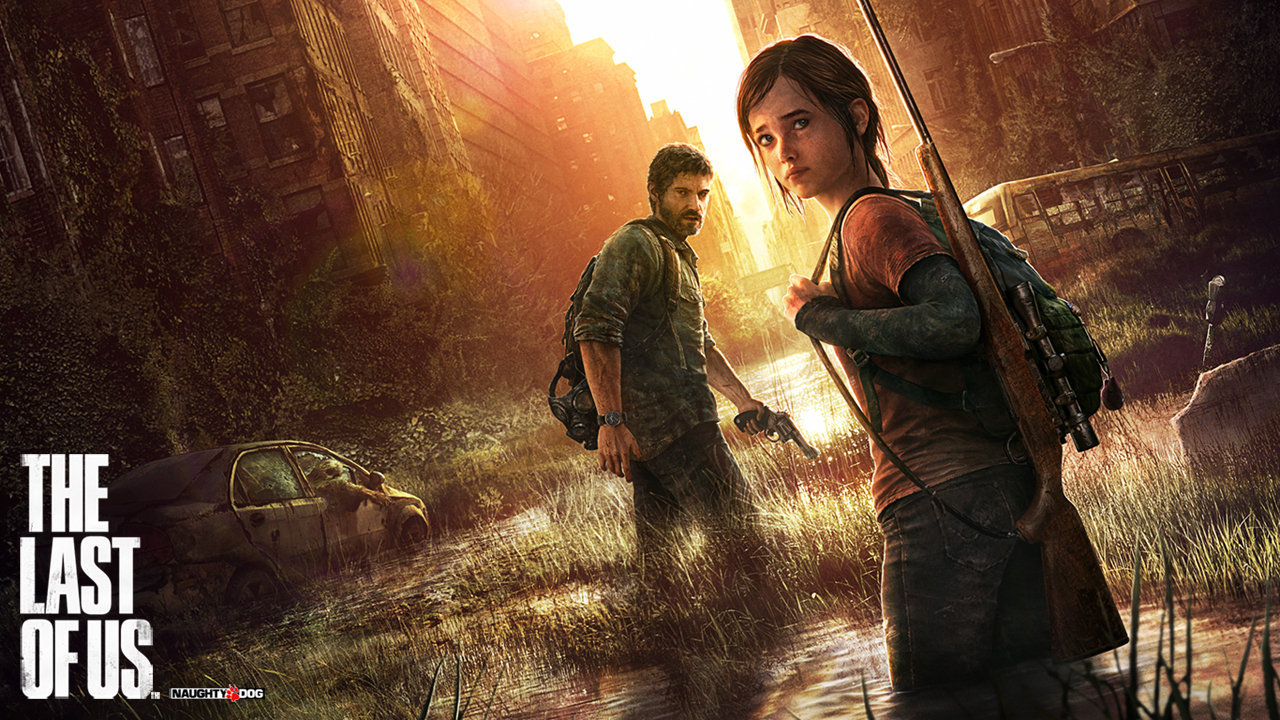
    You’ll grow to love these two characters, Joel and Elli, as you progress through the story of The Last of Us.

    This weeks review is on a game that has received a lot of attention recently, with many people calling it the game of the decade. I decided I had to see this for myself, so I popped down to Gamestop, and bought myself a copy for $60. (It’s still strange to write that, and $60 is the same price as back home so I was all good for it). For the purposes of length, this review will be split into two, with the first part today concentrating on premise, story and characters, and tomorrows part focusing on the gameplay, level design and conclusions.

    So, The Last of Us is based in a post apocalyptic world where zombies roam the earth. These aren’t normal zombies, they’re infected, which is slightly different and more believable than zombies; the first stage of transformation is crazed “runners”, who will beat and bite ordinary people like a traditional zombie. The next stage is “clickers”, this transformation entails a fungus exploding from the infected’s face, meaning they can no longer see, but click their tongues to see like a bat using sonar. The final transformation is the Boomer, a gigantic foe who will throw his fungal protrusions at enemies. Past these transformations an infected person will finally mould into a wall and give out spores to infect more people. It’s a nice concept that is different than the typical “zombie apocalypse” scenario, albeit all the familiar as well. Naughty God didn’t have to make the runner zombies, but to make the game play interesting they had to have multiple enemy types, and so it was a good fit.

    FUCK EM
    This is a clicker, which is what people who have been infected for a while turn into.

    The story starts with you controlling a little girl who wakes up to a phone call asking for her dad. The man on the phone sounds out of breath and scared, so the girl you control (Sarah) gets scared and has to find her dad (Joel). It’s a great scene that sets up the rest of the game fantastically, allowing you to see the world turning to chaos right before your eyes in a unique perspective. Once the screen fades to black, the player takes control of Joel 20 years later in Boston. In this time the infection has spread throughout the world, and special quarantine zones have been set up with military overlooking civilians. Rations are low, and the whole zone feels very much down in the dumps. As Joel and his companion (Tess) are smugglers, they need to get to the other side of the quarantine zone in order to get a “shipment”, and this is when you’re first introduced to the conflicting factions in this post-apocalyptic world. There’s the army, which is trying to take care of everyone in a harsh way, and the fireflies, a group of rebels that want to overthrow the army and feel they’d do a better job of protecting civilians than the government. Once Joel and Tess reach their shipment, the games true purpose is shown; in order to get their shipment, they must smuggle and deliver a child (Ellie) to the fireflies just outside of town. What seems like a simple task soon turns into having to traverse the whole USA, from Boston in the east to Salt Lake City in the west, which is a good set up for a game. The clans coupled with the new infected make for a very interesting take on the post-apocalyptic world, if not 100% original, it’s definitely a different take on a already popular genre of media. The story itself was ok, with cutscenes shinning light on the current circumstances characters found themselves in, but I found it all a bit too predictable, meaning that apart from the ending, I knew where the game was going. This is mainly because the story is based on the characters themselves, and not necessarily on the world around them.

    WOOOO BILLL
    Bill and Ellie certainly don’t see eye to eye, which can make for some very tense and funny cut scenes as their personalities rub each other up the wrong way.

    The characters are brilliantly filled out, with Joel and Ellie having a dynamic that makes you want to continue playing, just to see how their relationship changes. Throughout the campaign, Joel and Ellie will encounter many other characters on their travels, with each of these people being just as fleshed out and detailed as the main protagonists. Joel has been through a lot and is cynical of the world around him, meaning he’s a hardened veteran that doesn’t want hassle. Ellie on the other hand is a hard ass teenager who doesn’t want to be a burden on Joel, so tries to be independent, which causes more trouble for Joel. One example of the fleshed out characters is a man called Bill, who owes Joel a favour, to which Joel uses to try and get a working car to drive across the country. Bill is a very distrustful person who doesn’t like change, which really doesn’t go well with Ellie being a independent and strong woman, resulting in some very funny scenes between the two conflicting personalities. Overall the characters are amazingly thought out, which makes for a lot of believable relationships throughout the main story, meaning it’s not necessarily the story or the world that appealing, it’s the way the characters change and evolve throughout their time together.

  • Gaming Week 14: Uncharted 3: Drake’s Deception (PS3)

    Gaming Week 14: Uncharted 3: Drake’s Deception (PS3)

    LOOK AT THE SAND
    Nathan knows how to pose

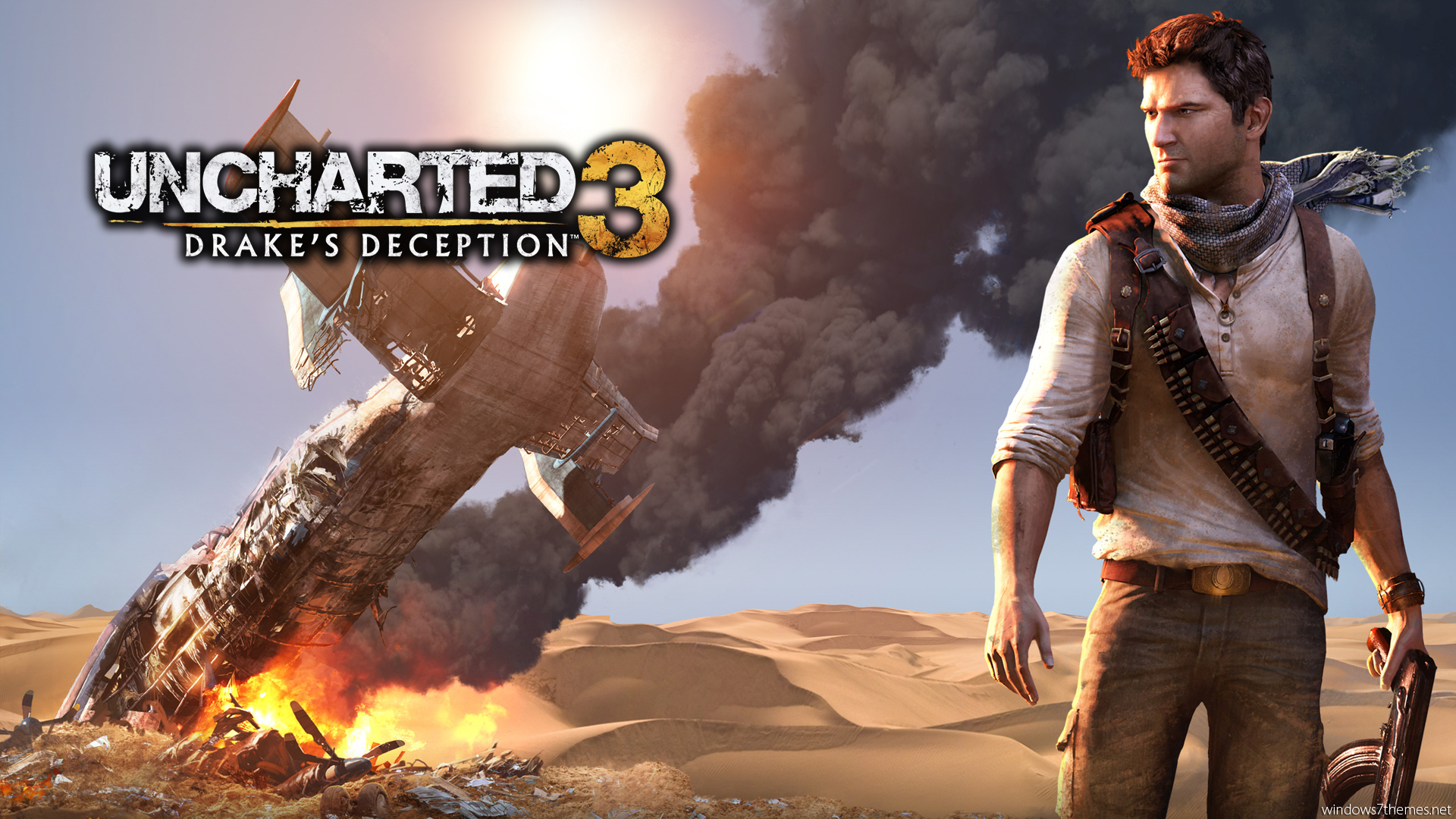
    Oh Nathan Drake, you careless adventurer you. How you made me not give a single damn in the first unchartered, then flipped my perception on its head in the 2nd is beyond my comprehension. So here we are with your third outing, and I must say, you’ve certainly impressed.

    The Uncharted series have been a mixed bag of highs and lows for myself. The first one, I was extremely unimpressed. I could see why people enjoyed it, but I felt like it was a poor mans Tomb Raider and was just a knock off. It was stunning in graphics, it wasn’t original in gameplay or story telling, it was just meh all the way through. This all changed with the second game. In Uncharted 2, Naughty Dog left me stunned at every turn. With improved art assets, and dynamically scripted sequences like the train level, (a level in which the game keeps dynamically generating a train journey whilst you progress across it, giving the feeling of a real train ride and not scripted/linear) I felt convinced that Naughty Dog had found their true potential, and had run with it.

    Uncharted 3 was more of Uncharted 2, albeit with quite a few bugs and a detracting story. It felt like a game that was never intended to be made, and quite a few plot points felt arbitrary, maybe even pointless. The action sequences were fantastic, bringing the series to a high point (but maybe not topping) of what was achieved in Uncharted 2. One example of this strength is a level in which Drake is fighting on a plane, all whilst enemies are trying to throw him off, with the back bay door open and crates falling out. This all adds to a dynamic feel of the game, as if you wouldn’t get the same scene twice if you tried. It truly adds to the immersion of the moment, and allows Uncharted 3 to feel more intense than any action movie.

    Uncharted 3’s game mechanics are still the same as old, ensuring old and new players alike feel in control the whole time. Enemies are the same as before, which can be a bad thing at times, for example when a level has multiple floors and enemies above are slaughtering you. This could be attributed to bad level design, but most of the levels are gorgeous and well thought out, so I’ll give Naughty Dog the benefit of the doubt.

    Nathan Drake and all the cast are fantastically well thought out, and compliment each other in everything that is done. Relationships are brought to tearing point, but it helps to portray an interesting character development arc that ends on a high note. I would gladly say that Naughty dog make some of the most believable characters in any game series of this generation.

    Pros:

    • Gorgeous landscapes and cities add to an immersive world
    • Great witty banter between characters
    • Fantastic action sequences that rival a film production any day

    Cons:

    • Very buggy (my character would fall out of the world often)
    • Story had many plotholes

    So to conclude, Uncharted 1 was meh, Uncharted 2 was AMAZING, and Uncharted 3 was alright, therefore I feel the whole series would rate as a 4/5 in a game review chart.

    3/5