Tag: PS Vita

  • Weekly Gaming: Metrico (Vita) Review

    Weekly Gaming: Metrico (Vita) Review

    2015-04-21-143908

    I was sceptical about playing Metrico at first, I mean, a game where you mess with bar charts and pie charts? BORING. But after reading Eurogamers review of the game many months ago, I decided maybe it was worth actually looking past the boring exterior and seeing if Metrico was worth it’s time.

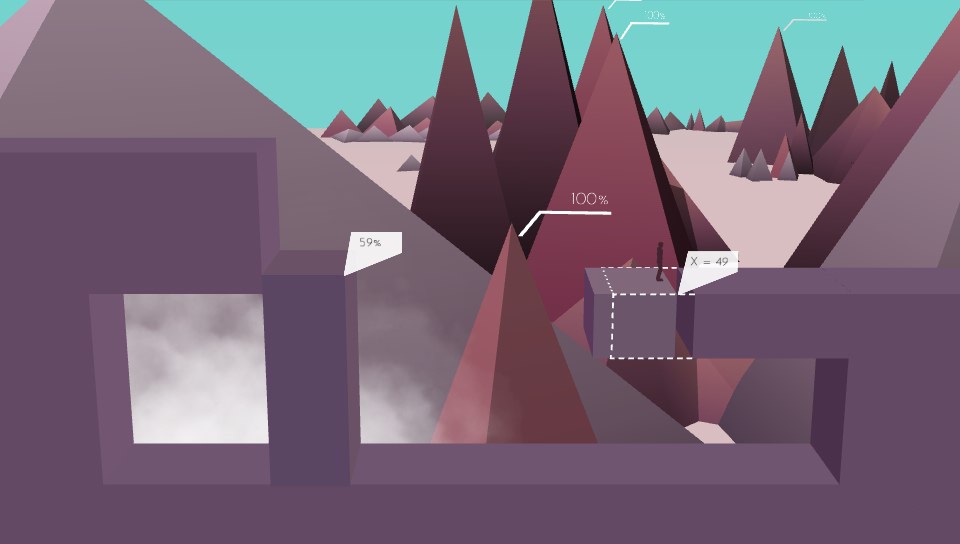
    Well first off, I have to advise to seriously ignore the setting and the premise of Metrico, as it sounds boring on paper but makes for some excellent and amazing puzzles to overcome. The premise is simple: certain bars or platforms in the world will move or resize depending on how you move your player or interact with the environment. One of the most basic forms of puzzles in the game revolves around your players movement across a surface: move right whilst touching the floor and one bar may increase in size, whilst moving left will decrease it. It’s through these simple interactions with the environment that complexity starts to form, with bars or platforms interlinked, meaning your actions for one to progress may hinder another, causing yourself to be stuck until the solution is found.
    FUCK THE INFOGRAPHICS
    Whilst the graphics look simple, there’s definitely a charm about the infographics look, one that oozes from start to finish of Metricos campaign

    It’s through this simplicity of interacting with the environment that you’ll find some of the hardest challenges I’ve come across in a game to date. Whilst the environment starts off related to your movement, it soon starts becoming more complicated, with a shooting mechanic soon entering the fray, along with the gyro-sensor of the Vita, and finally, the light around you and colours surrounding you in the real world using your Vita’s camera. They’re all novel ways of using every feature of the Vita, but they all really add to the complications of puzzles that may arise, with latter levels requiring you to both hold the Vita at a certain angle whilst also moving your player and firing at the same time. Digital Dreams really deserve to be applauded for the great work they’ve done in accommodating each feature of the Vita, a task I didn’t think possible.

    Through all the different methods of controlling the world, it’s a good thing Metrico has precise platforming down to a T, with each jump and twist of the Vita being as precise as it needs to be, ensuring you don’t blame the game rather than your own skills.

    FUCK THE PIE CHARTSSSS
    Metrico takes its infographic art style and runs with it, with pie charts and line charts appearing everywhere they possible can. Each is intrinsically linked to the actions you’re performing as the player, ensuring you have some control of what is being seen.

    The graphics aren’t much to look at due to it’s simplicity, but perfectly suite the environment of infographics Digital Dreams chose to portray. Pie charts appear in nice 3D, but as I said at the start, that’s all boring without context, so it’s a shame Metrico doesn’t really have a story. You walk endlessly throughout a forever changing world, with a choice given to you upon clearing one of it’s 5 worlds. These choices are between two doors, with each one having percentage of how many players have walked through it. There seemed to be no intrinsic value as to which one you selected, so for the most part, I just went for the door which had the least amount of players walk through it.

    Whilst there wasn’t much in the sense of music (I genuinely don’t remember the music at all, a bad sign when it comes to music that entices me to explore and adventure on), the entire atmosphere of Metrico was still fascinating to explore, with each puzzle enticing me on to the next one with no hesitation.
    FUCK THE STORYYYY
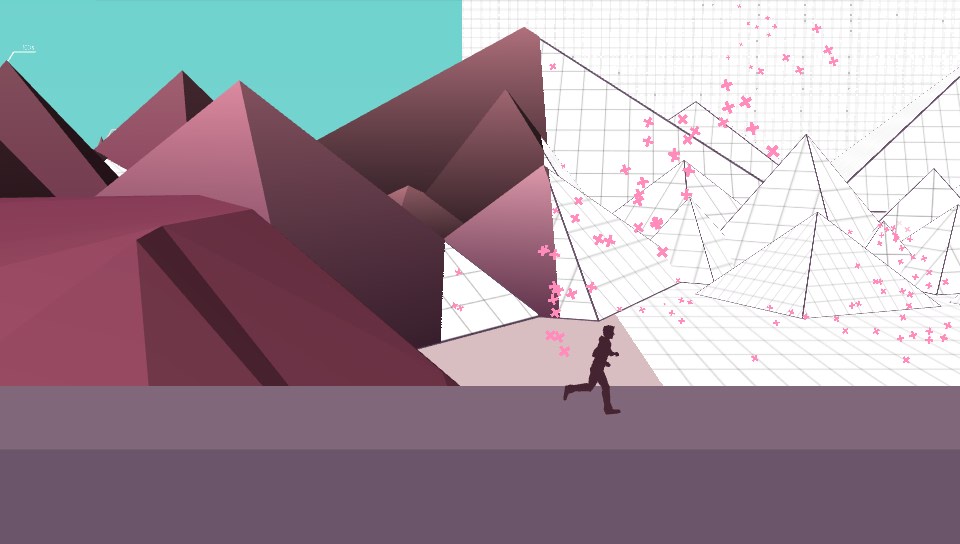
    There isn’t really a story throughout Metrico, merely a thought: your actions have instant feedback in the world your avatar inhabits.

    I think the thing that stands out so much about Metrico for me is the way that it brings to the forefront the code that’s happening in the background to players. Everything happening on screen in a game is usually linked to numbers in the background; from health bars slowly diminishing to the timing of an enemies movement, it’s all maths, it’s merely hidden from view. Metrico does a fantastic job of showing all these numbers to the player, and even helps in making players think more logically in how they approach problem solving. There are many times you’ll need to approach a puzzle from a different angle after you accidentally press a button too many times, pushing you on to find the correct solution as fast as possible.

    Whilst most of the puzzles allow you to carry on with the progression of the game, there are a few that allow you to pick up items should you get all objects on the screen in the correct place. These “collectibles” are purely for the challenge for the most part, with no story or extras being unlocked for gaining them (apart from trophies). Whilst I missed a couple, I enjoyed these extra challenges, as you’d have to look at the same puzzle in a different way, ensuring nothing went over it’s mark and all objects were in the correct place.

    As I said at the start of this article, ignore any and all preconceptions you have about Metrico and it’s style, and give it a go. I for one am ashamed at my preconceived notion that it would be boring, and feel that it doesn’t deserve that at all. Metrico is easily one of my favourite Vita games so far, which, for a console that’s been out for 4 years, is a damn great achievement.

    4/5

  • Weekly Gaming: Surge Deluxe (PS Vita)

    Weekly Gaming: Surge Deluxe (PS Vita)

    FUCK THE ARTWORKKKKK
    Surge Deluxe doesn’t require much artwork as its an entirely puzzle driven game.

    With Twixel in full charge wanting to be released relatively soon, I haven’t had much time to play games, other than the occasional half an hour here and there on Titanfall after a programming and game design session. This week, I really didn’t want to stop my 80+ week streak, so decided to quickly grab ahold of the game Surge Deluxe for the PS Vita and play it whenever I got a spare minute at work and at home.

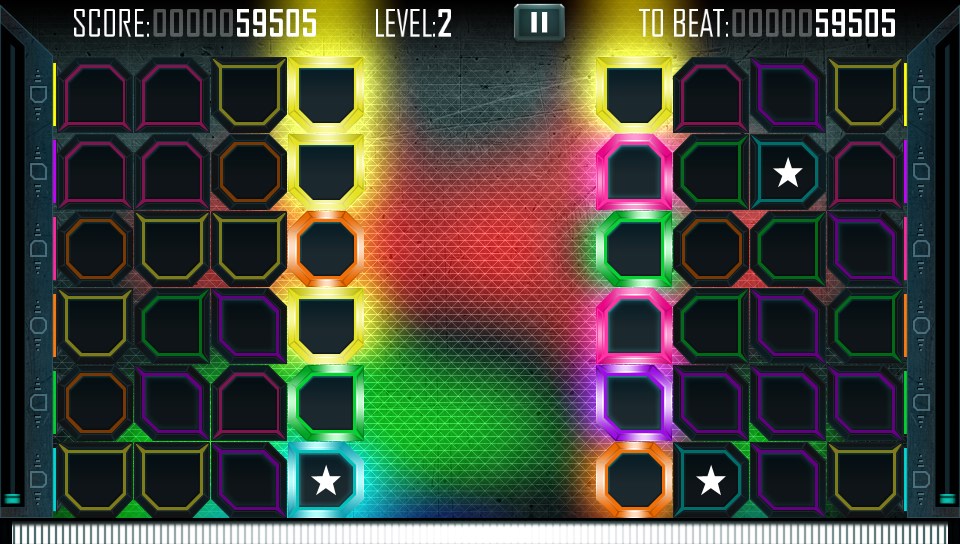
    Surge Deluxe is a puzzle game, one in which you must get rid of as many cubes of the screen as possible by linking them together using the touchscreen to create combos and clear the stage. Whilst you’re doing this, you have two “pressure” meters which must be relieved by clearing blocks at the sides of the stage and releasing valves, whilst also trying to clear the whole level before the timer runs out. A lot is happening at all times, which makes Surge Deluxe both a pleasure to play and a nightmare to master.

    FUCK THE TOUCHSCREENNNNNNN
    The Electric you see in the background is made whenever you touch the screen, which has a nice effect to it as your trial your fingers across the screen. Let me tell you though, its bloody hard to take screenshots whilst doing this on the Vita.

    Surge Deluxe certainly amps up the difficulty as the game goes on, with press gauges going up faster with each level, whilst random tiles on the screen start to immerse, changing the gameplay dramatically. You have the colour block, which will change the colour of every tile on the screen to the one you match up, the multiplier, which multiplies your score depending on how many tiles you’ve linked before touching it, the bomb, which will destroy everything on the screen resembling the colour you link to it, and the ? block, which will increase in multiples the more that you link in one chain. These items all help to get the game interesting and dynamic as the endless strategy goes on. You’re constantly having to choose between getting a high score and clearing the level, which certainly caught me off guard many times as I’d die by being too greedy.

    Whilst the mode I was describing goes on forever and will introduce you to the game, Surge Deluxe also comes with a puzzle mode, where you’ll be presented with a set number of tiles on the screen, and will not only have to complete the level in a set amount of time, but also with a certain score, meaning you could be stuck looking at the same level for a while before coming up with the solution. I know one thing: It’s bloody hard. The scores to achieve are just ludicrous, with myself not being able to accomplish one in the half an hour I had a go at it. Maybe I just don’t understand the mechanics on how to get high scores well enough, or maybe the scores are just too hard. Regardless I think other people will have to let me know before I make a firm decision on whether its the former or latter.

    FUCK THE TILESSSS
    Tiles not in the open area cannot be accessed until you start to destroy the tiles in front of them, causing you to constantly calculate whether it’s worth going for the higher score or just removing them as soon as possible so you don’t lose the game.

    I found my time with Surge Deluxe both short, and extremely satisfying. I wanted it short due to the relatively short amount of time I get for leisure these days, but I feel I could have quite as easily become hooked on the game, investing hundreds of hours into it, maybe once every night before I go to bed. Regardless, the game is satisfying for an itch in the same way that Tetris needs to be played once every few years; it’s fantastic to use your analytical skills to succeed at many small puzzles every now and then to keep your brain exercised in the same way you would your muscles. By all means get the game, it’s relatively cheap, and can be found on Playstation Plus quite often (that’s how I got my copy). I certainly enjoyed my time with the game, and I hope others would too.

    3/5

  • Weekly Gaming: Rayman Legends (PS Vita)

    Weekly Gaming: Rayman Legends (PS Vita)

    FUCK THE POLYGONSSSS
    Following on from the success of Rayman Origins, Legends takes all the characters you knew and loved and makes them polygonal based rather than sprite based. This new venture in graphics adds a lovely shine and polish to an otherwise basic graphics engine.

    Having loved Rayman Origins for its fantastic platforming, I couldn’t wait to get a hold of the latest game in the series, Rayman Legends. Screenshots and trailers made me even more jealous of the games Wii U exclusivity, until one day Ubisoft announced that they would be releasing the game on all platforms simultaneously across all systems. I decided to purchase the game on PS Vita, for the sheer sake of portability and for having a game to play on the system.

    The game starts out with Rayman and his pals asleep in the forest, whilst the world is being taken over and destroyed by a bunch of dragons and pirates. A green ‘fly’ comes to the rescue by waking Rayman and co, and telling them the world needs saving. The first levels sets you up and gets you used to the basics of the mechanics all over again (being able to sprint, jump, punch etc.), but a twist occurs when you can’t proceed any further in the level, and must touch the screen in order to continue.

    FUCK THE TOUCH SCREEN
    The Touch screen elements in Rayman Legends certainly adds some originality to the platforming genre, but this isn’t why we buy a Rayman game, which means it detracts from its core value rather than adding value to an otherwise familiar genre.

    This is where the game gets strange and I wasn’t sure about my purchase. When touching the screen, you take control of murphy (the green fly from earlier), and set upon helping the king teensy navigate the rest of the level. In these stages (of which there are many), you use the many abilities of the Vita to help the king teensy through the stage, buy swatting pests flames, slicing ropes of obstacles, and rotating the device to change the shape and layout of the level. This all sounds fine in theory, and finally makes good use of the PS Vitas different sensors and touch screens, but its the actual character that sticks out and is annoying. The king teensy is AI controlled, meaning he’ll walk through the level just like you would if you controlled him. Where the annoyances come in are obstacles or trying to find hidden secrets, as the king teensy can make the wrong move, killing himself and starting the stage again, or ignoring the fact you’ve opened a new door, missing the secrets you’ve uncovered. These sections were my least favourite of the whole game, taking away from the fantastic level design and glorious platforming the Rayman games usually encapsulate so well.

    There are around 48 new levels to play in Rayman Legends, with another 40 from the original game, making for a lot of content to play through. Each level has between 3 and 10 teensies to find and rescue, making for 700 tenses in total to help rescue. I can’t say how long I’ve played the game so far, but it must been in the 10’s of hours, and not single digits, as there’s just so much to do and collect. The new levels are interesting and stylishly done, but with half of them being the murphy levels, I became bored and annoyed at how they were designed. Whenever I got around to unlocking a new world I’d go out of my way to avoid the murphy challenges, so that I could have fun on the normal levels instead. The inclusion of the original Origins levels was nice, but it feels like a bit of a gimic to make the game bigger with relatively little work. The levels haven’t changed except there’s more teensies to collect than before, making them boring and tedious if you’re like me and played the original game many times with friends and family.

    FUCK THE MURPHY
    The levels that don’t incorporate murphy are hectic and fast, requiring perfect coordination and timing to pull of fantastic stunts that make you feel great as a player. Add that to the hidden tweensies that are spread throughout the level, and you have a brilliant combination of sheer excellence.

    One new mechanic Ubisoft have added for Legends is the ability to store and collect lums that you collect in each level. These lums are accumulated, and can be used to unlock new playable characters, from knight Rayman, to jungle Rayman, it allows you to progress through just playing the game. Everything seems to be revolved around these lums though, with scratch cards being unlocked in levels that can give you more lums, unlocking classic levels from origins, or unlocking creatures that you keep hidden away so that they slowly give you lums on different days of the week.

    Ubisoft have also added a new online mode, where you can compete in daily and weekly challenges in order to prove your might against other players across the world. These levels consist of small challenges, like collecting 250 lums as fast as possible, or reach 200metres asap, to which you’ll be rewarded with a small number of lums depending on where you’ve placed in the world wide rankings for that particular challenge. It’s certainly one way to get players involved everyday, with the levels being small enough that you could play for 5-10 minutes a day, just to maintain a score on the world rankings.

    Rayman Legends was a weird mixed bag of experiments and tried and tested fantastic gameplay. You can tell, especially with the Murphy sequences, that the game was designed from the ground up with the Wii U gamepad in mind, but those controls only work with multiple people playing. I found myself being the bystander, watching as the AI got to have all the fun navigating the levels. The collection of lums and online scoreboards also felt like a new experiment as a way to ensure players kept coming back for more, even after finishing the main campaign and side levels like the original Origins ones. I suppose what I’m trying to say is: Rayman Legends feels contrived. I enjoyed my time I’ve spent with the game, but cannot for the life of me understand why Ubisoft took some fantastic platforming, and replaced it with such a boring mechanic like touch screen controls and accelerometer controls. By all means play Rayman Legends, you may enjoy some levels, but be warned, you may not enjoy the other half.

    3/5


  • Gaming Week 4: Haunt the House (Playstation Mobile)

    Haunt the House is a charming little game made for the playstation Mobile store. I thought I’d give it a crack since it looked quite original and well thought out. Little did I know that I’d be hooked for an hour playing non-stop to scare all the people in these four houses and unlocking other ghosts along the way.

    It’s a Playstation Mobile game, so not a long game by any means, but it’s the charm of the game that see’s it through to the end, ensuring you’re constantly put in awe at the little set pieces that make this game a pleasure to play.

    Players start as a ghost, which they then are asked to control to move around the world. No context is given for this ghost, but you’re given freedom to explore and do as you like, which works to the games favor. You will eventually come across one of the 4 houses to haunt (Hospital, Opera House, Museum, Boat) upon which you’ll have to control certain objects to scare the occupants of each stage.

    Players of the flash game (Found here: http://jayisgames.com/games/haunt-the-house/) will be aware of the terror meter at the bottom of the screen is your main point of call. The higher it gets as you scare more people, the scarier the things you can do with the objects you possess, examples include making a T-Rex skeleton munch a man, make a chilling hand pop out of the drawers and many more.

    I’d hugely recommend Haunt the House to many friends and family, but would warn them at the same time about how short the game is (It took me 50 minutes to 100% complete it).

    Pros:

    • Charming, Creative game that feels very thought out.
    • Lovely smooth graphics that stay true to the flash game that came before it.
    • Cheap

    Cons:

    • Very short
    • Can be considered tedious due to same game mechanics.

    A fantastically realised little original game that I’d recommend to anyone who has a PS Vita and needs something to pass the time or experience.

    4/5