Tag: PS4

  • Weekly Gaming – Crash Bandicoot N’sane Trilogy (PS4)

    Weekly Gaming – Crash Bandicoot N’sane Trilogy (PS4)

    I apologise that this is a day late! It’s always hard to start the year if you haven’t prepared accordingly, and this week was no exception. Being 3 games in one, Crash Bandicoot Remastered was always going to be a struggle to finish, and as I write this I have two worlds left in the final game. So whilst I would usually make a point of completing every game I review, here I don’t feel so bad as I 1. played the games when they first came out in the 90’s, and 2. I feel I’ve played enough of the games to get a feel for the quality of the overall package.

    So without further ado! Here’s my impressions/review of Crash Bandicoot N’Sane Trilogy!

    Nostalgia is most definitely a weird quality we all seem to share. We look back on our childhood memories with awe, and proceed to place many products and items we cherished at that age on a pedestal, so much so that many of us won’t let anything bad be said about the things that made us who we are today. Usually, developers and many executives across the world remake games from our past for the crash grab (extremely likely that was the reason here too), but sometimes a remake/remaster is done for more legitimate reasons. In this case, Crash Bandicoot N’Sane Trilogy not only shows a new generation of gamers how groundbreaking and fun the original Crash game’s were, but also shows how far we have come in the graphical department.

    Crash N’sane trilogy manages to walk a fine line between completely remaking the original trilogy from the 90’s, whilst upping the whole game in resolution and graphical fidelity, all whilst being relatively cheap for how much content is on the disk – a rarity for games of this generation, and one that is certainly welcome considering how many games are out there these days. On the one hand it’s understandable – the developers (Vicarious Visions) didn’t have to plan and create anything from scratch – they already had the main games to work from and merely had to recreate it all, but considering the shear breadth of content present in N’sane trilogy it’s surprising Activision allowed the game to be released at £25 at all.

    So, has anything changed from the original trilogy? As far as I can tell, no, next to everything you remember from the original games is here, from the secret trick to getting 10 lives by jumping on the polar bar in Crash 2, to the ridiculous bridge level in Crash 1 – everything is here and working (almost) as you remember it. I say almost, as the developers have changed the collision detection on crash, meaning some jumps are harder than they used to be.

    The reason being the original Crash games on PS1 used polygonal collision detection, meaning the (almost) square components of crash made him definitively stand on a platform or not. If your foot was barely touching the edge of a cliff, you’d be on it. In the N’Sane trilogy this has changed to a pill shape collision detection, meaning should you be on the edge of a cliff, you’ll notice Crash slide off. It may not sound like a big change, but it makes all the difference when you’re actively trying to precisely navigate across the aforementioned bridge, all whilst making sure you don’t jump too far to fall down and die.

    Graphically, the game is astonishing to look at. I may make the pixar comparison a lot when talking about a game’s graphical prowess, but man oh man does it apply here. Whilst there’s not much on the screen at all times, what is there it’s extremely detailed, with individual grass blades and boxes all looking as detailed as something you would see in a pixar movie. I suppose it’s to be expected – if the Crash trilogy was able to run beautifully on a PS1 with blockey level design and blockey character models, then adding more geometry and better shaders/textures would certainly be possible on a console easily 1000x more powerful than the first.

    The graphics aren’t the only thing that’s had an upgrade. The voice acting and sound have all had major upgrades, with the voice acting being easily the stand out feature of the two. Each time a character pops up to talk to crash you get a new sense of fidelity to the conversation, with it being well above the voice acting of the original trilogy. It may not be a big component of the game, but certainly adds a level of polish to N’sane trilogy to make you happy with your purchase.

    One of the best minor changes to have come in the re-release is the collecting of gems. In the original trilogy should you have died after obtaining a hidden gem you’d have lost that gem and would have to redo the whole level. With N’sane trilogy once you gain a gem, you have it, no matter what happens in the level (unless you game-over or quit of course). These minor improvements definitely improve the gameplay of crash, and ensure you don’t feel anger or irritation from your mistakes; you simply brush yourself off and try again.

    Overall, it’s a fantastic package, and one I would hugely recommend owning if you have a PS4 and need some games to increase your library. It may not be too different to the originals (some may see that as a detriment), but what’s here is splendid, and is certainly a great way to relive your memories in glorious 4K.

    4/5

  • Weekly Gaming: Grow Up (PS4)

    Weekly Gaming: Grow Up (PS4)

    It’s been years since I sat down and gave Ubisoft’s Grow Home a go, and looking back, I remember being rather fond of BUD and his weird adventures in creating a star fruit for his mothership, MOM.With those fond memories in mind, this past weekend I decided to sit down with the sequel to that surprise hit, Grow Up, and it has to be said, the game is just as fascinating and charming as it was the first time round. Let’s explore why.

    Grow Up starts out with BUD riding within MOM, playing Tic-Tac-Toe indefinitely whilst exploring the cosmos. Unfortunately, with MOM concentrating on Tic-tac-toe too much, she accidentally hits into an asteroid, causing her to explode across a planet leaving BUD falling through it’s atmosphere. Upon landing, you’re straight back to where you were in the first game – controlling the weird physics of BUD and navigating an alien world.

    Eventually, you’ll happen across POD, a new drone character that is able to survey the land for you whenever you press the touchpad on the PS4 controller. Using his surveying ability you’re able to hunt down MOM’s parts, as well as all the new challenges, flora and crystals across this new land. In addition to that, you also have 4 new Starplants to grow!

    So, with POD in your arsenal of tools, you’re now able to set out and go about playing the game however you like. The completely open world is yours for the taking, with the same climbing mechanics also coming over from the first game completely in-tact. I proceeded to spend the first hour of playing Grow Up hunting down abilities for BUD (like the parachute, glider and even jetpack), and then proceeded to go to whatever tickled my fancy.

    At first I simply grew star plants and ensured they got as big as possible, controlling their vines to hit into floating lumps of rock to get them ever stronger, but this wouldn’t last, with myself constantly getting side-tracked with so many challenges and crystals to collect throughout the world.

    You see, with Grow Up, bigger definitely equals better, and where as the first game felt more of a primer to the BUD universe, you now have an entire world to explore, with different climates, land masses, and even more things to see and do than ever before. Just like Mario Odyssey (my review is coming for that, I promise!) you constantly have things to do, with even the climbing from one point to another being a puzzle and challenge in and of itself. There would be many instances where I would see a crystal sticking out of a rock a mile away, and consider how I can make my way to it using all the unique flora around, as well as using what limited resources BUD has available to him.

    The simplicity of the games design, to just have a open world with an end goal of accumulating all of MOM’s piece, can’t be understated. It means you can make your own fun, whether it be pushing bugs off mountains to their death (sorry poor creatures), or exploring each and every secret cave to find those luscious crystals, everything is pretty damn fun. Some may be annoyed at the lack of proper storyline/ no linearity, but I for one loved it.

    Most of the ideas here are recycled from the first game, from the collecting of plants and species, to the using crystals to level up your currently activated abilities, but overall the recycling doesn’t hurt the sequel, due to all the new things to collect and see. The power-ups too are given faster than before, meaning I was able to glide around the world fairly fast, resolved one of my biggest gripes with the first game, the constant climbing.

    If there’s one criticism to throw at Grow Up it’s the performance. Whilst i was playing Grow Up on the PS4 Pro i would constantly get framerate pauses whenever the game tried to save, and had many instances of the game slowing down to a crawl at times. Weird considering how graphically simple the game is.

    Also, graphically the game is still not much to look at. I mean, it’s to be expected when this is from a small off-shoot team within Ubisoft, but it’s not exactly a fantastic looker, especially within screenshots.

    Grow Up was the sequel many thanks hoped it would be. More of the same, but plenty more of it, allowing fans to do more of the things they liked, and less of the things they didn’t like (I’m looking at you, climbing). I certainly enjoyed my 5-6 hours in the game, and will be going back to it to collect all there is to find, including finishing each and every challenge, and getting all the remaining crystals I missed (40 damnit!). If you want a lovely lazy Sunday afternoon exploring a freeing and charming world, you most certainly can’t go wrong with Grow Up.

    4/5

  • Weekly Gaming: Bound (PS4)

    Weekly Gaming: Bound (PS4)

    Man oh man has playstation Plus been a roller coaster of a service over the years. When it first started out all those years ago I couldn’t wait to get my hands on most of the games that were offered. Triple-A titles left right and centre, all whilst being the same price (if not cheaper in many instances) than Microsoft’s Xbox Live service.

    I open with this context, as Bound comes to me courtesy of the Playstation Plus service, and my oh man has it been a let down these last few years. Nothing but indie games people haven’t heard of combined with Sony published games that never reviewed well in the first place. Polygon’s Owen Good wrote a fantastic piece on this exact issue just a few days ago, and I feel it explains my feelings on the service perfectly: https://www.polygon.com/2017/12/2/16728566/games-with-gold-and-playstation-plus-free-games-2017-analysis-opinion

    So with that being said, is Bound a good enough game to bring PS+ out of the depths and allow gamers to feel they’re getting good value for money? Unfortunately not.

    Not knowing anything about Bound before jumping in, I downloaded the game, and proceeded to boot it up. I was first presented with a pregnant lady leaving a car and proceeding to walk down a beach. Ok I thought, you’ve peaked my interest, what is Bound about? As I pushed the pregnant lady on, the game proper manifested, with a weird polygonal world manifesting in this ladies imagination. In this world, she’s merely a little girl, with her mother (the queen) appearing to have everything under control. You proceed to explore this rather gorgeous setting, only to find all is not as it seems, with a monster lurking around screaming at you, causing the sound princess to lose consciousness.

    Once that little intro is finished, you’re not in control of the pregnant lady once more, but this time the real world is actually a level select menu, with each turn of a new notepad being a different level to experience. You can proceed to take on any level in anyway you see fit, but being the boring bugger I am, I proceeded to just start from the furthest left level and make my way across to the right.

    The reason you’re able to take on levels in anyway you see fit? Because the game is abstract enough to only provide a little bit of context at the end of each level. So whilst each level is an abstracted example of what happened to the lady in her childhood, it’s only the very end of a level which actually shows what happened. In many instances it’s just showing normal family life, although throughout the campaign you’ll start to get the sense that something isn’t quite right. I shan’t go into spoilers, but whilst I felt the narrative and gameplay were a little too disjointed, it all concluded nicely in the end.

    Onto the gameplay, which, as mentioned before is fairly disjointed from the main story. You play a weird looking princess in an abstract blocky world. As you proceed through, you’ll notice the princess moves like a ballerina would, swaying to and fro about the level as you navigate her around. Occasionally you’ll happen across obstacles that try to kill your princess, and it’s up to you to either avoid them, or, should you actually get caught, worm your way out of the predicament by pressing R2 to dance nasties away.

    The stages are gorgeous to navigate, with enough particle effects to make anyone say wow should they see it in action, I just couldn’t help but feel it was all a bit too easy. Plastic, the develops of Bound, may have been just a little too inspired by games like Journey and Flower, and whilst they were trying to replicate the simpleness and majesty of the aforementioned games, just couldn’t actually make the world feel coherent in the story. As a consequence, the game and story just can’t help but feel plastered together – two unrelatable ideas smashed together to try and make something of a game.

    Story and lack of coherence aside, musically Bound doesn’t hold up too well either. In my time in the world I cannot recall a single song that’s stayed with me past my completion, a terrible state of affair for a game centred around a ballerina princess.

    Navigation/controls aren’t exactly fantastic, with me accidentally killing my character far too often, even with simple controls on, meaning my character wouldn’t walk over the end of surfaces. Further annoyance can be found in that not all the controls are explained, meaning on my first play through of the game I couldn’t reach many area’s purely because my characters move set was never explained properly. One could argue that the developers want you to replay the levels a second time with this added knowledge, but I personally so no reason to revise – past seeing what the main story was, there isn’t much more for me to see, both in the abstract worlds, and in controlling the ballerina princess.

    Whilst it’s world is fantastic to navigate through, you can’t help but feel Bound could have been so much more than what was released. The story, whilst fairly basic by the end of the campaign, had so much potential, it’s just a shame that some developers think that adding obfuscation makes a basic story better. The world too, whilst being gorgeous, could have been more fleshed out, linking more to the girls past as opposed to being abstract beyond recognition. As you can then tell, Bound is ok, but could have been a fantastic game up there with Abzu should the developers have spent a bit more time working on tying everything together.

    Bound then is another perfect Playstation Plus release – mediocre and Sony published. One day, playstation plus may give us a truly fantastic hit, but so far that is not within sight anytime soon.

    3/5

  • Weekly Gaming: Lego Star Wars: The Force Awakens (PS4 Pro)

    Weekly Gaming: Lego Star Wars: The Force Awakens (PS4 Pro)

    It’s been a while since I sat down with my other half and played some good old light hearted lego. These times aren’t only about the fun of playing with your partner, but also the fact that Lego games are just as enjoyable as ever, with a funny and mundane story all set in the same universe of brands/franchises you love. It’s this lightheartedness that makes me more than happy to sit down and play the game, even if I have other things I should be doing.

    So, to start off with, what is Lego Star Wars: The Force Awakens? It’s a lego game which retells the film’s story, albeit in a more light-hearted and fun tone. You play the actual characters at the story-beats of the film, and proceed to re-enact the scenes, all with lots of gameplay thrown in inbetween. For example, early on in the game you play as Rey and BB8 as they explore a ruined old Star Destroyer – a great way to get you used to each characters abilities, all whilst playing lines of dialogue from the film.

    Get used to seeing split-screen screenshots – I didn’t play the game once alone

    Being the Lego franchise gives the developers more freedom in regards to the story-beats, meaning (most) characters don’t ever actually die, and meaning you get bigger levels to explore, showing off more backstory to the Star Wars universe than the films actually showed. A fantastic example of this is a new level that opens once you complete the game and have enough gold bricks – in it you play as Han Solo and Chewbacca as they try to capture a creature which is seen in the film (and later on in the game). These scenes don’t add that much to the fiction, but extended the time we played the game, and gave us more reasons to keep coming back, which is only a good thing.

    As per (most) of the Lego games, Lego The Force Awakens manages to be as entertaining as ever, with myself and my partner laughing at least a few times in each level. Some of the funniest moments are when you least expect it – for example a story beat where a character is meant to die may seem sad, until the dead character suddenly gets up and waltzes off the screen, only to grab some flowers and act dead once more. It’s times like these where the Lego is a genuine charm to play.

    Expect to fight a lot of enemies. A LOT

    That’s not to say there isn’t grinding: being a Lego game, Lego The Force Awakens has a lot of grinding throughout it’s stages, with 10 minikits, 3 gold bricks, and 1 red brick ready to collect on most. Issue is, the vast majority of the collectibles can’t be grabbed until you’ve already completed the stages once and have proceeded to buy specific character with abilities that allow you to get them. This “grind” is annoying when you first play through, seeing clearly signposted collectibles being too far out of reach is always going to be annoying, but it gives you reason to come back, and is all the more gratifying when you actually 100% a stage.

    The space fights were actually pretty nifty, and felt more like rogue squadron than a lego game.

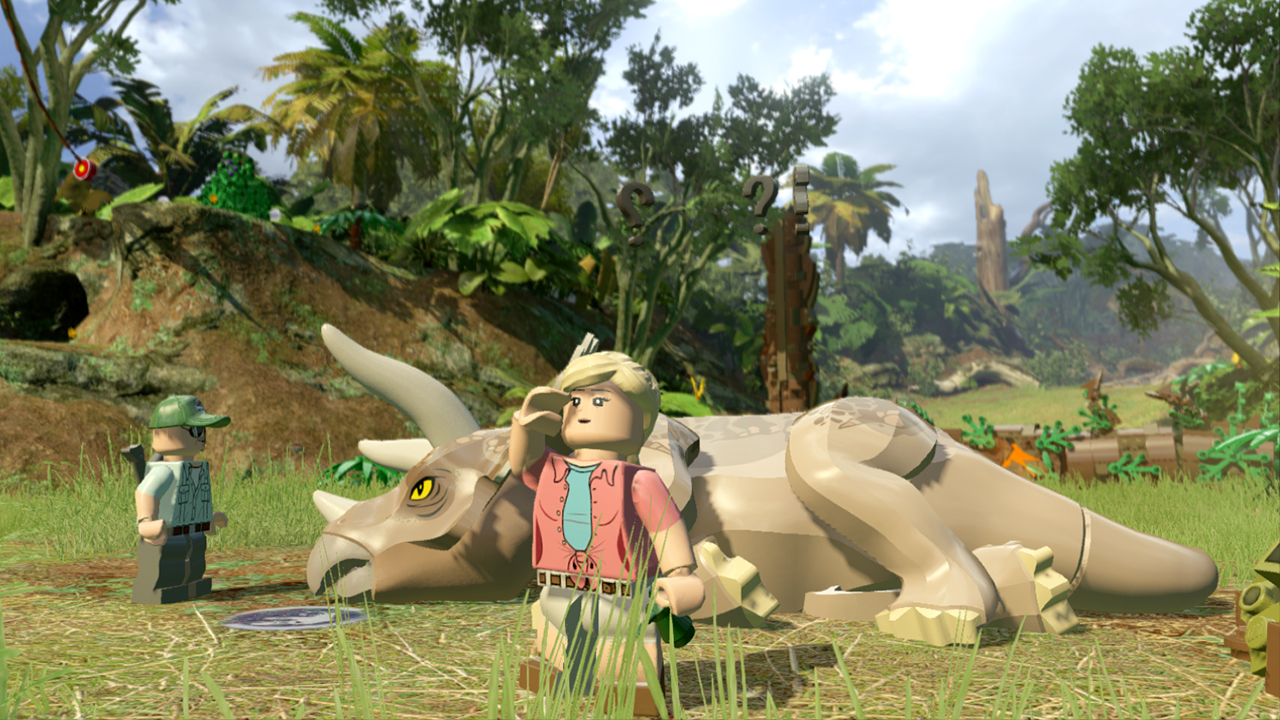
    Graphically, as per all Lego games, it’s a mixed bag. The main playable figures themselves have so few polygons that I wouldn’t be surprised if they came out of PS2 assets with all but a few minor tweaks. But the levels, and environments they traverse are gorgeously rendered – massive landscapes with plenty of detail on grass, leaves, star systems, the lot. It’s a weird mis-match of an aesthetic, which is weirdly pulled off very well – if it weren’t for the low poly characters, you would know you’re playing a PS4 game.

    There are puzzles throughout, but as with any Lego game you’ll come across, but the vast majority of them are easy to solve and don’t require much past pressing and holding the O button in the right place. Things are mixed up a bit when you have to use two characters to slot things into place, but when you’re playing co-op, these also become trivial.

    Exploring areas to find new and interesting puzzles is one way to kill time

    There are a few niggles I have in the sound quality department though – namely, the voice acting. Most voices for the characters are great, and are either masterfully taken from the film (so much so you can’t even tell), whilst others have great new original dialogue. Where this falls apart though is in some of the quality of the main characters – namely Rey. You see, the voice acting is so atrocious in quality that you can’t help but hear the room/street it recorded on. Her voice sound so distant, so bad that you can’t help but notice how much it stands out. Even my partner had to ask why her voice quality was so bad, with me advising that it was most likely due to the fact they had only a short amount of time with the actress and wasn’t able to do retakes. To say it stands out is a bit of an understatement.

    So overall, as with most of the Lego games I’ve played, I thoroughly enjoyed Lego Star Wars: The Force Awakens. Voice acting nuisances aside, I managed to put a good 15-20 hours into the game with my other half, collecting as much as possible just to see as much of the game as possible. If you’re looking for a highly polished co-op game, with no sharp edges, by all means give the game a go, you won’t be disappointed.

    4/5

  • Weekly Gaming: Uncharted 4 (PS4 Pro)

    Weekly Gaming: Uncharted 4 (PS4 Pro)

    Unchartered 4 Review (PS4 Pro)

    As those of you may have seen from previous reviews, I like the Unchartered games, but always found them a bit hollow. In fact, it was the original Unchartered game that put me off the series for so long, with its mediocre presentation, lacking game design, and weird characterisation. A started to warm towards the series throughout playing 2 and 3, with both games not only pushing the limits of what was possible in the graphical department for such an old system, but also making the characters more likeable.

    So here we are at the fourth title in the series, and what have Naughty Dog managed to do? They’ve managed to learn from their previous titles, that’s what.

    You see, what I didn’t mention is that between 3 and 4, Naughty Dog released The Last of Us, a great game that I reviewed when it was released. It received critical acclaim, and rightly so, especially for the character interaction and building that they managed to do. Naughty Dog haven’t rested on their laurels, and with the help of the lead writer, creative director and programmer Neil Druckmann, have managed to create characters you can genuinely love, and hope do well. This isn’t to say Neil was the only developer who helped craft unchartered 4’s story, far from it, but he seems to have pushed the seriousness of gaming one step closer to Cinema and TV, making it a better medium as a consequence.

    Anyway! Back to square one before I go on a tirade about nonsense. How does Unchartered 4 play? Well, if you’ve played a previous entry in the series, then you’ve basically played Unchartered 4. Don’t get me wrong, theres a few new mechanics used throughout the campaign, such as the hook mechanic to swing from platform to platform, but overall nothing new can really be seen here. You go through the same old routine of – narrative > puzzle > platforming > kill lots of henchman > platforming that we all know and (maybe) love.

    This tried and tested formula may not be very revolutionary, but what’s different this time round is the previously mentioned character arks, especially with Nathan Drake himself. You see, from Unchartered 1 through 3 you never really knew anything about Nathan’s past – yes, he would occasionally say things about how he met sully, but outside of that you’d never know how he knew so much about history and had some great survival skills.

    Unchartered 4 manages to do a fantastic job of not only fleshing out Nathan Drake, but also his new, never before seen or mentioned brother, both of which have a few chapters that go back to their childhood in an orphanage, and even what they got up to as youngsters. This fleshing out at first feels a bit contrived, merely to teach you some new mechanics you may first think – but as the campaign progresses you start to get a real sense of brotherly love between the two siblings, and eventually, care about their wellbeing.

    Graphically, the game is stunning. Everything from the mocap on the main characters, to the detailed forests, and even the gorgeous ancient buildings all looks truly magnificent, so much so I was taking screenshots every few seconds. I swear I’ve said this before, but if only Naughty Dog wasn’t a PS4 exclusive developer – the things they could do on a platform as powerful as the PC could be truly breathtaking.

    What helps bring the graphically impressive world to life even more is the new open world driving sequences, which, whilst are new in the game design of Unchartered, are still fairly linear. You’re given a big area of a map to explore, and an objective to find something, so you proceed to drive around looking for clues that may help to reach your objective. These sections can be as long, and as short as you like, and certainly add something new to the traditional formula of Unchartered.

    The set pieces are just as extreme as ever, and push the physics simulation of the PS4 to the absolute max, with debris flying everywhere, as well as dynamic building falling as you progress, or even cityscapes being drawn in on the fly. My other half also found them incredible, being surprised that even with eh amount of detail on display, I was still controlling Nate throughout the entire scene as it was unfolding. If you liked previous Unchartered’s set pieces, you’re sure to love them here.

    There is unfortunately still the issue of ludonarritive dissonance – that is the fact that the story. puzzle solving and everything else seems to have no bearing on the actual shooting of enemies throughout the game. It’s like you’re playing two completely different games – no one ever mentions the fact they’ve just killed a bunch of men, and no one certainly mentions the blatantly stupid story moments when enemies just so happen to be in the ruins of a never before seen city. It’s all a bit immersion breaking, and certainly got annoying towards the end of the game when (spoilers ahead!) the group abandon the cave with treasure in despite the fact they could go back there at any time.

    Another issue I found was the combat. Whilst Unchartered 4 pushes you to be as stealthy as possible, I found it was easier (and faster) to just start shooting the first enemy as soon as possible. Being sneaky resulted in a lot of AI routine bugs, especially when they were within close proximity to each other, resulting in enemies walking to a cliff edge, back into a friend, and back again.

    So overall, I definitely enjoyed Unchartered 4 more so than the previous entries in the series. It still has some of the same issues that plagued the previous titles BUT it managed to add enough story moments, along with better character depth, to make me choke a little at the ending. It’s been a long ride, but one I’m glad I experienced, and dare I say it, you should too.

    4/5

  • Weekly Gaming: Call of Duty: Ghosts (PS4)

    Weekly Gaming: Call of Duty: Ghosts (PS4)

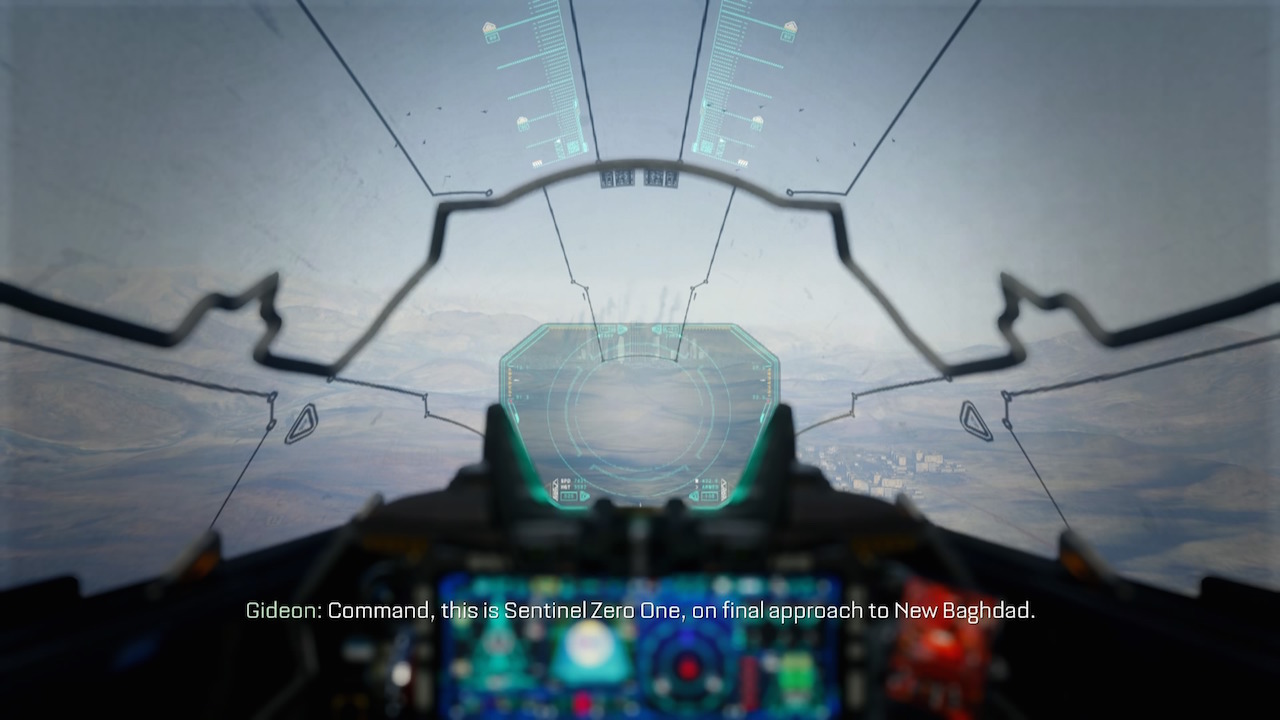
    As I’ve said in previous Call of Duty games, I actually don’t mind th franchise as a whole. I understand it’s cool and hip to hate on the popular franchises these days, but Call of Duty games have always managed to entertain me for the few hours I need to put into them. There’s something about the sheer bombastic nature of the campaigns that’s both lethargic, and somewhat entertaining. All this is to say, it’s awesome to see the fruits of a publisher/developers labour when money is (almost) no obstacle, especially when Call of Duty games of years past have been able to generate billions in revenue within the first 24 hours alone.

    So with all that being said, we move on to the uncomfortable middle game of the series, one that could even be argued has stated the demise of on of the biggest sellers in gaming history; Call of Duty Ghosts.

    First up Ghost’s campaign, which, considering I’ve enjoyed the previous two campaigns I’ve played, comes somewhat of a surprise to say: I genuinely didn’t like it. From the barebones narrative of a united South America taking on the USA, to the stupid, brutish characters and their constant shouting of “we’re ghosts!!!”, the whole campaign was stupid and lacked any nuance whatsoever.

    Even the few characters you meet throughout the game’s short 5-6 hour campaign are so generic that they rarely take their masks off, meaning we literally have a a couple of characters which are mimicking the modern warfare series’ “Ghost”. In fact, I would not be surprised if Neversoft were struggling to think up a story, proceeding to look to the Modern Warfare series, and proceeded to centre and entire narrative around the one faceless character they liked. It’s weird, because COD in recent years has really come a long way in their story telling, so it’s so odd that they had such a bad year in 2013.

    Onto the gameplay, which you could guess is just as fast paced and smooth as possible. As always with a Call of Duty title, Neversoft managed to keep to the 60fps lock for the most part, and proceeded to keep you constantly on your toes as you mow down countless foes. My only issue here is the way Neversoft constantly try to take control away from you as the player to show a big explosion, or water falling through a city. These big set-pieces look cool, don’t get me wrong, but they add nothing to the gameplay, and if anything, take agency away from me for trying to get to my end destination. It’s confusing, and feels like a cheap way to add “excitement” to the otherwise smooth shooting mechanics.

    Settings wise, Ghosts at least manages to change up the scenery every now and then, giving you a variety of mission locales, from the deserts of chilli, to the frozen lands of Antartica, all manner of different terrains are explored, and it actually helps in keeping the campaign feeling fast paced. Unfortunately, whilst each locale looks different, and in some instances stunning to observe, they for the most part are generic and lacking any detail. As per my reviews with Battlefield, I found that if you only look at the content the developers want you to look at (the other characters on screen + the main path you walk) then the detail is superb, but the second you start to wonder around the level you notice the rest of the geometry and aesthetics are fairly simply, with repeated textures and objects used throughout. It’s a shame, as the change in locale’s actually could have helped the game stand out from the crowd.

    I know my reviews usually last a lot longer than this, but man oh man was I not impressed with Ghosts. From the boring dialogue of macho men constantly saying what people thing hard men say, to the bog-standard gameplay typical of a COD game, from start to finish I was merely playing the game purely to finish it for my 52 games in 2017. If you want to play a COD game, don’t get Ghost’s; there’s plenty of good titles in the Call of Duty catalogue, and this definitely is not one of them.

    2/5
  • Weekly Gaming: Lego Jurassic World (PS4)

    Weekly Gaming: Lego Jurassic World (PS4)

    Whilst playing through Lego Jurassic World one thing constantly surprised me; everytime I brought up that I was playing the game to friends and family the absolutely universal love all people (gamers and non-gamers alike) have for the series is shocking.  I was surprised for example that my own girlfriend, a lady who rarely plays games, loves the Lego series, so much so that it was her that bought this copy.

    There has to be a reason for this universal love, and one which by the end of this review, I hope to get to the bottom of.

    First up, the graphics, which given this is a Lego game, you can imagine there’s not much of the stuff. It doesn’t take much to make simplistic figures with next to no geometry look like real-life plastic, and Jurassic world does it with ease. Oddly enough, despite the lack of need for pretty graphics, the developers have actually managed to flourish the world with highly detailed environments, so details in fact that it can look a little jarring when compared to the characters themselves. Overall the graphics suit the gameplay perfectly, which is to say they’re not the reason you’re here, but they’re ok to look at too.

    Speaking of gameplay, it’s your standard lego affair. You play through each of the films, albeit with lego figures, and proceed to beat up baddies and solve puzzles by inventing fantastic lego contraptions to get past the current road block. There’s lots of destroying of items around the environment, and lots of Lego stubs to collect throughout (the stubs are currency), along with multiple collectibles which can help you progress through the game.

    Whilst this gameplay is slow, simple, and repetitive, I can’t help but think this is the core reason the Lego games are looked on in such high regard. You see, whilst the campaigns don’t push you as a player, and are so lenient that you can never lose, they’re great ways to sink your time into some mindless fun. There are times for all of us where life can get us down, maybe we’ve just had a bad day at work, or someones annoyed us, regardless of the reason, we sit down and put our time into games to forget the world, and, more importantly, waste time until the next day.

    Lego Jurassic World (and other Lego games) manage to take away all the sharp edges of a difficult and challenging game, and as a consequence, give you a good time that anyone, no matter how old or young, can enjoy.

    It’s a fantastic time sink. Plain and simple.

    This isn’t to say it’s boring because of that fact. Far from it. Not having to worry about dying, or failing quick time events free’s you up to participate in the game at your own rate, even going so far as to let you sit back and appreciate the finer details of a lego game. The jokes, for example, are given a chance to shine, since not even the characters or dinosaurs themselves care too much about the overall narrative, allowing everyone to have a good time with great jokes.

    My favourite joke was easily based around the tall grass section of Jurassic Park 3. The velociraptors are hidden in the grass, and it’s your job to successfully navigate past them without being seen. At one point, you create a lawn mower, prompting the raptor that was blocking your path into chasing it down. This in itself wasn’t funny, but later it comes back, with the velociraptor itself now being chased by the small device. It’s jokes like these that come back time and time again that help everyone to laugh together, family and characters in the game included.

    Once the main campaign was out of the way, it was on to collecting all of the collectibles, and my god were there many! From Red Bricks that give you “cheats” to use throughout the game (such as a stub multiplier) to camera opportunities that need to be found, the whole world requires so many replays that it feels labourious at times, albeit fun too when you’ve managed to complete an entire level after searching every nook and cranny.

    Freeplay mode will help out a great deal in getting everything on offer, with the game allowing you to hot-switch between characters at a moments notice. Considering there’s plenty of collectibles hidden throughout the environment that can only be accessed by certain characters, you’re going to be hot-swapping a lot.

    Then there’s the drop-in and drop-out nature of the multiplayer, which I must admit is a god send. Lucy would be playing the game when I got in from work, and without any faffing around I was able to pick up a controller, and jump straight in, helping her out and completing levels as and when needed. When I’d had enough, I’d just drop out, allowing her to continue without any hesitation. This form of multiplayer is hands-down fantastic, and needs to be done in other games more regularly, allowing for friends and family to participate in a challenge together is always going to be fun, and I’d love to see it done in other genres.

    Overall, I can certainly see why there are so many fans of Lego games out there. Lego Jurassic World may not be breaking any conventions, and isn’t pushing any barriers in the graphics department, but my god is it fun and a fantastic way to lose an evening without realising. With this in mind, I’m definitely going to play more Lego games in the future, especially given how easy it would be for me to drop-in and drop out at a moments notice should Lucy be playing it. Should you be able to get the games for cheap and have a console able to play them, definitely buy Lego Jurassic World, you won’t be disappointed.

    4/5
  • Weekly Gaming: The Order: 1886 (PS4)

    Weekly Gaming: The Order: 1886 (PS4)

    Oh The Order: 1886. It’s been many years since your first trailer when Sony announced the PS4, and holy shit were gamers the world over blown away by your visuals. Then you finally got released after many delays, only to get shit on and end up in the bargain bin for £12. Was it gamers expectations that let you down, or was the criticisms against you valid? Well lets take a look as over the course of the last week I finally managed to play through this gorgeously astonishing game.

    One thing can be said about The Order from the offset: it’s aimed high in it’s setting. You play as sir Galahad, a knight of a secret order that protects Great Britain and all it’s domains from mythological creatures that see fit to kill innocent people. Set in 1886, the world is going through turbulent change, with the British empire ensuring rule over India, all whilst trying to get the upper hand over America. It’s alluded to many times throughout the campaign, but knights of the order are a lot older than they first appear: some are rumoured to be so old in fact that they used to rule alongside King Arthur.

    This mix of elements seems like a genuine thrill from the offset, with the stage and setting a true wonder to behold. It’s a shame then that the story never quite pans out as you’d hope, with the setting of 1886 rarely actually being used. Throughout the campaign you see glimpses of this wonderful world, with streets looking gorgeous, signs looking authentically victorian, and even photographs and items looking authentic,  but for the most part you’re confined to corridors, sewers and back alleyways; never a great way to fully explore a fantastic setting like the victorian era.

    The reason I say that criticism is two-fold: 1. It takes time away from the absolute marvel that is The Order’s graphical fidelity 2. It affects the gameplay when you’re constantly in small corridors fighting off waves of enemies. Onto the first reason, the graphics. Holy shit is The Order a sensation to look at! Every nook and cranny of the aesthetic seems to have been meticulously fawned over, so much so that even when I completed the main campaign, I came back just to show my other half the splendour that is The Order’s graphics.

    Snippets of the victorian error look absolutely sublime in some area’s, with lighting, textures and models all combining to something that you could swear was real-life at times. It’s a shame then that, like previously mentioned, you spend a great deal of time in linear corridors or sewers. I understand the complications behind making a fairly open world: the amount of assets that would have had to be made would be staggering, even with the support of Sony behind a team, but even so, to have so many reused and boring locales is annoying and down-right shocking considering these segments don’t make use of the setting. 1886 was a fantastic year that the developers could have genuinely shown more of, instead we’re left with a game that really could have been set in any time period: for the most part you wouldn’t tell.

    Then there’s the gameplay, which turns into a simple case of running to the next area down linear corridors, ducking behind cover and killing endless hoards of enemies until you can move on again. At least when this is done in Gears of War the developers mix things up by giving you multiple ways to take on enemies, where as The Order sticks you in a confined area, a nuisance in later levels when enemies start bombarding you with grenades. Then there’s the fact that these small environments don’t leave much to be discovered. If entire houses were modelled we really could have explored this beautiful and fantastic victorian setting: instead we’re given stones and tiles as far as the eye can see, with multiple doors that can never be opened.

    I will say that one criticism levelled against The Order 1886 wasn’t deserved: it’s length. Many reviews and gamers online said that the game could be completed in 5-6 hours, making the game extremely short and poor value. I noticed that in my play through, which was fairly rushed, I completed it in 8-9 hours. Granted, this isn’t much more time than others were quoting, but it felt like just the right length, not too short, but not over-staying it’s welcome.

    Gameplay again was a little annoying when it comes to mythological creatures. For a game all about the knights of the round table and lycans, you’d expect there to be a lot of creatures to kill. Not so I’m afraid, with the vast majority of the game encompassing you taking out many, many human foes. There are a few warehouse scenes whereby you take on lycans in a confined area, but these are few and far between, and don’t do much to change up the gameplay. It’s a shame, as   the lycans and other creatures could have helped in mixing up the core combat loop, with some enemies maybe charging you or flying overhead at times. It would have certainly made the combat more engaging, and if anything, made the game as a whole more replayable.

    So as a whole, The Order 1886 unfortunately did deserve many of the criticisms levelled at it. Whilst the setting was interesting, and the graphics absolutely sublime, the rest of the game falls apart when stretched to 8-9 hours. I hope the developers at Ready at Dawn get another chance to make another The Order, as there were hints of greatness here, the rest of the game just needed the same level of polish the graphics had.

    3/5

  • Weekly Gaming: Hohokum (PS4)

    Weekly Gaming: Hohokum (PS4)

    I remember seeing Hohokum announced for the PS4 before the consoles inevitable release. It was charming to watch in action, but I couldn’t help but feel confused as to what the game was actually about. Here was a tadpole-like creature that was going around weird but colourful worlds in a seemingly random fashion. Needless to say, I had to give the game a go, so when I got it as a part of Playstation Plus many months ago, I decided to finally sit down with Hohokum and see what it was all about.

    2042312-714468_20130610_004

    The game starts off in an abstract black circular area. You proceed to move your “tadpole” around the black circular area whilst button prompts come up showing you how to move your tadpole through the world. Pressing X speeds up your character, whilst O slows it down, and Square closes your tadpoles eye. That’s it, simple controls for a seemingly simple game.

    During this black section you’re also introduced to your main characters friends. These other “tadpoles” all have unique shapes and colours, and when you go near them, you find that they follow your every move. This makes for some simply stunning art when you have the ability to move them all around in spiral and gorgeous patterns.

    Eventually, the game start proper when an incident tears apart the fabric of your black world, and in doing so, makes you lose your 18 friends, and so the adventure starts proper. You go into the only hole left behind, and discover a hub world full of awesome abstract creatures, with all manner of obstacles that lovingly animate with your characters touch. There’s easter eggs galore all over this first land too, with statues adorning a lot of the stage hinting at a history where the inhabitants of this land hated the tadpoles. It’s all for naught though, as the entire game of Hohokum allows you to interpret anything you see anyway you want, as it never actually explicitly tells you anything. It occasionally hints at little story tidbits throughout, but this is purely to prod your imagination into conjuring up fantastic stories.

    Once you’ve explored the first world enough, you’ll notice that you can create these portals to other realm by hovering over specific groups of circles. Each portal you enter will take you to a brand new and seemingly random world. It’s in the exploration of these worlds that you truly start to realise how damn charming Hohokum really is. Every abstract interpretation of real-life animals and activities looks and feels different, with each dimension also seemingly having different rules to follow. In one area you may meet an “elephant” that for all intents and purposes acts and behaves like one, but otherwise look nothing like a real life one. These abstract representations are at first confusing, but eventually, endearing. I found myself towards the end of the game enjoying soaking up every new creature and person I saw, taking in this weird and wonderful world in all it’s glory, and not wanting it to end.

    hohokum-screen-9-us-10jun14

    Each world will have a new puzzle to solve, which will always involve interacting with the environment in weird and wonderful ways. One world for example is a theme park, with multiple people spread throughout. When you hover over them, they jump on your back, ready to be put somewhere around the theme park, maybe on a ride, or even in a cannon to shoot them anywhere randomly. Once mini-puzzles are solved (like starting a ride back up), bigger pieces of the puzzle are given, which in turn finally reveals one of your missing friends from the start of the game.

    These puzzles are the bread and butter of Hohokum, and contribute to the games seemingly impossible learning curve as you first venture around levels. Eventually you’ll get used to how weird the game is, and it’s at this point that you’ll truly start to love and adore everything you see on screen. Every character is so seemingly simple on the surface with their big bold colours, but also so stylised and complicated that it throws you off frequently. I genuinely loved feeling confused throughout, as it allowed me to take Hohokums style and substance in all it’s glory. This sense of confusion may not be to everybody’s taste: those of you who like a more linear game may get frustrated at the games seemingly random logic, but for those of you who like a challenge, Hohokum is a genuine delight.

    When a friend is found, a new cutscene/story piece is given for how that friend lived in the time you were gone, and it’s also here that I found myself loving Hohokum even more. These charming tidbits of information really give character to these string-like creatures, which makes the game even more endearing. It’s weird really, but an absolute delight to experience when you first laugh out loud at how a character was trapped for years with people in the world thinking it was a hose.

    hohokum-screen-14

    The music, whilst sparse is also a delight, which, when combined with the sound effects produced when your tadpole interacts with the world, makes for a captivating experience. I found myself humming tunes regularly as I re-entered a world I had been in previously, a brilliant way to show how lovely and charming the music truly was.

    If I had to say some negatives about Hohokum, first it would be that it’s pretty short. At 3 hours and 50 minutes, I felt I had seen everything the game had to offer, and whilst there were more collectibles to find, I didn’t really feel like staring at abstract shapes until my eyes went blurry.

    Second, the “story” doesn’t really have a beginning, middle or end. For some this could be seen as a positive, as you’re exploring at your own pace and for your own reasons, but I felt the fact that there was no proper conclusion detracted from character Hohokum gave to it’s seemingly sentient tadpoles.

    Overall though, these negatives are tiny in the grand scheme of things, with myself and my other half thoroughly enjoying the richness of the world that is Hohokum. Should you have picked the game up for free in the past using Playstation plus, give it a go, you will not be disappointed.

    4/5

  • Weekly Gaming: TTR: Table Top Racing (PS4)

    Weekly Gaming: TTR: Table Top Racing (PS4)

    It’s been a while since I’ve downloaded a game on my monthly subscriptions and instantly given a game a go. Most of the time I forget I own games and end up purchasing them on another platform (cause I can be an idiot at times). But given how it’s been a lovely few weeks, and how I’ve managed to get caught up on a lot of work, I decided to jump into one of the games I downloaded for this months Playstation Plus (I’m writing this in May).

    unnamed

    I didn’t have much criteria for what I was going to play other than it needing to be simple and laid back enough that I wouldn’t have to concentrate too hard. TTR fit that need perfectly. You see, like Super Toy Cars that I reviewed last year, the game takes place around miniature toy cars that are racing on table tops. The game has no story, and apart from the 238 stars to be collected, not much else. I thought this was all I was looking for in a game; how wrong I was.

    TTR is entertaining, don’t get me wrong. It’s a perfectly capable arcade racer, with OK handling and cool powerups, but by god is it repetitive! It’s own description on the playstation stores says the following:

    Race your tiny car around a world of table top race tracks, with over-sized obstacles and insane power-ups.

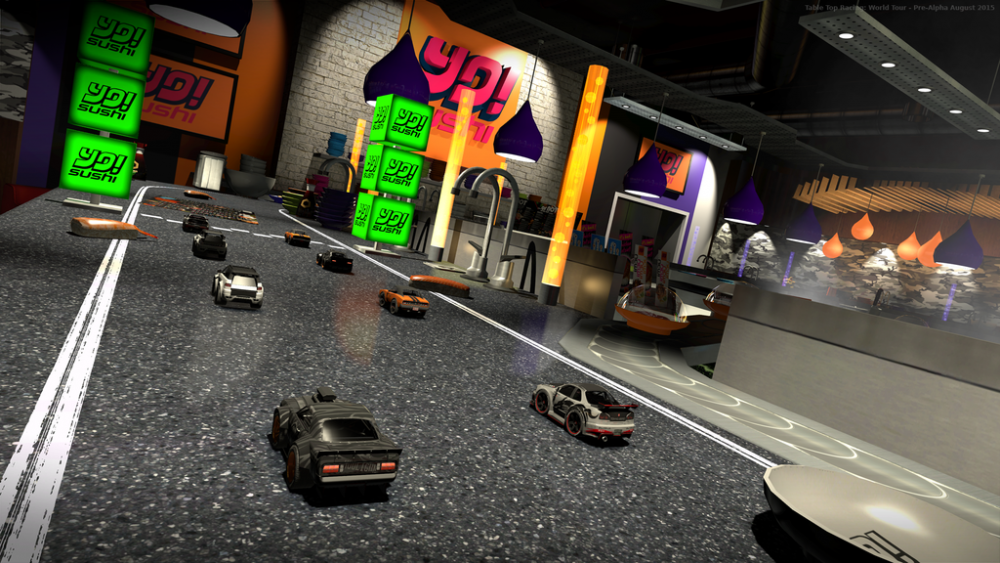
    Which is absolute bullshit. The game has 4 levels, each of which get changed ever so slightly throughout the course of the games campaign/career mode. These tiny adjustments could by all means be called “a new race track”, but there is no way it ever feels that way. Considering it only takes 1-5 minutes to complete a track, you’ll be seeing a lot of the same tracks, along with the same assets time and time again.

    yo

    The variety of race-modes on offer helps to alleviate the track medriocity somewhat, but only slightly. On offer are 7 different modes; elimination, normal race, time trial, best lap, no power ups, track down opponent (where you must race to find another racer and bash them) and finally the cup races. Each mode is unique, but short, and has you racing over the same tracks you’ve seen a million times before. It’s a shame, as I truly feel the lack of variety in track design slowly saps away at the enjoyment of the fun driving mechanics.

    Regardless of the repetitiveness of the tracks themselves, between races you can also upgrade your vehicle (or even purchases a whole new one!). This is actually quite rudimentary, as races give you so many coins (without even finding the hidden ones) that you can easily upgrade a car to it’s maximum potential within no time what-so-ever. This makes the entirety of the game a lot easier, so much so that I can’t help but feel the developers at Playrise Digital didn’t spend much time balancing the game, ensuring there was a constant progression system to the game at large. By the time I had reached the final two cups (of 6 in total) I had already purchased every basic car, and only had 6 left to buy. It’s a shame as a meta-game like upgrading your vehicle can actually help to keep players interested in a game longer than the races take place.

    table-topracing

    For all that I’ve said of the mechanics and levels on display, I can’t complain too much at the presentation. TTR is a perfectly serviceable game, and looks polished on the PS4. Granted, it doesn’t look cutting edge, but what’s on display suffices and ensures the player doesn’t feel ripped off with the game they’re investing their time into.

    So all in all was a free (yeah yeah I know I pay monthly for the service, but you get what I mean) price tag worth it? If you’re looking to kill a few hours of your time (it took me about 4 hours to complete the game from start to finish) then by all means give the game a download and play away. Just be warned of the repetitive nature of the game – it got on my nerves to the point I regretted playing the game.

    2/5

  • Weekly Gaming: Furi (PS4)

    Weekly Gaming: Furi (PS4)

    Hi all!

    So this week I review Furi, The Game Bakers epic boss-rush game that’s a staggering success by my standards. The game both infuriated me and delighted me, and I have to give it a massive thumbs up, especially for those of you who fancy a challenging game.

    As always for my articles that are published over at VGChartz.com, you can find the full review here:

    http://www.vgchartz.com/article/264984/furi-ps4/

    As always, thanks for visiting, and until next week, have a good ‘un!

    -Dan

  • Weekly Gaming: CounterSpy (PS4)

    Weekly Gaming: CounterSpy (PS4)

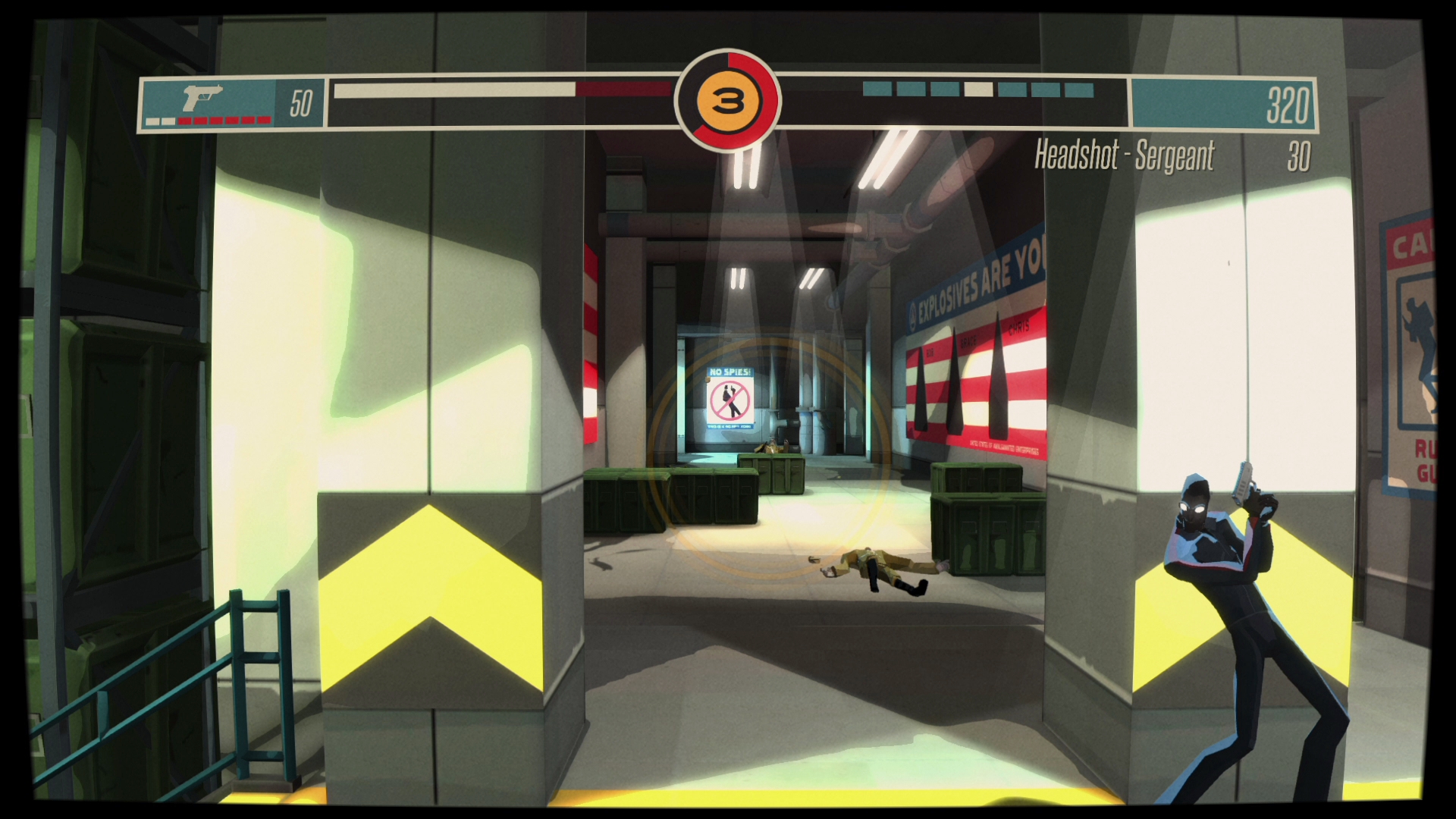
    Being in the mode for some stealth games is rare for me, but it does happen, occasionally. The last time I played a stealth game was Mike Bethel’s Volume, and even that didn’t really quench my thirst for the stealthiness. This week I was browsing through my PS4, to see what games I could maybe complete in the spare afternoon I had, and happened across Counterspy in my library. I gave it a quick download and decided to get on with playing it.

    CS_PS4_016.0

    Right out of the gate Counterspy warns you that it’s randomly generated, so not all players experiences are going to be the same. Nice, I thought to myself, this should make for an adventurous play through. So off I set on being a stealthy spy.

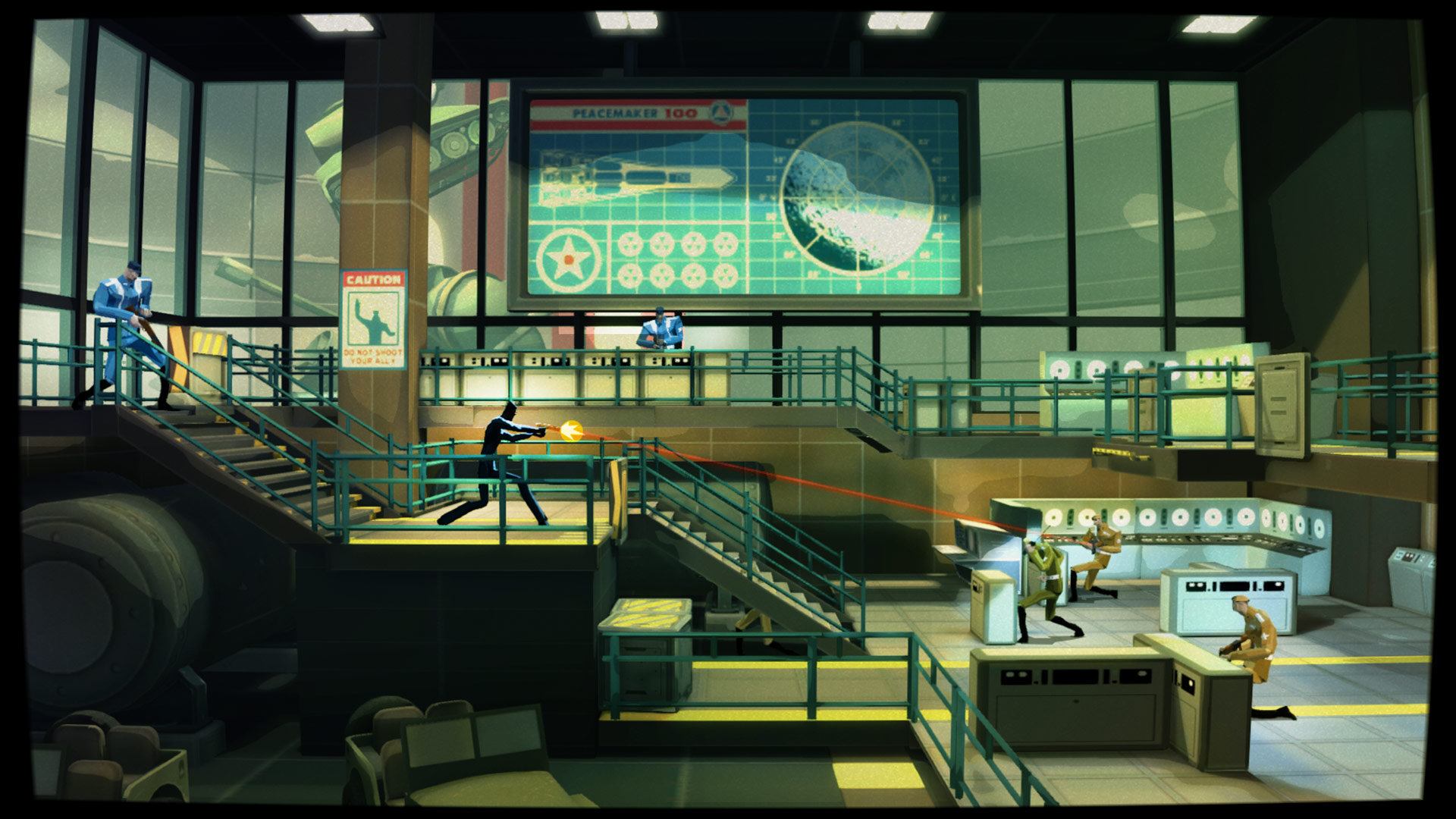
    The game takes place at the height of a nuclear war between the soviet state and the imperialists (USA). Both states are wanting to make nuclear bombs to explode into the moon, causing it’s orbit to shift in such a way that it would destroy all life on Earth. You’re a spy who works for COUNTER, an organisation that has tasked itself with making sure this never happens by collecting plans for the nuclear weapons, and in turn, their launch codes and flight telemetry.

    counterspy-3

    Because you don’t work for either side, you’re able to pick and choose which state you spy on to get these plans. Each state has a “Defcon” level, which goes up should you ever be seen in missions or should people phone in help. Think of this level as lives, and it makes a whole lot more sense. Being able to pick which state you spied on between missions was great, and added a layer of tact to an otherwise boring stage selection screen.

    The Defcon level isn’t the only thing you’ll be looking out for when choosing which missions to go on, as each state will have different collectibles to unlock. The imperialists usually have loads of weapon blueprints to collect, with the soviets having lots of formula blueprints. Once enough blueprints have been collected in each area, you can unlock new weapons to use between missions, and new formula’s (think of the formula’s as perks).

    So, enough about the interface and the meta game of picking where to play, how does the gameplay itself actually hold up?

    Well for one, for a game that bills itself as a stealth game, I didn’t find it all that stealthy. Yes, you can sneak up on guards and knock them out stealthily, and yes, you can get around security cameras by sneaking past their vision cones, but for the most part, Counterspy pushes you into violence at every turn. There are so many occasions where you’ll have a room full of enemies and the only way past is to shoot them all. There were times that I was able to shoot the enemies in a nice order so that not one was alarmed at the others falling, but due to the AI’s walking patterns, these stealth kills are few and far between.

    2631458-2014081911271510

    Each level is adorned with multiple layers, which is a good thing for a 2D platformer. being able to get behind a guard by passing above or below him is always great fun, and helps to keep a stealth game interesting like a puzzle. The problem is these moments rarely occur within Counterspy, due to it’s very random nature. There are just so many rooms where the only way forward is through 3 guards all facing each other, with no way above or below them, meaning starting a firefight is your only option.

    It’s in options that the game truly falls apart. Whilst you have quite a few options about what level to select and what weapons you’ll be taking into a level, you have next to no options when in the levels proper. Stealth is all about options: “should I stay where I am and wait for the enemy to come to me? Or should I shoot the explosive, wait for the carnage, and then pick the guards off one by one?” Options like these were plentiful in Volume, but are lacking in Counterspy, where I felt that I constantly had to take cover and shoot my way through almost every section in the game.

    I tried being stealthy as much as possible, even going so far as to get myself killed should I have been spotted time and time again, but the game just still corners you into action. There are sections of levels that are no longer 2D, and instead have depth to them with lots of enemies patrolling in the background. These sections are nigh on impossible to get past unless you kill all the enemies; not something a spy would necessarily do when they’re trying to be quiet.

    Regardless of the gameplay (and lack of stealth) at least the weapons are varied and help to keep you in stealth mode for as long as possible. I found myself using the silenced shotgun and silenced pistol as much as possible, otherwise guards nearby would be alerted by my arrival. When all else fails and there was an all out firefight, I’d use my hypnotising gun to hypnotise a guard in fighting for me; a brilliant tactic for running away from a firefight without having to deal with he rest of the guards.

    counterspy-screen-01-us-17jun14

    The aesthetics are generally lovely to look at, with soviet and imperialist posters scattered throughout areas both being funny, and great in achieving a cold war-era feel. Soviet missions will take place in hard concrete rooms with great towering statues adorning most rooms, whilst the Imperialist rooms are generally more metallic and useful. This contrast between both states is fantastic, and really helps to give the game a charming look and feel throughout.

    After 2 and a half hours of fighting, I finally come to the stories conclusion, and whilst it wasn’t a great ending, I still enjoyed my time with the game. As a stealth game, I feel Counterspy is a failure; it’s own random levels push you out of stealth rather than encouraging it. But as a polished product that manages to make you smirk and smile at it’s aesthetics, Counterspy is enjoyable. Give it a go if you already own it, and if you don’t, download the game on Android; it’s cheaper, and you’re bound to find more than 2 hours of enjoyment out of the game.

    3/5

  • Weekly Gaming: Sound Shapes (PS4)

    Weekly Gaming: Sound Shapes (PS4)

    soundshapes1

    There seems to be a theme going recently. First I review a simplistic platformer with amazing music called 6180 The Moon, then I review another simplistic platformer with fantastic music called 140. Whilst Firewatch broke that combo (ccccccc-combo breaker!), here I am yet again writing about a simplistic platformer with amazing music. Where Sound shapes differs is in the fact the music isn’t just awesome, it’s a part of the game’s core mechanics.

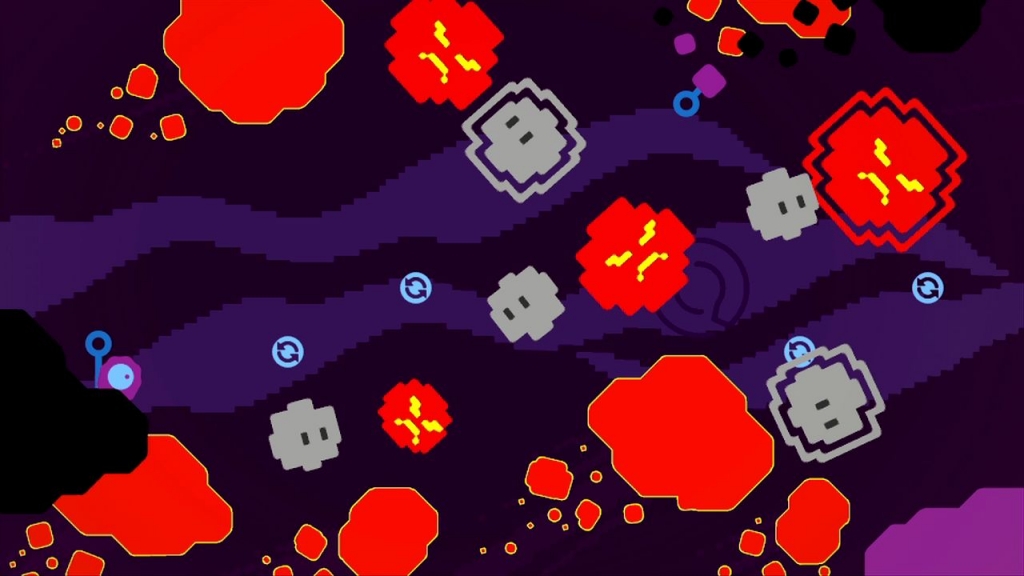
    It all starts off simple enough, and like any normal platformer, the controls are straightforward: move from left to right, making sure to avoid any red items on the screen. You play as a blob of sound which is able to stick to some surfaces that match it’s own colour, or turn black to move faster (without the benefit of sticking to surfaces). As you make your way through levels you’ll notice that everything around contributes to the music, making for some really unique sounds. Collect more “tunes” throughout a level and you’ll get the music constantly change and evolve, making collecting everything a level has to offer a real pleasant experience.

    ps3-game-6182-ss7

    Each “Album” of stages have their own style, both in the music they produce, but also in the general look and feel, as well as difficulty. Guest musicians make an appearance throughout, with one album being entirely produced by DeadMau5 for example (possibly my favourite of all the sets of stages throughout the game). I found that the constant changing of style between levels both helped to showcase how flexible the engine is, but also helped to constantly keep me interested, even as the game’s mechanics were soon mastered early on.

    With each change of style comes a whole new process of learning the games core mechanics again. Is that enemy in the distance touchable, or should I be avoiding it? Is that tree climbable, or should I try and find a way around it? You’ll constantly ask these questions with each new area that you enter, something I haven’t found myself doing in a while when it comes to games.

    The campaign as a whole can be completed within 3 hours or so, and whilst there’s no story to speak of (seems to be a reoccurring theme with these abstract simplistic platformers recently doesn’t it?) each stage carries enough variety and challenge to keep you well entertained until the end of the game, when you get that glorious gold trophy.

    2290270-sound_shapes_e3_2012_023_1338961115

    I think it easily goes without saying that for a game based soul around its music, the music present was absolutely stunning. As I previously mentioned, the DeadMau5 stages were my favourite, but that doesn’t mean the others didn’t affect me in the same way. Everybody’s bound to find a style they like throughout the campaign, and if not, you’re bound to find something in the games huge backlog of DLC available.

    Once the campaign was finished, I still continued to play the game for another 2-3 hours, which is rare for me due to how little time I have available these days. The reason I kept coming back? The death mode.

    This surprisingly infuriating mode which is only unlocked once the campaign is finished pits you on some of the hardest sections of each stage, and gives you the objective of collectible a certain amount of randomly generated “tunes” within a given time limit. These tiny sections are both ridiculous, and oh so great at bringing out how intricately designed Sound Shapes really is. During the campaign, there’s always a margin of error to your jumps; you don’t have to time things perfectly, and even if you cock up, you’ll probably still make a jump. In Death Mode this is all thrown out the window. You have to be pixel perfect precise; any mistake and you’re either dead, or never going to complete the objective.

    2377119-soundshapes_ps4_invaderoids2

    This difficulty spike got me so engrossed into the game that I ended up not realising an hour had passed whilst I replayed one level continuously. It’s that damn addictive. It isn’t even the fact that you get a silver trophy for your troubles, it’s genuinely the challenge of completing this ludicrously hard level.

    So, should you invest a few hours into the game known as Sound Shapes? Most certainly. I mean, if you’ve been a Playstation Plus subscriber for a while now, you’ll most likely already own the game, so what do you have to lose? Chances are, you’ll find something you like in Sound Shapes; I know I did, and will definitely be coming back time and time again when I have a spare hour.

    4/5

  • Weekly Gaming: Rocket League (PS4)

    Weekly Gaming: Rocket League (PS4)

    It’s a strange thing to be addicted to a game you never thought was your type or genre. I genuinely can’t explain how it makes me feel. I genuinely do not enjoy sports games, so to get hooked off a game I was sceptical of in the first place is weird, and not something that happens often.

    So, how did I come by Rocket League? Well luckily, it was free for Playstation Plus in September, a fantastic offer for a game only just released. For weeks I’ve been listening to the Giant Bombcast talk about how they’re all hooked to the game, so one afternoon, in my downtime, I decided to give the game a go. Booting the game up, I was greeted to a stunningly brilliant rendering of a car on a field, a weird sentence I wouldn’t ever have imagined I’d ever write! (first time for everything today it would seem). Jumping head first into an online match, I soon discovered what all the hype was about when I scored my very first goal.

    You see, Rocket League is equal parts luck, and equal parts skill, but when you score a goal or save one from happening, you genuinely feel like the most skillful player there ever was. Having your best (and worst) moments replayed straight after they happened really keeps you interested in the match a hand, even if you’re doing bad. I constantly wanted to better myself, or show off, depending on how I was doing.

    Sorry, I’ve gotten ahead of myself. To begin with, an explanation of Rocket League:

    Rocket League lets you play a typical game of football as a car. Sounds crazy, but it’s genuinely genius; to the point fans are now campaigning to make it an e-sport. You can choose from 4 different types of match: 1v1, 2v2, 3v3, 4v4, proceeding to try and outscore the opposing teams. It’s that simple.

    Each match lasts a maximum of 5 minutes, so the game really is a “pick up and play” type of game, with myself constantly thinking “ah, I have half an hour free before I go to bed, I’ll play a few games of Rocket League before sleep”. Whilst this mentality is certainly awesome, it can cause problems in regards to being just too damn addictive, with every match’s score screen prompting you to instantly press the “find new match” button without thinking.

    So how are the controls? Well to put it simply; Delightful. You literally control the car like you would any normal racing game, just this time the mechanics necessitate you controlling it in weird and wonderful ways, with the addition of a jump and nitro boost helping to push your driving skills to the extreme. With traditional racing games you’re trying to stick to a track, constantly making tiny adjustments in order to stay within the course and get the best time. Not so with Rocket League, where you’re constantly trying to change direction within seconds to counter wherever the ball is at that moment. Rocket jumping is hard, but soon you get used to it and are flying just as much as you’re driving, whacking the ball out of the air before over players can get to it.

    There isn’t really anything in the sense of music (bar the main menu screen, which, due to the quality of Rocket Leagues servers, you’ll rarely ever spend time on the menu), which isn’t a bad thing considering this is a sports game. Sound effects are as you’d expect (fans cheering, explosions happen when you score a goal etc.) and help to keep the immersion in the match.

    So should you get Rocket League for the grand total of £15 if you missed it on playstation plus? HELLS YES. I have easily put in hours and hours of time into the game, getting hooked well past the point of when I should be in bed before work the next morning. The game is addictive, and certainly something I wasn’t expecting to be hooked to considering it’s a genre I don’t generally like.

    5/5

  • Weekly Gaming: Call of Duty Advanced Warfare (PS4) Review

    Weekly Gaming: Call of Duty Advanced Warfare (PS4) Review

    It’s been years since I’ve played a call of Duty game. That’s not to say I don’t like them, far from it in fact, I spent hundreds of hours playing Call of Duty 4 and World at War with friends whilst at uni. The problem is, in subsequent years since I fell in love with the series, not much has really changed in the way it’s played out. I found my time in COD Modern Warfare 2 mediocre at best and only entertaining because me and a work colleague brought it at midnight on release day and managed to finish it within a day. COD Modern Warfare 3 didn’t fare much better, as I only played it purely to finish the story, and purely to see how to game turned out considering all the controversy that happened around infinity ward’s directors.

    FUCK THE ATLASSSS
    The world of Advanced Warfare is huge and detailed. Scenes like this made me forget I was playing the game on a PS$ and made me think I was playing on my PC

    I picked up Advanced Warfare as it’s genuinely one of the only COD games in recent memory which has actually peaked my interest. I managed to get a few matches of the games multiplayer done over Steams free weekend, so decided to pick the game up on PS4 where my other friends would be playing it.

    So, to start with the differences, the setting. Previous games of the franchise have taken place either in the past, or in the present, with others straying semi into the future (black ops 2). Advanced Warfare doesn’t piss around, and is set firmly 50 years in the future, ensuring the player has access to all manner of different vehicles, settings, and technologies we could only dream of. This setting has it’s advantages; it allows sledgehammer games to imagine a world not too different from our own, but with the whole world being taken over by LCD screens. It’s pretty cool actually, seeing a world that isn’t completely sci-fi but actually imaginable compared to the technology we have today, something I compliment Sledgehammer on portraying fantastically.

    Next up, the combat. Apart from introducing a new double jump that allows a player to see the terrain better or get up to new heights, not much has changed in the traditional Call of Duty formula of hiding behind a wall until an enemy hides and peeking out to kill them. The addition of homing grenades and new gear which help to highlight enemies on the field better than simply zooming in help to allow the player to kill more enemies than ever before, but doesn’t stop the core combat from feeling hollow as a result. I easily mowed down over 1400 enemies in my play through of the campaign, which would easily class me as a psychopath in most games, but in Call of Duty, it’s a standard affair.

    FUCK THE JETSSS
    Whilst action sequences are broken up and varied at times, they feel far too contrived, and offer little in the way of freedom.

    The hollowness isn’t to say that the combat is boring, far from it; it’s still easily one of the best shooters on the market by far, with its simple Left Trigger Right Trigger combo of aiming one of the most satisfying by far. I just merely wish that the campaign/ would have some gravitas to it, some personality if you will, rather than the entire world being in danger and it’s up to you and your team to save it.

    Graphically, Call of Duty games have come a long way. I seriously was gobsmacked at times at the intensity of the lighting effects on textures and shadows across the world. Add to this the amazing facial animation on characters in the world (with House of Cards’ Kevin Spacey playing the main antagonist), and you’ve got a truly delightful game to behold, one that really does honour the title of “next gen”.

    FUCK THE VISTASSSS
    You’ll be seeing a lot of vistas on your travels through Advanced Warfare’s campaign, with the game taking place over the whole globe.

    Story wise, the Call of Duty formula unfortunately rears its ugly head once again, with a huge organisation (Atlas) threatening all of the free world with it’s tight grip on security giving it a plentiful supply of targets on the planet. This is another “one man saves the world against one insane dictator” type stories, but one which is made more believable due to Kevin Spaceys ability to make Irons an actual believable character, one which really does believe his own motives behind killing america or any other free state in the world due to governments inability to act within a timely manner.

    The multiplayer of Call of Duty hasn’t changed a great deal, but my god is that a good thing. The timeless mechanic of die and repeat seems like it’ll never get old, with each death pushing you on to find your killer and put them down. It’s odd, but for all the new guns and advantages players are given (such as the double jump), things have relatively stayed the same, with most players staying grounded through fear of other players catching them whilst jumping. It’s all brilliant in the end, and I can easily see why players continue to buy Call of Duty games for the multiplayer alone, let alone the over-the-top campaign. There’s nothing more satisfying as seeing your own name at the top of your team with no deaths and many, many kills.

    FUCK THE ACTION SEQUENCESSSS
    Actions sequences constantly try to keep you on the edge of your seat, but being that you know your character won’t die, they rarely feel threatening.

    So, all in all, am I glad I brought back into the Call of Duty hype? Yes and no. The series is still easily one of the most recognisable in the world, with it’s shooting mechanics and priority of 60fps gameplay being a staple of the series, it’s not hard to see why. What I wouldn’t have minded seeing was after all this time away, experiencing something new and unique would have been nice. Scripted sequences like the jet level merely give the illusion of player control, and don’t necessarily go so far as to actually give you freedom to explore. This isn’t necessarily a bad thing, but considering games have the ability to give players an experience no film or book can give you by allowing you to make choices, it’s a shame the medium still hasn’t pushed forward or advanced. If you’ve kept your distance from the Call of Duty franchise for some years, Advanced Warfare might be worth coming back to, if not only to see how little has changed but how fun the core shooting mechanic still is.

    4/5