Welcome back to weekly gaming! This week, I review Sonic Mania, a game I’ve been waiting to be released for a long time. Having been raised on Sonic, Sonic Mania manages to hit all the right nostalgia notes, all whilst bring lots of new and refreshing ideas to the table.
You can read my full review at the link below, but SPOILER ALERT: I like the game, a lot.
Being the second title in the Typing franchise, The Typing of The Dead Overkill goes all out on being as crazy and sexist as possible, all for the chance to get a little laugh out of the player.
As a Kid, I used to beg my dad to go on his PC and play some of the games I watched him play. I recall loving the look of The Typing of the Dead as it was a game that I remembered from arcades at the seaside, and wanted to revel in this myself. Being only 13/14 at the time, I wasn’t very good at typing, and had to look at my keyboard every time a new word appeared on the screen so I could find the appropriate keys and press them. I was terrible, but it was still fun to play the game that I played in the arcades, albeit with a different control method. Does the new, “improved” Typing of the Dead live up to my expectations from yesteryear? Read on my friends.
Being that the original Typing of the Dead was just a rehash of The House of the Dead 2 with typing elements instead of a light gun, The Typing of the Dead Overkill does the exact same trick as it’s precursor, going so far as to include the original shooter as well. Being that I didn’t own a Wii, I wasn’t able to play the original, so all the gags, humour and characters seem completely original to me. The game starts you out by introducing you to the protagonists of the game: Agent G and Detective Isaac Washington. Its through these two characters eyes (and others along the way) that you’ll see a crazy world where mutants (they make sure to remind you that they aren’t zombies, and are in fact mutants) are roaming free, killing and devouring all that stand in their way. Agent G and Washington’s only hope is to find the serum to cure this outbreak, which it seems is in the hands of Papa Caesar, the crazy old man that started this outbreak.
Levels are varied, and the words you have to type to kill zombies are ludicrously sensitive, with some words being close to the knuckle in respect to your current situation. The screenshot above is a bad example, but you wouldn’t be surprised to find words like “Personal Space” on a zombie whilst it’s in your face.
Levels are played by just shooting the mutants by typing in the text that appears below them. The game is a rail-shooter, which means you don’t control the movement on the player, you merely watch as you’re taken on a tour throughout a level and shoot zombies as fast and as accurate as possible. Being that the whole game centres around this one core mechanic, the developers have managed to push it further than I’d have thought, with each word being sensitive to the surroundings or current predicament occurring. It makes for some witty chuckles as you progress through stages, and allows you to have a laugh whilst doing something that most people would find tiring and boring on a day to day basis. You finish each level with a boss fight, which consist of typing faster than usual, or typing the correct words that are coming at you. Bosses are varied enough to keep the stages entertaining, with fantastic design that makes you appreciate how much effort went into creating detailed, original mutants without being too grotesque.
There are many collectibles to be found throughout each stage, ensuring you keep your eyes on the screen at all times whilst typing the mutants words. The whole game kind of pushes you into learning how to touch type, for the sheer reason that you’ll die if you don’t. There just isn’t enough time between seeing a word or letter on the screen and looking down at your keyboard to type it. This could be seen as a weird attempt to teach children and others how to touch-type whilst having fun, but maybe I’m just stretching the premise a bit too far.
With most of the bosses being gigantic and near impossible to miss, The Typing of the dead makes it so that you don’t have to dodge, so long as you manage to type the words fast enough on the screen.
The typing mechanic isn’t the only point on the spec sheet to keep you playing though, with The whole game featuring a 3 hour campaign that tells the story of Agent G and Isaac Washington hunting down the cure to the mutant outbreak, and putting a stop to the evil Papa Caesar that’s managed to destroy so many lives. The story is brilliantly funny, with the game taking the Mick out of it’s own ridiculousness every two seconds, a sense of irony isn’t amiss here. Certain groups of the gaming community may not like the jokes that are told, as they are used as the butt end of the joke, thankfully these jokes are rare and uncommon. You may at times take control of other protagonists, but these are only side missions, as the main story is all based around the problems Agent G and Washington find themselves in.
Being a rehash of the Wii Overkill game isn’t a detriment to the typings success, as many players like myself have played the original. If you enjoyed the original Typing of the Dead released in 2001, you’ll enjoy whats on offer here. With more touch typing goodies at your finger-tips, Typing of the Dead: Overkill both challenges you and entertains you at the same time. Needless to say, I thoroughly enjoyed my time with Overkill, and may go back again in the future to improve my typing skills.
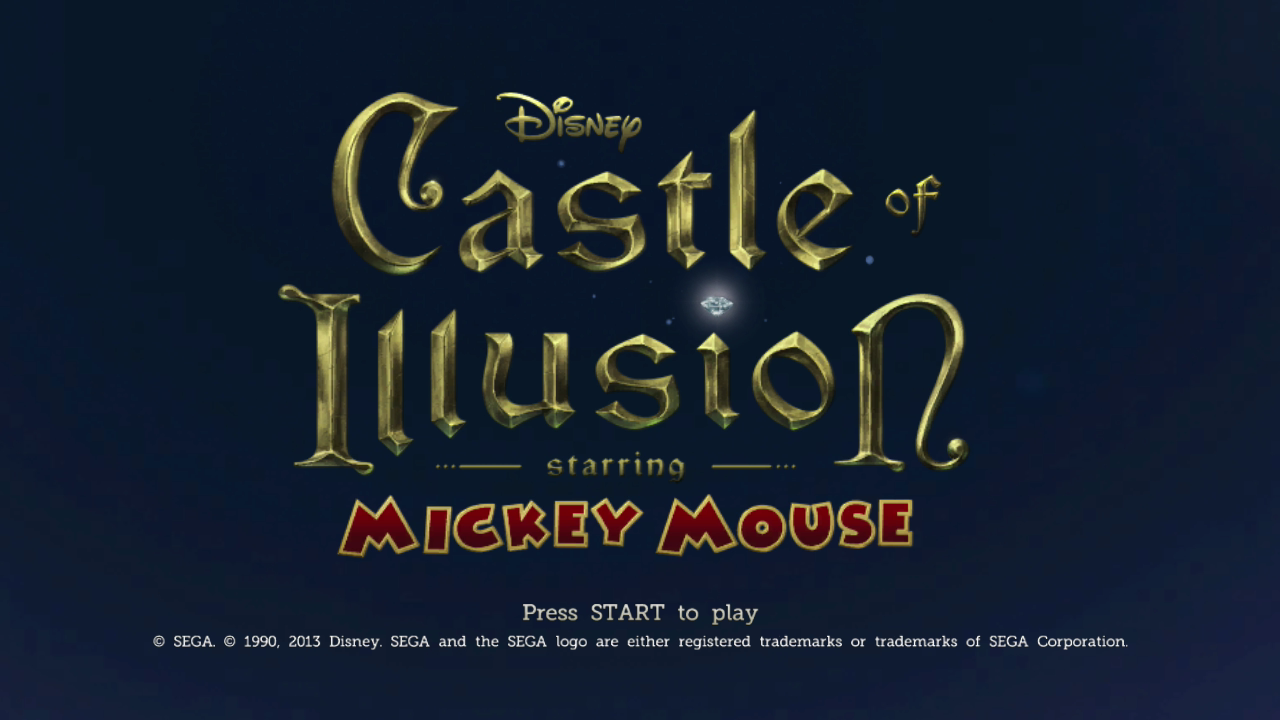
Some of you may remember the original Castle of Illusion from your childhood like myself. It was a fantastic platformer that I used to play with my brothers, so I had to buy this remake in an instant to see it my nostalgia was warranted.
This week, I take a look at Castle of Illusion, a remake of the original Disney game that came out for the Sega Mega Drive (Genesis for those American readers out there!).
I loved Castle of Illusion as a child, huddled around a small CRT TV with my brothers taking in all the games gloriously smooth animations and lovingly crafted graphics was one of my favourite things to do when I was 8. The game was difficult for how young I was, but my determination and countless hours of gaming allowed me to preserver and finish this hard game. The platforming involved a lot of memorisation and pin point accuracy, making it one of my favourite accomplishments of my youth. Has Sega Studios Australia succeeded in reimagining what I hold so dear from my childhood? Or is this a shameless money grab from an ailing company looking to cash in on our naivety?
The hub world is a nice level which allows you to see all your collectibles in gorgeous 3D, building the world up as you progress. The game is still linear, but the freedom to go back to specific levels that you may want to retry is welcomed.
The game starts off 2.5D, showing a 3D Mickey, moving across a 2D forest on his way to the castle where Mizrabel has imprisoned Minnie in the hopes of stealing her youth and beauty. After a little bit of platforming, you finally reach the castle, where you are then taught that the game isn’t 2D at all, and you in fact have to walk into the background to progress the game. Some reviewers have likened this to when the Wizard of Oz was revealed to be in colour rather than black and white, and whilst I like that sentiment, I don’t feel this is as grand a gesture as they’re making out. It’s cool, don’t get me wrong, but when the market has been saturated with 2.5D platformers for years, this doesn’t come as surprising.
Once the game is completed, the castle acts as a hub world, allowing you to replay any level you want in order to find all the collectibles the game has to offer, or to play each level as a time attack trial. Each level has plenty to explore, with secrets and hidden collectibles scattered aplenty. Its enjoyable enough to go back to a level to try and find everything, because you certainly won’t collect everything the first time round.
Unlike most water levels in platformer games, the water levels in Castle of Illusion are fairly enjoyable as you don’t have to worry about Mickeys air intake. It allows you to get on with the level and dodge enemies like normal rather than having a constant worry on your mind.
The landscapes and design quality of each world is staggering, with a sense of polish you don’t often see in platformers. It reminds me of Deadlight that I played last year (without the same realism and dread that came with a zombie apocalypse), and has a lot of things going on in the background, keeping you entertained and entranced throughout your entire play through. Toy Rockets will take off and land in the background on the toy level, whilst the library will show off deep vista’s, awe inspiring for a fantasy platformer.
Gameplay and levels haven’t changed much from the original, with enemies dying as you jump on their head or you can throw an object at them (objects differ per level, from marbles on the toy level to candles in the castle, it sticks to the theme). Most of the game takes place on a 2D plane, allowing you to accurately land on platforms as your progress throughout the campaign. There are a few new features where you’ll jump on platforms in a 3D section, but this is easily where the solid gameplay falls apart, with the shadow showing where Mickey is in relation to platforms frequently disappearing under the different hues of the world around him. These sections are thankfully few and far between, so these frustrations are kept to a minimum, but it’s still a nuisance that Sega Australia managed to make a fairly consistent game so frustrating at times.
The level designs are spectacular, despite being simple to navigate. Things are always happening in the background, from books jumping around, to toys flying, the levels conjure up a backstory of a living world rather than being static levels for Mickey to progress through.
Boses are a hit and miss, being nice set pieces that show off the engines ability to natively render both 2D and 3D gameplay at the same time, but mostly consist of doing the same dodging until you’re able to jump on the enemies opening. The engine changes from 2D to 3D platforming can be a little jarring when you’re trying to avoid an enemy around an entire platform and then all of a sudden the game restricts you to just moving left and right, but as with the annoying 3D platforming sections, these moments are rare, so they shouldn’t spoil your enjoyment too much.
Playing Castle of Illusion took me back to my childhood like I never imagined a game could. It succeeded in keeping my nostalgia in check, whilst also keeping the game entertaining enough to continue on gameplay alone, and not riding my nostalgia. I kept coming back to the game even after completing the main campaign, and although I didn’t get every gem in the game (there’s 800 to collect), I managed to find every collectible before growing bored. I hope Sega Australia get the chance to remake some other beloved games of my childhood, as I feel a co-operative castle of illusion 2 featuring Donald Duck would be amazing and well received, maybe even fixing some of Castle of Illusion’s set backs.
Her dress is made from her hair, how cool is that?
Oh Bayonetta, I’ve been meaning to play you for years but never found the time to fit your into my schedule. I’ve owned you since you first was released onto the world, and my oh my how I was a fool to disregard you for so long.
As you can probably tell from my little burst above, I enjoyed every minute of Bayonetta, and not just because of the main character. Everything from game play, to the style, to the music entranced me to my very core, making sure I constantly progressed until I had taken in all Bayonetta had to offer.
So firstly: the game play. Bayonetta is a action game, if you’ve ever laid your hands on a Devil May Cry title in the past then you already know how this game will go, the difference you’ll find is the execution. In Devil May Cry games, or even God of War for that matter, you find a very serious plot and the action enhances the seriousness, deepening the urgency of what Dante or Kratos is doing at the moment in time; for Kratos it expands the goriness, Dante the emotion. In Bayonetta on the other hand, the action is an extension of the fun and mischief Bayonetta takes in her stride. Every action, every move, every attack all seeks to enhance the richness of this world in which angels and witches constantly fight, and Bayonetta just wants to have fun, even when things get serious. She twists and turns around the battlefield like a pole dancer, being majestic, but with a slight sense of sexiness. To put this in perspective, it speaks volumes to the fact Bayonettas dress is made out of her own hair, so when she does powerful witch spells to defeat opponents she has to go naked in order to summon her demons. It’s tongue in cheek action, but it’s stylishly done.
The story leaves some to be desired, but overall does the job to integrate all the characters into one solid narrative, even if it is slightly confusing and doesn’t really explain/introduce key characters until the last 2 chapters. it’s still a story though, and that counts for something right?
The combat system is spot on, making it fantastic to land massive combos, and the game really makes sure you can dodge attacks at any moment, drilling it into your head from the get go, and actually pushing it further by making puzzle sequences use the dodge mechanic too. Each fight sequence is given a ranking, to let you know how well you took on a group of enemies, this is mostly determined by how much health/items you used, but also takes into consideration your combo count. It is certainly addictive, and will get the hardcore players coming back time and time again to try and get a platinum on every level.
One thing I will say about Bayonetta that I need to say with all the talk about sexism in the games industry at the moment: Bayonetta in my opinion is not sexist. The marketing/promotion of the game may be sexist, but the character and the game that centres around Bayonetta are not sexist at all. Bayonetta is a strong, independent woman who in fact belittles the few men she does encounter in the game, making me jealous and even respect how strong she is as a character. It speaks volumes to how Sega have made sure to walk a very fine line between marketing her to the biggest demographic, whilst also maintaining the characters main strengths, ensuring she doesn’t become a mere sex icon to be added to the games industry. I hope those people who also play Bayonetta feel the same way, and I’d be happy to discuss others opinions on the matter.
Pros:
Fantastic level design
Combat is fast, reactive and addictive
Very high replay-ability
Cons:
Story isn’t very clear, could do with a lot more explanation
Although Bayonetta may be old, if you haven’t given it a go this generation, I’d recommend you do. It is the pinnacle of what a action game can amount to when the developer has one specific goal in mind, and it has definitely left a lasting impression on myself.