Tag: Ubisoft

  • Weekly Gaming: Grow Up (PS4)

    Weekly Gaming: Grow Up (PS4)

    It’s been years since I sat down and gave Ubisoft’s Grow Home a go, and looking back, I remember being rather fond of BUD and his weird adventures in creating a star fruit for his mothership, MOM.With those fond memories in mind, this past weekend I decided to sit down with the sequel to that surprise hit, Grow Up, and it has to be said, the game is just as fascinating and charming as it was the first time round. Let’s explore why.

    Grow Up starts out with BUD riding within MOM, playing Tic-Tac-Toe indefinitely whilst exploring the cosmos. Unfortunately, with MOM concentrating on Tic-tac-toe too much, she accidentally hits into an asteroid, causing her to explode across a planet leaving BUD falling through it’s atmosphere. Upon landing, you’re straight back to where you were in the first game – controlling the weird physics of BUD and navigating an alien world.

    Eventually, you’ll happen across POD, a new drone character that is able to survey the land for you whenever you press the touchpad on the PS4 controller. Using his surveying ability you’re able to hunt down MOM’s parts, as well as all the new challenges, flora and crystals across this new land. In addition to that, you also have 4 new Starplants to grow!

    So, with POD in your arsenal of tools, you’re now able to set out and go about playing the game however you like. The completely open world is yours for the taking, with the same climbing mechanics also coming over from the first game completely in-tact. I proceeded to spend the first hour of playing Grow Up hunting down abilities for BUD (like the parachute, glider and even jetpack), and then proceeded to go to whatever tickled my fancy.

    At first I simply grew star plants and ensured they got as big as possible, controlling their vines to hit into floating lumps of rock to get them ever stronger, but this wouldn’t last, with myself constantly getting side-tracked with so many challenges and crystals to collect throughout the world.

    You see, with Grow Up, bigger definitely equals better, and where as the first game felt more of a primer to the BUD universe, you now have an entire world to explore, with different climates, land masses, and even more things to see and do than ever before. Just like Mario Odyssey (my review is coming for that, I promise!) you constantly have things to do, with even the climbing from one point to another being a puzzle and challenge in and of itself. There would be many instances where I would see a crystal sticking out of a rock a mile away, and consider how I can make my way to it using all the unique flora around, as well as using what limited resources BUD has available to him.

    The simplicity of the games design, to just have a open world with an end goal of accumulating all of MOM’s piece, can’t be understated. It means you can make your own fun, whether it be pushing bugs off mountains to their death (sorry poor creatures), or exploring each and every secret cave to find those luscious crystals, everything is pretty damn fun. Some may be annoyed at the lack of proper storyline/ no linearity, but I for one loved it.

    Most of the ideas here are recycled from the first game, from the collecting of plants and species, to the using crystals to level up your currently activated abilities, but overall the recycling doesn’t hurt the sequel, due to all the new things to collect and see. The power-ups too are given faster than before, meaning I was able to glide around the world fairly fast, resolved one of my biggest gripes with the first game, the constant climbing.

    If there’s one criticism to throw at Grow Up it’s the performance. Whilst i was playing Grow Up on the PS4 Pro i would constantly get framerate pauses whenever the game tried to save, and had many instances of the game slowing down to a crawl at times. Weird considering how graphically simple the game is.

    Also, graphically the game is still not much to look at. I mean, it’s to be expected when this is from a small off-shoot team within Ubisoft, but it’s not exactly a fantastic looker, especially within screenshots.

    Grow Up was the sequel many thanks hoped it would be. More of the same, but plenty more of it, allowing fans to do more of the things they liked, and less of the things they didn’t like (I’m looking at you, climbing). I certainly enjoyed my 5-6 hours in the game, and will be going back to it to collect all there is to find, including finishing each and every challenge, and getting all the remaining crystals I missed (40 damnit!). If you want a lovely lazy Sunday afternoon exploring a freeing and charming world, you most certainly can’t go wrong with Grow Up.

    4/5

  • Weekly Gaming: Rayman Legends (PS Vita)

    Weekly Gaming: Rayman Legends (PS Vita)

    FUCK THE POLYGONSSSS
    Following on from the success of Rayman Origins, Legends takes all the characters you knew and loved and makes them polygonal based rather than sprite based. This new venture in graphics adds a lovely shine and polish to an otherwise basic graphics engine.

    Having loved Rayman Origins for its fantastic platforming, I couldn’t wait to get a hold of the latest game in the series, Rayman Legends. Screenshots and trailers made me even more jealous of the games Wii U exclusivity, until one day Ubisoft announced that they would be releasing the game on all platforms simultaneously across all systems. I decided to purchase the game on PS Vita, for the sheer sake of portability and for having a game to play on the system.

    The game starts out with Rayman and his pals asleep in the forest, whilst the world is being taken over and destroyed by a bunch of dragons and pirates. A green ‘fly’ comes to the rescue by waking Rayman and co, and telling them the world needs saving. The first levels sets you up and gets you used to the basics of the mechanics all over again (being able to sprint, jump, punch etc.), but a twist occurs when you can’t proceed any further in the level, and must touch the screen in order to continue.

    FUCK THE TOUCH SCREEN
    The Touch screen elements in Rayman Legends certainly adds some originality to the platforming genre, but this isn’t why we buy a Rayman game, which means it detracts from its core value rather than adding value to an otherwise familiar genre.

    This is where the game gets strange and I wasn’t sure about my purchase. When touching the screen, you take control of murphy (the green fly from earlier), and set upon helping the king teensy navigate the rest of the level. In these stages (of which there are many), you use the many abilities of the Vita to help the king teensy through the stage, buy swatting pests flames, slicing ropes of obstacles, and rotating the device to change the shape and layout of the level. This all sounds fine in theory, and finally makes good use of the PS Vitas different sensors and touch screens, but its the actual character that sticks out and is annoying. The king teensy is AI controlled, meaning he’ll walk through the level just like you would if you controlled him. Where the annoyances come in are obstacles or trying to find hidden secrets, as the king teensy can make the wrong move, killing himself and starting the stage again, or ignoring the fact you’ve opened a new door, missing the secrets you’ve uncovered. These sections were my least favourite of the whole game, taking away from the fantastic level design and glorious platforming the Rayman games usually encapsulate so well.

    There are around 48 new levels to play in Rayman Legends, with another 40 from the original game, making for a lot of content to play through. Each level has between 3 and 10 teensies to find and rescue, making for 700 tenses in total to help rescue. I can’t say how long I’ve played the game so far, but it must been in the 10’s of hours, and not single digits, as there’s just so much to do and collect. The new levels are interesting and stylishly done, but with half of them being the murphy levels, I became bored and annoyed at how they were designed. Whenever I got around to unlocking a new world I’d go out of my way to avoid the murphy challenges, so that I could have fun on the normal levels instead. The inclusion of the original Origins levels was nice, but it feels like a bit of a gimic to make the game bigger with relatively little work. The levels haven’t changed except there’s more teensies to collect than before, making them boring and tedious if you’re like me and played the original game many times with friends and family.

    FUCK THE MURPHY
    The levels that don’t incorporate murphy are hectic and fast, requiring perfect coordination and timing to pull of fantastic stunts that make you feel great as a player. Add that to the hidden tweensies that are spread throughout the level, and you have a brilliant combination of sheer excellence.

    One new mechanic Ubisoft have added for Legends is the ability to store and collect lums that you collect in each level. These lums are accumulated, and can be used to unlock new playable characters, from knight Rayman, to jungle Rayman, it allows you to progress through just playing the game. Everything seems to be revolved around these lums though, with scratch cards being unlocked in levels that can give you more lums, unlocking classic levels from origins, or unlocking creatures that you keep hidden away so that they slowly give you lums on different days of the week.

    Ubisoft have also added a new online mode, where you can compete in daily and weekly challenges in order to prove your might against other players across the world. These levels consist of small challenges, like collecting 250 lums as fast as possible, or reach 200metres asap, to which you’ll be rewarded with a small number of lums depending on where you’ve placed in the world wide rankings for that particular challenge. It’s certainly one way to get players involved everyday, with the levels being small enough that you could play for 5-10 minutes a day, just to maintain a score on the world rankings.

    Rayman Legends was a weird mixed bag of experiments and tried and tested fantastic gameplay. You can tell, especially with the Murphy sequences, that the game was designed from the ground up with the Wii U gamepad in mind, but those controls only work with multiple people playing. I found myself being the bystander, watching as the AI got to have all the fun navigating the levels. The collection of lums and online scoreboards also felt like a new experiment as a way to ensure players kept coming back for more, even after finishing the main campaign and side levels like the original Origins ones. I suppose what I’m trying to say is: Rayman Legends feels contrived. I enjoyed my time I’ve spent with the game, but cannot for the life of me understand why Ubisoft took some fantastic platforming, and replaced it with such a boring mechanic like touch screen controls and accelerometer controls. By all means play Rayman Legends, you may enjoy some levels, but be warned, you may not enjoy the other half.

    3/5


  • Weekly Gaming: Rayman Fiesta Run (iOS)

    Weekly Gaming: Rayman Fiesta Run (iOS)

    FUCK THE THEMEEEE
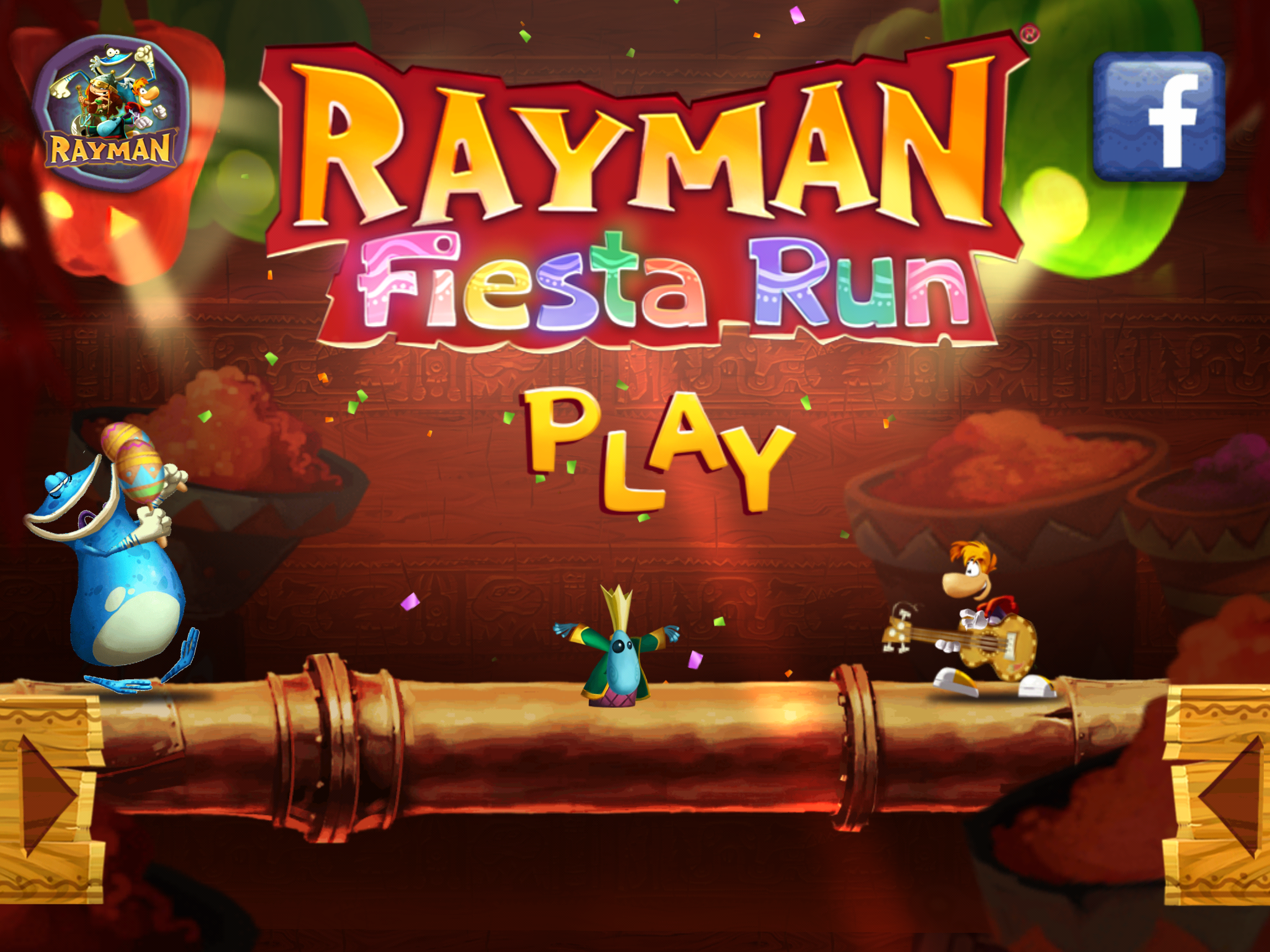
    Following on from the success of last years Rayman Jungle Run, Rayman Fiesta Run entails the same gorgeous, short worlds, but with a whole new theme.

    I loved Rayman Jungle Run when it was first released on iOS last year. I felt that the mechanics of a platformer translated perfectly to a touchscreen phone/tablet when you made sure the player was always moving on your behalf. Rayman Fiesta Run was released last fall, and along with it came a new urge within me to play this game to completion like I did the original. Does Fiesta Run manage to maintain Raymans recent high surge in production value? or does lightning really not strike twice?

    You start Rayman Fiesta run with only the ability to jump, just to ensure newbies are introduced to the game slowly and can get used to it before the levels get harder. Although this is easy, and does get boring, there’s at least something for more hardcore players in the collectibles on each level, with lums hiding in mysterious places out of sight you’ll be jumping and revisiting levels continuously trying to get 100 on each level.

    FUCK THE HELL
    Hell levels are some of the hardest in the game, requiring precision timing to ensure you don’t die.


    As the game progresses, you get the ability to hover in the air (by either using your hair if you’re Rayman, hands if you’re globox, and magic if you’re a teensie) and the ability to punch. These mechanics may sound easy and without challenge, but it’ll prove you wrong in a heart beat if you take it so lightly. Controls of each character are tight and well made, with your character automatically moving across the screen with no problems or glaringly obvious bugs to speak of. Althought the movement may not change, it’s the levels that do, and it’ll be your knowledge of these simple moves that’ll keep you going throughout the rest of the campaign.

    Levels are follow a traditional progression like they have in previous games, with the easier levels being in green fields with next to no dangers to your health, and later levels being in lava filled pits or hell itself, ensuring you know the difficulty of the stage just by looking at it or the colour scheme used. Each level is unique in their challenge and difficulty, meaning that most of the time you’ll need to retry after your countless deaths to ensure each level is mapped to your muscle memory. (muscle memory is for levels that require so fast reactions that you’ll have to remember what’s around each corner before you get there for fear of not reacting fast enough to avoid the danger). This pre-emptivity and muscle memory is needed to progress through Fiesta Run, as without it levels are just too difficult and impossible. With 72 levels in total, you’ll have quite a lot of time to practice and master the mechanics of Rayman Fiesta Run, as frustrating as they may be.

    Going around the map completing levels gives you lums to spend on extra characters and wallpapers. These characters are purely cosmetic, as the size of each character makes no difference on your collider. You will still hit walls or die on the pre-set collider thats around your character, which seems a little unfair at first, but you eventually learn it was done for the mechanics, meaning that no one has the advantage on leader boards across the world.

    Speaking of leaderboards and social features, did somebody say social platforms? because my god is Rayman scattered with Facebook likes and posts all over the place. Gone are the days you could play Jungle Run purely for the game itself, this time round Ubisoft wants you to use your own Facebook to advertise their game for you, with the incentive of getting extra lums to spend if you do. This doesn’t rear its ugly head until you perfect a level, asking you to brag to your friends about it by posting to your Facebook for an incentive of 100 extra lums. It may not seem intrusive, but when they are in every single menu and can be seen wherever you go, they are certainly annoying.

    FUCK THE PURCHASES
    The game is constantly asking you whether you want to spend your lums for items to be used on your one run. Lums can of course be purchased for real world money, which is a shame when you pay for the game up-front as well.

    At the start of each level you can purchase help throughout the level. You no longer get better items or help for playing the game like normal, with Fiesta run you now have to pay to get power ups. You get to pick from a heart which allows you to get hit once more (it’s normally insta-death), a golden heart which allows you to be invincible, a guide which shows you how to go across the track (and I mean, it literally tells you exactly when to jump and punch to get everything in each level), a glove that allows your punch to travel across the screen once and finally, a golden version of the glove which is unlimited. These items all cost anywhere from 10 to 80 lums (as of writing). It’s literally a fee-to-pay game, where you purchase the game for £1.99 at the start and then have to pay to get through levels.

    Rayman Fiesta Run is a fantastic sequel in its own right, and manages to get the same tight platforming feeling of the original so well. What lets Fiesta Run down is its reliance on purchases before levels, and it’s over-zealous use of social networking features, which makes for an otherwise frustrating game. If you enjoyed the original then by all means buy this one, but be warned; the constant social media drove me crazy.

    3/5


  • Gaming Week 19: Far Cry 3 Blood Dragon (XBLA)

    Gaming Week 19: Far Cry 3 Blood Dragon (XBLA)

    RWARRRR I'M A BLOOD DRAGON!
    How badass is this?

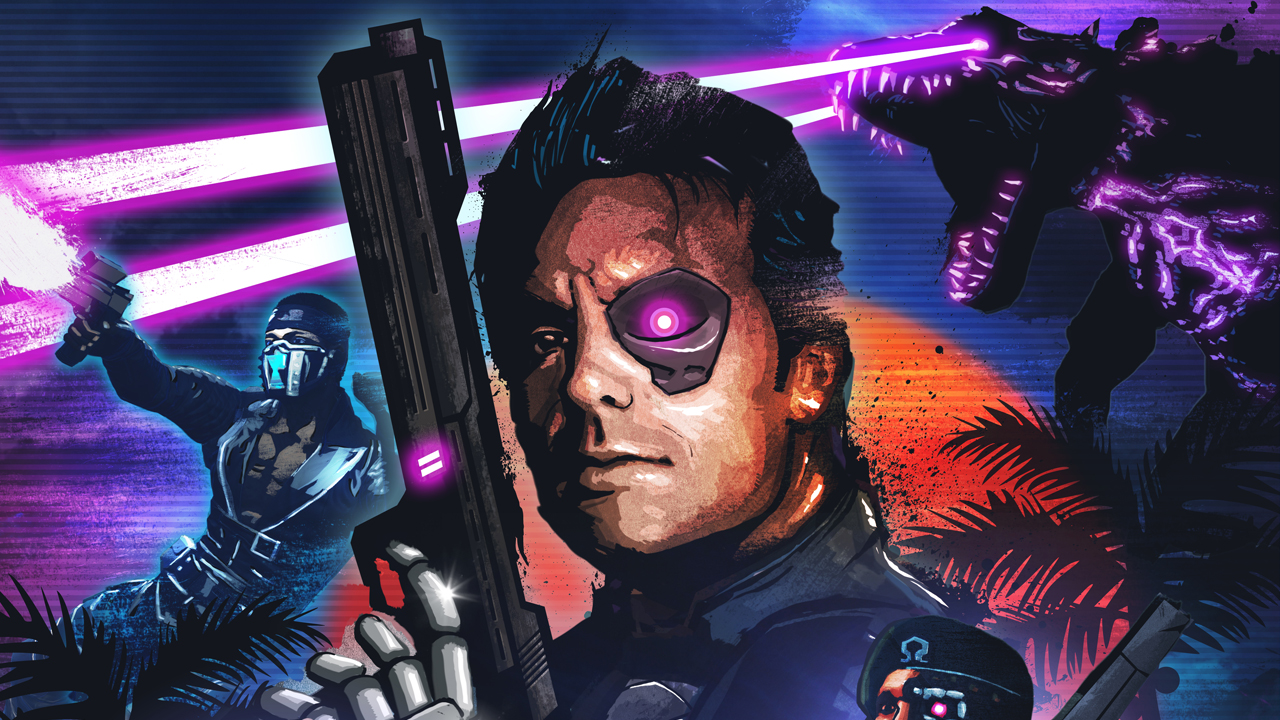
    Far Cry 3 was a fantastic release last winter, combining a gorgeous open world with a solid story, it made for a very fun and addictive game. Fast forward 6 months and we have the release of Far Cry 3: Blood Dragon, a stand alone expansion that doesn’t require the original game to work. So the question is, what is Blood Dragon? The answer isn’t as straight forward as you may think.

    Blood Dragon is Far Cry 3, except, it technically isn’t. The main setting and plot for Blood Dragon centres around an alternate universe in which the world has undergone 2 apocalypses (I shit you not) and the 80’s are here to stay. At face value, this is basically a few reskins of the original Far Cry 3 whilst also messing things up for comedic value, but some of the changes really are hooking, and make for a unique gaming experience in its own right. If you want to see how far they went with the 80’s theme, here’s the announcement trailer, it may damn well blow your mind:

    Combat is the same as Far Cry 3; you walk around a big island which gives you a wealth of different options to which you can kill people, including the new animals, the Blood Dragons. These beasts are huge, terrifying, and can fire lasers from their eyes! They’re certainly a force to be reckoned with, but can also be used to your advantage. (They can’t see very far, and love to eat cyber hearts, chuck a cyber heart into a enemy base and watch the mayhem unfold.) All these mechanics help to give you freedom over the island, whether you want to be a stealthy ninja, or a rambo in the making is completely up to your play style. You’ll be rewarded more for assassinating people without being seen, but be destructive enough and you won’t notice the difference in XP bonuses.

    Character progression has slightly changed from Far Cry 3, which makes it easier to progress, but not necessarily for the best . Where as before you could choose what new skills you wish to learn, allowing you to pursue any specific traits you want, (be it stealth, health or damage) you now have a straight path with no deviation. Your character can level up to 30, by which time he’s acquired all the skills available in the game. It’s not a bad skill tree by any means, it just takes away some of your freedom of how you want play the game.

    Enemies in Blood Dragon are the same as they’ve been in Far Cry 3; you get normal humans, which can be split into different types, as well as animals. There are your traditional types of human classes, some are heavy and take a lot to bring down, others are lightening fast, nimble, and quick to kill. Then theres the animals, which are pretty easy to hunt and kill, and don’t offer any rewards for killing. This is massive change from the crafting system of Far Cry 3, and a feature I missed quite a lot. With the crafting system, you took the game at your own pace, something that is missing in Blood Dragon. Overall, not much has changed since the original, the biggest innovation being the Blood Dragons themselves, whose presence is overwhelming at times, and certainly adds a new dynamic to the game.

    Pros:

    • Fantastic value for 1200MSP (£9.99)
    • Great addition to the Far Cry series
    • Addictive gameplay ensures you’ll 100% the game in no time

    Cons:

    • Short to complete 100% (5 hours 50 minutes to 100% all collectibles, side missions and main campaign, nothing left to do but a empty island)

    Overall, Far Cry 3: Blood Dragon is a great buy for those of you who didn’t quite get their fill of free roaming a new island in the original Far Cry 3. It does fall short on content, but is genuinely quite original in an increasingly over-saturated market.

    4/5

  • Gaming Week 13: I am Alive (360)

    Gaming Week 13: I am Alive (360)

    BUT NOT FOR MUCH LONGERRRR
    He certainly is

    I am Alive is the survival game from Ubisoft set in the future, after a catastrophic event has fallen mankind, and left only a few survivors on earth. A few people may remember the original trailer from 2008:

    If you count yourself as one of those people, then prepare to be disappointed, as Ubisoft changed majority of the formula from what they was showing in the original trailer, and instead made a fairly action orientated third person adventure game. This isn’t necessarily a bad thing mind you, but I think majority of the gaming community would agree that the original trailer showed a lot of promise and originality in an otherwise over-saturated market.

    The game centres around a unnamed protagonist who is searching for his wife and daughter in his hometown of Haventon, after a year of walking across the states to reach there. We are greeted with a view of the decaying city, with no access except across a broken bridge. It’s here that the game introduces you to the concept of stamina, and by god you better get used to it.

    Stamina is one of the main game mechanics you have to use in I am alive, effecting everything, from climbing a mountain, to literally just breathing. In theory, stamina fits perfectly in this post-apocalyptic world, ensuring that a player thinks about every action before he or she goes ahead. In reality though, this mechanic just becomes a frustrating barrier to you actually enjoying the world of Haventon. So many times I would just want to explore and see the inhabitants of this desolate town, but it’s broken up every few seconds with climbing, just to make sure you can breath again before running down the same flag pole to go down the same street you were just walking down. It’s frustrating, and genuinely detracts from the game.

    Characters in I am Alive are very believable, to the point I actually really felt attached to the little girl called Mei that you have to carry around and care for. The artists should be proud of what they’ve done with the people, showing true human nature in a world without morales.

    Action sequences follow a scripted pattern of aiming your gun at someone until they either decide to surrender, or shoot them on the spot. This is interesting at first, but leads to a routine later on in the game, meaning enemy encounters just aren’t that great, and leave a lot to be desired.

    Pros:

    • Great characters
    • Ok climbing mechanics

    Cons:

    • Stamina is too frustrating
    • Save points too far apart (leading me to lose an hours worth of gameplay at one point)

    Overall I am Alive just felt underwhelming. There was some challenge in the way it set the mechanics, but really, it all felt like these challenges were just there to mask the terrible game underneath, with all of its many flaws.

    3/5