Tag: Wii U

  • Weekly Gaming: Pullblox World (Wii U)

    Weekly Gaming: Pullblox World (Wii U)

    Given how much I loved the original Pullblox (it was called Pushmo in america, and is different in different territories) I couldn’t wait to get my hands on a Pushmo for the Wii U. What I’d lose in portability I’d certainly make up for in visuals and the sheer quantity of puzzles to solve. Suffice to say, Pullblox World met me expectations, and even advanced on them.
    simple_puzzle_huge

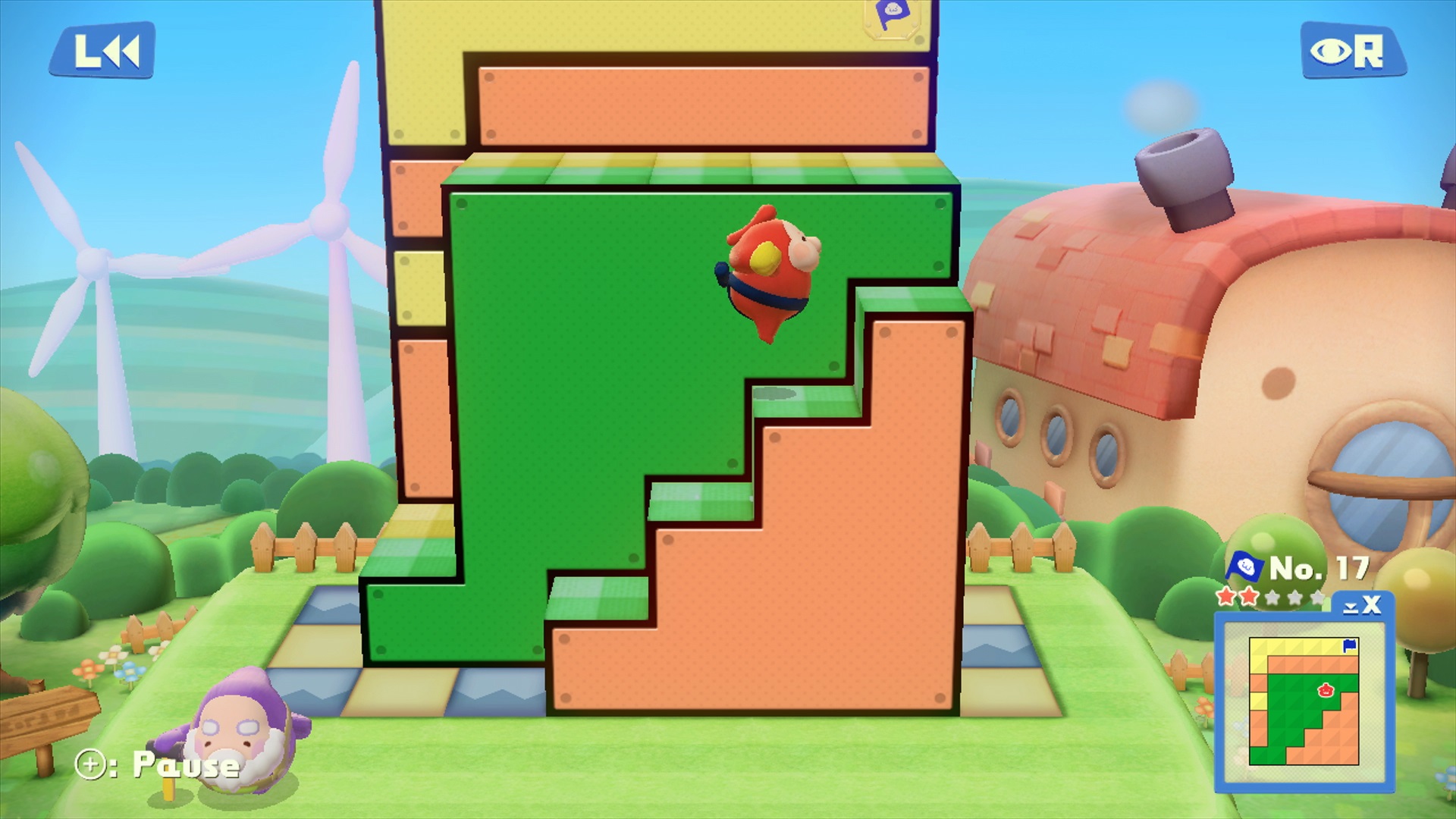
    First up, the game is no different than the 3DS version that I reviewed many years ago. You play as  Mallo, a little red sumo wrestler character that must save children that have managed to get themselves trapped on top of elaborate structures. These structures can only be pulled out a maximum of 3 spaces, meaning it’s up to your own ingenuity to discover the best method (and sometimes only method) of getting to the top of the puzzle and rescuing the children.

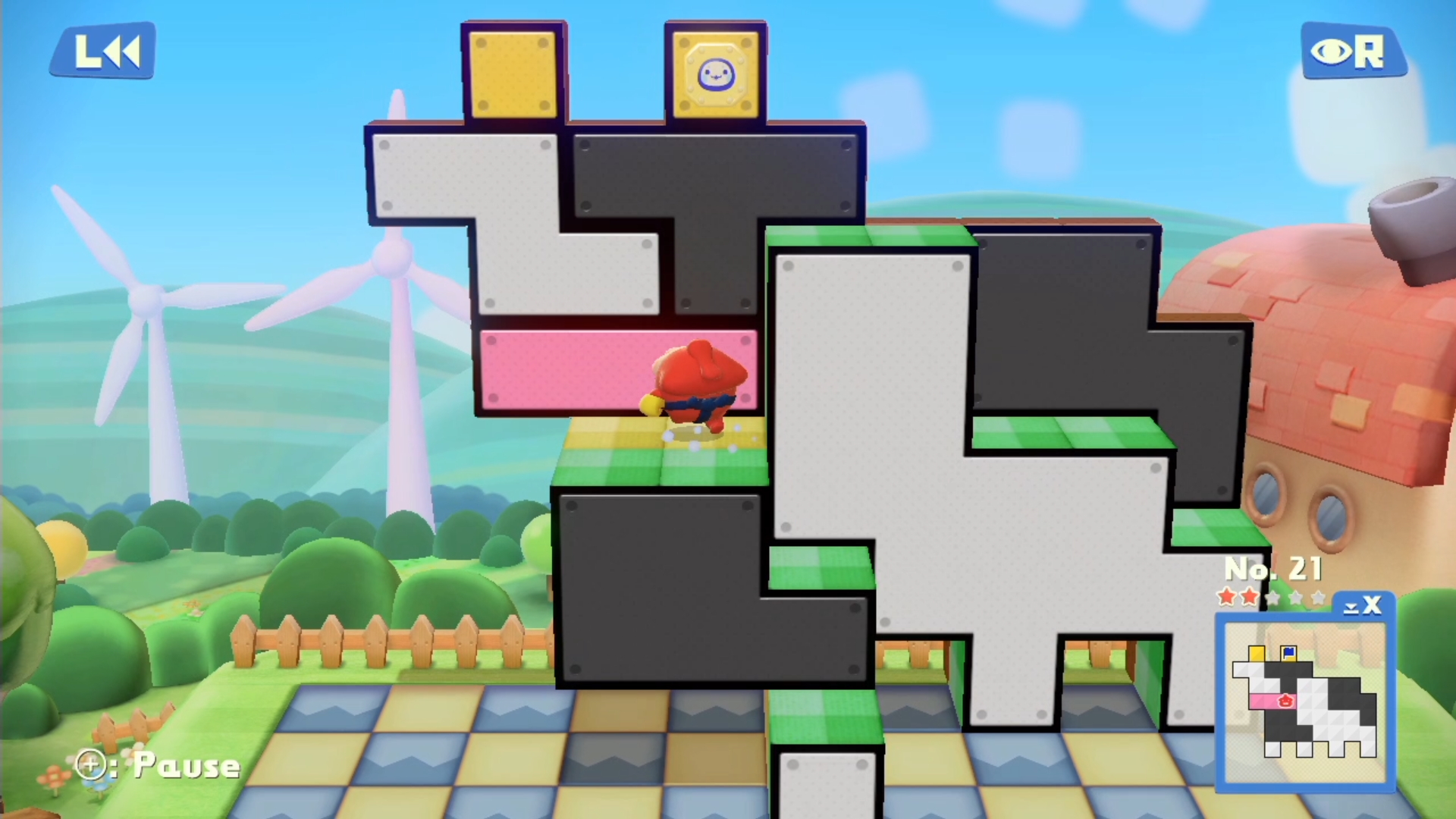
    So whilst the mechanics are the same, the puzzles are far from similar. The sheer amount of complexity and variety on offer in this Wii U version is just staggering, with some puzzles being quite abstract (i.e. normal shapes you have to overcome) to crazy sceneries, to even nintendo characters themselves being climbable. It’s insane, but oh so entertaining trying to figure out how to move blocks in order to make your way up.
    2549396-ci-25508788830376002

    One thing that has changed since the original: The complexity. There were so many times me and my other half would be starring at the screen for hours, wondering how best to move blocks out to get to the top. It’s infuriating, but genuinely gratifying when you overcome a challenge.

    Once we had finished the original 120 stages, we found there were another 30 special stages, along with 2 other modes: challenge mode (where blocks of the same colour all move out at the same time), and online mode. All in all there’s 250 new puzzles to conquer, and whilst I’m writing this review having only completed 140ish, I can’t help but feel me and my other half will continue to play this for the foreseeable future, having already put in 10 hours + so far.

    Graphics haven’t really changed since the portable version, with one of the only visible upgrades being the amount of polish in character and stage models. One improvement that does stand out is the new stage sizes. Where 3DS levels were relatively small, the Wii U versions are monstrosities, taking 15-20 seconds to walk from one end to the other. This sheer size can sometimes cause confusion, especially when you have to take into account elements from the other side of the puzzle when you’re half way up.

    pushmo

    The music is just as enticing as always, with the gorgeous cute charming music keeping you humming for hours. I found myself constantly shouting out the theme tune to levels well beyond completing them, much to the irritation of my other half.

    So all in all, I thoroughly enjoyed my time spent with Pullblox world. It’s more of the same, but when the original was so damn good, who can blame me for enjoying the second? Should you have a Wii U, you owe it to yourself to own Pullblox World, especially with it only being £8.99.

    p.s. Apologies for this review being so short, it’s hard to write 1000 words on a game that has such a simple premise, no matter how good it is!

    4/5

  • Weekly Gaming: Animal Crossing: Amiibo Festival (Wii U)

    Weekly Gaming: Animal Crossing: Amiibo Festival (Wii U)

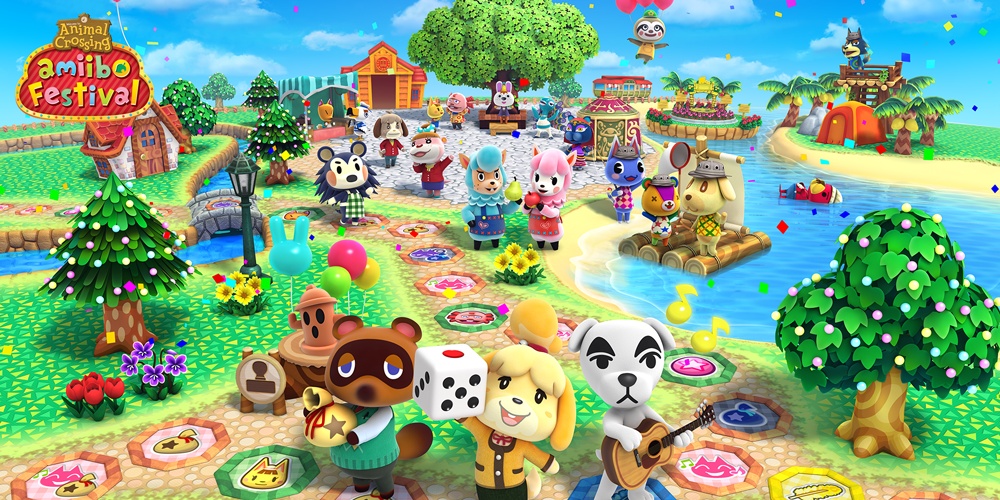
    I’m a massive fan of Mario Party. That is no surprise to those of you who know me, what is a surprise is how much so. It’s strange I know, especially for a series that evokes such hatred and love from it’s simplistic mechanics. In fact, there’s something about video board games that truly hits the spot for me. Maybe it’s the fact that no matter how much bad luck you have in rolling virtual dice you still have a chance to get points back with your skill, or even the randomness of it all, there’s something enthralling about playing a good video board game with friends or family. So, with that in mind, let me tell you about a little game that was on sale (for £15!!!!) for the Wii U called Animal Crossing: Amiibo Festival.

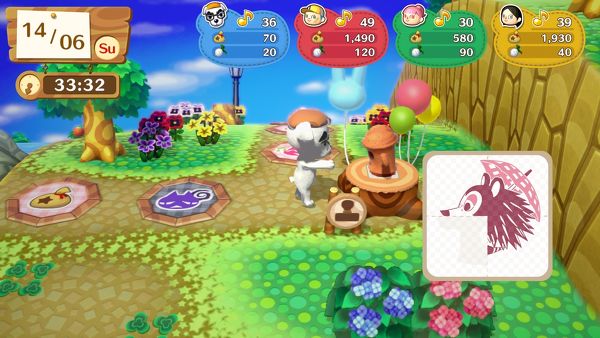
    Amiibo Festival, as the name implies, revolves entirely on Amiibo’s being placed on the Wii U gamepad in order to interact with the board game on screen. There are 2 game modes to do this in: the main board game or the mini-games unlocked through playing the main game. To get you started with the character placing,  Amiibo Festival includes two starter amiibo’s, Digby the dog and Isabelle the poodle. You don’t HAVE to play as these characters, but due to them being amiibo’s, and them inherently saving progress as you go around, it’s best to, as doing so unlocks more costumes and animations for your chosen characters.

    large-2

    So the main board game, is it any good? Unfortunately, nope, not at all. You see, the reason I love mario party games is because of the balancing that happens due to mini-games’ very existence. Just like being good in Mario Kart gives you bad items but doesn’t detract from your actual skill, Mario Party games can give you the worst dice rolls imaginable, but you could still win thanks to your skill in the mini-games.

    Animal Crossing: Amiibo Festival does away with anything you thought a board game should contain, meaning there’s no skill involved, apart from the skill to place an amiibo on a controller. The game does literally everything for you, there’s no thinking involved, no games to play, nothing. You are literally spending 45 minutes to an hour of your time watching characters interact with each other and lose coins. The objective of the game is to get as many happy points as possible, with coins turning into happy points at the end of the game. Some spaces of the board give you happy points or money, with others taking it away. This is all fine and good as a main objective, but as I said before, there’s no urgency, and certainly nothing on the players part in the way of skill – it’s all luck based on what you roll, and that, in itself is annoying.

    The only, and I mean only, two decisions of consequence you actually have during an entire game is trading turnips and deciding whether you wish to use your movement cards you pick up or to roll the dice. That’s it. Literally, the most thinking involved has to be the turnip buying, which happens once a week, and involves you deciding whether to buy as many as you can (the best strategy) or whether to hold on to some of your money. In most, if not all circumstances, the best tactic is to just buy as many as possible, as chances are, you’ll sell them at a profit during the week anyway.

    jpg

    The only redeeming feature Animal Crossing: Amiibo Festival has is it’s absolutely charming presentation and cute world. Every nook and cranny of the world features cute animals, each with their own charming personalities, and each going about their lives like any normal person would. It’s a lovely world, and one that makes me jealous of my other half’s love of all things animal crossing; it’s cute, and reminds me of how I felt about Disney when I was younger.

    Onto the mini-games, that require brand new amiibo cards. Yep, these are separate to the two main figures that came with the game, and are Nintendo’s attempt to draw even more money from their already heavily milked cow that is their fanbase. These cards look and feel like Pokémon trading cards from yesteryear, albeit with the new technology that is NFC built into everyone of them. Tap a card to the Wii-U controller, and you’ll perform an action with the character printed on the card.

    Each mini-game makes different uses of these different animals. One for example was a balloon game where you’d have to hold your card onto the wii-u until you decide you want your character to fall – doing so bounces them off balloons and points, with you trying to get your character to land on as many as possible.

    Another was a game of rock paper scissors mixed with whack-a-mole. It sounds crazy, but is actually fairly simple: each of the 3 character cards you place on the wii-u represent rock, paper or scissors. In front of them is a mole that spins around and chooses a different symbol every other second. It’s up to you to place a character card to the wii-u game pad both as fast as possible, but also ensuring you get the correct result (paper beats rock, rock beats scissors for example). Whilst I didn’t play this myself, I could see my other half enjoyed it no end.

    animal_crossing_amiibo_festival

    So were the mini-games worth it? Well half of them cannot be played with the included cards. Some require more than 3, which is yet another attempt within Animal Crossing Amiibo Festival itself to get you to spend more money. They were enjoyable, don’t get me wrong, but should they have been included as mini-games at the end of rounds they’d have been of greater use rather than side-projects.

    As for Animal Crossing Amiibo Festival as a whole; It could have been so much better. Every design decision, from the single board game (yep, no variation, always the same board), to the limited way in which you interact with the game feels like a hollow attempt by nintendo to grab more cash from you. It’s a shame, as the game does have a lot of genuine charm, but when you’re constantly made to feel like you’re missing out of features because of what you have or have no purchased, you can’t help but feel regret at stooping so low as to buy something so underwhelming. If you’re an animal crossing fan, you’re bound to find something of value here (namely the amiibo figures themselves), but for everyone else; avoid this game like the plague. There’s nothing of value here.

    1/5

  • Weekly Gaming: Splatoon (Wii U)

    Weekly Gaming: Splatoon (Wii U)

    splatoon_updates

    Having seen the amount of commotion traditional games media was lavishing upon Splatoon, I decided to finally jump in head first and see what the fuss was about first hand. Finding the game for sale at £18 (which is rare! Splatoon hasn’t really had any price drops since it’s release), I brought it straight away without hesitation. Here’s my impressions.

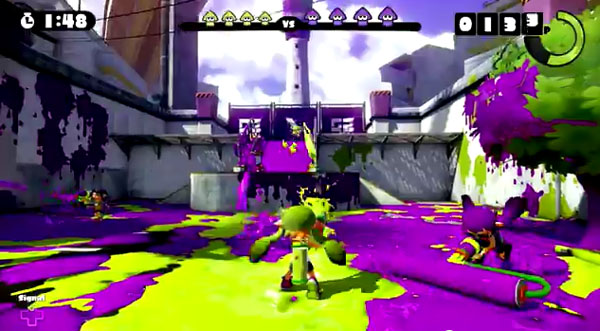
    Splatoon, Nintendos first ever foray into the Third Person Shooter Multiplayer genre, see’s you play as a squid-kid, a hybrid kind of creature that looks like a kid majority of the time, but can also turn into a squid at will. Being a Squid-kid comes with it’s benefits: you’re able to spray your own ink all over the stage, and use it to traverse to places you wouldn’t normally be able venture to. This mechanic is very reminiscent of Super Mario Sunshine for the Gamecube, where Mario had to spray FLUD (his water backpack) to get rid of toxic paint spread throughout the stage. The similarities stop there though, as Splatoon is a whole different kettle of fish.

    From the offset Splatoon makes it known that this is an online multiplayer game first and foremost with its news system. Each day it tells you what levels are available to play in social playlists, and in ranked. But before I got into any of the multiplayer, I decided to give the campaign a go.

    Splatoon_Wii_U_gameplay_screenshot

    First up, I played the entirety of the single player campaign. This mode allows you to get accustomed to the Splatoon controls (I’ll talk about those later; suffice to say, they take some getting used to), whilst also telling a story about the squid-kids versus the octopuses. Each stage has a unique gimmick to it, some will require you to fill up sponges with your own ink, increasing their size and making for some difficult platforming sections, with others having a boss system where you must avoid his attacks throughout the level, only to defeat the baddie at the end. The stages are varied and nice, and not once did I feel like the game was too repetitive, which, over the course of the 5 hour campaign, can only be a good thing. For all your troubles, you’re rewarded with some outfits to use in the online portion of the game (which is the main draw of Splatoon). Whilst this wasn’t much of a pay-off narratively speaking, the campaign doesn’t really set up much of a story in the first place; you’re trying to rescue a massive cuttlefish (electrical fishes basically) that’s been stollen by octopuses.

    Between choosing the campaign and the multiplayer, you have a hub world to interact with, allowing you to customise your character, as well as explore and take on extra challenges thanks to the games Amiibo support. Whilst I wasn’t a big fan of the amino challenges, they at least offered extra value in a game that hasn’t really dropped in price since launch. The shopping district in this hub area was a bit annoying though: everything’s level capped, meaning you need to make sure you play the multiplayer quite a bit before you can even interact with a bunch of shopkeepers. In theory this is a good idea: play the multiplayer more to get more loot! it left me disheartened, especially after I had just spent 5 hours playing the campaign. If anything, both multiplayer and campaign should have contributed to the same points system, allowing for single-player users to still feel like they’ve achieved something after so many hours playing the game.

    WiiU_Splatoon_02_mediaplayer_large

    Now before I get onto the core purpose of Splatoon (it’s multiplayer), a quick word about it’s controls. The game defaults with motion controls, meaning you need to move the gamepad up and down in order to look around. As soon as the option was available, I turned this mode off. It’s hard enough looking at a screen and concentrating on where to aim, let alone having to add another layer of complexity to the game by moving the controller up and down. As for the control scheme itself, I found that Splatoon is not accurate at all. You don’t get the precision that you normally would from a third person shooter, which takes some getting used to at first, but after a while, realise that it’s actually ok. You see, since the core purpose of the game is more to spray your ink as far as possible (covering as much of the map as possible), accuracy is mute. Yes, there are times you’ll come across another player and will need to precisely shoot at them, but these moments are few and far between, meaning the inaccuracy is fine for shooting and glooping the stage.

    Now onto the core of the game: Multiplayer, where all your skills are put to the test in multiple modes; ranked and social. For starters, you’re not able to join ranked matches until you’re level 10; a trait that’ll take at least 2-3 hours to attain. Whilst this was annoying, there’s a good reason for this restriction: the social playlist will teach you the core mechanics of the multiplayer mode. Every game mode is short (3-5 minutes in length) and as multiple game modes. For the vast majority of the time, you’ll be playing the “turf wars” game mode: a mode that requires each 4 player team to ink as much of the stage as possible. whilst that sounds boring in theory, it’s fantastic to actually experience, and gives every player of every ability the chance to have a great time. I loved being on the front line in this mode, taking on other players and getting rid of their ink in the middle of the level, but I could just as easily enjoy staying at the back of the level and making sure as much of the stage is covered as possible. It’s this flexibility that gives the game so much charm and replayability; everyone is contributing to the final score. Unlike most other shooters where you have to be good at killing others in order to contribute to the overall score, Splatoon makes it so that everyone on a team feels valued. It’s a fantastic feeling, and one which I can now see why so many editors and writers put it in their game of the year lists.

    WiiU_Splatoon_323_MultiPlayer_SplatZones_Warehouse01

    All in all, Splatoon is a marvel of multiplayer shooters. It stands alone in being quite unique and original; where so many other developers in the industry are trying to copy the leader (COD), Splatoon stands as a testament to what can be done when you think outside of the box. If you can find the game for cheap like I did (and of course be one of the 10 million people that own a Wii U), then buy Splatoon. You won’t be disappointed.

    p.s. If you do buy the game (or already have it) give me a shout, I’d love to give you a game!

    4/5

  • Weekly Gaming: Captain Toad: Treasure Tracker

    Weekly Gaming: Captain Toad: Treasure Tracker

    SI_WiiU_CaptainToadTreasureTracker

    I say games are charming quite often on this blog, and with most of these games I usually see them in a positive light. A lot of indie games come under this category, mainly because their aesthetic is so fantastic and cute that it leaves an impression that bypasses the actual gameplay. In these instances, the gameplay could be horrendous, but with the aesthetics looking so damn gorgeous I proceed to overlook a few grievances that would otherwise degrade the experience as a whole (I still write about the gameplay problems, but my overall score may be slightly higher due to the aesthetics alone).

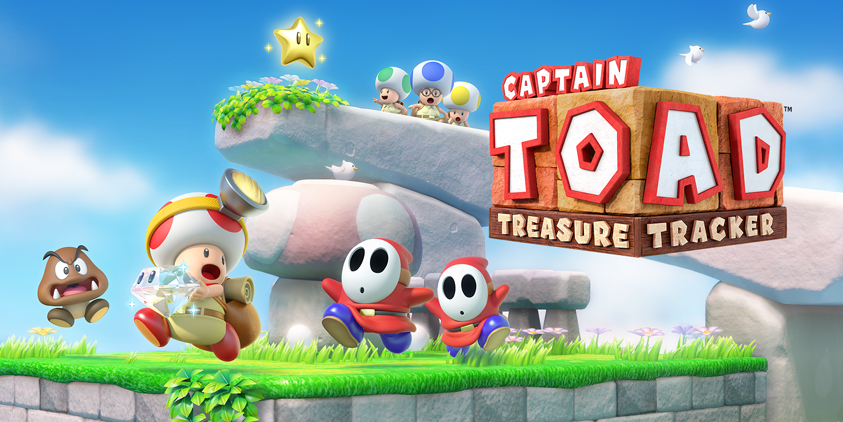
    Captain Toad manages to be both a charming game in the aesthetic department, as well as in the gameplay one. It’s combination of simple mechanics with oh-so troubling puzzles makes for one of the best experiences I’ve had playing with another person in a long time.

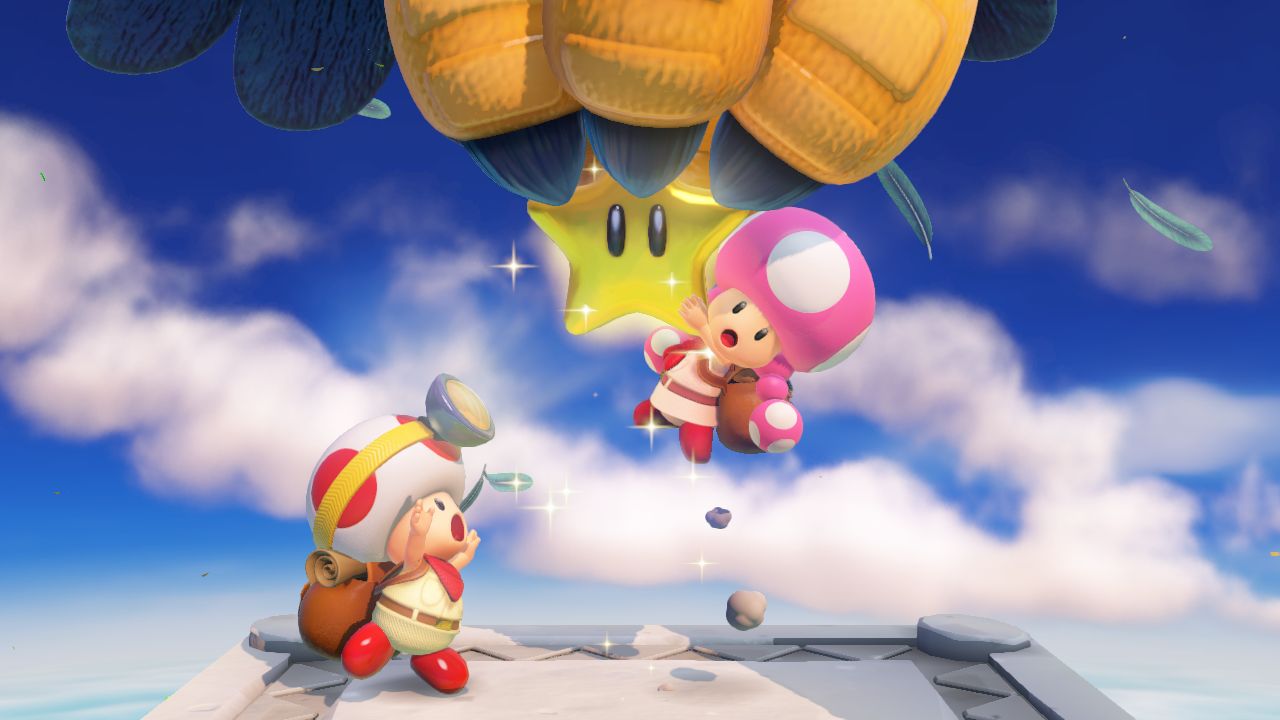
    So where to begin? Well from a story standpoint, there isn’t much to be had here. Like many Nintendo games the story is rather light, with Toadette being stolen by a giant evil-looking bird being the main reason Toad starts off on his adventure. This story flips back and forth throughout the game’s 70-odd stages, with Toad in turn being stolen, meaning Toadette has to take her turn at trying to rescue her other half. At the end of the day, the story is not necessary to enjoy Captain Toad: Treasure Tracker at all, so it’s mostly here to service a few fans with cute cut-scenes here and there.

    toad-main

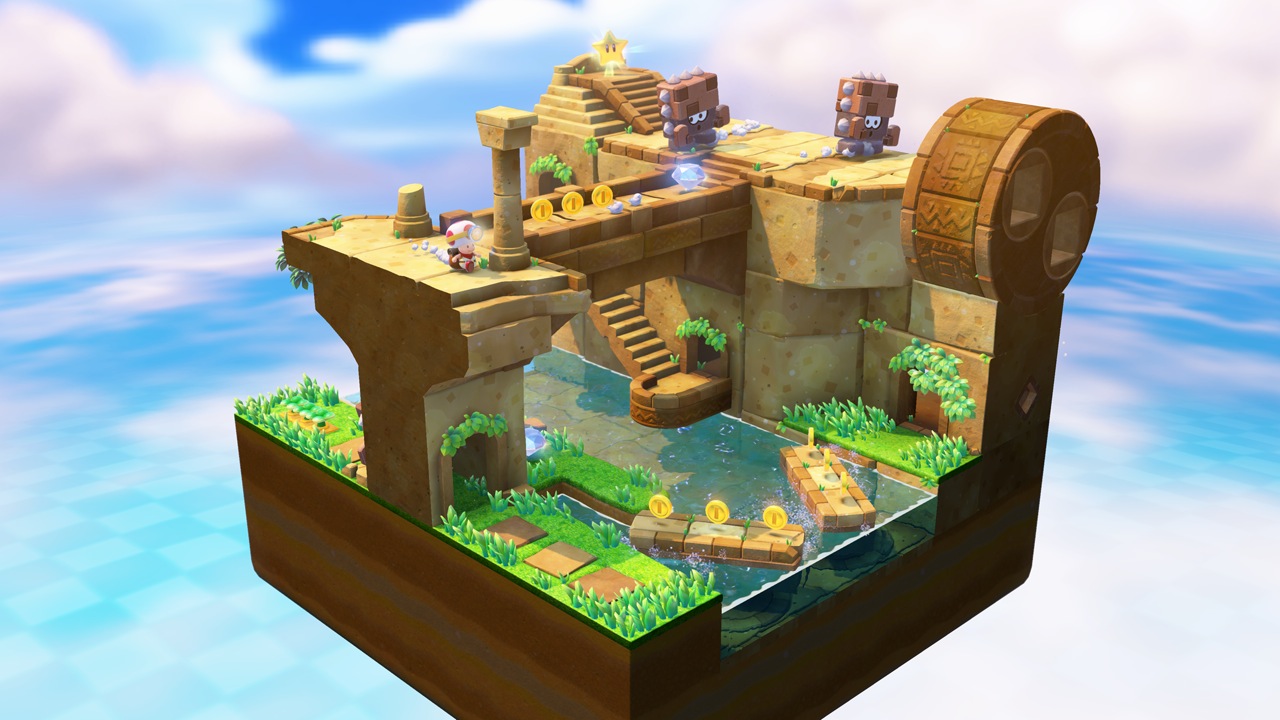
    The gameplay revolves around Toad (or Toadette!) having to navigate around a small map, all whilst collecting 3 diamonds and making their way to the golden star at the end. Each stage is extremely small, with most being able to be completed within 2 to 3 minutes should you brisk your way through them.

    These stages would be easier if it wasn’t for the limitation that Toad (and Toadette!) cannot jump. This limitation (which I believe is explained through the fact Toad has a large backpack on that holds lots of coins), helps to make every single stage extremely interesting and complex. Trying to get to a diamond which is hidden at the top of the stage becomes a chore of puzzle solving rather than action, which is great, as it gives you just as much time to take in the stunning levels with all their intricacies.

    My oh my how the levels shine! They are genuinely a testament to the amount of polish and attention to detail Nintendo can put into a game after all these years. Every blade of grass, every brick in a wall, and every character that moves about the screen is all so stunningly rendered I have no idea how Nintendo could make anything prettier in the future. This is pixar, but given to the user to control at their own pace.

    2558115-wiiu_captaintoad_scrn01_e3

    Whilst most of the campaign/story’s will entail making your way across these tiny stages, there are some deviations. These come in the form of some literal on-rails sections (where toad must throw turnips from a train cart at enemies throughout a course), and some boss encounters. These stages really help to mix up the campaign, with the same rules applying (no jumping), it makes for some challenging encounters.

    Captain Toad: Trasure Tracker isn’t without its faults though. One annoyance does manifest, and it’s in the game’s hidden mode. Titled “Hide and seek”, this fantastic little addition to each level is hidden behind a barrier: you must own the Toad amiibo. Tap your amiibo to the wii u gamepad on a level you’ve already completed, and a pixelated toad will invade it, with your soul objective being to find him somewhere within the stage. It’s a shame that for a lot of people that just bought the game without the amiibo they’ll never see this mode, as it’s easily the most fun I had with the game. Me and my partner would swear consistently as we scanned every nook and cranny of a course trying to locate a little pixelated Toad, calling him a little shit when we’d find him hiding behind a rock or a fucker when we’d find him jumping between windows. It’s seriously such a good game mode I’m tempted to try the gameplay idea myself with an iOS/Android game doing exactly the same.

    One other annoyance with Captain Toad: Treasure Tracker is it’s lack of difficulty. Whilst the puzzles are brilliant, and each level is masterfully designed, there just isn’t any challenge to the game. Yes, there may be times I would spend an extra minute or two staring at a stage wondering how to get to the final diamond, but overall these moments were few and far between. Maybe that’s a testament to Nintendo’s fantastic level designers, but for me, I genuinely wish it could have been harder so that I’d have spend more time taking in the gorgeous levels.

    2733255-captain-toad-treasure-tracker-2

    There’s plenty of replayability though, with each level having 3 different things to collect. There’s the star (which is always the end of the level), the three diamonds, and the optional objective. You’re not able to know the optional objective until after you’ve finished a level, so many times you’ll need to go back in again to do it. All three of these optionals should be enough to keep you entertained for hours, but with only one disadvantage: you’ll wish there was more once the games credits has rolled.

    Despite my grievances and as I said at the start of this review, the charm of Captain Toad Treasure Tracker manages to really pull through. Taken in it’s entirety, Nintendo have managed to make one of my favourite games of 2016, and to think, it’s only just begun makes me even more excited for what else I’m going to play this year.

    5/5

  • Weekly Gaming: Super Mario 3D World (Wii U)

    Weekly Gaming: Super Mario 3D World (Wii U)

    It’s genuinely insane how much adoration and annoyance I have for Nintendo games. On the one hand, they make absolutely charming games that are addictive for days, weeks, years even until you’ve collected everything a game has to offer. I remember doing just that with Super Mario 3D Land, collecting everything (yep, every single stage twice as Mario and Luigi + secret stages) the game had to offer. But my annoyance comes from the fact that they make the same games every generation of consoles, with the aesthetics being one of the only things they mix up with recent iterations (Yoshi’s Woolly World & Paper Mario come to mind). Thankfully, Super Mario 3D World is not one of those games, and as a consequence, is some of the most fun I’ve had on a Nintendo game since 3D land all those years ago.

    1381512525385-1

    You see, whilst most other nintendo IP’s have been through several generations of consoles before they ended up being rehashes with new aesthetics, Super Mario 3D Land was only released a few years ago on the 3DS. The great 3D environments and fantastically short levels truly helped to make one of the most exciting and original Mario games of recent memory. Super Mario 3D World elevates this praise and takes it to the next level, showing what you can do with a Mario game in 2013, with a proper console behind it.

    One of the first things I have to get out of my system about the game is it’s absolutely stellar presentation. Seriously, who knew simplistic geometry and cute disney-esque designs could be so god damn gorgeous? Everything, from the grass waving in the wind, to the mud that you see underneath, is absolutely stunning. It’s also insane that in a time when most console games are struggling to reach 30fps, Super Mario 3D World never stutters or moves below 60FPS, helping to keep gameplay smooth, no matter how many players or enemies are on screen at any one time.

    sm3dw1

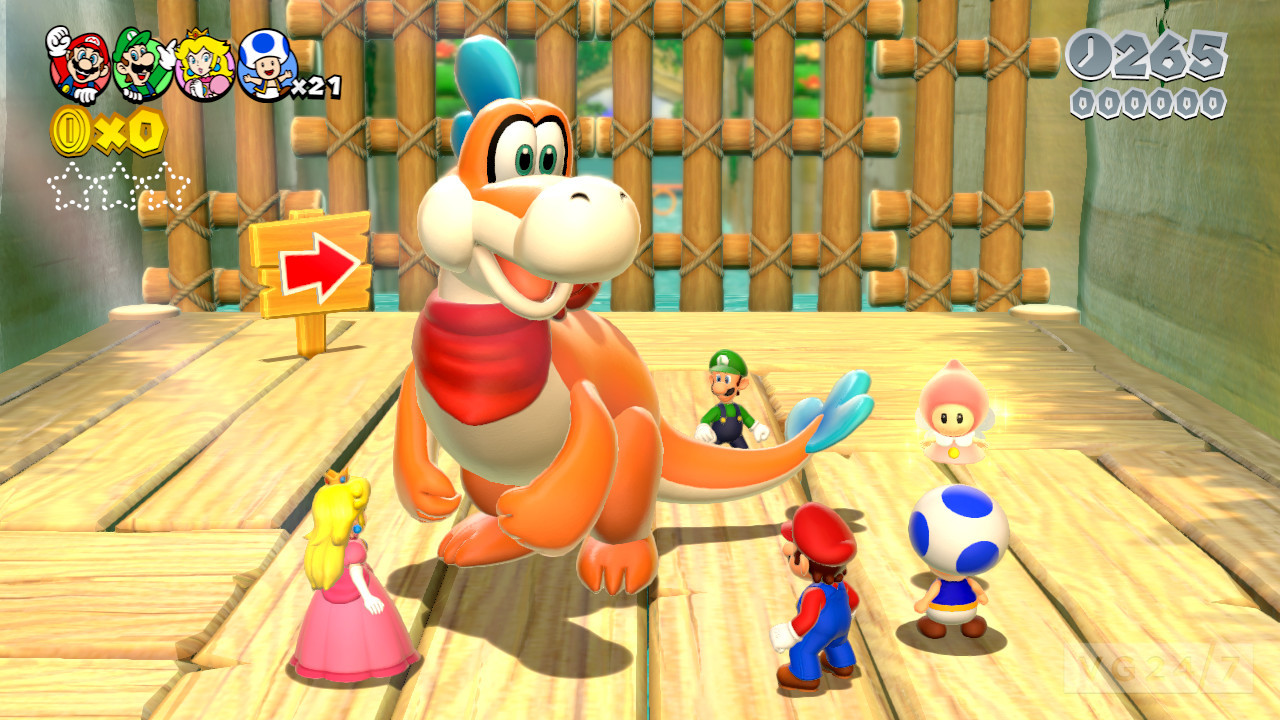
    The addition of multiplayer is a huge advantage over it’s predecessor on the 3DS. Being able to play the game with my other half ensured that I was finally able to incorporate her into my game time, ensuring she had a lot of fun whilst I got to play a game I wanted to review. Yes there were disagreements, it’s bound to happen in a game where the camera is trying to incorporate both players in the screen at any one time, but it was still enjoyable all the same.

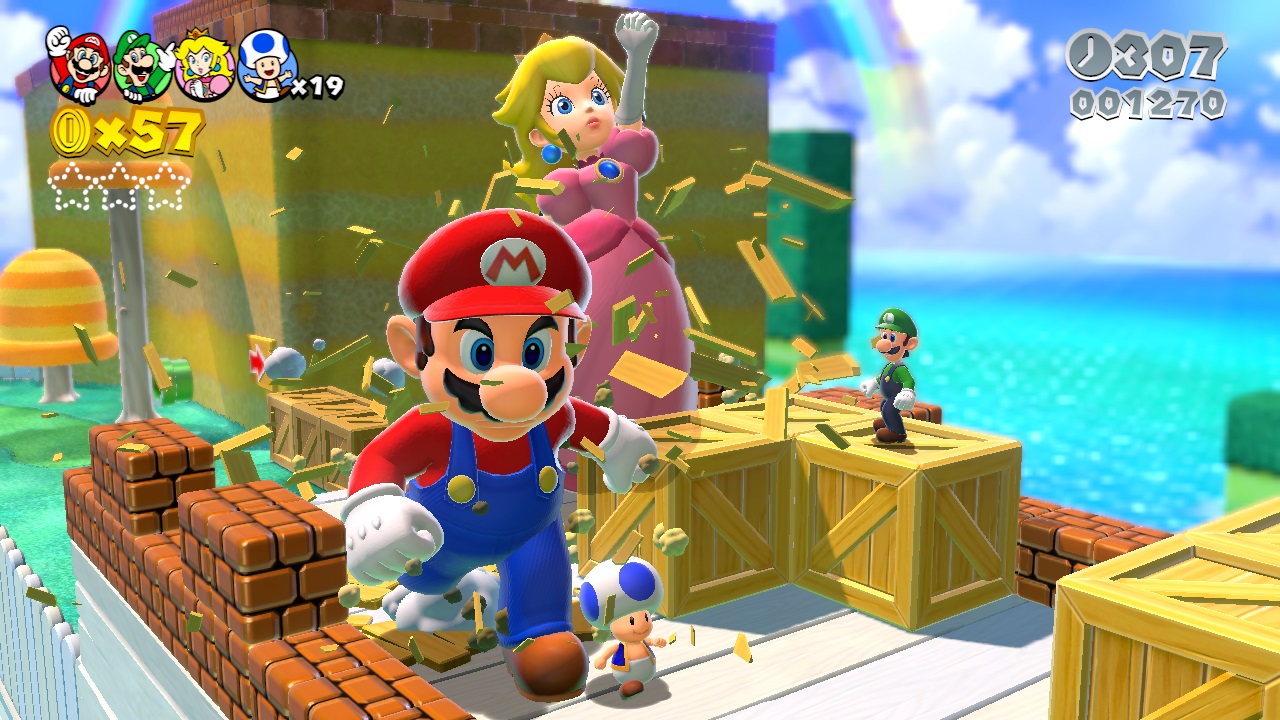
    With the presentation and multiplayer out of the way, how does the gameplay hold up? Rather well actually. Mario and the team still jump in the ways they always have (with peach being hugely OP since she can hover whenever she likes!), but because of these mechanics being the same as they always have been, where does nintendo find the innovation? In the course design and power-ups. You see, rather than resting on their laurels, Nintendo came up with quite a few new power-ups to use throughout, from the new cat bell which turns Mario and co into cats that can climb walls (in all fairness, this power-up feels like Nintendo’s pandering to the internet culture, but it was still good to use all the same), to the new cherry power up (which spawns a new playable character on the screen) found throughout certain levels, each power-up felt great to use and helped in keeping each stage original, and giving new options by which to traverse the levels.

    super-mario-3d-world-2

    It’s thanks to the course designs that each level is so enjoyable to play and go back to. Everything’s doable without power-ups, but it’s the power-ups that will help you achieve 100% of collectibles within a level should you have them. For example, the vast majority of levels will allow you just to rush through, but should you wish to get a collectible green star (there are 3 of them in each level), you’ll need to climb a wall, which can only be done with a cat bell power-up. Most stages will give you these at the start, so it’s up to your own skill as to whether you can keep them until the end of the stage. It’s a fantastic system that ensures everyone feels encouraged to finish a level (no matter whether they’re tiny Mario or full upgraded), and helps to make sure those who are slightly more skilled (who keep the power-ups) get the satisfaction of beating a level without being hurt.

    There are drawbacks to the new camera angle approach in Super Mario 3D World, and it’s mainly present in multiplayer. You see, trying to keep multiple players on the screen at the same time can take a lot of effort on the developers side, so to compensate, they make the player who’s ahead and on the correct path the main, focused player, whilst also zooming out to show the other player. This approach works most of the time, but there were so many instances where I would have to turn into a “balloon” in order to get back to my other half on screen, even though I was getting a power-up or collectible. It’s frustrating at times, and can also cause you to miss-time your jumps, resulting in lives lost or getting damaged by simple creatures like goombas.

    Super-Mario-3D-World-7

    Overall, Super Mario 3D world is simply one of the best games I’ve played in recent memory. It’s simplistic control scheme and simply sublime graphics really help to show how Nintendo go to where it is through sheer polish alone, a rare sight in a world with buggy games and unpolished presentations. If you have a Wii U, the price tag of Super Mario 3D World may be steep, but it’s worth every penny.

    5/5

  • Weekly Review: Bayonetta 2 (Wii U)

    Weekly Review: Bayonetta 2 (Wii U)

    FUCK THE WITCHESSS
    The troublesome twosome are back in Bayonetta 2 following the fantastic original.

    It’s weird to think that Bayonetta 2 may have never happened. Given the amount of praise the original got from almost every publication, you’d have expected the game to have sold well, but at ~2 million units sold, it didn’t make as much money as Sega would have hoped. Going from publisher to publisher trying to sell the premise of Bayonetta 2 was unsuccessful for the most part, until Nintendo stepped in at the last minute to fund the making of a second Bayonetta. It was a move that fans appreciated the world over, and I for one thank them after playing the masterpiece that is Bayonetta 2.

    The game starts out with Bayonetta Christmas shopping with her partner in crime following her every step. It’s here that something’s amiss, with angels coming down and attacking jets going through the city, prompting Bayonetta to jump into action to put a stop to these “evil” beings, by fighting on top of a jet which is flying through the city. It’s a fantastic start to the game, one that shows how the game means to go on, with over the top action scenes and ludicrously tight fighting. From here the story only gets even more interesting, with Bayonetta’s best friend’s soul being taken to hell, and the balance between good and evil skewing, Bayonetta has no choice but to fly to Japan and it’s Fimbulventr mountain in search of both the gate to heaven, and the gate to hell.

    FUCK THE SHOESSSS
    The gun heels are back, giving Bayonetta that unique look and feel she’s always had. These can be change and exchanged for swords, whips and all manner of other weapons.

    If you’ve played the original Bayonetta, or any action game like dynasty warriors, God of War etc. then you’ll know the basic mechanics of how the game will play out, with the game partially opening up to allow you freedom around a stage, and then putting you in a small arena to attack a bunch of enemies that spawn from no where. It’s a tried and tested technique, one that feels contrived but does the job of making sure you never go more than 5 minutes without fighting, because at the end of the day, the game lives and dies by its fighting mechanics, and oh boy do the fighting mechanics work well in Bayonetta 2.

    Every punch, kick, slash, whip and dodge feels fantastic to pull off, with combos flowing naturally as you jump between enemies, using your arsenal of different combos as you go. The dodging mechanic is easily the most empowering, as every time you successfully pull it off the whole world slows down allowing you to destroy your enemies faster due to something you successfully done. It’s gratifying, and one of the main reasons to keep coming back to the game, as you feel cool for doing it. I’d have many instances where a housemate of friend would pass by, watching the TV explaining they had no idea what was going on whilst I managed to skilfully dodge most incoming attacks. It empowers you like now other game has in recent memory, and for that I thank Sega and Nintendo for producing such a fabulous and entrancing system.

    FUCK THE STUPIDNESSSSSS
    Bayonetta 2’s graphics may at times look crude compared to modern PS4 and XBONE titles, but they’re a far cry from the original, with the game looking colourful and pretty without even trying.

    New weapons, abilities and moves are unlocked during the main campaign, allowing you to spec Bayonetta out like never before, with weapons like whips or swords helping to vary up your combat a bit, with each different weapon dealing different combos to help you out against specific enemies. Everyone will find their own groove with Bayonetta 2, and that’s the beauty of its fighting mechanics; they allow everyone to feel as empowered and as badass as Bayonetta acts in the face of peril.

    The game is rife with collectibles and unlockables, with every single fight being graded you feel compelled to come back to the game to do better in each and every encounter. The second you get hit instead of skilfully dodging a swing you sigh and groan, as it’s ruined your chance of getting a pure platinum award for this fight. It makes every encounter worthwhile and ties perfectly into the core fighting mechanic that feels so empowering. I managed to get around 75% of the collectibles on my first playthrough, totalling about 13 hours of story and gameplay. Once finishing the campaign I felt compelled to return to some stages to grade better, but was never able to find a few of the secrets I had missed on my first playthrough. Those of you that like to 100% games, be prepared to look up walkthroughs to find everything there is in Bayonetta 2.

    The story can be corny at times, with terrible characters falling from buildings to comedic effect and Bayonetta’s cockiness coming across a little close to the knuckle, but it doesn’t detract from the overall fun of the game at all , and if anything had me in stitches at times. Bayonetta 2 does not take itself seriously, and to a degree, neither should you, just sit back, relax, and have a load of fun.

    FUCK THE WHITE MAGEEEEE
    The action sequences that take part in cut scenes are astounding, making for an exciting game both when you’re passively watching it, as well as when you actively take part in it.

    It must be said that the soundtrack and graphics were top notch as well, with each battle having extremely catchy music (seriously, just take a look at it, called tomorrow is mine) and the whole game being extremely colourful it was  a joy to traverse each level. There were a few platforming sections that felt a bit annoying, but these were limited and far between, ensuring you can stick to kicking enemies asses rather than exploration.

    Bayonetta 2 feels like a love letter from Nintendo and Sega to gamers the world over. With the introduction of more serious topics in games, from gritty marines to the explosion and saturation of FPS’s, Bayonetta 2 stands alone as one of the games that looks to be fun, unadulterated, dirty and funny fun. Every mechanic in the game feeds back into each other to keep you entertained and constantly progressing, improving you both as a player of the game, but also ensuring you’re kept engrossed and never bore of any of the games’ key moments. It’s a fantastic game, one which justifies a Wii U’s purchase in itself, and one I wish more gamers would be able to experience. If you own a Wii U, you owe it to yourself to play Bayonetta 2.

    5/5