Category: Weekly Gaming/Media

  • Weekly Gaming: Knee Deep (Xbox One)

    Weekly Gaming: Knee Deep (Xbox One)

    Hi all!

    So, it’s been a while since I’ve reviewed a game for VGChartz.com. This hasn’t been intentional, there just hasn’t been many new games to review, and no publishers/developers willing to give me a review copy.

    Thankfully, that all changed this week when Wales Interactive reached out to me and asked if I wanted to review Knee Deep, an adventure game from Prologue Studios. Having seen the game at EGX in the past and being intrigued at the premise, I said hell yes and proceeded to play through the game.

    If you want to read my thoughts on it, by all means click the link below:

    http://www.vgchartz.com/article/267270/knee-deep-xbox-one/

    If you wanna shout at me for this review, or have any thoughts/feelings on my critique of the game, you can always reach me over on Twitter: @caesoose

    As always, thanks for visiting!

    -Dan

  • Weekly Gaming: Super Hot (PC)

    Weekly Gaming: Super Hot (PC)

    I finally done it. After months of hearing fellow gamers and journalists talk about Superhot, I finally bit the bullet and bought the game to play through it in one night.

    And truth be told: I’m underwhelmed.

    Not to say Superhot is a bad game, not by any stretch of the imagination. Far from it in fact. I just believe that maybe gamers across the world have maybe shouted superheats praises a little too much, making my time with the game not feel as epic as someone playing it with no prior knowledge.

    But, I’m getting ahead of myself here, so lets start from the beginning.

    Superhot is a First Person Shooter whereby time doesn’t move until you move. From that one sentence you can already tell this isn’t like normal FPS’s, and as a consequence, you could also call super hot something of a strategy/puzzle game.

    The game starts out by presenting you with a PC, with it’s own custom operating system. From here, you’re able navigate around all the files and folders, and open up chat messages with some unknown contact. They send you a build of a file called “Superhot.exe” and from there, when you click or enter it, you’re able to play the main campaign.

    Starting out, you’ll undoubtedly want to mess around with the time mechanics until you have a firm grasp on what you can, and cannot, do. Looking around the environment causes an extremely minimal amount of time to pass, with picking up weapons or punching enemies making chunks of time pass relatively quickly. Distinguishing how much time is left before a punch occurs, or a bullet hits you, can take some getting used to, especially when you’re looking around to find a way around a bullet heading right for you.

    Each level throughout the campaign is tiny, but sets up an elaborate scenario whereby you’ll always feel epic for having overcome the challenge on offer. One level for example starts you in an elevator, with 3 enemies pointing their guns at you ready to fire. The second you start you need to punch your way around, as one wrong move will result in a bullet in the head. It’s challenging, but once you see your full speed replay at the end of the level it makes the scene feel truly epic, like something out of the matrix.

    Once you’ve mastered the first few levels you’ll then proceed to get more chat logs with the “friend”, and download further levels to take part in. The story starts to show here and there, as you start to realise this world is more than just a game, with you in fact having an actual influence on the real world. I won’t spoil the ending, but considering I went into Superhot not expecting too much of a story, it left me impressed.

    The issue is, there’s just not enough of the game. It took me an hour and a half to complete Superhot, with the challenges extending that time for a few more hours. Given my upcoming criticisms of the gameplay in a minute, this could be seen as a good thing, but I just can’t help but think that the high price for low amount of game time is a bad deal. Granted, the gameplay is super polished and feels like something a Triple-A studio could produce, but it just doesn’t feel like *enough* for how much is paid.

    My other issue is the gameplay: it’s a one trick pony. Like I said at the start of this review, maybe it’s because of how much journalists have been raving about the gameplay for the last year, but I couldn’t help but feel that it becomes old, fast. Yes, the replays at the end look good, but the limited amount of guns, and situations you’re put into make for a game that’s figured out extremely fast, losing it’s puzzle attributes fairly fast. Some could argue that the campaign ends before the mechanics get boring, but I would counter that the developers could have extended the gameplay by giving more options, more variations, more enemies. Anything but the same would have sufficed.

    There’s nothing to speak of in regards to music, with some of the only sounds you hear throughout the game being the constant chanting of “Super Hot” between each level. This isn’t a bad thing necessarily, but there are times that the action could feel a bit better with the right soundtrack going on in the background.

    Hype is such a strange thing in video games. It has the potential to give a studio millions of sales with relative ease (I’m looking at you No Man’s Sky), but in the same vain it can also cause a loss of feeling towards a given product when it doesn’t meet it’s lofty expectations. Super Hot is one such game for me, as the hype surrounding its release has been so high that it could never fulfil my expectations.

    Super Hot is a good game, there’s no denying that. But I don’t believe it was a contender in my own top 10 games of 2016. It’s short campaign, lack of content, and one core mechanic soon become old, fast for me. Get Super Hot if you can get it on sale, but I wouldn’t recommend paying full price for it.

    4/5

  • Weekly Gaming: Gears of War 4 (Xbox One)

    Weekly Gaming: Gears of War 4 (Xbox One)

    Whilst I believe that the Gears of War series was one of the defining experiences of the previous generation of consoles, I never 100% got into them. Yes, their “press Y to look at this thing we want you to look at” and cover mechanics defined an entire generation, but they just never felt right to me. Maybe it was the overwhelming odds that the group faced, as they consistently survived with no issues, or maybe it was the fact that the attempts at horror fell flat when the game was constantly making you feel like a hero, interjecting humour wherever it could. Regardless of the reason, I still continued to play every single one, and proceeded to enjoy my time with the series whilst playing co-op with my friends, enjoying, but never loving, the series.

    So here we are, with a new generation of consoles to play the game on, and a new story. With Gears 3 destroying all the locusts (the main protagonists of the series), we find the world of Gears a very different place to be. Humanity is trying to repair itself, building cities using hulking robots (that are now a new enemy – more on that later), and proceeding to remind women the world over to have as many children as possible to replenish the dwindling population. this new world is weird, and in some respects, welcome. The previous game’s dreary underground segments were what defined last generations “murky” games, so the chance to explore a new world with less destruction and actual daylight was always going to be a nice change. The problem is, that change doesn’t last long, with Gears 4 soon turning back to it’s tried and tested formula of jokes, laughs, and dreary dark narrow hallways

    You see, not only are there new enemies in the robots that are controlled by the CoG (the governing body post-war), there’s also a new type of gruesome enemy that’s kidnapping people and taking them underground. Throughout the course of the campaign you’ll learn that these new enemies are simply re-skinned locusts that have managed to evolve due to their to prolonged exposure to imulsion and 25 years of being left alone in pits across the world. With Marcus (the protagonists father) being kidnapped, you spend most of the campaign fighting in the dark trying to find him, along with kait’s (a sidekick) mother.

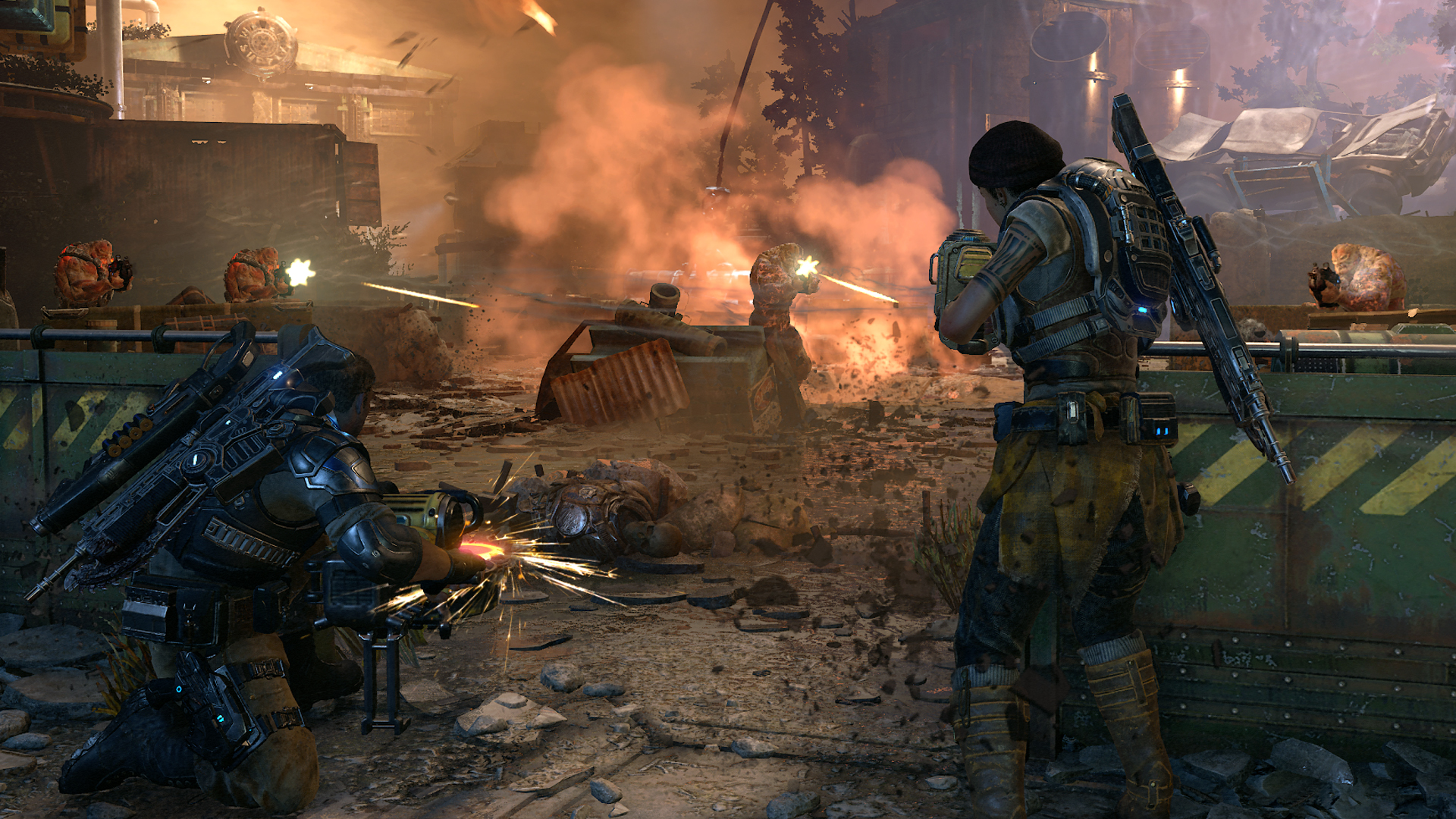
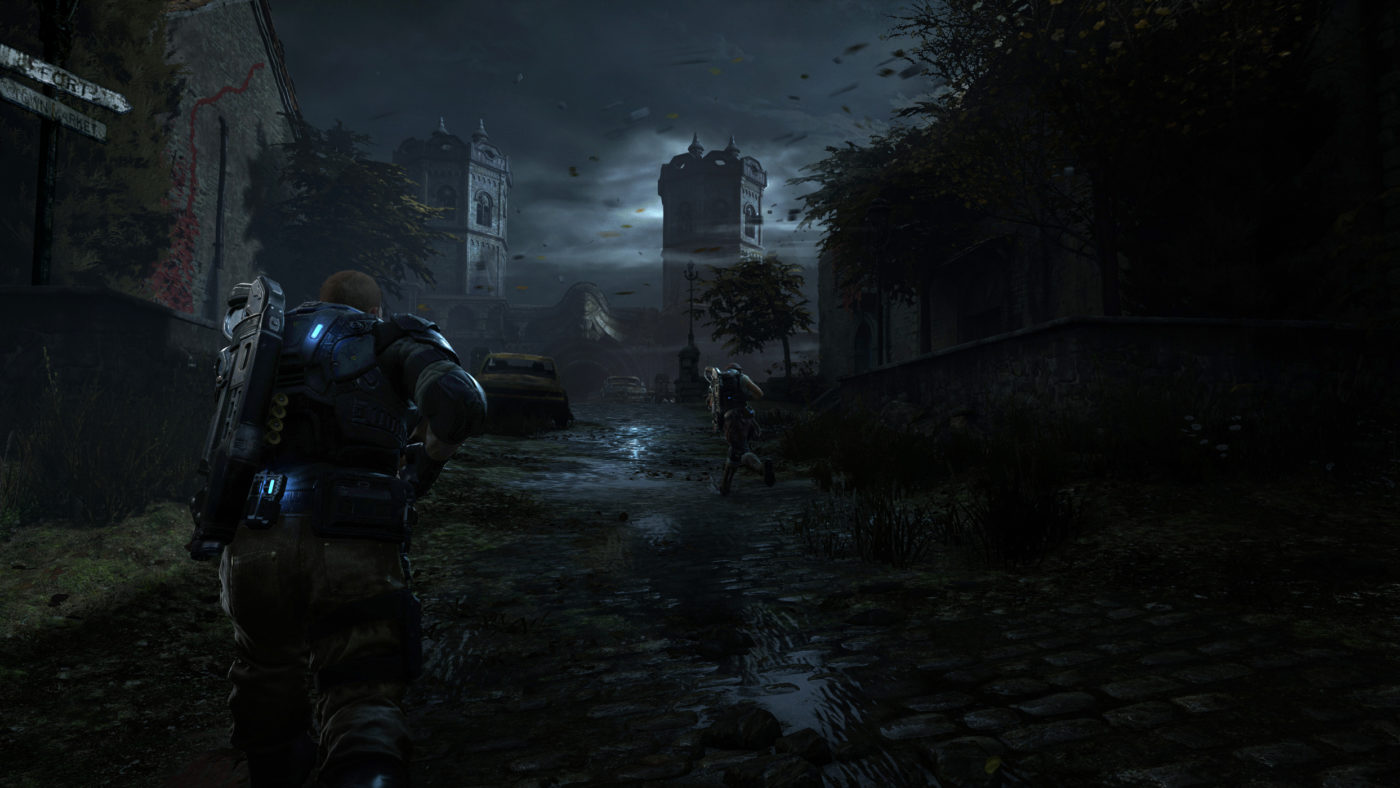
    These underground and ruined locations that you’ll progress through unfortunately don’t look too dissimilar to previous games. The only difference I could discern is that stages now have brand new colour ranges thanks to the new HDR support, meaning leaves and blood look more vibrant thanks to the new hues that can be produced. Otherwise, for the most part, you’re still seeing the same buildings, same murky walls, and weird architecture. Don’t get me wrong, this looks and feels like a Gears of War game, but I just couldn’t get over the over-reliance on underground and building scenarios. There are moments that stand out and shine above the rest, like the beginning area where you observe a city being built from scratch in broad daylight, but these moments are few and far between.

    My other issue is one of tone. After the first act of fighting robots in a day-lit city, you proceed to spend the rest of the game in the dark. This is fine: the developers at The Coalition are obviously trying to set up some elements of horror with the new “Swarm”, the issue is, it just doesn’t sit right with the constant jokes and playfulness of the characters. At one point in the campaign we have a grieving and upset sidekick, alongside an annoyed protagonist, and both of them are cracking jokes all over the place about not saying a place is “all clear”, as it jinxes them. It’s  all fine and good having humour here and there, but I can’t help but think The coalition straddled too close to the line as to whether the game was a horror, or funny, shooter.

    I didn’t mind the story too much, but it did feel like a setup to a trilogy rather than a standalone game in it’s own right. Half of the acts are finding out what threats lay in the world, with the final few being running away from said threats or trying to find your way from one town to another. The campaign was longer than I anticipated, totalling around 8 hours, but it ends so abruptly that you can’t help but think the developers cut some content from the end of the game.

    Graphically, I wasn’t impressed that impressed. When Gears of War first released on our xbox’s 10 years ago, it was a technical achievement, one that showcased the dawn of a new era of machines, and one that would take years to beat in regards to visual fidelity. Gears 4 on the other hand feels out of date in comparison. There are times when the amount of detail on screen can look lovely, stunning even, but for the most part it looks like a slightly more polished Xbox 360 title with slightly better textures. Not exactly a revolution in graphics, more of a refinement, and that just doesn’t hold ground anymore when every other developer is making better looking games.

    Like my opening paragraph alluded to, I still enjoyed my time with Gears 4, it’s a fun game that continues to delight as you play through. I just want something new from the series after it’s mechanics have been picked up by most other games over the last decade.

    3/5

  • Weekly Gaming: The Order: 1886 (PS4)

    Weekly Gaming: The Order: 1886 (PS4)

    Oh The Order: 1886. It’s been many years since your first trailer when Sony announced the PS4, and holy shit were gamers the world over blown away by your visuals. Then you finally got released after many delays, only to get shit on and end up in the bargain bin for £12. Was it gamers expectations that let you down, or was the criticisms against you valid? Well lets take a look as over the course of the last week I finally managed to play through this gorgeously astonishing game.

    One thing can be said about The Order from the offset: it’s aimed high in it’s setting. You play as sir Galahad, a knight of a secret order that protects Great Britain and all it’s domains from mythological creatures that see fit to kill innocent people. Set in 1886, the world is going through turbulent change, with the British empire ensuring rule over India, all whilst trying to get the upper hand over America. It’s alluded to many times throughout the campaign, but knights of the order are a lot older than they first appear: some are rumoured to be so old in fact that they used to rule alongside King Arthur.

    This mix of elements seems like a genuine thrill from the offset, with the stage and setting a true wonder to behold. It’s a shame then that the story never quite pans out as you’d hope, with the setting of 1886 rarely actually being used. Throughout the campaign you see glimpses of this wonderful world, with streets looking gorgeous, signs looking authentically victorian, and even photographs and items looking authentic,  but for the most part you’re confined to corridors, sewers and back alleyways; never a great way to fully explore a fantastic setting like the victorian era.

    The reason I say that criticism is two-fold: 1. It takes time away from the absolute marvel that is The Order’s graphical fidelity 2. It affects the gameplay when you’re constantly in small corridors fighting off waves of enemies. Onto the first reason, the graphics. Holy shit is The Order a sensation to look at! Every nook and cranny of the aesthetic seems to have been meticulously fawned over, so much so that even when I completed the main campaign, I came back just to show my other half the splendour that is The Order’s graphics.

    Snippets of the victorian error look absolutely sublime in some area’s, with lighting, textures and models all combining to something that you could swear was real-life at times. It’s a shame then that, like previously mentioned, you spend a great deal of time in linear corridors or sewers. I understand the complications behind making a fairly open world: the amount of assets that would have had to be made would be staggering, even with the support of Sony behind a team, but even so, to have so many reused and boring locales is annoying and down-right shocking considering these segments don’t make use of the setting. 1886 was a fantastic year that the developers could have genuinely shown more of, instead we’re left with a game that really could have been set in any time period: for the most part you wouldn’t tell.

    Then there’s the gameplay, which turns into a simple case of running to the next area down linear corridors, ducking behind cover and killing endless hoards of enemies until you can move on again. At least when this is done in Gears of War the developers mix things up by giving you multiple ways to take on enemies, where as The Order sticks you in a confined area, a nuisance in later levels when enemies start bombarding you with grenades. Then there’s the fact that these small environments don’t leave much to be discovered. If entire houses were modelled we really could have explored this beautiful and fantastic victorian setting: instead we’re given stones and tiles as far as the eye can see, with multiple doors that can never be opened.

    I will say that one criticism levelled against The Order 1886 wasn’t deserved: it’s length. Many reviews and gamers online said that the game could be completed in 5-6 hours, making the game extremely short and poor value. I noticed that in my play through, which was fairly rushed, I completed it in 8-9 hours. Granted, this isn’t much more time than others were quoting, but it felt like just the right length, not too short, but not over-staying it’s welcome.

    Gameplay again was a little annoying when it comes to mythological creatures. For a game all about the knights of the round table and lycans, you’d expect there to be a lot of creatures to kill. Not so I’m afraid, with the vast majority of the game encompassing you taking out many, many human foes. There are a few warehouse scenes whereby you take on lycans in a confined area, but these are few and far between, and don’t do much to change up the gameplay. It’s a shame, as   the lycans and other creatures could have helped in mixing up the core combat loop, with some enemies maybe charging you or flying overhead at times. It would have certainly made the combat more engaging, and if anything, made the game as a whole more replayable.

    So as a whole, The Order 1886 unfortunately did deserve many of the criticisms levelled at it. Whilst the setting was interesting, and the graphics absolutely sublime, the rest of the game falls apart when stretched to 8-9 hours. I hope the developers at Ready at Dawn get another chance to make another The Order, as there were hints of greatness here, the rest of the game just needed the same level of polish the graphics had.

    3/5

  • Ratchet and Clank (PS4 Pro)

    Ratchet and Clank (PS4 Pro)

    I have a confession to make fellow readers: I never played the original Ratchet and Clank’s that came out for the PS2 many many years ago.

    Whilst that’s not a massive confession, it does have its reasons. Growing up me and my family were never playstation fans. We had the consoles, but we also had the gamecube and xbox, and as such, never sided with just one console’s exclusive. Given the plethora of different titles we could choose from on all consoles, we missed out on some exclusives from each respective platform.

    Regardless of this, having played through Ratchet and Clank on the PS4, I can safely say I’m annoyed I didn’t play this series of games when they were first released.

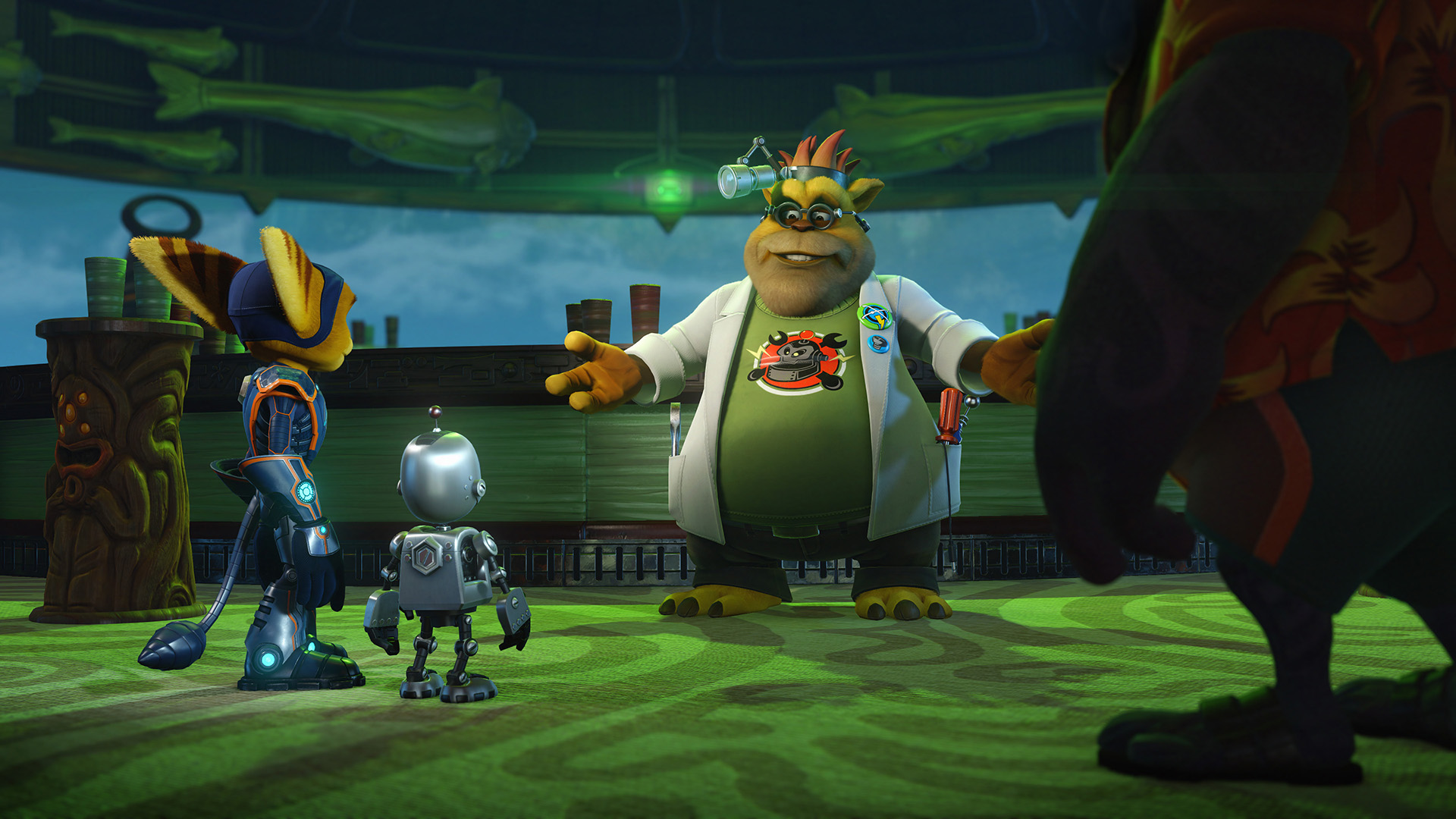
    Being a reboot, most elements are stripped out of the original series and brought into modern sensibilities. The graphics, for example, is absolutely stunning, with the PS4 Pro and 4K TV being an absolutely fantastic combination for playing the game. The story too has had some changes, with a quick google search showing me that whilst the plot is mostly the same, the characters and their key plot points are changed ever so slightly to align with the recently released Ratchet and Clank film.

    One of the first things that caught me off guard whilst playing the main campaign was how hooked I became whilst playing the story. I’m not usually into platformers, as I feel they can get repetitive and easy far too fast. Not so with Ratchet and Clank, where I was playing the game all day everyday until I eventually finished the campaign and started the “New Game +” mode, at around 13-14 hours. There’s just something about the RPG-lite gameplay of the game that lends itself well to also being a platformer, meaning that I kept re-visiting already completed planets just to make sure I got everything that was available, and finished every objective.

    The story is charming and all told from the point of view of Captain Quark, the once head of the Galactic Rangers, which is now in prison due to what happened throughout the course of the campaign. This method of story telling results in some rather humorous scenes, especially when Ratchet and Clank do something the captain wasn’t expecting, resulting in some fourth-wall breaking moments. There’s not really any character development to speak of, but when the gameplay is so addictive and fun to play, there’s no reason to want a better story.

    Playing through ratchet and Clank is equal parts third person shooter, third person platformer and beat-um up. You control Ratchet, who has clank on his back (most of the time) and proceed to jump around the environment defeating enemies either with your melee weapon (a crank) or your myriad of crazy and awesome weapons gained throughout the course of the campaign.

    This combination of gameplay is fantastic in action, and makes for a challenging and varied experience. I found myself dying quite often, even on medium difficulty, rethinking my strategy on how to take down a new crowd of enemies with different combinations of weapons or even new ways of attacking. Then there’s sections of levels which are entirely dedicated to platforming, meaning you’ll need to jump at the right time or find the right route in order to get a piece of treasure at the end. It’s fun, and always kept me on my toes, resulting in an enjoyable time throughout my playthrough.

    Each weapon you acquire is both entertaining to use, and also upgradable, resulting in many quirky and awesome side-effects. The pixelator for example is pretty nifty, and once fired, results in enemies becoming their old PS2 models whilst also being pixelated. The boogie ball was also fun and hilarious: shoot it into a field of enemies and laugh as they all stop fighting you to take part in dancing around the ball. It’s fun, and actually made me invest in my weapons a great deal, so much so that I ended up finding every collectible in the game in order to upgrade them.

    The collectables throughout the stages are fantastic, and help to keep you involved in the game. 28 Gold studs are hidden throughout the whole campaign, with each one unlocking new cheats, or even aesthetic changes to be used. These rewards for exploration may seem trivial, but when they help in speeding up or slowing down the game they become extremely useful. Then there’s the trading cards you can collect from hidden spots on maps or by killing so many of a certain enemy. Each set that’s collected give’s buffs in the game, for example giving me +100% damage when meleeing enemies, certainly a great buff I’m sure you’ll agree. It meant that everything to collect contributed to the enjoyment of the game, meaning nothing ever felt meaningless or without warrant. I know I certainly enjoyed it so much that I proceeded to collect everything Ratchet and Clank had to offer.

    The only thing that could be seen as a bad thing about Ratchet and Clank is the rate at which you obtain studs throughout the world. These studs are used as currency within each level, allowing you to buy ammunition, or even new weapons. Trouble was, studs come out of every enemy you defeat and every obstacle you destroy, meaning throughout the course of the game I had so many that I never had to worry.

    So overall, I’m glad Ratchet and Clank was remade. This story, as well as graphical fidelity, harkens back to a by-gone era, one where the point of a game was to have fun and nothing else. With the increased visual fidelity (thanks to the PS4 Pro) and updated gameplay, I can certainly say that Ratchet and Clank is one of the best PS4 exclusives I’ve played since it’s release, and one that you owe yourself to own should you have a PS4.

    5/5

    N.B. Ratchet and Clank is one of the first games I’ve played that’s truly a 4K HDR title, and my god does it shine. The colours, and aesthetics throughout are so slick and gorgeous that you could be forgiven for thinking you were watching a movie. 4K HDR games are really going to ensure artists’ work is shown how it was originally intended, making for an exciting and enticing future in Video games, especially for ones that don’t strive for realism, and have a art direction that takes advantage of every pixel on screen.

  • Weekly Gaming: Dead Rising 4 (Xbox One)

    Weekly Gaming: Dead Rising 4 (Xbox One)

    Hi all!

    I hope you had a fantastic Christmas, and are looking forward to an amazing New Year! My GOTY articles will be published tomorrow, with my New Years Resolution article published New Years day.

    Regardless of that, time for review number 52/52! So to read my thoughts on Dead Rising 4, click the link below:

    http://www.vgchartz.com/article/266706/dead-rising-4-xbox-one/

    Overall it was an OK game, but not by any means is it a Dead Rising game. I think Brad Shoemaker said it best in Giant Bomb’s weekly podcast: “It’s a generic RPG”.

    Regardless of how good or bad Dead Rising 4 is, I thank you for visiting this blog to read my thoughts, and thank you for a weird, if not wonderful 2016.

    I look forward to seeing you again next week!

    -Dan

  • Weekly Gaming: Titanfall 2 (PC)

    Weekly Gaming: Titanfall 2 (PC)

    Hi all!

    For this weeks Weekly Gaming, I take a look at EA/Respawn Entertainment’s Titanfall 2. Whilst I don’t want to spoil the review too much, I should say that the game is absolutely sublime, and it’s a bloody shame that it hasn’t sold well at all.

    You can read my full review below:

    http://www.vgchartz.com/article/266335/titanfall-2-pc/

    If I don’t speak to you beforehand, have a bloody fantastic Christmas, and I’ll see you back here again same time next Friday.

    -Dan

  • Weekly Gaming: Attack on Titan: Wings of Freedom (Xbox One)

    Hi all,

    For this weeks Weekly Gaming I take a look at Attack on Titan: Wings of Freedom, published by Koei Tecmo and developed by Omega Force. Overall I thoroughly enjoyed the game, and whilst the lack of any new story was a bit of a downer, the game in it’s entirety felt like a refreshing take on the Attack on Titan universe. The combat was also great, which was surprising, especially since the simple mechanics (in previews) looked like it may have been the biggest flop.

    You can read my full review over at VGchartz.com below:

    http://www.vgchartz.com/article/265619/attack-on-titan-wings-of-freedom-xbox-one/

    As always, thanks for visiting, and I’ll see you next week!

    -Dan

  • Weekly Gaming: Finn and Jake’s Epic Quest (PC)

    Where oh where do I start with a game like Finn and Jake’s Epic Quest? OK, first off, why I own the game. I personally love the Adventure Time universe; I love that for a children’s show it has so many dark themes that it could just as easily have been made for adults. Characters work together so well, and everyone who ever watches the show is bound to have their favourite.

    I was gifted the game as it was on my Steam Wishlist back in 2014, but with life being so busy (and the Steam library increasing dramatically all the time) it hasn’t been on my list of things I must play. Fast forward to today, and I decided, you know what, the game’s only meant to take 6-7 hours to beat, may as well hammer it out in one night.

    Having completed the game, all I can say is: I wish there was a way to turn back time and get those 7 hours of my life back.

    I genuinely feel that Finn and Jake’s Epic Quest was made as a cash grab based on the Adventure Time name. Not only does the game feel like it was made by some interns in their spare time, but the game from start to finish add’s nothing to the Adventure Time world, and if anything, tarnishes it’s brand identity.

    Finn and Jake’s Epic Quest is a top down isometric dungeon crawler where you take control of Jake or Finn, as you proceed to look for 8 mystery artefacts so you can save your lost friend, BMO, all whilst grabbing as much booty as they possible can.

    Each dungeon is a relatively plain floating island, with the only noteworthy unique environment variable being the enemies themselves, which are taken straight from the show and copy/pasted hundreds of times. These enemies are simple, and have no AI to speak of, simply walking towards you and attacking until you die or they do, whichever comes first. Whilst these two set backs wouldn’t necessarily be bad by themselves, they contribute to a hugely boring game, one which has no unique qualities to speak of.

    The only thing that could be considered entertaining is the spells you’ll find throughout the world as you traverse. These spells can be purchased or found, and allow Jake and Finn to have a myriad of different abilities, from summoning princess unicorn, to even wearing Jake as armour. These abilities are cool, but due to their lacklustre effects could be considered merely side mechanics, things that aren’t really integral to the story or gameplay, but are good to see/use occasionally regardless.

    Then there’s the story, which is so lacklustre you could be forgiven for thinking the game doesn’t even have one. Apart from a simple 10 second cutscene after killing each boss, nothing else happens, with the dungeons themselves merely being time sinks in which you can endlessly kill enemies and find loot. the story could be summed up to: BMO’s missing and has been taken hostage; It’s up to Jake and Finn to find 8 artefacts and give them to the baddies holding BMO. That’s it; no interactions between characters, no extra stories to make this feel unique, nothing.

    Animations are janky as all hell, and the combat has nothing to actually get you hooked. Run up to an enemy, mash x, and you’re done. The sound effects from Jake and Finn are authentic, coming from the real voice actors themselves, but since it’s all flavour text for each thing you interact with (a spell for example) you’ll soon get sick to death of hearing the same things being said over and over again.

    Oh and the bugs that are still present after the game’s been out for over 2 years are insane! There were multiple occasions where I would have to exit back to the title screen and start a dungeon again just because my character would get locked in an animation that would never play out.

    If I haven’t made it clear over the last few paragraphs, I did not enjoy my time with Finn and Jake’s Epic Quest. The game is literally made to be a time sink, requiring little thought and little attention, you should only play the game should you have the mind of a 5 year old. Avoid Finn and Jake’s Epic Quest like the plague; there’s nothing good to be had from playing it.

    1/5

  • Weekly Gaming: Call of Duty Black Ops 3 (PC)

    There was one question I just could not stop asking myself throughout my playthrough of Activisions latest Call of Duty shooter; why on gods green earth is this game branded with the moniker “Black Ops”?

    Obviously, this is the third in the series, but for some odd reason, Black Ops 3 has no connections to the previous two, and seems to never actually warrant the Black Ops title. Granted, some may say that this is a trivial matter, but I for one think that it perfectly encapsulates the differences (both bad and good) of this latest in a long line of Call of Duty games. Let us proceed to unravel why.

    First up the story, which, whilst being completely unrelated to the previous two games, is actually quite a departure from traditional COD games. The year is 2065. Augmentations and robotics are rife across the world, with many people now having brand new DNI’s implanted into their minds, allowing them to interface with robotics and technology the world over.

    If the plot sounds familiar, that’s because it’s been done many times before in other forms of media: Ghost in the Shell springs to mind for example. Where Black Ops 3 deviates though is in the philosophical applications of DNI’s. Very early on in the game you’re taught that you can interface with another person’s DNI, allowing you to see everything they’ve ever thought. Doing so will make them brain dead, and it’s through this moral ambiguity that Black Ops 3’s story actually stands tall.

    You see, whilst it’s a nuisance that there’s no relation to the previous two games, Black Ops 3’s futuristic story manages to carve out an extremely believable and unique world. The use of DNI’s to interface with peoples imaginations and memories allows for dramatically different and crazy landscapes, with the stylised future feeling fantastic, even going so far that it would feel right at home in a Deus Ex game.

    With an AI intent of never dying eventually making its way into the plot, the moral ambiguity starts to increase a notch or two. The characters that take part can at times feel like stereotypical caricatures, but overall they help to give the story more believability, showing how different personalities can help in truly showing a devastating force. Overall, by the end of the 8-10 hour campaign I was left feeling hugely satisfied with what I had just taken part in, something I can’t necessarily say for other Call of Duty games (I enjoyed the previous Black Ops games, but don’t take too fondly to their stories).

    This isn’t an understatement when I say that the futuristic setting helps to add more to the gameplay than any COD game before it. Your suit not only has augmentations that allow you to do things like hack enemy AI, or cause explosions at a distance, but also allow you to traverse the environment at tremendous speeds. Wall running, double jumping and sliding are all present, and they add such a sense of speed that it’s going to be hard to go back to previous Call of Duty games I haven’t played before (e.g. COD Ghosts).

    About those augmentations: they’re fantastic at changing up the “strategy” (I use that word lightly) of a traditional Call of Duty game. In the past you’d run from encounter to encounter, shooting down everything you saw without thinking. With the new abilities to hack, destroy and paralyse enemies you’re given greater freedom to take any challenge that is thrown at you how you would like to. For my part, I admit I relied on the instant kill robot feature a little too much (especially when it’s upgraded and can explode other surrounding robots), but the versatility of different options to mess and tinker with is truly astonishing, and weird in a franchise that’s become accustomed to pushing out the same features year in, year out.

    The addition of a new “Hub” world base between each mission is also another weirdness that truly sets Black Ops 3 apart from anything that came before it. During each level, you’ll pick up and find collectibles, as well as modification kits that are earned through levelling up. Back at the base you can choose to use these kits to upgrade your abilities, make new guns, or simply upgrade existing weapons. The collectibles you find can also be showcased on your walls, along with any accolades that you’ve learnt in tough missions. It’s odd and small, but all of this makes your playthorugh feel personal: you get to choose what you want to do and what you want to showcase within your base, making everything, from load outs to mission completions feel rewarding and personalised, with a sense of progression which is always present.

    The new enemy types were a welcome departure from constant humans being able to just hide behind buildings and objects in the environment. Robots march towards you without hesitation, which are first seems really simple (just shoot them right?!?) but soon becomes a challenge in itself when you also have to worry about other enemies firing at you. Then there’s the big enemies; these monstrosities can be seen as bosses, as they require a lot of rockets, and a lot of bullets to be taken down. There’s also drones, which are weak but high in number, and finally bullet-proof humans. All this variety makes for a challenging experience, especially when you have multiple enemy-types homing in at you at once. If anything, the enemies on display push you more and more into using your augmentations, which results in a splendid gameplay loops of running, firing, hacking and repeating, all whilst trying to stay alive.

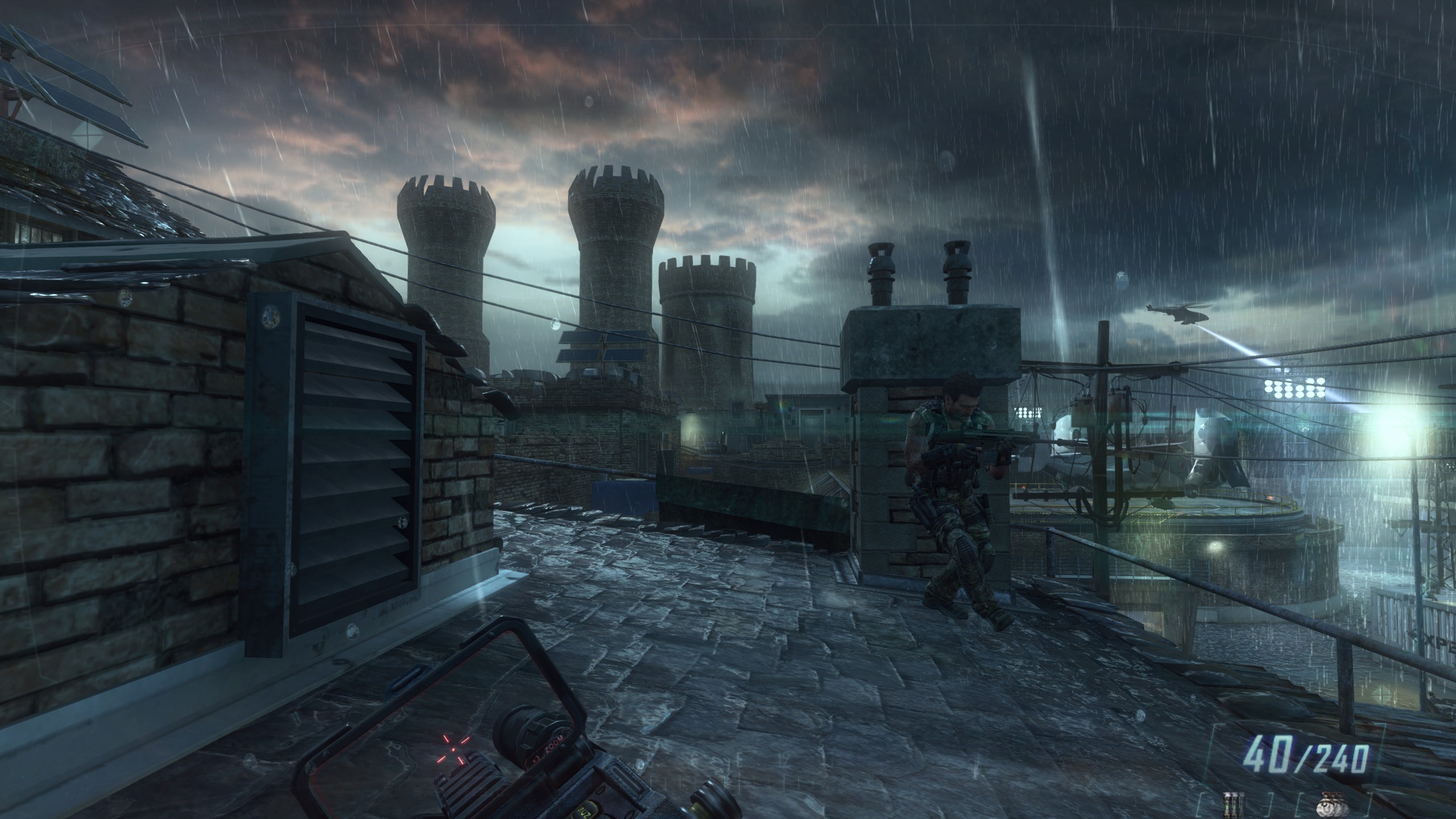
    Graphically, Black Ops 3 is an absolutely stunning game. I took so many screenshots throughout my play through that at times I would die from taking in the scenery rather than actually playing the game. Characters brim with life, environments look just as stunning as anything you’d ever see within a Crysis game, and for the most part my 1070 GTX was well and truly put through it’s paces. There are times where you can see that Treyarch are still using the old COD engine, all with glitchy AI and the same animations as previous games,  but these times are few and far between.

    Finally, the music, which for the most part was ignorable. You’re not really going to come to a COD game for it’s music, especially with so many explosions and so much gunfire going off at all times. On that note, the explosions were just as explosion-ey as ever, with guns sounding like what you’d expect a future model of an AK-47 to.

    Overall, I thoroughly enjoyed my time with Black Ops 3. The changes made since the last Black Ops were significant enough to keep me more than entertained, with the new augmentations and hub world helping me feel that this was my own personalised experience. The only thing I just cannot get my head around is the use of the Black Ops name. There are so many changes, such a different story, and overall no relation to previous games that I don’t see a need to use the moniker at all. For a title as fantastic as this, Black Ops 3 deserved its own franchise name, God knows it deserves it for how much of a departure it is from the tried and tested COD formula.

    5/5

  • Weekly Gaming: Abzû (PC)

    Weekly Gaming: Abzû (PC)

    Hi all!

    For this week, I’m going to link to a review I done back in August. Whilst I thoroughly enjoyed Abzû, I couldn’t help but think that it was a little too similar to Flower and Journey. Not that this is a bad thing, it just made me feel a little… cheated?

    Anyway, if you wanna give it a read, click the link below:

    http://www.vgchartz.com/article/265432/abz-pc/

    And as always, I’ll see you next week!

    -Dan

  • Weekly Gaming: Mortal Kombat X (PC)

    Weekly Gaming: Mortal Kombat X (PC)

    Some things never change, and in the case of Mortal Kombat, this old saying couldn’t be more true. Yes, the game’s been given a facelift with new characters taking the centre stage, but at it’s heart, Mortal Kombat X manages to stay true to the reboot from a few years ago, whilst also adding a few new Kostmetic (see what I did there?) and gameplay changes.

    mkx character select screen

    First off, Mortal Kombat X takes place both after the events of the first games epic conclusion, and also 20 years into the future, helping to mitigate the amount of characters that died from the original. A great Elder God tried to take over Earth-realm once Shao-Kahn was annhilated, and as such, Johnny Cage and Sonya Blade came to the rescue alongside Raiden, trapping said Elder God for millennia.

    Fast forward 20 years, and you have the world as a different place – kids have been raised, Blade and Cage are now a part of Earth’s defences, and the outworld has been taken over by a new emperor; Kotal Kahn. This new look at a well-known world is fairly cool, especially with how much people have changed. Cage for example was always the smart-ass, but in the future he’s fairly calm, collected, and a great leader.

    mortalkombatx_review_2

    As with the original Mortal Kombat reboot, the story takes place across different stages and with you taking control of any character that’s central to the plot at that time. You get to experiment with many characters and all their different assortment of control schemes, and in doing so, build up an understanding for the subtle changes NetherRealm studios have employed. It can be annoying at times, especially when you take control of a slow character that you can’t string any combo’s together with, but at least it gives you and understanding of that character for when you have to fight them on the opposing side.

    Overall, with a 5 hour story, Mortal Kombat’s campaign kept me intrigued until it’s end, but it was nothing to shout home about. The drama felt stiff, and every step of the way it felt contrived, as if the current situation your characters were in was purely for the developers to have a new fight matchup. I mean, some characters would destroy an enemy when you control them, but out of nowhere they’re defeated later on in the campaign? It makes no sense. If you come into Mortal Kombat expecting a great story, be warned; this is like B-roll movie.

    mortal-kombat-x-screenshot-02-ps4-ps3-us-20jan15

    Story out of the way, how’s the combat? Overall, pretty impressive. When fighting regular matches outside of the campaign you get to chose multiple styles of combat for each character you may play as. Each style has it’s own distinct pros and cons, with some styles being more powerful but slower, and others speeding things up to the detriment of the damage you can cause.

    It’s still Mortal Kombat combat though, and as many of us have said over the years, it just doesn’t feel right. It’s completely competent at what it does, don’t get me wrong, but my god are there times where you swear the game is cheating for the opponent, or you get slammed with no chance of blocking or re-cooperating. I’m sure you’ll be able to find professionals online playing the game at such a level that it looks fantastic, but for people like me who dabble in fighting games now and then it just doesn’t feel right. It strikes a weird balance between Tekken and Street Fighter, which you’d expect would be a perfect combination, but in the end comes off as just feeling off.

    Graphically, you can tell Mortal Kombat X was made for the next generation of consoles, and even on PC the game is absolutely stunning. Running at the highest settings, it was jarring when character models and lighting effects were better in-game than the cinematics that took place. Particle effects are plentiful throughout combat, and the Fatalities are just as gruesome as ever, with blood and guts going everywhere.

    Mortal-Kombat-X-31

    The collectibles on offer past the campaign are ridiculously plentiful, with the gallery where you unlock them all being a game in-itself! Walking around a maze, trying to purchase things whilst also unlocking mysteries and taking on wolves, it’s gratifying the amount of detail they’ve put into something as simple as unlocking extra movesets.

    Past the gallery, you also have plenty of online modes to take advantage off. Before you begin the game, you must choose a clan. There’s 5 different clans to choose from, with everything you do throughout the game contorting points towards your designated clan. It’s a weirdly cool incentive to play more hours into the night, especially when your clan is closest to winning the daily prize pool of Koins to spend in the gallery.

    So, for all the small cosmetic (and minor gameplay) changes, does Mortal Kombat X warrant a purchase with your hard earned money? As always, it depends. There’s probably some of you who love the way that Mortal Kombat plays and feels, even from the Sega Mega Drive days, and to you I’d say get it, you’ll feel right at home. But for those of you who only dabble in fighting games like myself, I’d stay away from Mortal Kombat X unless you can get it on sale; the story and features around the gameplay are cool, but the combat itself never truly feels great, which is a shame, as that’s the core reason most of us by fighting games: to fight.

    3/5
  • Weekly Gaming: Nidhogg (PC)

    Weekly Gaming: Nidhogg (PC)

    It’s rare that a game truly encapsulates the mantra “Keep it Simple, Stupid”, fortunately, Nidhogg is one such game. Don’t let it’s simplistic retro art style throw you off, for all of it’s simplicity in the aesthetics departmenr, Nidhogg is one deep and lovely game.

    First off, the main appeal of the game: The combat. Being a simple 2D platformer, you’d expect for me to just say there’s 2 buttons to attack, wouldn’t you? Well… technically that’s correct, but its the manner in which Nighogg combines these buttons along with your analogue stick that truly makes the combat come alive.

    You see, whilst there’s only two buttons to master (A to jump and X to punch/slash with your sword) Nidhogg has multiple ways to chain these buttons together and give them different uses depending on the context of your movement. Jump and pressing X? Why not dive kick to knock the opponent back. Holding a sword? Pressing up on the analogue stick will easily change it’s position, allowing you to disarm hostile attackers with relative ease. Opponent running away? Just press up and x at the same time to throw your sword at them.

    These devilishly simple but hard to master techniques wouldn’t be as fun as they are if it were not for the fantastic presentation for such a simplistic game. Every death has a fantastic new and varied scream, truly helping to push forward the narrative that these two fighters are well and truly fighting to the death with everything they have. The amount of gore present is also insane, with each death of your character sending hundreds of blood particles across the stage, making for a truly colourful level once you and your opponent have died plenty of times.

    The objective of Nidhogg is simple. Kill your opponent, and then proceed to continue killing (or avoiding) them rushing to their side of the screen. Being player one, you start on the left, so it’s up to you to kill the AI, and rush to the right. The second the other player gets a kill in on you though it’s time to hunt them down, as it’s now their chance to run three scenes to the left. This back and forth is truly amazing, and helps for the game to truly feel alive, especially when you’re hunting somebody down and worrying you’ll fail to successfully counter their attack the next time you encounter them.

    nidhoggjpg-d28e87_1280w

    But it’s the skill and the feeling of ecstasy from triumphing over your opponents that truly sets Nidhogg apart from other indie games on the market. You see, the plethora of different combinations you can pull of in fighting your opponent never ceases to astound me, especially when an AI character manages to pull off a combo you would have never dreamed of. I’d be constantly on the edge of my seat, wondering whether I’d get the upper hand over my opponent, or him, me. It’s nail biting stuff, but extremely gratifying when played, and hugely satisfying once you finish the games campaign against it’s ever increasing difficult AI.

    So overall, I’m thoroughly impressed by Nighogg and it’s attention to detail. Don’t get me wrong, the game’s short, with it’s $15 asking price being a bit much in my opinion, despite how much replayability there is. If you ever find the game in a sale, get it in a heartbeat, you will not be disappointed.

    4/5

  • Weekly Gaming: Call of Duty: Black Ops 2

    Weekly Gaming: Call of Duty: Black Ops 2

    I was surprised at how much I enjoyed Call of Duty Black Ops recently. I mean, it wasn’t fantastic, not by any stretch of the imagination, but it definitely punched above my expectations for it, and proceeded to make me eager enough for more of the story to go out and purchase the second and third of this trilogy. So with Black Ops now a distant memory, and with me having some time to myself, I decided to give the second a go, to see if it manages to surpass the original or whether it manages to fall flat on it’s face.

    20160716003212_1

    My initial impressions upon starting the game were “who the fuck is woods, and who the fuck is this?”. Suffice to say, if I was having problems remembering characters from the first game when I only played in 2 months ago, i feel sorry for players who had to wait two years. It took a good hour or two (and a bit of Googling), but after a while, I was able to follow the story and find out why the game flashes between the 80’s and 2020’s.

    You see, you play as “section” mason, Alex mason’s son (you played as Alex Mason throughout the first game). You’re trying to get to the bottom of why a terrorist is planning to destroy the western world, and how. So, in classic Call of Duty fashion, you have flashbacks to the 80’s in many weird and wonderful places that are central to modern history. Take Vietnam, Africa and Afghanistan for example. I’m not gonna complain too much, the variety of stages helps to really show the graphical prowess of this successor, and my oh my does it impress.

    For a game that was still only released on last-gen consoles, Call of Duty Black Ops 2 is quite the visual upgrade from it’s predecessor. Everything from textures, to lighting effects, to even character models all stand out as far more detailed than before. It’s crazy really, especially considering Black ops 2 continues to use the same engine. Treyarch deserve some recognition for what they were able to do with such a limited amount of resources.

    20160716164433_1

    The gameplay is the standard affair we’re all used to with Call of Duty game: namely great shooting and action sequences galore. I especially liked how much more “force” each gun seemed to have in this sequel, as I recall the previous guns feeling like pea shooters in comparison. Enemies are the same as always: Spawn from random locations and then try and flag you from multiple directions, the difference here is that there’s a lot more of them, mainly due to engine upgrades that allow a lot more enemies and NPC’s on screen at any given time. I’ll say one improvement the developers made for the enemies this time round: their ability to want to survive is commendable. The animations they display when flipping a table or a drinks machine is fantastic, and whilst it was first shown off in FEAR all those years ago, it’s still a great addition to increase the complexity of the enemies you’re fighting.

    20160716003529_1

    I wouldn’t usually bring up bugs in my reviews, mainly because all of the big ones have usually been fixed by the time I get around to playing a game, but also because I don’t feel they impact the gameplay too much (most of the time!). Unfortunately though, Black Ops 2 for the PC had one of the worst bugs I’ve experienced in PC games, which is that after every single campaign level I completed the game would crash to my desktop. I mean it – every single campaign mission, thrown straight back. Looking around on the net it seems this has been known since day one, with Treyarch saying they’d fix it soon, yet here we are, two years after it’s release with no fix in sight. The only way around it was to use Steam in offline mode, or to have less than 50 friends. Horrendous in my opinion, but alas, now you know (should my opinion be what you need before you go out and buy something – I don’t know, it could happen!).

    Story wise, it wasn’t as interesting as “the numbers” theme within Black Ops 1 (that entire sub-plot is thrown out the window within the first hour), but overall it kept me engaged and pushed me to find out more throughout the plots entirety. What was more interesting throughout was the future missions, where there was an air of believability throughout. The world is effectively the same as now, but with a new type of plane (where the engines are mobile, allowing for upwards travel) and monitors everywhere. It makes me look forward to playing Black Ops 3, where most of it’s missions are apparently based in the future, with all it’s high-tech robot suits and an all-out war.

    20160716142932_1

    For the most part, I enjoyed my time within Black Ops 2. It’s a more streamlined affair than it’s predecessor, which makes for a more enjoyable experience on the whole. Don’t get me wrong, it has it’s flaws, like the bugs and the lacklustre story when compared to the original, but taken in it’s entirety, Black Ops 2 really is a better game than the original. Treyarch should be proud, they really did manage to make a fantastic sequel to the acclaimed Black Ops, something many thought they wouldn’t be able to do. One things for sure, I’m sold on the premise of future warfare, and cannot wait to sink my teeth into Black Ops 3.

    4/5

  • Weekly Gaming: Inside (PC)

    Weekly Gaming: Inside (PC)

    It’s been a long 6 years since Playdead graced our Xbox’s worldwide with their first hit Limbo, and in that time the world has changed an insane amount. Looking back, it was always going to be a huge success: indie releases on Xbox were still relatively rare, meaning any that did manage to hit the platform were an instant overnight success. That’s not to detract from the game in anyway; it was still a great platformer, but I can’t help but feel it’s success was guaranteed regardless of it’s quality. So what has Playdead been up to these last 6 years, and does Inside manage to fee like 6 years worth of quality? Lets find out.

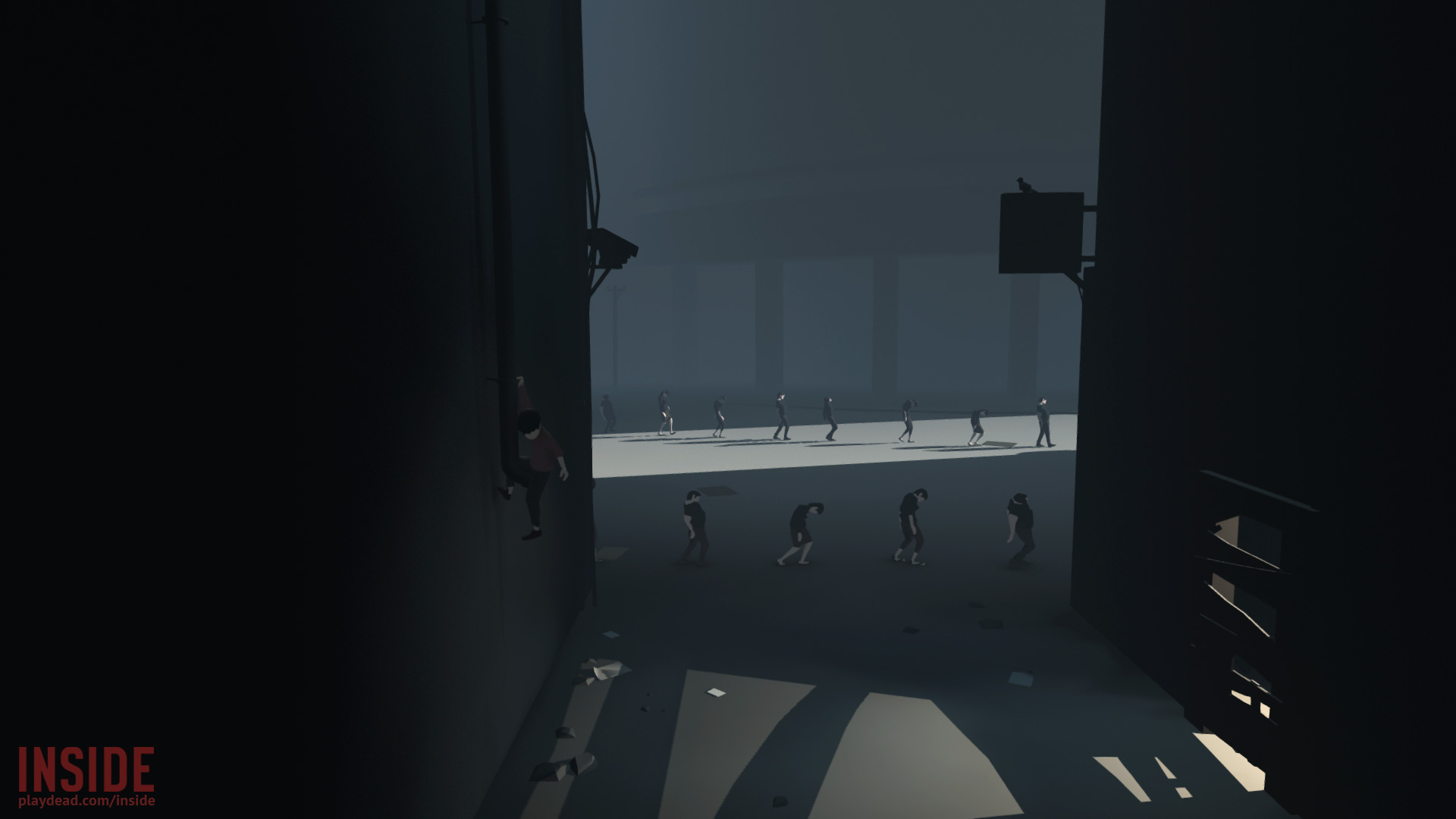
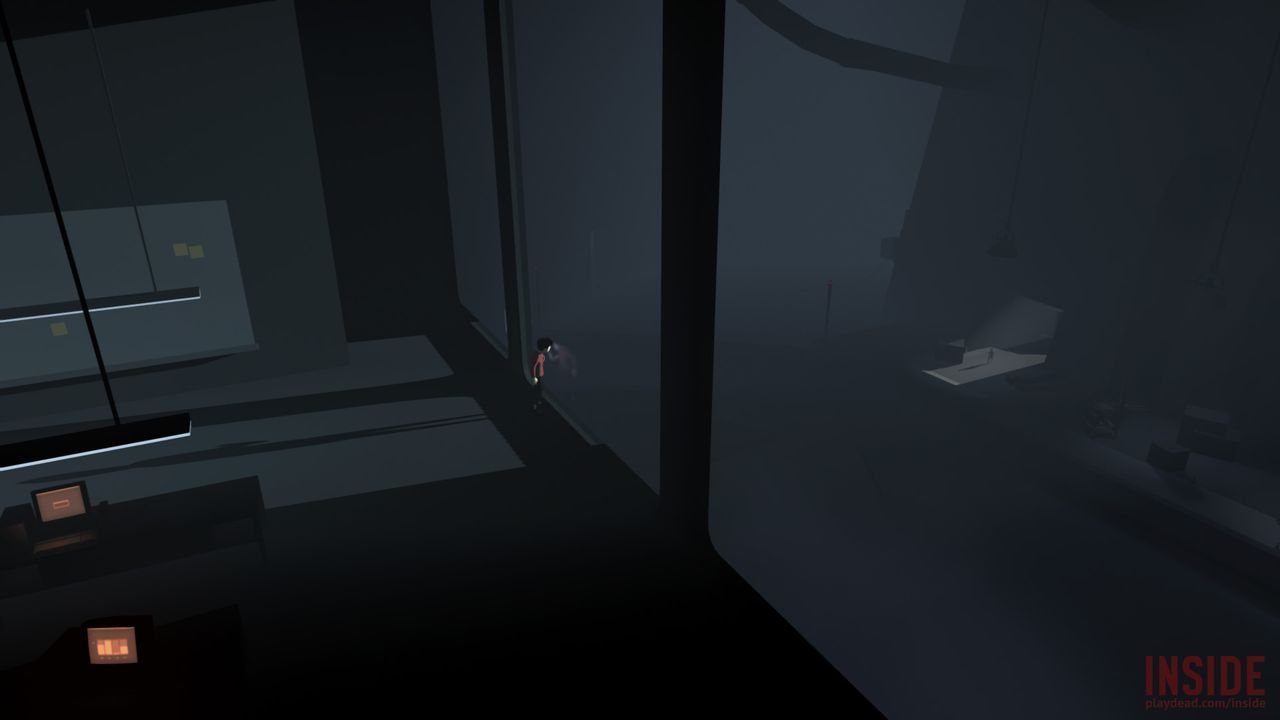
    Just like Limbo before it, you start off as a small child wondering through the woods. The immediate difference is the visual style of the game: what was once a plain black 2D art style is now a fully 3D environment with 2.5D platforming. There’s not a great amount of detail in each object you can see (most objects are polygonal to a degree, with no textures so to speak on them), but the amount of variety and attention to detail in the environments is insane. So many trees make the woods feel genuinely cramped, and even the fields in the farm and underwater sections feel chilling to explore.

    3076121-6584620453-INSID

    Inside gives you no prompts, and no instructions: you’re to learn this game yourself, ensuring you are properly paying attention to the world and it’s intricacies in order to fully appreciate it. Running from left to right, you make your way through this weird and wonderful world, one which is believable in it’s own right, but also weird in that it never explicitly spells anything out for you.

    In regards to the narrative, there’s no dialogue, no writing on screen, no nothing. Everything about the world and what happens within it is so abstract that you are meant to infer your own meaning on it. The internet is already becoming a hive mind trying to unravel what the story of the world truly is, but in doing so they’re missing what’s so charming about the game: it’s ability to make the player come up with their own idea of the world is what set it apart from other games trying to tell a story. Inside really is telling a huge story, but one that it doesn’t mind you making up as you go along.

    So if everything’s fairly simple, and there’s no narrative, what is there to do in Inside? A lot it seems, with the sheer amount of variety being absolutely shocking in a world where assets are reused time and time again. There isn’t a moment where you need to backtrack, and everything in the world feels unique and organic, so much so that the world feels like a real, tangible place. Combine that with what I said in the last paragraph, and you’ll find yourself guessing about everything you see, wondering what purpose an item has, and even what the people do. This level of detail cannot be over-stated, it’s immensely gratifying.

    inside-screenshot_1920.0.0

    Puzzles are few and far between, and the ones you do come across are actually relatively easy. Unlike Limbo, you rarely die throughout Inside’s world, and for the most part you’re merely taking the world in. Whilst I won’t spoil anything about the end game, your ability to move boxes in weird and wonderful ways towards the end is certainly entertaining, and had me gasping at the attention to detail Playdead Studios have pushed throughout.

    One puzzle mechanic that should be pointed out which intrigued and was actually quite original was your ability to control “drones” across the land using helmet gear. Drones are weird creatures throughout the land that are human, but have no sentience; instead they’re controlled to do menial tasks otherwise they’ll just sit around and do nothing. Donning a helmet allows you to control one drones across the land, which can make for some extremely intuitive puzzles during your time with Inside.

    With all that said, there’s not much more I can say about Inside without spoiling any of the story and surprises. Inside was an enjoyable experience, but I don’t think I agree with many reviewers in the world that has said it’s perfection. A more polished Limbo, yes, but a perfect game? No way. The ending didn’t leave me feeling anything, and if anything, just made me exclaim “cool” aloud. Whilst I enjoyed Inside, I’ve had better 2.5D experiences since Limbo was released all those years ago, meaning Inside just left me feeling hollow, as a lot of what it does has now been improved upon and even bettered. By all means give the game a go; it’s great, and an enjoyable experience from start to finish, just don’t expect to be blown away.

    4/5