Tag: Nintendo

  • Weekly Gaming: Fast RMX (Switch)

    Weekly Gaming: Fast RMX (Switch)

    It’s been a while since I’ve played a fast, arcade racing game, and for the first time in a while, I didn’t play Fast RMX purely to review it within a fast timeline for VGChartz.com. You see, since first getting the Switch I’ve been clamouring for games I can play on the nifty handheld – it sucks having a highly capable machine with next to no games to actually play on it. So from the offset, Fast RMX caught my attention, with me adding it to my wishlist when I first set eyes on it. Thankfully, with it just being the holiday season and with it being New Year sales, Fast RMX came down in price, instantly prompting me to download the gorgeous and fast racer.

    First things first – it has to be said that Fast RMX is a perfect portable game. The short stages (each about 2-3 minutes in length) as well as the fast championships makes for a fantastically portable game, one that game be played in fast spurts and one that easily beats most of the mobile games out there. The shortness of levels works massively in the games favour, especially when it comes to losing – you see, in most games, should I lose a race I’d be annoyed and rarely want to come back to it, due to the sheer length of the course I’d have to drive around once again. Not the case with Fast RMX, where failing a race or even championship just requires another couple of minutes to try again. I found this aspect of the game hugely gratifying, especially since it alleviates any frustration you may have with the game.

    Graphically, Fast RMX is a stunner, especially for such a tiny portable console like the Nintendo Switch. There are times where the presentation/polish lets the game down mind you, especially when it comes to the dynamic resolution going extremely low (resulting in a blurry image at the start of races), but overall when the games actually being played, Fast RMX is a stunning game to behold. Light rays, particles effects, and all manner of great and large environments are an absolute joy to behold, and easily justifies the games price despite how small some of it’s levels may be.

    It’d be hard to talk about a story, mainly due to the fact there isn’t one – you merely pick championship, jump into a specific race, and choose a ship. A few button presses and you’re in the game, with no context as to the world this game takes place in, nor whether there’s any reason for the races taking place. Not to say Fast RMX needs a story – far from it, it’s more than capable of sustaining your attention without any reasons given for racing, I just thought I’d point out that you’re merely getting an arcade racer through and through.

    So, how does one race in Fast RMX? well, being something of a Wipeout clone, you simply proceed to press and hold A to accelerate,  press X to switch the colour of your engines, and finally press the right shoulder button to use your boost that you collect around levels . That’s all there is to it. This simplicity in controls is both freeing, allowing you to concentrate on racing alone, but also annoying to some degree. You see, as you go around the stages, there are some times it’s all but impossible to actually catch up to, and overtake other drivers on the track. No matter what you do, they’ll always be ahead of you, which is irritating as hell. It’d have been nice if there were weapons to grab on the stages, for example a homing missile or anything to just try and get the upperhand, but alas you’re stuck just watching AI overtake you forever more.

    As previously alluded to, there are some ways of getting ahead of opponents in races. For example, change the colours of your engines to the same as panels on the floor and you’ve got yourself an instant boost, one that doesn’t fill your boost meter, but helps you get ahead. Spread throughout the stages are also little balls of energy that fill up your boost meter – collect them and use all your boost at once, or use them instantly, it’s completely up to you. I found that whilst this simplicity is pretty cool, as previously stated it can be down right annoying too, especially when you’ve used all your boosts yet your opponents are all seemingly faster than you.

    It goes without saying, but the vast majority of the time a racing game is only as good as it’s soundtrack, and in Fast RMX’s case, it’s certainly got that going for it. I found myself loving each new stage’s music, so much so that I ended up tracking down the soundtrack on soundcloud and have listened to it well past completing the game. To say some stages become Better due to the soundtrack is an understatement – many would be downright forgettable if it wasn’t there.

    So all in all, am I glad I finally bit the bullet nad purchased Fast RMX? Yep, it’s certainly one hell of a game to showcase what the Nintendo Switch is capable of, and goes one step further in getting me to play the console even more, even going so far as to call it my go-to gaming device. Should you own a Switch, by all means buy the game at full price, and you’re in for a treat if you managed to get it in the sale like myself.

    4/5

  • Super Mario Odyssey (NS)

    Super Mario Odyssey (NS)

    It’s been a bloody good year for Nintendo, and I for one couldn’t be happier for them. Whilst I initial said the switch wouldn’t sell tremendously well, it looks like I may be being proven wholeheartedly wrong, which is a bloody good thing, as it means we get fantastic gems like Breath of the Wild and Super Mario Odyssey, all in the space of one year. The fact I’m comparing Super Mario Odyssey to easily my favourite game of 2017 in the same sentence show’s how fantastic it really is: Nintendo have made an absolutely stunning platformer, one I’ve gone back to so many times since completing it that I’ve put over 40 hours into it.

    So, what is Super Mario Odyssey about? Well, as per always Peach is kidnapped (along with her new tiara hat that is sentient), with Mario being blasted out of the sky upon trying to rescue the Princess from her captor, Bowser. upon landing in a new, Tim Burton-esque world called hat land, marries happens upon a hat ghost that’s inhabited his fallen hat, and proceeds to use this new hat creature asap, finding he can use it to attack enemies, or even control other creatures. This random new mechanic is explained away within a millisecond, and is never explained much further, carrying on Nintendo’s long held trope of not really explaining much, but using it to death all the same.

    Regardless of how weak the actual story is (there’s a couple of cutscenes along the way, with a lacklustre amount of narrative), the actual gameplay is what most (if not all) players are here for, and it has to be said that Super Mario Odyssey has some of the freshest platforming in the last few years. Not only does the new hat mechanic add so much to the way Mario navigates the world, it also changes the way the levels/ world is laid out.

    You see, in Super Mario Odyssey you are taken to individual worlds that have multiple moons strewn throughout. These moons help power your craft for you to move onto the next world, but there’s nothing stopping you spending hours in one location picking up as many moons as possible. In fact, in the desert kingdom I done just that, spending the first 3-4 hours of the game gathering 80% of the moons available (around 70) before even heading onto the next world, meaning I was already way ahead of what the game anticipated.

    This freedom is present throughout the whole game, and ties in perfectly to the structure of how Mario now plays. Throughout your first play through of the main levels you’re basically collecting brand new moons and progressing every couple of minutes. Everything’s so close together and (apparently) so easy to get that you start to feel Super Mario Odyssey is a little bit too easy. But continue to play the same levels, and you’ll notice the easy moons were purely there for the beginners of platformers, and to get you used to the mechanics of Mario.

    As you start to accumulate 500+ moons (once you’ve completed the main story once), you notice that each moon is a challenge in themselves, some requiring knowledge about the world and it’s mechanics, with others requiring player skill in regards to controlling Mario. Regardless of whether you’re jumping across skyscrapers in a city, or running through time trials at breakneck pace, you consistently feel like you’re learning more and being pushed further than ever before. It’s an enthralling experience, and one that genuinely has you enticed well after the final moments of the campaign.

    Graphically, as per Nintendo tradition the game is an absolute stunner to look at. It’s weird to say, especially given the limited power of the portable games console, but my god does the Nintendo Switch manage to deliver on some cinematic levels of quality! Trees, textures, enemies, everything in fact looks and animates delightfully, resulting in one of the most pixar-esque games to have come out of Nintendo for quite a while. I say that often, but it really is true – Nintendo’s graphical fidelity is as if you’re watching a pre-rendered movie in real time, and it’s an absolute delight to behold.

    Level variation goes through the traditional standard formula of ice level, desert level, dark level etc, but unlike traditional platformers where your characters handling changes slightly based on the terrain, Super Mario Odyssey introduces new ai to control, as well as new environmental puzzles to master. Take for example the water level, where Mario still has an oxygen level. Using the new hate controlling mechanic, you’re able to take over fish, that can of course swim indefinitely. This new way of traversing the levels makes each one a delight to rediscover, especially when you’re hunting for ever more elaborate moons.

    Whilst on the topic of levels, the only level I disliked was a food themed level. Whilst many reviewers have praised it for it’s platforming (which admittedly, is pretty good), I couldn’t stand the actual levels’ aesthetics. You see, instead of there being food strewn all over the place (like, burgers, chicken etc.), you instead get a bunch of abstract shapes and colours that are meant to represent food. Some say it’s because Nintendo were worried about advertising food to kids, so chucked all the textures out, which I find more believable than the half-assed attempt at a style we got in the end.

    Musically, being a Nintendo game Super Mario Odyssey is fantastic. Everything from the new voiced jump man song, to the perfectly suited themed songs for each level will have you jiggling around well after you’ve completed the game and walked away for a while. Even as I write this sentence a few songs and swimming around my mind, wanting me to find remixes of those songs on Soundcloud. It’s genuinely fantastic, and Nintendo should be impressed with that they’ve managed to accomplish here.

    So overall, Super Mario Odyssey is an absolute delight to behold, and one that’ll keep you hooked and entertained for hours. Between it, and Zelda, I feel completely justified in spending £300 on my Switch at the start of the year, and would even argue it’s worth people going out of there way just to purchase the new console for these games alone. Super Mario Odyssey manages to perfect some of the series’ tropes, and even introduces (and disregards with relative ease) so many new mechanics that’s any one could have been a game unto themselves. If you like platformers, you owe it to yourself to own Super Mario Odyssey – it’s the pinnacle of what a platformer can be.

    5/5

  • Weekly Gaming: Mario + Rabbids Kingdom Battle (Switch)

    Weekly Gaming: Mario + Rabbids Kingdom Battle (Switch)

    Hey all!

    So this week I take a look at a game I would have never thought I’d actually be buying: Mario + Rabbids Kingdom Battle. Now this may also come as a surprise, but the game is absolutely fantastic, easily one of my favourite games of this year. So without further ado, if you wish to read my thoughts on the game in their entirety, proceed to click the link below:

    http://www.vgchartz.com/article/269255/mario-rabbids-kingdom-battle-switch/

    Hope you’re all well, and until next week, keep safe!

    – Dan

  • Weekly Gaming: Super Mario Run (iOS)

    Weekly Gaming: Super Mario Run (iOS)

    Nintendo’s first foray into mobile gaming may have been a massive hit (Pokemon Go) but their first premium game is certainly a mixed bag of weirdness. Super Mario Run costs the grand old price of £7.99, not an extravagant price when comparing it to the traditional games market, but certainly pricey on mobile platforms. So what do you get for your money? Let’s find out.

    First up, Super Mario Run is a running platofrmer, but because you can’t control a phone as easily as you would a traditional console and controller, the game is a forever runner – Mario himself moves forward regardless as to whether you actually press anything or not. This is a massive break from previous mario games, with their precise controls, but is understandable due to the constraints of mobile phone’s designs.
    Nintendo made a big point of advertising the fact you control Mario with only one hand, and whilst it works absolutely fine, it does change the players relationship with Mario. You see, Mario in most games is renowned for his precision – where you want him to go, he will go. This 1:1 relationship between what you do on the controller and Mario actually moving is one of the main reasons the Mario franchise has been so successful. The issue is, having Mario move himself forward makes it hard to judge when to actually jump, or the to tap the screen to make him kill an enemy.

    This disconnection between player and movement actually has far reaching consequences. I for one love mario games – they can be both simplistic, and extremely hard depending on your skill level. Super Mario 3D World for example, I managed to collect every single optional coin, and even completed the extra hard special levels, all because of how much I enjoyed controlling Mario. Yet, in super Mario Run, I struggled in even simple levels, accidentally making Mario fall to his death multiple times just because I mis-timed a jump or accidentally used my double-jump far too soon. It’s annoying, and actually made me walk away from the game for several months.

    But it’s not all bad, Super Mario Run actually distills the core of Mario games into a mobile platform quite well. Enemies we all know and love go about levels exactly as you’d expect, and are great to take on. There’s no new enemies to take on, but due to some of the level changes some enemies do move in new and different ways. Take the Boo’s for example – as Mario can’t change direction manually, they are usually used as obstacles on your path e.g. popping out of blocks, as opposed to enemies you can actively avoid and use to your advantage.

    As alluded to in the previous chapter, Mario’s new control system has resulted in some level design changes. The most dramatic ones are Bowser’s castle levels, and the haunted house levels. The former doesn’t entail having multiple levels (levels being platforms above and below the one you’re currently on), whilst the latter consists of very thin levels with lots of blocks that pause Mario and allow him to move again when tapping the screen. This is all fine and good and takes a little longer to get used to than usual, but results in some new gameplay that can get a bit confusing. 

    On the subject of levels, it has to be noted how few levels there actually are. In total, there’s 18 levels and 6 castle levels, all which can be completed in around 1 minute, resulting in a really short game. The way Nintendo goes about making the game longer is through collecting optional coins – each level contains 5 purple coins. Should you collect them all, you’ll unlock a new version of the level with 5 new coins. Do this 3 times, and you’ve collected everything that level has to offer. I’m usually a fan of these optional objectives, but genuinely had no interest in it here on Super Mario Run. Maybe it was because there’s no way to go back to collect a coin, meaning it’s more memory of the level than your actual skill, resulting if you having to repeat a level multiple times just to get a single coin, but I just couldn’t enjoy this aspect of the game.

    Thankfully, the graphics are just as good as ever, with Mario looking just as detailed, if not more so than on Nintendo’s own consoles themselves. Levels are lovely and detailed, and the amount of aliasing being used makes Super Mario Run look like a pixar film at times. It’s just so smooth and detailed, it’s genuinely lovely to look at.

    Unfortunately, it seems that Nintendo might have been in two minds when making Super Mario Run. You see, whilst it’s a premium game with a premium price tag, it’s completely cluttered with free to play elements, something that seems at odds with the game’s core design. You see, you start in a hub world where you must start to rebuild the mushroom kingdom using Toads earned through repeating levels in the game’s “Rally” mode, and coins earned in levels. Not only does this try to get you to repeat levels endlessly, it also proceeds to tally up how many enemies you’ve killed giving you special unlocks should you kill so many.

    This split personality of premium/free to play couldn’t help but make me feel…. gross for playing Super Mario Run. If the game would have been free-to-play, most of these mechanics would have been completely acceptable – Nintendo need to make money, so keep you coming back is the way to go. But, if I’ve paid a non-inconsequential fee to play the game, I don’t expect to be bombarded with all of this shit. I should be able to play the game as and when I want, and not pestered to spend more time in Mario’s world. It’s a weird mismatch of a game, and one that I wish Nintendo would have fully committed to one or the other.

    Overall, I’m glad Nintendo is foraying into brand new territory, but it needs to do so with some consistency. Trying to incorporate Free-to-play mechanics into a premium game makes it both annoying, but also is a subservience to fans of the series, and first-time players alike. It’s enjoyable for a few hours, but Super Mario Run is a weird mix of a platformer that alienates fans of the series, and becomes too expensive for the casual player. By all means give the game a download if you need to see everything Nintendo produces, but be warned that you may not find it as enjoyable as Nintendo games of yester-year.

    3/5

  • Weekly Gaming: Pokemon Moon (3DS)

    Weekly Gaming: Pokemon Moon (3DS)

    Deary me has it been a while since I started playing Pokemon Moon. Having preordered the game last November, I proceeded to play the game straight for 20 hours, loving every moment of it. But for some reason, I fell off the Pokemon bandwagon and never actually got around to completing it – until now that is.

    First up, you already know how Pokemon games go: As a 10 year old boy or girl, you proceed to meet the new professor of the place you’ve moved to, attaining your first pokemon, making you a newly qualified trainer. You make your way to the first gym, and proceed to take on the gym owner to gain a badge.

    Except!

    Not so this time round. The start’s the same in that you gain a starter pokemon, but everything from there changes. Gone are the gym’s from every other game in the series, which are instead replaced by trials across each of the 4 hawaiian islands. Once each trial has successfully been completed on a given island, you’re then able to take on that island’s “Kahuna” – the island protector so to speak. Whilst this has the same kind of layout as previous games, it changes immensely when actually partaking in the trails themselves.

    You see, each trial will not only have you doing certain puzzles or taking on certain pokemon, but each trial will also conclude with a battle against a huge pokemon – one that’s stronger and bigger than the rest of it’s kind. For example, one of the first you take on within a cave ends with a battle against a Raticate; a simple enough battle you would think. Except, the battle ended up taking quite a while, not only because the Raticate was stronger than average, but also because it was able to summon other pokemon to fight at it’s side.

    These trials were certainly a great mix-up to the age old pokemon formula, and even gave me quite a few challenges I didn’t think I’d be able to get out of alive thanks to the way it’s mixed things up.

    The new trials aren’t the only way Pokemon has been mixed up. Now you can also ride Pokemon themselves on the overworld, allowing them to get you around a lot faster than running traditionally would. Getting around faster isn’t their only use though, as different pokemon’s abilities enable you to find new secret locations on the world map, giving you better TM’s or even better equipment.

    Another fantastic new addition to the series is the Z ultra moves; moves so powerful they can kill most pokemon in one hit. Z moves can be given to any pokemon you have in your party as long as they’re holding a Z stone which matches the elemental type of one of their moves. Once activated, a brilliant cutscene of their attack unfolds, usually causing the opposing pokemon to faint. These powerful moves can only be used once per battle, so should you be taking on a team of opponents, it’s best not to use the move asap.

    Aside from the new gameplay changes, there’s the age old tradition of New Pokemon adorning the land. These new pokemon range from trivial items in the environment like a ghost sandcastle pokemon, all the way up to new legendary’s that control the sun and moon. My favourite addition in all of this was the brand new “alolan” variants of some of the original 150 pokemon. These variants now only changed their features, like Raichu looking browner for example, but also changed their types. Exeggutor for example goes from being a grass type in previous games, to suddenly becoming a dragon type, able to learn amazing new moves like Hyper beam in the process. It’s a weird touch, but actually changes up the game quite a bit, making you excited to find/discover new pokemon and old.

    Story-wise, the game is much the same as previous entries in the series. The biggest change is in the fact for the first time in Pokemon’s history, the main game has cutscenes. Yep, it’s strange at first, but you soon start to love the fact that it’s not all staticky talking characters anymore, with amazingly animated scenes lighting up your 3DS with all manners of joy. If anything, this addition makes the story all the more interesting, giving Pokemon a whole new layer to work with in producing new stories for people of all ages.

    Additionally, Pokemon Moon had me surprised at the amount of mini-games available on the pause screen and how fun they were to keep coming back to. One of them, a bean collecting island, allowed you to place down berries to attract Pokemon, all whilst picking berries and planting them. I was surprised at how much fun I actually had with this mini-game, even going so far as to keep returning every now and then. This definitely contributed to my 30 hour play time total, but I felt it was worth it, especially when you can use the berries to make your pokemon love you, giving you extra headroom in fights when pokemon successfully dodge attacks for your love.

    Section on Graphics: 

    Section on Disadvantages:

    So all in all, I’m bloody glad I came back to Pokemon Moon. It’s formula may be similar to those games that came before it, but I cannot help but feel it’s a fantastic addition to the series, and sets up brand new precedent’s for future Pokemon titles, especially with the region variances in play. Should you own a 3DS (or 2DS!), you owe it to yourself to own Pokemon Moon – it’s guaranteed to give you dozens of hours of pleasure, and keep you coming back for more time and time again.

    5/5

  • Weekly Gaming: Zelda: Breath of the Wild (Nintendo Switch)

    Weekly Gaming: Zelda: Breath of the Wild (Nintendo Switch)

    The Legend of Zelda: Breath of the Wild Review.

    How does one review Zelda? The game series has been going on for so many years and has so many fans that any word said on the game is going to be scrutinised in everyway possible. It’s for good reason: The Zelda games, for a long while, pushed their respective consoles forward into the limelight of the gaming world, and even proceeded to hold games up as a legitimate art form many times when other games were content with exploding limbs and gratuitous violence.

    But the series hasn’t been without it’s downfalls. Twilight Princess didn’t exactly set the world on fire, with skyward sword receiving middling to negative reviews. So does Breath of the Wild mix the formula up enough to become an instant classic once more, or is Zelda losing the power it once had?

    Well you’ll be glad to know that Zelda has turned away from it’s linear formula of the last few years and has instead embraced the rogue like gameplay mannerisms of years past. After an hour of playing around within a starting area, getting you used to how the world behaves and what it does (and doesn’t) expect of you, you’re able to embark in any which way you want. Your only objective is to “Kill Ganon”. How you go about doing this main objective is completely up to you. This disregarding of a linear narrative with a specific route in which you take on dungeons is pleasing, and makes the game feel so much more special than many other open world games like Skyrim or even Horizon Zero Dawn.

    This open world formula ensures that you’re constantly looking for things to do. The game never once makes you go in any one direction, you simply explore and move towards what interests you most. A typical hour in the game would comprise of me starting to walk to the other side of the map, having my other half see something in a field which looks interesting, proceeding to deviate over to the interesting ruin, and then getting muddled up in a new fight or puzzle that I never anticipated being in.

    It’s invigorating, and pushes you on to explore the world as much as possible. Especially given the fact your weapons die so quickly; encouraging you to find as many useful replacements in the environment. It’s even more exciting when you make your way to the end of a cave that didn’t look interesting and find a chest which has a new powerful weapon for you to try. Yes the weapon will die quickly, but the fact you have many and they all get destroyed pushes you to experiment with your whole inventory, as well as encouraging you to explore more.

    The aesthetics of the world too, are absolutely lovely. Each time breath of the wild was shown at conferences I had no interest in the graphical fidelity at all. This changed when I started to explore the world, as each and every bit of detail in the environments is meticulously detailed. I’ll never forget getting to the end of a long canyon, just to find some carvings on a wall, each of them lovingly rendering to look like they were actually etched and using polygons to do so. Nintendo really should be commended for how well they’ve done on the graphics standpoint with what limited hardware they had available to them.

    This showcase of graphical prowess really stands out when it comes to the sheer size of the world. For a game all about exploring, Zelda gives you plenty of reasons to explore, as well as a lot of space in which to do so. The producer, Eiji Aonuma, made it clear that Breath of the wild was based on the freedom of exploration first invented in the original Legend of Zelda. My god have they gone above and beyond that freedom. Me and my other half put over 65 hours into the game, exploring every nook and cranny of the world until our sense of adventure had been fulfilled. It’s a marvel, to put it bluntly, and one that really will stand up to the test of time when historians look back and wonder what we were playing in 2017.

    With all this exploring, you’d be forgiven for thinking the traditional Zelda tropes like dungeons are gone. Alas they are still here, although they are broken down into two distinct categories: Shrines and Guardians. Shrines can be found throughout the world, and once activated, allow you not only to fast travel between them (a god send considering the sheer size of the world) but also to embark on a mini adventure. When entering the shrines, you’ll be tasked with solving puzzles, or even taking part in combat, all to earn a spirit orb which can then be traded in for more stamina or hearts. These mini sections were a fantastic reward to finding a shrine after spending hours exploring the land, and as such, are brilliant ways of breaking up the game.

    Guardians on the other hand a few, but complex and gratifying when taking them on. They’re huge structures that proceed to roam the land, cursed by Ganon into hurting the local inhabitants. Once inside these monstrosities, you’re able to use their sheer size to affect the dungeons within themselves, making for some great puzzles that had me stumped for ages. Whilst they harken back to Zeldas of yesteryear, they’re so few and far between that you can let them off for being more linear than the rest of the game.

    The characters found throughout this world are just as interesting and charming as ever, making you want to talk to them more and more. I would consistently come back to villages after having done quite a few missions to get some characters take on what’s gone down, a delightful experience each and every time. Whilst the characters are great, thinly thing that could be said to let the game down is the story. Whilst I enjoyed what little was there, it certainly felt bare, pushing you to make your own stories in the journeys between locations rather than giving you a proper narrative. For some people this is fine (I for one loved it), but for others I can see this being a point of contention, especially when the triforce isn’t mentioned once in the whole game.

    So, if I haven’t made it clear enough yet, Zelda Breath of the Wild is an absolutely phenomenal game. It’s mechanics, from the gigantic world where you actually feel like an adventurer, to it’s new fighting mechanics, and even charming characters make it easily one of the best gaming experiences you can have in 2017. Screw Game of the Year, Breath of the Wild manages to rate so highly on my list that I believe it may even be my game of the generation.

    5/5

  • Weekly Gaming: Pullblox World (Wii U)

    Weekly Gaming: Pullblox World (Wii U)

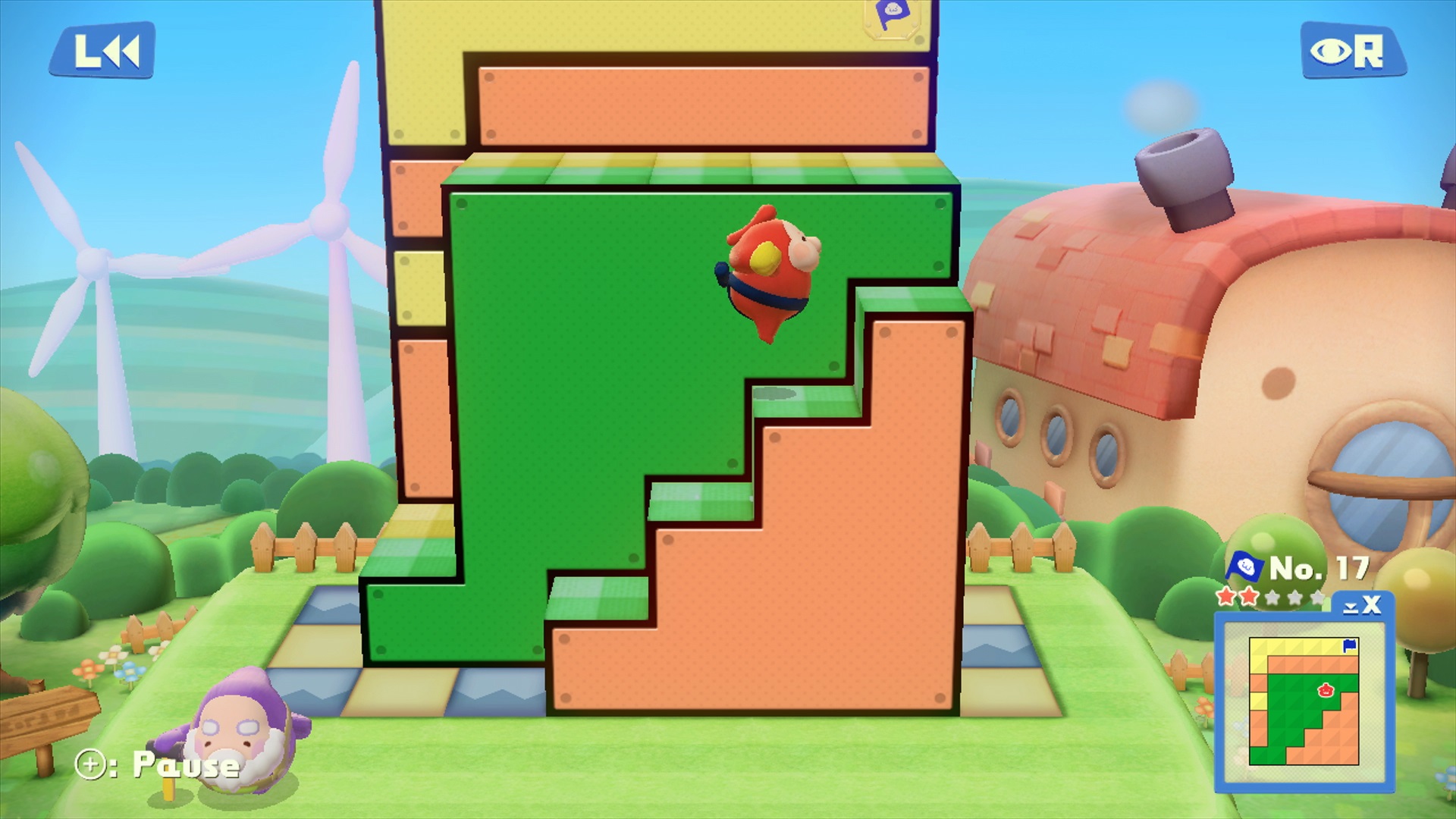
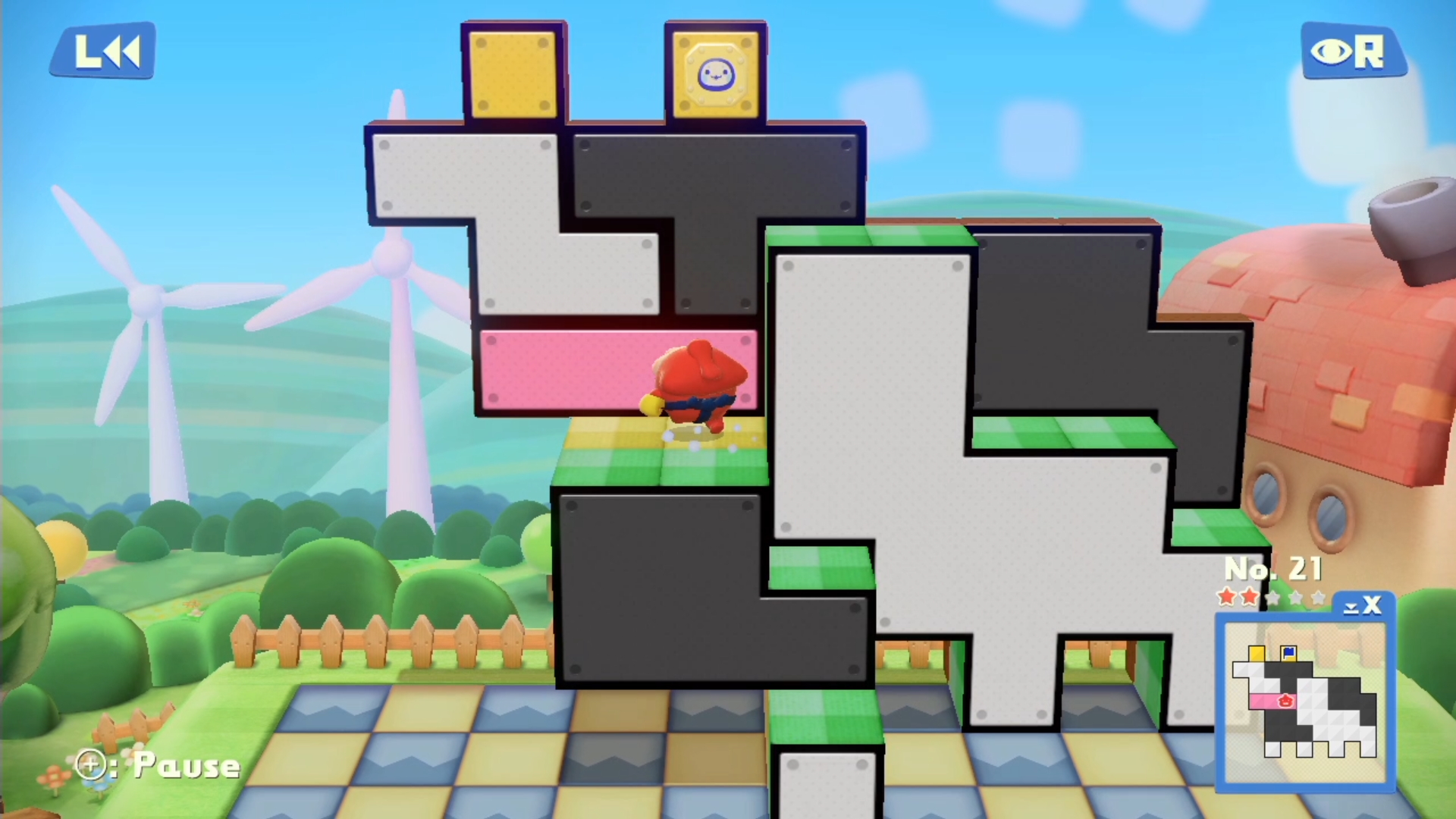
    Given how much I loved the original Pullblox (it was called Pushmo in america, and is different in different territories) I couldn’t wait to get my hands on a Pushmo for the Wii U. What I’d lose in portability I’d certainly make up for in visuals and the sheer quantity of puzzles to solve. Suffice to say, Pullblox World met me expectations, and even advanced on them.

    simple_puzzle_huge

    First up, the game is no different than the 3DS version that I reviewed many years ago. You play as  Mallo, a little red sumo wrestler character that must save children that have managed to get themselves trapped on top of elaborate structures. These structures can only be pulled out a maximum of 3 spaces, meaning it’s up to your own ingenuity to discover the best method (and sometimes only method) of getting to the top of the puzzle and rescuing the children.

    So whilst the mechanics are the same, the puzzles are far from similar. The sheer amount of complexity and variety on offer in this Wii U version is just staggering, with some puzzles being quite abstract (i.e. normal shapes you have to overcome) to crazy sceneries, to even nintendo characters themselves being climbable. It’s insane, but oh so entertaining trying to figure out how to move blocks in order to make your way up.

    2549396-ci-25508788830376002

    One thing that has changed since the original: The complexity. There were so many times me and my other half would be starring at the screen for hours, wondering how best to move blocks out to get to the top. It’s infuriating, but genuinely gratifying when you overcome a challenge.

    Once we had finished the original 120 stages, we found there were another 30 special stages, along with 2 other modes: challenge mode (where blocks of the same colour all move out at the same time), and online mode. All in all there’s 250 new puzzles to conquer, and whilst I’m writing this review having only completed 140ish, I can’t help but feel me and my other half will continue to play this for the foreseeable future, having already put in 10 hours + so far.

    Graphics haven’t really changed since the portable version, with one of the only visible upgrades being the amount of polish in character and stage models. One improvement that does stand out is the new stage sizes. Where 3DS levels were relatively small, the Wii U versions are monstrosities, taking 15-20 seconds to walk from one end to the other. This sheer size can sometimes cause confusion, especially when you have to take into account elements from the other side of the puzzle when you’re half way up.

    pushmo

    The music is just as enticing as always, with the gorgeous cute charming music keeping you humming for hours. I found myself constantly shouting out the theme tune to levels well beyond completing them, much to the irritation of my other half.

    So all in all, I thoroughly enjoyed my time spent with Pullblox world. It’s more of the same, but when the original was so damn good, who can blame me for enjoying the second? Should you have a Wii U, you owe it to yourself to own Pullblox World, especially with it only being £8.99.

    p.s. Apologies for this review being so short, it’s hard to write 1000 words on a game that has such a simple premise, no matter how good it is!

    4/5

  • Weekly Gaming: Animal Crossing: Amiibo Festival (Wii U)

    Weekly Gaming: Animal Crossing: Amiibo Festival (Wii U)

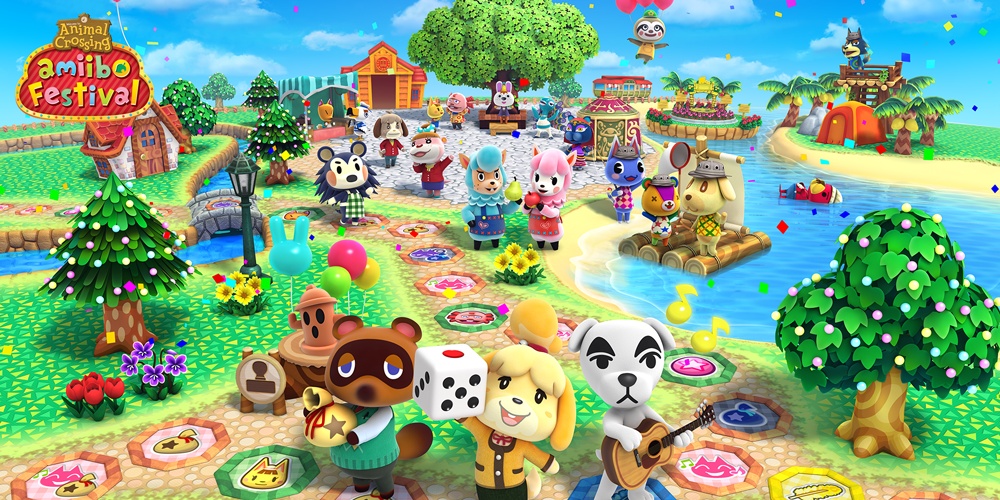
    I’m a massive fan of Mario Party. That is no surprise to those of you who know me, what is a surprise is how much so. It’s strange I know, especially for a series that evokes such hatred and love from it’s simplistic mechanics. In fact, there’s something about video board games that truly hits the spot for me. Maybe it’s the fact that no matter how much bad luck you have in rolling virtual dice you still have a chance to get points back with your skill, or even the randomness of it all, there’s something enthralling about playing a good video board game with friends or family. So, with that in mind, let me tell you about a little game that was on sale (for £15!!!!) for the Wii U called Animal Crossing: Amiibo Festival.

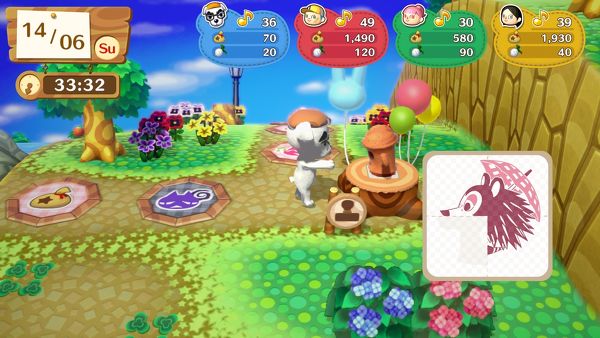
    Amiibo Festival, as the name implies, revolves entirely on Amiibo’s being placed on the Wii U gamepad in order to interact with the board game on screen. There are 2 game modes to do this in: the main board game or the mini-games unlocked through playing the main game. To get you started with the character placing,  Amiibo Festival includes two starter amiibo’s, Digby the dog and Isabelle the poodle. You don’t HAVE to play as these characters, but due to them being amiibo’s, and them inherently saving progress as you go around, it’s best to, as doing so unlocks more costumes and animations for your chosen characters.

    large-2

    So the main board game, is it any good? Unfortunately, nope, not at all. You see, the reason I love mario party games is because of the balancing that happens due to mini-games’ very existence. Just like being good in Mario Kart gives you bad items but doesn’t detract from your actual skill, Mario Party games can give you the worst dice rolls imaginable, but you could still win thanks to your skill in the mini-games.

    Animal Crossing: Amiibo Festival does away with anything you thought a board game should contain, meaning there’s no skill involved, apart from the skill to place an amiibo on a controller. The game does literally everything for you, there’s no thinking involved, no games to play, nothing. You are literally spending 45 minutes to an hour of your time watching characters interact with each other and lose coins. The objective of the game is to get as many happy points as possible, with coins turning into happy points at the end of the game. Some spaces of the board give you happy points or money, with others taking it away. This is all fine and good as a main objective, but as I said before, there’s no urgency, and certainly nothing on the players part in the way of skill – it’s all luck based on what you roll, and that, in itself is annoying.

    The only, and I mean only, two decisions of consequence you actually have during an entire game is trading turnips and deciding whether you wish to use your movement cards you pick up or to roll the dice. That’s it. Literally, the most thinking involved has to be the turnip buying, which happens once a week, and involves you deciding whether to buy as many as you can (the best strategy) or whether to hold on to some of your money. In most, if not all circumstances, the best tactic is to just buy as many as possible, as chances are, you’ll sell them at a profit during the week anyway.

    jpg

    The only redeeming feature Animal Crossing: Amiibo Festival has is it’s absolutely charming presentation and cute world. Every nook and cranny of the world features cute animals, each with their own charming personalities, and each going about their lives like any normal person would. It’s a lovely world, and one that makes me jealous of my other half’s love of all things animal crossing; it’s cute, and reminds me of how I felt about Disney when I was younger.

    Onto the mini-games, that require brand new amiibo cards. Yep, these are separate to the two main figures that came with the game, and are Nintendo’s attempt to draw even more money from their already heavily milked cow that is their fanbase. These cards look and feel like Pokémon trading cards from yesteryear, albeit with the new technology that is NFC built into everyone of them. Tap a card to the Wii-U controller, and you’ll perform an action with the character printed on the card.

    Each mini-game makes different uses of these different animals. One for example was a balloon game where you’d have to hold your card onto the wii-u until you decide you want your character to fall – doing so bounces them off balloons and points, with you trying to get your character to land on as many as possible.

    Another was a game of rock paper scissors mixed with whack-a-mole. It sounds crazy, but is actually fairly simple: each of the 3 character cards you place on the wii-u represent rock, paper or scissors. In front of them is a mole that spins around and chooses a different symbol every other second. It’s up to you to place a character card to the wii-u game pad both as fast as possible, but also ensuring you get the correct result (paper beats rock, rock beats scissors for example). Whilst I didn’t play this myself, I could see my other half enjoyed it no end.

    animal_crossing_amiibo_festival

    So were the mini-games worth it? Well half of them cannot be played with the included cards. Some require more than 3, which is yet another attempt within Animal Crossing Amiibo Festival itself to get you to spend more money. They were enjoyable, don’t get me wrong, but should they have been included as mini-games at the end of rounds they’d have been of greater use rather than side-projects.

    As for Animal Crossing Amiibo Festival as a whole; It could have been so much better. Every design decision, from the single board game (yep, no variation, always the same board), to the limited way in which you interact with the game feels like a hollow attempt by nintendo to grab more cash from you. It’s a shame, as the game does have a lot of genuine charm, but when you’re constantly made to feel like you’re missing out of features because of what you have or have no purchased, you can’t help but feel regret at stooping so low as to buy something so underwhelming. If you’re an animal crossing fan, you’re bound to find something of value here (namely the amiibo figures themselves), but for everyone else; avoid this game like the plague. There’s nothing of value here.

    1/5

  • Weekly Gaming: Hyrule Warriors Legends (3DS)

    Weekly Gaming: Hyrule Warriors Legends (3DS)

    I’m sure that when I say that I haven’t played a Dynasty Warriors game since I was a kid there’s going to be many of you who relate. It’s not that we didn’t enjoy the games when they were released, and god only knows there are still people out there buying the games (otherwise they wouldn’t continue to be made), it’s just that the formula is stale and the gameplay repetitive. Suffice to say that after 15-odd years, I finally felt in the mood for a hack-and-slash-defeat-thousands-of-enemies title, and what better game to play than Nintendo’s Hyrule Warriors for the 3DS.

    Why the 3DS version? I hear you ask when the HD version is so much prettier on Wii U:

    Portability.

    I wanted to play this game wherever I was, including but not limited to when I was on my lunch at work, or out and about travelling to site installs during my day job. I also feel that in getting the game for 3DS, I justified my purchase in the NEW 3DS XL even more (as reports suggest the fidelity of the non-new 3DS’ is atrocious and barely playable).

    Hyrule-Warriors-Legends-2-2

    Speaking of presentation, you can definitely tell the game’s been scaled back massively, both in terms of gameplay (how many enemies on screen at any one time) and graphical fidelity. In order to make the game playable at all on portable consoles the graphics has been scaled back to a presentation that reminds me of the N64. Yes, the polygonal enemies and low resolution textures are seriously that limited. Due to the lack of processing power, this has also affected the gameplay, as the limited amount of units that can be rendered on-screen at any one time is hugely limited.

    Whilst I haven’t played the original Wii U version to compare the difference, the game certainly feels lacking when it comes to combat due to the consoles restraints. There would be many times where my mini-map would be fairly red from the amount of enemies surrounding me, yet on screen there were barely 50. Activating a special ability would only kill at maximum 44 enemies, with more suddenly appearing on screen the second their comrades are defeated (in the very same place you just annihilated I might add!). It detracted from the enjoyability of the game at times; here you are, a seemingly powerful Hyrulian who is able to defeat Gods, yet not able to kill everything on screen because said enemies haven’t even appeared.

    Regardless of the nuisances the lack of processing power brings with it, the rest of Hyrule Warriors Legends holds up extremely well. The story brings together multiple familiar faces from across all the Zelda franchise, tying them together through a witch who is able to observe and manipulate all of time. In loving Link too much, and knowing she will never get close to him (since he is destined for Zelda) Cia (the main protagonist) succumbs to Gannondorf’s evil, starting the end of the world, and with it, the merging of different timelines and characters.

    screenshot5

    This fantastic way of both bringing in new characters into the fray, whilst also narratively keeping the world consistent helps to keep Hyrule Warriors campaign hugely engaging, even when you constantly have to change characters and play as someone new. In fact, in making you constantly switch up and play as new characters, Hyrule Warriors pushes you to learn more attacks, and more information about each of the characters, ensuring you get as much from the game and it’s hugely expanded lore as possible. Whilst the campaign ends in a relatively predictable manner, the story as a whole was enjoyable, and explored both new and old characters in ways I wouldn’t have thought before.

    As per all hack and slash games, Hyrule Warriors requires little strategy, but a lot of repetitive enemy slaying. Things constantly change of the battlefield, with new enemies appearing at a drop of the hat, and in doing so, partially changing the tide of the battle, but overall the whole game makes you feel “reactionary” rather than a strategist who plans out who to attack and when. You may have an idea of what you want to do throughout a playthrough, but until boss drop happen or new objectives are thrown at you, you cannot possibly hope to properly plan out a level.

    Not that the hacking and slashing is a bad thing, not by any stretch of the imagination, you just best know what you’re getting into before delving into Hyrule Warriors 10-12 hour campaign. Most enemies are easy to kill and so generic you can go about ignoring them; they aren’t going to have any effect on the tide of the battle, and if anything, they’re merely cannon fodder for you to build up your special attacks. It’s once you get used to the mechanics of how the stages play out that you realise that you can indeed ignore most of these enemies and concentrate on the true challenge of the game: the mini-bosses and enemy captains.

    hyrule-warriors-legends-2

    You see, these enemies change things up on the battlefield, and actually require skill rather than button mashing to conquer. They’ll ignore some of your attacks, and will proceed to leave themselves with openings should you evade their attacks for long enough. I especially found the final few bosses nice to take on, as in doing so you feel a real sense on accomplishment when an boss is downed.

    Outside of the main game you also have a weirdly addictive meta game of upgrading allies skills using rupees and materials picked up in levels, and also managing and creating weapons. All of this adds an extra layer of complexity to an otherwise simplistic game that kept me coming back to levels time and time again just to ensure I unlocked more. It’s weird, but hey, if it kept me hooked, it’s sure to make many fans happy.

    Am I glad I came back to a genre I had all but forgotten about? Yes. The simplistic rhythm of bashing out combos and barely thinking, only reacting, on a battlefield was enjoyable and weirdly relaxing, so much so that I was able to watch videos or listen to music in the background whilst still enjoying my time. Hyrule Warriors Legends isn’t a taxing affair, but is certainly enjoyable to take out and about should you own a 3DS. Weirdly enough, on completing the game I’m kind of eager to buy the Wii U version, just to compare the differences and maybe get a better playtime. Regardless, I think Hyrule Warriors Legends is a good buy, and a good match for 3DS – should you own the NEW 3DS and are looking for software to play on it, look no further.

    4/5

  • Weekly Gaming: Splatoon (Wii U)

    Weekly Gaming: Splatoon (Wii U)

    splatoon_updates

    Having seen the amount of commotion traditional games media was lavishing upon Splatoon, I decided to finally jump in head first and see what the fuss was about first hand. Finding the game for sale at £18 (which is rare! Splatoon hasn’t really had any price drops since it’s release), I brought it straight away without hesitation. Here’s my impressions.

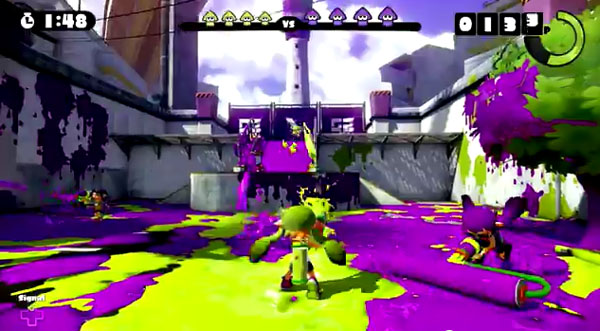
    Splatoon, Nintendos first ever foray into the Third Person Shooter Multiplayer genre, see’s you play as a squid-kid, a hybrid kind of creature that looks like a kid majority of the time, but can also turn into a squid at will. Being a Squid-kid comes with it’s benefits: you’re able to spray your own ink all over the stage, and use it to traverse to places you wouldn’t normally be able venture to. This mechanic is very reminiscent of Super Mario Sunshine for the Gamecube, where Mario had to spray FLUD (his water backpack) to get rid of toxic paint spread throughout the stage. The similarities stop there though, as Splatoon is a whole different kettle of fish.

    From the offset Splatoon makes it known that this is an online multiplayer game first and foremost with its news system. Each day it tells you what levels are available to play in social playlists, and in ranked. But before I got into any of the multiplayer, I decided to give the campaign a go.

    Splatoon_Wii_U_gameplay_screenshot

    First up, I played the entirety of the single player campaign. This mode allows you to get accustomed to the Splatoon controls (I’ll talk about those later; suffice to say, they take some getting used to), whilst also telling a story about the squid-kids versus the octopuses. Each stage has a unique gimmick to it, some will require you to fill up sponges with your own ink, increasing their size and making for some difficult platforming sections, with others having a boss system where you must avoid his attacks throughout the level, only to defeat the baddie at the end. The stages are varied and nice, and not once did I feel like the game was too repetitive, which, over the course of the 5 hour campaign, can only be a good thing. For all your troubles, you’re rewarded with some outfits to use in the online portion of the game (which is the main draw of Splatoon). Whilst this wasn’t much of a pay-off narratively speaking, the campaign doesn’t really set up much of a story in the first place; you’re trying to rescue a massive cuttlefish (electrical fishes basically) that’s been stollen by octopuses.

    Between choosing the campaign and the multiplayer, you have a hub world to interact with, allowing you to customise your character, as well as explore and take on extra challenges thanks to the games Amiibo support. Whilst I wasn’t a big fan of the amino challenges, they at least offered extra value in a game that hasn’t really dropped in price since launch. The shopping district in this hub area was a bit annoying though: everything’s level capped, meaning you need to make sure you play the multiplayer quite a bit before you can even interact with a bunch of shopkeepers. In theory this is a good idea: play the multiplayer more to get more loot! it left me disheartened, especially after I had just spent 5 hours playing the campaign. If anything, both multiplayer and campaign should have contributed to the same points system, allowing for single-player users to still feel like they’ve achieved something after so many hours playing the game.

    WiiU_Splatoon_02_mediaplayer_large

    Now before I get onto the core purpose of Splatoon (it’s multiplayer), a quick word about it’s controls. The game defaults with motion controls, meaning you need to move the gamepad up and down in order to look around. As soon as the option was available, I turned this mode off. It’s hard enough looking at a screen and concentrating on where to aim, let alone having to add another layer of complexity to the game by moving the controller up and down. As for the control scheme itself, I found that Splatoon is not accurate at all. You don’t get the precision that you normally would from a third person shooter, which takes some getting used to at first, but after a while, realise that it’s actually ok. You see, since the core purpose of the game is more to spray your ink as far as possible (covering as much of the map as possible), accuracy is mute. Yes, there are times you’ll come across another player and will need to precisely shoot at them, but these moments are few and far between, meaning the inaccuracy is fine for shooting and glooping the stage.

    Now onto the core of the game: Multiplayer, where all your skills are put to the test in multiple modes; ranked and social. For starters, you’re not able to join ranked matches until you’re level 10; a trait that’ll take at least 2-3 hours to attain. Whilst this was annoying, there’s a good reason for this restriction: the social playlist will teach you the core mechanics of the multiplayer mode. Every game mode is short (3-5 minutes in length) and as multiple game modes. For the vast majority of the time, you’ll be playing the “turf wars” game mode: a mode that requires each 4 player team to ink as much of the stage as possible. whilst that sounds boring in theory, it’s fantastic to actually experience, and gives every player of every ability the chance to have a great time. I loved being on the front line in this mode, taking on other players and getting rid of their ink in the middle of the level, but I could just as easily enjoy staying at the back of the level and making sure as much of the stage is covered as possible. It’s this flexibility that gives the game so much charm and replayability; everyone is contributing to the final score. Unlike most other shooters where you have to be good at killing others in order to contribute to the overall score, Splatoon makes it so that everyone on a team feels valued. It’s a fantastic feeling, and one which I can now see why so many editors and writers put it in their game of the year lists.

    WiiU_Splatoon_323_MultiPlayer_SplatZones_Warehouse01

    All in all, Splatoon is a marvel of multiplayer shooters. It stands alone in being quite unique and original; where so many other developers in the industry are trying to copy the leader (COD), Splatoon stands as a testament to what can be done when you think outside of the box. If you can find the game for cheap like I did (and of course be one of the 10 million people that own a Wii U), then buy Splatoon. You won’t be disappointed.

    p.s. If you do buy the game (or already have it) give me a shout, I’d love to give you a game!

    4/5

  • Weekly Gaming: Captain Toad: Treasure Tracker

    Weekly Gaming: Captain Toad: Treasure Tracker

    SI_WiiU_CaptainToadTreasureTracker

    I say games are charming quite often on this blog, and with most of these games I usually see them in a positive light. A lot of indie games come under this category, mainly because their aesthetic is so fantastic and cute that it leaves an impression that bypasses the actual gameplay. In these instances, the gameplay could be horrendous, but with the aesthetics looking so damn gorgeous I proceed to overlook a few grievances that would otherwise degrade the experience as a whole (I still write about the gameplay problems, but my overall score may be slightly higher due to the aesthetics alone).

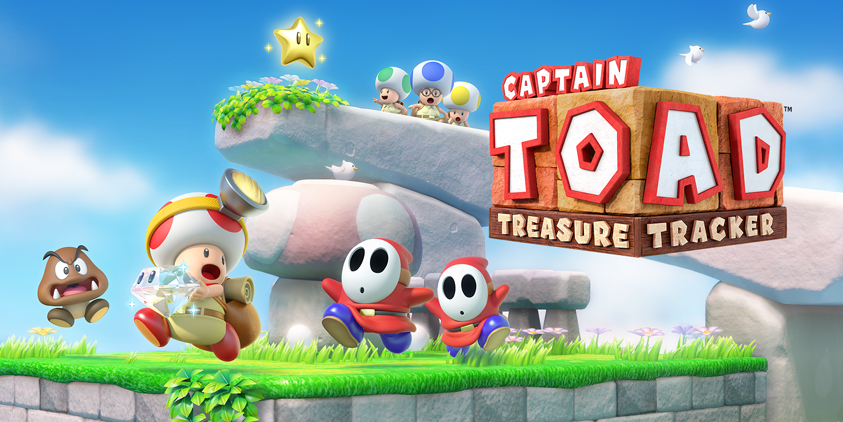
    Captain Toad manages to be both a charming game in the aesthetic department, as well as in the gameplay one. It’s combination of simple mechanics with oh-so troubling puzzles makes for one of the best experiences I’ve had playing with another person in a long time.

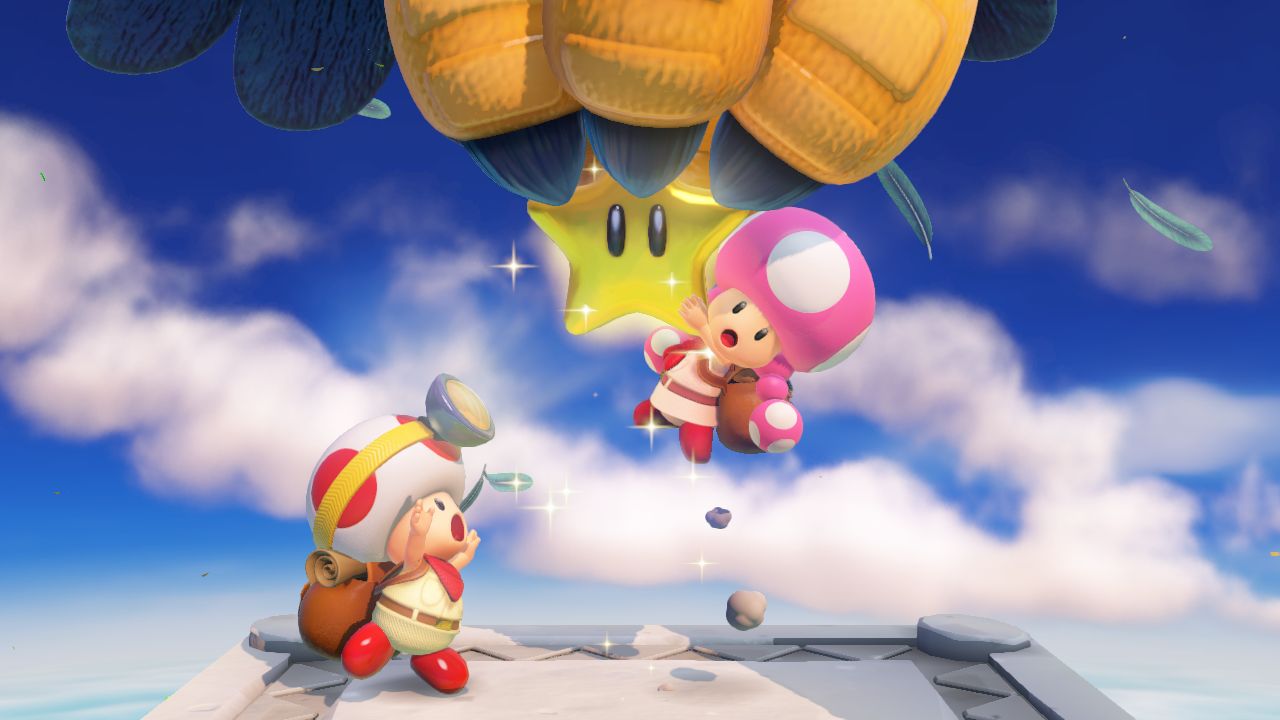
    So where to begin? Well from a story standpoint, there isn’t much to be had here. Like many Nintendo games the story is rather light, with Toadette being stolen by a giant evil-looking bird being the main reason Toad starts off on his adventure. This story flips back and forth throughout the game’s 70-odd stages, with Toad in turn being stolen, meaning Toadette has to take her turn at trying to rescue her other half. At the end of the day, the story is not necessary to enjoy Captain Toad: Treasure Tracker at all, so it’s mostly here to service a few fans with cute cut-scenes here and there.

    toad-main

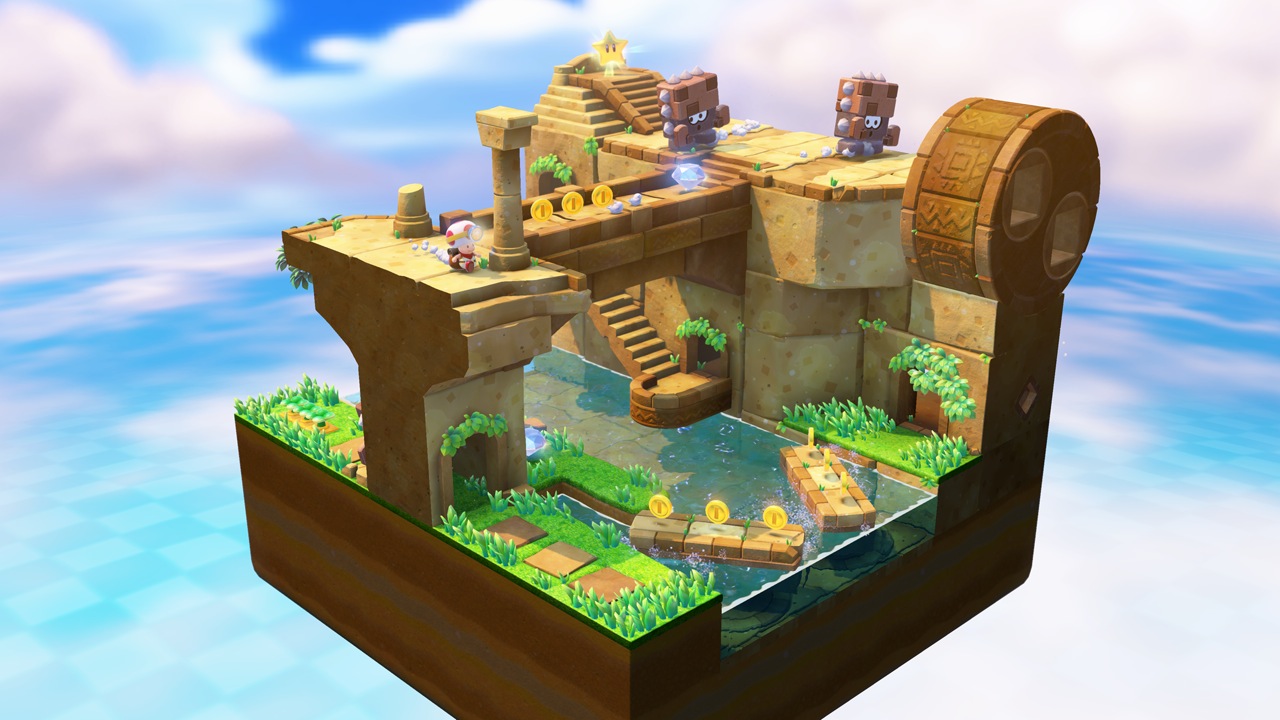
    The gameplay revolves around Toad (or Toadette!) having to navigate around a small map, all whilst collecting 3 diamonds and making their way to the golden star at the end. Each stage is extremely small, with most being able to be completed within 2 to 3 minutes should you brisk your way through them.

    These stages would be easier if it wasn’t for the limitation that Toad (and Toadette!) cannot jump. This limitation (which I believe is explained through the fact Toad has a large backpack on that holds lots of coins), helps to make every single stage extremely interesting and complex. Trying to get to a diamond which is hidden at the top of the stage becomes a chore of puzzle solving rather than action, which is great, as it gives you just as much time to take in the stunning levels with all their intricacies.

    My oh my how the levels shine! They are genuinely a testament to the amount of polish and attention to detail Nintendo can put into a game after all these years. Every blade of grass, every brick in a wall, and every character that moves about the screen is all so stunningly rendered I have no idea how Nintendo could make anything prettier in the future. This is pixar, but given to the user to control at their own pace.

    2558115-wiiu_captaintoad_scrn01_e3

    Whilst most of the campaign/story’s will entail making your way across these tiny stages, there are some deviations. These come in the form of some literal on-rails sections (where toad must throw turnips from a train cart at enemies throughout a course), and some boss encounters. These stages really help to mix up the campaign, with the same rules applying (no jumping), it makes for some challenging encounters.

    Captain Toad: Trasure Tracker isn’t without its faults though. One annoyance does manifest, and it’s in the game’s hidden mode. Titled “Hide and seek”, this fantastic little addition to each level is hidden behind a barrier: you must own the Toad amiibo. Tap your amiibo to the wii u gamepad on a level you’ve already completed, and a pixelated toad will invade it, with your soul objective being to find him somewhere within the stage. It’s a shame that for a lot of people that just bought the game without the amiibo they’ll never see this mode, as it’s easily the most fun I had with the game. Me and my partner would swear consistently as we scanned every nook and cranny of a course trying to locate a little pixelated Toad, calling him a little shit when we’d find him hiding behind a rock or a fucker when we’d find him jumping between windows. It’s seriously such a good game mode I’m tempted to try the gameplay idea myself with an iOS/Android game doing exactly the same.

    One other annoyance with Captain Toad: Treasure Tracker is it’s lack of difficulty. Whilst the puzzles are brilliant, and each level is masterfully designed, there just isn’t any challenge to the game. Yes, there may be times I would spend an extra minute or two staring at a stage wondering how to get to the final diamond, but overall these moments were few and far between. Maybe that’s a testament to Nintendo’s fantastic level designers, but for me, I genuinely wish it could have been harder so that I’d have spend more time taking in the gorgeous levels.

    2733255-captain-toad-treasure-tracker-2

    There’s plenty of replayability though, with each level having 3 different things to collect. There’s the star (which is always the end of the level), the three diamonds, and the optional objective. You’re not able to know the optional objective until after you’ve finished a level, so many times you’ll need to go back in again to do it. All three of these optionals should be enough to keep you entertained for hours, but with only one disadvantage: you’ll wish there was more once the games credits has rolled.

    Despite my grievances and as I said at the start of this review, the charm of Captain Toad Treasure Tracker manages to really pull through. Taken in it’s entirety, Nintendo have managed to make one of my favourite games of 2016, and to think, it’s only just begun makes me even more excited for what else I’m going to play this year.

    5/5

  • Weekly Gaming: Super Mario 3D World (Wii U)

    Weekly Gaming: Super Mario 3D World (Wii U)

    It’s genuinely insane how much adoration and annoyance I have for Nintendo games. On the one hand, they make absolutely charming games that are addictive for days, weeks, years even until you’ve collected everything a game has to offer. I remember doing just that with Super Mario 3D Land, collecting everything (yep, every single stage twice as Mario and Luigi + secret stages) the game had to offer. But my annoyance comes from the fact that they make the same games every generation of consoles, with the aesthetics being one of the only things they mix up with recent iterations (Yoshi’s Woolly World & Paper Mario come to mind). Thankfully, Super Mario 3D World is not one of those games, and as a consequence, is some of the most fun I’ve had on a Nintendo game since 3D land all those years ago.

    1381512525385-1

    You see, whilst most other nintendo IP’s have been through several generations of consoles before they ended up being rehashes with new aesthetics, Super Mario 3D Land was only released a few years ago on the 3DS. The great 3D environments and fantastically short levels truly helped to make one of the most exciting and original Mario games of recent memory. Super Mario 3D World elevates this praise and takes it to the next level, showing what you can do with a Mario game in 2013, with a proper console behind it.

    One of the first things I have to get out of my system about the game is it’s absolutely stellar presentation. Seriously, who knew simplistic geometry and cute disney-esque designs could be so god damn gorgeous? Everything, from the grass waving in the wind, to the mud that you see underneath, is absolutely stunning. It’s also insane that in a time when most console games are struggling to reach 30fps, Super Mario 3D World never stutters or moves below 60FPS, helping to keep gameplay smooth, no matter how many players or enemies are on screen at any one time.

    sm3dw1

    The addition of multiplayer is a huge advantage over it’s predecessor on the 3DS. Being able to play the game with my other half ensured that I was finally able to incorporate her into my game time, ensuring she had a lot of fun whilst I got to play a game I wanted to review. Yes there were disagreements, it’s bound to happen in a game where the camera is trying to incorporate both players in the screen at any one time, but it was still enjoyable all the same.

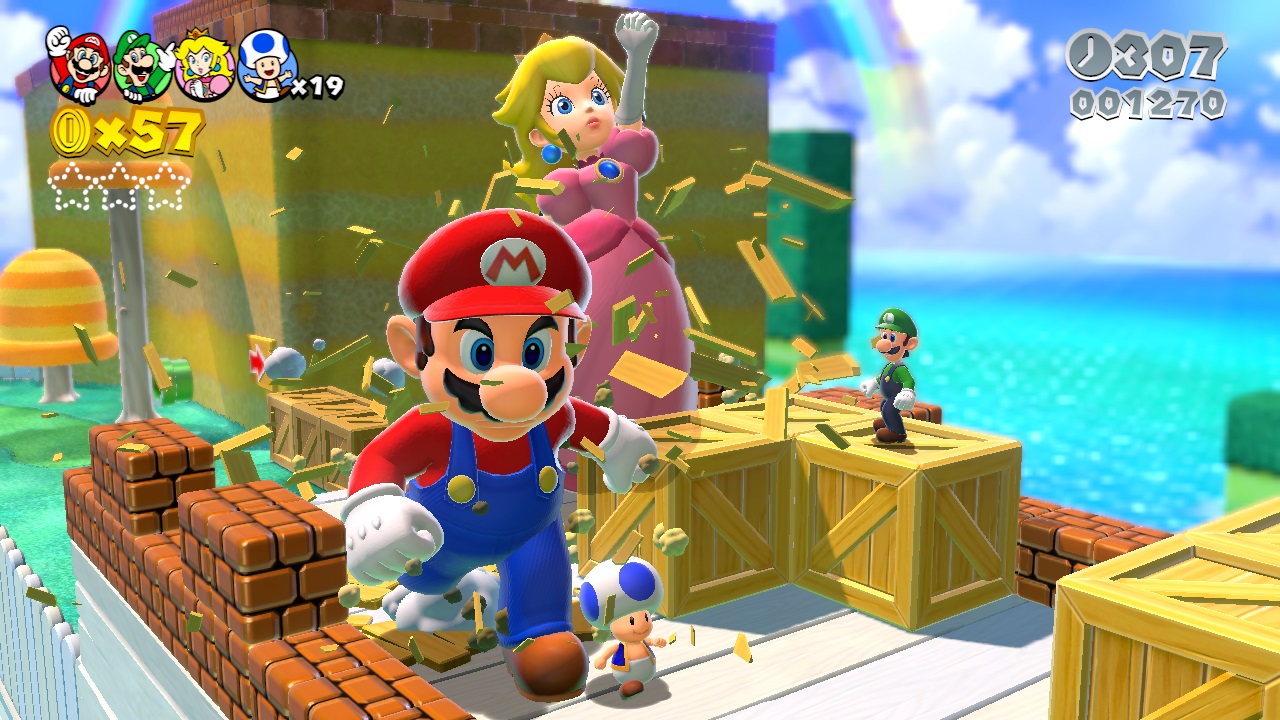
    With the presentation and multiplayer out of the way, how does the gameplay hold up? Rather well actually. Mario and the team still jump in the ways they always have (with peach being hugely OP since she can hover whenever she likes!), but because of these mechanics being the same as they always have been, where does nintendo find the innovation? In the course design and power-ups. You see, rather than resting on their laurels, Nintendo came up with quite a few new power-ups to use throughout, from the new cat bell which turns Mario and co into cats that can climb walls (in all fairness, this power-up feels like Nintendo’s pandering to the internet culture, but it was still good to use all the same), to the new cherry power up (which spawns a new playable character on the screen) found throughout certain levels, each power-up felt great to use and helped in keeping each stage original, and giving new options by which to traverse the levels.

    super-mario-3d-world-2

    It’s thanks to the course designs that each level is so enjoyable to play and go back to. Everything’s doable without power-ups, but it’s the power-ups that will help you achieve 100% of collectibles within a level should you have them. For example, the vast majority of levels will allow you just to rush through, but should you wish to get a collectible green star (there are 3 of them in each level), you’ll need to climb a wall, which can only be done with a cat bell power-up. Most stages will give you these at the start, so it’s up to your own skill as to whether you can keep them until the end of the stage. It’s a fantastic system that ensures everyone feels encouraged to finish a level (no matter whether they’re tiny Mario or full upgraded), and helps to make sure those who are slightly more skilled (who keep the power-ups) get the satisfaction of beating a level without being hurt.

    There are drawbacks to the new camera angle approach in Super Mario 3D World, and it’s mainly present in multiplayer. You see, trying to keep multiple players on the screen at the same time can take a lot of effort on the developers side, so to compensate, they make the player who’s ahead and on the correct path the main, focused player, whilst also zooming out to show the other player. This approach works most of the time, but there were so many instances where I would have to turn into a “balloon” in order to get back to my other half on screen, even though I was getting a power-up or collectible. It’s frustrating at times, and can also cause you to miss-time your jumps, resulting in lives lost or getting damaged by simple creatures like goombas.

    Super-Mario-3D-World-7

    Overall, Super Mario 3D world is simply one of the best games I’ve played in recent memory. It’s simplistic control scheme and simply sublime graphics really help to show how Nintendo go to where it is through sheer polish alone, a rare sight in a world with buggy games and unpolished presentations. If you have a Wii U, the price tag of Super Mario 3D World may be steep, but it’s worth every penny.

    5/5

  • Weekly Gaming: Paper Mario: Sticker Star (3DS)

    Weekly Gaming: Paper Mario: Sticker Star (3DS)

    Weirdly enough, in all my years of owning Nintendo consoles; from the very first 3DS that I saved up my own money to buy at the age of 13, to the Gamecube I bought a few years later, I’ve never owned or played a Paper Mario game. Don’t get me wrong, I’ve always admired them from a distance; their fantastically stunning presentation always had me attracted to them, and from what I always heard, their RPG mechanics also tempted me time and time again. Alas, years later and at the grand old age of 28, I decided to pop my Paper Mario cherry. Suffice to say, I’m glad I did.

    Paper_Mario_Sticker_Star_Gameplay

    There’s more to the game then just the visuals; Paper Mario Sticker Stars takes place in a book/land where the world is not only made of paper, but knows about stickers and their incredible abilities they hold. Once a year a sticker comet comes down to the land during the sticker festival, for all to marvel at how much power it holds. Unfortunately, with Bowser being Bowser, he decides to try and steal the Comet Stickers power, and thus begins Mario’s adventure through this gorgeous and crazy world.

    The sticker/paper motive is really taken to the extremes throughout the course of Paper Mario Sticker Star, both to it’s advantage visually, but also to it’s deterrent mechanically.

    paper-mario-sticker-star-e1352150834202

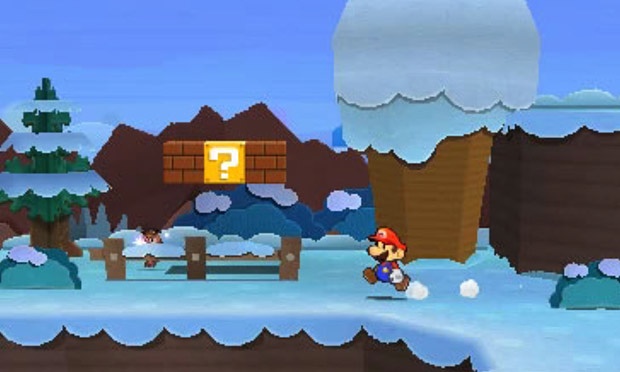
    From a visual standpoint the sticker/paper combo really helps to bring a visually stunning world to life, with every character fitting nicely into two dimensions. Mario for example can be crumpled up like a piece of paper, and due to all the characters two dimensions, see them on their side and they’re basically invisible. Stickers are commonly found throughout the world; on walls or under bushes, it’s fantastic peeling them off whenever you find them to see them fall with grace like a piece of paper in the wind. It’s all a wonder to behold, and truly is a stunning feat for nintendo to achieve; Paper Mario Sticker Star is one of the most visually pleasing games I’ve played in a long time.

    Whilst the stickers and world are really a delight to be seen in action, the mechanics of them are not great. Battles take place with enemies like a traditional turn-based RPG, meaning you’ll select an attack and proceed to block oncoming offences. The problem is, the stickers you find throughout the world (and can buy) are the very stickers you need in order to attack and defend against enemies. It’s a cool idea in theory, but left me stuck many-a-time when I didn’t have the correct sticker to take on a specific enemy; an annoyance no gamer wants to come across after putting hours into a game.

    Sombrero-noscale

    Another problem with the stickers is the very core of the gameplay loop; there’s no XP for gain in Paper Mario Sticker Stars, meaning your progression through the game is on the stickers alone. Nintendo have done good to provide stronger and stronger stickers as your proceed through the story, but in focusing the whole game around this stickers, it never felt like I was progressing. Typically in RPG’s I enjoy fighting as many enemies as possible at the stat of the game so I can become strong enough to kill hard enemies with relative ease, helping me to feel empowered in an otherwise atypical game. The problem with a system like Paper Mario Stick Star is that in giving you no reason to fight enemies for a gain at the end of the combat, and instead giving you a net loss of losing your hard earned stickers from damaging goomba’s, you’re under no incentive to actually fight any enemies at all unless absolutely necessary (e.g. They’re blocking an exit). I spent the first few hours fighting everything I came across until I made that realisation; I wasn’t gaining anything at all, so what was the point?

    It’s just a shame about the combat system, as I actually really enjoyed the fighting. Timing jumps is always enjoyable and keeps a user engaged with turn-based RPG’s, and the ability to block against enemy attacks is always a bonus and incentive for keeping you engaged with the game at all times. I still had fun with the game overall, but as said previously, I genuinely let like there were no progression. I just went on a linear path the developers wanted me to go on gaining stickers strong (or weak) enough for the current enemies.

    Paper-Mario-Sticker-Star-010

    Another annoyance about the sticker system is the ability to go into a fight with the wrong stickers in the first place. There are certain “things” that can be found around the world. These 3D household objects can be turned into rare and powerful stickers, that, during combat, can have huge effects on your foes. The problem is, some of the bosses in the game (and levels!) are absolutely essential on you having one of these stickers in your possession.

    Case in point; I wasted dozens of minutes fighting a fish that would simply jump into the water and heal itself once you first damaged it. Not knowing what to do I would constantly try and hurt it, all to no avail. After getting so annoyed of getting the game over screen time and time again, I decided to check out a guide online. Turns out in one of the levels you can find a fish hook; this fish hook should be used only when the fish goes into the water, and that allows you to continue fighting him.

    papermario-1352386509

    It’s genuine annoyances like the example above which really made the mechanics of Paper Mario grate on me after a while. If it wasn’t for the charming graphics and gorgeous presentation, I may not have made it to the end.

    Whilst this article makes it sound like I’ve shitted on Paper Mario Sticker Stars more than sang it’s praises, I should say here that I genuinely still enjoyed the game from start to finish; but only in a presentation and story way. The mechanics let me down because they (in theory) should have complimented the art-style, but instead they detracted from the games’ mechanics as a whole. As I said at the start of the article, I’m glad I finally popped my Paper Mario Cherry, but man oh man was it a bittersweet time.

    3/5

  • Weekly Gaming: Zombie Panic in Wonderland DX (3DS)

    Weekly Gaming: Zombie Panic in Wonderland DX (3DS)

    large

    Having recently purchased a NEW 3DS Xl, I decided I needed a few more digital games on the system to entertain me during my downtime between writing and programming, so jumped onto the Nintendo store to find what was on offer. Lo and behold, quite a lot actually, with Zombie Panic in Wonderland DX actually peeking my interest the most, I proceeded to download it ASAP and set about completing it.

    Let me start by saying: Zombie Panic in Wonderland DX is not a simple game. The controls are simple, but my god is the game difficult. It’s a arcade shooting affair where your character stands at the back of the stage and shoots wherever you put your stylus on the bottom screen. Whilst it starts off easy, it soon becomes nigh on impossible when every enemy is shooting projectiles whilst being so far away that you can’t accurately hit them. To add to the challenge, you also only get 1 hit point per continue, with extra health coming randomly through destroying the scenery around the zombies themselves in the background. There’s also no save games, and after 5 continues, that’s it, you need to start the game from scratch. I’m surprised I finished the game to be honest, with a quick Google telling me that this is a remake that originally come out for the Wii, it doesn’t surprise me that they upped the difficulty to keep veterans entertained.

    tumblr_inline_negqaarrfP1spwxuw

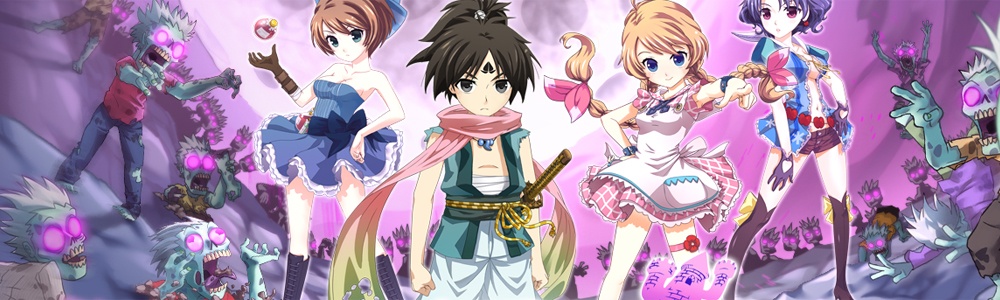
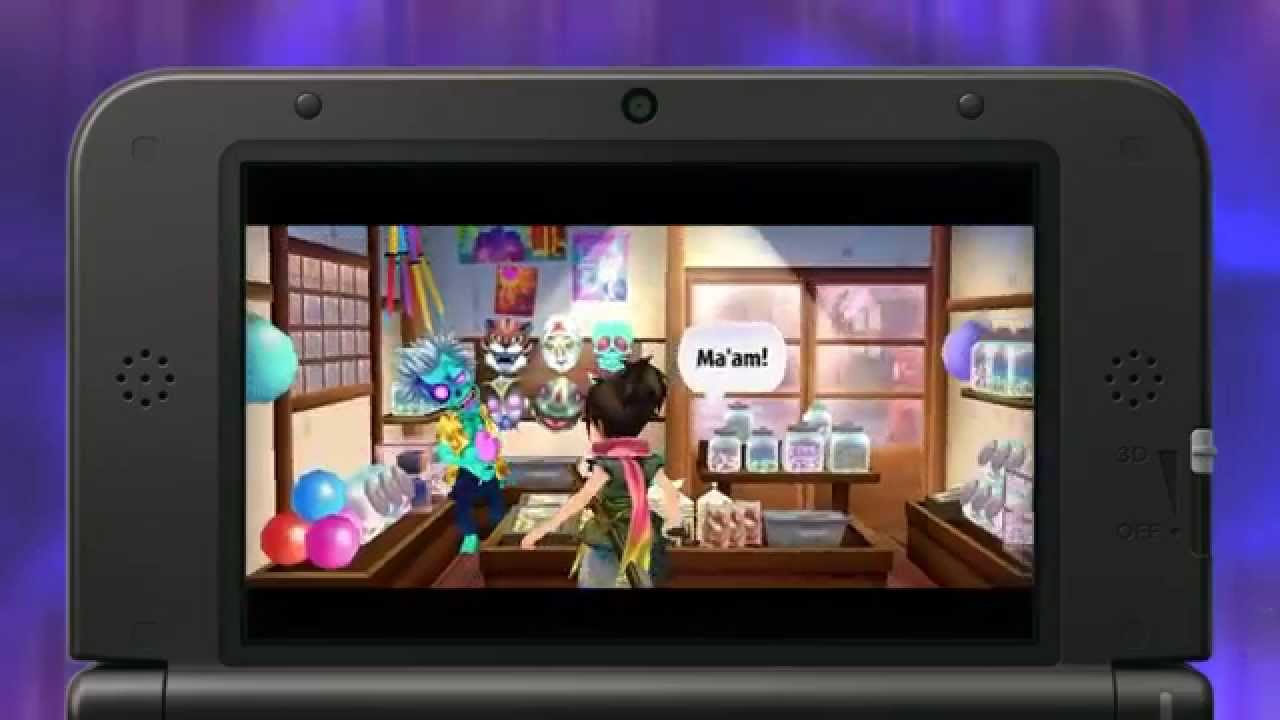
    Don’t let the difficulty put you off the game though, with interesting themes and a multitude of different levels, I was kept entertained for a long while, and enjoyed the diversity of scenes on display. For a standard shooting zombie game, it’s strange to see such a variety of different levels and enemies to take on; from caterpillars in the world of Alice in wonderland, to the fantastic skeleton archers in the medieval period (where snow white is introduced), every enemy and asset looks lovingly created, despite only being on the screen for a few moments before you blow it up. This also goes for all of the characters you meet during the campaigns limited story-telling: each cutscene is cute and has it’s own take on familiar fairy tales that’s sure to delight, and left me smiling during some of the latter scenes in the game.

    The enemies are easy to kill, but varied, and in such a large number that there are many times during the campaign that you may feel overwhelmed with how much is coming towards you. I died and had to start from scratch multiple times, a nuisance, but one that speaks volumes about the difficulty of the game. The vast majority of them will simply walk towards you, with a few shots to their head killing them on the spot, with others taking their place before long.

    maxresdefault

    One nice addition which soon upped the ante and made the game more enjoyable once every few levels were the bosses, who were hugely details and had nice attack patterns that had to be learnt quickly (for fear of seeing the Game Over screen far too soon). Each boss took on the perspective look/visuals of the levels they proceeded, with my favourite easily being the queen of cards from Alice in Wonderland; her first attack patterns were easy, but before long she became something of a dominatrix, and proceeded to dance in her underwear whilst attacking me. It was hugely enjoyable, and certainly unexpected; a nice surprise at a time I died multiple times.

    Along with the campaign mode there is a normal arcade mode, where no story happens, but you’re able to choose whichever character you unlocked during the main campaign. I found this mode enjoyable, but altogether not as entertaining as the main campaign where the characters and enemies really shine in their environments. Also, scores don’t really mean much when you can’t compare your scores on the games you play with your friends! (Nintendo really are behind in this regard – the sooner I can play games and compare my score against my friends within the game itself the better).

    For the couple of quid I paid for the game in the Nintendo Store, Zombie Panic in Wonderland DX has certainly earned it’s money and time I’ve invested and then some. It may not be to everyones liking (nothing ever is), but the simple controls paired with the horribly difficult gameplay, and lush environments had me enjoying every minute I put into the game. There’s a few niggles in the games transition from a TV to a small screen (enemies in the distance are seriously impossible to hit), but overall these niggles don’t detract too much from how much pleasure I got from the rest of the game. Should you find Zombie Panic in Wonderland DX for sale again anytime soon, I’d hugely recommend getting it, you shouldn’t be disappointed.

    3/5

  • Weekly Gaming: Super Smash Bros for 3DS

    Weekly Gaming: Super Smash Bros for 3DS

    I’ve always loved Super Smash Bros, ever since me and my brothers got it one christmas as children and played it non-stop, it’s always had a special place in my heart. The game took a while to get used to, but being a kid didn’t stop me and my siblings, as we soldiered on until we smashed the hell out of each other. It wasn’t until many years later, when Smash Bros Brawl came out on the gamecube that I realised how fond I was of the series, with myself playing it with friends and family during my teenage years, and easily into university with some of my best friends on their Wii. It’s a fantastic series, one that brings people together, no matter what their skill range may be. So with all this in mind, what do I think of Nintendo’s latest brawler? It’s bloody fantastic.

    FCUKT HE CELL SHADINGGGGGG
    The character models on the 3DS version have a cel-shaded look with the reason being the small size of the 3DS’ screen. Despite this new style, Smash Bros still manages to look fantastic.

    The first thing I done when I received the game was took it around my families house and proceeded to battle for hours on end. Having not played Smash Bros in years, I lost, time and time again, but this didn’t deter me, as I continuing honing my skill with bowser and dr mario and continued to smash people out of the stage. It’s one of the fantastic things about smash bros that hasn’t been lost with all these years: the games fun no matter what your skill level may be. Items on the stage help to even the playing field, with my youngest sister easily smashing us off the stage when a lucky hammer would come her way. Suffice to say, the multiplayer is just as fun as ever, and reason enough to get Super Smash Bros Brawl on either 3DS or Wii U.

    So what of the single player? Well there’s plenty to do, with myself spending most of my time in the classic mode, where you must go from one stage to another fighting variations of characters as you go. The difference with Smash Bros for 3DS is the fact that you can choose your path, with some paths being harder than others but netting higher rewards. Next up is the Smash run: a mode where you run across a stage as fast as possible all whilst killing as many enemies to collect their stat bonuses. Once the timer is over, you then proceed to battle it out with CPU controlled enemies on a normal brawl level but with different abilities from the stats you collected. it’s a fun mode to play in short bursts, and one that certainly helps in unlocking all the characters available this time round.

    FUCK THE FAVOURITE CHARACTERSSSSS
    Whilst there’s a great deal of characters on display here, most players will end up going back to their favourite before long.

    Whilst on the subject of characters, how do the new additions hold up I hear you ask? Well for the most part, pretty well. The Villager from Animal crossing is overpowered to hell, but otherwise additions like Pacman and little mac are a standard affair of learning what abilities they have on the B button, and proceeding to master when to use said abilities. As much as I just dismissed little Mac, he’s actually got one of the best line up of moves compared to the whole roster. He’s fast and light, and whilst he can’t jump, he’s bloody powerful, making for a very worth opponent. Despite all these new additions though, I couldn’t help but fall back to tried and tested characters like Bowser and Doctor Mario; my favourite characters because one is fast and all around great (Dr Mario), with the other being just massively strong and an outright monster to budge.

    For all of my positives about the game, I only have one glaring negative: Smash Bros for 3DS doesn’t innovate on the smash bros formula in any noticeable way. Don’t get me wrong, the game is extremely polished, to the point I don’t think I could find a sharp edge on it even if I tried, but in playing it safe, Nintendo also made the game boring for me far faster than it typically should. The rise of DLC characters has kept my interest peaking back here and there, but I can’t help but feel Nintendo played it far too safely, and could have come up with some new modes that really mixed the formula up in new and interesting ways.

    bottom_screen_super_smash_bros_3ds
    Whilst the top screen is where all the action happens, it feels like Nintendo could have made better use of the bottom screen.

    So should you own Super Smash Bros for 3DS (or Wii U)? Well, it depends how many friends you have or how much you like fighting. Playing with my family like good old times was great, but I got bored quickly when I wasn’t playing with others. If you’re a loner for most of the time like me, you may not find great value in the game, despite how great and polished it is. If your answer is that yes, you’re a social butterfly, then seriously, you cannot find a better party game than Smash Bros right now.

    4/5