Tag: Nintendo

  • Weekly Gaming: Mario Party: Island Tour (3DS)

    Weekly Gaming: Mario Party: Island Tour (3DS)

    I have fond memories of Mario Party; me and my family would play it loads as a child. I remember the painful blisters we would all get after stupid mini games forced us to out-do each other on the N64, and I also remember finding that an electric toothbrush was the best way to press A as fast as possible on the controllers. So with Nintendo doing a Nintendo Classics line on the 3DS, I thought, what better way to spend the last of the year then renewing this love for the game with my partner? Well, my presumptions were far from true, which was annoying considering I had mistakenly purchased two copies in the hopes we could play together.

    FUCK THE RACINGGGG
    Looks like a board game from yesteryear, but beneath it all Mario Party is just a race to the finish, and a frustrating one at that.

    So first things first, why was I mistaken? Well Mario Party’s of yesteryear was a board game affair. Players would take turns rolling a dice, landing on special places, and playing mini-games to help them progress around the board. Whoever had the most stars at the end of the game won, with everything in the game helping you progress towards getting as many stars as possible. It was fun and addictive, down right competitive even.

    Not so anymore with Mario Party Island tour. Whilst the “boards” still exist, they’re a one way street, with no repeating or challenge involved in collecting the most of something. This is a purely racing affair, with the player reaching the finish line first taking all, leaving everybody else in last place. whilst this may be to some peoples taste, it left a bad taste in my mouth when I was unlucky with my dice roles and ended up finishing a game at space 20 when everyone else was at space 50. It didn’t matter how well I played the mini-games (I won all of them), I still lost.

    I’m not delusional; previous Mario Party games also had a lick of luck involved in winning a game, but at least there was skill involved too. You could nick players coins, preventing them from buying the game winning stars, or even outrightly turns the tables on someones fortunes should you win a mini game. Not so with Mario Party Island Tour, which has taken the most frustrating parts of any Mario Party formula and put them all into this one product.

    FUCK THE MINIGAMESSSS
    Whilst I’m annoyed at the “board game” aspect of Mario Party, the mini games are just as addictive as always

    Why was I annoyed I purchased the game twice? Well 3DS games usually contain download play; a way for up to 4 people to play one game with one cartridge. These titles usually also have the added benefit that should the other players own the same game, more options will be made available. Not so for Mario Party Island Tour, where doing download play allows you to access the full game. I sound annoyed, mainly because I waster money, but this is actually a fantastic addition to the game, and one Nintendo should advertise more.

    So what good is there about the game? Well for one, the mini-games are just as addictive and fun as they always were. There’s a huge variety on display here, with them all taking advantage of the 3DS’ unique feature set, such as it’s gyroscope, touch screen, or even the microphone. In the 5 hours I’ve put into the game, I’ve rarely come across the same mini-games twice in a row, a brilliant play on Nintendo’s part calling to the amount of content available.

    Along with the traditional “board” games, Nintendo has actually filled the game out plenty. You can choose to play the mini-games by themselves should you wish to practice and improve yourself, or play against the CPU on a hot air balloon mode where you must win as many mini games as possible. There’s also time trial mode, and another mode titled “Bowsers Tower”, which is more like the games actual campaign/story mode, with bosses and mini-games you wouldn’t find in the main game.

    So for £13, Mario Party: Island tour is actually a bargain for the amount of content it squeezes in, it’s just a shame that the main thing that got me interested in the games in the first place (the board game) is gone, with it’s replacement being a mere shadow to the brilliantness that came before it. By all means buy Mario Party: Island Tour since it’s now on offer; it’s great fun with friends, and is cheap; just be prepared to get very annoyed very fast when the games decides to give you shit for no reason.

    3/5

  • Weekly Gaming: NES Ultimate Remix (3DS) Review

    Weekly Gaming: NES Ultimate Remix (3DS) Review

    nes-ultimate-remix-3ds-810767_expanded

    Hi all,

    So on the day of my games release (which you can buy below here: http://www.twixelgame.com), I still have writing left in me, so this week I bring you NES Ultimate Remix by Nintendo. You can read my review below:

    http://www.gamrreview.com/review/92217/ultimate-nes-remix-3ds

    I hope you enjoy it, and keep tuned, I’ll be doing a write up on my game soon.

    -Dan

  • Weekly Review: Bayonetta 2 (Wii U)

    Weekly Review: Bayonetta 2 (Wii U)

    FUCK THE WITCHESSS
    The troublesome twosome are back in Bayonetta 2 following the fantastic original.

    It’s weird to think that Bayonetta 2 may have never happened. Given the amount of praise the original got from almost every publication, you’d have expected the game to have sold well, but at ~2 million units sold, it didn’t make as much money as Sega would have hoped. Going from publisher to publisher trying to sell the premise of Bayonetta 2 was unsuccessful for the most part, until Nintendo stepped in at the last minute to fund the making of a second Bayonetta. It was a move that fans appreciated the world over, and I for one thank them after playing the masterpiece that is Bayonetta 2.

    The game starts out with Bayonetta Christmas shopping with her partner in crime following her every step. It’s here that something’s amiss, with angels coming down and attacking jets going through the city, prompting Bayonetta to jump into action to put a stop to these “evil” beings, by fighting on top of a jet which is flying through the city. It’s a fantastic start to the game, one that shows how the game means to go on, with over the top action scenes and ludicrously tight fighting. From here the story only gets even more interesting, with Bayonetta’s best friend’s soul being taken to hell, and the balance between good and evil skewing, Bayonetta has no choice but to fly to Japan and it’s Fimbulventr mountain in search of both the gate to heaven, and the gate to hell.

    FUCK THE SHOESSSS
    The gun heels are back, giving Bayonetta that unique look and feel she’s always had. These can be change and exchanged for swords, whips and all manner of other weapons.

    If you’ve played the original Bayonetta, or any action game like dynasty warriors, God of War etc. then you’ll know the basic mechanics of how the game will play out, with the game partially opening up to allow you freedom around a stage, and then putting you in a small arena to attack a bunch of enemies that spawn from no where. It’s a tried and tested technique, one that feels contrived but does the job of making sure you never go more than 5 minutes without fighting, because at the end of the day, the game lives and dies by its fighting mechanics, and oh boy do the fighting mechanics work well in Bayonetta 2.

    Every punch, kick, slash, whip and dodge feels fantastic to pull off, with combos flowing naturally as you jump between enemies, using your arsenal of different combos as you go. The dodging mechanic is easily the most empowering, as every time you successfully pull it off the whole world slows down allowing you to destroy your enemies faster due to something you successfully done. It’s gratifying, and one of the main reasons to keep coming back to the game, as you feel cool for doing it. I’d have many instances where a housemate of friend would pass by, watching the TV explaining they had no idea what was going on whilst I managed to skilfully dodge most incoming attacks. It empowers you like now other game has in recent memory, and for that I thank Sega and Nintendo for producing such a fabulous and entrancing system.

    FUCK THE STUPIDNESSSSSS
    Bayonetta 2’s graphics may at times look crude compared to modern PS4 and XBONE titles, but they’re a far cry from the original, with the game looking colourful and pretty without even trying.

    New weapons, abilities and moves are unlocked during the main campaign, allowing you to spec Bayonetta out like never before, with weapons like whips or swords helping to vary up your combat a bit, with each different weapon dealing different combos to help you out against specific enemies. Everyone will find their own groove with Bayonetta 2, and that’s the beauty of its fighting mechanics; they allow everyone to feel as empowered and as badass as Bayonetta acts in the face of peril.

    The game is rife with collectibles and unlockables, with every single fight being graded you feel compelled to come back to the game to do better in each and every encounter. The second you get hit instead of skilfully dodging a swing you sigh and groan, as it’s ruined your chance of getting a pure platinum award for this fight. It makes every encounter worthwhile and ties perfectly into the core fighting mechanic that feels so empowering. I managed to get around 75% of the collectibles on my first playthrough, totalling about 13 hours of story and gameplay. Once finishing the campaign I felt compelled to return to some stages to grade better, but was never able to find a few of the secrets I had missed on my first playthrough. Those of you that like to 100% games, be prepared to look up walkthroughs to find everything there is in Bayonetta 2.

    The story can be corny at times, with terrible characters falling from buildings to comedic effect and Bayonetta’s cockiness coming across a little close to the knuckle, but it doesn’t detract from the overall fun of the game at all , and if anything had me in stitches at times. Bayonetta 2 does not take itself seriously, and to a degree, neither should you, just sit back, relax, and have a load of fun.

    FUCK THE WHITE MAGEEEEE
    The action sequences that take part in cut scenes are astounding, making for an exciting game both when you’re passively watching it, as well as when you actively take part in it.

    It must be said that the soundtrack and graphics were top notch as well, with each battle having extremely catchy music (seriously, just take a look at it, called tomorrow is mine) and the whole game being extremely colourful it was  a joy to traverse each level. There were a few platforming sections that felt a bit annoying, but these were limited and far between, ensuring you can stick to kicking enemies asses rather than exploration.

    Bayonetta 2 feels like a love letter from Nintendo and Sega to gamers the world over. With the introduction of more serious topics in games, from gritty marines to the explosion and saturation of FPS’s, Bayonetta 2 stands alone as one of the games that looks to be fun, unadulterated, dirty and funny fun. Every mechanic in the game feeds back into each other to keep you entertained and constantly progressing, improving you both as a player of the game, but also ensuring you’re kept engrossed and never bore of any of the games’ key moments. It’s a fantastic game, one which justifies a Wii U’s purchase in itself, and one I wish more gamers would be able to experience. If you own a Wii U, you owe it to yourself to play Bayonetta 2.

    5/5

  • Weekly Gaming: Zelda: A Link Between Worlds (3DS)

    Weekly Gaming: Zelda: A Link Between Worlds (3DS)

    FUCK THE 2D PARTSSSS
    Set hundreds of years after the events of a link to the past, A Link Between Worlds gives you the gorgeous world of Hyrule in stunning 3D.

    A Link Between Worlds was announced rather unexpectedly last summer, as Nintendo showed of a line up of 3DS title after 3DS title. As much as it was a surprise, it was certainly welcome, with Skyward Sword not getting the same scores or sales numbers of Zelda titles of the past Nintendo needed a hit to ensure that Zelda was still known and remembered for being one of the best action/adventure games of all time.

    You start A Link Between Worlds in Links house, just the same as the original A Link To the Past. Having slept in and late for work, a friend comes in and wakes you up, setting you on course to get to the blacksmiths house as you (Link) are his apprentice. From here, you are set with delivering a new sword to a knight at the sanctuary, where your true adventure will start. It’s at the sanctuary that a new villain is found, someone who is imprisoning seemingly ordinary people in the world in paintings, making them 2D and not able to move. It’s here that you are able to use the sword you were tasked with delivering, and its here that the adventure truly starts.

    You’re able to explore most of the world of Hyrule from the offset as soon as you get the sword, with only a few areas being locked until you receive the appropriate item to bypass the obstacles in your path. Link doesn’t level up, but you can find rupees and items in the world before progressing through the story and going to hyrule castle to meet Princess Zelda.

    The Land of Hyrule is fantastically detailed, with Nintendo easily toying with your nostalgia of the original by making most things the same, but others tweaked for better replayability and interaction. Dungeons are similar, whilst also taking advantage of your new unique abilities and items to give a interesting puzzle to pass. The world feels alive at the start of the game, but as it progresses you’ll start to get the same conversations happening time and time again. It feels fantastic when you find a new secret or person to talk to after accidentally wondering down a new path that you haven’t seen before.

    Like the previous Zelda for the Snes, you’re able to travel between two worlds, one which is lovely and normal (Hyrule), and another that is destroyed and the opposite of Hyrule: Lorule. You travel to this new location by using one of Link’s new control mechanics, which turns Link 2D against any flat walls or surfaces as a drawing/painting. This allows you to navigate pass boulders or enemies without getting hurt, or allows or very clever puzzles.

    Lorule is like the dark parts of a Link to the Past, and takes all the enemies that were easy to kill, making them stronger and harder to beat. Lorule is also hard to navigate, with huge swaths of land missing so you have to teleport between worlds in order to get the the correct location. It makes navigating a puzzle in itself, which certainly adds extra hours of gameplay to your experience.

    One of the biggest talking points of A Link Between Worlds was the way you got your new equipment. Traditionally, you’d have to navigate dungeons and defeat bosses in a set pattern, always giving you new equipment which helps you unlock the next dungeon along your quest. (E.g. in one dungeon you’ll unlock the ability to throw bombs, then the next dungeon will require this to enter the dungeon itself, allowing nintendo to set you down a one way path through completing the game). In a Link Between Worlds though, you have access to almost all of the equipment throughout the whole game from the offset, for a small fee of renting the items. You keep these items until the next time you die or fall, meaning you could potentially never have to buy out the items throughout the whole campaign. It’s certainly a nice feature, and makes the game more accessible to those who haven’t played Zelda games before, but not a feature I’d recommend for hardcore players, as items that are bought can then be upgraded to become more powerful and devastating to enemies. To also buck trends in this long running franchise, Nintendo have also allowed you to upgrade the master sword, something that has never been done before. By the end of the game, I was killing most enemies in one hit, and felt truly over-powered.

    A Link Between Worlds is one of the best gaming experiences I’ve had in recent memory. Nintendo managed to take my nostalgia for the original, put it into a machine, mess around with it, and spit it back out shinier than ever. Everything in the game feels refreshingly original, whilst you know it’s all based on a template so tried and tested. I played the game to completion, collecting every collectible in the game and upgrading everything I possibly could, just to treasure every moment I could. Nintendo has made yet another classic, and you owe it to yourself to play it. I look forward to the next time I start this adventure again.

    5/5


  • Weekly Gaming: Donkey Kong Country Returns (3DS)

    FUCK THE MONKEYSSSS
    Being a 2D platformer, Donkey Kong Country is pretty solid and graphically rich, taking the series back to what I hear were its glory days on the SNES.

    N.B. The following review will have no screenshots due to the 3DS’ lack of screenshot capabilities. 

    I’ve never played a Donkey Kong game before, they’ve always been on my radar, but I’ve never felt inclined to give them a go. I never even played the much revered N64 versions, as my family never bought it when I was young. So having a lovely 3DS XL, I felt it was time to jump straight in to what is known as a timeless classic when it comes to precision platforming.

    The game starts out with a simple premise: Donkey Kong and Diddy are sleeping at home, when some Tiki’s come to their island, brainwash all it’s inhabitants, and use these brainwashed slaves to steal all the banana’s. The tiki’s come across DK and Diddy, and try to brainwash them too, but are unsuccessful in doing so. The reason for DK and Diddy not being brainwashed is never explained, but I believe we’re to deduce it’s because of how stupid they are. DK punches the Tiki in question, which then starts your journey across the island to put a stop to these evil creatures and take back what’s naturally theirs (because, you know, they’re monkeys, and all banana’s belong to them, right?).

    The game features traditional 2D platforming, meaning you move from left to right, jumping on enemies heads, or rolling into them to kill them. Levels are made more varied for DK as he can bang the floor whilst stationary to smash plant pots, or cactuses, revealing hidden treasure or bananas. Levels start off fairly easy as the game gets you used to it’s mechanics, and the “floatiness” of DK’s jumps, but soon start getting quite difficult in how precise you have to be to land specific sections and come through unscathed.

    Enemies are varied, from crabs that require you banging the floor to get them to flip over, to Tiki drums spitting fire and requiring DK to blow them out, every enemy is out to get you and ruin a perfect streak as you traverse through DK Country Returns beautiful landscapes. Boss encounters are some of the most fun sections in the game, taking it to new heights with runaway trains with a badger at the helm, to robot chickens that try to squash you under their feet.

    The are 8 main worlds to explore in the campaign, with a bonus 9th world if the player collects 8 special pearls after completing the game. These pearls can be attained by collecting the KONG letters hidden throughout each level, which in turns opens up an additional level in each world. These additional levels are an acclamation of some of the most challenging set pieces DK Country Returns offers, with precision platforming causing many a headache for those that attempt them.

    Each world brings with it a unique style and gameplay dynamic, from the lush trees at the start of the game, to a factory level, and even a volcano, everything shouts originality when compared to the previous section that came before it. Some levels will be big set pieces, with one early sea level having a octopus in the background constantly trying to stop DK and Diddy from reaching the end. These set pieces are rare, and few and far between, but when they do happen it’s invigorating to beat. Regions have unique sensibilities about them, for example, he jungle level later on will have nothing but ropes to swing across to make your way through the level, yet the caves have none and it’s mostly carts that will get you across the level. This makes the contrast between each world unique, allowing the developers to truly mess with your pre-sonceptions of what has to be in specific locations.

    Items can be purchased to help you on your quest across the island, which are certainly needed later on in the game. These can be purchased with banana coins, which are hidden throughout levels or gained by successfully landing on three enemies or more. Items range from just buying extra lives (trust me, these are needed in later levels), to buying a balloon which prevents you from falling off a stage.

    As was previously mentioned, some levels are special and require you to take control of either a flying rocket barrel, or a mine cart. These will take many revisits to successfully beat, as the mine carts are difficult to control compared to what you’ve been used to throughout the entirety of the game. Touch anything and you’re dead, so most of these levels can’t be done first time, and will need memorisation in order to conquer their challenges. The same can be said for the rocket barrel levels, whose control scheme is strange and doesn’t feel right, so most of the time it feels like luck if you manage to successful avoid a missile of rock.

    Replayability is a big selling point of Donkey Kong Country Returns, with every level having multiple collectibles and even a time trial mode once a level is beaten once before. This all becomes so much more challenging once the secret 9th world is beaten, and the game receives a mirror mode to try and conquer, giving the player 1 less heart, no chance to use any items they have purchased, and no Diddy kong to help you out. It’s cynically evil of Retro Studios, but DK Country Returns isn’t for the faint of heart, and will push you to your limits in trying to conquer it’s precision platforming.

    I enjoyed my time with Donkey Kong Country Returns, putting 14 hours into it before giving up on the mirror mode and collecting every puzzle piece. I feel Nintendo and Retro Studios have done a fantastic job of making a solid platformer, one which pushes players to their limit, something I feel more studios should strive to accomplish these days instead of holding the players hand. This extreme difficulty could be off-putting to some casual players, but Nintendo made this game to appeal to the hardcore fans, and in making it difficult, have succeeded in that regard. Give it a play if it comes down in price, but be warned, it will take a few hours to get into and a lot longer to master (if you ever manage to master it at all).

    3/5


  • Gaming Week 52: Pokémon Y (3DS)

    Gaming Week 52: Pokémon Y (3DS)

    FUCK THE YVETILLLL
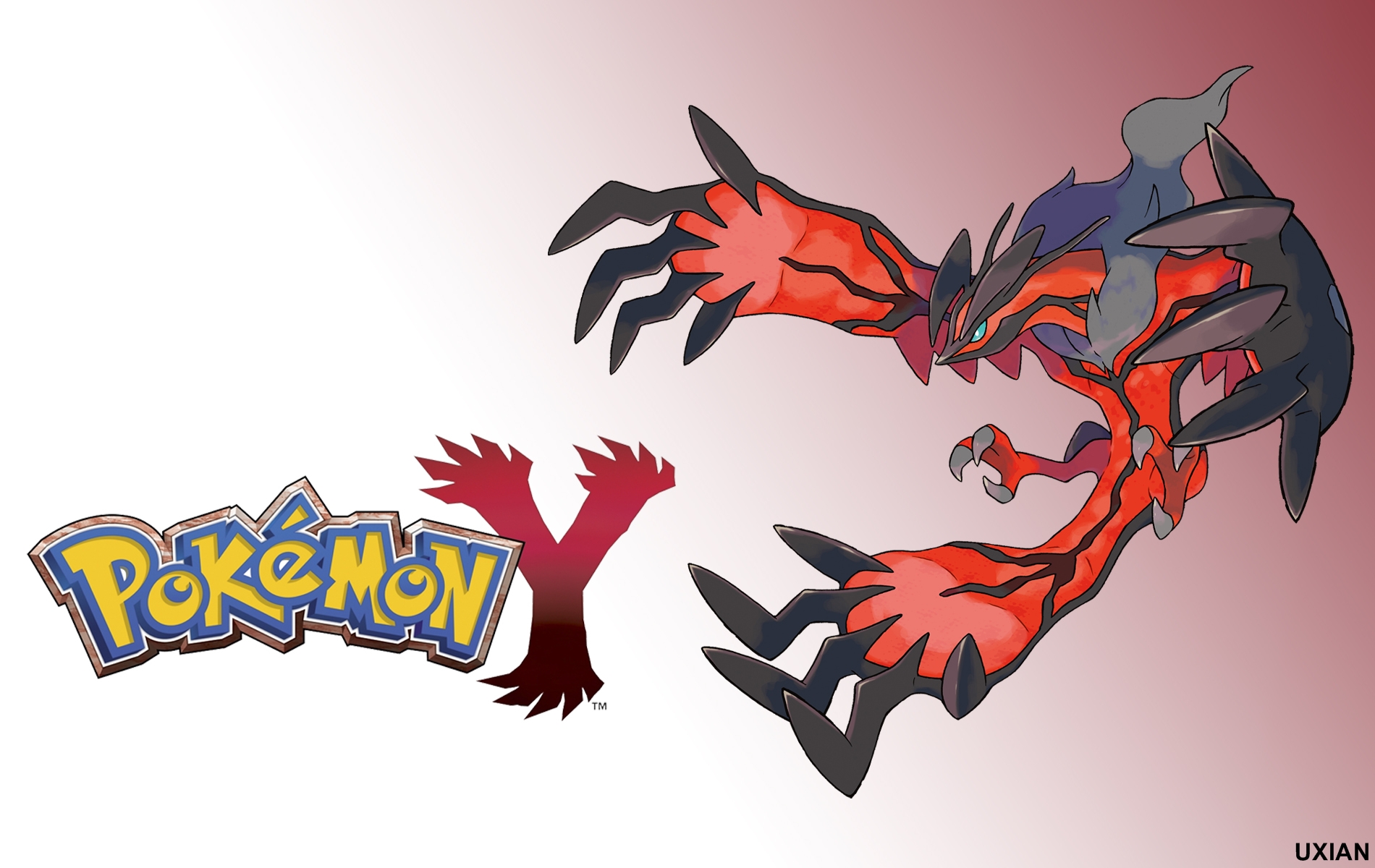
    Pokemon Y changes Nintendo’s traditional naming convention of colours and now gives us letters, but does Pokemon Y change the direction of the game like it’s name implies? Picture credit of Uxian.

    People of the world, I have a confession to make.

    I have never played a portable Pokemon game from start to finish.

    Let that sink in for a moment, and be even more shocked when I say that I was raised in the perfect environment, perfect time, and given every opportunity to do so, but never did. Yes, I’m 26 and have talked about Pokemon with friends, colleagues and family, but I didn’t feel I needed to, since I knew enough about the lore and Pokedex that I deemed the games unnecessary. How wrong I was.

    The game starts out with a Professor explaining what Pokemon are, and who you are. It’s here, where the story begins, that you get to create your own hero or heroine before embarking on your adventure. Your options are limited, from picking your name to what gender you are, but these options soon increase throughout the game, with myself donning different clothes and eye colour to my original inception. It’s the ability to be free to be who you want in this new and wonderful world that’s begging to be explored which makes Pokemon stand above the rest.

    Gameplay entails guiding your character around the world from a birds eye perspective, whist talking to other Pokemon trainers you encounter and avoiding bushes. Once you encounter a battle with a trainer or wild Pokemon, you’re taken to a fight scene, where your Pokemon and the opponent take turns slicing each other until one faints. This hasn’t changed since the original, but certainly looks different thanks to the graphical prowess of the Nintendo 3DS/2DS to old generations. Being the first 3D polygonal Pokemon game, Nintendo have gone all out with the presentation of the world, with every scene looking as detailed and charming as their sprite based cousins.

    FUCK THE KALOSSSS
    As can be hopefully seen in this picture, the Kalos region takes Pokemon to France. With this change of scenery comes a new change in atmosphere and surroundings, with villages and sites looking cultured compared to previous Pokemon games. It leaves you with a very Noire feeling. (Image copyright of Nintendo)

    The world is huge and begging to be explored, with the story alone taking 40+ hours to complete if you rush your way through, and longer if you do all of the side content and want to level your team up as much as possible. I finished the game at the 45 hour mark, with 6 Pokemon all at level 70+, with 2 of them 85+, but others may want to train new Pokemon from scratch, leading to a longer game.

    Team Rocket have been replaced since I was a kid with Team Flare, a new organisation that wishes to destroy the world and recreate it using the new legendary Pokemon from the Kalos region (these new Pokemon can be found on the covers of both games). They’re a weird organisation that certainly mimic Team Rockets tactics in stealing items and being generally evil, and genuinely add to the story, with cutscenes and key moments tied to their ambitions.

    Being a Pokemon game, your main characters ambition is to be the best Pokemon trainer around, collecting every Pokemon in the Kalos region (over 450 now!) whilst also defeating all 8 gym leaders to then take on the elite 4. This troupe hasn’t changed in years, but here it feels different and revitalised with each gym being unique and a puzzle in themselves to navigate and defeat. They’re certainly a great way to show off the graphics of the new games, with some scenes being mind-blowing in originality and creatively inspiring, a first for me when it comes to anything Pokemon.

    FUCK THE MEGA EVOLUTIONSSSSS
    Certain Pokemon can now Mega Evolve into a stronger version of their former self, as can be seen above with Mewtwo. This change is only temporary however, and only one Mega Evolution can be done per battle, meaning you really have to decide which Pokemon fits the situation best.

    Pokemon battles are easily one of the most improved features of Pokemon Y, with a host of new features, from horde battles (where multiple Pokemon will attack you at once) to sky battles and Mega Evolutions, battling has certainly been revitalised. Mega Evolutions are temporary buffs to a certain few Pokemon in the game, and can only happen if they are fully evolved and are holding a piece of meteorite special to themselves. It adds an interesting mechanic to battles, and certainly came in handy when my mega Charizard would stop the battlefield from snowing purely from how hot he was. Sky battles are exactly as they say, where only flying Pokemon can partake, meaning you best make sure you have some flying Pokemon on you. Overall, the battle system is far more refined, and with every battle netting your whole team XP from the new XP sharer item, you can level up Pokemon in no time without even having to get them out in a battle.

    All these new refinements can certainly make a die hard Pokemon enthusiast feel a little disheartened, making it easier to level up your team and faster to get around. But by changing the pacing of the game, and adding more content and story than before, Nintendo have made something that feels completely new and original, without really doing anything to the core mechanics.

    In many ways, Pokemon at the base level isn’t any different to the original. The Core mechanics are the same, and haven’t changed since it’s inception, but the refinements around the edge, like making battle systems have more depth, or changing on how your team earns XP, makes it feel like a refreshing and new game. It could be said that Pokemon encapsulates where Nintendo is in it’s current life, remaking old franchises with just enough new trimmings that it feels original, but these new trimmings truly do give the games a new life, especially when their premise and core mechanics are just strong enough to stand the test of time, all that’s needed is a repackaging. It all seems to be a winning formula, and one that I hope continues from Nintendo for a few years to come.

    4/5