Author: Dan

  • Gaming Week 51: Gunpoint (PC)

    Gaming Week 51: Gunpoint (PC)

    FUCK THE SOFAAAAA
    Giving you the freedom to take on most missions how you’d like is a core strength of Gunpoint, allowing you a sense of strategy in an otherwise typical platforming game.

    I’ve had Gunpoint on my radar for a while now, learning about it whilst it was still in development, and going so far as to show my friends and family what little footage I had found as I thought it was a genius concept. After finally getting it around my Birthday a month ago, I jumped in without hesitation, eager to immerse myself in this sublime and wonderful creation.

    Gunpoint is a 2D platformer with strategy mechanics, which sounds like a weird combination until you see how flawlessly they’re pulled off. You play as Richard Conway, a private eye investigator who is forced into his line of work after purchasing some Bullfrog trousers which malfunction and put him at the scene of a crime. Through clearing his name, Conway is lead deeper and deeper into a rabbit hole, one in which innocent bystanders request Conways assistance to clear their name, whilst others use conway to set these assassinations up. It’s a lovely convoluted story that’ll keep you hooked until the end (unless you don’t enjoy reading).

    FUCK THE GUARDSSS
    The screenshot above is the games cross link view, which allows Conway to set up traps and rewire entire buildings. It’s this unique element which makes Gunpoint special, allowing a player to go about getting to the objective however they please, from elaborate traps that require a lot of rewiring, to going in guns blazing, the choice is yours.

    Each level of Gunpoint consists of a building (or many buildings) that you must infiltrate to get to your end objective. This can be done as you’d like, with the use of different gadgets you purchase throughout the duration of the campaign. The most useful gadget by far is the Crosslink, a gadget that allows you to see all the wired components in the building, and rewire them to suit your needs. This brings about a new layer of gameplay, one in which you have to think your way through a level instead of jumping on every enemy and punching them to a pulp (as fun as this may be). You can wire light switches to trigger an electrical outlet, meaning when you switch off a light to another room, the guard that tries to switch it back on will be in for a shock. It’s extremely satisfying when a plan like this pays off, and one that may require some replays in order to find the best approach to getting to your end objective and getting out of there without being spotted.

    FUCK THE TEXTINNGGGG
    The story of Gunpoint unfolds through scenes like the one above. You get to choose your responses throughout the whole campaign, meaning there are times where you may see different missions depending on who your snuggle up to.

    The campaign is charming and witty, making for an enjoyable 2 hours of your time. It’s short, possible too short, meaning you’ll be yearning for more by the end of it, so you’ll probably want to replay missions you didn’t A+ first time, or even play the campaign all over again with different dialogue options keeping you entertained for hours. The replayability is fantastic, with Gunpoints level editor sure to keep many players entranced and being creative for a long time after the campaign is finished.

    Gunpoint’s levels are enjoyable and short, each one giving a new challenge and a new insight into how to use the Crosslink successfully. When you first start using the cross link, levels are made up of simple light switch puzzles to open doors for you to then jump on the guards and take them down, but soon evolve into complex traps that’ll test your wits. Each level has some le-way, so you don’t have to be amazing at timing jumps or crosslinking switches, which is a nice change of pacing in an otherwise familiar setting.

    The AI isn’t intelligent, and is there just to add another layer to the puzzles, but are enjoyable cannon fodder for the entertaining take downs you can perform. Knocking enemies out is strangely satisfying, with each click repeating the mesmerising sound of punching a guard whilst he’s down, it’s entrancing, and damn right sadistic. The enemies get stronger as the game goes on, with some minor variances between guards making gameplay a little more challenging, but still easy overall. By the end of the game, you’ll have encountered 3 different enemies: Normal Guards, Heavy Guards, and spy ops guards, all of which have their own abilities, and all have to be taken down differently.

    FUCK THE CROSSLINKKKK
    Buildings vary in shape and size, with multiple cross link colours to unlock and different ways to approach the same objective. Your freedom to tackle any problem as you please with the tools provided is one of the most satisfying things about Gunpoint.

    The soundtrack of Gunpoint is astounding, produced by Ryan Ike, Francisco Cerda and John Robert Matz, it really helps to bring the game alive with a noire feeling. It’s hard to describe how perfectly these men have nailed noire, so follow the link below to hear a sample of their work:

    The pixel art graphics may not be to everyones taste, but the general atheistic of the game holds up, with levels detailed enough to portray real office blocks. One thing that may be worth considering for those of you with high res displays is to lower the resolution the games rendered at. I found playing at 1080p far too small, so had to drop the settings down to 1440×900 to get a more comfortable experience.

    So in conclusion, if all I’ve said so far hasn’t convinced you to buy Gunpoint so far, I don’t know what will. It controls beautifully, with every jump, punch and smash feeling satisfying. Its strategy/puzzle mechanics are amazing, allowing you to take on any level time and time again with a  different outcome. The only thing I can possible say against Gunpoint is how short it is, which speaks volumes to how enjoyable the game is and how much more I’d have loved to play.

    4/5

  • Gaming Week 50: Batman Arkham City (PC)

    Gaming Week 50: Batman Arkham City (PC)

    FUCK THE MENNNUUUUUSSSSS
    Absolutely stunning graphics made the PC version a pleasure to play. I know graphics don’t make a game, but they certainly help you become more engrossed in the world.

    I absolutely adored the original Batman Arkham Asylum, going so far as to 100% the game twice on both normal and hard difficulty, doing every online challenge, and playing it to the point I was once 42nd in the world on the leaderboards for one challenge. To say it was going to be a difficult act to follow up would be an understatement, something the gaming press agreed with unanimously.

    The game starts out with Bruce Wayne at a press conference outside the portion of the city sanctioned off for prison use (hence the name, Arkham City), making the argument that the prison is a disgrace to the citizens of Gotham. He’s arrested by police guards, and chucked straight into the pit with all the inmates he helped arrest breathing down his neck, waiting to pounce. You’re soon introduced to Penguin, and upon escaping and reaching higher ground, don your suit and begin your journey through the streets of Arkham as Batman, trying to get to the bottom of this corrupt and evil place. It’s a good start to the game, one that sets the premise relatively quick, and allows freedom to explore the intricacies as soon as possible.

    FUCK THE COSTUMESSSS
    Playing through a game where your main characters appearance changes constantly is reminiscent of the original Arkham Asylum, but it still impresses here, with suit upgrades and rips/tears making you believe Batman really is fragile and an evolving character, something many game developers could learn a thing or two from.

    Intricacies are what Batman: Arkham City has plenty of. The City is brimming with thugs, side objectives and Easter eggs that I’m sure any Batman fan would recognise in a heartbeat, and continues to offer hours of gameplay even after its final moments. It’s not the biggest gaming environment to explore, with Batman able to glide from one side to the other in a few minutes, but it’s filled to the brim with content, so you’re never more than 5 minutes away from discovering something new. It’s a lovely environment, one that allows you to take many different approaches to different situations. For example, if you want to take on a gang of bandits, you could be stealthy, intelligent with gadgets laid as traps, or go all out and brute force your way through. The city itself is more of a hub world, with key story moments happening within the confines of the buildings. It allows for the level designers to make a more unique environment for each villain, but could also annoy fans who would just want to get through the campaign, as the travelling between locations just wastes time.

    Combat is a pleasure, becoming a bit tighter since the original, with Batman swinging from foe to foe effortlessly. If it weren’t for you pressing the buttons to make Batman punch and kick, you’d think every fight scene was scripted or an FMV. Enemies offer more variety than the plain orange inmates of the original Arkham Asylum, with designs changing depending on which leader they follow, but most can be put into the category of cannon fodder. They appear around every corner of the game, allowing the player to not go more than 5 minutes without fighting, just in case you’re getting bored of the city. It’s strange considering how beautifully the city is constructed, but is understandable when you consider who this games target market is.

    FUCK THE GLIDINGGGGG
    Gliding and exploring Arkham City is a pleasure, with hidden easter eggs for fans of the series at every turn. Riddler Trophies and gangs help to flesh out the city, keeping you hooked for hours, even after the game ends.

    Multiple villains make their first appearance in Arkham City, alongside many familiar faces from the first Arkham. From Penguin to Mr Freeze, each villain is lovingly crafted, both in personality and aesthetics. They have a big impact on the main campaign, and the look and feel of the city itself, with Jokers part being themed like a circus and his gang members clowns, to penguin enjoying more sophisticated locations like museums and having his gang members dress up in black and white. Most of the campaign is centred around the Joker, just like the original, but other characters play a big part in the story. Other villains are tossed to the side quests, like Riddler and Bane, whilst others just have a nod, like when you accidentally come across Croc in the sewers.

    FUCK THE CROCCCCC
    Each character is modelled fantastically in a modified version of the Unreal engine. The combination of a gorgeous dark art style, with DX11 features and a high resolution monitor really made the game come to life.

    Playing as Catwoman was a welcome addition to the game, with all of her actions an exact duplicate of Batmans, except his ability to glide. She plays an essential part in the campaign, but was strangely missing from the original version of the game if you didn’t buy it brand new. This was a pretty douchey thing to do by any standards, and would be like missing out Agent Smith from The Matrix unless you purchased the box set brand new. Saying that, the only way to buy Batman Arkham City these days is digitally, with Warner Brothers giving out game of the year editions left right and centre.

    In conclusion, it took me a while to get into Arkham City, having tried to play it for many years. Once I got over the first few hours and the game started to make sense to me, I couldn’t stop playing until 25+ hours had been lost to the streets of Arkham and the campaign finished. Batman isn’t going to be for everyone, especially if you want a more linear experience with less exploration, but for those of you that enjoyed the original and wanted more on a grander scale, Arkham City is just for you.

    4/5

  • Gaming Week 49: Rock of Ages (PC)

    Gaming Week 49: Rock of Ages (PC)

    FUCK THE PUMPKIN
    I played Rock of Ages around Halloween, so the pumpkin in the background was a nice touch.

    I recently bought Rock of Ages after years of seeing journalists giving it praise for being random, yet successful for such a small studio. I knew it was a physics based game, where you control a ball and destroy levels, but nothing could have prepared me for the craziness that ensued.

    Rock of Ages starts out with a cutscene comprised of old portraits from history, and tells the story of Sisyphus snapping after constantly pushing his rock up a hill for it to fail many times. He decides to take on the other gods and notable heroes of history, and so begins your campaign through this weird and wonderful world.

    Each level is comprised of a tower defence style set up, with the ability to then control your ball to defeat your enemy. The enemy is doing the same as yourself, which means you have to spend most of your time avoiding his traps and enemy placements to ensure you get to his keep and squash him inside. It’s a brilliant play style, one that mixes up action and strategy in a new and interesting way. The game I would liken this too would be Sanctum, where you build your placements before battling in the next wave of attacks. It’s fun and addictive, but can lead to issues when you’ve been fighting for over 10 minutes and you suddenly lose, it feels like a time waste, and one that could have been avoided with some quick saves throughout matches. The strategy element is key to being successful in a match, meaning you can’t rely on your boulder all the time. I found myself struggling through many levels because I didn’t invest into my defence enough and just concentrated on attacking, a silly mistake that I warn you not to repeat. You will need boulder skills, don’t get me wrong, but they’re not entirely needed to win a match, as long as you have your defences, it’s plain sailing.

    FUCK THE BOSSES
    Boss battle’s are dispersed throughout the main campaign, allowing for some variety in an otherwise repetitive story mode. Each Boss is unique, but entails hitting the same weak spots over and over until they fall.

    The campaign comprimises of many of these encounters with historical characters, but occasionally you come across something special and unique, a boss battle. These battles are different each time, but have the same end objective: To kill the boss. This is done through hitting the boss figure in weakspots located all over their body, for the dragon: its underbelly, for the greek statue: its groin area. These become repetitive in time, but Rock of Ages ends its campaign at just the right time, when you’re at the point that if you played anymore you’d hate the game, but any less and you’d feel let down.

    FUCK THE BOULDERSSS
    Your boulder can be changed during a game, allowing you to change your game style on the fly, or counter enemy tactics. In this instance, my boulder is stronger, allowing it to take more damage, whilst also causing more damage to the opposing player.

    Cutscenes are plentiful, happening between each level and explaining Sisyphus’ journey across Europe and through history. They’re comical and brilliantly executed, leading to myself laughing out so loud that family members came in to see what all the noise was about. Each cut scene is made using real world art, from historic paintings to photos, each character is lovingly animated to give them a personality that’s likable, or hatable, depending on the scenario.

    Graphics is stunning, making for some truly smooth and brilliant looking levels and action. The whole game is based around physics (Nvidia PhysX to be precise), and makes good use of smooth Anti Aliasing with Ambient Occlusion to make a seemingly lovely environment with attention to detail. The levels are crafted in a sensible way, giving the aesthetics of the time they’re taking place in, whilst lovingly adding some charm and humour. With 2D character and crowds shouting your rock onwards, its relatively funny and makes for an enjoyable experience, one that’s refreshing and rather original in todays realistic approach. Thinking about it, the aesthetics reminded me of Monty Python, with 2D characters blended in with realistic environments, I wouldn’t be surprised if I one day find out they were inspired by the same art.

    FUCK THE HUMOURRRRR
    Cutscenes comprise of artistic depictions of characters of history put in strange and funny situations. I was surprised by how much of the campaign I genuinely found funny, and wasn’t laughing out of embarrassment for the developers, like most other humorous games these days.

    The music to Rock of Ages is lovely, blending classical music with a modern take, but can get a bit tedious and annoying when you have to repeat levels. It certainly leaves an impression on you, meaning I got excited whenever I booted up the game and listened to it’s main theme at the title screen, but would be filled with contempt if I even began to hear a track from a level I’d had to repeat time and time again.

    Overall, I thoroughly enjoyed my time with Rock of Ages. It’s definitely not going to be for everybody, and I certainly had times when I wanted to stop playing due to retrying a 10 minute battle 3 times in a row, but stick with it and the outcome is worth the pain and trouble. It’s rare for me to feel that way about a game, I’m currently playing through Dishonored and cannot for the life of me find the passion to carry on, but with Rock of Ages, with its witty humour and refreshingly original gameplay, I feel the 4-5 hour campaign is worth it. You’ll certainly respect the developers for it, and it may even entice you enough to play its multiplayer.

    3/5

  • Gaming week 48: The Swapper (PC)

    Gaming week 48: The Swapper (PC)

    FUCK THE PLANETTTT
    The Swapper starts out with little explanation and a lot of guesswork, Which works to it’s advantage as a narrative choice throughout the whole campaign.

    The Swapper was recently on Steams Halloween sale, and having heard a lot of positive buzz about it this past summer, I decided to take the plunge and give it a go. Giantbomb praised it in their podcast, and I felt this indie studio needed all the help they could get, and in hindsight, £3.50 wasn’t a pad price to pay for such a solid game.

    The game starts out with some fantastic cut scenes that starts with your character being sent to a planet from a space station. Upon landing, you can take control of your character, and proceed to explore the planet on which you’ve landed. Eventually, you come across a strange looking device, one that allows you to make clones of yourself and switch your “soul” between them. It’s an interesting premise, one that The Swapper makes good use of, with puzzles that’ll push you to your limits and an atmosphere that’ll make you feel like you’re there.

    The graphics are lovely for a 2.5D game, reminding me of Deadlight that I played previously in the year. Hyper-realistic and gorgeously rendered, it wouldn’t look strange in a 3D setting. Levels have multiple light sources, and the game was overall bug free, but did have slow downs when dying multiple times in the same level, which I assume is a garbage collection problem with the code not recycling assets fast enough. Overall, the aesthetics are easily one of the best things about The Swapper, with art and style notches above the rest of the games industry at this moment in time.

    FUCK THE SWITCHESSSS
    Using your 4 clones can be difficult at times, but here’s an easy example with how most puzzles play out.

    Puzzles start off fairly easy, with the first few involving pressure pads to open doors. Relatively straight forward but enjoyable to solve, these puzzles start becoming a lot harder with the introduction of red and blue lights that stop some of your abilities of your gun. Red lights still allow you to produce clones, but don’t allow you to swap into them, where as blue lights do the opposite, allowing for swapping into clones but not producing them. It plays with your mind in weird and wonderful ways, ensuring you’re constantly thinking of new ways to use your gun; not a simple task by any means for a game that has a simple game mechanic/premise. Eventually you’ll come across purple lights (that will stop both replicating and swapping), and wind turbines that will invert gravity, leading to harder puzzles that were pushing me to my limit. The ending can only be accessed once you’ve completed each and every puzzle, so be prepared to spend hours and countless live’s trying to solve some rooms puzzles, as they certainly get hard.

    FUCK THE TERMINALLLSSSS
    Terminals are your main source of information in the world of The Swapper, with tidbits of story being fed to the player as they explore more and more. Lights, on the other hand, are your enemy, changing the way your device works to hamper your progress at times.

    There are several main characters throughout the story of The Swapper, with the player being a blank slate to explore and learn about this wonderful world. There’s no aliens per-say, but rocks discovered on the planet and brought up to the space station talk to you as you pass them, adding a nice piece of depth to the world.  The story of the Swapper takes place through logs you find in terminals, a trope of a  story telling mechanic if there ever was one, but an effective one none the less. Each log can be accessed at any time, with each one giving the perspective of a female on board the space station, and the rocks that you pass, allowing the player to read/invest into the story as much or as little as they’d like. It’s an overall unique and creepy tale, with life and one’s soul being questioned, especially when sentient rocks are involved, making the player question life and philosophy.

    The Swapper is fairly linear, with the player being able to explore the space station as they please, but with little to no result for doing so. Rooms become boring and stale once the puzzle has been solved, with the only extras available to the player being the secret rooms and terminals that have extra logs on them after a certain point in the story. It results in the game taking roughly 4-5 hours to complete, but with the game not being very re-playable. This is understandable with every puzzle game due to the very nature of once a puzzle is solved, it can easily be done again and again. The story, though intriguing, is fairly simple, which didn’t have me coming back for more. The only thing that may change on your second playthrough would be the ending, which allows you a choice, which once chosen, cannot be done again due to your save file being deleted. Going to Youtube and searching for the alternate ending may be the best method of seeing all that The Swapper has to offer.

    FUCK THE OUTLINESSSS
    Time slows down when you make a clone, allowing you to scale huge distances quickly by generating a clone and swapping with them. It’s a fantastic gameplay mechanic that makes The Swapper a nice and unique puzzle game, whilst also incorporating platforming techniques.

    In conclusion, I thoroughly enjoyed my time with The Swapper, its unique puzzle elements were certainly entertaining for the duration of the campaign, and didn’t outstay their welcome. A second game with slightly improved mechanics might be fantastic, but wouldn’t be needed, as The Swapper is fantastic as a stand alone game. Given how much I enjoyed the game, I’d easily recommend it to friends and family for it’s full price, and if it ever goes on sale again you’d be grabbing yourself a bargain.

    4/5

  • Gaming Week 47: Crysis 2 (PC)

    Gaming Week 47: Crysis 2 (PC)

    FUCK THE SKIN TEXTURESSSSS
    Graphics are easily one of the standout features of Crysis 2, with characters and lighting taking the centre stage for a otherwise unoriginal First Person Shooter.

    Crysis was the brilliant successor to Far Cry, a game that was original and ground breaking for its time. Giving you the ability to approach any mission how you liked, Fay Cry set a trend that the games industry would follow for quite some time, Crysis took the torch and continued this trend to new heights. Crysis 2 was only the natural successor that took this torch to a new audience: the console gamer.

    In order to cater to this new gamer, the Crytek team had to dramatically change a lot of what made Crysis, Crysis. It was a shame, but a necessary evil to cater to this new market of customers, so the nano suit was revised to make for quick and easy allocation of powers, and the graphics were scaled down to compensate for the console’s lack of power. Don’t get me wrong, Crysis 2 is still a pretty game, but for such a generational shift in engine, there’s not much to show for it.

    FUCK THE TESSALATIONNNN
    Although Tessalation and High Textures were added at a later date, they were a welcome addition for PC Gamers, with scenes lie this being a common occurrence whilst progressing through Crysis’ world of New York.

    The level design is easily one of the biggest changes the series has seen. In Crysis and Far Cry, the island was so wide and open that you could approach any objective as you saw fit. I would occassionally hide in the bushes a mile away from the danger, slowly throwing rocks or nearby animals (chickens, turtles etc.) to get guards attention to slowly make their way over to me. It was fun, exciting, and allowed me to play the game at my own pace, doing what I wanted to do. Crysis 2 on the other hands feels like a linear experience, no different to a game like Doom. Your huge, free roaming island has been traded for a small, dense urban environment, with the game directing you where you should go and where you shouldn’t with arbitrary dead ends similar to what’s found in a Naughty Dog game. Cars will conveniently be destroyed and piled up blocking one way down a street, or an alien tentacle will be conveniently protruding from a wall blocking access to a door. It’s all very frustrating if you’ve played the original games, and even more irritating when the developers shouted about the game being all about choices. You are indeed allowed to choose how you approach a combat situation, but only within the confines of a small space between buildings, something that feels very contrived and not very open.

    FUCK THE ALIENSSSSS
    Landscape does change from boring old buildings eventually, with alien technology everywhere. It makes for a dynamic environment, something that evolves and changes the further you progress.

    The enemies of Crysis 2 are very unoriginal, varying from human soldiers that patrol around and shoot you, to aliens that patrol around and shoot you. It’s a shame considering the first game had aliens as these weird hovering mammoths that could kill you quite fast, and running was usually your best option. Instead, we now have aliens that act and behave like the human AI in the game, which makes for some boring combat scenarios instead of the potentially exciting ones they could have been. The only variance you do get is in a giant hulking tank of a alien, which requires a lot of firepower to take down, but even that isn’t original in today’s market. I found that you could never take it head on, so your best tactic was to turn invisible, run to cover, and wait until it patrols again before bombarding it with rocket launcher ammo.

    As mentioned earlier, the Nano suit has had a overhaul. In the past, you’d have to click your mouse’ scroll wheel in to bring up a radial menu which you then pointed in the direction of the type of power you wanted your suit to use. There were 4 options to choose from: Armor, Strength, Speed or Cloak. Activating speed for example would allow you to walk faster, crawl faster, and sprint extreme distances in a short amount of time. Crysis 2 does away with these powers up front, and instead only activates them when you go to perform a certain action. The Speed example I just gave is only activated when you sprint, and cannot be activated normally. This new way of working takes the control away from the player, meaning you’re left with an experience where more likely than not you’re only activating your armor ability due to the amount of enemies shooting at you all at once.

    FUCK THE WALKERRRR
    This is the only enemy in the game that changes gameplay in any meaningful way. He’s so huge and bulky that you really have to change up your tactics, as you really can’t take him head on.

    A lot of spectacle was made of Cryteks employment of famous comic book novelists, saying that the story of Crysis 2 would be the next generation of story telling, and a new way to experience plot within a game. I can’t help but feel these were all marketing lies told to get people to buy the game, because the stories undergoes the same arcs as any other FPS out there. Nothing amazing leaps out of you in terms of the plot, with the only plot piece worth mentioning being the fact humans are contracting a disease that turns them to goo for the aliens to use, I can’t help but think Crytek have failed on the story aspect as well.

    In the end, Crysis 2 turned out to follow the pack of generic FPS’s, when it could have been so much more and diverged. If you don’t think whilst playing games and just want some action on your screen with pretty visuals, Crysis 2 is right up your street. But if you’re looking for something different in the games industry, something that truly lets you feel emotion and gives you choice, then Crysis 2 isn’t for you.

    2/5

  • Gaming Week 46: Superfrog HD (PC/PSN)

    Gaming Week 46: Superfrog HD (PC/PSN)

    FUCK THE FROGGGG
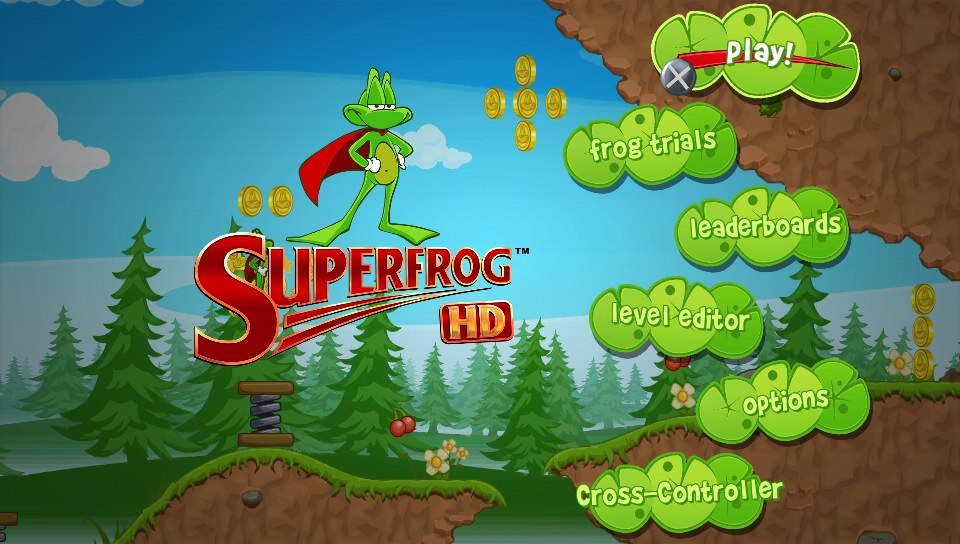
    As can be seen from the main menu above, the HD version of Superfrog comes with a level editor; a fairly simple to use level creator that allows you to make levels from brushes you unlock in the game.

    I have extremely fond memories of Superfrog as a child, my dad would get his amiga out and let us play it for hours back in 1993. At the age of 6, I found it far too difficult for my young age, but everything about it fascinated me, from the Lucozade (Americans read: Energy drink), to the slot machine, all the colours and charm rubbed off on me as if it was a genuine product for a kid. Nostalgia has a weird way of changing ones perspective of pervious events, so I decided to take the plunge with Superfrog HD and see if it lives up to my high expectations from my youth.

    Superfrog starts out like most 90’s and 80’s platformers: with a small intro to show how your hero begins his adventure and his motivation for doing so. Apart from the HD drawings, nothings changed in this respect from the original, with the only glaringly obvious difference being the lack of advertising from Lucozade, which has now been replaced with a generic bottle of potion which makes Superfrog, super. These potions can still be found within levels to get your health back up, but it takes some charm away from the game that I don’t get to see that lucozade logo whilst trawling through levels.

    FUCK THE WITCHHHHHH
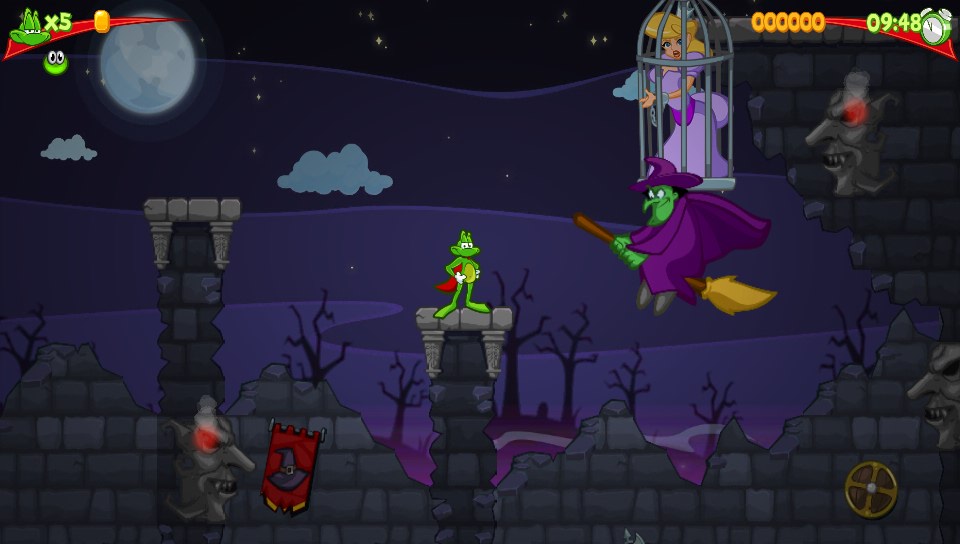
    Each world ends with a boss battle with the witch, a simple affair which just entails Superfrog firing “spud” (his companion) at her whilst occasionally jumping. You’ll be hard pressed to lose a life.

    Maps are slightly different this time round, with Team 17 making 4 new maps per world for this remake. Original levels are still here for you hardcore players, but they need to be unlocked through playing the slot machine which appears at the end of each level. It’s certainly not great to hold original levels behind a wall, but it encourages the player to play through all the new levels first, which are certainly easier than the originals. Levels are laid out fairly simply, and any player with average gaming ability should be able to complete the game with no problems. Original levels on the other hand are extremely difficult, which reminded me how far we’ve come in both dumbing down games, and making them user friendly.

    Levels are designed to make you collect as much as possible, meaning you are constantly collecting fruit or items for high score, or coins for ranking at the end of the stage. Brushing up against certain walls will unlock secret spots, something that has been lost to this current generation of games. One new item that has been added to each level is the golden lily-pad, something which was absent from the original game, and a item that is hard to find on some levels. It’s always hidden in secret passageways, so you have to make sure you go out of your way to find it. Finding all the lily-pads gives you a trophy for all your hard work, something some players may not give a damn about so can be overlooked.

    FUCK THE SCOREEEEEE
    Levels are jam packed with fruit and items to collect, meaning you don’t go more than 5 seconds without a sound effect going off and your score going up.

    Not content with just remaking the original in brand new lovely graphics, Team 17 added a plethora of new features, from cross play saves (play on your PS Vita whilst you’re out and play it again when you’re back home on your PS3) to level editors, and even frog trials. Cross play saves is a nifty little feature that allowed me to play Superfrog when I was out and about with my Vita, but synced up with my PS3 when I got home, meaning I could continue the same game I was playing on my TV and on my portable console. I really hope game developers continue to do this in future, it was a fantastic feature that would do many games justice. The level editor is pretty basic, but does what it says on the tin, whether you want to make difficult as hell levels or a simple, clever level is completely up to you. Frog trials are distinct challenges that aim to push your Superfrog skills as far as they’ll go, which sounds simple but they’re never-ending, so best of luck with it. All these next features were nifty, but not essential to the core game of what made Superfrog so great and memorable in the first place.

    In conclusion, Superfrog does a good job of replicating the original as best it can. It’s a bit jarring at first, especially with the new levels being similar to the original, and does’t live up to the nostalgia the original brought on. Superfrog HD isn’t a bad game in it’s own right, but in my opinion, it doesn’t live up to the original.

    3/5

  • Gaming Week 45: The Binding of Isaac (PC/Mac)

    Gaming Week 45: The Binding of Isaac (PC/Mac)

    FUCK THE HEARTTTTT
    The main menu of The Binding of Isaac conjures up exactly what the gameplay entails: a poor boy running away from frightening things.

    Like most of my steam collection, I’ve owned The Binding of Isaac (which will henceforth be shortened to Isaac to save my sanity) for a while now, but have never actually gotten around to playing it properly. That was the whole point of my one game a week idea, but in this time I’ve collected more and it’s becoming a impossible task to finish my game collection. I’d played Isaac before, for about an hour, and just couldn’t understand why people found it so addictive and enjoyable. That’s how it’s been left for years, until these last few weeks that is, I’ve been hooked, playing dozens of hours of the game to try and beat the game over and over again.

    The game starts out with a little intro to let you know the plot of Isaac before giving you the main menu. The general gist of the story is that Isaacs mum is a religious nut, which starts hearing voices telling her to stop Isaac from doing things. Eventually, this voice escalates and tells Isaacs mum that she must sacrifice Isaac in order to show her love and dedication to God. With Isaacs mum at Isaacs door, Isaac manages to escape through a hidden door in his room which leads to a underground basement full of monsters that he must fight off.  In the main menu you get to see your collection of all the items you’ve collected so far, and eventually you get to pick your character (which is just Isaac at the start) and then you set on your way. Items are randomly dropped throughout the levels, with each one being unique and giving Isaac a different ability, you could literally spend hundreds of hours trying to collect them all.

    FUCK THE CONTROLSSSS
    This is all the information you’ll need to survive through the treacherous basement. It may seem simple, but it’s difficult to master.

    Isaac kills enemies with his tears that are thrown as projectiles. You control Isaac’s movement through the WASD keys, and control the direction he shoots either by mouse, or by the arrow keys. Its a simple system that’s hard to master, especially when your tears have physics that change direction depending on how your character is moving. You collect items as you sprawl the dungeons, each one being a mystery until you pick it up or use it. Some items affect Isaac himself, increasing his combat strength or amount of tears he fires, or others may be objects that protect Isaac like a fly that circles him, attacking enemies that get near enough. With more playthroughs of the game under your belt, you’ll start to recognise what each item does, and eventually, you’ll start hoping and wishing for some to appear after defeating a boss as you know they’re good items to have.

    The whole game is randomly generated, meaning rooms, items, bosses and secret rooms are never a certainty. You may start a game and die within a few minutes due to one room after another having the hardest enemies, or sometimes you’ll make it to the end no problem. The Randomness of the game is what keeps you coming back for more; It’s like a gambler, who needs to just try one more time as this time may be the one. Isaac may seem hard at first, but keep on playing and you’ll begin to master it’s intricacies, you’ll be able to take on the random enemy generation in each room, no matter what items you have on you. It’s the randomness that makes this game in the end, and it’s the randomness that keeps me coming back for more.

    FUCK THE MONSTROOOO
    Bosses come in many different shapes and sizes. This one above (Monstro) is one of the easiest, occasionally jumping around and spitting blood at you. Keep your distance and you’ll be fine.

    The art style is fantastic, coming from Edmund McMillen of Super Meat Boy Fame, it really is unique but at the same time familiar if you’ve ever played any of his previous games. The game can be quite dark and twisted, but in a humourus way. There are times where you’ll have to take on demon fetus’, or pick up your dead dogs head as an item, it’s all lovingly drawn, but sinister at the same time.

    Each map/level is random, so you’re never sure which way will be correct until you’ve explored til your hearts content. It can be difficult negotiating which way to go when you’re low on health and need to find your way to a treasure room, but that’s part of the fun. At the end of each map is a boss room, where you must defeat one of the many bosses in order to progress deeper into the basement. Defeating a boss gives a random item, to help in your adventure to survive as long as possible. This progression continues until you finally reach the depths, where you’ll have to take on your mum, defeating her and winning Isaacs freedom. Once this is over, the game has a lot of replayability, with the true ending reserved for after you defeat mum once, which grants two extra stages at the end that take place inside mum’s womb.

    FUCK THE DEATH SCREENNNNN
    Whenever you die(which will happen many a time), you’re presented with the following screen, which shows all of the items you collected throughout the game and what ended up killing you.

    So, I finally got around to playing The Binding of Isaac, and I have to say, I’m madly in love. It’s core mechanics are perfect for what the game sets out to accomplish, and those who have the patience to master it’s mechanics will have plenty of hours worth of entertainment and joy to behold.

    5/5

  • Gaming Week 44: God of War: Ghost of Sparta (PSP)

    Gaming Week 44: God of War: Ghost of Sparta (PSP)

    FUCK THE FIREEEEE
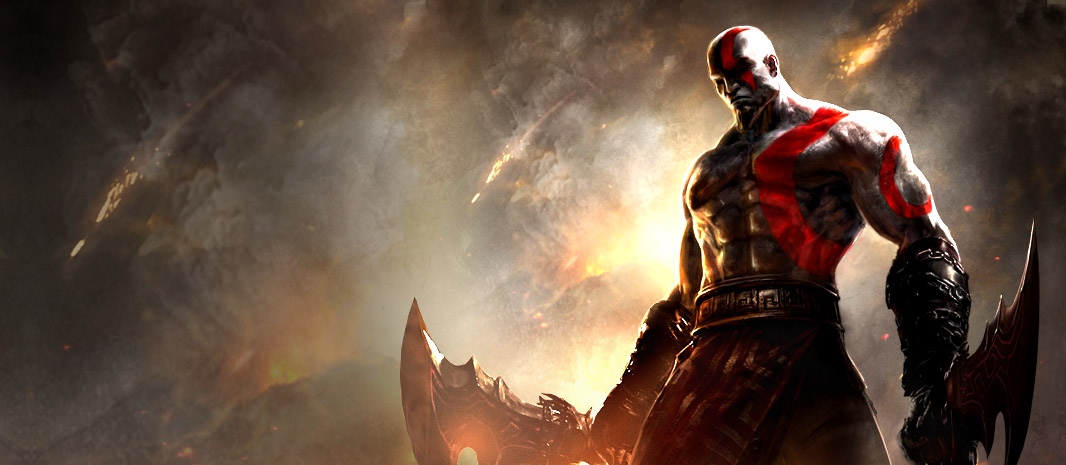
    This pic doesn’t say much about Ghost of Sparta, only that it’ll include Kratos and… fire?

    Note: The following will not include screenshots of gameplay due to the PS Vita’s inability to take pics of PSP games. If you wish to see screenshots or gameplay, by all means Google Ghost of Sparta.

    Earlier in the year I bought both the original God of War PSP titles on the PSN sale, something that I felt was a huge bargain for only £2.87 each. I wrote a piece here about my feelings and experience with it. (I apologise for it’s length, during this year of writing I feel I’ve gotten better at writing, something I feel a comparison to this article would show easily.) This is the second game, one that I finally re-downloaded and played whilst I was on the bus and any spare moments I had around the house.

    Ghost of Sparta starts out with Kratos, on his throne as the God of War (chronologically, this game takes place after God of War 1), getting flashbacks of his life as a child, sparing with his brother Deimos. Deciding he can’t put up with the visions no more, he decides to travel to the temple of Poseidon to find the origins of his nightmarish flashbacks and hopefully, settle them once and for all. He sets sail with his spartan men towards this temple, only to be ambushed (as is always the case) by a massive sea monster. Taking control of Kratos, you’re taken through some tutorials on how to fight, and all of the other essentials required in playing the rest of the game. It’s unoriginal at this point in the series, but still a spectacle to behold, and one that makes you feel like a badass for taking on gigantic sea monsters at the beginning of the game.

    The controls are the same as they’ve ever been: left analogue stick to move around, X to jump, Square to slash quick, Triangle to heavy attack, and circle to grab, making this a similar ordeal to other games. There’s nothing new to add, the only difference is the items you eventually collect whilst exploring Ghost of Sparta’s world. These range from items that freeze other enemies (Horn of Boreas) to items that electrocute enemies, which has been done in previous games, but under different names and weapons. Quick Time Events (QTE’s) are back for finishing off enemies big and small, and can sometimes cause frustration, but are otherwise fairly simple to overcome. One day we’ll find a way to make QTE’s become a thing of history, but today is not that day.

    Level design is fantastic, ranging from the oceans of Poseidon to the volcanoes of Methana, it’s all glouriously rendered and lovingly crafted. Levels are linear by design, which is fine in a God of War game as its not the place you’re looking for free roaming action. The game makes sure you get enough space to fight enemies,  and breaks up enemy encounters with puzzles at good, regular intervals. People may complain about the puzzle elements, but it’s needed to maintain the pacing of the game, otherwise fight after fight would get boring and tedious by the end of the 5 hour game.

    The story of Ghost of Sparta flesh’s out the God of War universe without being essential to the main story. It’s good in showing why Kratos is so angry at the God’s, and helps to also shine light on his past with regards to his immediate family, where as Chains of Olympus concentrated on his daughter in the afterlife. You get to meet Kratos’ mother, who almost tells him who his father is, whilst also learning more about other greek Gods such as Thanatos, the God of Death. You don’t see any main God’s here, that’s left for the main story, but that’s ok as the cast of Ghost of Sparta is more than adequate to fill the plot out.

    Graphically, this is one of the most artistically realised God of War games to have come out of previous generation hardware (so all games except God of War 3). At times I was genuinely surprised to find I wasn’t playing a PS Vita game, as the views and graphics are spectacular for a PSP game, something I rarely say for old games made for old platforms. Hair and cloth physics play a part in making enemies and Kratos come to life, with fire effects and water making levels look gorgeous on the Vita’s 5 inch screen (and I’m sure, the PSP’s 3.5inch screen).

    There are a few niggles I have with Ghost of Sparta’s gameplay, namely the developers insistence on using enemies that can freeze Kratos in the same room as normal, fast enemies. It seems the developers done this to add a challenge to some of the fights you encounter, but it just comes across as frustrating and unpassable to the end user. I like to think I’m skilled when it comes to games like this, but I would die over and over in these instances, making the game a frustration multiple times.

    Overall, I thoroughly enjoyed my time with Ghost of Sparta, and would suggest that if anyone has a PSP, this is a game that they must own to show off the potential of the PSP or PS Vita. It’s a full console game that makes no compromises, despite the fact it’s made for a portable console, and that my readers, is an achievement in itself.

    3/5


  • Gaming Week 43: Pressure (PC)

    Gaming Week 43: Pressure (PC)

    FUCK THE PRESSUREEEE
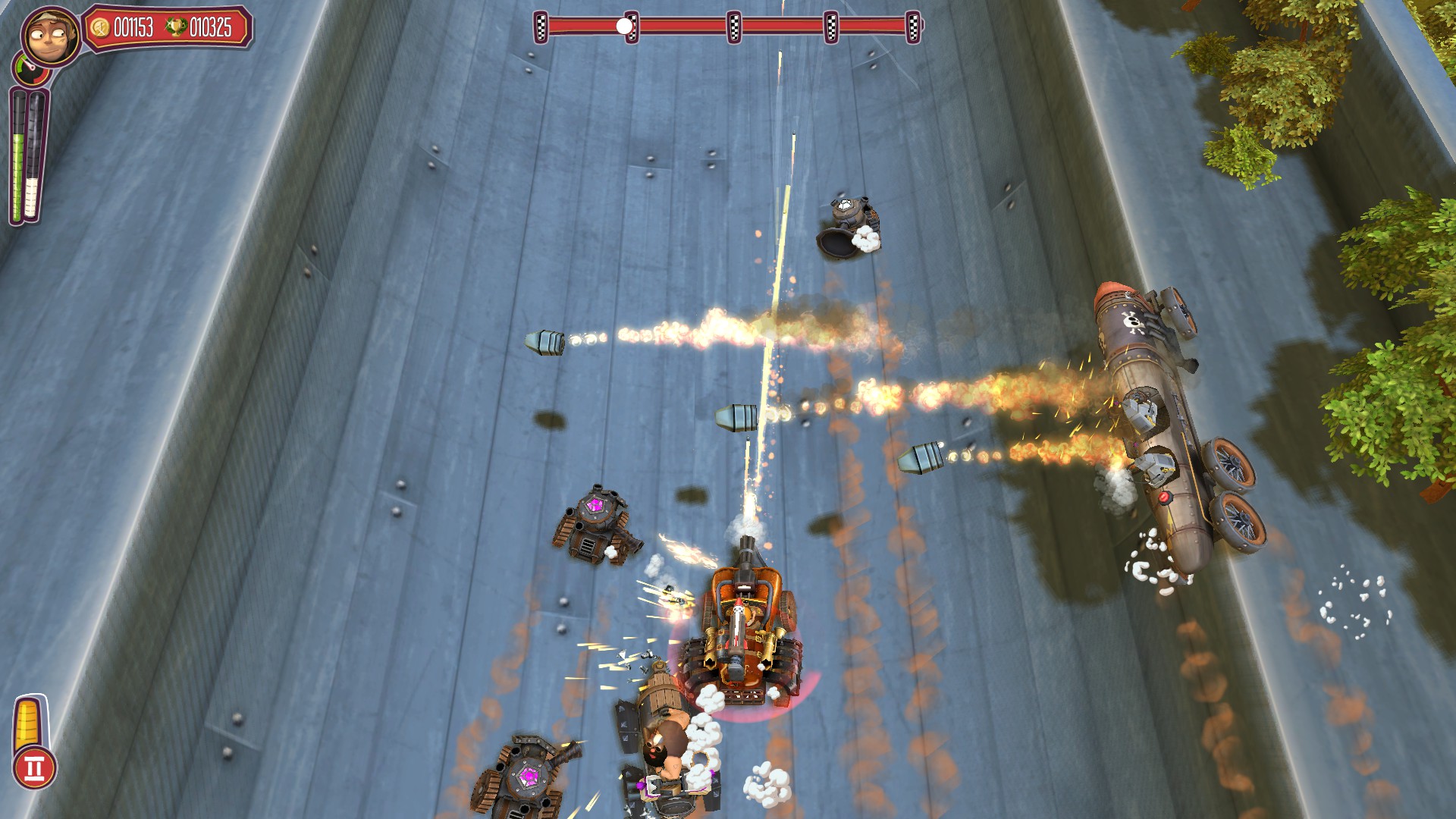
    I think this main menu sums up the mindless fun that Pressure ensures.

    Looking through my games library for things to play for this weeks review, I stumbled upon a game I have no recollection of purchasing: Pressure. Intrigued, I went online and instantly searched for a gameplay video, to see what the game was about. Needless to say, I enjoyed what I had seen and proceeded to instantly download the title and start playing.

    Pressure is a top down driving shooter that doesn’t push any boundaries when it comes to reinventing the genre, but does make itself stand out with its fantastic design and art style. You control a car as you race through 30 different levels and 3 bosses, killing as many enemies as possible whilst also trying to race to the end of the level as fast as possible. You have 2 bars that track your progress through a level, your health and your pressure. Health is pretty self explanatory, where as pressure is what’s needed to get your car going through to the end of the level. Enemies will try and steal it, and will drop tubes of it whenever you kill them. It’s a nice system that rewards a player for doing what the game wants you to do, and if you choose to just race, you’re gonna have a hard time getting to the end.

    FUCK THE GRAPHICSSSS
    Graphics are charming and lovely, making for a Pixar-like take on an otherwise familiar genre.

    Pressure looks and feels like a Pixar film, something I say with high regard for the art style of the game. It has cute little cutscenes which will be shown to progress the story, which are so high in quality you could indeed mistake it for a pixar film. They have some humour, which is always welcome in games. The art style is so polished and lovely, that every aspect of the game, from menus to upgrading your car, all the way to the gameplay itself is dealt with such charm that it’s impressive.  Levels change as you progress through the story, from forest and fields to caves and castles, the levels show enough progression that you don’t get bored of seeing the same scenery for every stage, that is, they progress with the story.

    Levels are designed in a way that there’s no way to really go wrong, which isn’t necessarily a bad thing, but Pressure could of come up with more diversity in the way levels are played out. Secret paths or different routes would have done wonders to the games ability to be played multiple times, but what we’re left with is a seemingly linear experience with no diversity.

    FUCK THE WEAPONSSSS
    The controls for moving around is simple enough, with the Right Trigger on my Xbox Controller acting as Accellerator, the A button for firing your primary weapon, X for boosting, and B for your secondary weapon.

    The gameplay looks the part, but controlling your car can occasionally feel very “airy”, by which I mean that your car doesn’t feel heavy and can be chucked around the stage when hit by an enemy. It makes controlling your car difficult with many enemies on screen, especially when you’re trying to race to the end of the level as fast as possible. Apart from the airiness of your car when hit, the car feels good to handle, and its rare you’ll hit the sides of the stage, even with the camera changes. As a whole, the controls were enjoyable, if not a bit irritating at times.

    FUCK THE ENEMIESSSS
    Enemies are varied enough to keep a level challenging and engaging, without outstaying their welcome. Killing them is essential for gaining pressure to finish the level.

    Your vehicle consists of 4 main parts: the shell, the primary weapon, the secondary weapon, the ram and the buggy upgrades.  Depending on how well you do in a level, you get an appropriate amount of coins to spend on upgrades for your car. These can range from a new shell that’ll help you boost longer and increase your health, to a new weapon that fires mortar rounds. These vary up the gameplay, and can be sold as and when you’d like, allowing for some flexibility in how you take on the certain enemies that appear in certain areas. I found that saving up my money and buying the most expensive weapon and secondary weapon was worthwhile, as every enemy died in one hit from then on, allowing me to only worry about aiming, and not enemy management.

    Overall, Pressure was a throughly enjoyable game that I had no idea existed. It’s a short ride (3-4 hours max), but that’s just about the right amount of time you’d probably play the campaign before getting bored or annoyed at the mechanics. I’m surprised how much fun I had playing Pressure, and I hugely recommend you play it too.

    3/5

    P.S. A Quick Look of Pressure can be found below:

  • Gaming Week 42: Anna (PC, Mac, Linux)

    Gaming Week 42: Anna (PC, Mac, Linux)

    Anna Title Screen
    Anna is made using the Unity engine, something which stuck out to me instantly when I observed the terrain they had used (Grass and mountains.) They’ve done a good job of making this engine their own, but mishaps in controls remind you that they didn’t spend much time polishing certain mechanics.

    I’ve always noticed Anna on the Steam store, appearing here and there whenever I boot up my PC, but I never took the time to find out what it was. Eventually, I watched the trailer video and looked through some screenshots, and decided that it was easily worth the couple of quid Steam was asking for, every sale helps to feed a developer right?

    Well the first time I booted up the game, I was introduced to a screen that wanted my username and password, something I didn’t have and I had no intention of making. Upon pressing cancel, I couldn’t go any further, the game just closed and wouldn’t let me do anything unless I registered or already had a account. This was extremely frustrating, and goes against the first rule of business/game design: don’t annoy the customer. The customer is doing you a favour by buying your product, giving them easy access to said product is the best way to go about it. Making them make accounts before they can even do anything? That’s just annoying.

    FUCK THE SCARINESSSSSSSS
    Each room is scarily rendered, giving a strange atmosphere that keeps you on edge the whole time. Music is played every few minutes, which is calming, but puts you in a false state of security when things can happen at any moment.

    The gameplay of Anna is similar to a old fashioned adventure game, where you must explore an environment, clicking, examining and picking up as much as possible, all to try and progress to the next area. Items that are picked up can be combined, and must be used on real-world objects in order to open to doorways, solve puzzles and progress the narrative that Anna tells. It’s a simple system, but one that is mechanically broken at times, for example I had one occasion where the story wouldn’t progress until a bell went off, something which I had no control over, so was sat exploring and wondering around for 15 minutes before I could progress. Overall, despite its flaws, the play style suits the horror genre perfectly, matching Amnesia: The Dark Descent whilst also adding it’s own twist in the narrative department.

    Graphics are lovely on Highest quality setting, with most of the game taking place indoors, you’d be hard pressed to realise its a Unity game. Dreampainters (the developer) have done a great job putting loving care into each environment, making sure it all gets used to it’s maximum potential. Even though you spend 2-4 hours in just 3/4 rooms, you’re always finding something new, prolonging your fear just when you start to feel comfortable in one area.

    The story is told at a slow pace through voices that are heard as the player is exploring areas and solving problems. Your character occasionally talks out loud and tries to respond to these voices, but it always falls on deaf ears. It’s a great way to tell a story, as its done at the players own pace, allowing you to absorb as much or as little information as you’d like.

    ALLLL THE HANDSSSS
    Symbols appear quite often, and are a good way to change the atmosphere of a room. It keeps you on edge, allowing the game to mess with you in interesting and different ways.

    So with all the good bits out the way and done with, we now get onto the bad bits. I found that the puzzle solutions to the game were a bit arbitrary, with no clear concise way for a player to solve them unless a guide is consulted or a player manually tries every item with every other item. It made the game annoying at times, meaning I spent about 45 minutes walking around the first area, with no way to know what I was meant to be doing, or how I would even get to the objective. The hints didn’t help either, being so loose that they could apply to anything. For example, at one stage I had a branch, which I thought would be good to use as a fire, or to move rocks. Turns out this branch is fantastic for moving boulders that looked the size of the player, something I would never have guessed until I actually started using each item with each object in the world. This same branch can apparently unwedge a knife out of a table, so whilst playing Anna, get used to unconventional thinking, and a lot of trial and error with items and objects.

    Anna starts out promising, with it’s beautiful graphics and scenery, but can quite quickly become frustrating due to the very nature its game mechanics work. Dreampainters would be wise in future to spend a bit more time working on their puzzles, as the rest of their game exceeds the poor mechanics implemented in puzzle solutions.

    2/5

  • Why I Feel Double Fine Studios Are Taking The Piss

    Why I Feel Double Fine Studios Are Taking The Piss

    Spacebase DF9

    Disclaimer: The following is an opinion piece. People may not agree with what is being said, but I by all means encourage readers to engage in discussion about the following views and opinions.  

    I originally wanted to write an article about the frustration I felt towards Double Fine when they announced that Broken Age would be split up into two pieces and the first part would be sold on Steam Early Access. I felt that Double Fine were taking advantage of their fanbase, and were gambling with fan’s money as if no risk is involved. Double Fine themselves had admitted that they had taken their idea to publishers before, only for publishers to turn them down, saying there wasn’t a market for adventure games. For all we know, Double Fine has that entire market already invested in its project, but are acting as if their sales for Broken Age in January are all but confirmed. I decided to skip writing this article in the end as I felt it was a bit hypocritical of me to be frustrated when I hadn’t kickstarted the project, and let it be.

    To the public’s surprise, yesterday saw Double Fine release a new game called Spacebase DF9, a game that was conceived during their “Amnesia Fortnight” where the whole company makes new game concepts that may one day turn into a product. I say this is a surprise as Double Fine still have 2 other projects that are yet to finish, and they’ve decided to add a third to the fray.

    FUCKKK THE BROKEN AGGEEEE
    Broken Age does indeed look pretty, but was it really necessary considering it’s over budget? Double Fine are from the same camp that says graphics do not make a game, yet go out of their way to generate reflections in water, something which I would class as “graphics and aesthetic not needed to fulfil the core game”.

    In the past, Double Fine have indeed worked on multiple projects, as many fans have been quick to point out. The difference this time is their use of Kickstarter and Steam Early Access, 2 services that were built to support and maintain indie developers that don’t have access to publishers, something which Double Fine has. In the past, fans didn’t complain about these multiple projects because Double Fine were using publisher’s money, which is the same for every developer in the industry. What makes this wrong is that Double Fine are now messing with their own fan’s money directly, rather than fans just being annoyed that a game has been delayed. It sets a bad precedent that Kickstarter can indeed fail if Broken Age’s sales don’t meet expectations in January, something which everyone seems to gloss over and act as if it’s not a big deal.

    I can’t help but feel that Double Fine has been getting a free pass with fans lately. First they overspend on their project which made 8x as much as was needed, and the fans rushed to bless them for making a more ambitious game and being open and transparent with everyone. Next, we don’t hear much about their second game in development, Massive Chalice, and now we get a new alpha game that is still early in development, yet is being sold at a premium price. If any other company were to do any of the above, the gaming industry would be up in arms, telling the developers where they could stick it. But ohhhh no, since Double Fine have a few legendary staff who helped make nostalgic games of yesteryear, fans  rush to save them from hostility. It’s a bit ridiculous when you look at it from afar, as Double Fine are still yet to deliver on any of the promises they have made with Broken Age and Massive Chalice, and yet fans are still eager to trust them. Some may claim that Double Fine is composed of 60 employees, and they can’t have people sat around doing nothing, so why not make another game? Which would usually be true in most studios, but when Double Fine have the press and the whole community of Kickstarter watching them, why would you risk your game being mediocre? You’d ensure as many staff were working on the main game as possible to ensure that your reputation isn’t tarnished.

    FUCK THE CHALICCEEEE
    Whilst massive chalice wasn’t as big of a success as Broken Age, it still broke $1million, meaning it easily has a bigger budget than a lot of indie games and Kickstarter projects out there.

    Finally, I’m not sure how I feel about early access games recently. I believe that if a customer is willing to buy your broken unfinished game, they should be given an incentive to do so, similar to Minecraft. I bought Minecraft for £8 when it was in beta and was still being fixed and expanded. I felt that was a good price, and it continued to get better and better. With the £8 I spent, I got to watch an enterprising, ambitious and unique project grow into the huge success it is today, whilst becoming engrossed in a diverse, intelligently made world, seeing requests and demands for game additions being fulfilled, brilliant customer service in several other ways and a copy of the game in its entirety upon official release. I was rewarded for my belief in an otherwise unproven product and company.  But I’m seeing a growing trend of developers charging premium for this “early access”, like with Double Fine’s recent release. As it stands while I type this, they’re charging £18.99 for the privilege of playing a short, broken game, because apparently at that price it’s already a better game than Fez, Super Meat Boy and Braid, to name a few. Fans should be rewarded, not punished, for supporting developers.

    Double Fine have access to publishers, have access to the industry at large, and have a loyal fan base. These means of funding were made for small, independent developers who don’t have access to the same contacts as big businesses, yet Double Fine seem to be abusing the system. They want all the money to develop a game without any of the responsibility. If Double Fine had to go to a publisher and announce they were delaying their product, the publisher would go insane, possibly dropping funding for the rest of the project, yet if Double Fine do the same with fans that invested and they get applauded for being so open and transparent.

    And that, my friends, is why I think Double Fine are taking the piss.

  • Latest Build of Project Dandelion (play in fullscreen recommended)

    Latest Build of Project Dandelion (play in fullscreen recommended)

    [unity src=”1239″]

    Hi all!

    Over the next few days/ week I’ll be working on making sure my player doesn’t go off screen (still a bug I haven’t fixed yet) and also adding enemies and pollen to collect (for points).

    Once the above is done, the game will be complete in a simple state, and will just require to be polished on top. Polishing will require remaking the menu’s using my own art style rather than the built in unity code, making stages other than open field and forest, and making lots of animations for the player.

    I plan to have this game finished and released before Christmas, and will continue to support it afterwards with updates that improve functionality. (such as online leaderboards rather than local high scores.)

    Either way, enjoy the latest build!

  • Gaming Week 41: Fotonica (PC/Mac)

    Gaming Week 41: Fotonica (PC/Mac)

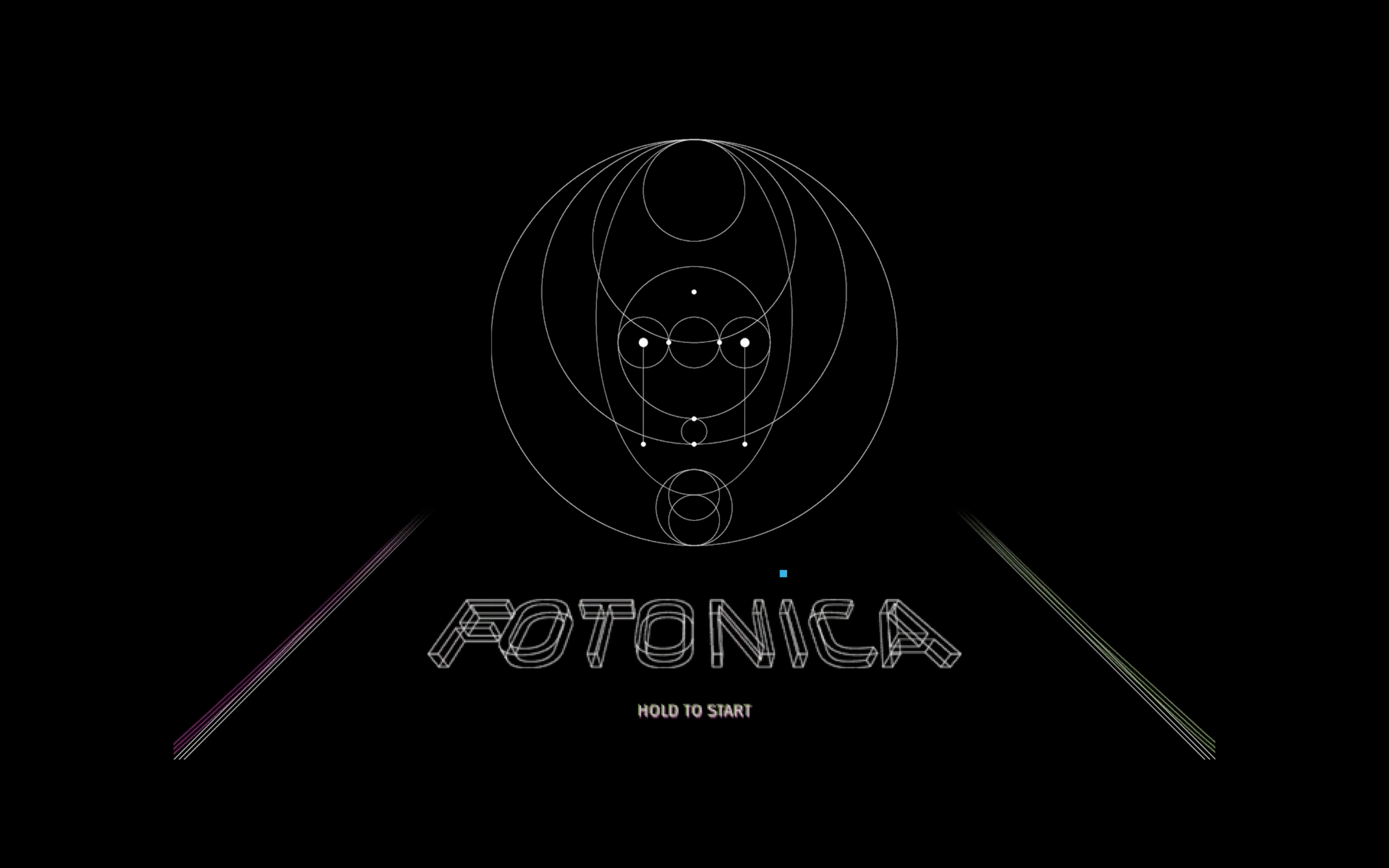
    FUCK THE VERTICES
    The simple graphics really work in Fotonica’s favour, giving a striking look to an otherwise familiar genre.

    I stumbled upon Fotonica whilst browsing notonsteam.com, a website committed to popularising indie games that deserve recognition, but aren’t getting said recognition due to their inability to get on Steam. Fotonica stood out to me, with it’s sharp graphics and weird name, I decided to take the plunge and paid the developers the whole $2.99 they were asking for (It’s on sale at 50% off right now). All I can say is: I’m certainly glad I took the plunge.

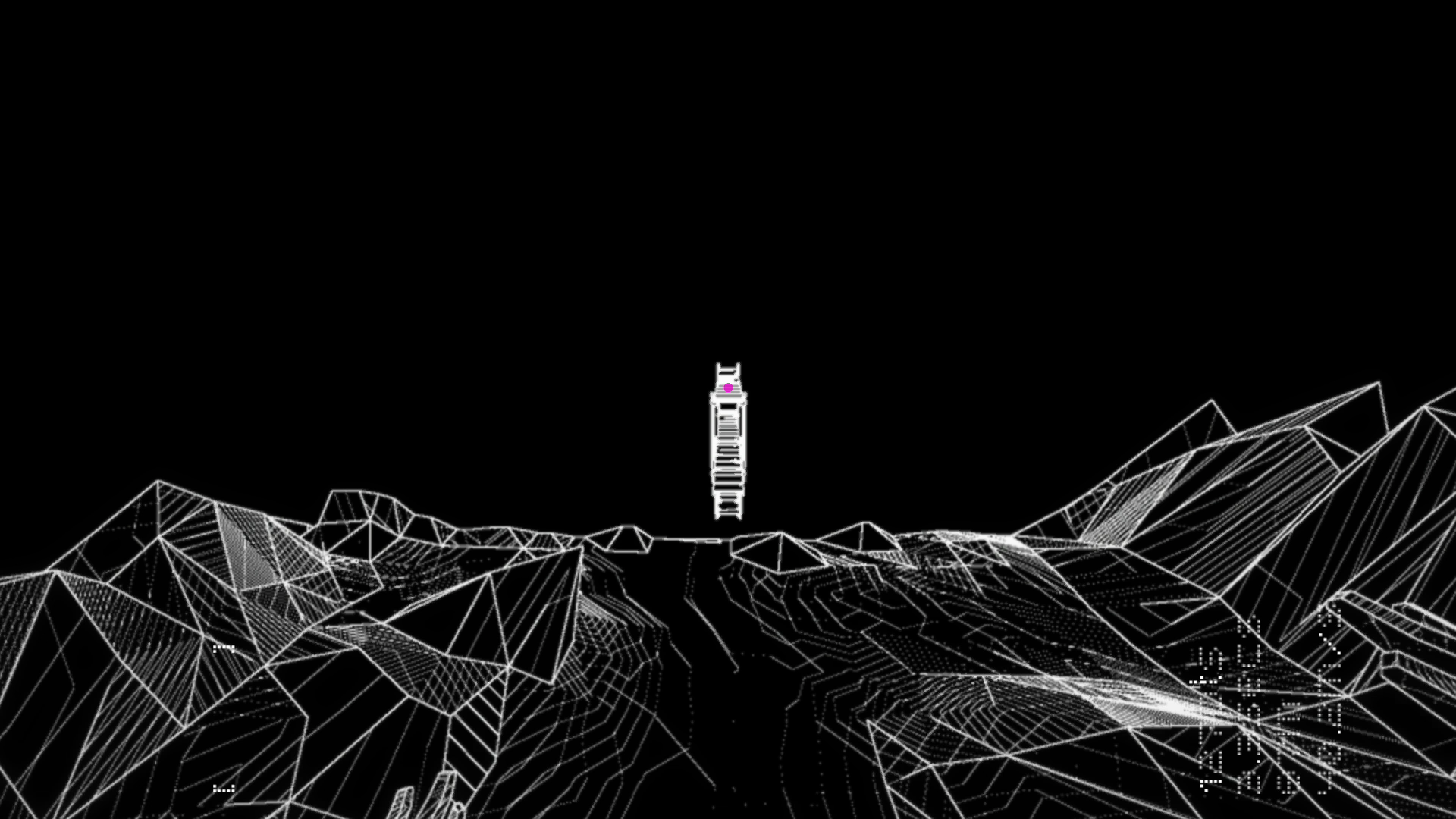
    FUCK THE TERRAINNNN
    Terrains are different for each level, giving variety in an otherwise unoriginal game. This level composes of bridges and landscapes that get generated as your run further and further.

    The mechanics of Fotonica are simple enough, it’s an endless runner game that gives you the task of surviving for as long as possible by jumping over gaps between platforms. You’ll pick up the controls in no time, and from there on out its a case of learning the levels to make sure you get as many points as possible in your run up to the end of a level.

    Each level is different and unique in style, from bridges to landscapes, the vector based graphics don’t let up, allowing for some variety in an otherwise simple and repetitive game. Graphics settings can be changed from the options, letting you choose from vector graphics or filled in graphics. (an example of filled in graphics can be seen below)

    FUCK THE ARMSSSSS
    The arms/hands are a nice touch, giving you a sense of perspective as to where your character is and the speed they’re going as the arms flail faster and faster.

    Fotonica has 4 individual levels, each with it’s own aesthetic, as well as a Endless mode. Each level tracks your highest score, and is posted to the games built in leaderboards. If Fotonica ever comes to Steam, this will improve dramatically with more stages, more endless modes, and a steam friends list integration. For the moment, achieving a high score doesn’t mean much, this is through no fault of the leaderboards though, and is more a reflection on how limited you are in the level designs. There are rarely more than 3 routes you could chose from, and it feels like once you’ve got one route nailed down, there’s no need to choose another. If the developer was to do a  weekly challenge with different levels/objectives, this may make the game more competitive, allowing for great replayability – something the game seems to be lacking at the moment.

    FUCKKKK THE GOLLDDDD
    As you approach your fastest speed, the graphics change to gold, which gives you more score in the final tally of your points. It’s a nice visual change that ties closely to the mechanics of the game, allowing you to know when you’re doing the right thing without looking at some text.

    Fotonica is currently waiting to be Steam Green-lit, and I feel it could definitely use your support. The gameplay is solid, and the visual aesthetic is fairly unique in this genre of games. Being green-lit would allow the developer to add the following extras to the game:

    • 2 Completely New Levels! with new awesome electornica music and new scenery!
    • 2 New Endless levels with different aesthetics and music and play styles
    • 2 Difficulty settings to let you play an even faster version of Fotonica
    • 4 new 2-player levels
    • 10 New Achievements!
    • New options to customize your soundtrack, the position of the camera and more.

    Which in my book, sounds pretty awesome. Fotonica is already a fantastic concept in its own right, but with support from the community and a reason for the developers to work on it more, it could grow into something amazing.

    4/5

    p.s. My quick look of Fotonica can be found below:

  • Gaming Week 40: To the Moon (PC)

    Gaming Week 40: To the Moon (PC)

    FUCK THE MOOOONNNN
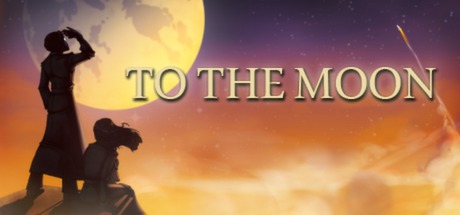
    To the Moon’s art style is a fantastic deviation from the norm. In a world where AAA studios spend months designing just one logo, To the Moon’s fan made art style brings a refreshingly new look to the market. (Image courtesy of Steam Community)

    To the Moon is a 4-5 hour game from the creative mind of Kan Gao of Freebird Games, that takes you on a emotional roller coaster through a deep story, rich characters, and seemingly fantastic locations. The fourth game to come from Kan, it’s certainly one of his best, and easily tugs at your heart strings and makes you want to play more and more to conclude the epic story.

    You start To the Moon playing as a pair of scientists(/doctors/employees? Who knows, they’re in white doctors jackets so they must be important) that accidentally get into a car accident on their way to a old, drying man. You make your way up the hill where you crashed, to find a huge house on the cliff edge overlooking the sea and a lighthouse. The characters you control acknowledge that this was the place they were meant to be, and proceed inside. From here, the story is explained; the characters you play as are agents that can fulfil a patients dying wish using some kind of device that alters a persons memories. In order to make this wish a reality though, they need as much information as possible about the patients life, be it memories, or physical world possessions, in order to build up a complete picture and change the right memory to make sure the patient believes their wish came true before passing away. It sounds weird, but it is all executed beautifully, allowing you to look back through a persons life and feel proper attachment to the characters Kan Gao makes. I won’t say anything more on the story, as I feel it’s the core of the whole game, and saying anything would spoil the greatness you feel as you explore and learn the story for the first time.

    FUCK THE CLIFFFFF
    The style of To the Moon is reminiscent of SNES graphics, which may be a strange way to start a epic story, but doesn’tt affect the narration at all. Freebird Studios manages to make likeable, distinct and unique characters that are recognisable despite the graphics. (Image Courtesy of GiantBomb Community)

    Gameplay is your standard typical RPG game, but without the fighting. You wonder around, clicking on certain items or people to interact with them, building up your understanding of the world around you. This type of gameplay was flawed at times, meaning I would wonder around for ages without proper understanding of where my end goal was. This could of been implemented better with a objective system, but these occurrences were few and far between. The soundtrack is worth mentioning, being easily one of my favourite parts of the whole game. It ties in so well to the emotion that is being portrayed at any one point, and sticks with you. The second the game was over, I went straight to Bandcamp and bought the whole album. I haven’t stopped listening to it since; I’m listening to it whilst writing this review (and most reviews for that matter, it makes for fantastic background music). Listen to a sample of it below, and be blown away:

    The game is made using RPG Maker, a weird little engine that isn’t very flexible, but gets the job done for telling stories in a RPG themed way. It was this choice of engine that started my first hurdle to playing To the Moon: it wasn’t available on Mac. Not a biggie I thought to myself whilst in America, I’ll just play it on my PC when I get home, which couldn’t be further from the truth. On my PC, I couldn’t get the screen to work, meaning the game just sat there, playing the music but without any picture. After checking around online, people suggested pressing ctrl + enter to exit from full screen, which worked, but my god was that window tiny! It barely took up the left corner of my monitor. I tried playing like this for a few hours, but it was just too tiny to truly get immersed in the game. In the end, I used windows magnifier to zoom in on where my cursor was, and for the most part, this sorted my problem. It’s a shame that a game as great as this suffers from little kinks like this that dramatically detract from the core game itself. It’s comparable to when Simcity launched and people couldn’t play it due to the servers being down, which may sound harsh for such a small studio, but we all make choices, and Kan Gao’s choice was to make the game using RPG Maker, which became a detriment to myself and many others experiencing his game. It’s for these very reasons that I wasn’t able to capture screenshots or video.

    In conclusion, I hugely recommend To the Moon to anybody out there that has a heart or a keen interest in storytelling in games. The rich characters and depth of story make for a truly unique experience, one which had me shedding a few tears and wanting more, something I haven’t had from AAA games for a while. Whilst RPG Maker wasn’t the best choice in making this game, it certainly didn’t detract from making Kan Gao’s imagination a reality.

    4/5

  • Its Been a While…..

    Its Been a While…..

    YAYYYYY
    This image was taken from my iPhone, that’s why the text and buttons are so small.

    It’s been a while since I updated my Game Development section, so I thought I’d post my latest build:

    https://dl.dropboxusercontent.com/u/55177814/project%20dandelion%20site.html

    I’ve now made a main menu, which will be updated to be more polished when the game is complete and done. I’ve also added a score system, which isn’t currently saved, but will be in due time.

    Let me know what you think and by all means give feedback. This is very early, and I’ll soon be adding enemies and items for you to collect and get more score with, so keep coming back for more builds.