Author: Dan

  • Weekly Gaming: Grow Home (PS4) Review

    Weekly Gaming: Grow Home (PS4) Review

    Grow Grow Home

    I’ve been meaning to play Grow Home for a while now. Considering one of my school mates has their own name in the game, I really needed to download it and give it a go, especially after the guys at Giant Bomb gave it high praise. Alas, months passed with constant reviews and programming to be done, until it finally become apparent the game was getting a new release on the PS4 as a part of it’s Playstation Plus free games promotion. Well this was a massive delight, especially since it meant I’d finally get to play the game, but also, I would’t have to pay anything for it!

    So where to begin? Well to start off, Grow Home is an indie game by Ubisoft Reflections in Newcastle, a studio renowned for Watch Dogs and The Crew. Strange, I know, but at least some of the team up there were given free time to work on Grow Home. The game has a simple premise; you play a red robot named BUD (Botanical Utility Droid), who travels with his mother ship (M.O.M) from planet to planet finding Star Plants, huge plants which can create Star Fruit for people back on earth. The plants are gigantic, easily able to reach over 2000 metres in size, so it’s up to BUD (and you, the player) to grow the plant and retrieve it’s fruit. It’s a fantastically simple premise, but one that I found extremely enjoyable; as of writing this review I played the game for over 7 hours and managed to get every trophy in the game.

    FUCK THE PLANTSSSS
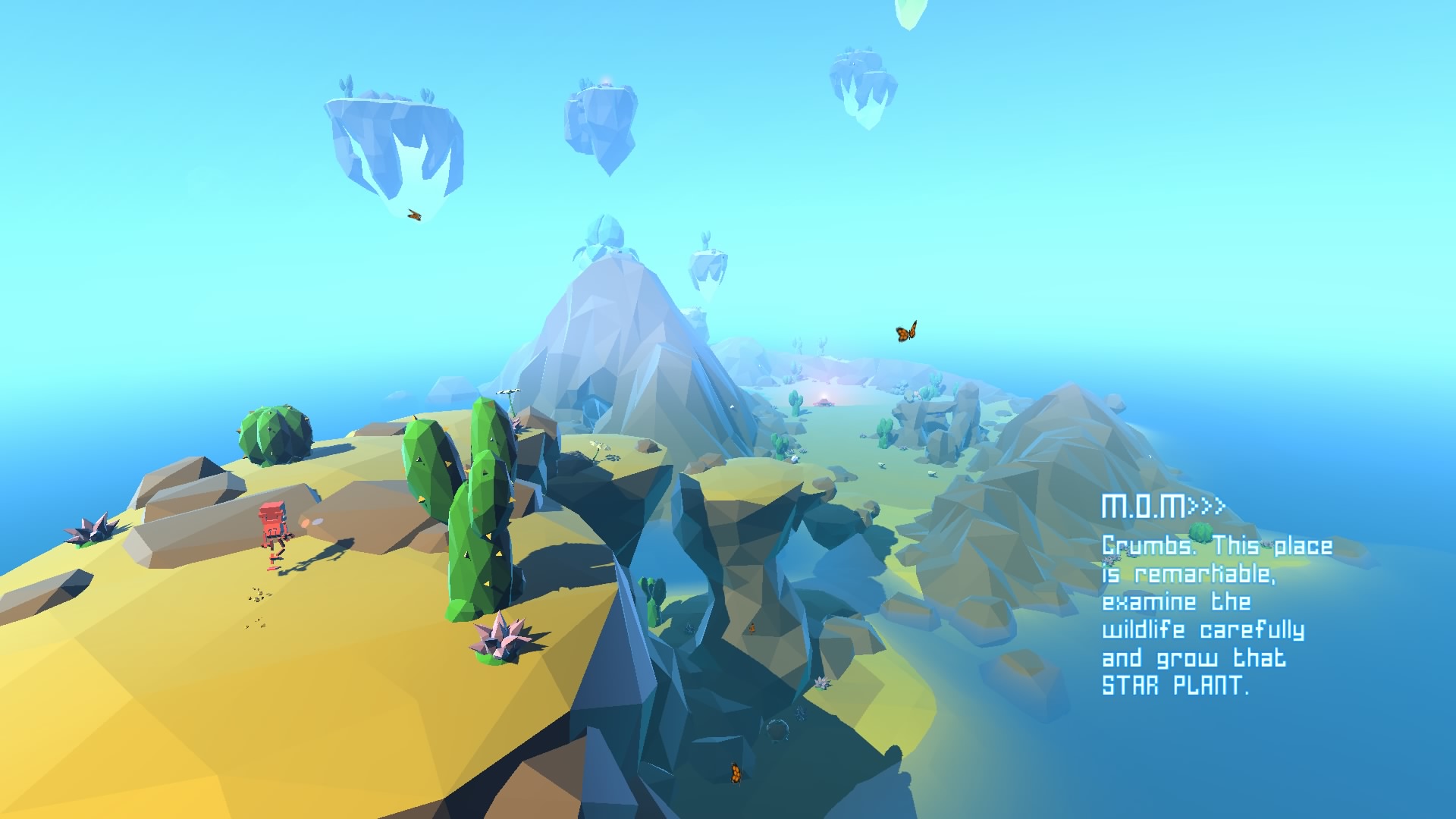
    Whilst the graphics are simple, they’re certainly great in portraying a lovely environment.

    Whilst the premise is simple, the controls and gameplay are far from it, with BUD being a wobbly mess that is difficult to control. At the start you’ll walk more than anything else using the analogue sticks, but occasionally you’ll need to pick things up using the R1 and L1 buttons (which both control BUDS arms). It’s these buttons you’ll also need to use for climbing, which, considering this is a vertical game all about growing a plant upwards, you’ll be doing a lot of. Alternating between L1 and R1 enables BUD to grab hold of walls in front of him, and whilst this works for the most part, the fiddliness of BUD himself will make it difficult to keep ahold of walls sometimes. For the most part, the controls are fine. BUD feels like a real tangible thing, with gravity and weight, and whilst this form of control is annoying at times (try falling 600-700 metres after climbing for tens of minutes), it adds a sense of challenge to anything you may want to do in the game.

    The world BUD explores is open, meaning you’re free to explore til your hearts content. Upon exploring, you’ll find new wildlife to pick up and inspect, as well as power crystals, which power BUD up and give him more abilities. The first (and possibly most useful ability), was to zoom the camera out, meaning you could see whether crystals were hiding in unexplored places. This was a nifty addition, and later additions usually involved the rocket pack on BUDS back, which was a way of flying around the world temporarily (and increasing length as you gather more crystals). The hunting for new flowers, fauna and crystals really pushed me to explore every nook and cranny of the world, a somewhat enjoyable but also challenging prospective considering BUDS control mechanics.

    A final word about the world: the way in which you grow the star plant is a fantastic mechanic where you hold a flower/bloom, and then direct it to wherever you like. The stem of your new sprout will then have more flowers to bloom to do the same with. Should you direct your stem into a floating island with green underneath, you’ll grow the main star plant higher, furthering your progress. It’s all a fantastic mechanic that kept me entranced until the end.  
    FUCK THE LANDSCAPPPEEEE
    At the start of the game there’s endless possibilities, with the whole land before you, and with a plant which hasn’t grown yet.

    Controls aside, it’s onto the graphics, which is simplistic throughout the whole game. Just take a look at the screenshots attached to this review, and you’ll see how everything is stylised polygonal, with no textures, and everything simply coloured. Whilst some may be critical of this simplistic approach, I, for one, enjoyed it, with the massive shadows from the single light source adding a nice feeling to an otherwise simplistic decor. Just to add: there’s not really anything in the way of music, and what little sound effects are in the game suit it admirably.

    So, was Grow Home worth the wait? I’d say so. For a free Playstation Plus game, you really can’t go wrong. I ended up spending 7 hours getting 100% of the trophies before stopping, even though the main game can be completed within 3 hours; I was just that hooked. Some may find it boring after a while, but for the most part, Ubisoft Reflections first foray into indie gaming is a fantastic success. Go get it for free if you have Playstation Plus, otherwise, it’s certainly worth the £7 they’re asking.

    4/5

  • Weekly Gaming: Catlateral Damage (PC)

    Weekly Gaming: Catlateral Damage (PC)

    Catlateral-Damage

    The following review was done at the beginning of the year when I received a early access review copy of Catlateral Damage from it’s developer. Due to problems at the time, as well as my awful writing, I never got around to publishing it. Read it now before I decide to take it down:

    Love cats? Then you’re going to love Catlateral Damage, the game which’ll have you exploring a procedurally generated house whilst making an absolute mess of it. Your reason for doing so? Cause you’re a cat, you don’t need any further reasoning.

    The game’s easy to understand and play; you’ll explore randomly generated houses and will need to push as much of your owners stuff onto the floor as possible. You achieve this through two means; either using your paws to whack things off, or walk into them, ensuring they smash onto the floor from whatever height they’re at.

    It’s a simple premise, but certainly has some repetitiveness to it, with the two game modes available merely deviating in how much time it gives you to push things off the shelves. Objective mode gives you one level after another, making you push off a certain amount of objects before you can progress to the next level. Litterbox mode on the other hand gives you free reign of the levels, and allows you to spend as much or as little time as you’d like before moving on. Regardless which mode you select, you’ll be getting the same game here, with levels being the same albeit with more urgency in the objective mode.

    There are side objectives in the game, regardless of which mode you choose. The first time a buzzer went off to tell me that there was a mouse on the loose I abandoned everything I was doing and went about trying to locate it. Upon catching it I managed to get one of the power ups

    Whilst going about your business and whacking things off sides, you’ll be given power ups to improve your 3 main abilities: jump, speed and swatting power. Your way of attaining these powers will change from house to house, with some randomly spawned just by doing a level, and others appearing because you’ve played with a cat toys for so many times. Occasionally you

    In playing Catlateral Damage I couldn’t help but feel a truly Katamari Damacy vibe emanating from the game. The objects around the scenery are basic, but they’re at least different, with the game being intelligent enough to differentiate between different books or DVD’s, so will push you into getting so many of a certain object. Every different object you find and push off in the world will contribute to your collection of items you’ve happened across.

    Whilst there is a core mechanic at play here, I couldn’t help but feel that the game was a hollow shell of what it could become one day should the developers add more items, more objectives, and overall more of everything into the game. Once you’ve seen few deviations of the formula at the start of the game, you soon start to feel bored, and have to make your own objectives. I found myself purely going for the achievements within steam rather than doing anything else in the game.  This isn’t to say Catlateral Damage is bad at all, just that it feels like it’s missing its potential in what an addictive game it could be, rather than the shell of one we have right now.

    3/5

  • Weekly Gaming: Life is Strange Episode 5: Polarised (PC)

    Weekly Gaming: Life is Strange Episode 5: Polarised (PC)

    Hi all!

    So this week I finally finished Life is Strange’s final episode. It was a fantastic series, and one that I’m sure will live on in gamers memories as a true testament of what adventure games can accomplish when they take on better subject matters and have a brilliant writing staff. Telltale game’s last few entries into the adventure game market really have left me stumped with how hollow I’ve felt from them, so here’s to hoping they learn from DontNod studios’ fantastic writing.

    The review in question can be found below:

    http://www.vgchartz.com/article/261900/life-is-strange-episode-5-polarized-pc/

    As always, thanks for visiting, and I hope you all have a brilliant week!

    -Dan

  • Weekly Gaming: Halo 5: Guardians (Xbox One)

    Weekly Gaming: Halo 5: Guardians (Xbox One)

    Hi all,

    For this weeks review I have something more special: my first ever video review! Whilst I was excited for Halo 5 anyway, to have been given a review copy weeks ahead of launch was a god send, and one which enabled me to make my first ever video review with plenty of time before launch.

    So please, give the video a watch below:

    And if you want to read more than what the review had to say, you can read it below:

    http://www.vgchartz.com/article/261687/halo-5-guardians-xbox-one/

    As always, thank you for visiting, hope you have a fantastic week!

    -Dan

  • Weekly Gaming: Skyrim DLC: Dragonborn (PC)

    Weekly Gaming: Skyrim DLC: Dragonborn (PC)

    I told myself (and my friends) time and time again that I would buy the DLC for Skyrim one day. 4 years after the games launch, it’s finally happened. The legendary edition was only £4 on Green Man Gaming, so I took the plunge, and haven’t regretted it at all.

    Just a side note: I didn’t buy it for ages as I wanted to just buy the DLC, since I bought the retail copy of the game many years ago. This never happened as the DLC pricing was just ridiculous, even on sales. Lo and behold, it was cheaper to buy the legendary edition of the game with all DLC then it was to just buy 1 piece of DLC (god I hate DLC).

    FUCK THE DRAGONSSSS
    Arriving into Steheilm is a weird affair, one which really feels dreary and crap compared to the wondrous locales of before.

    So, upon getting all the DLC downloaded and installed, I proceeded to jump into my old 64 hour playtime game, where I was completely overpowered and ready for anything. Upon arriving, and walking around a bit, I finally got some NPC’s that tried to attack and kill me. Once they were dispatched, I found a note on them saying they were dragon heretics sent to kill me from a far off land near Marrowwind. So I set off to find out about this new land, as Skyrim itself is fairly explored at this point for me, so a change of scenery would have been good.

    Upon arriving, I found that a lot of people were mindless drones, simply constructing structures around holy poles. Speaking with someone nearby that wasn’t affected by the mind control going on, I found that there was a temple far away that I could explore for clues on what was happening. It was here that I decided to embark on making my way across the land, finding every single point of reference possible, so that I could then fast travel to anywhere on the island when I actually started getting objectives (yes, I know that’s strange as it diminishes the wonder you experience when encountering a place for the first time, but I love find everything possible so that I can quickly and efficiently finish objectives). The land of Solstheim is a lovely place that is truly new and wondrous compared to Skyrim before it. There’s plenty of desert (something we definitely haven’t seen in skyrim) due to the constant volcanic activity far away, and plenty of natural creatures we haven’t seen before. Some floated, which I’m sure was a shout back to players of the original Marrowwind, whilst some were spider like and exploded. It was nice to see such a new and interesting land, and makes me all the more excited for Fallout 4 due this year.

    FUCK THE DEADRA
    The Deadra sequences were easily my favourite, with the land of Steheilm not actually containing much for me.

    So what of the main story? With another Dragonborn on the scene, you can’;t help but think that shit is about to go down. Unfortuantely, it doesn’t really. Markaarn (a Dragon priest that existed when Dragons ruled Skyrim, but was the first to rebel), barely shows himself as he’s in another dimension, one with the deadra demon of forbidden knowledge. He can’t do much in the real world, so controls people on his behalf to do his bidding. It’s a weird story, one which really doesn’t last long, but one I was glad I played thorugh if not purely for the alternate dimensions alone. Travelling through a world that is within a book, and is made of pages of said book is fantastically gratifying, with every nook and cranny of the dimension looking so much more different then anything seen before in Skyrim. Add to that the fact you’re serving a deadra lord and are learning new dragons spells all the time (getting the strength of a dragon is definitely awesome), and you have for a pretty mediocre expansion with some amazing parts.

    There aren’t many locations on the island of Solstheim, with all locations being spread pretty thin and far apart. This is a shame, as I genuinely love searching for new lcoations, but understandable considering this is only an expansion. The side quests were pretty cool, with one re-opening the mines up for the island, and another getting me to investigate a murder plot, but overall, 8 hours later, I feel I’ve seen all I can from the island, which is a shame when I easily spent the best part of 20 hours on The Shivering Isles expansion for Oblivion.

    FUCK THE MARKAARRR
    Stupid other Dragonborn being stupid. Look how Stupid he looks!

    So was it all worth the wait? Meh, not really. Whilst I’m glad I played the expansion, it didn’t really add anything to the story of Skyrim for me. I’m definitely thankful I only spent £4 on the content rather than the £13 Bethesda is trying to charge for the DLC alone, but really, I could have gone without. Is it worth your time? If you’ve never played Skyrim before and feel you could do with getting it all together in the legendary edition like I did then knock yourself out, it’s got a lot of content. But should you already own Skyrim, don’t bother, it really doesn’t add much.

    3/5

  • Weekly Gaming: Titan Souls (PC) Review

    Weekly Gaming: Titan Souls (PC) Review

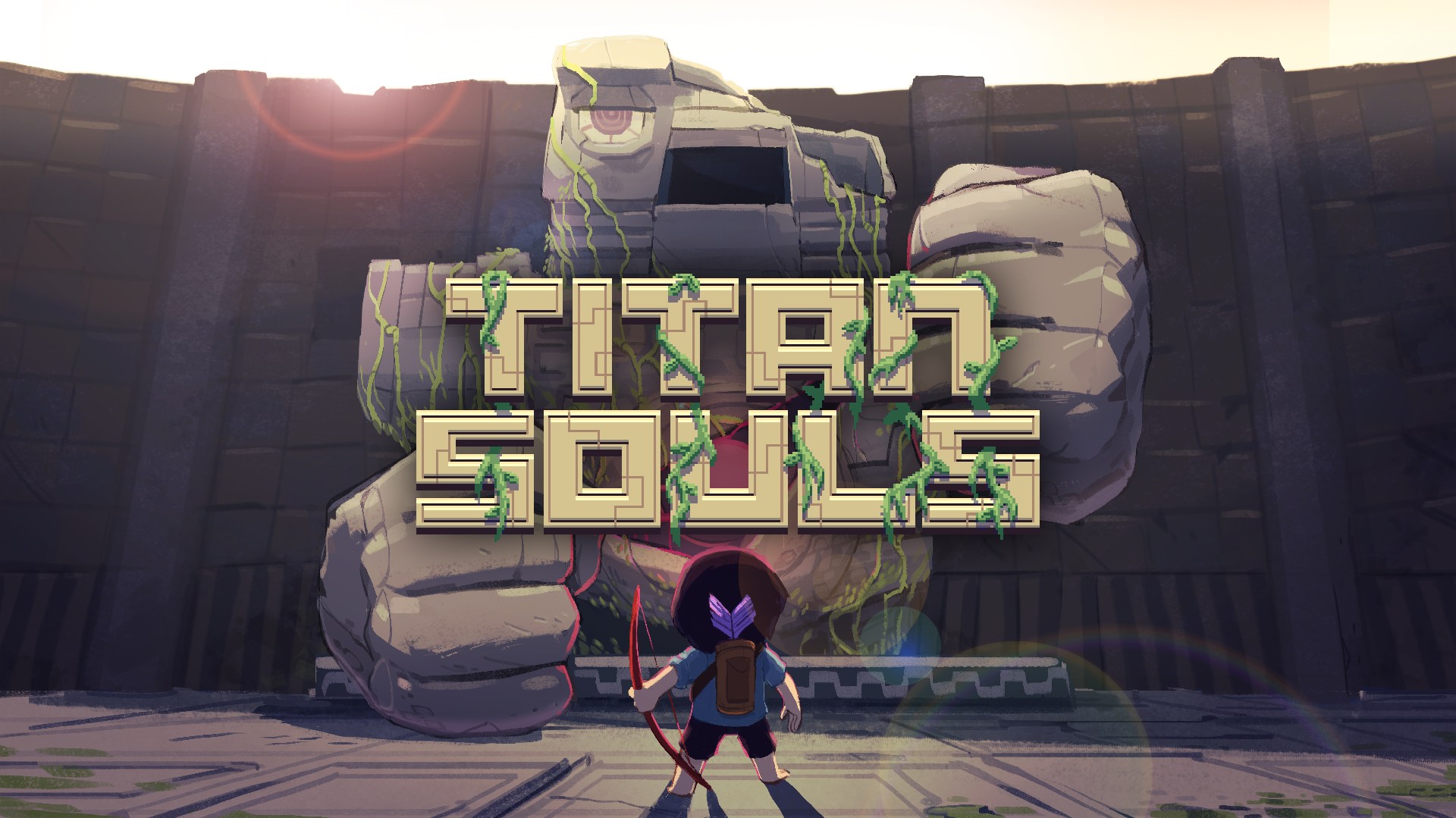
    titan_souls_-_key_artOn paper, Titan Souls ticks all the right boxes for me. Indie: Check, Roguelike: Check, lovely pixel graphics: Check. But in playing through and completing Titan Souls, I can’t help but feel hollow. The games completely based around the simple concept of one shot kills, with your character only having one arrow to fire at a time and it having to be retrieved before firing again. It’s was a great concept in theory, but where did Titan Souls manage to slip between the crack and become so… dull?

    Well it wasn’t in the graphics, which were simply sublime throughout the whole campaign. There were times when everything felt a little repetitive, and the Titans and player could of had more animations than the few they are given, but overall the world felt alive and lovely, with each and every Titan being exquisitely detailed. My biggest grip about the graphics? Too many enemies flip-flopped between being 3D modeled and others being completely 2D sprite based. It was jarring, and certainly inconsistent in a world that was mostly sprite based.

    FUCK THE TITANSSSS
    After defeating 8 Titans you’re able to make your way to the final two bosses, which are certainly harder than the rest.

    The music helped me enjoy the game and see it through to it’s end, with lovely guitars playing whilst exploring forests, and action-ey fast paced music appearing whenever a Titan is encountered. What surprised me the most was the amount of variety, with all 13 Titan encounters having different music. Granted, due to the way the game is played (you die, you run to the place again, and die again), you rarely got to hear music for more than a few seconds, but what was heard was certainly impressive enough to keep me adventuring.

    The controls? Well not much can be said about the controls. You have two buttons: One to fire your sole arrow + reclaim it,  and one to roll/sprint. It’s simplicity at it’s finest, enabling the player to master the controls early on, and purely using the Titans moves/patterns to dictate how the game is played out. There were times I couldn’t help but think how much better the game could have been with different abilities though, with a new level of variety being added to the game based purely on what actions you can and cannot do to your enemy.

    So what of the gameplay? Well, this is probably where my major gripes start to manifest. You see, the roguelike ability to die with one hit is fantastic when applied to lots of different games, and can push you to better yourself as a player. My problem with Titan Souls’ implementation of this mechanic is that when you die you’ll then need to walk back to the same point you were at previously purely to start the fight again, which, when you’re dying over 128 times in one playthrough, equates to a lot of waster time walking back to the same point you were at previously. Whilst it sounds like a tiny gripe in the grand scheme of things, I can’t help but feel the single hit death which is applied to enemies and the player is a bad concept in making the player feel empowered after killing a Titan. You see, there were more times that I felt my triumph over a Titan was more down to luck than my own skill, causing me to feel hollow when I should have felt joyed that I had managed to kill my foe.

    FUCK THE FRIENDLY GIANT
    One of the only places in the whole game where you’ll get any dialogue, this friendly giant must be slain without any context as to why.

    The hub world between Titans just felt contrived, with no story as to why the ruins are there at all being explained to the player in my entire playthrough. During development, team Acid were interviewed and asked where their motivations came from, with the team admitting Shadow of the Colossus being high on their list. The problem is, this doesn’t translate very well into Titan Souls. Where Shadow of the Colossus did indeed give massive open worlds, they were there as you was striving to find your next Colossus’ to take down, giving the player time away from the action they had previously endured. Titan Souls attempts to do this with their big open hub world, but it just can’t help but feel contrived, as the player has no prior knowledge as to why they’re there at all and why they’re killing Titans. At least with Shadow you had a purpose, here Titan Souls can’t even muster much of a purpose. You kill big things instantly; end of.

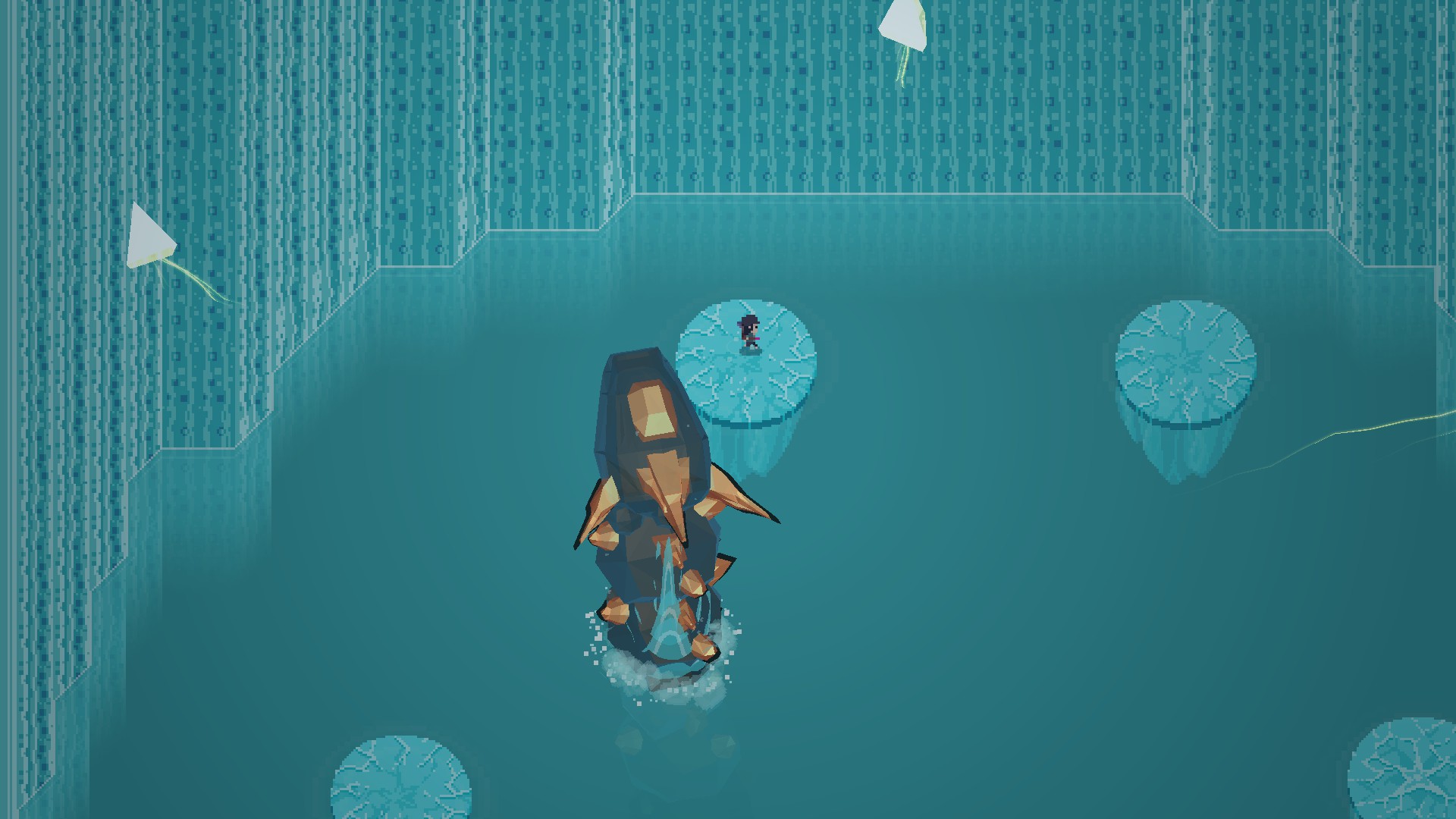
    FUCK THE WATERRR
    Most Titan chambers are simple, with only a large area to which you can avoid enemy attacks with. The water Titan was an exception, and one that genuinely had me excited to play.

    Add all of what I’ve said above with the fact Titan Souls is a short game (I managed to complete it in 2 hours 35 minutes), and you have a disappointment when compared to my initial excitement. Replayability is limited, as I now know how to kill all the Titans, so going back would feel more like luck in defeating them than actual skill. Titan Souls is clever, there’s no doubt about that, but I won’t be coming back to it anytime soon.

    3/5

  • Weekly Gaming: DMC: Devil May Cry (PC) Review

    Weekly Gaming: DMC: Devil May Cry (PC) Review

    As a huge fan of the Original Devil May Cry series, I’ve been waiting to get my teeth into DMC for a while. I’ll admit, when it was first announced, I joined in with the mass of fans that cried foul because of Dante’s hair colour change (how petty and small a thing to get worked up over). But, upon the game being released for years now, I’ve gotten over that original contempt I felt for the change, and have decided to finally take the plunge and play the game on PC, where I can experience it in full 1080p, 60FPS glory. Below I’ll break down each part of the game, starting with the Story, moving onto the Graphics/Sound, and finally the gameplay. Enjoy!

    FUCK THE LIMBOOOOO
    The Dream Sequences are fantastic, easily showcasing some of the best scenes in the game.

    First up, the Story: Seriously, as much as I enjoyed the original Devil May Cry games, the story wasn’t exactly thorough or deep. I find that with age, I genuinely can’t remember much other than Dante was the son of Sparta, a demon that loved a human and had a kid, allowing that kid to be super-human in strength, and to even summon demon powers to take on the super-natural. Whilst this may have been enough back in the days of the PS2 (a simple enough premise to keep players engaged), these days that simplicity just wouldn’t stand.

    So Ninja Theory (developers of Enslaved: Odyssey to the West) took the game back to the drawing board, with the story taking place in a world not unlike our own. Dante and Virgil are still demon kids, but their mother was also an angel, meaning they are nephilim; half angel, half devil, able to kill gods themselves. Unlike the original series, which took place in a real world, DMC takes place in Limbo, giving Ninja Theory the perfect setting to let their creative juices flow freely, with worlds crumbling and contorting in weird and wonderful ways. It also allows them to show Dante fighting demons without humans seeing them, closing a loophole the previous games faced. This setting, and the seriousness of it, really shone through, keeping me hooked until the end of the game. Fantastic retelling/alteration of a mediocre original series I would say.

    FUCK THE DETAILSSSS
    As can be seen in the first level, you’d be really hard pressed to find that DMC was buiilt for the PS3/Xbox 360. The level of detail is stunning.

    Next up, the graphics/sound: Well, what can I say. We haven’t really had a true next gen (read: previous gen) devil may cry game, with Devil may cry 4 being more of a slight upgrade over Devil May Cry 3’s engine, it felt awesome to actually play a game made for Xbox 360/PS3, and even on the PC, where I was able to crank graphics settings so high it looked like a PS4/Xbox One title (albeit with silky smooth 60fps framerate at all times). The HD textures were a pleasure to behold, with in game graphics looking better than the pre-rendered cutscenes, I was gobsmacked. Ninja Theory deserve a pat on the back for what they managed to do with the Unreal 3 engine, with the game truly being a beauty on new and old consoles + PC.

    The sound was also a joy to behold: with punk rock appearing every time an enemy encounter started, it truly got me into the fight, pumping me up and pushing me to do better. Whilst the music and sound may be a bit “pretentious” due to some of the songs feeling too… contrived (as in, the developers forced the punk aesthetic too hard), it still all flowed well together, with the main menu music also pulling me in to the point I’d stare at the screen for a while, waiting to start.

    FUCK THE MOVEMENTSSSS
    Levels seem to constantly twist and turn, adding a certain fluidity to the game as nothing is ever what it seems.

    So, finally: The Gameplay. The absolute core of a Devil May Cry game, and the main reason the series has been so renowned for so long. It’s the gameplay that kept players coming back despite all of it’s terrible story and plotholes. How’d it hold up in DMC? Fucking beautifully.

    It was the gameplay most of all that kept me hooked to the game from beginning to end, with each and every action or story-point actually tying perfectly into the gameplay. Whilst playing, I couldn’t help but this Ninja Theory concentrated 100% on the gameplay first, with everything like story and music being made purely to add substance to the game, or to give an excuse to actually play it. You start off with just Dante’s sword, and his trusty guns. This soon changes to a devil weapon (a hammer), and an angel weapon (a scythe). These soon get superseded by stone hands and katanas, which in turn immensely changes up the gameplay and combos you can perform, so much so I was constantly changing my tactic to try and get a SSS rating in fights. Like I say, it truly feels like the whole game was built around the fighting first and foremost, with everything else being an excuse to fight more. It’s fantastic.

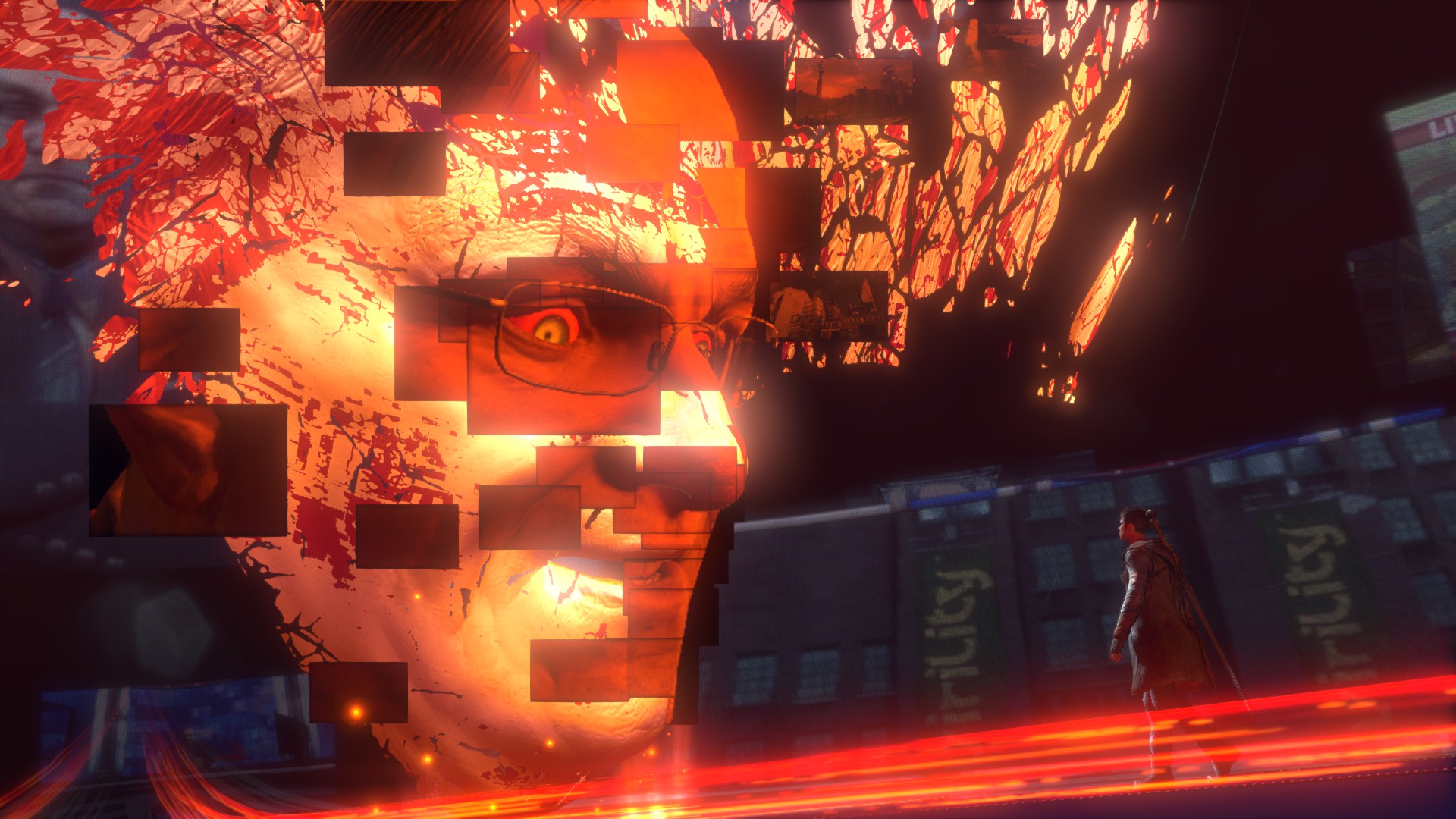
    FUCK THE BOSSESSSS
    The boss fights were incredible, with the News Anchor fight easily being one of the most intoxicating environments in a game in a long time. Having news graphics with a presenter you need to kill is fantastic.

    So overall, I’m annoyed. Annoyed because I didn’t invest the time (nor money) to play DMC sooner. The only reason I finally got around to buying the game now was because it was only £5 for the PC version, and I really need to finish more games that I buy. I’m glad I finally did play it, and am annoyed there may never be another considering how damn great DMC was. The sales figures weren’t great for this one, with Capcam being in a scary position of almost going bankrupt also, it seems we’ll never see a sequel for DMC anytime soon. If you haven’t played DMC, and are a massive fan of action games, you owe it to yourself to play DMC.

    5/5

  • Weekly Gaming: Catherine (PS3) Review

    Weekly Gaming: Catherine (PS3) Review

    Catherine.full.729368

    Catherine’s been on my to do list for years now. The game has always fascinated me: taking control of a man who needs to decide between his girlfriend of many years and a new girl on the scene. It always appealed to me, as it’s exactly where I am in life at the moment, with me reaching my 30’s soon and not settled down (whilst everyone else around me is having kids and getting married). After I had heard good things for years, I finally started looking into buying it, only to find that it was already on my PS3 as it was free on PS+ many years ago.

    Trying to find a perfect time to play the game was a challenge though. Thankfully, my friend and I was looking for a new game to complete together, and decided on Catherine, since we could see the story whilst taking it in turns to solve the puzzles. To say I’m glad we played Catherine is an understatement.

    The game of Catherine takes place in a little Japanese city, with you playing and watching the life of Vincent as he unexpectedly gets dragged into a world of drama between two girls, all whilst men are dying from strange dreams. Upon night time, Vincent himself has these strange dreams, where he needs to climb a weird puzzle game in order to live another day. By day, he speaks with friends to try and get to the bottom of what to do in his current predicament. Half puzzle game, half dating simulator. It’s a weird combination of gameplay, but one that really speaks volumes to the games core underpinnings: it’s ability to use gameplay as a metaphor and tell a fantastic story.

    FUCK THE DECISIONSSSS
    Moral choices are insane when you’re constantly reminded that there’s a person on the receiving end of your choices.

    You see, whilst you have some control over Vincent and his decisions (do you drink more at night to have an advantage in your dream, but will most likely mean that Vincent sleeps with the wrong Catherine again?) the game still wants to tell a story of it’s own, with some of your reactions/replies to moments being not what you’d want to say. I’d find many instances where Vincent would need to reply to a text he had gotten, only to find that none of the replies suited what me and my friend wanted to actually say, meaning we’d need to do the lesser of two evils. This is all fine and good though, as you still have some control over Vincent, it’s just annoying when a situation presents itself that you wish you could actually have some control over.

    The nightmare sequences are cool, but nothing special. Catherine’s puzzle mechanics are simple, but solid, with Vincent being able to move blocks to progress up a tower, and climb them. What starts off simple enough soon becomes harder, with ice blocks, explosive blocks, and many others soon forcing you to constantly rethink your strategy of how to make your way up the tower. The stages are big enough that you have plenty of freedom to come up with your own solution, meaning Catherine is still giving your freedom to choose in both it’s main story and it’s gameplay.

    The true brilliance of the game is during the day, when you control Vincent in deciding what he does around a bar. It’s here that you get to learn more details about the world around you (more men dying, details about special drinks being poured for you etc), but it’s also here where you’ll make new friendships and answer questions which will change your characters morality. It’s this “morality” system which will have an effect on the ending, with multiple anime scenes playing out depending on how you answered the questions, or responded to Catherine (and Katherine)’s demands.

    FUCK THE QUESTIONSSS
    Choices like these (albeit not as straightforward) are constantly asked throughout the story, like “do you see kids as life’s greatest gift, or annoying for your freedom?”. These questions had me and my friend in great debate, with us rarely picking the same answer.

    I was hooked on these day scenes, with me shouting at Craig telling him what to reply in a text back to Catherine. The characters felt real, and were certainly enticing enough for me to have an opinion on what should be done with them. I wanted to have an impact on the world, and wanted so much for Vincent to get with Catherine, the new girl on the block who enticed Vincent to cheat on his girlfriend of many years: Katherine. Lo and behold, the developers actually made the two Catherine’s out to be a visual metaphor; Catherine (the young, blonde free spirit) was freedom manifested, with Katherine (the dull, safe girlfriend) being commitment. It was a good contrast, and was interesting to see that I went with freedom each and every time, whilst my good friend (who’s about to get married and already has a kid), chose the latter.  It was these decisions and constant scenarios which made me truly love the game, with their being no “right” or “wrong” answer, merely decisions to be made like what would happen in real life.

    I genuinely loved Catherine, and may actually be tempted to play it again in the near future (when I’ve got less games to play). The decisions, atmosphere, and everything about it enticed me to a point I was shouting my friend down on what decisions to make all the time. It was also fascinating on the breadth of different choices people would make in the exact same situation given the same questions. If you’re the kind of person who likes a fantastic story (one that’ll make you look at your own life and the decisions you make), then look no further, as Catherine is sure to get you thinking about your life decisions so far. Just be warned: don’t play the game with a loved one around. They may affect your decision making, or would be annoyed at the answers you give.

    4/5

  • Weekly Gaming: Rare Replay (Xbox One)

    Weekly Gaming: Rare Replay (Xbox One)

    Rare-Replay-E3-2015-760x428

    Hi all!

    So this week, I managed to get a copy of the recently released Rare Replay for Xbox One! The collection was definitely one of the best I’ve ever played, with a fantastic meta-game placed over the top. If you wanna give my review a read, you know what to do!

    http://www.vgchartz.com/article/260438/rare-replay-xbox-one/

    As always, thanks for your continued support!

    -Dan

  • Weekly Gaming: Life is Strange Episode 4: Dark Room (PC)

    Weekly Gaming: Life is Strange Episode 4: Dark Room (PC)

    maxresdefault (2)

    Hi all!

    This week I managed to play the latest episode in Life is Strange’s great campaign. Being the fourth episode of five, you won’t be surprised to learn that many mysteries are coming to an end, all whilst others are popping up.

    If you wanna give the review a read, hit up the link below:

    http://www.vgchartz.com/article/260439/life-is-strange-episode-4-dark-room-pc/

    Thanks for visiting!

    -Dan

  • Weekly Gaming: Beyond Eyes (Xbox One)

    Weekly Gaming: Beyond Eyes (Xbox One)

    maxresdefault (1)

    Hi all!

    So this week I went out of my way and decided to buy the game I raved about when I first set my eyes on it back in March, Beyond Eyes! The game was unfortunately a big disappointment, but if you want to read my thoughts on the game, click below:

    http://www.vgchartz.com/article/260380/beyond-eyes-xbox-one/

    Hope you’re all well!

    -Dan

  • Weekly Gaming: Volume (PS4)

    Weekly Gaming: Volume (PS4)

    volume-ps4-384907_expanded

    Hi all!

    So this week I managed to get a review copy of Volume, and set about reviewing it over the course of an entire night. It’s a fantastic stealth game that really brings the genre down to its core essentials, emitting things we take for granted like graphics and sound. Overall, a great game, but with some nuisances, like the voice acting and music.

    As always, if you wanna give my review a read, click the link below:

    http://www.vgchartz.com/article/260707/volume-ps4/

    Thanks for visiting!

    -Dan

  • Weekly Gaming: Gears of War: Ultimate Edition (Xbox One) Review

    Weekly Gaming: Gears of War: Ultimate Edition (Xbox One) Review

    gears-of-war-ultimate-edition-793037_expanded

    Hi all!

    So this week I managed to get a review copy of Gears of War: Ultimate Edition, and proceeded to play the hell out of it! As you can see from my review, it was OK, but was fairly dated and with no context with the graphics, I just couldn’t help but feel I was playing the same game again.

    http://www.vgchartz.com/article/260682/gears-of-war-ultimate-edition-xbox-one/

    As always, thank you for your support!

    -Dan

  • Weekly Gaming: Everybody’s Gone to the Rapture

    Weekly Gaming: Everybody’s Gone to the Rapture

    Everybody's_gone_to_the_rapture_logo

    Hi all,

    This week I look at The Chinese Room’s latest “walking simulator”; Everybody’s Gone to the Rapture. Whilst I enjoyed the story, the game was literally a walking simulator, and had nothing else worth mentioning apart from the lush graphics.

    If you wanna give the review a read, you can check it out below:

    http://www.vgchartz.com/article/260562/everybodys-gone-to-the-rapture-ps4/

    As always, thanks for your support, and see you next week!

    -Dan

  • Weekly Gaming: Metrico (Vita) Review

    Weekly Gaming: Metrico (Vita) Review

    2015-04-21-143908

    I was sceptical about playing Metrico at first, I mean, a game where you mess with bar charts and pie charts? BORING. But after reading Eurogamers review of the game many months ago, I decided maybe it was worth actually looking past the boring exterior and seeing if Metrico was worth it’s time.

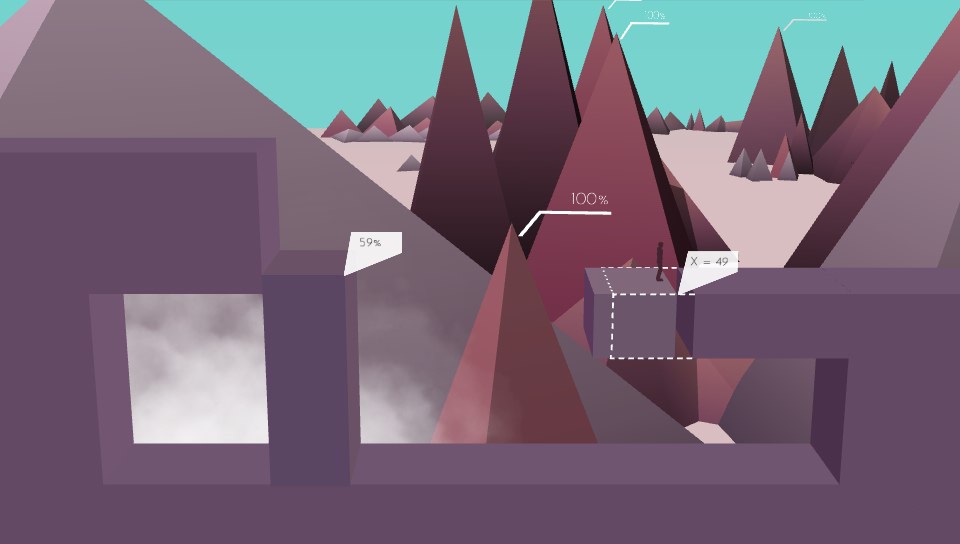
    Well first off, I have to advise to seriously ignore the setting and the premise of Metrico, as it sounds boring on paper but makes for some excellent and amazing puzzles to overcome. The premise is simple: certain bars or platforms in the world will move or resize depending on how you move your player or interact with the environment. One of the most basic forms of puzzles in the game revolves around your players movement across a surface: move right whilst touching the floor and one bar may increase in size, whilst moving left will decrease it. It’s through these simple interactions with the environment that complexity starts to form, with bars or platforms interlinked, meaning your actions for one to progress may hinder another, causing yourself to be stuck until the solution is found.

    FUCK THE INFOGRAPHICS
    Whilst the graphics look simple, there’s definitely a charm about the infographics look, one that oozes from start to finish of Metricos campaign

    It’s through this simplicity of interacting with the environment that you’ll find some of the hardest challenges I’ve come across in a game to date. Whilst the environment starts off related to your movement, it soon starts becoming more complicated, with a shooting mechanic soon entering the fray, along with the gyro-sensor of the Vita, and finally, the light around you and colours surrounding you in the real world using your Vita’s camera. They’re all novel ways of using every feature of the Vita, but they all really add to the complications of puzzles that may arise, with latter levels requiring you to both hold the Vita at a certain angle whilst also moving your player and firing at the same time. Digital Dreams really deserve to be applauded for the great work they’ve done in accommodating each feature of the Vita, a task I didn’t think possible.

    Through all the different methods of controlling the world, it’s a good thing Metrico has precise platforming down to a T, with each jump and twist of the Vita being as precise as it needs to be, ensuring you don’t blame the game rather than your own skills.

    FUCK THE PIE CHARTSSSS
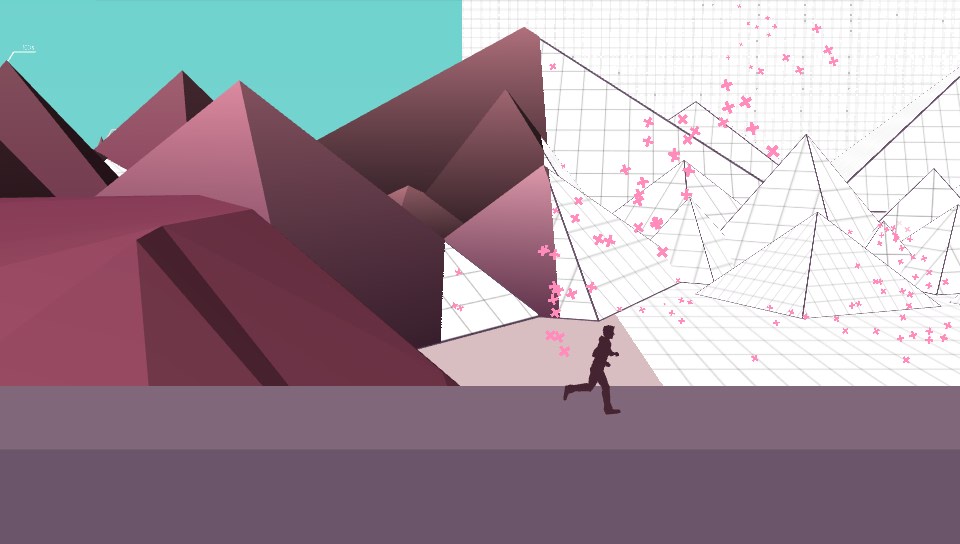
    Metrico takes its infographic art style and runs with it, with pie charts and line charts appearing everywhere they possible can. Each is intrinsically linked to the actions you’re performing as the player, ensuring you have some control of what is being seen.

    The graphics aren’t much to look at due to it’s simplicity, but perfectly suite the environment of infographics Digital Dreams chose to portray. Pie charts appear in nice 3D, but as I said at the start, that’s all boring without context, so it’s a shame Metrico doesn’t really have a story. You walk endlessly throughout a forever changing world, with a choice given to you upon clearing one of it’s 5 worlds. These choices are between two doors, with each one having percentage of how many players have walked through it. There seemed to be no intrinsic value as to which one you selected, so for the most part, I just went for the door which had the least amount of players walk through it.

    Whilst there wasn’t much in the sense of music (I genuinely don’t remember the music at all, a bad sign when it comes to music that entices me to explore and adventure on), the entire atmosphere of Metrico was still fascinating to explore, with each puzzle enticing me on to the next one with no hesitation.

    FUCK THE STORYYYY
    There isn’t really a story throughout Metrico, merely a thought: your actions have instant feedback in the world your avatar inhabits.

    I think the thing that stands out so much about Metrico for me is the way that it brings to the forefront the code that’s happening in the background to players. Everything happening on screen in a game is usually linked to numbers in the background; from health bars slowly diminishing to the timing of an enemies movement, it’s all maths, it’s merely hidden from view. Metrico does a fantastic job of showing all these numbers to the player, and even helps in making players think more logically in how they approach problem solving. There are many times you’ll need to approach a puzzle from a different angle after you accidentally press a button too many times, pushing you on to find the correct solution as fast as possible.

    Whilst most of the puzzles allow you to carry on with the progression of the game, there are a few that allow you to pick up items should you get all objects on the screen in the correct place. These “collectibles” are purely for the challenge for the most part, with no story or extras being unlocked for gaining them (apart from trophies). Whilst I missed a couple, I enjoyed these extra challenges, as you’d have to look at the same puzzle in a different way, ensuring nothing went over it’s mark and all objects were in the correct place.

    As I said at the start of this article, ignore any and all preconceptions you have about Metrico and it’s style, and give it a go. I for one am ashamed at my preconceived notion that it would be boring, and feel that it doesn’t deserve that at all. Metrico is easily one of my favourite Vita games so far, which, for a console that’s been out for 4 years, is a damn great achievement.

    4/5