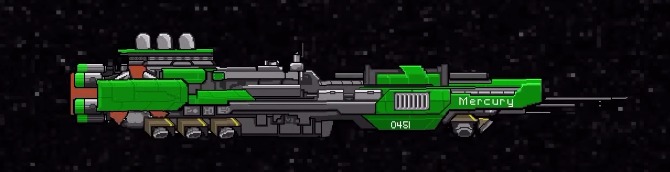
So this week I’ve linked this post to my review on Convoy Games’ first game, Convoy (confusing naming, I know). It was a bloody enjoyable game, and one which easily could be recommended to anyone who loved 2012’s FTL.
If you want to give the article a read, by all means click the link below to read it over at VGChartz.com
It’s a shame I didn’t get a review copy of The Vanishing of Ethan Carter months ago when it was released, the game seemed right up my street considering it was similar to games like Ether One. I wanted to play it, but not so much that I sunk £15 on the game considering it was around the time I was releasing my first game. I finally managed to purchase the game just the other day when it was £7.49 on the Steam store, and considering I’m between project at the moment, I decided I needed to see what all the fuss was about.
The game starts out with a with little introduction of the character you’ll be playing as, private detective Paul Prospero, a super natural detective from the sounds of things, as he instantly tells you that Ethan is seeing things that he shouldn’t be. You enter a forest from a tunnel, and so begins your journey through this strange and wonderful world that is Red Creek Valley. It’s not long before you come across the first hint as to what The Vanishing of Ethan Carter will entail, with a trap springing up from nowhere. As you approach it, you’re given the prompt to press and hold A on it to “sense” the item, a method of being teleported into a different realm, where things of the past can now be seen.
Portals appear many times throughout the whole campaign, allowing you to explore the world as it was in the past to make sense of the present.
The past doesn’t just reveal itself though, and objectives must be adhered to in order to get the portal open in the first place. Most of the time, this will just be a case of putting things back in their respective places before they were picked up and used as a murder weapon, but occasionally things will be mixed up. Once everything is in place, you’ll be able to travel through the portal and see the past events that lead up to the new persons murder, using snapshots of people as a timeline, it’s up to you to guess in which series of events led up to the murder, and order them in the correct manner to see the scene unveil itself before your eyes. It’s an interesting mechanic, one which allows you to get a better picture of the world without throwing anything in your face needlessly, with all the story being realised as you put the puzzle together.
The past in which you see scenes played out before you is fantastic, and reminds me of media like Sherlock Holmes as he imagines what happens in a room before coming to a conclusion. Sometimes the order of events can get a little confusing, but a little bit of trial and error is enough to suffice.
The game would be boring with the mechanic alone, so The Vanishing of Ethan Carter goes one step further and has mini-stories all throughout the world, each so vastly different from each other that it really messes with you as the player, but also makes the world feel so alive. An early example of this has you chasing a astronaut in the middle of a dense forrest, with dinosaur noises surrounding you. As you chase the astronaut, he disappears and reappears further away, pushing you to chase him even more. Eventually, his shuttle will appear, with a bright teleportation light appearing, taking him away. You run into this light to be then transported into outer space, a random occurrence for such a grounded game, but one that genuinely made me say “wow” out loud upon seeing it. Finally, you’re transported back to the forrest, but this time, with a voiceover of Ethan being shouted at by his brother, telling him that his stories are terrible and he should stop. A single page fills the screen, with a description of what you just done; you were just acting out Ethans story about a dinosaur chasing a light and never being able to use it’s claws again.
Strange rooms like this will always conjure up horror in The Vanishing of Ethan Carter, but for the vast majority of the game, your experience will be calm and adventurous.
Whilst The Vanishing of Ethan Carter may look like a big open world where you can tackle each puzzle as you come across it, this isn’t the case, as it’s actually fairly linear. Trying to skip ahead a few puzzles leaves you stumped for how to progress, for example how do you get past the gated entrance to the mines? If you follow the path the developers (The Astronauts) have made from puzzle to puzzle, you’ll easily be able to progress through the world, but deviate from it, and you’ll find it impossible to advance. That may sound annoying to some players who look at the marketing material and think the game is something it isn’t, but having a lovely big world like Red Creek Valley, where you can explore everything you can see, is actually a fantastic experience, one where I would get lost in the woods plenty of times because of my innate curiosity to explore large expanses.
It’s in the exploring of the big world that you’ll really feel a part of it, with gorgeous vistas and fantastic textures making the world feel alive, surreal, and certainly a graphical beast. There may not be much in the trees of the forest, but you won’t feel cheated for having walked through it to see a stunning sunset over a sublime town.
The vistas you’ll uncover whilst exploring the world of Red Valley Creek will sometimes leave you speechless, with horizons as far as the eye can see, and detail so magnificent it has to be seen to be believed.
I cannot finish this review without saying the following: I regret not buying The Vanishing of Ethan Carter when it was first released (despite not getting a review copy), because if I had, it would have easily been on my personal top 10 games of the year, and I would have personally championed it for GamrReview’s Game of The Year awards. The gameplay was fantastic, and whilst many people may not enjoy wondering around a world without much happening for 4-5 hours, I absolutely adored every minute I spent in Red Creek Valley, and would gladly do it again should The Astronauts develop something similar in the future. The Vanishing of Ethan Carter is easily one of the most polished narratively driven “walking simulators” I have ever play, and I would beg anyone who wants to know anything about games design and narrative to give the game a play. You will not be disappointed.
Given that Jon Snow has been shown consistently throughout all the marketing of this episode, you’ll be surprised to learn you barely see him at all. False advertising I’d say.
(Following post will contain spoilers from the first episode of Game of Thrones: You have been warned)
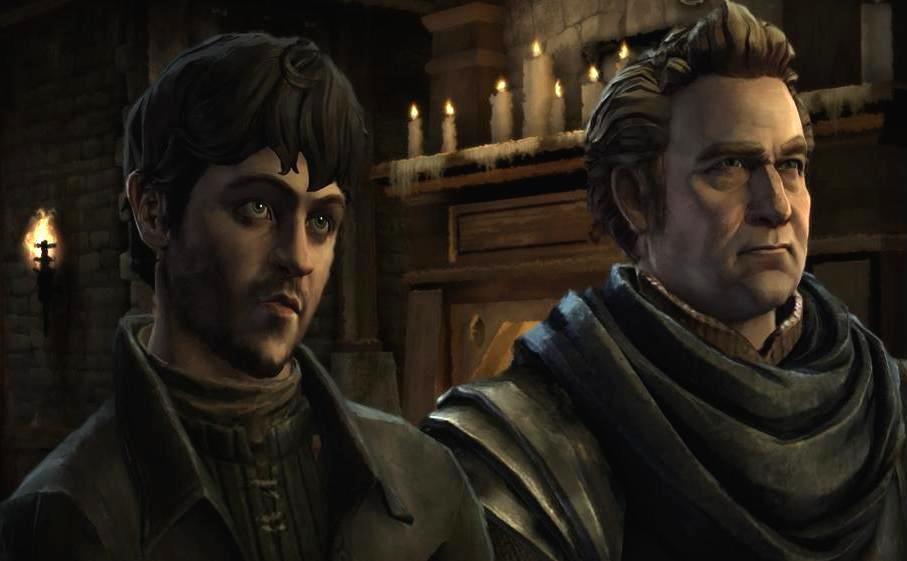
Given my tepid response to Telltales’ Game of Thrones Episode 1, I was unsure as to what to expect from episode 2, considering one of the characters you played as died right at the end of the episode, leaving next to nobody in the Forrester family left to lead the house back to good times. With this in mind, I began my next foray into the Forresters live’s with an open mind, expecting a lot of the brother fighting in the desert, as all hopes of the house rest on him.
So imagine my surprise when the game has a section that begins on the back of a cart, with you playing as Rodrick, the eldest son of Forresters who happened to fall at the battle of the Boltons tower, where everyone was slain. Turns out, he’s still alive, and happens to be very week. You control him as the cart makes it’s way back to the Forresters house, and it’s up to you to pull him to safety out of the cart to ensure people in the town find you. Once discovered, rufus takes his place as lord of the Forresters, ensuring the family at least has someone to look up to and lead the house back to nobility.
Starting in a cart full of dead people is never great, but at least reintroduced someone back into the story, enabling The Forresters a chance back at nobility and power.
It’s through Rodricks’ return that a lot of the big decisions unfold, with key alliances begging for your attention, as well as the continued aggression between your town and the alien Whitehouse’s inhabiting it. During the episode I had to try and woo and old friend/scheduled marriage to unite two houses, decide how to deal with the aliens in my town, decide how to react to enemies who demand I kiss their feet, and how to tow a line between being too weak to retaliate to enemies, whilst still showing how strong of a house we are. It’s all quite dramatic, and makes for some tough decisions, albeit decisions that so far don’t seem to have too much bearing one way or the other. The marriage proposal for example I failed, as I just couldn’t persuade the lady to marry me due to our house’s weakness, but from the looks of the statistics at the end, this could have passed, allowing your two houses to unite, making both stronger. I can’t help but this such a dramatic decision can’t have too much bearing on future episodes, otherwise the games designers would have to make twice as much game to cater to both situations, something we know just won’t happen.
Whilst it’s good to see another Forrester, this section of the game didn’t generally have any bearing on the actual plot, and served more as a device to spice things up when it came to an action segment of the game rather than dialogue.
Enough about Rodrick though, what of his brother in the east? Well this is the part of the game where you effectively just have fun. Asher starts out with a close friend, with the two of them being hired swordsman who have just captured a slave master for Khaleesi’s reward. Upon the arrival of the unsullied, who are meant to pay the ransom, you’re pushed into a fight due to the fact they aren’t paying what they agreed. This turns into an all out chase, as you’re reunited with an old friend from the Forresters that has come to return you home. Whilst Asher’s story is sure to have an impact on the overall narrative of the future episodes, so far it just felt like a good excuse to break up the dialogue sections of the game.
Mira is back in this episode too, with her trying to support the Forresters back home from the capital. There were a few decisions I decided to avoid, like forging a letter from Lady Margery to improve chances at the two houses uniting, but this was because of my actions in the first game. Everything for Mira seems pleasant during this episode, all until Tyrion decides to involve her in the negotiations for selling the ironwood the Forresters own. This causes enemies, ones that try to kill her in the middle of the night. Thankfully, you manage to get away after killing the guard that tried to murder you, and so begins the deception and lies in the capital, especially considering guards will now be after Mira due to her being seen in the middle of the night.
It’s sad to see all the Forresters together in their limited numbers, but if this episode is anything to go by, they seem to pop up everywhere just in the nick of time.
Finally, we have Garad at the wall, who must now become a member of the Nights Watch. Apart from some scrabbling with other members, not much happens for Garad, with this section feeling more like fan service than anything else due to Jon Snow’s inclusion in this scene. The conversation is hollow, but at least gives the player the ability to choose their own path with how they would like Garad to be seen going forwards. I personally chose for Garad to be truthful and reliable, but we’ll see how that goes in the future episodes.
Overall, the episode still felt clunky, with a lot of moments feeling hollow and merely there for fan service to say the game has taken place all over Westeros. Whilst the first episode was an ok opener to the series, this episode suffers the curse of being in the middle, starting plot points that never materialise until later. The Decisions I made still may never come to fruition as anything bad or good, but as per always we’ll just have to wait and see what the writers have in store for the Forresters, and whether my decisions have any effect on the end result.
So this week I finally managed to get around to reviewing Rubycone Games’ first title: Hektor. It took so long to be published as I was waiting for GamrReview to finally get merged with VGChartz.com, meaning the review should potentially get more hits as a result (this seems to be the case so far, with 1400 views on an indie game).
If you want to read up on my impressions of Hektor, go ahead and click the link below:
So this week I wanted to show you all something I’m very proud of reviewing: Ori and the Blind Forest for PC. It was a thoroughly joyful experience, one which I’ll definitely come back to time and time again in the near future when I want enthusiasm for games development.
So this week I managed to get a review copy of Hotline Miami 2 for the PC, and subsequently reviewed it for GamrReview.com. I enjoyed the game, but I couldn’t help but find it tedious, to the point that once I had finished the game I just didn’t want to go back. Regardless, you can read my review below:
Borderlands has always been a mixed bag for me, with my experience of the first one being forgettable and boring, but the second being exciting and addictive thanks to the local multiplayer nature of the game. Having played through all the DLC on both games, and about to play the pre-sequel one day, I can say I’m a fan of the series, but have never really loved the lore of the world. It’s mechanics are one thing, but the world isn’t really that rich with content due to the disposable nature of the characters that inhabit it. It surprised me to learn that Telltale were making a story based version of the game, mainly due to the fact I knew it would be a comically funny experience, but not one I could imagine lasting 15 hours. With only Episode 1 being available for now, I took the plunge and bought the entire season pass for the game at christmas for only £12, not bad for something that’s going to give me new experiences to come back to throughout the year, but has Borderlands made it through the transition of genre unscathed? Read on to find out.
You start the game out exploring as a chummy person who looks quite like handsome Jack, the protagonist from Borderlands 2, and head of Hyperion industries, a corporation that supplies ammunition and other items to the planet of Pandora. You’ll get knocked out, and upon being dragged, are asked to explain why you’re here by your captor. This starts your story, and finally introduces you to the character you’re going to be playing as throughout the next few episodes: Rhys, a Hyperion employee who is about to become CFO of the company after working his ass off for years. In this introductory sequence, you get to see the inner workings of the Hyperion space craft orbiting the Pandorian moon, which is quite nice to see there’s actually normal people working up there. Upon not receiving your promotion due to an ass killing your boss, you decide to take revenge on him by buying a vault key from the planet, the exact one he wanted. With the reasons for going to pandora sorted, so embarks your adventure of going down to the crazy planet.
Character introductions are as quirky as ever, with text on the screen always talking to the player like a comedian would standing in your room. It’s all comedic, and adds to the overall pleasantness of the game.
Rhys isn’t your only playable character though, so once Rhys finishes his part of the story, you’re introduced to Fiona, a local pandorian citizen her whole life who makes money by scamming people. She has a sister, and a father figure who taught her all the tricks of the trade, and is definitely unlike anything you’ve seen on Pandora before. Playing as Fiona was easily the more interested parts of the game, with new perspectives of the world given to the player, showing that it isn’t all fun and games, and not everyone’s a psychopath, people are trying to make a living, they just get outnumbered by the amount of psychopaths and weirdos you’ll usually encounter.
Both Rhys and Fiona’s story manage to combine, allowing you to get a complete picture of what has happened to the pair of them throughout this episode, and presumably, throughout the others still to come. Overall, it wasn’t the story that got me interested in the game, it was the characters, with Vault hunters like Zer0 having a part in the tail; the original new characters fit in seemingly well in this chaotic world.
New and old faces will welcome you to Pandora in Tales from the Borderlands, with each one adding to the overall hilarity and tone of the game. I hope the series manages to maintain this fantastic combination of characters and situations they then find themselves in.
Humor is a massive reason why I love the Borderlands series of games, with the first one being bland and normal, and the second one making me piss myself laughing. Thankfully, the tradition of humour continues to reign supreme in Tales from the Borderlands, with many sequences genuinely making me and my friend laugh out loud and stop playing the game at times. One of the best ways Telltale games have done this is through Rhys’ eye, which is able to scan the environment and give more context about the items within it. One of the best examples of this humour and context driven comedy is a museum, which had a gentleman sat in a chair with a sword through him. You can see it below:
Seriously, this had me pissing myself laughing. Such simple humour that manages to go so far.
It’s this humour that manages to maintain the pace of the game, with Rhys having grandiose ideas of how he’s the hero of the group, and his nerdy friend being too scared to do anything useful. It makes for a dynamic and interesting presence between all of the characters, one that I look forward to subsequent episodes that explores each of their personalities in more detail.
Overall the episode was a brilliant set up for a (hopefully) brilliant series. Everything fit together so lovely that it felt like a complete game in itself, not a part of a series. Decisions didn’t really mean much (unlike most other telltale games); the game was just fun and a treat to play.
Decisions don’t feel as drastic as other Telltale games, ensuring you just literally have fun.
So, should you buy Tales from the Borderlands? Whilst the price might be a bit of a stretch for many players on PS4 or PC, where you’ll have to invest in the whole series before you even know if you like the game, the Xbox One version gives you a chance to play just the first episode for £3.99, allowing you to technically try before you buy (albeit you’re buying up front anyway). I thoroughly enjoyed the first episode, and would gladly recommend it to anyone who enjoyed the humour and lore of Borderlands 2. As for if you wasn’t a big fan of Borderlands 2? Well I’m pretty sure you’re bound to find something you like in the game, with the characters and their personalities being the best I’ve seen in a game in a long time.
So this week I managed to get a copy of The Deer God a week before it’s official release, so went about reviewing it as soon as possible. Whilst original in it’s aesthetic, I thought the game was rather hollow considering how amazing it could have been given the mechanics involved.
You can read my review and thoughts on the game below:
Apologies for the look of the site at the moment, I need to go back through it and reupload all the images that are missing due to the amount of space everything was taking on the server.
Regardless, I managed to get a review copy of Roll 7’s latest game, OlliOlli 2, and went about reviewing it so fast that my review was up on release day at the same time as all of the big publications, GO ME!
I still remember the great days of Peggle, when I was introduced to it in my first year of uni. We all huddled around a friends laptop, competing between for hours laughing and cringing at insane luck and skillshots. Peggle was fantastic, so much so that I managed to get my whole family and a lot of friends hooked on it upon my return to Banbury. I downloaded the game on 5 different platforms, with it still to this day being the only game on my iPod video, a huge achievement for any game I might add (seriously, that device was NOT made for playing games).
When I heard that Peggle was finally getting a sequel, I was overwhelmed, until I read that it was going to be exclusive to Xbox One that is. It sucked, here was a game I would have willingly given EA/Popcap the full amount they were asking, and they put it out on the worst platform available this generation. Needless to say, I waited, until eventually I caved in, got an Xbox One, and picked up Peggle 2 in the Christmas sale for £3.99. Was the wait worth it? For the most part yes, but for most players Peggle 2 is not a guaranteed buy.
I enjoy playing as Jeffrey, but not because of his special ability like many of you would think. Jeffrey ‘s animations at the left of the screen involving the goats are fantastic, bringing me to tears at times.
Not much has changed in terms of the mechanics of Peggle 2 from Peggle, with you merely having to fire a ball at a bunch of pegs on the stage, clearing all the orange ones whilst trying to score as high of a score as possible. Green pegs still activate characters abilities, and purple pegs still cause a point bonus. Stages are familiar to Peggle, with some outrightly copy+pasted into 2 without a second thought, making you wonder what took the game so long to produce. So far not so good.
Where Peggle 2 does innovate and deviate though is in it’s characters and their abilities, which my oh my are they different and unique enough to experiment with and have fun all over again. First up on the new characters list is Jeffrey the troll, a mighty beast at the left side of the screen who’s special ability grants the player a huge boulder as a ball, smashing through anything it touches. This may sound similar to the dragon in the previous game, but differentiates hugely in the way that this boulder “stops” at the first peg it hits and plummets down, not carrying on it’s trajectory you planned originally.
Finishing a level with Extreme Fever is certainly more entertaining than the original, with the animations at the side making me chuckle with their cute and humorous gags.
Next up is Berg the Yeti, a character that makes the whole stage slippy, causing pegs you hit to glide along and hit/activate other pegs on the stage. Nifty on stages with lots of pegs, but not great on stages with straight blue pegs due to their inability to move. Gnorman the robot is next, with his power granting the player a electric ball that activates pegs around whatever peg was hit, possibly one of the best abilities in the game by far. Gnorman is easily my go to character for most stages, ensuring I can hit as many pegs as possible during my green ability turns.
Finally, there’s Luna, a zombie skeleton that has the ability to turn return all pegs back to the stage, whilst making all blue pegs on the stage completely invisible, highlighting only the orange pegs. Your balls are then able to travel freely to the orange pegs, whilst simultaneously destroying any blues in it’s path. It sounds like a strange power at first, but once you complete Luna’s trail, which has you using her ability on the final orange on the stage, you can see it’s potential: I managed to get 750k points easily using this powerup.
Weirdly, if I was now writing about the original Peggle, I’d continue listing the characters available to play with in Peggle 2. Problem is, that is all of them. 5 Characters in a sequel compared to 10 in the original is insane. Most products/sequels in the world work off the basis that you must offer your customer more than what you gave them before, to show them what they’re missing and give them better value. Not in EA’s wonderland. You can add another 2 characters to these measley few, but ones the squirrel from Peggle 1, whose ability is the multiball powerup, and the others a butterfly that gives you 5 points boost pegs to hit on the stage. Both of these characters are DLC, and each costs £1.59, which although isn’t an expensive proposition, is certainly annoying considering they could have been included in the base game in the first place.
Luna’s powerup is easily one of the most inventive of the bunch, with it not having an ideal time to be used, it can be used in a variety of situations. It’s gotten me out of many tight spots before, but should you leave it until the end of the level you’ll be in heaven when it comes to the scoring.
So what is available in terms of stages? Well this is where EA/Popcap have been cleaver, with 10 normal stages available per character, 10 trial stages per character and finally 20 stages for the master levels, making a total of 120. The normal stages are made even more replayable with 3 optional objectives to be done on each level, ensuring players come back for more even after completion of the main story. There’s a lot to be done it can be said then, but I’m not sure if I really will complete all side objectives. The stages just weren’t as memorable as Peggle’s; I’d be hard pressed to really remember any should you ask me, making for a boring experience throughout most of the campaign. Trial stages lighten things up a bit, giving you very strict instructions on how to beat said trial, whilst also pushing you to your limits in regards to characters abilities. They’re nifty, but short lived due to how few of them there actually are.
Given the limited about of content EA and Popcap have actually pushed into Peggle 2, is it worth your hard earned cash? Get it in a sale and I’d say yes, Peggle 2 can provide hours of entertainment at a great price with countless hours of replayability thanks to it’s trials and optional objectives. Get it at full price? Nope, don’t give EA or Popcap the benefit of paying more for a game that technically contains less. Most players are bound to find something they like in Peggle 2, but given the limited scope of content here, it’s harder than ever before to find that perfect character/stage combination, a frustrating endeavour for any player.
Given the amount of Telltale adventure games out there at the moment, and how much I love Game of Thrones so wouldn’t want the series to be ruined, I was sceptical at first about the new Game of Thrones Adventure game. It wasn’t until Sony had their 10% discount one weekend along with a sale because of their downtime over christmas that I decided to take the plunge and finally buy a telltale series whilst they’re still in development (instead of waiting until they’re finished like I usually do). So, with that being said, here’s my impressions on the first opening episodes (be warned, there will be spoilers throughout this).
Unlike other Telltale games, Game of Thrones will have you playing as multiple characters throughout the episodes, putting you in many different situations. You start out the episode as a squire called Garad who works for lord Forester, a noble knight who has allied himself and his army with the Starks. Your camp is based outside the Boltons keep on the night of the Red wedding (a part in the show/books where the Starks are effectively killed off from the series), meaning lots of death will be awaiting you in the first opening scene. Once the massacre ensues, it’s up to you to get out of the forest with information from the lord on what to tell your own uncle, something you don’t understand, and have to option to adhere to with the many decisions you now must make.
Eventually, you’ll come across your own family home, which has been ransacked by thieves from a competing family not too far away. In your desperation, you manage to fight off two of them, with a third one running away to tell his lord of your crimes against their house. Garads family is dead, and he must still make his way to the family’s (Forrester) household. It’s here that you learn that the new lord of the house is a young boy (about 15 in age) and is now struggling to be a lord with all of its decisions. It was taking control of Ethan that I had some of the more interesting moments in the series, with big decisions having to be made with next to no prior knowledge of what is right, and what is wrong.
The final character you take control of in this episode is Ethan’s sister, Mira, who’s at kings landing, and is a servant to Margaery Tyrell, the soon to be wife of Joefrey, king of the 7 kingdoms. It’s up to Mira to try and get support from the capital before the forresters rival family tries to take over their control of the forest of ironwood; world renowned for making the best ships and shields available. Mira’s part of the story is interesting, albeit fairly bitchy considering she’s at the capital and is being interrogated by Tyrian and Cersai Lannister. It’s an interesting break from what happens in the north, but starts to show the fractures in Telltale’s story telling in their games, with your decisions really having no impact on how the story actually unfolds. I suppose it’s genuis that they actually make you feel that your decisions will have consequences, but with so many games under their belt now, you’re sure and know these stories will play out the same regardless of what you do.
Eventually the game puts you back in Ethans shoes, pushing you to make decisions which will effect the whole family and your subjects. I have to admit that at times I struggled for an answer when presented with multiple decisions, but eventually said I would meet the new warden of the north in my hall, since the family doesn’t have much of an army and is just trying to get into the Lanisters good books after being loyal to the Starks for so long. After a length dialogue, the episode ends with Ethan being stabbed, a conclusion I found disappointing considering how well I believed it had gone up until that point, but a conclusion that apparently happens to everyone that plays the game, regardless of the decisions you make.
So, what did I think of the episode, and Game of Thrones translation to a adventure game series? Well first, it sucks that you need to be watching the TV series or reading the books in order to truly know whats going on in the game. I understand companies want “transmedia” content, but when many are pushed away from a game purely because they don’t have any knowledge outside of that game, it just sucks as a whole in my opinion. As for yet another game being made by Telltale games? I can’t help but think they’re being stretched pretty thin from a company stand point, with many of the scenes feeling underwhelming or outrightly blunt due to lack of funding or lack of staff available to make assets. One example I did not like was getting Garad to try and look outside the Forresters house window to the accompanying ironwoods behind, only to get Garad seen from a different angle to mutter the words “wow, look at the ironwoods”. It just felt.. bland to say the least, and severely limiting considering what we’ve come to expect from the TV series with all of its bells and whistles.
So is Game of Thrones a worthwhile purchase? So far, I’d say no. Granted, its nice to see the kingdom of westeros from a different perspective, especially from a new family standpoint who are effected by the bigger events in the show. But for all of it’s big branding, the game feels underwhelming so far, with decisions that ultimately amount to nothing. For a game whose entire premise is the decisions you make, time will only tell if Telltale games manage to put more effort into branching the story depending on what you choose to do, as it’s the biggest advantage gaming has over other mediums: the ability to choose and be an active member of a story rather than a passive onlooker.
Carrying on with my moniker of playing old games I’ve always wanted to, I found the Unfinished Swan had been released on Playstation Vita and PS4. At £5, I couldn’t miss the offer of finally giving the game a go in stunning 1080p 60fps, considering I’ve always heard it’s an artistic game. Having completed the game and collecting majority of the collectibles, I feel I should give some opinions on the quality of the game and how I felt my time with it went.
The story of The Unfinished Swan was unique and lovely, comprising of a little boy who’s mother has recently passed away, and is only able to take one of her many unfinished paintings with him. The painting he chooses is the Unfinished Swan, a painting thats beautiful, but with a missing neck. It’s through these paintings that the story of The Unfinished Swan will unravel, with the whole game feeling like you’re playing through a children’s fairy tale book. It’s charming, and certainly keeps you hooked for the 2-3 hour long campaign it has, and offers enough variety as to make sure you’re never bored by it’s splendid presentation.
The first stage in the game has you painting an entirely white world with black paint. It’s a fantastic mechanic, one which looks rubbish at first as you can’t see detail on items, but takes on the looks of a painting once you stand back and see what you’ve done.
Each level in the game has it’s own mechanic all tied around the capacity to shoot little balls of paint or water wherever you go. The first level for instance compromises entirely around the mechanic of seeing where you’re going by painting the pure white world black. The second stage takes this one step further by giving you blue water balls, by which you can then interact with vines and grow them wherever you’d like to help you with your progress. The third stage has balls which can create “blueprints”, giving you the ability to make cubes of varying sizes depending on where you fire the balls. For a game whose advertising seemed to be based around the painting mechanic, the developers at Santa Monica managed to pull of some unique mechanics.
The Unfinished Swan is stylish in every sense of the word, with detailed and lovely environments brimming with life, it’s no wonder I found so much good coverage for the game around it’s original release. Frogs and animals you encounter look strikingly abstract, but alive, ensuring you’re constantly on your feet as to when you’ll next encounter another living thing. Throughout all of the story you’ll be chasing the swan from your mothers painting, with it’s gawks seemingly coming from nowhere at times, it leads you through the marvellous world the game has to offer.
The vines levels were some of my favourite, with the game giving you freedom on how you wished to proceed across an obstacle. Although there was only one solution, it still gave you the freedom to find the solution on your own.
Most of the game is fairly linear, with most levels just compromising of a series of corridors getting you from point A to point B. Where The Unfinished Swan deviates from this linearity though is in its ability to make each players experience different and unique purely from the fact the mechanics like the paints aren’t constrained so to speak. Granted, the mechanics are constrained within the confines of the stage as a whole, but how players paint the level or obstacles is different with each play-through. This in turn could show some similarities to real painting, with each brush stroke being different from person to person, with the end result always looking different as a result of that work.
Once you’ve finished the main story, there are always reasons to revisit, with collectible balloons hidden throughout the world you’re bound to come back a few more times. Collecting these balloons also counts as currency to use in buying abilities used throughout the story/chapters. Most abilities aren’t available until you’ve completed the game once, but given that they’re fairly game breaking in nature (e.g. you’re able to summon the cube making balls anytime in the game, by-passing massive obstacles on your way) you can understand why. Once completed I bought the ability to travel to any chapter, along with a hose for the water levels and the balloon hunter, which tells you when you’re close to a hidden ballon, making it easier to find the last few.
Environments are gorgeously rendered in The Unfinished Swan, with massive cities just as awe-inspiring as little woods and houses.
So, should you play The Unfinished Swan? I believe so. Given its game length (easily completable within a few hours) and unique story and style, I’d be hard pressed to tell you any reasons why you shouldn’t buy or even play the game. It’s shortness may deter some players who aren’t willing to fork out upwards of £10 for it’s RRP, but if it ever goes on sale again I’d recommend it. I thoroughly enjoyed myself, and see what all the fuss is about.
So this week, I managed to get a review copy of Life is Strange on the day of release, so proceeded to play it asap and get a review out. Whilst I thoroughly enjoyed the game, I’m concerned where the story is going, and fear it may be a completely different game to what Square Enix advertised.
As always, thank you for your continued support, and should you ever want to ask any questions, please don’t hesitate to shout out to me on Facebook or Twitter, or even my own contact form on this site!
So, in writing on my blog for 2 years now and writing for gamrReview.com for almost a year, I had never actually gotten around to interviewing a developer in what it took to make their game, and other questions consumers may have in mind for making a viable purchase of said product. Thankfully, out of nowhere I got an email from a PR representative on behalf of Rubycone Games who wanted to see if I’d be interested in an interview. I said yes and jumped at the chance to do this, and below, you can go to the published end result:
A few things I’ve learnt for future interviews though:
Make sure the software you use doesn’t corrupt any recordings you make, you’ll want to come back to the interview time and time again to ensure accuracy, or even a written transcript, something I couldn’t do in this example due to software problems.
Prepare well ahead of time, and give yourself half an hour of relaxing time before the interview to ensure you’re clear headed to ask the correct questions (Skype fucked up for me and had a problem signing in, meaning I was running around worrying for half an hour).
Write all questions well in advance, ensuring if you need to add to them you can.
All in all it was a fantastic first interview, the first of many I hope. Time will tell if this becomes a regular occurrence.
This Friday, expect a review of The Unfinished Swan for PS4.
The whole game is summed up in the title. It’s genius really.
Having seen Race the sun ages ago, I was interested at the offset. Here was a stylistically simple game, but with what looked like a complex and tough gameplay implementation. I didn’t buy the game straight away, and if I’m honest, I wish I would have kickstarted it, but alas, I waited a while and finally brought it on the humble store when it was on sale this past Christmas. Am I glad I bought the game? Hell’s yes I am! Flippfly deserve every penny of what I spent on Race the Sun, something I wouldn’t say all too often with most of the game I play. Read on as I explain what about Race the Sun drives me to this conclusion.
The game is centred around a plane that is powered by the sun, constantly moving forwards whilst avoiding obstacles. Speed increases to a certain point (dictated by how long you’re in the sunlight), to which the game stays strikingly hard until you crash into an obstacle and die instantly. This instant death mechanic keeps the player coming back for more, knowing that the game isn’t fobbing them off and it was actually their own fault they died. It’s a hooking mechanic, one which kept me playing for hours after I should have stopped many nights.
When the Sun’s like this, you better get your arse in gear, cause you’re next to death son. Only yellow star items can help you out in these situations.
Since your plane is powered by the sun, Flippfly studios wouldn’t want to make it too easy for you to play their game, so the sun that powers you is constantly setting into the horizon, making shadows on the stage longer (shadows limit your speed and kill you should you stay in them long enough) along with making it harder to avoid obstacles or get a higher score. It’s a lovely mechanic, one which keeps you not only on your toes with the obstacles, but also on your toes looking out for the items you can get to help you on your way through this weird and wonderful world.
You see, items help to not only improve your game, but to also keep the game going and making it interesting. . You have blue pyramids that you can collect to multiply your constantly increasing score, Yellow star shaped items that increase the amount of time the sun is up in the sky whilst also giving your plane a boost in speed, a green crown shaped item that allows your plane to jump. and finally a purple shield that can be otherwise known as an extra life. All these items ensure you’re constantly aware of whats around you, not only trying to avoid your imminent death, but also checking to see if you can grab any items that are nearby to give you the advantage.
Dodging all the obstacles can somethings feel impossible, but thankfully the developers usually give multiple ways out of any situation, helping you out greatly if you can think fast enough to react.
So far I’ve only talked about the mechanics, and that’s because the Race the Sun is all about the mechanics. Even the objective system, which is reminiscent of mobile games like Tiny Wings on iPhone, helps to create a feedback loop where the player is pushed to achieve the objectives (e.g. jump 20 times in one run), only to be given more items or skills in playing the game again. It’s a perfect loop, where players are encouraged to play more to unlock more to then progress further. It’s highly addictive.
Once you’ve played the game enough and gotten to a high enough level, Race the Sun will give you a new stage called “Apocalypse”. This new stage is extremely hard, being twice as fast as the original, with all manner of the hardest obstacles appearing from the offset. It’s not for the faint hearted, but was certainly challenging and fun once you start to master it on a given day.
The reason I say “given day” is due to the very way levels are built in Race the Sun. Although the stage is randomly generated, it’s generated from a seed that the developers push out to everyone’s machine daily. This seed will determine what each region will hold, so you can at least start to master the patterns of obstacles you’ll encounter. I found this aspect of the game just as intriguing as the rest, as I could never really feel comfortable, having to constantly change my tactics due to new layouts. It was refreshing.
The Apocalypse level was ridiculously hard but addictive, ensuring I came back time and time again just to master this fiendish stage.
So, with Race the Sun being made available on most platforms now (PS4, PC, Linux, PS3 and PS Vita), should you part with your money to play it? Well I for one completely understand some people being hesitant about paying $9.99/£6.99 for a game thats essentially a ported mobile game, but I can’t help but feel to surmise Race the Sun to it’s core mechanics is missing everything else it does so well. The feel of the craft and the precision gaming are fantastically hooking, so much so that you’d be hard pressed to find this simplicity elsewhere on the market. Should Race the Sun ever drop in price, either permanently or for sales, buy it, as I feel you won’t regret the time you spend with it.