Author: Dan

  • Weekly Gaming: Doom (PC)

    Weekly Gaming: Doom (PC)

    Hey all!

    So this week I’m looking at ID’s latest take on Doom on the awesome platform that is the PC. It’s hard to put into words how much I genuinely love this game, and how I lost an entire weekend to the game when I really didn’t expect much.

    So without further ado, go read my full review at the link below!

    http://www.vgchartz.com/article/264338/doom-pc/

    For those of you who are interested, I felt that this review was so different to the original draft I posted that tomorrow I’ll be posted an editorial on the edits that happen to a review before it’s posted over at VGchartz.com. It’s gonna be a long article, but I hope it’s worth it to many of you out there that would like to see the difference.

    Until tomorrow!

    -Dan

  • Weekly Gaming: Tembo The Badass Elephant (Xbox One)

    Weekly Gaming: Tembo The Badass Elephant (Xbox One)

    I know I know, it’s weird hearing that Game Freak made a game that isn’t Pokemon, but here we are with Tembo The Badass Elephant. After having just spent 6 and a half hours 100% the game, I have to say, what a weird confusing experience it’s been. If this review seems a bit all over the place, then I apologise, but Tembo The Badass Elephant has unfortunately frazzled my brain.
    vlcsnap-2016-03-13-19h17m18s107

    The game starts out easy enough, with the graphics being somewhat charming, and with the story being funny and nowhere near serious in any way. A group called “phantom” has invaded a peanut shaped land, and is holding all civilians hostage. The lands general, in need or urgent help against these bad people, calls in someone he used to work with whilst he was in the jungle.

    In comes Tembo, and with this huge elephant, a whole new way of playing platformer games. Due to Tembo’s size the platforming mechanics have had to be reworked. You don’t need to worry about many walls or enemies, as Tembo will just triple through them with relative ease. So with the core mechanics changing in this way, how does Game Freak manage to make a challenging and compelling game? Through variety and collecting.

    vlcsnap-2016-03-13-19h17m03s215

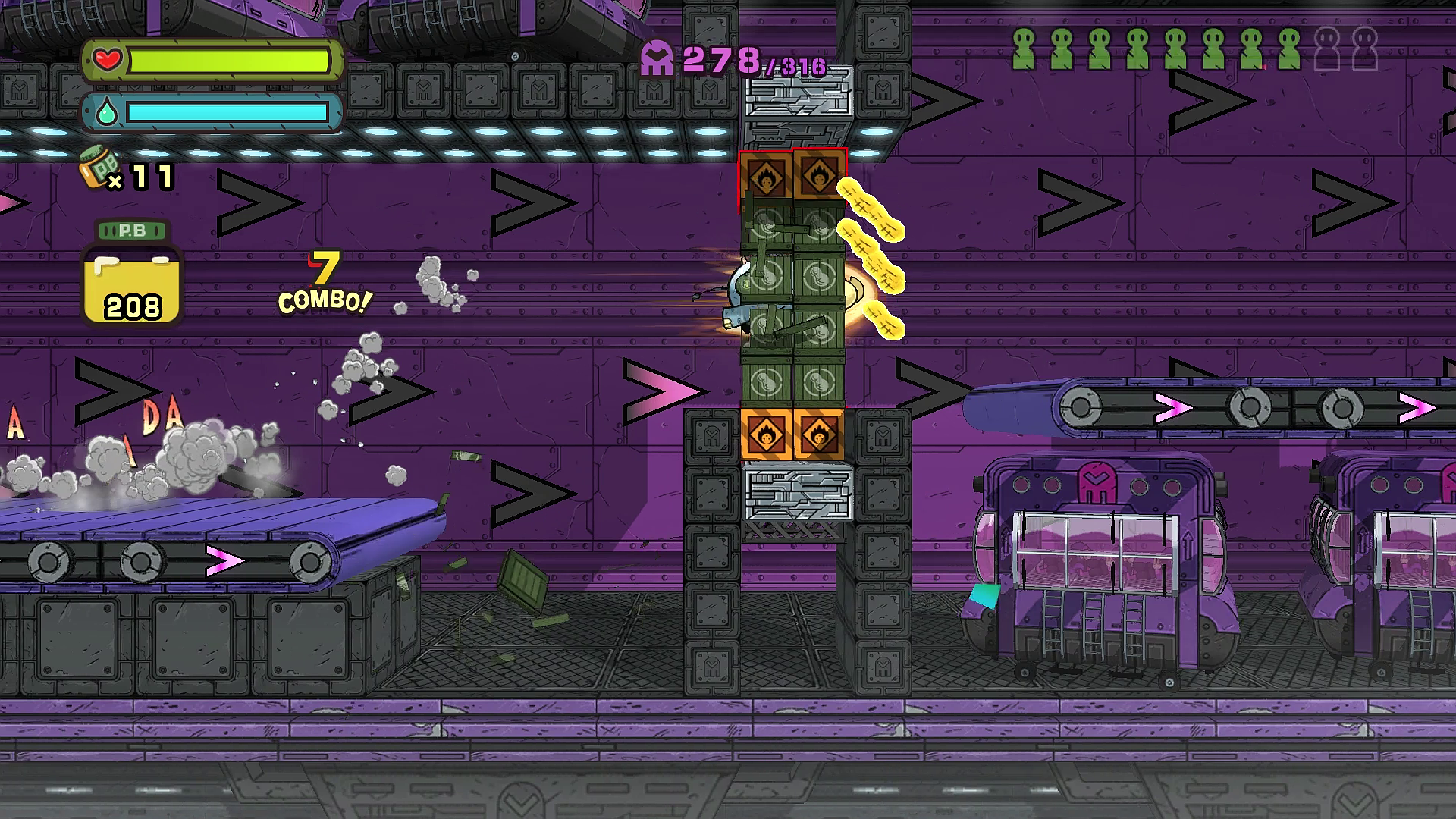
    Whilst core enemies are of no concern, Game Freak have made a variety of different enemy types, all of which are easy to deal with A mano a mano, but the second these enemies start grouping together you’ve got a fight on your hands. Take for example the flamethrower grunt; his attack is straightforward and easy to see through: simply wait for him to recharge his flame, and rush into him. Seems simple enough, but when you start putting this very same flamethrower man alongside robots that glide, and bomb throwing grunts, you start having a very challenging time.

    That’s not to say Tembo isn’t without his own array of arsenal. Using his hulking size, you’re able to sprint through enemies, slide, uppercut and finally spin dash at them (the last move is similar to sonic; jump and press x to lunge towards enemies as a ball). These attacks are all the arsenal you’ll need against both terrain and enemies, but use them wisely: i found myself dying far too many times because I was trigger happy and would press the X button before touching the ground, leading me to spin to my death.
    vlcsnap-2016-03-13-19h17m42s93

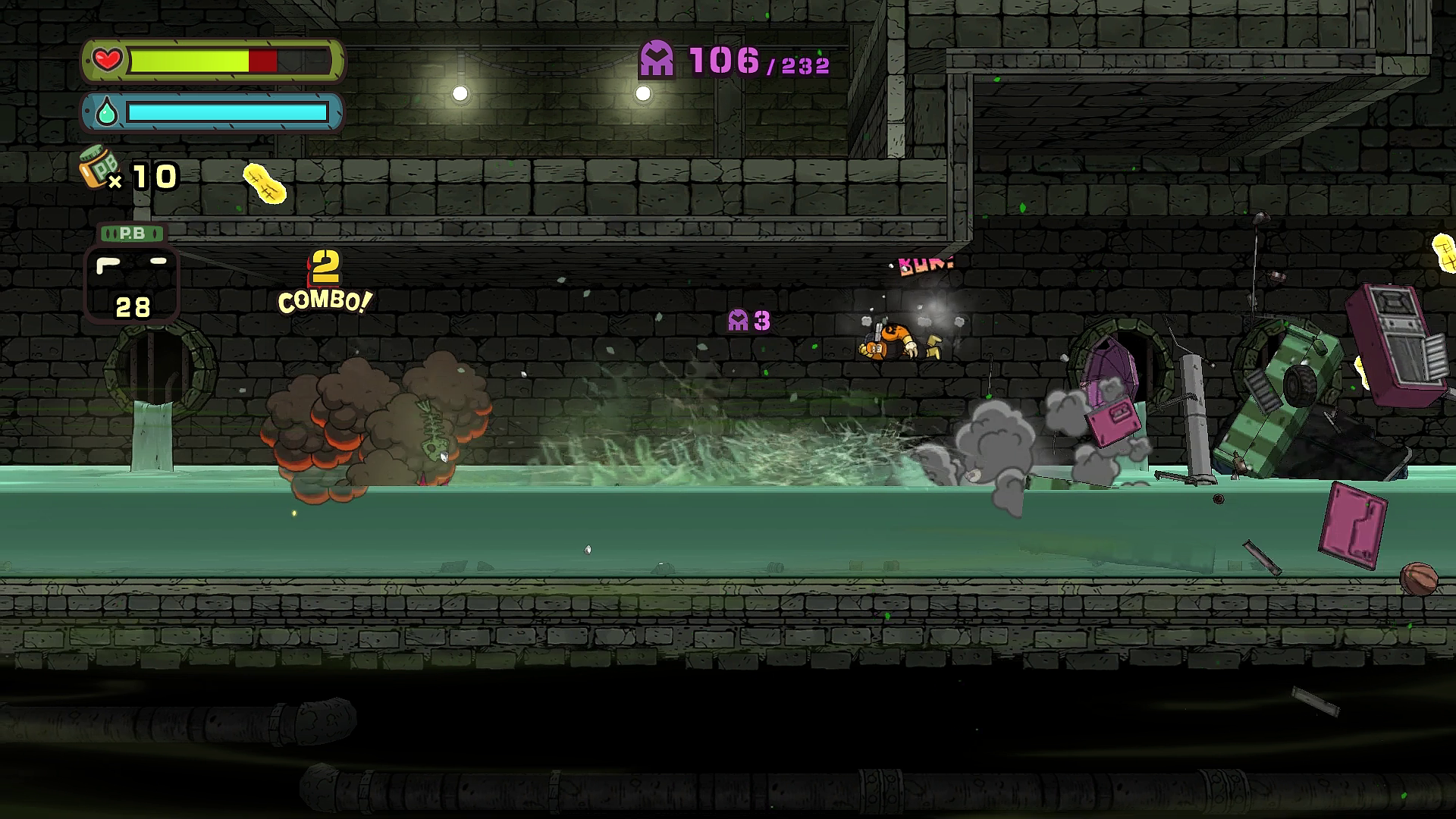
    Along with Tembo’s abilities for movement is his ability to use water from his trunk to put out fires. Whilst this mechanic is shown off at the start of the game as a brilliant way to differentiate it from other platformers, I found it was rarely needed throughout the campaigns 17 levels. Wherever there was fire, there was a way round it.

    The collecting part of Tembo is what got me so hooked on the game, and kept me coming back to levels time and time again. There’s two collectibles on each stage: 10 civilians to collect, and kill every enemy within a stage. The two kind of go hand in hand; each time you collect a civilian, you’ll have 10 phantom points added to the total number of enemies you’ve killed, meaning you’ll need to get everything a level has to offer if you want to get all the medals.

    vlcsnap-2016-03-13-19h18m09s101

    There are boss fights throughout, and I found them actually rather challenging compared to most levels. Sure, the first boss fight can be done easily, but every subsequent one took me at least half an hour; a brilliant sign of their difficulty in putting your knowledge on how to control Tembo to the test. I found the final boss especially frustrating, mainly due to the lack of checkpoints throughout his many stages; a true testament to testing the abilities you’ve mastered.

    The stages were aesthetically pleasing for the most part, but ignorable all the same; for the vast majority of the game you don’t really notice what colour the ground is, or whether you’re in a city or forest; all that matters is killing every enemy, and charging through, making sure to look out for breakable walls or collectible civilians.

    vlcsnap-2016-03-13-19h21m26s24

    If there was any gripes I could have about the game, it would be in how temperamental the controls were; the spinning dash sonic move could just have easily have been remapped to the Y or B button to make sure players didn’t accidentally press it whilst in a pickle (Like I did far too often).

    With the game currently on sale as I write this, is Tembo the Badass Elephant as Badass as Game Freak like to think? Yes, albeit be prepared to get frustrated throughout, as you’re in for a challenging difficulty curve throughout the game’s 6 hour campaign. Platforming fans who enjoy collecting should really enjoy Tembo, but if you’re put off by collecting and don’t like fickle controls, it might be worth looking elsewhere.

    4/5

  • Weekly Gaming: Q.U.B.E Directors Cut (Xbox One)

    Weekly Gaming: Q.U.B.E Directors Cut (Xbox One)

    It’s been a while since I last played a puzzle game for the hell of it. I ended up playing 1010! just for the competition of beating my friends, but otherwise, I haven’t exactly gone out of my way to challenge my mind. After having a productive week in regards to games development and work relating things, I decided to dedicate my entire Saturday night to playing and completing a game. So, sitting in front of my Xbox One, I decided to look back through the many games I’ve purchased and never played, and happened across Q.U.B.E, by Toxic games.

    vlcsnap-2016-03-13-00h48m46s32

    I’ve seen the game multiple times in the last few years, but always dismissed it as “just another portal ripoff” before going about my day. It wasn’t until the Develop conference in Brighton that I finally started paying attention to the game when I met Dan Da Rocha. Having spoken to him and then going off and watching some trailers, I decided I would buy the game, and one day (time pertaining) would give it a play. Suffice to say, I’m glad I did.

    The game starts out like a typical indie game: you’ve lost your memory, and are in a strange simplistic (aetsthically speaking) place. You walk along and start getting voices radioed to you: apparently you’re in a space station which is close to earth and have been tasked with destroying this alien station for the benefit of all mankind. Walking on, you find a room which makes you go into sectors, with the first sector teaching you the basics of the game; namely cube manipulation.

    vlcsnap-2016-03-13-00h49m11s39

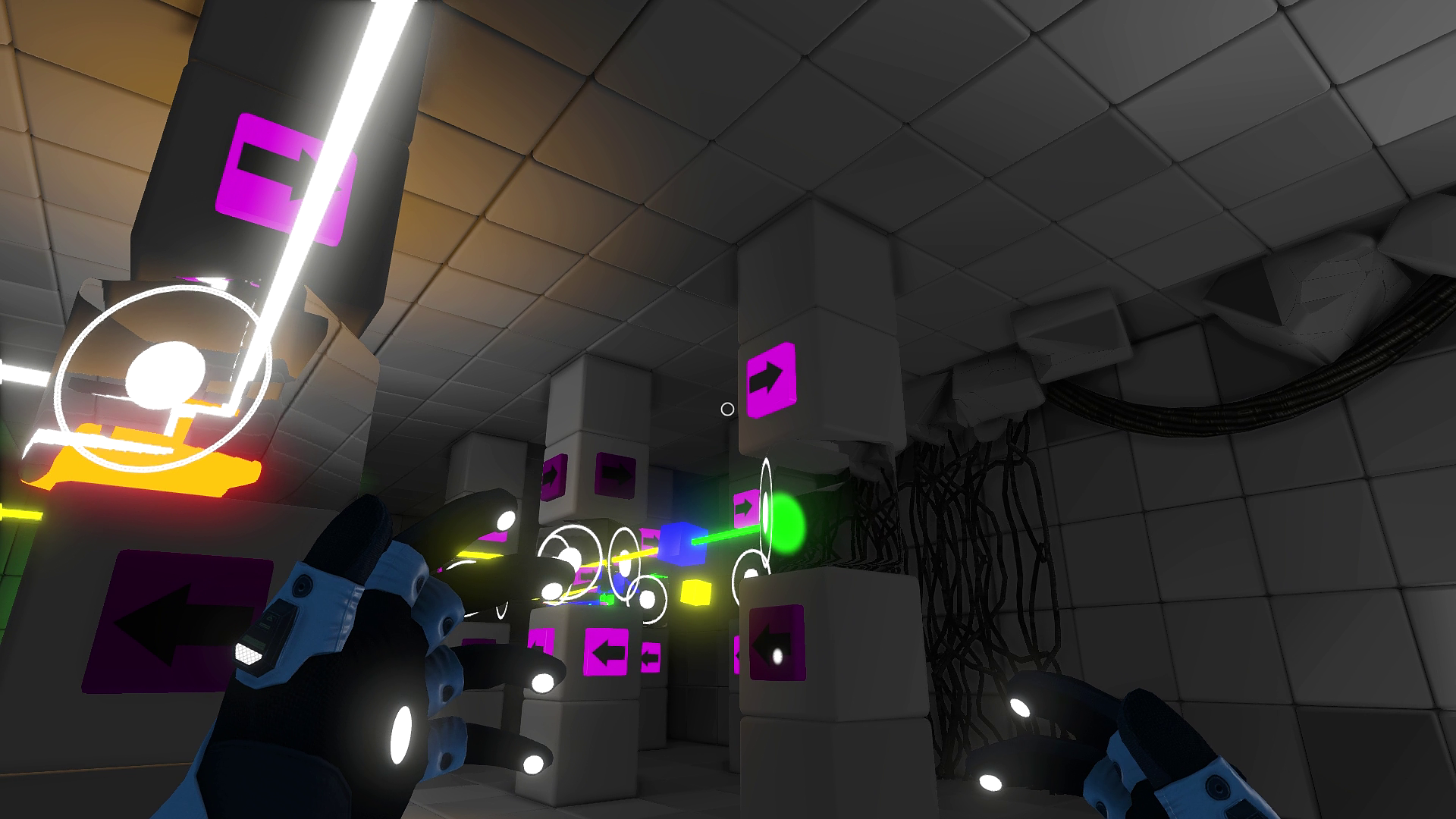
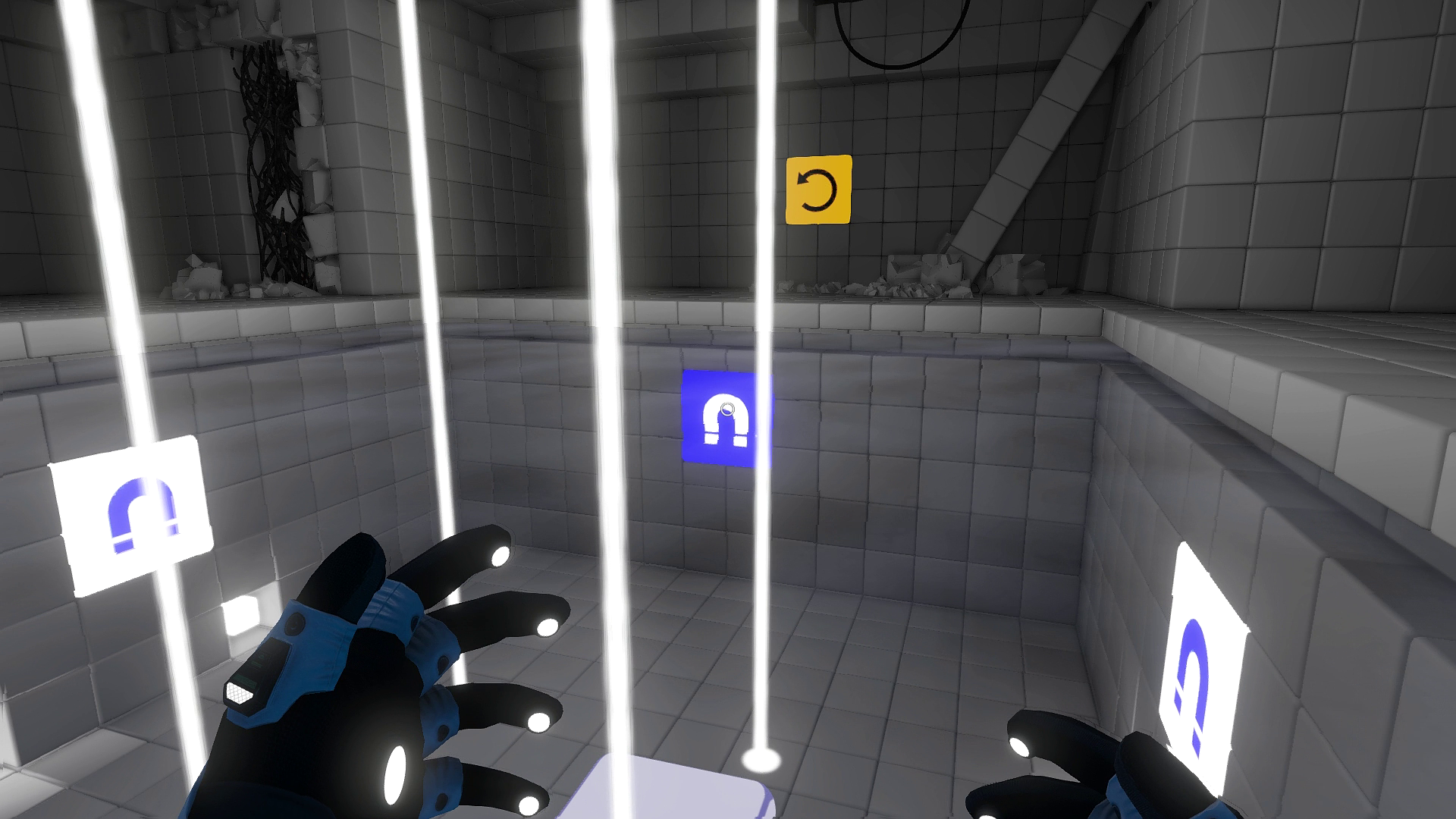
    You see, QUBE (which stands for Quick Understanding of Block Extrusion) does what it says on the tin. You must make your way from point A to point B (the exit) using blocks that extrude from the walls and floor. Each colour of blocks behave in a different way: red blocks are regular and extrude one press at a time, yellow extrudes as a group, blue as a spring, and purple as a room rotation. Using different combinations of these blocks will allow you to traverse the environment, and in turn, get to another sector.

    When I write it down like that it makes the game sound a lot easier than it actually is, but with each new sector comes a new way to use and present this basic building blocks. Sector 4 for example turns out all of the lights, meaning you can only see the colours of a set of blocks when you turn those specific blocks on. I thoroughly enjoyed a sector where you played with exposed electrical wires; multiple grayed out coloured blocks would be laid out before you, and it was up to you to use your block extruding techniques into guided these wires into powering the grayed out blocks. It was thoroughly enjoyable, and made for a new way of looking at the world.

    vlcsnap-2016-03-13-00h48m56s151

    I didn’t feel the graphics was anything great throughout my playthrough; yes, the cubes look polished and the presentation is slick throughout, but at the end of the day, you’re still only looking at a bunch of basic cubes, something modern game engines can do with relative ease. I did enjoy the music though (whenever it made an appearance), as it’s mellow tones and sometimes dramatic bass made the experience feel more alive and serious, something I would never thought I’d say about a puzzle platformer.

    The story, to, is actually fairly complex and some great icing on an otherwise tasty cake. The back and forth between two characters saying things completely at odds against at each other leaves you as a player constantly guessing as to what the true intentions of the facility really is. Even in the games final moments, I genuinely didn’t know what was going to happen. It was exicting, and another reason to keep me motivated throughout the games 2 hour play time.

    vlcsnap-2016-03-13-00h49m21s133

    I suppose what I enjoyed most about Q.U.B.E was the fact that no one thing ever felt out of place or every overstayed its welcome. Puzzles and new mechanics would be shown to the player fairly frequently, pushing them to learn a new method of getting past a section in a short amount of time. Each new mechanic would be iterated time and time again, meaning nothing ever felt repetitive, despite the core building blocks of the game (protruding red, blue, yellow and purple blocks) being exactly the same. It’s extremely clever, and I have to had it to the guys at Toxic Games; they done a fantastic job.

    So, is Q.U.B.E a game I should have played when it first come out? Doing a little digging around on Google tells me I made the right choice by playing the game now; the original game (not the directors cut) had no story, and no voice acting, meaning the game was 100% about the puzzles. Whilst these puzzles are good in their own right, I can’t help but feel the game would have felt a little more boring if they were the only thing to experience. Should you not have played the game by now, by all means give it a go; I know I’ll certainly be getting my other half to play the game since she loved portal so much, and I hope if you do play the game, you feel the same way.

    4/5

  • Weekly Gaming: The Walking Dead: Michonne: In too Deep (PC)

    Weekly Gaming: The Walking Dead: Michonne: In too Deep (PC)

    Hey all!

    I wanted to do less episodic gaming this year (as I swear I played far too many episodic games last year, which is kind of cheating when you’re meant to be completing a game a week!), but here I am, playing another Telltale episodic game. My reasoning for this one is that VGChartz.com needed someone to review Michonne, and since I’ve recently completed watching theTV show from scratch, I wanted to see how one of my favourite characters played out in a game.

    http://www.vgchartz.com/article/263526/the-walking-dead-michonne-episode-1-in-too-deep-pc/

    Unfortunately, as my review above will attest, it does not turn out well at all. When you make a character driven series like The Walking Dead, you have to make sure you actually care about the characters, something Michonne doesn’t allow you, as the player, to do in any way, shape or form.

    If I had to give the game a score out of 5 (like I usually do), I’d give it a 2/5 so far, as it genuinely doesn’t live up to any expectations the previous telltale games set.

    Until next week!

    -Dan

  • Weekly Gaming: Captain Toad: Treasure Tracker

    Weekly Gaming: Captain Toad: Treasure Tracker

    SI_WiiU_CaptainToadTreasureTracker

    I say games are charming quite often on this blog, and with most of these games I usually see them in a positive light. A lot of indie games come under this category, mainly because their aesthetic is so fantastic and cute that it leaves an impression that bypasses the actual gameplay. In these instances, the gameplay could be horrendous, but with the aesthetics looking so damn gorgeous I proceed to overlook a few grievances that would otherwise degrade the experience as a whole (I still write about the gameplay problems, but my overall score may be slightly higher due to the aesthetics alone).

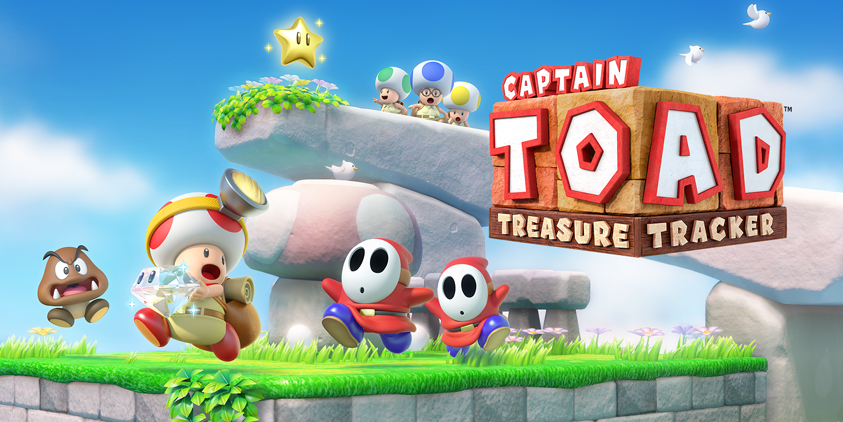
    Captain Toad manages to be both a charming game in the aesthetic department, as well as in the gameplay one. It’s combination of simple mechanics with oh-so troubling puzzles makes for one of the best experiences I’ve had playing with another person in a long time.

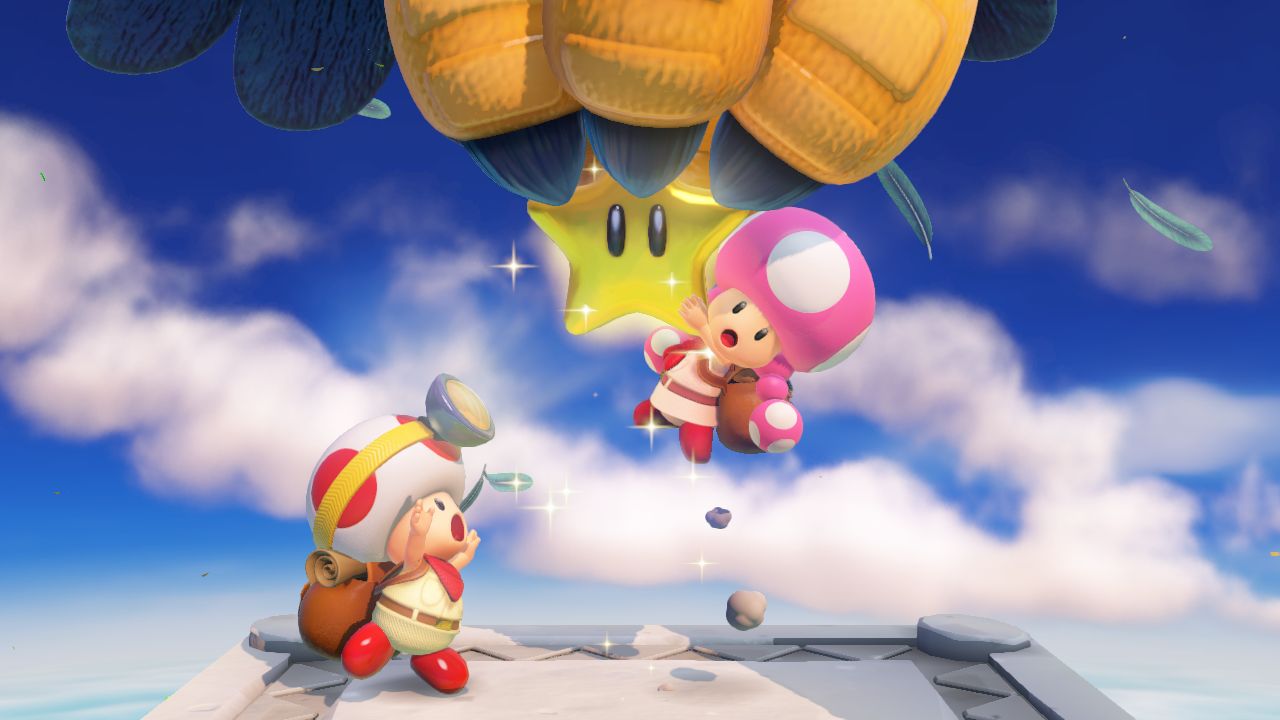
    So where to begin? Well from a story standpoint, there isn’t much to be had here. Like many Nintendo games the story is rather light, with Toadette being stolen by a giant evil-looking bird being the main reason Toad starts off on his adventure. This story flips back and forth throughout the game’s 70-odd stages, with Toad in turn being stolen, meaning Toadette has to take her turn at trying to rescue her other half. At the end of the day, the story is not necessary to enjoy Captain Toad: Treasure Tracker at all, so it’s mostly here to service a few fans with cute cut-scenes here and there.

    toad-main

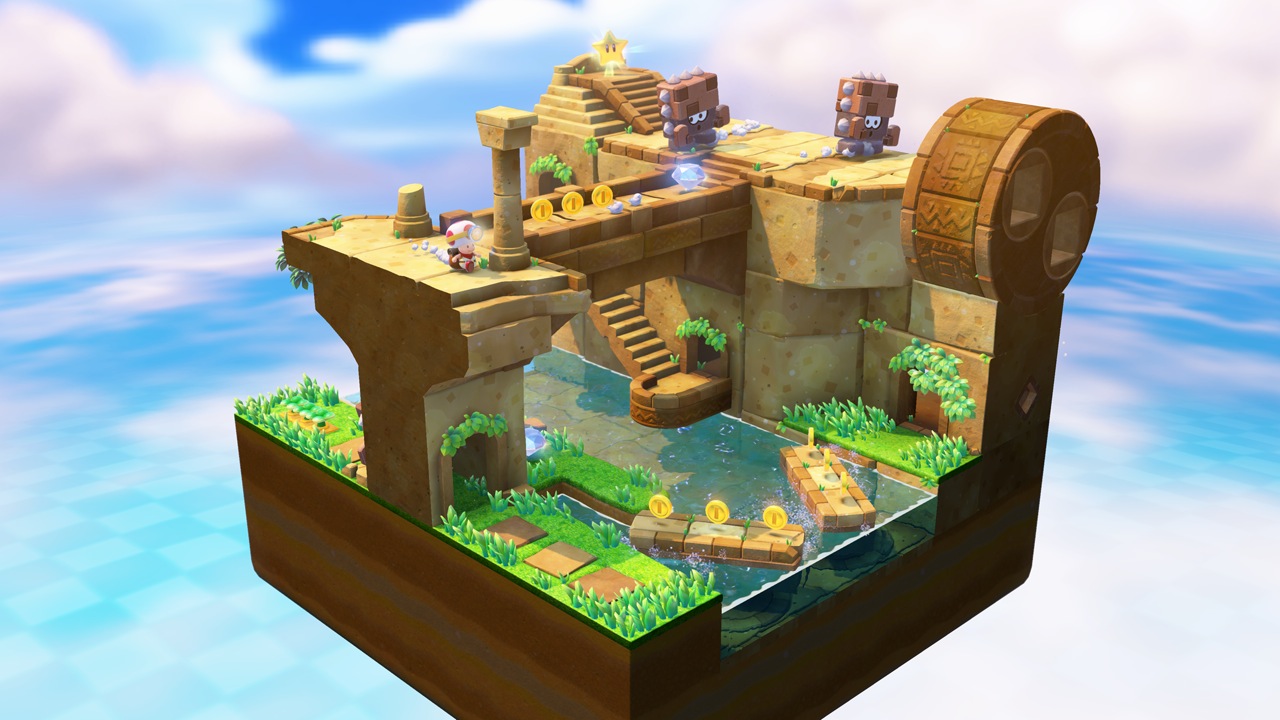
    The gameplay revolves around Toad (or Toadette!) having to navigate around a small map, all whilst collecting 3 diamonds and making their way to the golden star at the end. Each stage is extremely small, with most being able to be completed within 2 to 3 minutes should you brisk your way through them.

    These stages would be easier if it wasn’t for the limitation that Toad (and Toadette!) cannot jump. This limitation (which I believe is explained through the fact Toad has a large backpack on that holds lots of coins), helps to make every single stage extremely interesting and complex. Trying to get to a diamond which is hidden at the top of the stage becomes a chore of puzzle solving rather than action, which is great, as it gives you just as much time to take in the stunning levels with all their intricacies.

    My oh my how the levels shine! They are genuinely a testament to the amount of polish and attention to detail Nintendo can put into a game after all these years. Every blade of grass, every brick in a wall, and every character that moves about the screen is all so stunningly rendered I have no idea how Nintendo could make anything prettier in the future. This is pixar, but given to the user to control at their own pace.

    2558115-wiiu_captaintoad_scrn01_e3

    Whilst most of the campaign/story’s will entail making your way across these tiny stages, there are some deviations. These come in the form of some literal on-rails sections (where toad must throw turnips from a train cart at enemies throughout a course), and some boss encounters. These stages really help to mix up the campaign, with the same rules applying (no jumping), it makes for some challenging encounters.

    Captain Toad: Trasure Tracker isn’t without its faults though. One annoyance does manifest, and it’s in the game’s hidden mode. Titled “Hide and seek”, this fantastic little addition to each level is hidden behind a barrier: you must own the Toad amiibo. Tap your amiibo to the wii u gamepad on a level you’ve already completed, and a pixelated toad will invade it, with your soul objective being to find him somewhere within the stage. It’s a shame that for a lot of people that just bought the game without the amiibo they’ll never see this mode, as it’s easily the most fun I had with the game. Me and my partner would swear consistently as we scanned every nook and cranny of a course trying to locate a little pixelated Toad, calling him a little shit when we’d find him hiding behind a rock or a fucker when we’d find him jumping between windows. It’s seriously such a good game mode I’m tempted to try the gameplay idea myself with an iOS/Android game doing exactly the same.

    One other annoyance with Captain Toad: Treasure Tracker is it’s lack of difficulty. Whilst the puzzles are brilliant, and each level is masterfully designed, there just isn’t any challenge to the game. Yes, there may be times I would spend an extra minute or two staring at a stage wondering how to get to the final diamond, but overall these moments were few and far between. Maybe that’s a testament to Nintendo’s fantastic level designers, but for me, I genuinely wish it could have been harder so that I’d have spend more time taking in the gorgeous levels.

    2733255-captain-toad-treasure-tracker-2

    There’s plenty of replayability though, with each level having 3 different things to collect. There’s the star (which is always the end of the level), the three diamonds, and the optional objective. You’re not able to know the optional objective until after you’ve finished a level, so many times you’ll need to go back in again to do it. All three of these optionals should be enough to keep you entertained for hours, but with only one disadvantage: you’ll wish there was more once the games credits has rolled.

    Despite my grievances and as I said at the start of this review, the charm of Captain Toad Treasure Tracker manages to really pull through. Taken in it’s entirety, Nintendo have managed to make one of my favourite games of 2016, and to think, it’s only just begun makes me even more excited for what else I’m going to play this year.

    5/5

  • Weekly Gaming: 1010 (iOS)

    Weekly Gaming: 1010 (iOS)

    I’ve been going around my friends house a lot lately and watching Fairy Tail with him and his sister. On one of these days, his sister happened to be playing a game that looked like Tetris on her iPad at the corner of my eye. Seeing her pic this intriguing game up now and then to give it another go piqued my interest, so I asked her what game it was and set about downloading it.

    FUCK THE NEATNESS
    It always starts off well like this, but it’s your own desire to keep everything neat and tidy that’ll be your downfall.


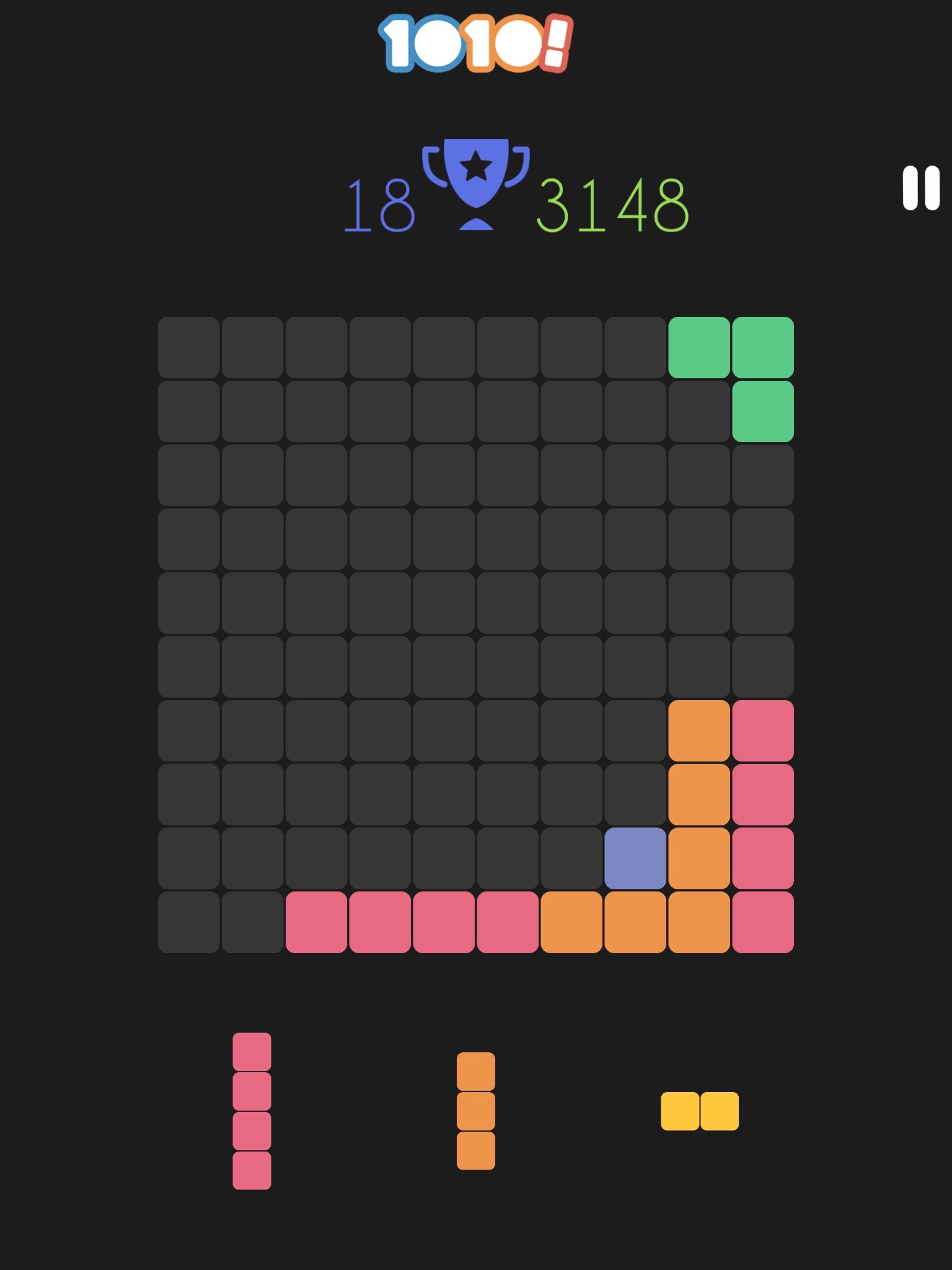
    That game in question is 1010!, a puzzle/strategy game where the only obstacle is yourself. The game starts off simple enough: you have a blank grid taking up theist majority of the screen, with three tetriminos at the bottom. It’s your task to put these tertiminos anywhere you would like on the screen, trying to make lines (either horizontally or vertically) to destroy them. Should you not be able to put a tetrimino on the grid its game over.

    The first couple of times you play the game, chances are you’ll try and sign everything up so it looks perfect and straight, just like you would in Tetris. Problem is (as you’ll soon find out) making everything look lovely does not mean you’ll have a good game. There were many times where I would make it so that all I needed was a straight piece, then find the next three tetriminos all being shapes other than I needed, ending the game.

    FUCK THE GAME OVERS
    Get used to this screen, you’ll be seeing it a lot

    You soon start to realise (and master) that in order to do well in 1010! you must get rid of lines as soon as they appear. Yes, in doing so you’ll have a messy board with shapes and remnants of tetriminos sticking out all over the place, but at the end of the day the more space you have to play with, the easier life will be when it comes to sticking the new tetriminos on the grid.

    It’s such a simple game, but is both a blast to play, and sticks to the design philosophy I love so much: keep it simple but hard. The only obstacle in this game is yourself; should you start organising everything neatly, you only have yourself to blame when the next random tile comes on screen that you can’t place.

    FUCK THE CROWDEDNESS
    This is getting a little too crowded for my comfort…

    Your score goes up for each tetrimino that you place on the grid, with destroying a line netting you more points. It’s your objective to last as long as possible, which is why being neat and tidy is not a good idea for survivability, and why I was finally able to beat my friends sisters high-score after a few hours of constant retrying.

    The games addictive, and it’s not hard to see why. It’s simple, but damn well bloody hard, and you only have yourself to blame should anything cock up. You might spend the first couple of tries blaming the game when you have nowhere else to place tetriminos, but you soon start to realise; it’s all you.

    1010! is free on iOS and Android, with the option to pay for the in-game ads to disappear. I found I needed to spend that £1.49, as the ads take up 5-10 seconds of your time between games, when all you want to do is jump straight back in after your own idiocy got you killed.

    4/5


  • Weekly Gaming: Hyper Light Drifter (PC)

    Weekly Gaming: Hyper Light Drifter (PC)

    Hi all!

    So this week I finally got hold of a copy of Hyper Light Drifter that I backed over 2 and a half years ago. Suffice to say, I was excited to play the game after this much anticipation, and it certainly lived up to my expectations.

    I can only hope that eventually all the other Kickstarter games I’ve backed are eventually released…. (I WISH).

    Anyway, if you wish to give the review  a good read, click the link below to see it in all it’s glory on VGChartz.com!

    http://www.vgchartz.com/article/263775/hyper-light-drifter-pc/

    As always, thank you for your support, and I look forward to seeing you next week for another game I’ll be completing from my ever-growing games collection!

    -Dan

  • Weekly Gaming: Unravel (PC)

    Weekly Gaming: Unravel (PC)

    vlcsnap-2016-02-28-01h05m39s317

    Hi all!

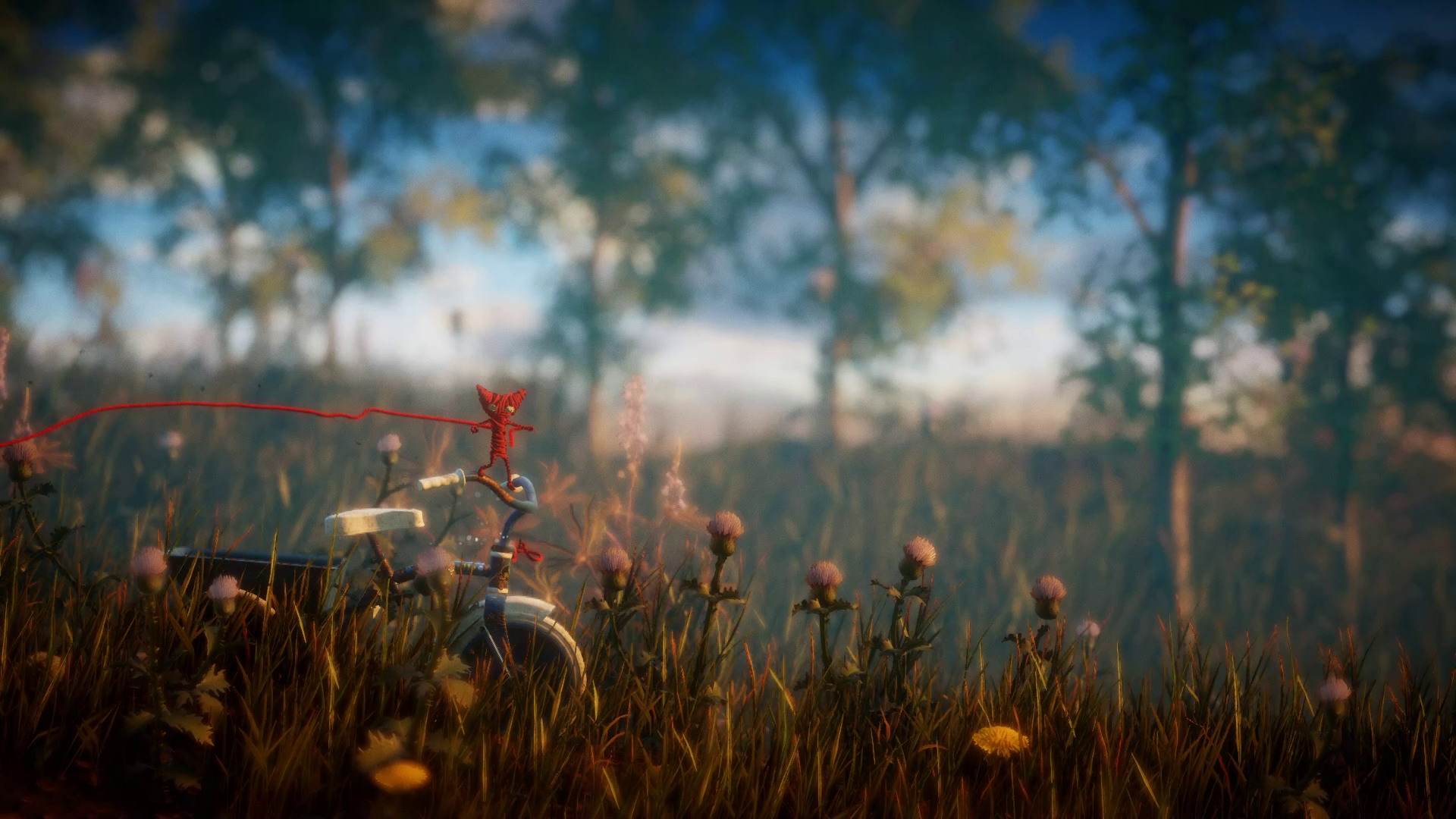
    So this week I take a look at Unravel, Coldwood Interactive’s first indie game. You can read the review over at VGChartz.com below:

    http://www.vgchartz.com/articles/adminnew/?task=edit&story=263431

    I hope you enjoy! and by all means, if you agree, disagree, or want to start a conversation on Unravel, you can always comment below!

    -Dan

  • Weekly Gaming: Sound Shapes (PS4)

    Weekly Gaming: Sound Shapes (PS4)

    soundshapes1

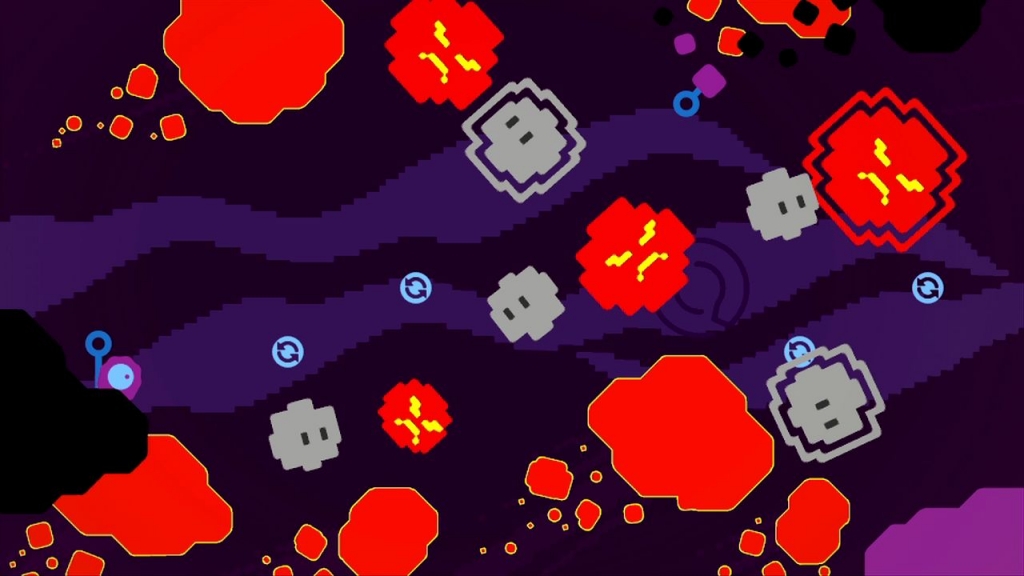
    There seems to be a theme going recently. First I review a simplistic platformer with amazing music called 6180 The Moon, then I review another simplistic platformer with fantastic music called 140. Whilst Firewatch broke that combo (ccccccc-combo breaker!), here I am yet again writing about a simplistic platformer with amazing music. Where Sound shapes differs is in the fact the music isn’t just awesome, it’s a part of the game’s core mechanics.

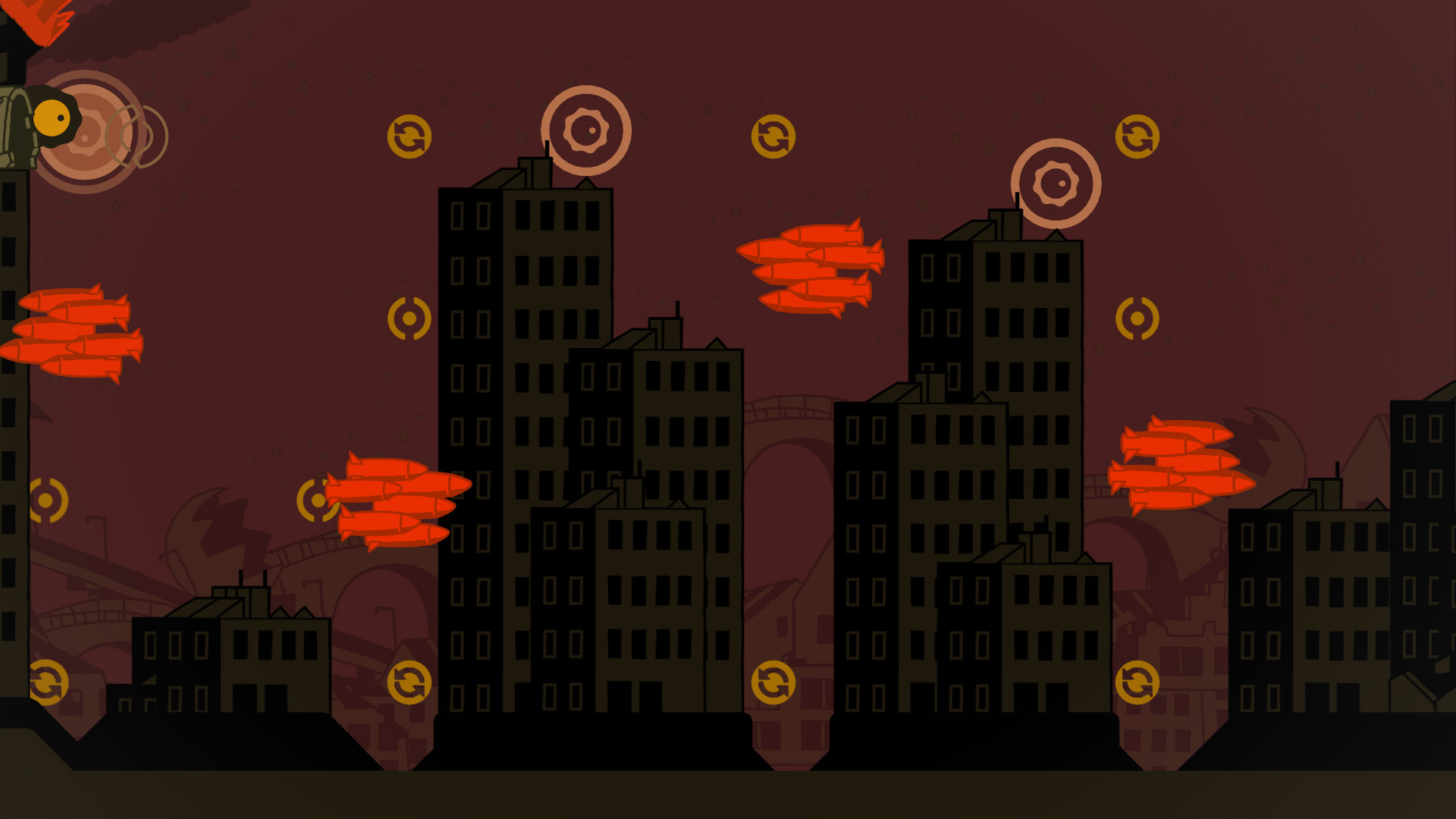
    It all starts off simple enough, and like any normal platformer, the controls are straightforward: move from left to right, making sure to avoid any red items on the screen. You play as a blob of sound which is able to stick to some surfaces that match it’s own colour, or turn black to move faster (without the benefit of sticking to surfaces). As you make your way through levels you’ll notice that everything around contributes to the music, making for some really unique sounds. Collect more “tunes” throughout a level and you’ll get the music constantly change and evolve, making collecting everything a level has to offer a real pleasant experience.

    ps3-game-6182-ss7

    Each “Album” of stages have their own style, both in the music they produce, but also in the general look and feel, as well as difficulty. Guest musicians make an appearance throughout, with one album being entirely produced by DeadMau5 for example (possibly my favourite of all the sets of stages throughout the game). I found that the constant changing of style between levels both helped to showcase how flexible the engine is, but also helped to constantly keep me interested, even as the game’s mechanics were soon mastered early on.

    With each change of style comes a whole new process of learning the games core mechanics again. Is that enemy in the distance touchable, or should I be avoiding it? Is that tree climbable, or should I try and find a way around it? You’ll constantly ask these questions with each new area that you enter, something I haven’t found myself doing in a while when it comes to games.

    The campaign as a whole can be completed within 3 hours or so, and whilst there’s no story to speak of (seems to be a reoccurring theme with these abstract simplistic platformers recently doesn’t it?) each stage carries enough variety and challenge to keep you well entertained until the end of the game, when you get that glorious gold trophy.

    2290270-sound_shapes_e3_2012_023_1338961115

    I think it easily goes without saying that for a game based soul around its music, the music present was absolutely stunning. As I previously mentioned, the DeadMau5 stages were my favourite, but that doesn’t mean the others didn’t affect me in the same way. Everybody’s bound to find a style they like throughout the campaign, and if not, you’re bound to find something in the games huge backlog of DLC available.

    Once the campaign was finished, I still continued to play the game for another 2-3 hours, which is rare for me due to how little time I have available these days. The reason I kept coming back? The death mode.

    This surprisingly infuriating mode which is only unlocked once the campaign is finished pits you on some of the hardest sections of each stage, and gives you the objective of collectible a certain amount of randomly generated “tunes” within a given time limit. These tiny sections are both ridiculous, and oh so great at bringing out how intricately designed Sound Shapes really is. During the campaign, there’s always a margin of error to your jumps; you don’t have to time things perfectly, and even if you cock up, you’ll probably still make a jump. In Death Mode this is all thrown out the window. You have to be pixel perfect precise; any mistake and you’re either dead, or never going to complete the objective.

    2377119-soundshapes_ps4_invaderoids2

    This difficulty spike got me so engrossed into the game that I ended up not realising an hour had passed whilst I replayed one level continuously. It’s that damn addictive. It isn’t even the fact that you get a silver trophy for your troubles, it’s genuinely the challenge of completing this ludicrously hard level.

    So, should you invest a few hours into the game known as Sound Shapes? Most certainly. I mean, if you’ve been a Playstation Plus subscriber for a while now, you’ll most likely already own the game, so what do you have to lose? Chances are, you’ll find something you like in Sound Shapes; I know I did, and will definitely be coming back time and time again when I have a spare hour.

    4/5

  • Weekly Gaming: Firewatch (PC)

    Weekly Gaming: Firewatch (PC)

    As weird as it sounds as a games writer, I haven’t purchased and played a game so close to it’s release date in quite a while. Maybe it’s because of my backlog of games (I keep buying them faster than I can play them!), or maybe its because it’s been quiet on the release calendar, but either way, I couldn’t stay away from the enticing adventure game that has everyone deep in conversation: Firewatch.

    So what is Firewatch? Another walking simulator if you want to break it down to its very foundation. Just like Gone Home or Dear Esther, the whole game is about a narrative unfolding, with the exploration of the place you’re in (in this case, a national park) being only a sub-task to the games narrative itself. Unlike the aforementioned titles, Firewatch thankfully takes the exploratory narrative game one step further, and tricks the player into thinking there’s actual gameplay mechanics throughout the campaign. I say tricks, as throughout the campaign itself you’re given urgency, and don’t think about how much freedom you actually have to explore the great wilderness the developers at Campo Santo provide to you.

    firewatch-1.0

    For a narrative driven game, right out of the gate Firewatch hits all the expected ques. You have a deep back story, one which takes you through the main protagonists history with his wife, along with the struggles that come about because of her onset alzheimer’s disease. As a consequence of this, Julia is taken back to her parents in Australia, meaning our protagonist (Henry) has a lot on his plate when he finds the firewatching job. Throughout the course of the game, this history will matter little compared to the new relationship blooming in his life; between himself and his new supervisor, Delilah.

    You’ll be given tasks to do throughout the lush national park of Shoshone National Forest by Delilah, and it’s whilst you’re going about these tasks that the narrative will unfold more and more. During these tasks you’ll get to know Delilah quite well, with each sarcastic insult she and Henry throws at each other becoming more and more familiar to relationships we all know in real-life; a feature I truly enjoyed and made me smile with the witty charm and attention to detail the writing implores so often. The characters of Henry and Delilah feel real; none of the voice acting feels forced, and throughout the campaign I never once felt like I was being deceived; it’s fantastically made, and something the voice actors should feel hugely proud of for the work they have done.

    firewatch1

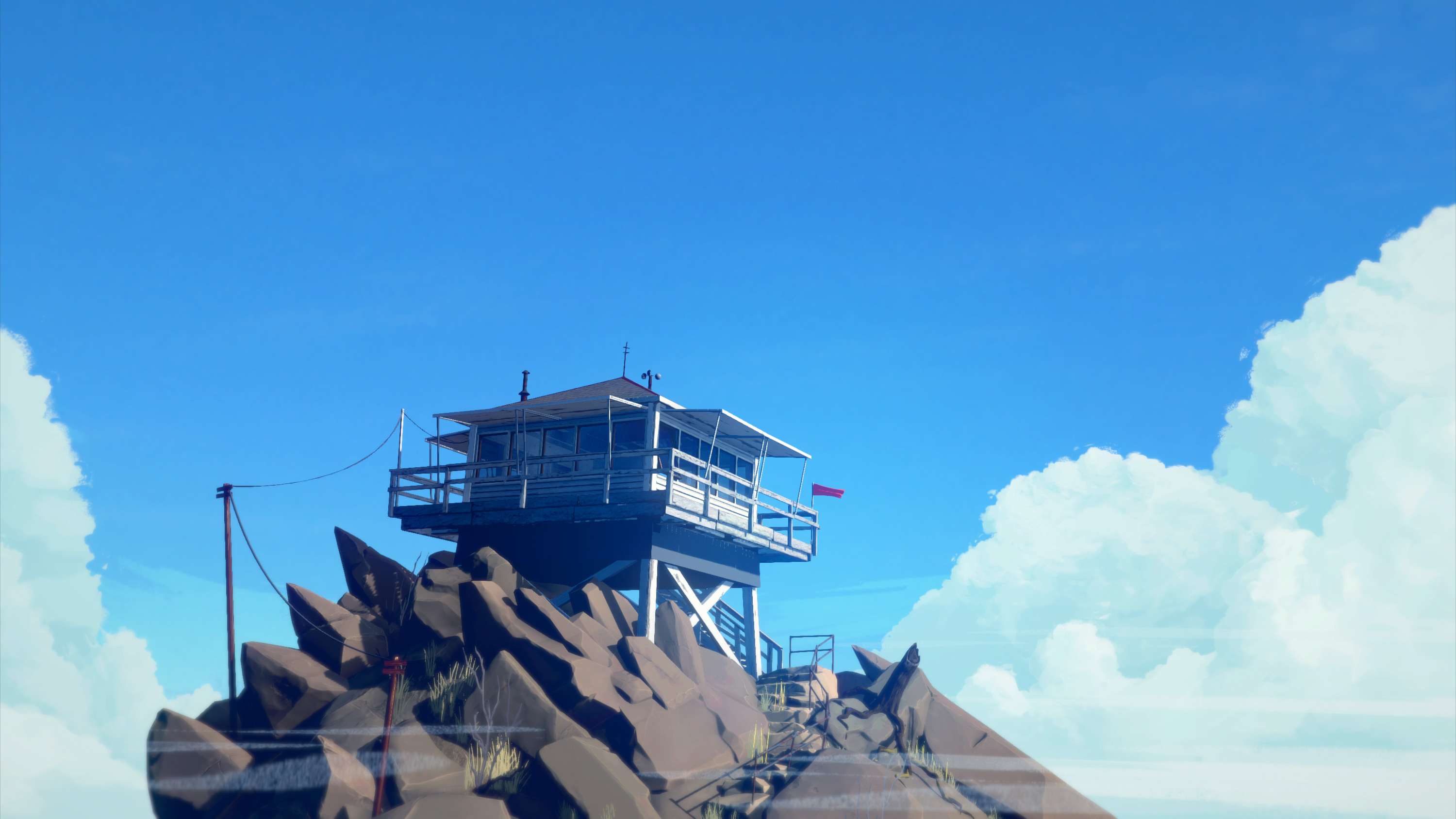
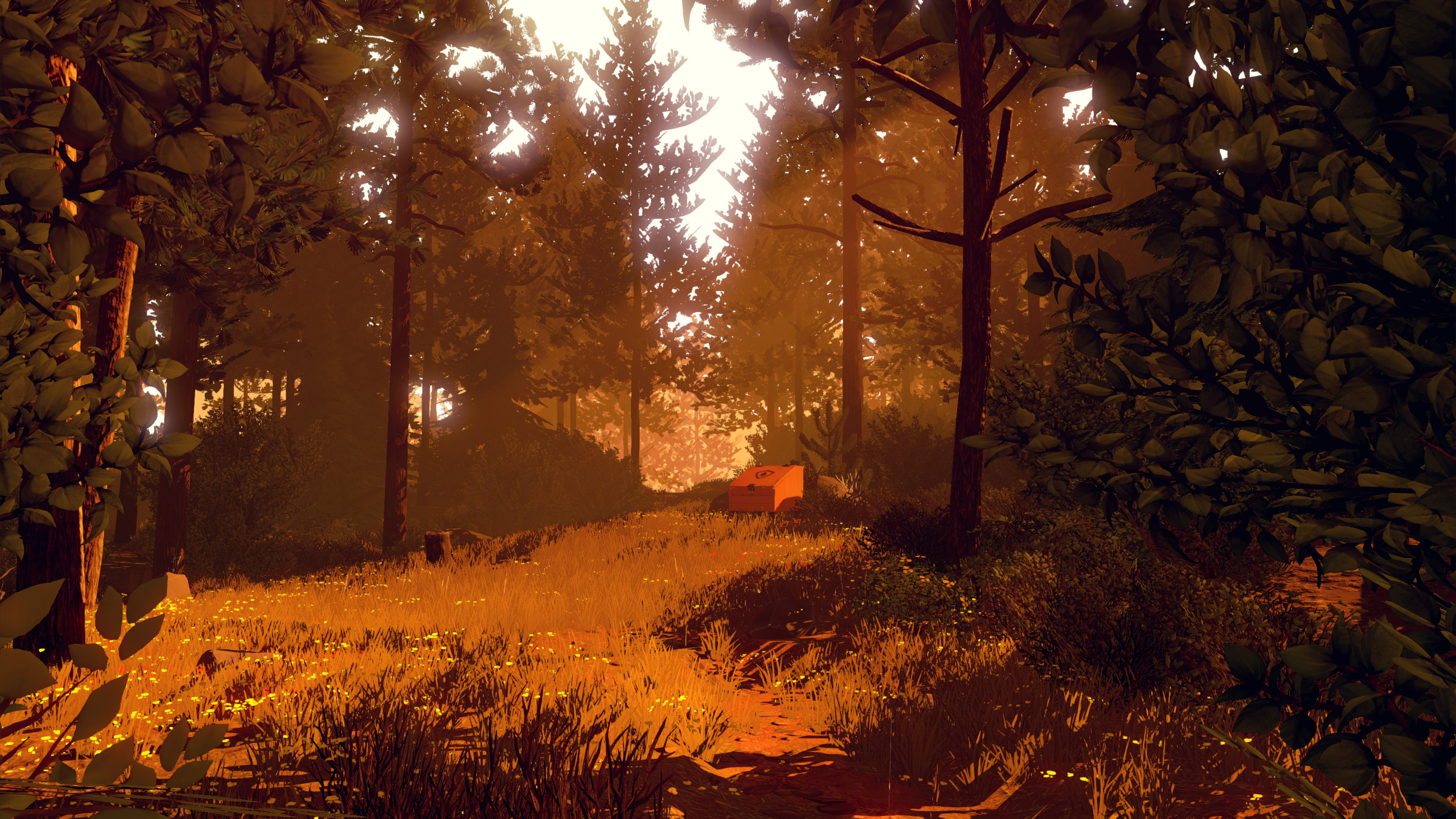
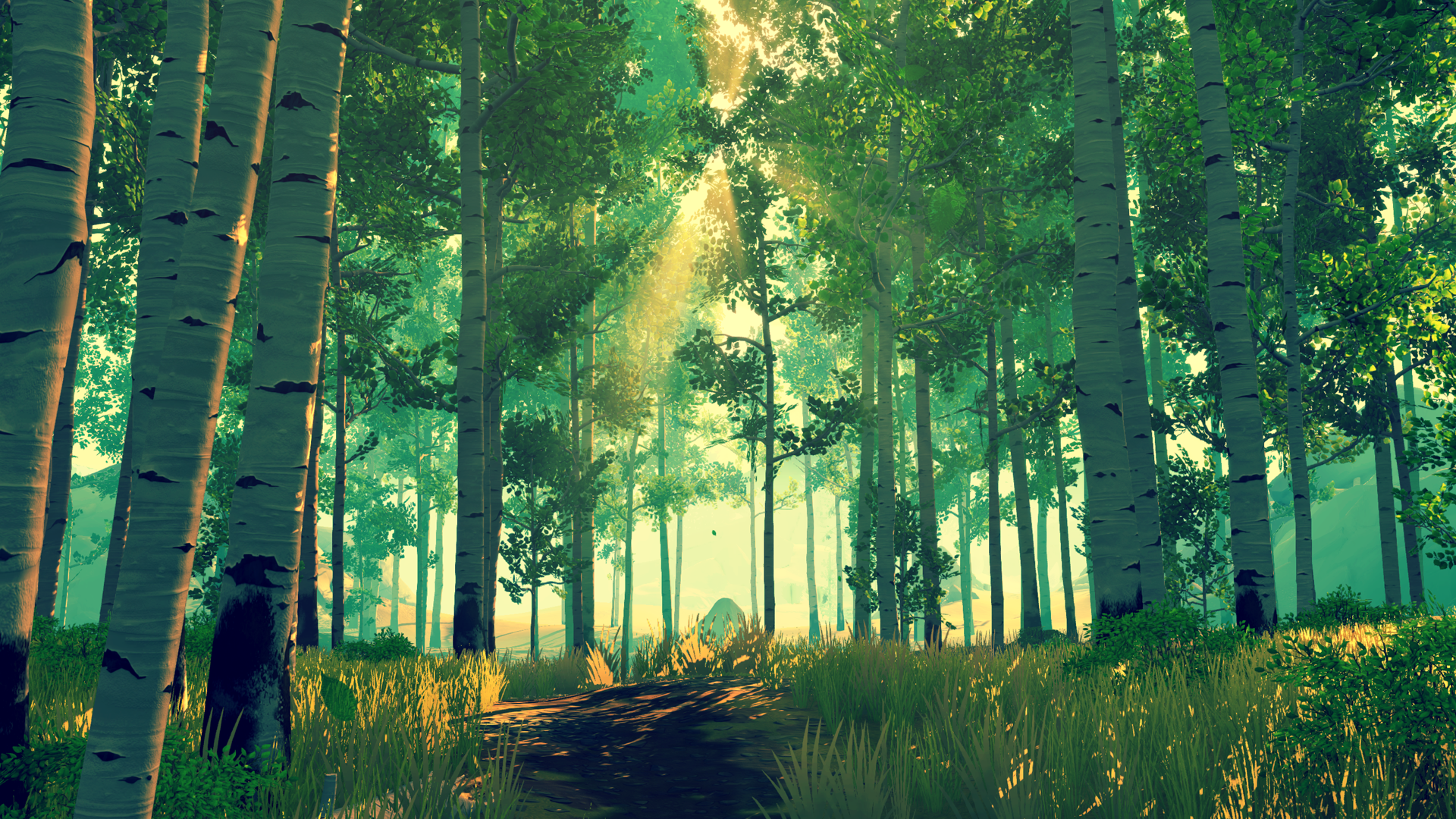
    The world of Shoshone National Forest is a treat for the eyes. The way the trees shimmer in the wind, along with the way the lighting changes throughout the day help to make for one of the most aesthetically pleasing indie games in living memory. Don’t get me wrong, there’s no realism here; Campto Santo isn’t going to be competing with Crytek anytime soon, but the world feels so vibrant and alive despite it’s simple textures and lovely object models that it genuinely feels alive. Its a testament to how grand the world looks that the developers gave players the ability to print of the in-game pictures they take as postcards; proof in itself that Firewatch is a marvel to look at.

    It’s a shame then that for all the praise I’ve given to Firewatches aesthetics and narrative, the same couldn’t be said for the gameplay itself. Whilst all the trailers and screenshots make the game out to be an open world, this is only a half-truth. Firewatch is in-fact, a linear corridor driven affair, albeit with some freedom as to how you get to the next objective.For example: You’ll get a call from Delilah to investigate some teens for example, so off you go, drudging through the woods to a point on your map. During this time, you chat with Delilah, and make your way to your objective. Once there, you’ll make a few decisions, and then have to head to another location, which is repeated ad infinitum. There’s no reason to ever really explore the world, as the mechanics simply don’t let you; everything exists for the narrative, meaning should you come across something early, you can’t do anything to it (e.g. I came across a fence early on. There was no way to enter the area beyond the fence until later in the campaign; the same happened again for many other things I found on exploring).

    firewatch_150305_06

    Firewatch feels like an empty shell of what it could have been. Whilst the narrative and wilderness is great, you just can’t help but feel let down by the end of the campaign. There has been talk online of some customers wanting a refund after completing the game, admitting that they enjoyed what they played, but felt that the experience wasn’t worth £15. I tend to agree with these customers. Firewatch could have been so much more; the forest is big enough and beautiful enough that players could have gotten lost in it for days hunting for secrets with a set of gameplay mechanics like using an axe acquired to cut down trees to get to new areas. Unfortunately, with Firewatch’s world merely being eye-candy whilst you learn more about the story, the game left a foul taste in my mouth once finished.

    By all means buy Firewatch when it comes down in price and is on sale; the story alone would be a fantastic experience when the game’s on sale. I just cannot in good faith recommend spending £15 on the game, as you too would probably come out with the same bad feeling.

    So much potential, so little pay off.

    3/5


  • Weekly Gaming: Teslagrad

    Weekly Gaming: Teslagrad

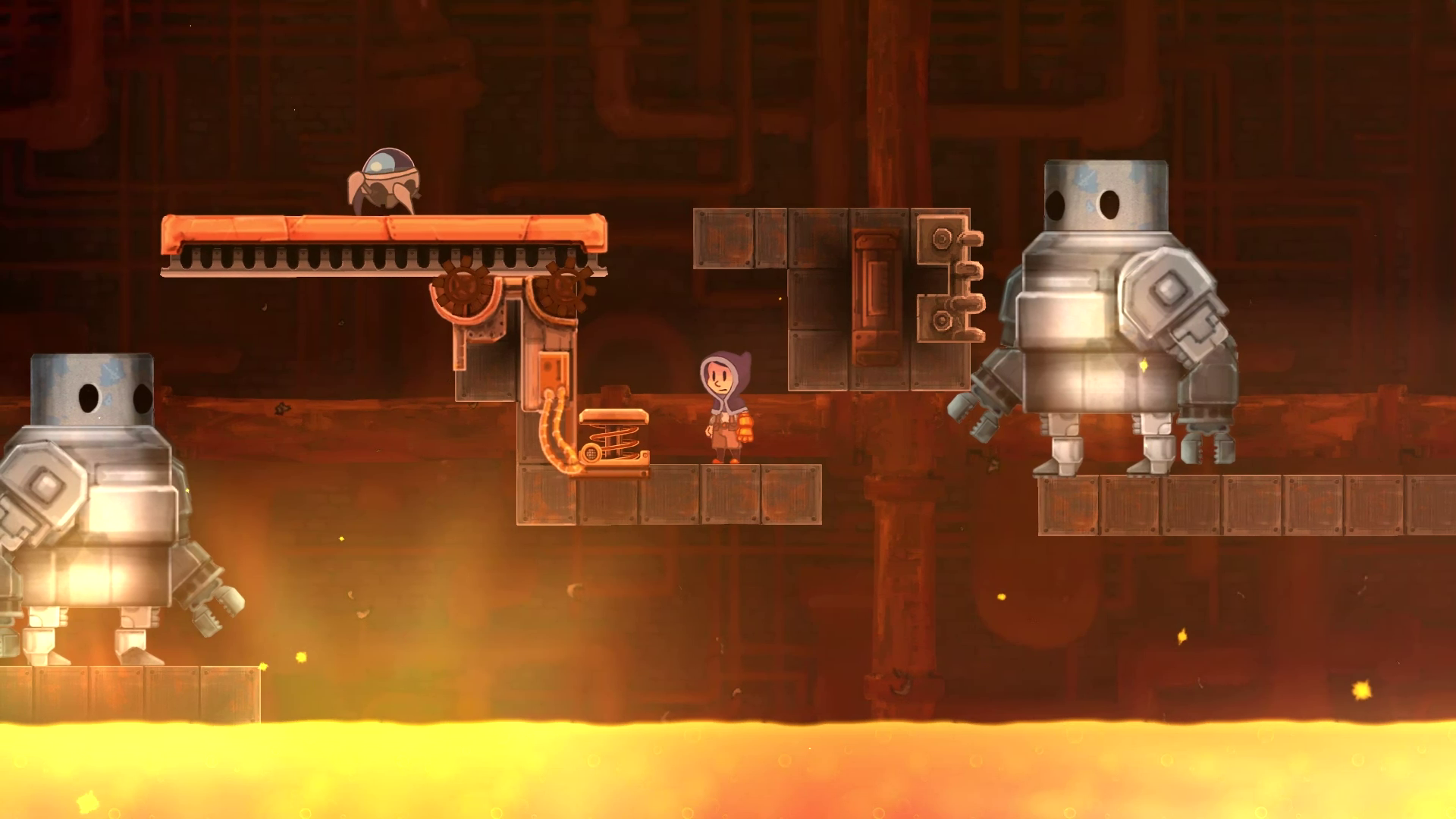
    I’m genuinely surprised that in all my years of gaming, I hadn’t played Teslagrad sooner. It’s charming graphics and genuinely fantastic puzzle mechanics are exactly what I look for in indie games, and Teslagrad does not disappoint. And yet, here I am, 3 years after it’s original release date stiill having not played it. So what gives? Well until the game was being re-released on Xbox One and a professional contact offered me a review copy, I jumped at the chance to give the game a go (only just realising that I also own the game on PS3 and PC already). So what does this 3 year old indie game offer that keeps it so intriguing and fantastically charming in the modern age of the indie revolution? to put it simply: everything.

    The first thing that draws your attention about Teslagrad is its aesthetics. The simple, fantastically animated hand drawn models are an absolute slender to behold throughout your entire play-through of the game. I found myself often standing and admiring the animation that was unfolding before me, especially in the final fight scene, where the evil king of the world’s animation is absolutely sublime, leading myself to many unwanted deaths due to the eye candy on display.

    vlcsnap-2016-03-08-23h43m49s610

    You’ll start the game off by abandoning your mother as a large group of soviet looking men invade your home town. Making your way past these evil men, you happen across an abandoned castle, where the game starts proper. You’ll get tidbits of story throughout the campaign, told through puppetshows on a theatre stage, but there’s no text and no speech, meaning there’s some room for imagination as to what happens in the world. This may seem a little light, but that’s the case with Teslagrad, as it’s mostly the gamplay that will keep players interested throughout the campaign.

    And my god does the gameplay deliver! This hybrid puzzle/adventure platformer does a fantastic job of making the player feel frustrated at times, but oh so brilliant when a puzzle or difficult section is overcome. The amount of times I would spend 10-15 minutes stuck on one section were insane, but I never felt worse of for it. The puzzles are addictively tantalising enough that you want to pick the controller up and play again, regardless of how difficult the puzzle may be. No matter how many times Teslagrad punches you to the floor, you’re bound to get back up again just to show it who’s boss.

    vlcsnap-2016-03-08-23h44m05s075

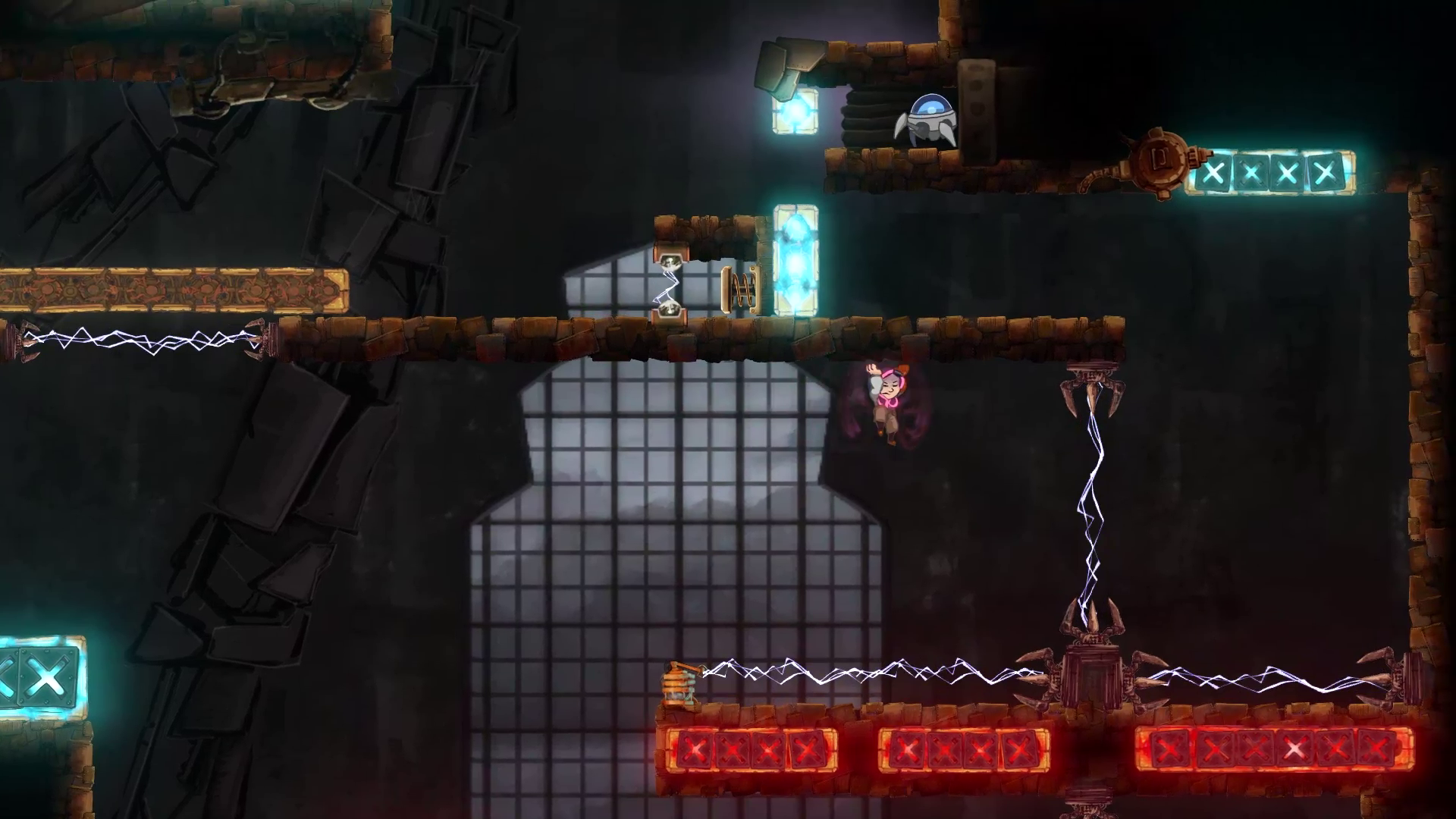
    The puzzles revolve around electromagnetism, with red and blue different types of magnetism adjourning many different rooms. Just like real electromagnetism, should an items “colour” be the same as another, it’ll be repelled. Have the opposite colour/charge, and the item will attract. It’s simple in theory, but can make for some extremely complicated puzzles, as well as some frustrating platforming sections, especially later on once you start getting new power ups which revolve more around your own reflexes than puzzles.

    The abandoned castle holds many secrets, and like any true metroidvania game, many collectibles that are hidden behind tantalisingly easy puzzles that can only be recovered once you have the necessary power-up. Whilst other metroidvania games can feel obtuse and annoying when they do this, Teslagrad instead feels rewarding in doing so, ensuring you’re constantly wondering what awesome power lays before you to enable such an impossible jump.

    vlcsnap-2016-03-08-23h43m40s060

    Upon your travels through the tight corridors of the castle you’ll also encounter boss fights. In these fights you’ll need to watch the attack patterns of the bosses and attack when needed. Sounds simple in theory, but I lost far more lives than I would like to mention whilst taking them on, with one boss even requiring me to look up a video guide on how to defeat it (it’s the eye boss if you were wondering).

    but for all the good I’ve said, there are some drawbacks. The music for example can have some absolutely lovely moments, but for the most part it takes a back seat, and is far too subtle to even notice there’s music playing at all throughout the main game. Another annoyance was the somewhat annoying collision bugs that sometimes manifested throughout the campaign. These would happen when an obstacle was moved, but should you go back to the original location of it, your character will push against an invisible wall.

    vlcsnap-2016-03-08-23h43m31s719

    Whilst the story never truly ends with a proper crecesendo, it was a fantastic adventure, one I’m annoyed at myself for never playing sooner. The little nuisances I just listed were no where near enough to detract from the overall feel of the game, with everything else about Teslagrad being a stand out achievement of what most indie games should aspire to be. Aesthetics, polish, puzzles and action are just some of the wonders Teslagrad brought to the table, and three years on, they’re just a good as ever.

    4/5

  • Weekly Gaming: 140 (PC)

    Weekly Gaming: 140 (PC)

    I know I know, I seem to be on an abstract indie platforming stint at the moment, what with 6180 the moon last Friday and this week indie hit 140. I mean, who can blame me? These games are short, but both award winners because of how far they push their simplistic mechanics. Having restrictions really is a fantastic thing in the world of games, helping to push creatives to their limits when it comes to original and refreshing games.

    vlcsnap-2016-02-17-21h23m29s324

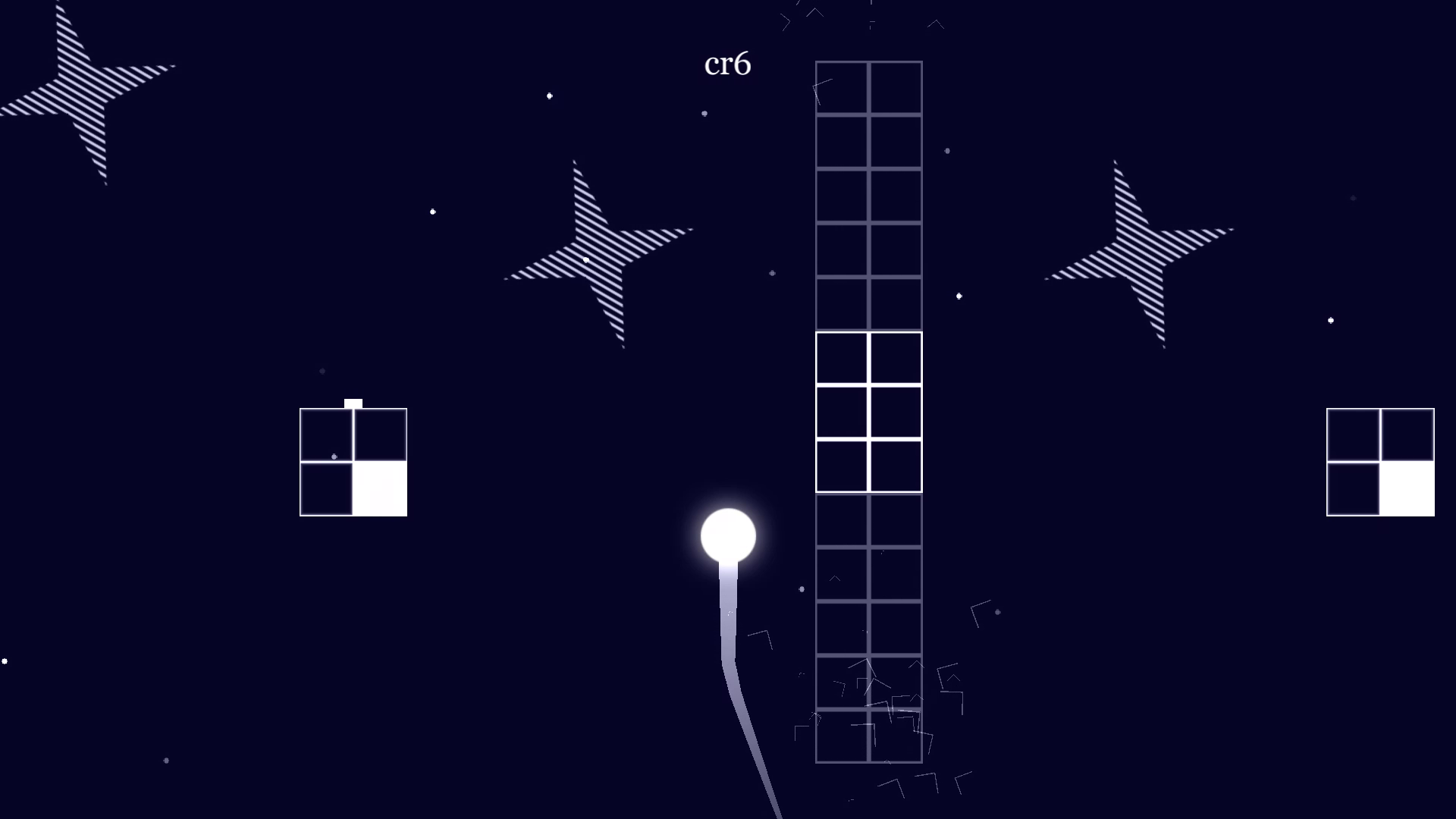
    So what is 140? As with last weeks 6180 The moon, the title really doesn’t tell you anything about the game, and seemingly feels quite random. Again, like 6180, 140 is an abstract (think simple shapes and colours) platformer, where the player must make their way through 3 different levels, making sure to keep their jumping and movements in tune with the music constantly playing in the background.

    Simple premise again I know, but where I genuinely got hooked to 140 was in it’s fantastic style, and brilliant music mechanic, where the patterns you see and hear truly help you to advance throughout each level. Each level introduces new obstacles and mechanics to take advantage of; some blocks for example may change in size depending on the beat, whilst others may become deadly at set intervals. Regardless how you start out playing 140, you eventually get into a rhythm where you listen to the music whilst observing what new obstacles lay before you. After a few attempts, you’ll manage to successfully pass the puzzle before you, only to see it mutate and naturally become more advanced later on.

    vlcsnap-2016-02-17-21h24m13s602

    This simple repeated premise helps keep 140 enticing for the entirety of its hour playtime, with myself raging when my controller ran out of battery and couldn’t reconnect until I restarted the game. I didn’t mind too much; replaying an entire level was really enjoyable, especially when you’ve learnt how a level reacts to the music. It helps to make you feel intelligent for overcoming the challenges laid before you.

    There’s no story to speak of, but the game has got “boss” battles, which are all different and challenging in their own right. Whilst there’s no context as to why you’re advancing through each of the levels other than progression for progressions sake, it was fairly refreshing to play a game that was purely about the mechanics, rather than trying to knit a story into an otherwise abstract game.

    Now onto the music. It genuinely cannot be stated how good the music in 140 is, and how important a role it plays in the gameplay itself. As an example, listen to an excerpt of the music below:

    (yes, I know that’s not the game’s official soundtrack, but unfortunately the developer never got around to separating the games audio from the game itself, so somethings bette than nothing!)

    It’s genuinely stunning. I’m just annoyed there isn’t an official soundtrack for the game, as I’m fairly certain it’d become my new go-to programming/generic background soundtrack.

    vlcsnap-2016-02-17-21h25m20s104

    All in all, I’m genuinely glad I played 140. It’s been in my steam library for yonks (2 years apparently; I wasn’t even aware) and was a game I always overlooked. So my recommendation to you: should you look in your steam library and see 140 towards the top, do me and yourself a favour and play the game. It’ll only take an hour (two hours if you want to do the optional 3 levels where you have no lives), and is thoroughly enjoyable.

    4/5

  • Weekly Gaming: 6180 the moon (PC)

    Weekly Gaming: 6180 the moon (PC)

    vlcsnap-2016-02-17-21h30m44s851

    I’m not sure what brought me round to playing 6180 The Moon. The naming certainly wasn’t a part of it, with the name only being semi-descriptive as to the games purpose and nature. I suppose it was just blind luck that I happened across it, which is indeed lucky considering my Steam library has over 640 games. Regardless, the fact of the matter is I’m glad I happened across it, as 6180 is one of my favourite puzzle games I’ve played in a long while.

    Simple but hard.

    That one sentence is one of my favourite game mechanic philosophies of all time, and one that 6180 the moon pushes perfectly. The premise is simple; get to the end of the stage using traditional platforming mechanics but with one huge twist: jumping off the top of the screen or bottom will make you reappear on the opposite side instantly. What seems simple soon becomes a nightmare to overcome, with obstacles and level design pushing you to your wits end.

    vlcsnap-2016-02-17-21h28m38s555

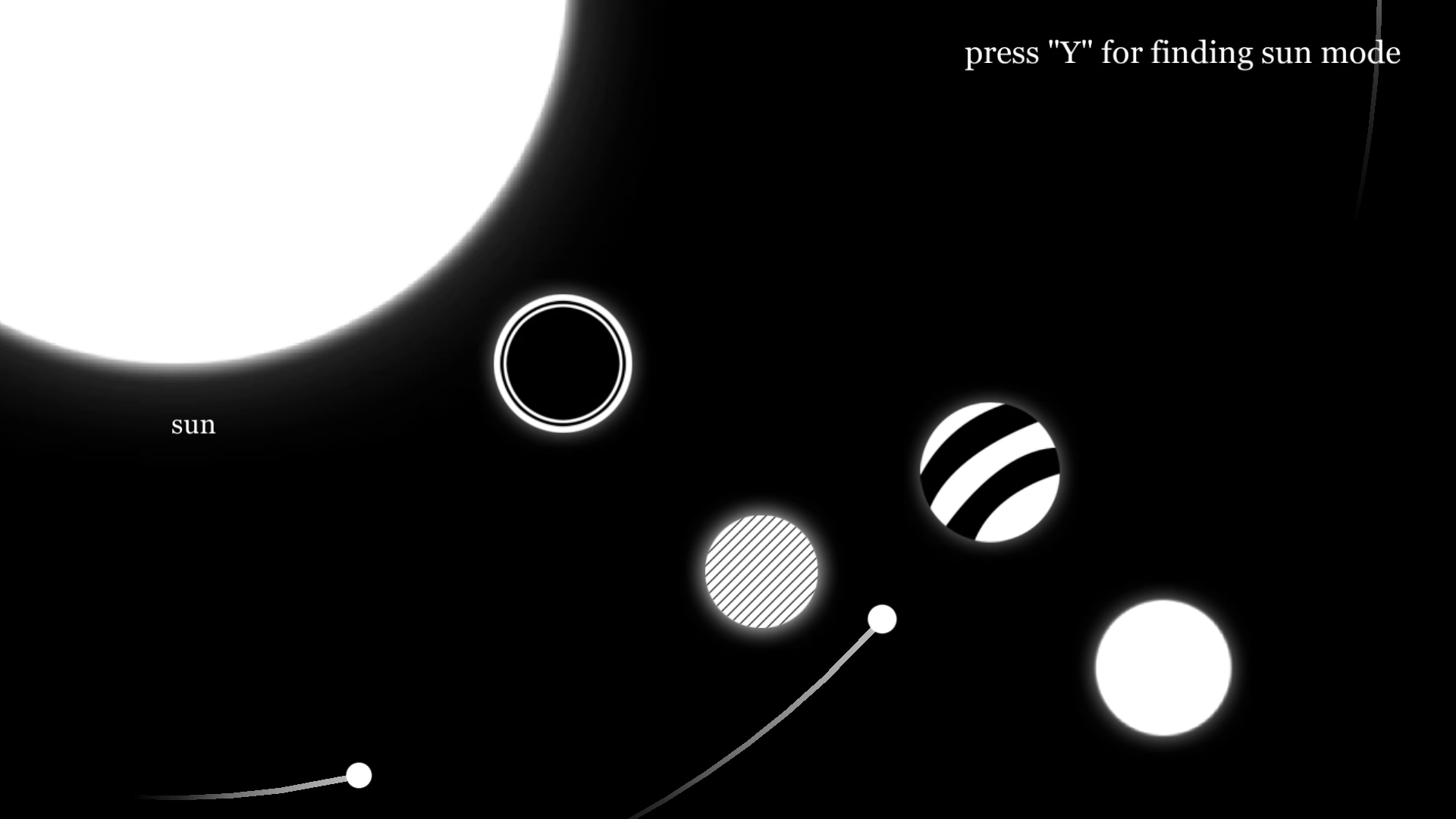
    Playing as the moon, your objective is to find out what’s happened to the sun, as there seems to be a never ending night. Making your way left to right, from the moons current position around the Earth to where the sun’s supposed to be, you’ll make your way through 49 increasingly challenging and fantastically made levels. Upon your travels you’ll encounter the Earth, Venus and Mercury in your quest for the Sun, with each planet having it’s own unique personality. These segways between each set of new levels seem a bit trivial, but a little bit of a story between gameplay sections can never hurt.

    It’s always amazing to me how far a simple premise can be pushed. 6180 the moon genuinely is amazing at keeping each and every level refreshing and new. Nothing ever feels over-used, even when you complete the game and have to redo every level in reverse, it all still feels authentically fresh. Every single level constantly feels original; from the simple levels that require a different perspective, to the hard ones that require avoiding obstacles and timing your jumps correctly to get past a long canyon filled with spikes; it’s all just fantastic.

    vlcsnap-2016-02-17-21h29m20s453

    The graphics are simplistic, and that’s quite alright. For an indie game with a relatively tiny budget, you have to make the most with what you have, and for that, the game’s simplistic graphics helps to not detract from the games fantastic mechanics. Not only that, but like Thomas was Alone from all those years past, the graphics actually help in telling a story, with nothing getting in the way of the lovely story of a Moon trying to make the world right again by finding the sun.

    The music was fantastic throughout my playthrough, with brilliant orchestral moments interspersed with relaxing background music, it made for a fantastic experience throughout. Don’t get me wrong, you’re not going to be coming to the game purely for the music alone, but it’s good, and helps really make the game enticing from start to finish.

    vlcsnap-2016-02-17-21h29m39s159

    So, I know this is a shorter review than usual, but my god, there’s not much more to say other than the game is a fantastic platformer than truly feels original and refreshing. If you need something to play for a few hours, you cannot go wrong with 6180 the Moon. I enjoyed myself so much that I even completed the mirror mode, something that doubled that amount of time I had with the game.

    4/5
  • Weekly Gaming: Coffin Dodgers (PC)

    Weekly Gaming: Coffin Dodgers (PC)

    I’m a bad person.

    I was given Coffin Dodgers months ago to review, when the game was about to come out to drum up hype. Problem was, I had a lot of other things going on, so I kept putting the game off until I had some downtime so I could properly invest some quality time into the game. With my  “52 games in 52 weeks” going again this year, I sat down at my PC, finally downloaded the game, and gave myself a few hours to see what Coffin Dodgers had to offer.

    When first booting it up, I couldn’t help but feel nostalgia for old PS1 games. The simplicity of the presentation, from the introduction, to the story, all felt so much like games I remember from my childhood. The simple characters, with funny names, and extremely limited tutorial all added to this nostalgia, resulting in my first 15 minutes of playtime feeling fantastically familiar, and down right pleasant.

    The problem was, the main campaign just couldn’t keep this positive ride going. What starts off simple soon became a clash against the game mechanics itself, resulting in some of the most annoying gaming moments of 2016 so far.

    Whilst the looks (and some of the gameplay) began with evoking feelings of complex cart racers, the physics engine soon just could not keep up with the slick presentation. Sometimes I’d get bumped off geometry that simply did not exist; other times the AI became a complete nightmare to compete with.

    It didn’t help that there’s no skill involved in the core driving experience itself. You just drive around a track with your acceleration barely changing, with no jumping or sliding mechanic present. It’s so simple that there’s even an option to enable “auto-accelerate” should you want it. At least with games like Mario Kart or Crash Team Racing there was a skill to the game on corners where (should you be good enough) you could skid around and get a boost. Not in Coffin Dodgers, where your only way of progressing is luck based on the pickups you get.

    So for a game so entrenched in making every appeal to 90’s gaming kids, what’s on offer that actually pleases?

    Well for one, the graphics are absolutely charming. The town you race in is lovingly rendered, at times even looking like a Disney film. Then there’s the characters, who all have their own unique little traits, and who have fantastically hilarious names and backstory’s. I thoroughly enjoyed the premise (Death has said it’s time for the 7 OAP’s to die, so they all challenge him to a race in their scooters), and loved the ways the premise was used for funny weapons (smacking other racers with your walking stick will always be funny).

    The courses were fantastically varied too, with each “theme” changing which area you’d drive around the town. The farming section for example starts pitting the racers against each other towards the outskirts of town, with each sub-race taking a different route above and below ground. Each course also had it’s own “destructibles”, items or characters placed around the track that could be run over for extra XP (the games’ way of determining how well you performed on a race, giving you an amount of gold for your effort), a great way to keep me coming back to tracks time and time again to destroy as much as possible.

    There’s also an upgrade system, whereby you can spend your hard earned cash on upgrades for your scooter. whilst this was a fantastic idea in theory (who doesn’t love progression?), I found that the upgrades genuinely amounted to nothing, meaning by the end of the game, despite having a fully upgraded vehicle, I still didn’t stand a chance against the AI, meaning the entire game was down to luck rather than skill.

    And it’s in that nuisance of “luck vs skill” that I felt Coffin Dodgers truly let me down. I came in happy and excited at the prospect of playing a game inspired by my childhood, but in the end, came away annoyed. Games should always have equal parts skill, and equal parts luck, but unfortunately with Coffin Dodgers I could help but feel I was an innocent bystander, watching as the game passed me by. I had next to no affect on the end outcome of matches, and would genuinely put it down to luck should I have actually won a race.

    By all means give Coffin Dodgers a go; I’m sure it’s multiplayer would be enjoyable (playing on PC is a nightmare for trying that mode), but don’t expect much for your money. At an hour in length for it’s main campaign, Coffin Dodgers left much to be desired. It’s a shame, as the premise genuinely intrigued (and delighted) me due t the lack of good kart racers in recent years. I can only hope Milky Tea Studios learn from their first game,  and continue in this genre: I’m sure they can make a great game, it just isn’t Coffin Dodgers.

  • Weekly Gaming: Super Mario 3D World (Wii U)

    Weekly Gaming: Super Mario 3D World (Wii U)

    It’s genuinely insane how much adoration and annoyance I have for Nintendo games. On the one hand, they make absolutely charming games that are addictive for days, weeks, years even until you’ve collected everything a game has to offer. I remember doing just that with Super Mario 3D Land, collecting everything (yep, every single stage twice as Mario and Luigi + secret stages) the game had to offer. But my annoyance comes from the fact that they make the same games every generation of consoles, with the aesthetics being one of the only things they mix up with recent iterations (Yoshi’s Woolly World & Paper Mario come to mind). Thankfully, Super Mario 3D World is not one of those games, and as a consequence, is some of the most fun I’ve had on a Nintendo game since 3D land all those years ago.

    1381512525385-1

    You see, whilst most other nintendo IP’s have been through several generations of consoles before they ended up being rehashes with new aesthetics, Super Mario 3D Land was only released a few years ago on the 3DS. The great 3D environments and fantastically short levels truly helped to make one of the most exciting and original Mario games of recent memory. Super Mario 3D World elevates this praise and takes it to the next level, showing what you can do with a Mario game in 2013, with a proper console behind it.

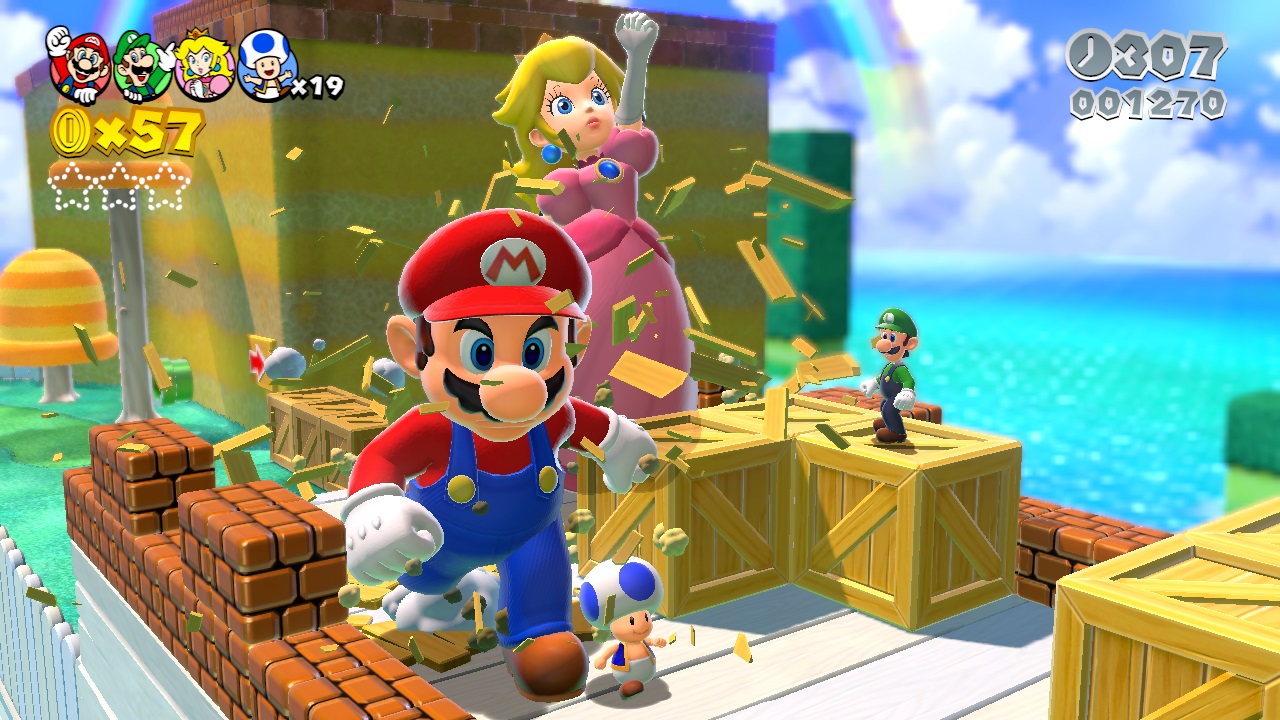
    One of the first things I have to get out of my system about the game is it’s absolutely stellar presentation. Seriously, who knew simplistic geometry and cute disney-esque designs could be so god damn gorgeous? Everything, from the grass waving in the wind, to the mud that you see underneath, is absolutely stunning. It’s also insane that in a time when most console games are struggling to reach 30fps, Super Mario 3D World never stutters or moves below 60FPS, helping to keep gameplay smooth, no matter how many players or enemies are on screen at any one time.

    sm3dw1

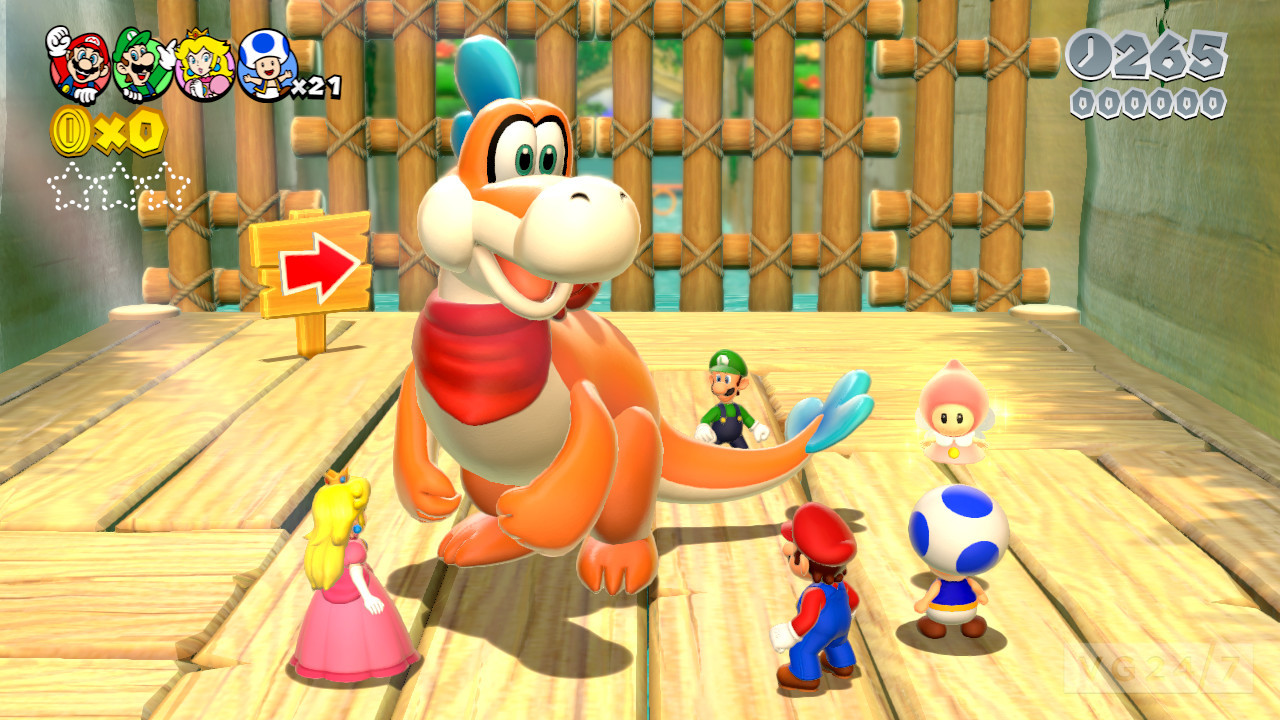
    The addition of multiplayer is a huge advantage over it’s predecessor on the 3DS. Being able to play the game with my other half ensured that I was finally able to incorporate her into my game time, ensuring she had a lot of fun whilst I got to play a game I wanted to review. Yes there were disagreements, it’s bound to happen in a game where the camera is trying to incorporate both players in the screen at any one time, but it was still enjoyable all the same.

    With the presentation and multiplayer out of the way, how does the gameplay hold up? Rather well actually. Mario and the team still jump in the ways they always have (with peach being hugely OP since she can hover whenever she likes!), but because of these mechanics being the same as they always have been, where does nintendo find the innovation? In the course design and power-ups. You see, rather than resting on their laurels, Nintendo came up with quite a few new power-ups to use throughout, from the new cat bell which turns Mario and co into cats that can climb walls (in all fairness, this power-up feels like Nintendo’s pandering to the internet culture, but it was still good to use all the same), to the new cherry power up (which spawns a new playable character on the screen) found throughout certain levels, each power-up felt great to use and helped in keeping each stage original, and giving new options by which to traverse the levels.

    super-mario-3d-world-2

    It’s thanks to the course designs that each level is so enjoyable to play and go back to. Everything’s doable without power-ups, but it’s the power-ups that will help you achieve 100% of collectibles within a level should you have them. For example, the vast majority of levels will allow you just to rush through, but should you wish to get a collectible green star (there are 3 of them in each level), you’ll need to climb a wall, which can only be done with a cat bell power-up. Most stages will give you these at the start, so it’s up to your own skill as to whether you can keep them until the end of the stage. It’s a fantastic system that ensures everyone feels encouraged to finish a level (no matter whether they’re tiny Mario or full upgraded), and helps to make sure those who are slightly more skilled (who keep the power-ups) get the satisfaction of beating a level without being hurt.

    There are drawbacks to the new camera angle approach in Super Mario 3D World, and it’s mainly present in multiplayer. You see, trying to keep multiple players on the screen at the same time can take a lot of effort on the developers side, so to compensate, they make the player who’s ahead and on the correct path the main, focused player, whilst also zooming out to show the other player. This approach works most of the time, but there were so many instances where I would have to turn into a “balloon” in order to get back to my other half on screen, even though I was getting a power-up or collectible. It’s frustrating at times, and can also cause you to miss-time your jumps, resulting in lives lost or getting damaged by simple creatures like goombas.

    Super-Mario-3D-World-7

    Overall, Super Mario 3D world is simply one of the best games I’ve played in recent memory. It’s simplistic control scheme and simply sublime graphics really help to show how Nintendo go to where it is through sheer polish alone, a rare sight in a world with buggy games and unpolished presentations. If you have a Wii U, the price tag of Super Mario 3D World may be steep, but it’s worth every penny.

    5/5