Author: Dan

  • Weekly Gaming: Abzû (PC)

    Weekly Gaming: Abzû (PC)

    Hi all!

    For this week, I’m going to link to a review I done back in August. Whilst I thoroughly enjoyed Abzû, I couldn’t help but think that it was a little too similar to Flower and Journey. Not that this is a bad thing, it just made me feel a little… cheated?

    Anyway, if you wanna give it a read, click the link below:

    http://www.vgchartz.com/article/265432/abz-pc/

    And as always, I’ll see you next week!

    -Dan

  • Weekly Gaming: Mortal Kombat X (PC)

    Weekly Gaming: Mortal Kombat X (PC)

    Some things never change, and in the case of Mortal Kombat, this old saying couldn’t be more true. Yes, the game’s been given a facelift with new characters taking the centre stage, but at it’s heart, Mortal Kombat X manages to stay true to the reboot from a few years ago, whilst also adding a few new Kostmetic (see what I did there?) and gameplay changes.

    mkx character select screen

    First off, Mortal Kombat X takes place both after the events of the first games epic conclusion, and also 20 years into the future, helping to mitigate the amount of characters that died from the original. A great Elder God tried to take over Earth-realm once Shao-Kahn was annhilated, and as such, Johnny Cage and Sonya Blade came to the rescue alongside Raiden, trapping said Elder God for millennia.

    Fast forward 20 years, and you have the world as a different place – kids have been raised, Blade and Cage are now a part of Earth’s defences, and the outworld has been taken over by a new emperor; Kotal Kahn. This new look at a well-known world is fairly cool, especially with how much people have changed. Cage for example was always the smart-ass, but in the future he’s fairly calm, collected, and a great leader.

    mortalkombatx_review_2

    As with the original Mortal Kombat reboot, the story takes place across different stages and with you taking control of any character that’s central to the plot at that time. You get to experiment with many characters and all their different assortment of control schemes, and in doing so, build up an understanding for the subtle changes NetherRealm studios have employed. It can be annoying at times, especially when you take control of a slow character that you can’t string any combo’s together with, but at least it gives you and understanding of that character for when you have to fight them on the opposing side.

    Overall, with a 5 hour story, Mortal Kombat’s campaign kept me intrigued until it’s end, but it was nothing to shout home about. The drama felt stiff, and every step of the way it felt contrived, as if the current situation your characters were in was purely for the developers to have a new fight matchup. I mean, some characters would destroy an enemy when you control them, but out of nowhere they’re defeated later on in the campaign? It makes no sense. If you come into Mortal Kombat expecting a great story, be warned; this is like B-roll movie.

    mortal-kombat-x-screenshot-02-ps4-ps3-us-20jan15

    Story out of the way, how’s the combat? Overall, pretty impressive. When fighting regular matches outside of the campaign you get to chose multiple styles of combat for each character you may play as. Each style has it’s own distinct pros and cons, with some styles being more powerful but slower, and others speeding things up to the detriment of the damage you can cause.

    It’s still Mortal Kombat combat though, and as many of us have said over the years, it just doesn’t feel right. It’s completely competent at what it does, don’t get me wrong, but my god are there times where you swear the game is cheating for the opponent, or you get slammed with no chance of blocking or re-cooperating. I’m sure you’ll be able to find professionals online playing the game at such a level that it looks fantastic, but for people like me who dabble in fighting games now and then it just doesn’t feel right. It strikes a weird balance between Tekken and Street Fighter, which you’d expect would be a perfect combination, but in the end comes off as just feeling off.

    Graphically, you can tell Mortal Kombat X was made for the next generation of consoles, and even on PC the game is absolutely stunning. Running at the highest settings, it was jarring when character models and lighting effects were better in-game than the cinematics that took place. Particle effects are plentiful throughout combat, and the Fatalities are just as gruesome as ever, with blood and guts going everywhere.

    Mortal-Kombat-X-31

    The collectibles on offer past the campaign are ridiculously plentiful, with the gallery where you unlock them all being a game in-itself! Walking around a maze, trying to purchase things whilst also unlocking mysteries and taking on wolves, it’s gratifying the amount of detail they’ve put into something as simple as unlocking extra movesets.

    Past the gallery, you also have plenty of online modes to take advantage off. Before you begin the game, you must choose a clan. There’s 5 different clans to choose from, with everything you do throughout the game contorting points towards your designated clan. It’s a weirdly cool incentive to play more hours into the night, especially when your clan is closest to winning the daily prize pool of Koins to spend in the gallery.

    So, for all the small cosmetic (and minor gameplay) changes, does Mortal Kombat X warrant a purchase with your hard earned money? As always, it depends. There’s probably some of you who love the way that Mortal Kombat plays and feels, even from the Sega Mega Drive days, and to you I’d say get it, you’ll feel right at home. But for those of you who only dabble in fighting games like myself, I’d stay away from Mortal Kombat X unless you can get it on sale; the story and features around the gameplay are cool, but the combat itself never truly feels great, which is a shame, as that’s the core reason most of us by fighting games: to fight.

    3/5

  • Weekly Gaming: Nidhogg (PC)

    Weekly Gaming: Nidhogg (PC)

    It’s rare that a game truly encapsulates the mantra “Keep it Simple, Stupid”, fortunately, Nidhogg is one such game. Don’t let it’s simplistic retro art style throw you off, for all of it’s simplicity in the aesthetics departmenr, Nidhogg is one deep and lovely game.

    First off, the main appeal of the game: The combat. Being a simple 2D platformer, you’d expect for me to just say there’s 2 buttons to attack, wouldn’t you? Well… technically that’s correct, but its the manner in which Nighogg combines these buttons along with your analogue stick that truly makes the combat come alive.

    You see, whilst there’s only two buttons to master (A to jump and X to punch/slash with your sword) Nidhogg has multiple ways to chain these buttons together and give them different uses depending on the context of your movement. Jump and pressing X? Why not dive kick to knock the opponent back. Holding a sword? Pressing up on the analogue stick will easily change it’s position, allowing you to disarm hostile attackers with relative ease. Opponent running away? Just press up and x at the same time to throw your sword at them.

    These devilishly simple but hard to master techniques wouldn’t be as fun as they are if it were not for the fantastic presentation for such a simplistic game. Every death has a fantastic new and varied scream, truly helping to push forward the narrative that these two fighters are well and truly fighting to the death with everything they have. The amount of gore present is also insane, with each death of your character sending hundreds of blood particles across the stage, making for a truly colourful level once you and your opponent have died plenty of times.

    The objective of Nidhogg is simple. Kill your opponent, and then proceed to continue killing (or avoiding) them rushing to their side of the screen. Being player one, you start on the left, so it’s up to you to kill the AI, and rush to the right. The second the other player gets a kill in on you though it’s time to hunt them down, as it’s now their chance to run three scenes to the left. This back and forth is truly amazing, and helps for the game to truly feel alive, especially when you’re hunting somebody down and worrying you’ll fail to successfully counter their attack the next time you encounter them.

    nidhoggjpg-d28e87_1280w

    But it’s the skill and the feeling of ecstasy from triumphing over your opponents that truly sets Nidhogg apart from other indie games on the market. You see, the plethora of different combinations you can pull of in fighting your opponent never ceases to astound me, especially when an AI character manages to pull off a combo you would have never dreamed of. I’d be constantly on the edge of my seat, wondering whether I’d get the upper hand over my opponent, or him, me. It’s nail biting stuff, but extremely gratifying when played, and hugely satisfying once you finish the games campaign against it’s ever increasing difficult AI.

    So overall, I’m thoroughly impressed by Nighogg and it’s attention to detail. Don’t get me wrong, the game’s short, with it’s $15 asking price being a bit much in my opinion, despite how much replayability there is. If you ever find the game in a sale, get it in a heartbeat, you will not be disappointed.

    4/5

  • Weekly Gaming: Call of Duty: Black Ops 2

    Weekly Gaming: Call of Duty: Black Ops 2

    I was surprised at how much I enjoyed Call of Duty Black Ops recently. I mean, it wasn’t fantastic, not by any stretch of the imagination, but it definitely punched above my expectations for it, and proceeded to make me eager enough for more of the story to go out and purchase the second and third of this trilogy. So with Black Ops now a distant memory, and with me having some time to myself, I decided to give the second a go, to see if it manages to surpass the original or whether it manages to fall flat on it’s face.

    20160716003212_1

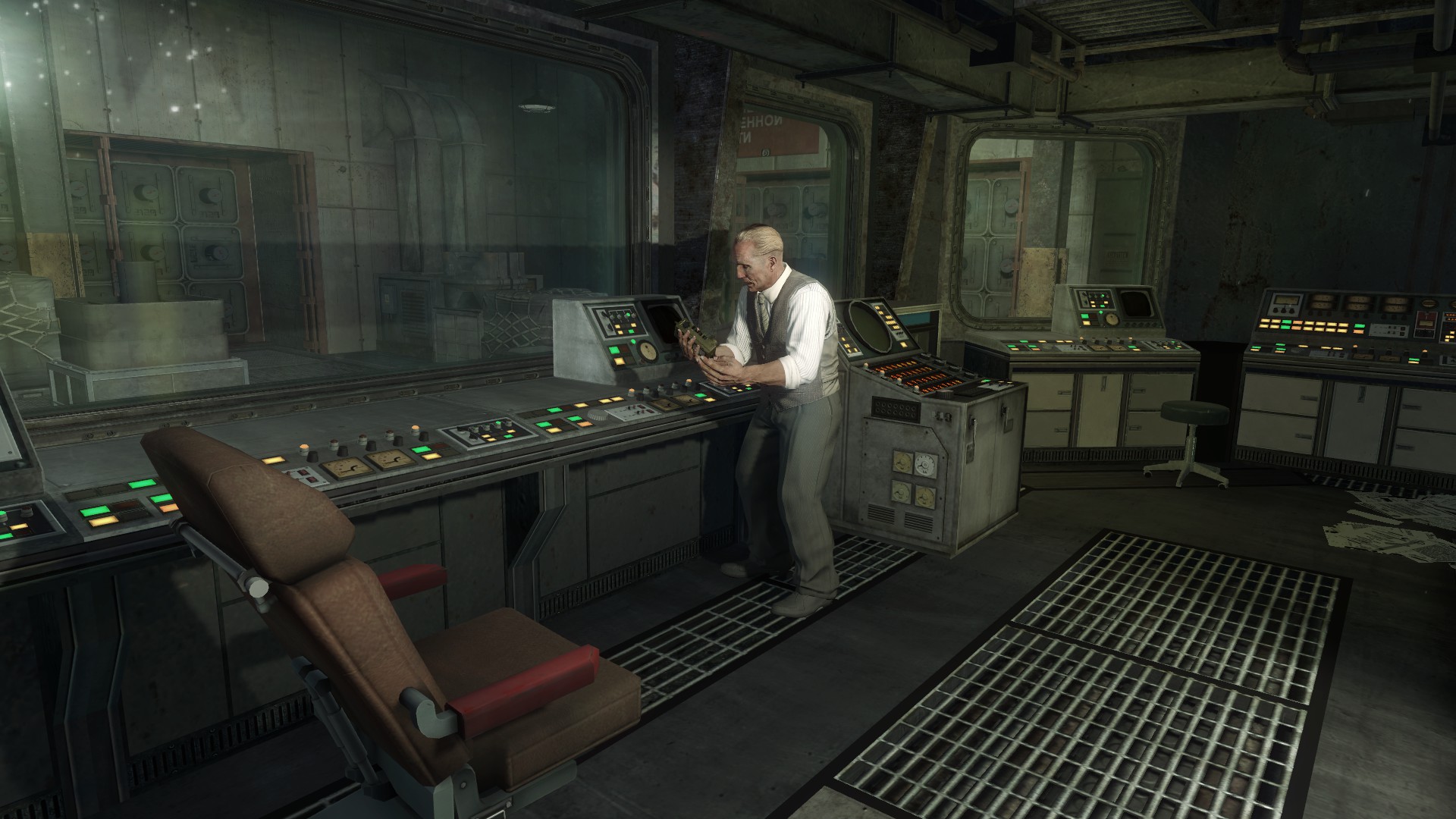
    My initial impressions upon starting the game were “who the fuck is woods, and who the fuck is this?”. Suffice to say, if I was having problems remembering characters from the first game when I only played in 2 months ago, i feel sorry for players who had to wait two years. It took a good hour or two (and a bit of Googling), but after a while, I was able to follow the story and find out why the game flashes between the 80’s and 2020’s.

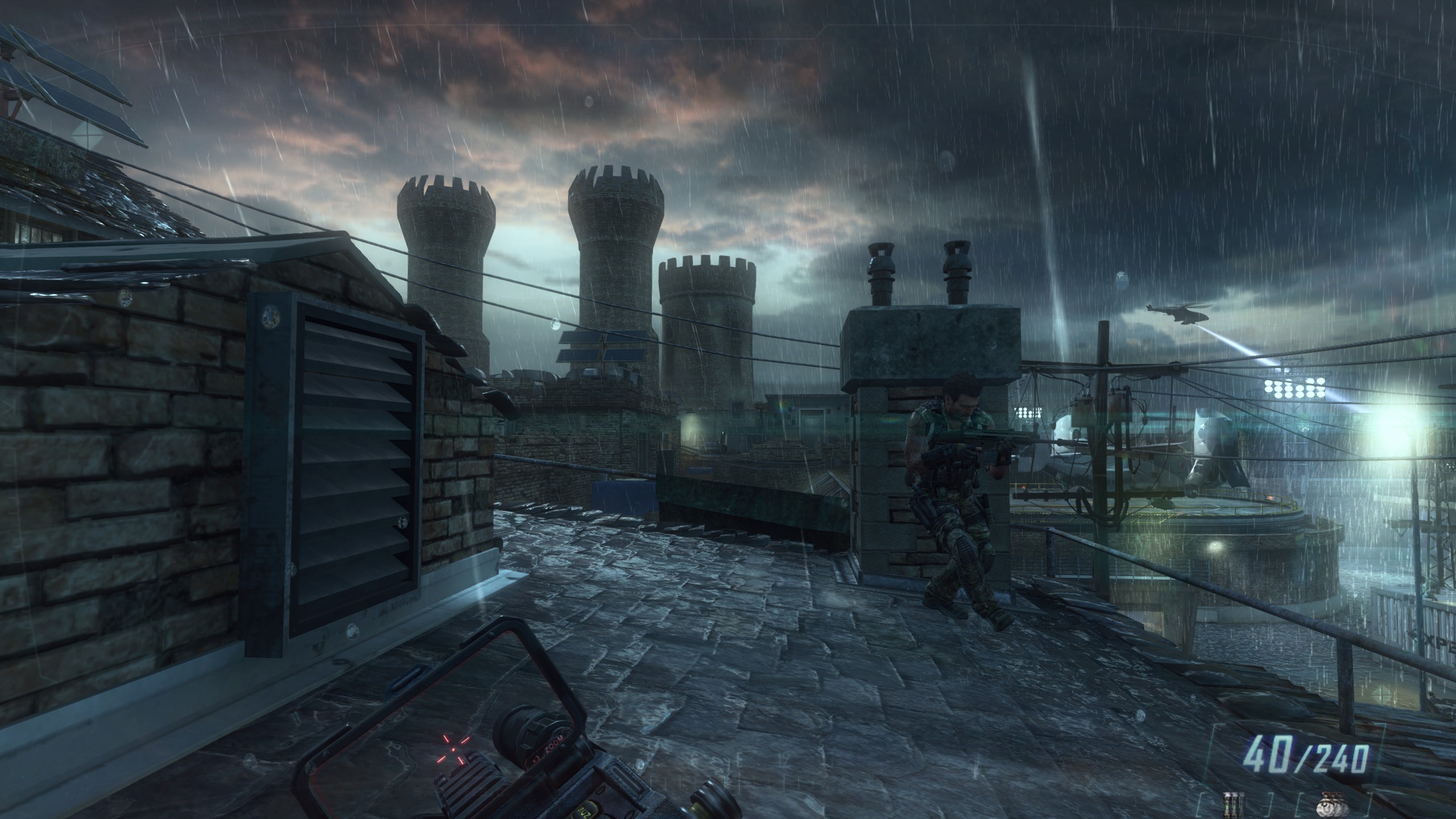
    You see, you play as “section” mason, Alex mason’s son (you played as Alex Mason throughout the first game). You’re trying to get to the bottom of why a terrorist is planning to destroy the western world, and how. So, in classic Call of Duty fashion, you have flashbacks to the 80’s in many weird and wonderful places that are central to modern history. Take Vietnam, Africa and Afghanistan for example. I’m not gonna complain too much, the variety of stages helps to really show the graphical prowess of this successor, and my oh my does it impress.

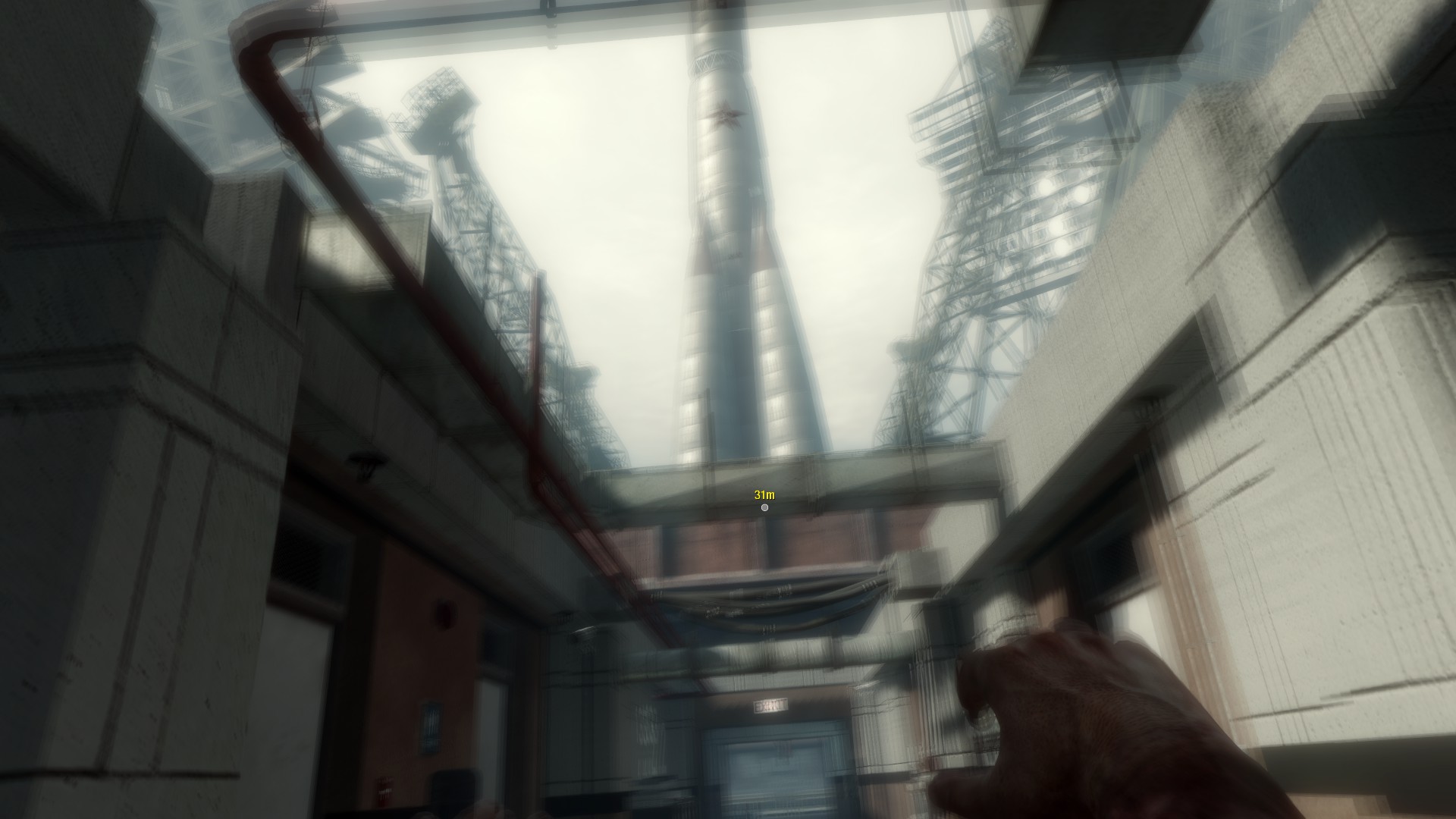
    For a game that was still only released on last-gen consoles, Call of Duty Black Ops 2 is quite the visual upgrade from it’s predecessor. Everything from textures, to lighting effects, to even character models all stand out as far more detailed than before. It’s crazy really, especially considering Black ops 2 continues to use the same engine. Treyarch deserve some recognition for what they were able to do with such a limited amount of resources.

    20160716164433_1

    The gameplay is the standard affair we’re all used to with Call of Duty game: namely great shooting and action sequences galore. I especially liked how much more “force” each gun seemed to have in this sequel, as I recall the previous guns feeling like pea shooters in comparison. Enemies are the same as always: Spawn from random locations and then try and flag you from multiple directions, the difference here is that there’s a lot more of them, mainly due to engine upgrades that allow a lot more enemies and NPC’s on screen at any given time. I’ll say one improvement the developers made for the enemies this time round: their ability to want to survive is commendable. The animations they display when flipping a table or a drinks machine is fantastic, and whilst it was first shown off in FEAR all those years ago, it’s still a great addition to increase the complexity of the enemies you’re fighting.

    20160716003529_1

    I wouldn’t usually bring up bugs in my reviews, mainly because all of the big ones have usually been fixed by the time I get around to playing a game, but also because I don’t feel they impact the gameplay too much (most of the time!). Unfortunately though, Black Ops 2 for the PC had one of the worst bugs I’ve experienced in PC games, which is that after every single campaign level I completed the game would crash to my desktop. I mean it – every single campaign mission, thrown straight back. Looking around on the net it seems this has been known since day one, with Treyarch saying they’d fix it soon, yet here we are, two years after it’s release with no fix in sight. The only way around it was to use Steam in offline mode, or to have less than 50 friends. Horrendous in my opinion, but alas, now you know (should my opinion be what you need before you go out and buy something – I don’t know, it could happen!).

    Story wise, it wasn’t as interesting as “the numbers” theme within Black Ops 1 (that entire sub-plot is thrown out the window within the first hour), but overall it kept me engaged and pushed me to find out more throughout the plots entirety. What was more interesting throughout was the future missions, where there was an air of believability throughout. The world is effectively the same as now, but with a new type of plane (where the engines are mobile, allowing for upwards travel) and monitors everywhere. It makes me look forward to playing Black Ops 3, where most of it’s missions are apparently based in the future, with all it’s high-tech robot suits and an all-out war.

    20160716142932_1

    For the most part, I enjoyed my time within Black Ops 2. It’s a more streamlined affair than it’s predecessor, which makes for a more enjoyable experience on the whole. Don’t get me wrong, it has it’s flaws, like the bugs and the lacklustre story when compared to the original, but taken in it’s entirety, Black Ops 2 really is a better game than the original. Treyarch should be proud, they really did manage to make a fantastic sequel to the acclaimed Black Ops, something many thought they wouldn’t be able to do. One things for sure, I’m sold on the premise of future warfare, and cannot wait to sink my teeth into Black Ops 3.

    4/5

  • Weekly Gaming: Inside (PC)

    Weekly Gaming: Inside (PC)

    It’s been a long 6 years since Playdead graced our Xbox’s worldwide with their first hit Limbo, and in that time the world has changed an insane amount. Looking back, it was always going to be a huge success: indie releases on Xbox were still relatively rare, meaning any that did manage to hit the platform were an instant overnight success. That’s not to detract from the game in anyway; it was still a great platformer, but I can’t help but feel it’s success was guaranteed regardless of it’s quality. So what has Playdead been up to these last 6 years, and does Inside manage to fee like 6 years worth of quality? Lets find out.

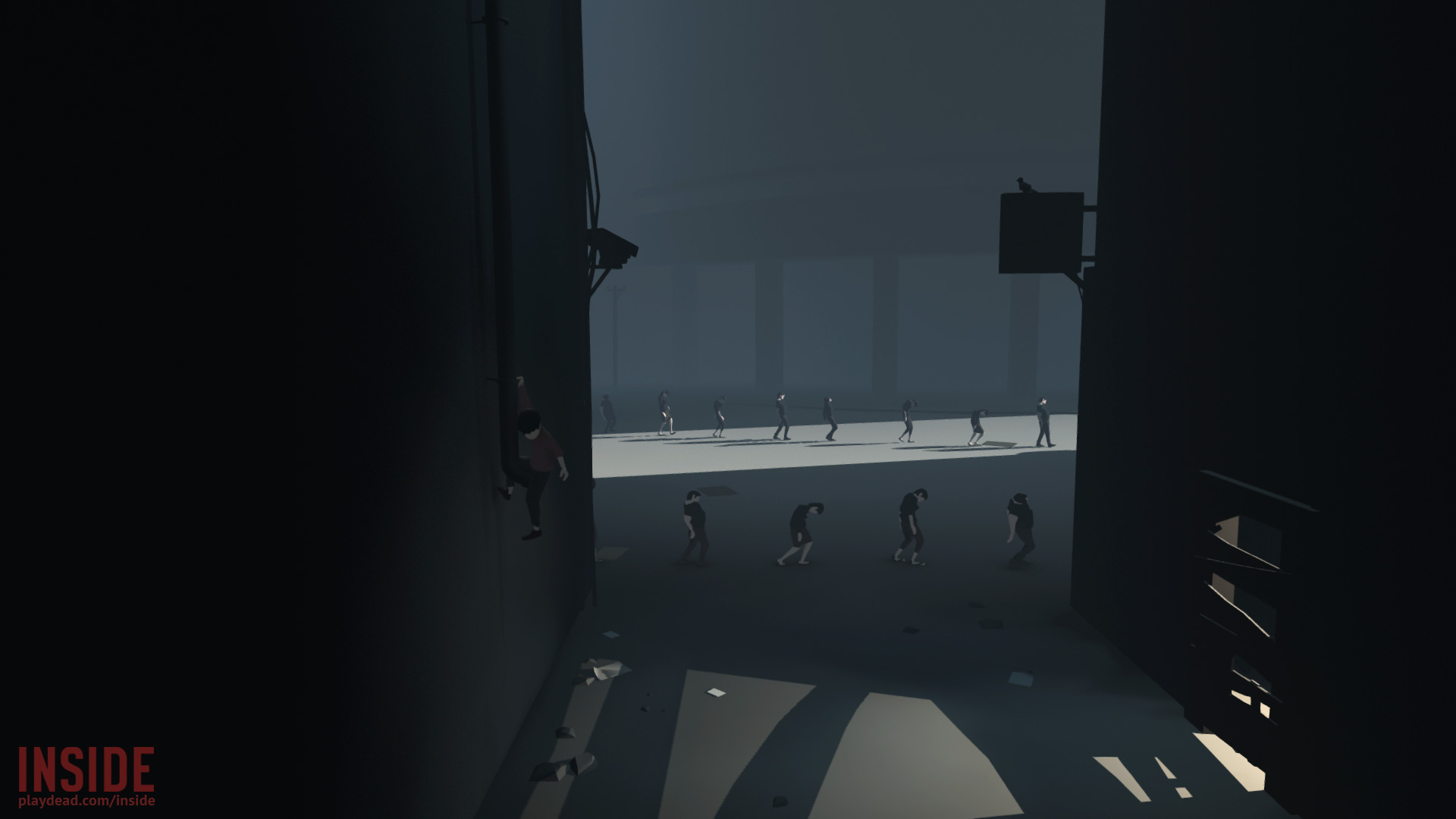
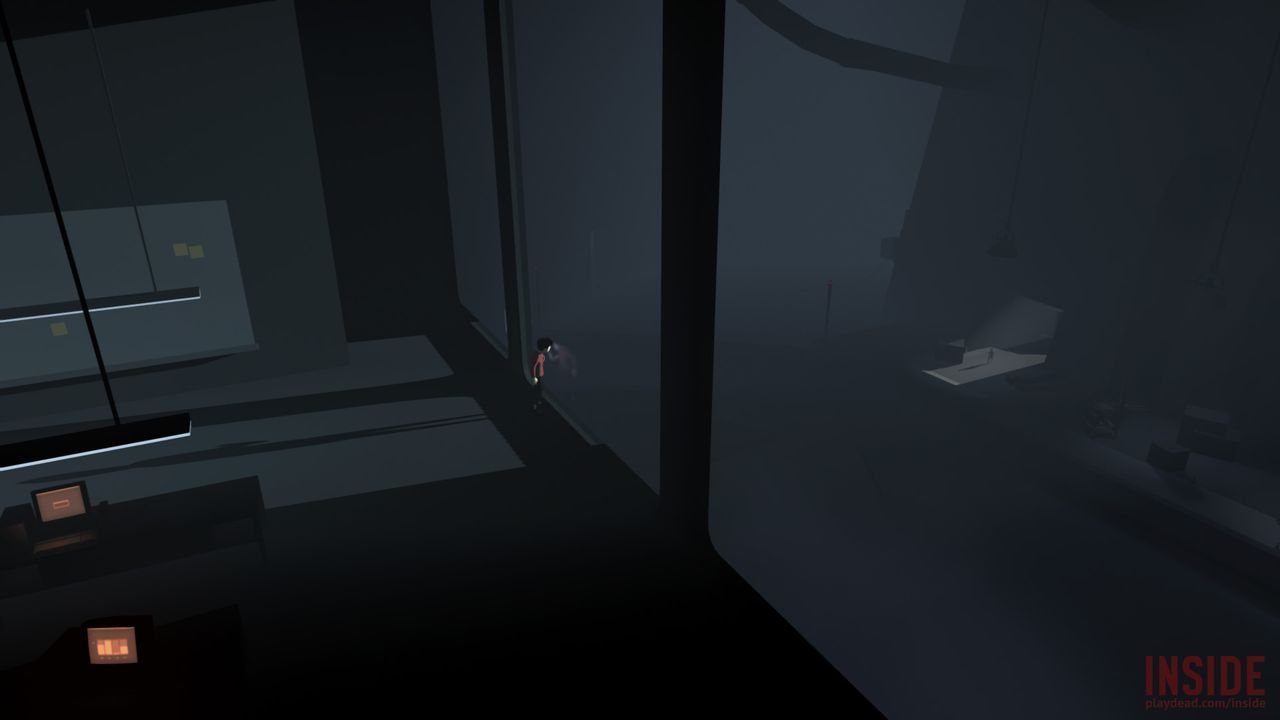
    Just like Limbo before it, you start off as a small child wondering through the woods. The immediate difference is the visual style of the game: what was once a plain black 2D art style is now a fully 3D environment with 2.5D platforming. There’s not a great amount of detail in each object you can see (most objects are polygonal to a degree, with no textures so to speak on them), but the amount of variety and attention to detail in the environments is insane. So many trees make the woods feel genuinely cramped, and even the fields in the farm and underwater sections feel chilling to explore.

    3076121-6584620453-INSID

    Inside gives you no prompts, and no instructions: you’re to learn this game yourself, ensuring you are properly paying attention to the world and it’s intricacies in order to fully appreciate it. Running from left to right, you make your way through this weird and wonderful world, one which is believable in it’s own right, but also weird in that it never explicitly spells anything out for you.

    In regards to the narrative, there’s no dialogue, no writing on screen, no nothing. Everything about the world and what happens within it is so abstract that you are meant to infer your own meaning on it. The internet is already becoming a hive mind trying to unravel what the story of the world truly is, but in doing so they’re missing what’s so charming about the game: it’s ability to make the player come up with their own idea of the world is what set it apart from other games trying to tell a story. Inside really is telling a huge story, but one that it doesn’t mind you making up as you go along.

    So if everything’s fairly simple, and there’s no narrative, what is there to do in Inside? A lot it seems, with the sheer amount of variety being absolutely shocking in a world where assets are reused time and time again. There isn’t a moment where you need to backtrack, and everything in the world feels unique and organic, so much so that the world feels like a real, tangible place. Combine that with what I said in the last paragraph, and you’ll find yourself guessing about everything you see, wondering what purpose an item has, and even what the people do. This level of detail cannot be over-stated, it’s immensely gratifying.

    inside-screenshot_1920.0.0

    Puzzles are few and far between, and the ones you do come across are actually relatively easy. Unlike Limbo, you rarely die throughout Inside’s world, and for the most part you’re merely taking the world in. Whilst I won’t spoil anything about the end game, your ability to move boxes in weird and wonderful ways towards the end is certainly entertaining, and had me gasping at the attention to detail Playdead Studios have pushed throughout.

    One puzzle mechanic that should be pointed out which intrigued and was actually quite original was your ability to control “drones” across the land using helmet gear. Drones are weird creatures throughout the land that are human, but have no sentience; instead they’re controlled to do menial tasks otherwise they’ll just sit around and do nothing. Donning a helmet allows you to control one drones across the land, which can make for some extremely intuitive puzzles during your time with Inside.

    With all that said, there’s not much more I can say about Inside without spoiling any of the story and surprises. Inside was an enjoyable experience, but I don’t think I agree with many reviewers in the world that has said it’s perfection. A more polished Limbo, yes, but a perfect game? No way. The ending didn’t leave me feeling anything, and if anything, just made me exclaim “cool” aloud. Whilst I enjoyed Inside, I’ve had better 2.5D experiences since Limbo was released all those years ago, meaning Inside just left me feeling hollow, as a lot of what it does has now been improved upon and even bettered. By all means give the game a go; it’s great, and an enjoyable experience from start to finish, just don’t expect to be blown away.

    4/5

  • Weekly Gaming: Pullblox World (Wii U)

    Weekly Gaming: Pullblox World (Wii U)

    Given how much I loved the original Pullblox (it was called Pushmo in america, and is different in different territories) I couldn’t wait to get my hands on a Pushmo for the Wii U. What I’d lose in portability I’d certainly make up for in visuals and the sheer quantity of puzzles to solve. Suffice to say, Pullblox World met me expectations, and even advanced on them.

    simple_puzzle_huge

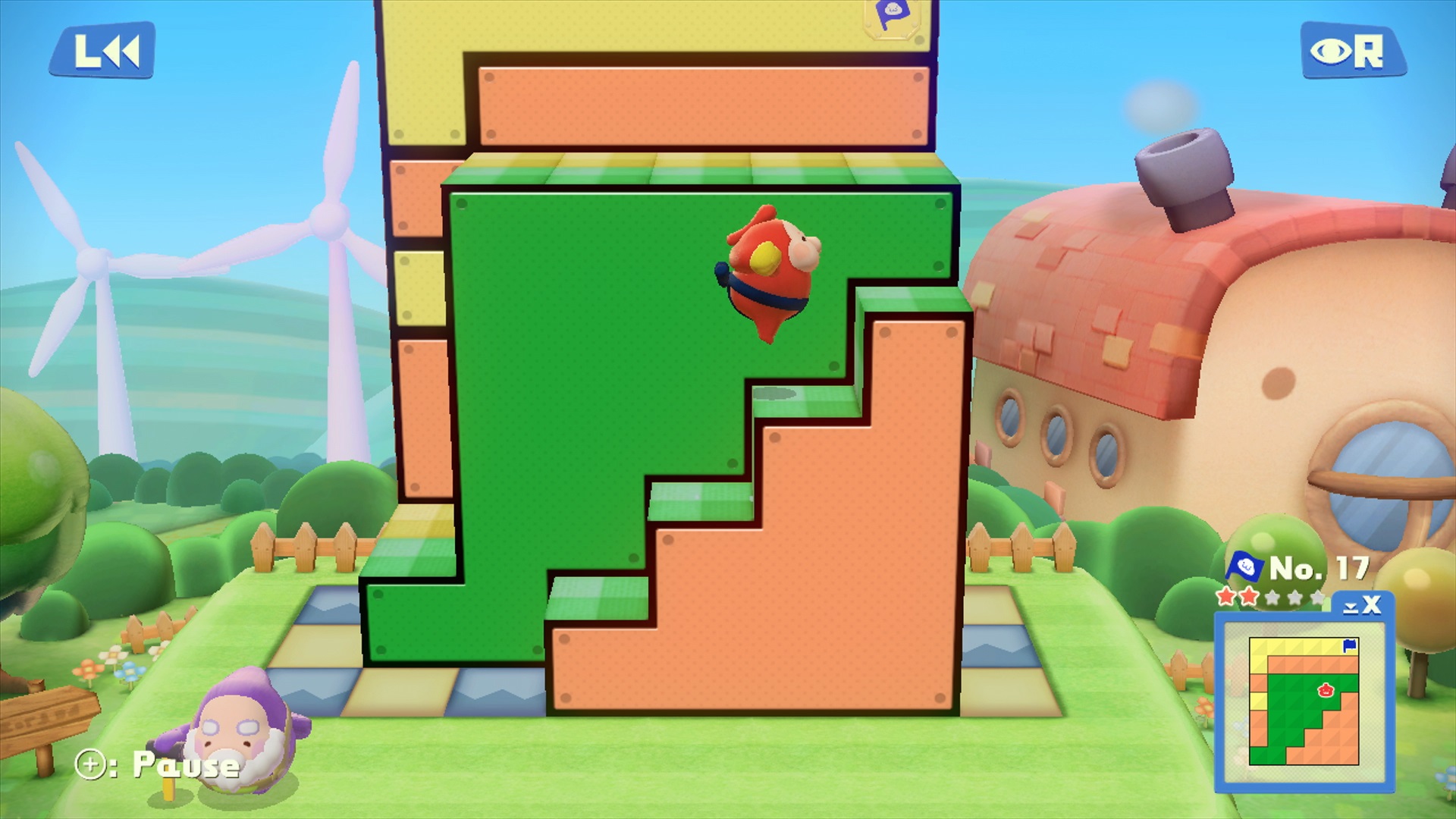
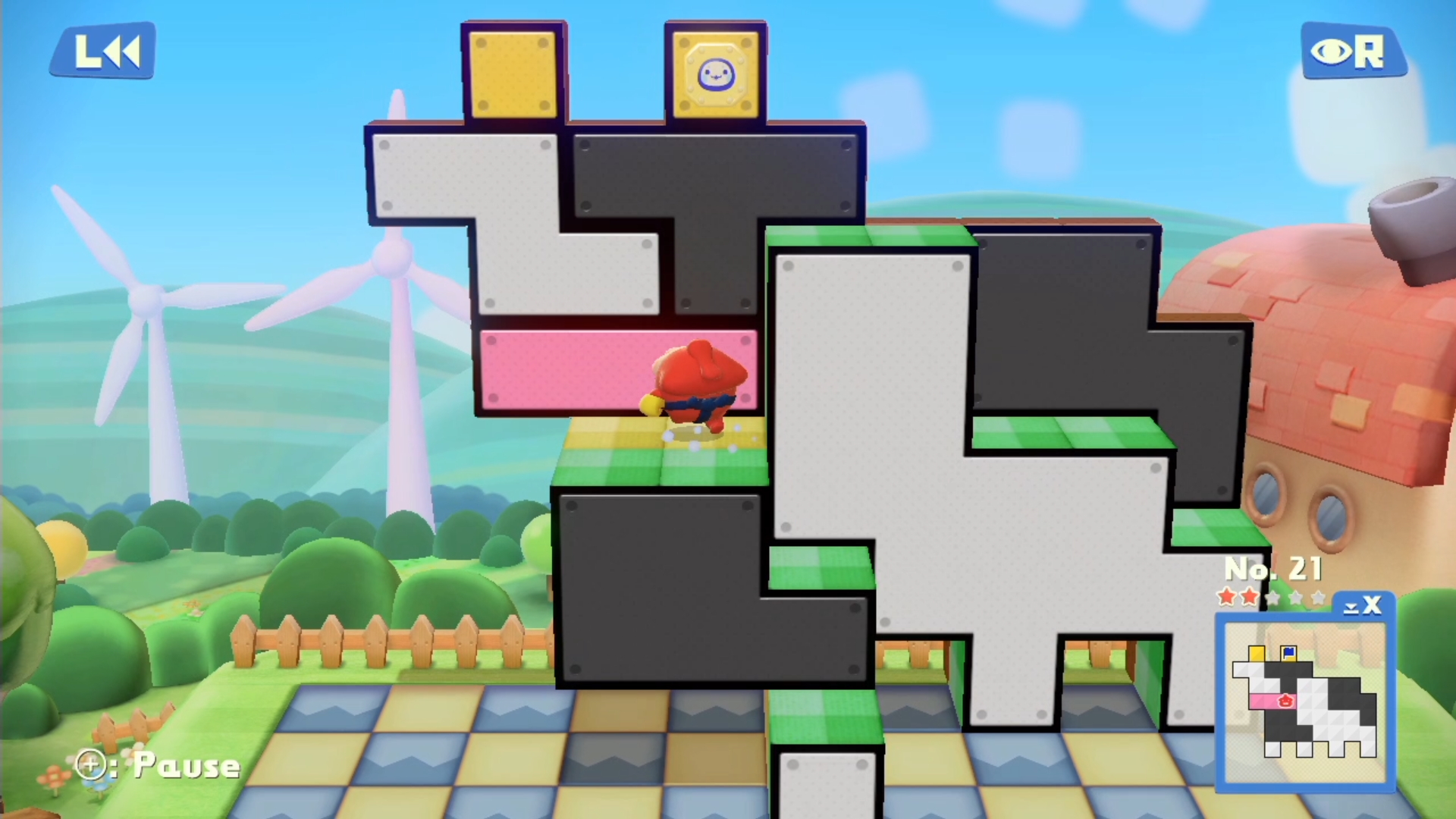
    First up, the game is no different than the 3DS version that I reviewed many years ago. You play as  Mallo, a little red sumo wrestler character that must save children that have managed to get themselves trapped on top of elaborate structures. These structures can only be pulled out a maximum of 3 spaces, meaning it’s up to your own ingenuity to discover the best method (and sometimes only method) of getting to the top of the puzzle and rescuing the children.

    So whilst the mechanics are the same, the puzzles are far from similar. The sheer amount of complexity and variety on offer in this Wii U version is just staggering, with some puzzles being quite abstract (i.e. normal shapes you have to overcome) to crazy sceneries, to even nintendo characters themselves being climbable. It’s insane, but oh so entertaining trying to figure out how to move blocks in order to make your way up.

    2549396-ci-25508788830376002

    One thing that has changed since the original: The complexity. There were so many times me and my other half would be starring at the screen for hours, wondering how best to move blocks out to get to the top. It’s infuriating, but genuinely gratifying when you overcome a challenge.

    Once we had finished the original 120 stages, we found there were another 30 special stages, along with 2 other modes: challenge mode (where blocks of the same colour all move out at the same time), and online mode. All in all there’s 250 new puzzles to conquer, and whilst I’m writing this review having only completed 140ish, I can’t help but feel me and my other half will continue to play this for the foreseeable future, having already put in 10 hours + so far.

    Graphics haven’t really changed since the portable version, with one of the only visible upgrades being the amount of polish in character and stage models. One improvement that does stand out is the new stage sizes. Where 3DS levels were relatively small, the Wii U versions are monstrosities, taking 15-20 seconds to walk from one end to the other. This sheer size can sometimes cause confusion, especially when you have to take into account elements from the other side of the puzzle when you’re half way up.

    pushmo

    The music is just as enticing as always, with the gorgeous cute charming music keeping you humming for hours. I found myself constantly shouting out the theme tune to levels well beyond completing them, much to the irritation of my other half.

    So all in all, I thoroughly enjoyed my time spent with Pullblox world. It’s more of the same, but when the original was so damn good, who can blame me for enjoying the second? Should you have a Wii U, you owe it to yourself to own Pullblox World, especially with it only being £8.99.

    p.s. Apologies for this review being so short, it’s hard to write 1000 words on a game that has such a simple premise, no matter how good it is!

    4/5

  • Weekly Gaming: Mighty No. 9 (PC)

    Weekly Gaming: Mighty No. 9 (PC)

    Hi all!

    This week I’m going to post a review back to Mighty No. 9, a game I reviewed a while ago, but never posted to this site. For those of you who need a little background: Mighty No. 9 was a kickstarter project from the man that brought us the original Mega Man. This hard 2D platformer was hugely successful in the NES years, but with Capcom owning the IP, it stagnated, becoming a title that was never developed in the 3D era.

    If you fancy reading my feelings on the game, by all means give the review a read below:

    http://www.vgchartz.com/article/264813/mighty-no-9-pc/

    As always, thanks for visiting, and until next Friday have a fantastic week!

    -Dan

  • Weekly Gaming: Call of Duty: Black Ops (PC)

    Weekly Gaming: Call of Duty: Black Ops (PC)

    I genuinely cannot believe that it’s almost been 6 years since Call of Duty Black Ops was introduced to the world. The game still (in my mindset at least) feels like it was just announced yesterday, with it’s weird mid-60’s era warfare being quite new and revelatory for the time. But alas, here we are 6 years later, and with myself having never given the game a go. For someone that was a fan of the series (I specifically asked for COD 2 for christmas one year, loving the series that much), I was never that interested in the concept of Black Ops. Maybe it was because, to me at least, the series was trying too hard. Modern Warfare was astounding, and it’s follow up, Modern Warfare 2 was just as good, so I suppose I just couldn’t be bothered with what felt like a stand in for a fully fledged game between games. But in dismissing Black Ops as an off-shoot, did I miss anything? Yes and No. Let me elaborate.

    20160619155256_1

    Black ops makes sure you know it’s trying to tell it’s own story, and is trying to create characters you fall in love with (just like the whole world did with Captain Price). From the offset you’re given a mysterious premise to the game, that there’s numbers that need decrypting, and it’s up to mason to crawl back through his memories to find out what they mean. This mystery takes you from one place to another, and is actually a good way to explain why Black Ops takes place in such a variety of places.

    You fight in the jungles of Vietnam, the island of Cuba, the harsh winters of Russia, and even see the Pentagon during your travels, and whilst Black Ops’ graphics is certainly starting to show its age, I for one enjoyed the attention to detail given to each locale. My only gripe is the Call of duty engine itself, which not only makes shooting enemies feel hollow (I can’t count the amount of times I wasn’t sure whether my shot landed or not), but also does a bad job of lighting environments, resulting in characters looking “plastic-ey”, especially when you’re up close to them during intense story moments.

    20160619161709_1

    Those moments are few and far between, because for the most part you’re going to be mowing down countless amounts of enemies as they swarm towards you in open areas. The typical COD action is present throughout, with the ante constantly being upped whilst more and more enemies swarm your way. One advantage Black Ops had over other titles in the series is it’s ability to give narrative as to why you’re in all these different circumstances. Underground fighting Vietcong? There’s plans under there which lead back to the soviets and their Weapon of Mass Destruction. In a Lockheed Blackbird guiding troops through Russia? There’s a plant nearby that manufacturers deadly gas. It all ties together quite nicely to be honest. Don’t get me wrong, there are a few moments which felt like tropes (the guiding of people from a Lockheed was one of them), but overall Black Ops done a good job of explaining why you were in each location.

    The gunplay as ever was entertaining and constant. Any downtime between gunfights was great for receiving narrative relating to the story, but overall the variety of weapons to use and abuse was staggering, and enjoyable for the most part. As I mentioned before, the game engine was annoying in so-far as not communicating to the player whether an enemy was hurt or killed, but overall I enjoyed mowing down thousands of enemies with different weapons. There’s a reason players keep coming back to COD after all these years, and the gunplay is certainly the main one.

    20160619164659_1

    It should be noted here that on PC, the gamepad was not an enjoyable controller to use in Black Ops. I for one prefer using a controller on PC games (call me a peasant all you want, to each their own I say), but found it impossible to do so in Black ops. It just felt wrong, no matter how much I changed up the settings, each and every kill just felt weird or lucky, never as though I had any skill. Half way through the campaign I switched to keyboard and mouse and felt a hell of a lot better for doing so. Take heed if you’re like me and prefer controllers, Black Ops may say it supports gamepads, but it does not feel nice at all.

    I spoke of the story/mystery earlier on in this review, so how does it play out? Overall Black Ops does a genuinely good job of intriguing the player, and introducing enough likeable characters that you feel bad should they be hurt. The cold war setting is a point rarely explored in games, so to see key figures from the era (like Kennedy) rendered within the engine was a delight. Plot points come frequently, and whilst the main twist in the campaign was predictable from a mile off, it still done a good job of upping the ante throughout the campaign. The conclusion is also satisfying, albeit with the caveat that you can’t help but think the developers left the franchise open to a sequel in two years time.

    A big gripe I do have with the PC version is it’s lack of extra settings to truly use the power of the platform. The graphics engine is clearly made for consoles, and it’s a shame that my PC could easily run the game at over 140fps, especially given the fact Treyarch (the developers) have experience with PC gaming in the past.

    20160619165549_1

    Oh, and before I come to the summary, I’m glad Treyarch brought the Zombies mode back for Black Ops. Whilst I didn’t give it a go on PC too much (it’s more of a co-operative mode), I’m glad it exists; I have so many fond memories of killing zombies whilst trying to survive with Uni friends.

    So in conclusion, 6 years on I can see why Black Ops was actually seen as the one true competitor to Infinity Wards behemoth Modern Warfare series. They set up some memorable characters, and some plot points that truly standout compared to the stories of other Call of Duty games, and all whilst maintaining the fantastic 60fps gameplay everyone knows and loves. Just be warned if you now wish to play the game since reading this review: Activision RARELY reduce the price of their games. The only reason I have Black Ops 1 and 2 on PC is because of a Steam summer sale. If you still want to give the game a go, get it from amazon; it’s still $40 on Steam.

  • Weekly Gaming: Hohokum (PS4)

    Weekly Gaming: Hohokum (PS4)

    I remember seeing Hohokum announced for the PS4 before the consoles inevitable release. It was charming to watch in action, but I couldn’t help but feel confused as to what the game was actually about. Here was a tadpole-like creature that was going around weird but colourful worlds in a seemingly random fashion. Needless to say, I had to give the game a go, so when I got it as a part of Playstation Plus many months ago, I decided to finally sit down with Hohokum and see what it was all about.

    2042312-714468_20130610_004

    The game starts off in an abstract black circular area. You proceed to move your “tadpole” around the black circular area whilst button prompts come up showing you how to move your tadpole through the world. Pressing X speeds up your character, whilst O slows it down, and Square closes your tadpoles eye. That’s it, simple controls for a seemingly simple game.

    During this black section you’re also introduced to your main characters friends. These other “tadpoles” all have unique shapes and colours, and when you go near them, you find that they follow your every move. This makes for some simply stunning art when you have the ability to move them all around in spiral and gorgeous patterns.

    Eventually, the game start proper when an incident tears apart the fabric of your black world, and in doing so, makes you lose your 18 friends, and so the adventure starts proper. You go into the only hole left behind, and discover a hub world full of awesome abstract creatures, with all manner of obstacles that lovingly animate with your characters touch. There’s easter eggs galore all over this first land too, with statues adorning a lot of the stage hinting at a history where the inhabitants of this land hated the tadpoles. It’s all for naught though, as the entire game of Hohokum allows you to interpret anything you see anyway you want, as it never actually explicitly tells you anything. It occasionally hints at little story tidbits throughout, but this is purely to prod your imagination into conjuring up fantastic stories.

    Once you’ve explored the first world enough, you’ll notice that you can create these portals to other realm by hovering over specific groups of circles. Each portal you enter will take you to a brand new and seemingly random world. It’s in the exploration of these worlds that you truly start to realise how damn charming Hohokum really is. Every abstract interpretation of real-life animals and activities looks and feels different, with each dimension also seemingly having different rules to follow. In one area you may meet an “elephant” that for all intents and purposes acts and behaves like one, but otherwise look nothing like a real life one. These abstract representations are at first confusing, but eventually, endearing. I found myself towards the end of the game enjoying soaking up every new creature and person I saw, taking in this weird and wonderful world in all it’s glory, and not wanting it to end.

    hohokum-screen-9-us-10jun14

    Each world will have a new puzzle to solve, which will always involve interacting with the environment in weird and wonderful ways. One world for example is a theme park, with multiple people spread throughout. When you hover over them, they jump on your back, ready to be put somewhere around the theme park, maybe on a ride, or even in a cannon to shoot them anywhere randomly. Once mini-puzzles are solved (like starting a ride back up), bigger pieces of the puzzle are given, which in turn finally reveals one of your missing friends from the start of the game.

    These puzzles are the bread and butter of Hohokum, and contribute to the games seemingly impossible learning curve as you first venture around levels. Eventually you’ll get used to how weird the game is, and it’s at this point that you’ll truly start to love and adore everything you see on screen. Every character is so seemingly simple on the surface with their big bold colours, but also so stylised and complicated that it throws you off frequently. I genuinely loved feeling confused throughout, as it allowed me to take Hohokums style and substance in all it’s glory. This sense of confusion may not be to everybody’s taste: those of you who like a more linear game may get frustrated at the games seemingly random logic, but for those of you who like a challenge, Hohokum is a genuine delight.

    When a friend is found, a new cutscene/story piece is given for how that friend lived in the time you were gone, and it’s also here that I found myself loving Hohokum even more. These charming tidbits of information really give character to these string-like creatures, which makes the game even more endearing. It’s weird really, but an absolute delight to experience when you first laugh out loud at how a character was trapped for years with people in the world thinking it was a hose.

    hohokum-screen-14

    The music, whilst sparse is also a delight, which, when combined with the sound effects produced when your tadpole interacts with the world, makes for a captivating experience. I found myself humming tunes regularly as I re-entered a world I had been in previously, a brilliant way to show how lovely and charming the music truly was.

    If I had to say some negatives about Hohokum, first it would be that it’s pretty short. At 3 hours and 50 minutes, I felt I had seen everything the game had to offer, and whilst there were more collectibles to find, I didn’t really feel like staring at abstract shapes until my eyes went blurry.

    Second, the “story” doesn’t really have a beginning, middle or end. For some this could be seen as a positive, as you’re exploring at your own pace and for your own reasons, but I felt the fact that there was no proper conclusion detracted from character Hohokum gave to it’s seemingly sentient tadpoles.

    Overall though, these negatives are tiny in the grand scheme of things, with myself and my other half thoroughly enjoying the richness of the world that is Hohokum. Should you have picked the game up for free in the past using Playstation plus, give it a go, you will not be disappointed.

    4/5

  • Weekly Gaming: Her Story (PC)

    Weekly Gaming: Her Story (PC)

    Given how many awards Her Story has received this year (some from BAFTA for example), I felt it was time to give the game a go, and see what all the fuss was about. I recall walking past the game at EGX Rezzed 2015, but didn’t think much of it due to its lacklustre appearance. I mean, who wouldn’t? You’re in a tiny room with hundreds of other games making loud noises and packed full of action and explosions, and all you see on this one monitor is an artistic impression of an old CRT monitor, complete with scaliness and reflections, with nothing more than a lady talking on it. I’m sure many others would walk past too.

    But boy ‘ol boy was I a fool. After spending the best part of an entire evening with my other half playing through Her Story, I can say I’m a fool for not giving it a look sooner.

    her-story-script-01.jpg

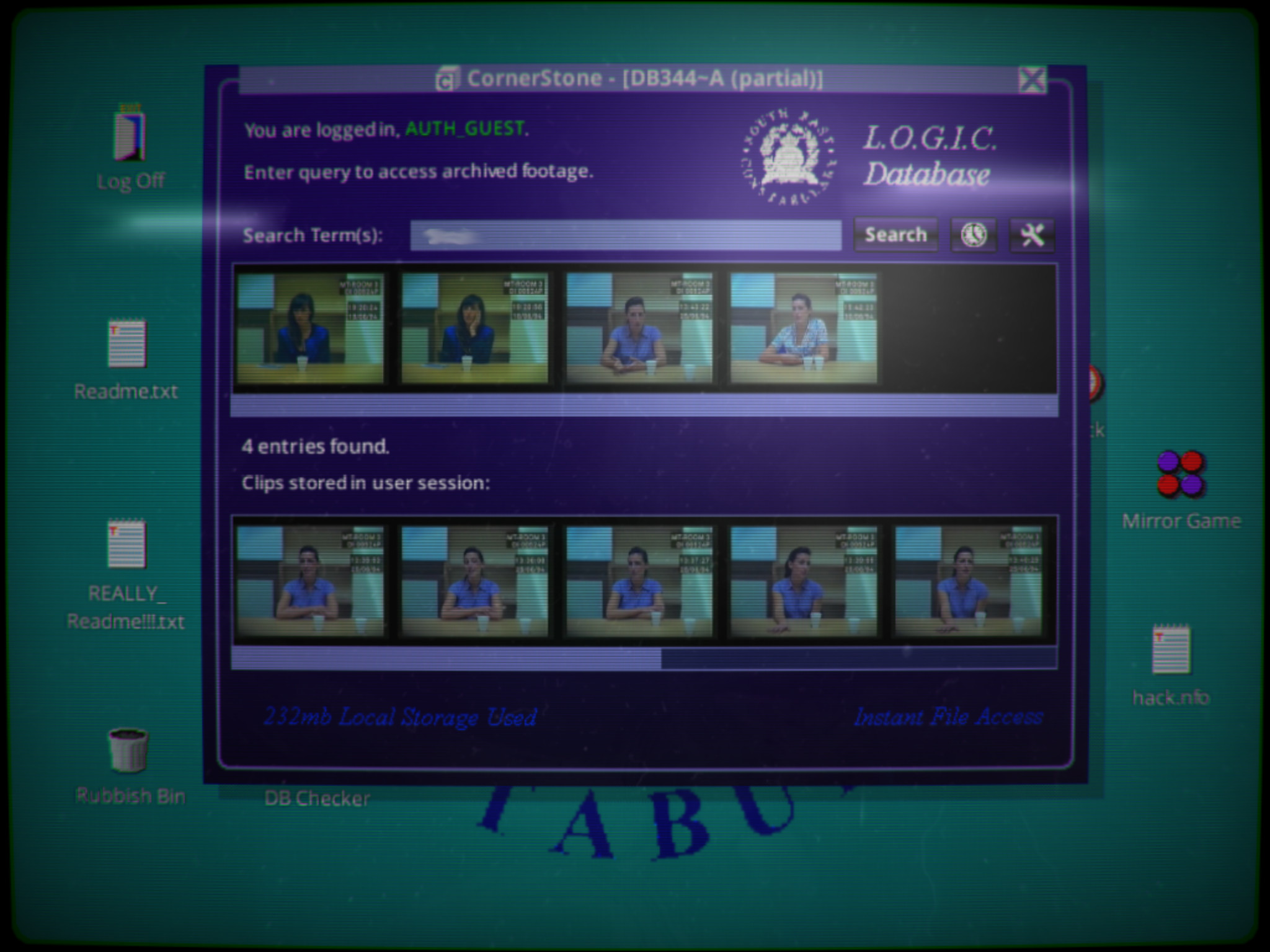
    Her Story revolves entirely around a series of police interviews with a suspect. You’re given no context about the reasons the person in question is a suspect, or even what has happened for their to be an investigation, you’re just presented with a PC monitor, a database piece of software, and some instructions on how to use it.

    You proceed to watch the first 5 videos already brought up within the database, and from there you start to build up a picture of what has happened. From these tidbits of information recovered from the tapes you just watched you can proceed to search for new terms in the database. A lot of the recordings you find may lead nowhere – sometimes they’re not giving more context on the current line of thinking you may have, other times they’re 2-3 seconds long and only contain a recording of the lady saying “yes” or “no”.

    Her_Story_screenshot_06

    But it’s in this mystery and lack of context that Her Story really stands out from the crowd. My other half really got into the idea of being a detective, picking apart everything the lady said to try and distinguish what we should search for next. Some clues may lead nowhere, but others feel like going down the rabbit hole, revealing a whole new point to the investigation you had never thought of before.

    The lack of hearing questions pushed at the lady also helps to keep a sense of mystery throughout, with your own mind having to be the conduit for which you try and order everything together. Tapes are mixed, and depending on which search terms you use, convoluted, making for an interesting and ever lasting hunger for more information.

    I’m not going to spoil anything about the story or the game, as that’s a huge part of what makes Her Story so incredible to experience. Should you already know terms or story points before you go in, you lose the mystery and as a result, are able to separate yourself from the investigative experience Her Story so greatly encapsulates. Suffice to say, what you get from the story is certainly fantastic, with many plot points giving you aha! moments that expand your understanding of the events that happened.

    main

    The acting of the actress was fantastic, with me an my other half truly getting a sense that these were real tapes with real questions being asked. The story, too has done an absolutely fantastic job of building this world up from scratch just through this ladies answers to questions we never hear. It’s insane to think these places and people don’t exist in real life, as the attention to detail about everything is staggering.

    One touch I did like was that Her Story is open ended; there is no conclusion to the story, no grand cut-scene that explains everything in chronological order, you’re simply asked if you’ve seen enough to understand what happened. It’s up to you, yourself to determine if you’ve seen enough of the tapes and have enough context to know what happened in 1994.

    You know what? I’ve been racking my brain for the last 15 minutes trying to think of a negative for Her Story and genuinely can’t come up with one. It knows what kind of game it wants to be, and never deviates from the course, creating one of the most sophisticated and brilliant games of the last few years. Because of this paragraph alone, I’m pushing the 4/5 I originally gave it up to a 5/5.

    ss_47f0e58df778d9f10b3df40ddce8bba8e592b1fb.600x338

    So, Her Story is genuinely fantastic. I can say without doubt that the game has won me over, and I can understand why it won as many awards as it did. Should you have 3-4 hours free one evening, and have a PC, iPad or Android tablet, give the game a download; you won’t be disappointed.

    5/5

  • Weekly Gaming: Cibele (PC)

    Weekly Gaming: Cibele (PC)

    Losing your virginity; it’s a deeply personal experience, and one which rarely gets mentioned in all forms of media. There’s a reason; this awkward first time is meant to prepare you for a lifetime of sexual encounters, so it’s hugely intimate and infinitely personal. So imagine my surprise when a game is made that goes through a girls first sexual encounter, and online relationships in general. I was interested, don’t get me wrong; indie games really do push the boundaries when it comes to what can and cannot happen within an interactive medium.

    cibele_004

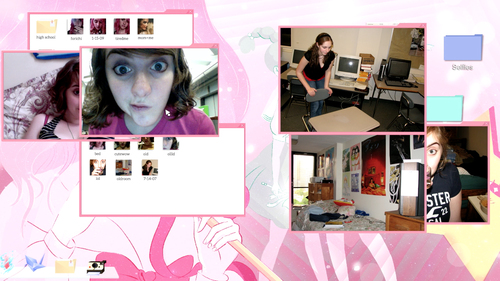
    So how does Cibele go about explaining it’s developer’s (Nina Freeman) first experience? Through a simulated desktop of what Nina would have said and done during this time. You’re able to click around this desktop, looking in Nina’s files and folders, exploring her most intimate poems and pictures. It’s this freedom to explore the game at your own pace, and to see as much or as little as you’d like which truly sets the tone here. You really feel like you’re actually exploring someones computer, which, as many of you may know, can be a hugely personal and scary thing (I know I certainly wouldn’t want someone free roam of my PC).

    Once you’ve explored Nina’s desktop as much as you’d like, you can proceed to boot up and play the online multiplayer game Nina is playing. This game (Valtameri) has you defeating enemies on the screen whilst dialog plays in the background between Nina and Blake. The game isn’t fun, and is merely there as a backdrop/scene to the actual depth of the story; Nina and Blake’s long distance relationship.

    udw390L

    The dialog is down right cringe-worthy in spots, but as a whole took me back to my teenage years of chatting up girls online. It’s authentic, and generally does a good job of showing how a relationship can manifest from terrible flirting between two awkward participants.

    The dialog plays out seemingly separate to the game being played itself, a fact that took my other half by surprise whilst we were playing. It wasn’t until I explained to her that multiplayer games are more of a backdrop to you catching up and socialising with others that the story made more sense to her. To put it in perspective, I explained all the times I would play Halo Reach or Call of Duty with friends at uni over Xbox Live just to catch up on the day’s events.

    Once you’ve finished the boss on each level within Valtameri, you’re rewarded with a new cut-scene which further expands on Nina and Blake’s relationship. This may be in the form of Nina taking revealing photos, or even her searching for flights to California (Blake lives on the west coast – Nina the east). These cut-scenes themselves can make you extremely uneasy also – the intimate detail Nina proceeds to show throughout Cibele is definitely not for the faint hearted, something which may put many players off. It’s tasteful though – nothings inherently sexual here. Yes, Nina’s in her underwear and taking awkward sexy photos, but you know the context, and can see how awkward it all is, giving precedence to the story at large.

    Once the cut-scenes over you’re introduced to a new date (sometime in the future) and proceed to start again, looking through Nina’s desktop files before proceeding into Valtameri again. This continues for 3 acts until you finally get the conclusion – Blake visits Nina in New York. In the conclusion, Nina and Blake lose their virginity together, but end up going their separate ways, with no future relationship manifesting from this encounter. It’s not a spoiler to say this, that’s the whole point of this game, it’s just jolting when it happens; we’re all used to game’s and narratives as a whole giving a fairy tale ending – with Cibele it shows the awkwardness of real-life, and how everything is a shade of grey rather than black or white.

    images_cibele_03

    As a consequence of the “narrative” Cibele pushes, there are going to many that refute it being called a game. I can kind of see why; the interactivity of Cibele is limited merely to the desktop portion of the game – here, you can see as much, or as little as you’d like about Nina’s life. Snooping around her personal files will certainly give more context about her current feelings on different matters, but there’s no way to actually influence the story being told. You are just an observer into this girls adolescence.
    Cibele is a great narrative experience, one that brings to life the awkwardness of our teenage years of flirting, and one which truly helps to evoke feelings of awkwardness and cringe-eyness. As I said before, it was weird seeing so many chat up lines or conversations I once had growing up, and especially to see it from the other side (from the girls perspective). Whilst Cibele doesn’t do much as a game in that you don’t do much at all (think like walking simulators), it still does a good job of reflecting that one weird period in our life we’re all going to experience.

    3/5

  • Weekly Gaming: Animal Crossing: Amiibo Festival (Wii U)

    Weekly Gaming: Animal Crossing: Amiibo Festival (Wii U)

    I’m a massive fan of Mario Party. That is no surprise to those of you who know me, what is a surprise is how much so. It’s strange I know, especially for a series that evokes such hatred and love from it’s simplistic mechanics. In fact, there’s something about video board games that truly hits the spot for me. Maybe it’s the fact that no matter how much bad luck you have in rolling virtual dice you still have a chance to get points back with your skill, or even the randomness of it all, there’s something enthralling about playing a good video board game with friends or family. So, with that in mind, let me tell you about a little game that was on sale (for £15!!!!) for the Wii U called Animal Crossing: Amiibo Festival.

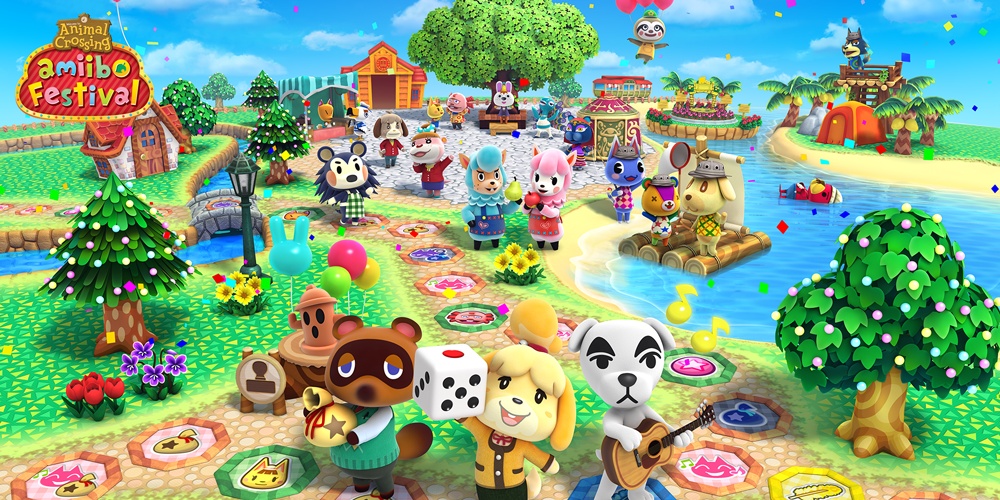
    Amiibo Festival, as the name implies, revolves entirely on Amiibo’s being placed on the Wii U gamepad in order to interact with the board game on screen. There are 2 game modes to do this in: the main board game or the mini-games unlocked through playing the main game. To get you started with the character placing,  Amiibo Festival includes two starter amiibo’s, Digby the dog and Isabelle the poodle. You don’t HAVE to play as these characters, but due to them being amiibo’s, and them inherently saving progress as you go around, it’s best to, as doing so unlocks more costumes and animations for your chosen characters.
    large-2

    So the main board game, is it any good? Unfortunately, nope, not at all. You see, the reason I love mario party games is because of the balancing that happens due to mini-games’ very existence. Just like being good in Mario Kart gives you bad items but doesn’t detract from your actual skill, Mario Party games can give you the worst dice rolls imaginable, but you could still win thanks to your skill in the mini-games.

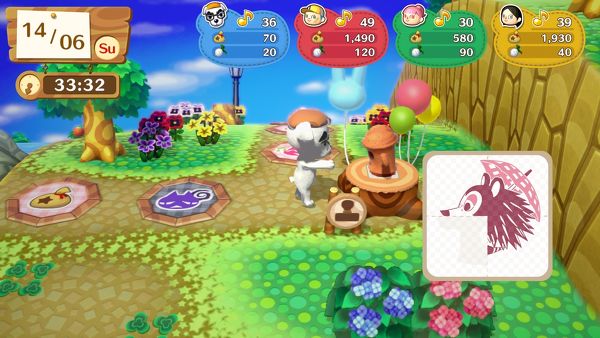
    Animal Crossing: Amiibo Festival does away with anything you thought a board game should contain, meaning there’s no skill involved, apart from the skill to place an amiibo on a controller. The game does literally everything for you, there’s no thinking involved, no games to play, nothing. You are literally spending 45 minutes to an hour of your time watching characters interact with each other and lose coins. The objective of the game is to get as many happy points as possible, with coins turning into happy points at the end of the game. Some spaces of the board give you happy points or money, with others taking it away. This is all fine and good as a main objective, but as I said before, there’s no urgency, and certainly nothing on the players part in the way of skill – it’s all luck based on what you roll, and that, in itself is annoying.

    The only, and I mean only, two decisions of consequence you actually have during an entire game is trading turnips and deciding whether you wish to use your movement cards you pick up or to roll the dice. That’s it. Literally, the most thinking involved has to be the turnip buying, which happens once a week, and involves you deciding whether to buy as many as you can (the best strategy) or whether to hold on to some of your money. In most, if not all circumstances, the best tactic is to just buy as many as possible, as chances are, you’ll sell them at a profit during the week anyway.
    jpg

    The only redeeming feature Animal Crossing: Amiibo Festival has is it’s absolutely charming presentation and cute world. Every nook and cranny of the world features cute animals, each with their own charming personalities, and each going about their lives like any normal person would. It’s a lovely world, and one that makes me jealous of my other half’s love of all things animal crossing; it’s cute, and reminds me of how I felt about Disney when I was younger.

    Onto the mini-games, that require brand new amiibo cards. Yep, these are separate to the two main figures that came with the game, and are Nintendo’s attempt to draw even more money from their already heavily milked cow that is their fanbase. These cards look and feel like Pokémon trading cards from yesteryear, albeit with the new technology that is NFC built into everyone of them. Tap a card to the Wii-U controller, and you’ll perform an action with the character printed on the card.

    Each mini-game makes different uses of these different animals. One for example was a balloon game where you’d have to hold your card onto the wii-u until you decide you want your character to fall – doing so bounces them off balloons and points, with you trying to get your character to land on as many as possible.

    Another was a game of rock paper scissors mixed with whack-a-mole. It sounds crazy, but is actually fairly simple: each of the 3 character cards you place on the wii-u represent rock, paper or scissors. In front of them is a mole that spins around and chooses a different symbol every other second. It’s up to you to place a character card to the wii-u game pad both as fast as possible, but also ensuring you get the correct result (paper beats rock, rock beats scissors for example). Whilst I didn’t play this myself, I could see my other half enjoyed it no end.

    animal_crossing_amiibo_festival

    So were the mini-games worth it? Well half of them cannot be played with the included cards. Some require more than 3, which is yet another attempt within Animal Crossing Amiibo Festival itself to get you to spend more money. They were enjoyable, don’t get me wrong, but should they have been included as mini-games at the end of rounds they’d have been of greater use rather than side-projects.

    As for Animal Crossing Amiibo Festival as a whole; It could have been so much better. Every design decision, from the single board game (yep, no variation, always the same board), to the limited way in which you interact with the game feels like a hollow attempt by nintendo to grab more cash from you. It’s a shame, as the game does have a lot of genuine charm, but when you’re constantly made to feel like you’re missing out of features because of what you have or have no purchased, you can’t help but feel regret at stooping so low as to buy something so underwhelming. If you’re an animal crossing fan, you’re bound to find something of value here (namely the amiibo figures themselves), but for everyone else; avoid this game like the plague. There’s nothing of value here.

    1/5

  • Weekly Gaming: Lumo (PC)

    Weekly Gaming: Lumo (PC)

    Hi all!

    I hope you’ve all been well. This ones a bit late, as I forgot that I had reviewed the game but never published it on here! So for this week, enjoy my video and written review for Lumo, a classic isometric platformer that I enjoyed, but felt was quite flawed.

    http://www.vgchartz.com/article/264425/lumo-pc/

    Apologies if this reviews a bit over the place, I must admit I felt my words were certainly convoluted and all over the place whilst writing the review and the script.

    Anyway, until next week, have a great one!

    -Dan

  • Weekly Gaming: Ryse (PC)

    Weekly Gaming: Ryse (PC)

    I’ve been intrigued with Ryse since it first came out on the Xbox One. It’s troubled development (originally planned to be released as a Kinect game) and mediocre reviews that all said it had generic gameplay with shiny graphics made me hesitate on my purchase at the time. Now with Ryse being ported to the PC, and with it also being included on a Steam sale for £3.74, I decided to pull the trigger, and finally give the game a go, to see if all of those criticisms were valid.

    The first thing that grabs your attention about Ryse is it’s insane amount of detail. Every marble staircase, every glisten of light, and every single model in the world looks absolutely stunning, so much so you’d be forgiven at times for thinking it’s a 3D film. This amount of realism also extends to the characters on screen and the animations deployed. Facial expressions are intrinsically comprehensive, properly portraying emotions like never before, so much so that when people are angry, you truly believe their rage. This amount of graphical detail is consistently pushed into your face with each execution the gameplay ensures you participate in on a regular basis. Suffice to say, if there’s one thing that should keep you interested throughout Ryse’s 5 hour campaign, its the constant gorgeous presentation.

    So how about the story – one of the core tenants of any game and the glue which holds and explains the gameplay set pieces. Unfortunately, this part of Ryse does not hold up well. It starts off all good and fine – your main character Marius Victus is a typical roman centurion, who just so happens to have a bad start to his career when barbarians invade rome and kill his family. Doing what any good centurion would do, he gets sent off to the front lines of the empire, taking on the barbaric Britains as they try to reclaim their land. It’s once you’re introduced to the main protagonist that the story truly starts to digress.

    You see, it’s not the personality of Neo’s son that brings the games plot down, it’s what he represents; a clear deviation from the current grounded story. From this character onwards, the story of Ryse starts becoming magical, with Marius soon discovering that he cannot die – a fact which he shrugs off and never takes advantage of. Due to this severe change of tone, Crytek then have an opportunity to write things into the script which clearly goes against the ethos of the first half of the game. You start rebelling against Rome as a whole, dressing up in black to scare Romans but to also get into a colosseum undetected. For a man that knows he’s immortal, you sure like messing around in brothels and colosseums to go a round-about way of killing the people you hate. By the end of the campaign I was just left feeling disheartened and annoyed; it started so well – with a grounded story being an absolutely fantastic reason to admire and enjoy the characters portrayed. But alas, Crytek couldn’t keep it up, and despite the campaign being relatively short, it’s second half feels like it overstays its welcome.

    The story was a bit lacklustre then, but what of the gameplay itself? Surprisingly, this part of Ryse actually holds up quite well. I’m all too used to the classic fighting system that Batman Arkham Asylum introduced all those years ago, and as a result, I felt right at home with Ryse. The combat is fluid, with a single press of the X or B buttons on the Xbox controller and a movement on the analogue stick causing Marius to charge across the battlefield to the next enemy you’d like to take on. Counters are present, ensuring you can maintain a decent combo, which in turn unlocks more moves to carry out, and finally, an execution system is present, a feature Crytek hopes will truly differentiate Ryse in a crowded market.

    When an enemy is hit enough to become stammered, you can proceed to press the right trigger on your controller, causing a execution to take place. This brutal animation, which requires quick-time buttons to be pressed at precise moments, gives back health, xp, or a myriad of other benefits, and is needed to be used in order to progress in many areas. This incentive to execute people is a rewarding system, both aesthetically, and from a gameplay perspective, and it’s a lovely repetitive system that I enjoyed thoroughly throughout.

    The enemies that you fight change throughout the course of the campaign as they would to increase the difficulty, with some being able to block your incoming attacks, or others not able to be stammered/killed unless you counter them enough times. This variety is short lived though, and before long you’ve seen every enemy variant Ryse has to offer. Whilst that statement may sound boring on the surface, it’s through clever level design that Crytek have managed to redeem themselves here. Enemies are spread out and come to attack at just the right moments, ensuring you’re constantly kept on your feet no matter what the area. Don’t get me wrong, it gets repetitive and predictable after a while, but for me, that was quite alright, as I felt empowered whilst mowing down hoards of enemies.

    So, was Ryse truly the mediocre game reviewers made out? Yes and no. It could be argued that the entirety of the game, from the fighting, to the story and even the environments themselves were created purely for the aesthetics alone. This would explain why a colosseum level appears half way through for seemingly no reason, and why the execution system was introduced, with the incentive for doing so coming just after. Regardless of the reasons Ryse was made the way it was, I still enjoyed what (little) time I had with the game, and would recommend fans of action games to pick it up should they find it only sale for ridiculous prices once again.

    4/5
  • Weekly Gaming: TTR: Table Top Racing (PS4)

    Weekly Gaming: TTR: Table Top Racing (PS4)

    It’s been a while since I’ve downloaded a game on my monthly subscriptions and instantly given a game a go. Most of the time I forget I own games and end up purchasing them on another platform (cause I can be an idiot at times). But given how it’s been a lovely few weeks, and how I’ve managed to get caught up on a lot of work, I decided to jump into one of the games I downloaded for this months Playstation Plus (I’m writing this in May).

    unnamed

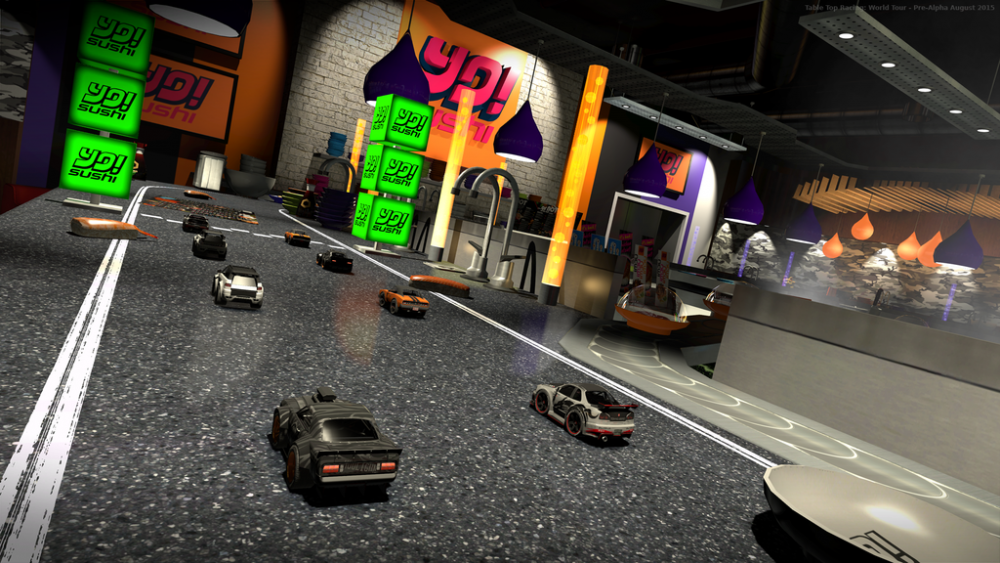
    I didn’t have much criteria for what I was going to play other than it needing to be simple and laid back enough that I wouldn’t have to concentrate too hard. TTR fit that need perfectly. You see, like Super Toy Cars that I reviewed last year, the game takes place around miniature toy cars that are racing on table tops. The game has no story, and apart from the 238 stars to be collected, not much else. I thought this was all I was looking for in a game; how wrong I was.

    TTR is entertaining, don’t get me wrong. It’s a perfectly capable arcade racer, with OK handling and cool powerups, but by god is it repetitive! It’s own description on the playstation stores says the following:

    Race your tiny car around a world of table top race tracks, with over-sized obstacles and insane power-ups.

    Which is absolute bullshit. The game has 4 levels, each of which get changed ever so slightly throughout the course of the games campaign/career mode. These tiny adjustments could by all means be called “a new race track”, but there is no way it ever feels that way. Considering it only takes 1-5 minutes to complete a track, you’ll be seeing a lot of the same tracks, along with the same assets time and time again.

    yo

    The variety of race-modes on offer helps to alleviate the track medriocity somewhat, but only slightly. On offer are 7 different modes; elimination, normal race, time trial, best lap, no power ups, track down opponent (where you must race to find another racer and bash them) and finally the cup races. Each mode is unique, but short, and has you racing over the same tracks you’ve seen a million times before. It’s a shame, as I truly feel the lack of variety in track design slowly saps away at the enjoyment of the fun driving mechanics.

    Regardless of the repetitiveness of the tracks themselves, between races you can also upgrade your vehicle (or even purchases a whole new one!). This is actually quite rudimentary, as races give you so many coins (without even finding the hidden ones) that you can easily upgrade a car to it’s maximum potential within no time what-so-ever. This makes the entirety of the game a lot easier, so much so that I can’t help but feel the developers at Playrise Digital didn’t spend much time balancing the game, ensuring there was a constant progression system to the game at large. By the time I had reached the final two cups (of 6 in total) I had already purchased every basic car, and only had 6 left to buy. It’s a shame as a meta-game like upgrading your vehicle can actually help to keep players interested in a game longer than the races take place.

    table-topracing

    For all that I’ve said of the mechanics and levels on display, I can’t complain too much at the presentation. TTR is a perfectly serviceable game, and looks polished on the PS4. Granted, it doesn’t look cutting edge, but what’s on display suffices and ensures the player doesn’t feel ripped off with the game they’re investing their time into.

    So all in all was a free (yeah yeah I know I pay monthly for the service, but you get what I mean) price tag worth it? If you’re looking to kill a few hours of your time (it took me about 4 hours to complete the game from start to finish) then by all means give the game a download and play away. Just be warned of the repetitive nature of the game – it got on my nerves to the point I regretted playing the game.

    2/5