Author: Dan

  • Weekly Gaming: The Room Three (iOS)

    Weekly Gaming: The Room Three (iOS)

    It’s been a mighty long time since I played The Room Two, and since (from what I can recall) I remember thoroughly enjoying the game I decided to give the latest instalment a download. From the offset I can say that The Room three’s price tag certainly helps in making that purchasing decision quick and painless. At a measly price of £3.99, I was stumped at how cheap it was considering how expensive indie games are getting these days on other platforms. Fireproof Games should be commended for keeping such a low price point when others in the industry are deciding to charge through the nose for the latest and greatest.

    IMG_0022

    Anyway, onto the game itself. Fans of the series should note that nothings really changed from the previous two games’ formula. You’re in a weird world where puzzles are hidden within puzzles, and must find your way between rooms to solve more puzzles before eventually reaching the games climax. I know that’s a massive over-simplification if there ever was one, but that’s seriously 100% of the game. A typical 5 minutes of the game plays out as follows:

    “ooo, there’s a new link on the box I’ve been staring at. I wonder what will happen if I move it”

    *Box proceeds to open, revealing a new item to collect*

    “okie dokey, I’ll be having that. Ooo there’s a puzzle here… hmmm, lets move all the gold things around”

    *Box shifts into itself again, revealing another puzzle with a suspicious shaped hole that seems to match the item I collected*

    “lets put the item in there then”

    *Box reveals yet another puzzle which expands on the first puzzle*

    Continue ad infinitum until the game is complete.

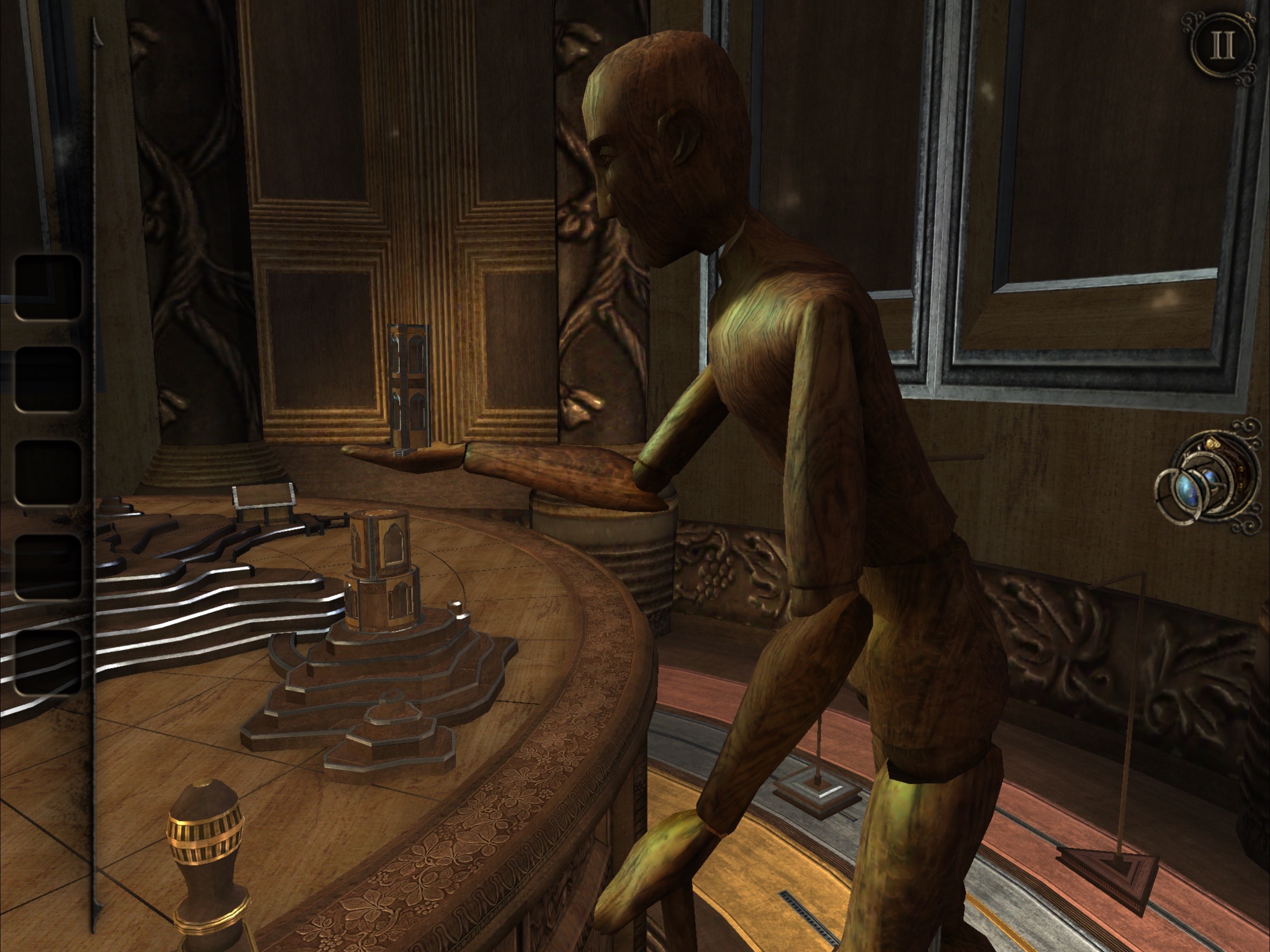
    That over-simplification isn’t to detract from the game, and for what it’s worth, Fireproof games do a bloody good job of keeping this formula varied enough that you’re constantly being pushed to solve the problem at hand. They do this through changing the style and feel of each area, changing up the art and the items you collect .

    IMG_0026

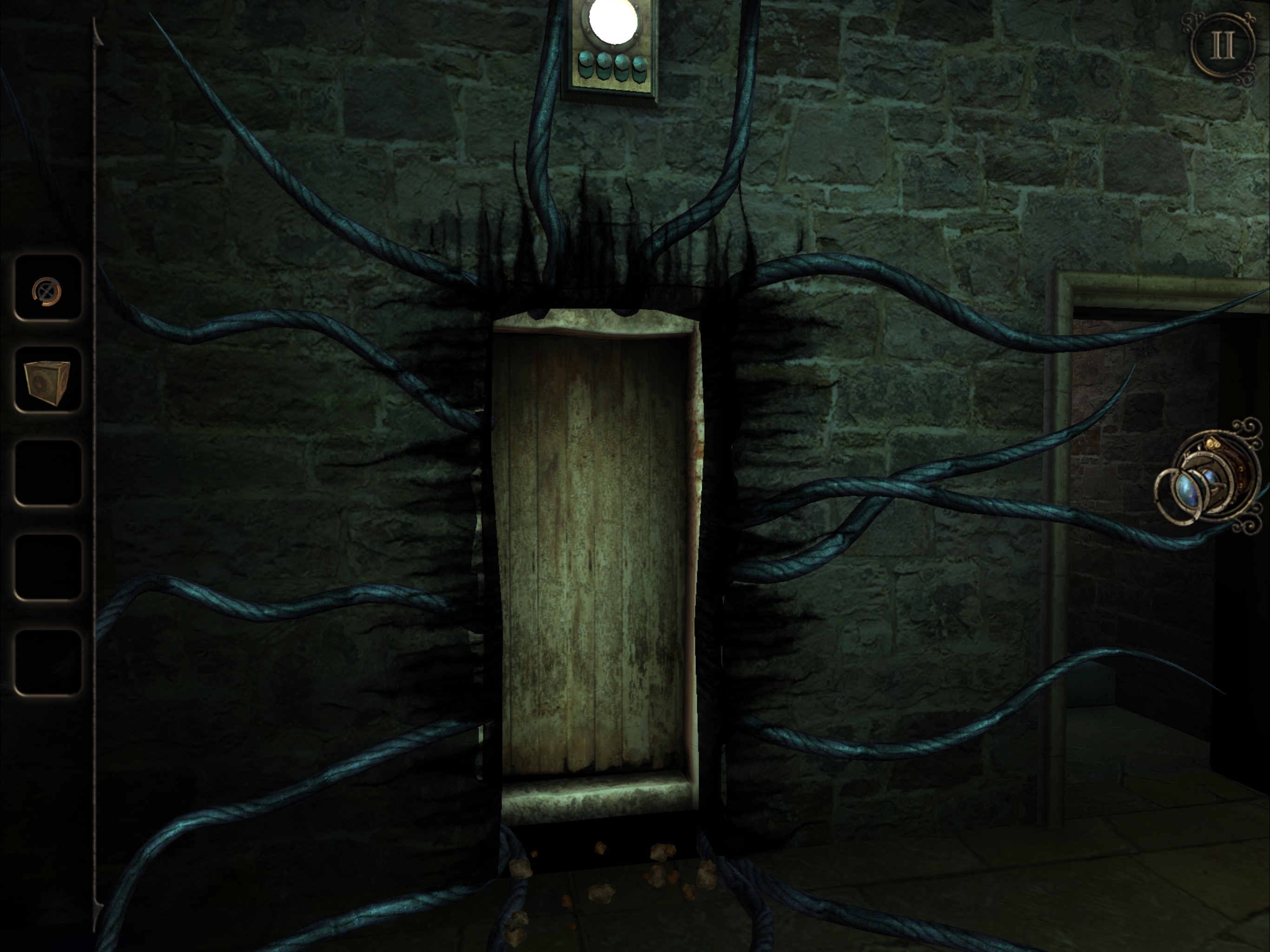
    Each chapter looks and feels distinctly varied, with each item you collect keeping with the general theme of your current location. My favourite chapter was easily one which played out in an outhouse that had a saw, a furnace, and all manner of other items spread throughout the area. It was here where you had to meld a key to use on the box in the centre of the room, which may sound simple on the surface, but when you have 16+ possible key types you could make, it soon becomes difficult. It was also here where I enjoyed the flexibility of the puzzles on offer; whilst most of the time puzzles are quite linear and have no fail states (they just require you to solve the puzzle at hand), the key modelling puzzle allowed you to rinse and repeat the puzzle until it was solved. Even when you’ve solved it once, it give the key back to you to use in several other puzzles. It was awesome to see such flexibility and consistency from one little gimmick.

    IMG_0028

    As for story, there’s not much expansion on previous games. You’ll get notes throughout the chapters explaining how you’re helping someone uncover a great mystery, but in the grand scheme of things you’re still left relatively clueless on what exactly happens throughout the last three games. There are multiple endings should you find and solve sub-puzzles throughout the games’ “hub” world, and whilst i didn’t personally play any further to experience them, I’m sure they’ll still leave a lot of questions hanging about just so Fireproof Games have the chance to make a fourth room should they desire. Not that this is going to be a detriment to the vast majority of players of The Room: most people are here for the puzzles alone.

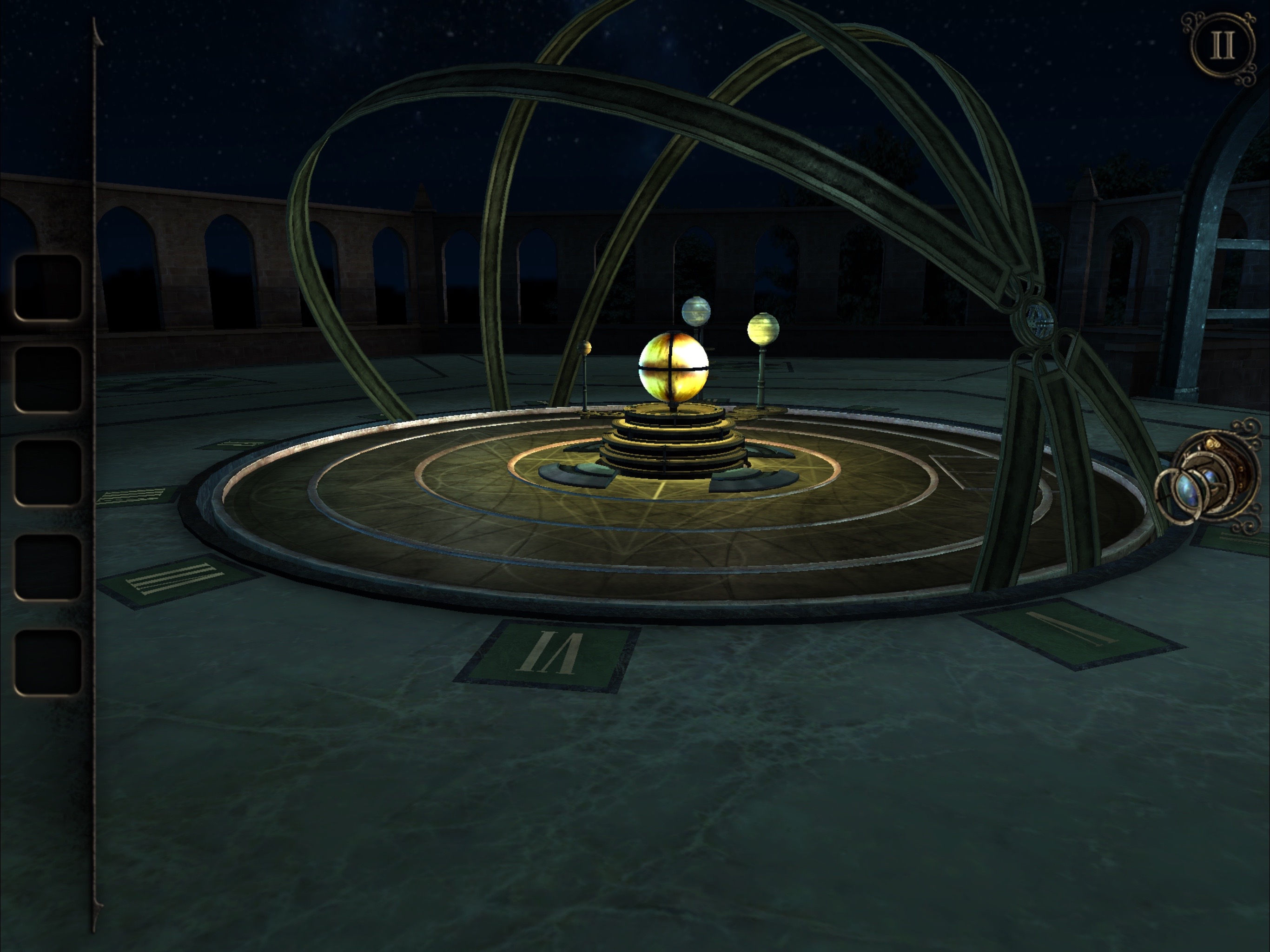
    I’ve always praised Fireproof Games for their stellar work on presentation, and that holds up here in The Room Three. All manner of different textures are stunningly rendered on an iPad, and it’s genuinely insane how the devs can glean this much polish from a mobile platform. Regardless of how they do it, whichever device you use to play The Room Three, you’ll have a pleasant viewing experience.

    IMG_0031

    So, after 4 hours and 21 minutes of playing the game in one day, am I glad I finally finished the trilogy of Room games? Most definitely. Whilst the third game doesn’t add much original content to the tried and tested formula, it’s still a great way to sit down and waste some time. Fans of the original 2 games should definitely give it a go, and at only £3.99 (that’s its RRP, it’ll be cheaper on sales), you have no excuse not to invest your time into the game.

    3/5

  • Weekly Gaming: Wailing Heights (PC)

    Weekly Gaming: Wailing Heights (PC)

    Hi all!

    Thanks as always for returning to another week of Weekly Gaming. This week, I take a look at Wailing Heights, a fantastic indie adventure game from Outsider Games – a Northern Irish developer of which this is their first game.

    Overall, the game was fantastic, with even it’s flaws (jumpiness in the intro, weird animations at times etc.) contributing to the genuine charm the game emanated. If you’re a fan of adventure games with a unique aesthetic, give the game a go.

    You can read my full review below:

    http://www.vgchartz.com/article/264197/wailing-heights-pc/

    Til next week!

    -Dan
  • Weekly Gaming: The Walking Dead: Michonne Episode 3: What We Deserve

    Weekly Gaming: The Walking Dead: Michonne Episode 3: What We Deserve

    Hey all!

    As always, thanks for stopping by. This week I conclude my TWD: Michonne mini-series review, and as per the previous few episodes, I genuinely thought this was terrible for a Telltale game. Whilst there’s plenty of urgency in the game (Michonne is constantly forced to think on the spot and make brash decisions), you can’t help but not care for the other characters in the game, which is horrendous when Telltale constantly try to make you feel the weight of your decisions.

    Regardless, if you wanna read my impressions you can do so below:

    http://www.vgchartz.com/article/264172/the-walking-dead-michonne-episode-3-what-we-deserve-pc/

    Hope you’re all well, and by all means, stop by next week where I’ll reviewing a lovely new indie game.

    -Dan

  • Twixel has been Greenlit!

    Twixel has been Greenlit!

    Greenlight

    It’s happened!

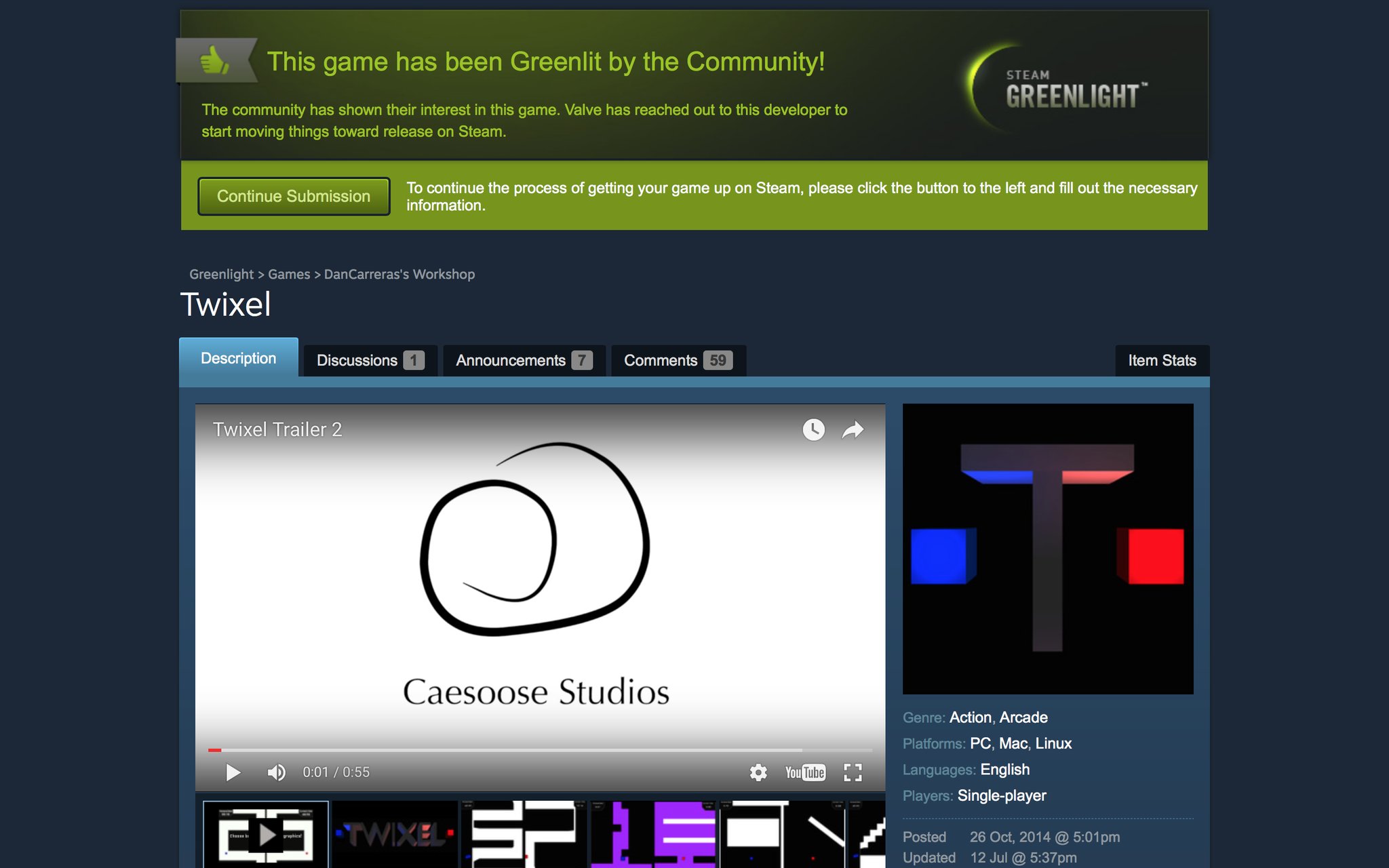
    After almost 2 long gruelling years, Twixel is going to be made available on Steam!

    While this is cause for celebration, it’s also a time for introspection.

    I admit, I have not been a good developer. Given how lacklustre Twixel sold when it was released on PC, and again on iOS and Android, I kind of gave up on the idea, and started working on other prototypes. But here I am, a year later, realising I was a fool and regretting the fact that I should have continued to work on Twixel well past it’s release date. I knew it still had problems, and I had feedback others recommended. It was just easier I suppose to look forward to the next project rather than support the one that had already made it.

    Thinking about it, and looking back, it seems that in not updating the game I actually done myself a disservice. All that time and effort working on the game, only for me to not follow through on it’s potential. Suffice to say, I will not be making that mistake twice.

    The next couple of months are going to hard as I go back to Twixel and port it to Steam, but it’s going to be worth it. Having the game in front of a potential 125 million customers is a huge incentive, and one that should keep me going until I manage to get the game fully ported.

    Once this has been done for Steam, I’m going to work hard and bring every improvement listed below back to mobiles, as I know there’s a few bugs on there too!

    Until then, Thank you all for voting, and please see the list of things I’ll be working on bringing to the Steam release:

    • Improve look of game (shaders across whole game)
    • improved music reaction (obstacles will now bounce up along with level)
    • Tweaked control system
    • More obstacle variations to avoid
    • Better procedural generation of obstacles
    • Improved control scheme
    • Changing of save file system (have since learnt how to serialise data, so will be putting that to good use!)
    • 4 new songs added to hyper levels
    • Improved GUI presentation
    • Improved Scene Management/transition
    • Full Xbox One/Xbox 360 controller support
    • Steam Achievements and Cards
    • New Achievements Pictures
    • Steam Leaderboard integration
    • Better Twixel Trailer (Once improvements are made!)

    Thank you all once again, and I’ll keep you updated on my progress!

    -Dan

  • Weekly Gaming: Hyrule Warriors Legends (3DS)

    Weekly Gaming: Hyrule Warriors Legends (3DS)

    I’m sure that when I say that I haven’t played a Dynasty Warriors game since I was a kid there’s going to be many of you who relate. It’s not that we didn’t enjoy the games when they were released, and god only knows there are still people out there buying the games (otherwise they wouldn’t continue to be made), it’s just that the formula is stale and the gameplay repetitive. Suffice to say that after 15-odd years, I finally felt in the mood for a hack-and-slash-defeat-thousands-of-enemies title, and what better game to play than Nintendo’s Hyrule Warriors for the 3DS.

    Why the 3DS version? I hear you ask when the HD version is so much prettier on Wii U:

    Portability.

    I wanted to play this game wherever I was, including but not limited to when I was on my lunch at work, or out and about travelling to site installs during my day job. I also feel that in getting the game for 3DS, I justified my purchase in the NEW 3DS XL even more (as reports suggest the fidelity of the non-new 3DS’ is atrocious and barely playable).

    Hyrule-Warriors-Legends-2-2

    Speaking of presentation, you can definitely tell the game’s been scaled back massively, both in terms of gameplay (how many enemies on screen at any one time) and graphical fidelity. In order to make the game playable at all on portable consoles the graphics has been scaled back to a presentation that reminds me of the N64. Yes, the polygonal enemies and low resolution textures are seriously that limited. Due to the lack of processing power, this has also affected the gameplay, as the limited amount of units that can be rendered on-screen at any one time is hugely limited.

    Whilst I haven’t played the original Wii U version to compare the difference, the game certainly feels lacking when it comes to combat due to the consoles restraints. There would be many times where my mini-map would be fairly red from the amount of enemies surrounding me, yet on screen there were barely 50. Activating a special ability would only kill at maximum 44 enemies, with more suddenly appearing on screen the second their comrades are defeated (in the very same place you just annihilated I might add!). It detracted from the enjoyability of the game at times; here you are, a seemingly powerful Hyrulian who is able to defeat Gods, yet not able to kill everything on screen because said enemies haven’t even appeared.

    Regardless of the nuisances the lack of processing power brings with it, the rest of Hyrule Warriors Legends holds up extremely well. The story brings together multiple familiar faces from across all the Zelda franchise, tying them together through a witch who is able to observe and manipulate all of time. In loving Link too much, and knowing she will never get close to him (since he is destined for Zelda) Cia (the main protagonist) succumbs to Gannondorf’s evil, starting the end of the world, and with it, the merging of different timelines and characters.

    screenshot5

    This fantastic way of both bringing in new characters into the fray, whilst also narratively keeping the world consistent helps to keep Hyrule Warriors campaign hugely engaging, even when you constantly have to change characters and play as someone new. In fact, in making you constantly switch up and play as new characters, Hyrule Warriors pushes you to learn more attacks, and more information about each of the characters, ensuring you get as much from the game and it’s hugely expanded lore as possible. Whilst the campaign ends in a relatively predictable manner, the story as a whole was enjoyable, and explored both new and old characters in ways I wouldn’t have thought before.

    As per all hack and slash games, Hyrule Warriors requires little strategy, but a lot of repetitive enemy slaying. Things constantly change of the battlefield, with new enemies appearing at a drop of the hat, and in doing so, partially changing the tide of the battle, but overall the whole game makes you feel “reactionary” rather than a strategist who plans out who to attack and when. You may have an idea of what you want to do throughout a playthrough, but until boss drop happen or new objectives are thrown at you, you cannot possibly hope to properly plan out a level.

    Not that the hacking and slashing is a bad thing, not by any stretch of the imagination, you just best know what you’re getting into before delving into Hyrule Warriors 10-12 hour campaign. Most enemies are easy to kill and so generic you can go about ignoring them; they aren’t going to have any effect on the tide of the battle, and if anything, they’re merely cannon fodder for you to build up your special attacks. It’s once you get used to the mechanics of how the stages play out that you realise that you can indeed ignore most of these enemies and concentrate on the true challenge of the game: the mini-bosses and enemy captains.

    hyrule-warriors-legends-2

    You see, these enemies change things up on the battlefield, and actually require skill rather than button mashing to conquer. They’ll ignore some of your attacks, and will proceed to leave themselves with openings should you evade their attacks for long enough. I especially found the final few bosses nice to take on, as in doing so you feel a real sense on accomplishment when an boss is downed.

    Outside of the main game you also have a weirdly addictive meta game of upgrading allies skills using rupees and materials picked up in levels, and also managing and creating weapons. All of this adds an extra layer of complexity to an otherwise simplistic game that kept me coming back to levels time and time again just to ensure I unlocked more. It’s weird, but hey, if it kept me hooked, it’s sure to make many fans happy.

    Am I glad I came back to a genre I had all but forgotten about? Yes. The simplistic rhythm of bashing out combos and barely thinking, only reacting, on a battlefield was enjoyable and weirdly relaxing, so much so that I was able to watch videos or listen to music in the background whilst still enjoying my time. Hyrule Warriors Legends isn’t a taxing affair, but is certainly enjoyable to take out and about should you own a 3DS. Weirdly enough, on completing the game I’m kind of eager to buy the Wii U version, just to compare the differences and maybe get a better playtime. Regardless, I think Hyrule Warriors Legends is a good buy, and a good match for 3DS – should you own the NEW 3DS and are looking for software to play on it, look no further.

    4/5

  • Weekly Gaming: Enter the Gungeon (PC)

    Weekly Gaming: Enter the Gungeon (PC)

    Hi all!

    This week I’m talking about a review I done a while ago over at VGChartz.com. Enter the Gungeon is easily one of my most enjoyable games of 2016 so far, and I have to say, it’s bloody addictive. In the months following my original review, I haven’t stopped playing the game; a testament, if anything, to how damn addictive and awesome the game really is.

    Regardless, you can read the full content of my review below:

    http://www.vgchartz.com/article/263911/enter-the-gungeon-pc/

    As always, thanks for visiting the site, and I hope you’ve enjoyed what you’ve read!

    Till next week!

    -Dan

  • Weekly Gaming: Furi (PS4)

    Weekly Gaming: Furi (PS4)

    Hi all!

    So this week I review Furi, The Game Bakers epic boss-rush game that’s a staggering success by my standards. The game both infuriated me and delighted me, and I have to give it a massive thumbs up, especially for those of you who fancy a challenging game.

    As always for my articles that are published over at VGChartz.com, you can find the full review here:

    http://www.vgchartz.com/article/264984/furi-ps4/

    As always, thanks for visiting, and until next week, have a good ‘un!

    -Dan

  • New Years Resolutions: Progress Report

    New Years Resolutions: Progress Report

    Hey all!

    With tomorrow being the 27th week of the year (meaning today is exactly half way through the year!), I’ve decided to give an update on my New Years Resolutions (just as I did last year).

    But first, I must apologise. I have no idea how or why, but I didn’t seem to post my New Years Resolutions on here back in January. I’ve kept up to date with next to everything else this year, so why this slipped my mind is beyond me!

    Anyway! Without further ado, by all means see my New Years Resolutions for the first time along with my progress on them – As with last years progress update, I’ll colour code each bullet point with the following:

    Green = Completed

    Orange = In progress

    Red = Not started


    • Complete and Review 52 Games On Caesoose.com – 40 Completed So Far

    Well, if you check back, I’ve certainly been keeping to this resolution! I have to say, even when everything else in my life starts to fall apart, or time flies by, I will always make sure to keep to this resolution as it gives me a sense of fulfilment 🙂

    • Read 24 Books – 16 Read So Far

    So far up to 16 books read! Doing a great job so far, and enjoying the extra time away from a monitor.

    • Watch The Walking Dead – Success!

    This has been on my mind for a while now, especially with friends and family constantly telling me how good it was. So at the start of the year I managed to watch all seasons of this fantastic TV show. Now I just have to await the next season at the end of the year…..

    • Get Teeth Sorted – Have Not Started

    Now that I have a bit of savings behind me, and with future ambitions to emigrate to America, I should really get on with getting braces so that I can straighten out my teeth. I’ve been putting this off for far too long, especially with my 30th birthday fat approaching next year.

    • Produce 1 Video Article Per Month – Failed

    Unfortunately, whilst I began working on this project:

    I soon stopped. This was due to myself talking with third parties and asking if they could edit my videos. I also had a few articles prepared, but due to them containing a lot of content relating to interviews with people in the industry (that never got back to me), it all fell over. I’ll start this back up again soon, but for now I can certainly say I failed to produce one video article a month.

    • Make A New Game – In Progress

    Whilst I haven’t shared much about my latest project, I can confirm it is definitely in the works, with my latest prototype being shown on my youtube channel:

    I’m currently working with a fantastic artist, so whilst I’m excited about this project, my project now relies on two people, which could add time to it’s release date. In the meantime, I’m going to work on a couple of small projects, ranging from a day in my life (tiny project where you live a day in my life), to other little arcade games.

    • Watch 26 New Films – 23 Watched So Far

    This has been far too easy. I mean, films take 2 hours (maybe 3 at a stretch) so are no where near the same time commitment of my other projects. Will definitely succeed in this.

    • Visit 2 New Countries – Slovakia and Austria

    This was fantastic, and was done at the same time as I travelled to Bratislava with my other half. Due to how close Bratislava is to Vienna, we stayed in Bratislava the whole time (which is extremely cheap) and just took a cheap €5 bus to vienna twice. This was a fantastic holiday, and I’m sure it’s not going to be the last. I have plans to visit Norway and many other places before the end of the year.

    • Produce 1 Video Review Per Month – 6 Done So Far

    Whilst I may have been unssuccessful with my video articles, I’ve definitely kept up with my video reviews. This thankfully goes hand in hand with my written reviews, so apart from spending 3-4 hours editing the footage I recorded after the fact, it doesn’t take too much time to accomplish.

    • Visit E3 – Failed

    Whilst it’s been my dream to visit the famed conference for years, after speaking with my editor and other writers at VGChartz, I found that if I wanted to attend I’d have to fund the entire trip myself. This, along with the fact lots of companies have pulled out of E3, pushed me into deciding not to attend the awesome games conference. There’s always next year…..

    • Visit EGX Birmingham – Not hosted until September

    Due to the event not being scheduled until September, I can’t exactly say I’ve done this. Will update at the end of the year.

    • Visit EGX Rezzed – Done!

    The conference was great, and as a result I managed to write the following articles:

    http://www.vgchartz.com/article/263901/games-to-watch-out-for-from-egx-rezzed-2016/

    http://www.vgchartz.com/article/263900/manual-samuel-hilarious-and-challenging-in-equal-measure/

    http://www.vgchartz.com/article/263892/furi-takes-titan-souls-to-its-extreme/

    http://www.vgchartz.com/article/263897/bears-cant-drift-oh-yes-they-can/

    • Get New Tattoo – Not Started

    As per last year, getting a new tattoo is still on my mind, I’m just trying to make sure I get another I’ll love until the grave. Watch this space – I expect to make a decision before years end.


    Thanks for reading, and I hope you’re all doing well in your endeavours!

    -Dan

  • Weekly Gaming: The Walking Dead Michonne Episode 2: Give No Shelter

    Weekly Gaming: The Walking Dead Michonne Episode 2: Give No Shelter

    Hi all!

    So this week, I’ve decided to post an (old) review for Telltale games’ The Walking Dead spin-off series, Michonne. Given that I was rather tepid about the first outing of the game (which can be read here), I didn’t have much hope for the second episode. Lo and behold, my pessimistic side won out, with the game being massively underwhelming compared to other Telltale ventures.

    If you want to give the review a read, you can click on the link below:

    http://www.vgchartz.com/articles/adminnew/?task=edit&story=263776

    As always, thanks for visiting, and will see you next week!

    -Dan

  • Weekly Gaming: Splatoon (Wii U)

    Weekly Gaming: Splatoon (Wii U)

    splatoon_updates

    Having seen the amount of commotion traditional games media was lavishing upon Splatoon, I decided to finally jump in head first and see what the fuss was about first hand. Finding the game for sale at £18 (which is rare! Splatoon hasn’t really had any price drops since it’s release), I brought it straight away without hesitation. Here’s my impressions.

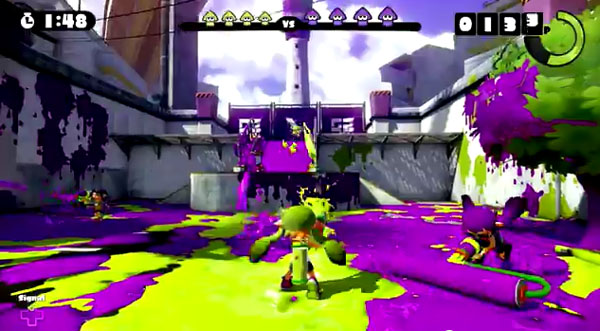
    Splatoon, Nintendos first ever foray into the Third Person Shooter Multiplayer genre, see’s you play as a squid-kid, a hybrid kind of creature that looks like a kid majority of the time, but can also turn into a squid at will. Being a Squid-kid comes with it’s benefits: you’re able to spray your own ink all over the stage, and use it to traverse to places you wouldn’t normally be able venture to. This mechanic is very reminiscent of Super Mario Sunshine for the Gamecube, where Mario had to spray FLUD (his water backpack) to get rid of toxic paint spread throughout the stage. The similarities stop there though, as Splatoon is a whole different kettle of fish.

    From the offset Splatoon makes it known that this is an online multiplayer game first and foremost with its news system. Each day it tells you what levels are available to play in social playlists, and in ranked. But before I got into any of the multiplayer, I decided to give the campaign a go.

    Splatoon_Wii_U_gameplay_screenshot

    First up, I played the entirety of the single player campaign. This mode allows you to get accustomed to the Splatoon controls (I’ll talk about those later; suffice to say, they take some getting used to), whilst also telling a story about the squid-kids versus the octopuses. Each stage has a unique gimmick to it, some will require you to fill up sponges with your own ink, increasing their size and making for some difficult platforming sections, with others having a boss system where you must avoid his attacks throughout the level, only to defeat the baddie at the end. The stages are varied and nice, and not once did I feel like the game was too repetitive, which, over the course of the 5 hour campaign, can only be a good thing. For all your troubles, you’re rewarded with some outfits to use in the online portion of the game (which is the main draw of Splatoon). Whilst this wasn’t much of a pay-off narratively speaking, the campaign doesn’t really set up much of a story in the first place; you’re trying to rescue a massive cuttlefish (electrical fishes basically) that’s been stollen by octopuses.

    Between choosing the campaign and the multiplayer, you have a hub world to interact with, allowing you to customise your character, as well as explore and take on extra challenges thanks to the games Amiibo support. Whilst I wasn’t a big fan of the amino challenges, they at least offered extra value in a game that hasn’t really dropped in price since launch. The shopping district in this hub area was a bit annoying though: everything’s level capped, meaning you need to make sure you play the multiplayer quite a bit before you can even interact with a bunch of shopkeepers. In theory this is a good idea: play the multiplayer more to get more loot! it left me disheartened, especially after I had just spent 5 hours playing the campaign. If anything, both multiplayer and campaign should have contributed to the same points system, allowing for single-player users to still feel like they’ve achieved something after so many hours playing the game.

    WiiU_Splatoon_02_mediaplayer_large

    Now before I get onto the core purpose of Splatoon (it’s multiplayer), a quick word about it’s controls. The game defaults with motion controls, meaning you need to move the gamepad up and down in order to look around. As soon as the option was available, I turned this mode off. It’s hard enough looking at a screen and concentrating on where to aim, let alone having to add another layer of complexity to the game by moving the controller up and down. As for the control scheme itself, I found that Splatoon is not accurate at all. You don’t get the precision that you normally would from a third person shooter, which takes some getting used to at first, but after a while, realise that it’s actually ok. You see, since the core purpose of the game is more to spray your ink as far as possible (covering as much of the map as possible), accuracy is mute. Yes, there are times you’ll come across another player and will need to precisely shoot at them, but these moments are few and far between, meaning the inaccuracy is fine for shooting and glooping the stage.

    Now onto the core of the game: Multiplayer, where all your skills are put to the test in multiple modes; ranked and social. For starters, you’re not able to join ranked matches until you’re level 10; a trait that’ll take at least 2-3 hours to attain. Whilst this was annoying, there’s a good reason for this restriction: the social playlist will teach you the core mechanics of the multiplayer mode. Every game mode is short (3-5 minutes in length) and as multiple game modes. For the vast majority of the time, you’ll be playing the “turf wars” game mode: a mode that requires each 4 player team to ink as much of the stage as possible. whilst that sounds boring in theory, it’s fantastic to actually experience, and gives every player of every ability the chance to have a great time. I loved being on the front line in this mode, taking on other players and getting rid of their ink in the middle of the level, but I could just as easily enjoy staying at the back of the level and making sure as much of the stage is covered as possible. It’s this flexibility that gives the game so much charm and replayability; everyone is contributing to the final score. Unlike most other shooters where you have to be good at killing others in order to contribute to the overall score, Splatoon makes it so that everyone on a team feels valued. It’s a fantastic feeling, and one which I can now see why so many editors and writers put it in their game of the year lists.

    WiiU_Splatoon_323_MultiPlayer_SplatZones_Warehouse01

    All in all, Splatoon is a marvel of multiplayer shooters. It stands alone in being quite unique and original; where so many other developers in the industry are trying to copy the leader (COD), Splatoon stands as a testament to what can be done when you think outside of the box. If you can find the game for cheap like I did (and of course be one of the 10 million people that own a Wii U), then buy Splatoon. You won’t be disappointed.

    p.s. If you do buy the game (or already have it) give me a shout, I’d love to give you a game!

    4/5

  • Weekly Gaming: Grand Theft Auto 5 (PC)

    Weekly Gaming: Grand Theft Auto 5 (PC)

    2015-09-06_00006

    Its strange to write this review on GTA V, as it feels like the end of something I’m quite fond of. It’s like those last goodbyes to friends and family when you’re going away to uni, or moving out for the first time, it’s unpleasant, but warming to know you have someone still there. GTA V is so big, so dynamic, and so damn good in almost all respects, I’m sad to have finished it’s campaign and will have to move on to another game.

    You see, GTA V made me miss America. I started this blog in 2013, the year I also spent 3 months in the great US of A with my then girlfriend. It’s hard to explain what everyday life in america feels like; I mean, granted, most of the time it’s exactly like life in Britain and I’m sure many other places, but it feels different. There were so many times that I would be driving down a motorway or walking down the sidewalk in GTA V that I felt like I was back in California. Everything from the lighting, to the amount of detail in textures, to even the grimness of living in Los Santos harked back to my time in Hollywood. It’s so rare for a game to do this; to relate to me on a deep fundamental level as to make me feel like I’m elsewhere, but GTA V manages to pull it off spectacularly.

    2015-09-06_00005

    I’m finding it hard to decide whether the story of GTA V was good, or just ok. Don’t get me wrong, throughout the entire campaign there’s fantastic writing, and each of the characters have brilliant personalities, but what really let the story down as a whole was its pacing and extreme use of new characters. You’re introduced to so many new people throughout the course of the game that it gets hard knowing when ones will make a reappearance, and who’s the true bad guy at the top. There’s also inconsistencies: why the hell do players have to spend 30 missions (from half way through the game until the end) following these bad buys plans only to kill them all right at the end with no consequences? It makes no sense, especially with how often the crew explain what they want to do to these bad people, narratively speaking (considering the group kill everyone else that gets in their way), they should’ve killed them sooner rather than later.

    20160324183136_1

    The world of Los Santos within GTA V is absolutely stunning, especially on PC. It’s actually odd to say that, because a lot of the graphics on show here sometimes look like they’re straight from the PS2 era of consoles; we still have flat geometry when it comes to hills, and still have pictures in shop windows to give the impression the world has depth, which does at times detract from the games aesthetics somewhat. The amount of polish on show though is insane. Sun-rays and shadows gloriously adorn the world as you drive, with an orange haze (a signature of LA in real life) being ever present as you make your way across the extremely large world. texture detail and resolution is staggering here too, as roads aren’t just one texture, but a multitude of little crevices here and there where it’s been fixed in the past with new tarmac. These little nuggets of graphical prowess is where the graphics truly help to make the world feel like a real lived in place, unlike other games where the world is completely pristine. I suppose it’s like they always say: the devil is in the detail.

    As for the gameplay, well Rockstar truly outdone themselves here. Much was touted about the games shooting mechanics, as they were taken straight from Max Payne 3, a game which has some of the most fluid and lovely third person shooter controls on the market. Here, they’re just as good as ever, with the added benefit of each member of the team having a unique ability which is activated by pressing in the left and right analogue stick at the same time. For Michael, he gets the ability to slow down time (brilliant for heists where you need to kill people quickly and efficiently), Franklin has the ability to slow down time whilst driving (allowing for faster turns and tiny adjustments to your vehicles direction) and for trevor the ability to withstand a multitude of damage but also to give that back. There was one problem about these abilities: they’re so damn good and useful that to not have them at times felt like losing a limb. You still have walls to stand up against (and I have to say, the animation for moving around is absolutely astonishing) but you’ll most likely find each of the characters abilities the best thing about the gameplay.

    2015-10-08_00002

    Heists are a massive feature throughout GTA V’s storyline, and there’s a reason the press talked about them non-stop up until the games release: they’re pretty damn awesome. First, you need to do a few missions where you’ll be grabbing all the necessary gear to perform this heist. Next up is the heist itself, which usually incorporates a few missions worth of length into one long drawn out objective. Drawn out was probably the wrong word to use there, as it makes it sound like the heists are boring; they’re not. Each one mixes things up constantly, and rewards or punishes you based on your decisions before the heist, and in real-time. A choice of driver for the mission could play out to bite you in the bottom when they lose their nerve later on, or on the other end of the spectrum, your choice could be so good you go by unnoticed by cops as the heist plays out.  In making you have to react to these decisions in real-time, the heists feel like a genuine evolution of the GTA  formula throughout the years, with this incarnation giving the player real agency rather than just being an innocent bystander to the structural underlying of the code going on.

    2015-09-13_00002

    As I said at the start of this review, I’m going to miss playing and exploring GTA V. The game itself is seriously a love letter to gaming; a potential of what all games can aspire to achieve (when enough money and time is thrown at something). It perfectly encapsulates America in ways I wouldn’t have thought a medium possibly could of, right down from the nitty gritty details of pavement, to how looking at the great sign of “Vinewood” feels. I’m glad I spent so much time in Los Santos, and with 50 million other people playing the game, I’m sure they feel exactly the same way.

    5/5


  • Weekly Gaming: CounterSpy (PS4)

    Weekly Gaming: CounterSpy (PS4)

    Being in the mode for some stealth games is rare for me, but it does happen, occasionally. The last time I played a stealth game was Mike Bethel’s Volume, and even that didn’t really quench my thirst for the stealthiness. This week I was browsing through my PS4, to see what games I could maybe complete in the spare afternoon I had, and happened across Counterspy in my library. I gave it a quick download and decided to get on with playing it.

    CS_PS4_016.0

    Right out of the gate Counterspy warns you that it’s randomly generated, so not all players experiences are going to be the same. Nice, I thought to myself, this should make for an adventurous play through. So off I set on being a stealthy spy.

    The game takes place at the height of a nuclear war between the soviet state and the imperialists (USA). Both states are wanting to make nuclear bombs to explode into the moon, causing it’s orbit to shift in such a way that it would destroy all life on Earth. You’re a spy who works for COUNTER, an organisation that has tasked itself with making sure this never happens by collecting plans for the nuclear weapons, and in turn, their launch codes and flight telemetry.

    counterspy-3

    Because you don’t work for either side, you’re able to pick and choose which state you spy on to get these plans. Each state has a “Defcon” level, which goes up should you ever be seen in missions or should people phone in help. Think of this level as lives, and it makes a whole lot more sense. Being able to pick which state you spied on between missions was great, and added a layer of tact to an otherwise boring stage selection screen.

    The Defcon level isn’t the only thing you’ll be looking out for when choosing which missions to go on, as each state will have different collectibles to unlock. The imperialists usually have loads of weapon blueprints to collect, with the soviets having lots of formula blueprints. Once enough blueprints have been collected in each area, you can unlock new weapons to use between missions, and new formula’s (think of the formula’s as perks).

    So, enough about the interface and the meta game of picking where to play, how does the gameplay itself actually hold up?

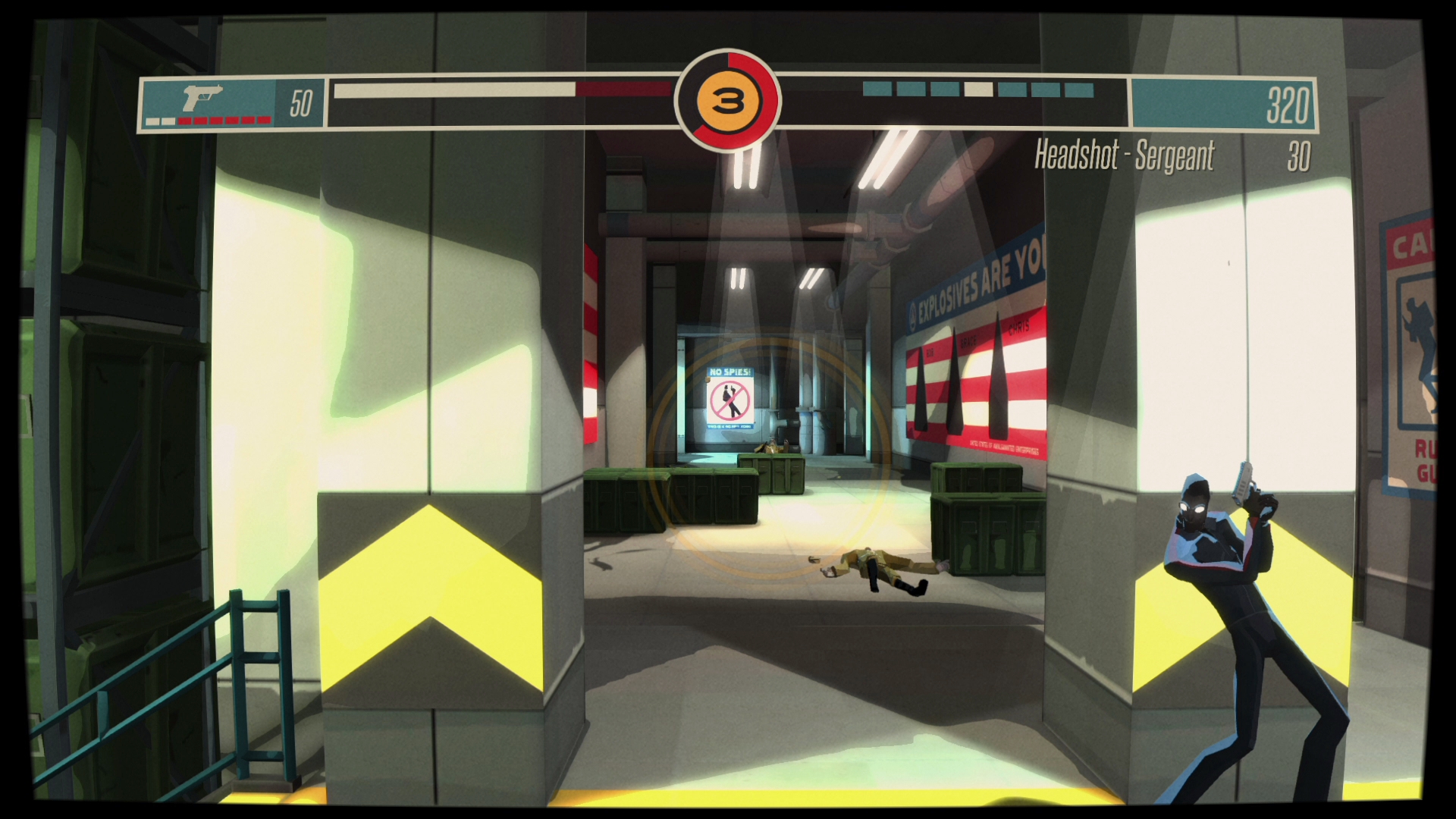
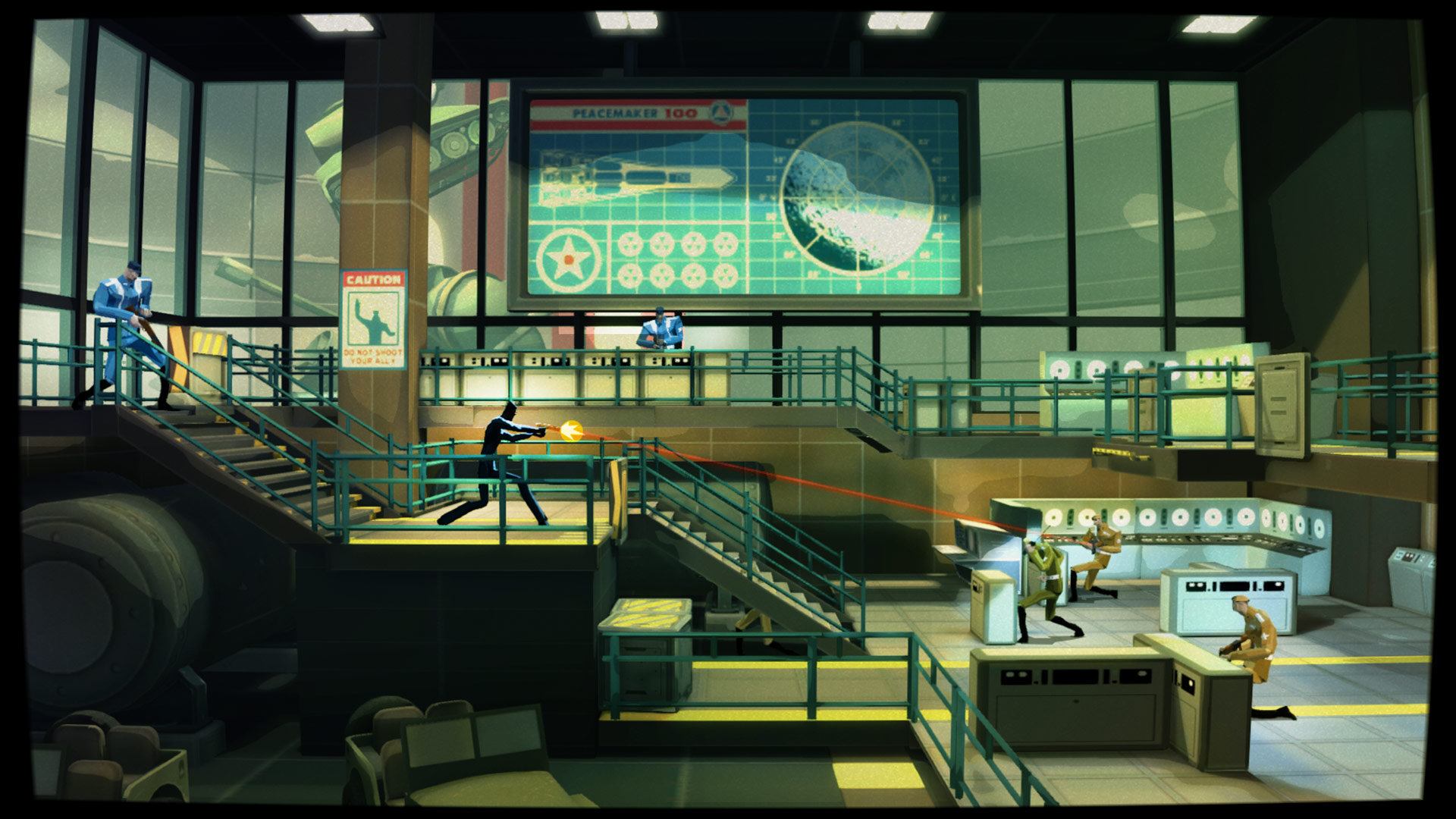
    Well for one, for a game that bills itself as a stealth game, I didn’t find it all that stealthy. Yes, you can sneak up on guards and knock them out stealthily, and yes, you can get around security cameras by sneaking past their vision cones, but for the most part, Counterspy pushes you into violence at every turn. There are so many occasions where you’ll have a room full of enemies and the only way past is to shoot them all. There were times that I was able to shoot the enemies in a nice order so that not one was alarmed at the others falling, but due to the AI’s walking patterns, these stealth kills are few and far between.

    2631458-2014081911271510

    Each level is adorned with multiple layers, which is a good thing for a 2D platformer. being able to get behind a guard by passing above or below him is always great fun, and helps to keep a stealth game interesting like a puzzle. The problem is these moments rarely occur within Counterspy, due to it’s very random nature. There are just so many rooms where the only way forward is through 3 guards all facing each other, with no way above or below them, meaning starting a firefight is your only option.

    It’s in options that the game truly falls apart. Whilst you have quite a few options about what level to select and what weapons you’ll be taking into a level, you have next to no options when in the levels proper. Stealth is all about options: “should I stay where I am and wait for the enemy to come to me? Or should I shoot the explosive, wait for the carnage, and then pick the guards off one by one?” Options like these were plentiful in Volume, but are lacking in Counterspy, where I felt that I constantly had to take cover and shoot my way through almost every section in the game.

    I tried being stealthy as much as possible, even going so far as to get myself killed should I have been spotted time and time again, but the game just still corners you into action. There are sections of levels that are no longer 2D, and instead have depth to them with lots of enemies patrolling in the background. These sections are nigh on impossible to get past unless you kill all the enemies; not something a spy would necessarily do when they’re trying to be quiet.

    Regardless of the gameplay (and lack of stealth) at least the weapons are varied and help to keep you in stealth mode for as long as possible. I found myself using the silenced shotgun and silenced pistol as much as possible, otherwise guards nearby would be alerted by my arrival. When all else fails and there was an all out firefight, I’d use my hypnotising gun to hypnotise a guard in fighting for me; a brilliant tactic for running away from a firefight without having to deal with he rest of the guards.

    counterspy-screen-01-us-17jun14

    The aesthetics are generally lovely to look at, with soviet and imperialist posters scattered throughout areas both being funny, and great in achieving a cold war-era feel. Soviet missions will take place in hard concrete rooms with great towering statues adorning most rooms, whilst the Imperialist rooms are generally more metallic and useful. This contrast between both states is fantastic, and really helps to give the game a charming look and feel throughout.

    After 2 and a half hours of fighting, I finally come to the stories conclusion, and whilst it wasn’t a great ending, I still enjoyed my time with the game. As a stealth game, I feel Counterspy is a failure; it’s own random levels push you out of stealth rather than encouraging it. But as a polished product that manages to make you smirk and smile at it’s aesthetics, Counterspy is enjoyable. Give it a go if you already own it, and if you don’t, download the game on Android; it’s cheaper, and you’re bound to find more than 2 hours of enjoyment out of the game.

    3/5

  • Weekly Gaming: Downwell (PC)

    Weekly Gaming: Downwell (PC)

    If I had to describe Downwell with as few words as possible, I’d have to say the following: The Binding of Isaac but as a platformer. Those words don’t come lightly, as I absolutely adore The Binding of isaac; a game that has easily taken hundreds of hours of my productive life away. So what about Downwell makes me sing its praises so loudly? Mainly everything about this addictive little shooter/platformer/rogue-like/endless runner has something to be fascinated by.

    animated2-feb

    As may have been ascertained from my last paragraph, it’s hard to clump Downwell into one genre. It’s an endless runner with levels, it’s also a shooter, as well as a rogue like, and finally, it’s also a platformer. All these elements fit strangely well together, mainly due to the simplicity of the game, and the fact you only need to know 3 button presses.

    Left, right and A. That’s everything you’ll need to traverse the bottomless pit that is Downwell. The A button isn’t only for jumping from platform to platform, but also for shooting your weapon whilst falling or in the air. It’s stunningly simplistic, but hard to master, and makes for every jump in the pit just as exciting as the last time. what also helps is the controls’ accuracy; we’re talking Super Meat Boy levels of twitching-ness here, which certainly helps to bring the blame of deaths and hits onto yourself. Not once in my time with Downwell did I ever feel like the game was ripping me off; if I take a hit of damage or die, that’s my own fault, not the games.

    7b1cbe2604c4881ff0c1102bfe97520cfe5f0e3d

    The rogue-like nature of the game also works in its favour, ensuring that everytime you die you’re bound to come back. The short, repetitive levels never feel overused, and with each new stage and new enemy that is spawned the difficulty increases, helping you to truly always feel challenged, but never outgunned.

    To help with the rogue-like feel of the game are power-ups given between each stage. These power-ups can range from the trivial (like extra gems from enemy deaths), to the extreme (every rock exploded produces shrapnel that’s fired upwards at enemies). Along with the power-ups between levels, you have the chance to purchase new ones at a shop which randomly generates throughout stages. Using gems collected by killing enemies, you’re able to buy ammo upgrades, or health, ensuring you’re constantly well stocked and ready to face the well again. Regardless of how lucky you are on a run, you never feel cheated. Each power-up, no matter how trivial, at least serves some purpose, and helps to make the game feel more engaging as a consequence.

    Downwell-PC-3

    Enemies throughout the stages are also varied enough to make sure you’re always kept on your feet whilst progressing downwards. Skeletons and jellyfish may not seem threatening whilst alone, but should you avoid some and let them accumulate with others on the screen, you’re bound to get into trouble. It means that not only are you trying to manage your risk throughout every section of the map, you’re also trying to get to the bottom of the screen as fast as possible should you miss an enemy, as you may be able to deal with threats below you, but you can never deal with something above (not unless you’re a mentalist that’s able to trick enemies into somehow going below you).

    The platforming if anything is a hindrance to playing Downwell: landing on a platform breaks the flow of immersion you get by scaling the games levels. The only time they’re somewhat useful would be when they lead to timefree zones; areas that have hidden power-ups within and allow you to pause the world outside the timeframe bubble temporarily, which is a good chance to get back to your senses and progress again.

    Whilst the game may not be much to look at, it’s certainly stylized fantastically, and really gives the vibe of an old/retro game. If it wasn’t for the smooth and consistently fascinating animations anyone would genuinely think the game was released 30 years ago. The music too isn’t too great, but when you’re concentrating so hard on the gameplay at hand, it’s good to have no distractions.

    Given Downwells cheap asking price (£1.99 full price, £0.99 at time of writing) you can hardly go wrong with this absolutely mechanically smooth game. I had friends telling me how good the game was, and I should have listened to them sooner: Downwell is an absolute joy, and completely deserving of your hard earned cash. Upon playing the game for a few hours I went and purchased two more copies for a couple of my brothers, just so I had someone to talk to about my experiences and theirs. If you loved The Binding of Isaac, and are looking for a quick fix, you can’t go wrong with Dwonwell.

    5/5

  • Weekly Gaming: Super Time Force Ultra (Xbox One)

    Weekly Gaming: Super Time Force Ultra (Xbox One)

    Having both Games with Gold and Playstation Plus is a genuine nightmare should you make sure to get each of their games monthly. That’s (at the minimum) 9 games every month constantly added to my overwhelming collection, and thats ignoring my PC collection where I also subscribe to Humble Monthly, and buy multiple Humble Bundles as and when they’re released. Why do I bring this up? Well, as a consequence of so many games being stockpiled, great games manage to slip through my hands, meaning that although I got them for free months, even years ago, I never get around to playing them.

    Super Time Force Ultra just so happens to be one of those great games that slipped through. I recall playing just the tutorial when I first got my Xbox One almost 2 years ago now, and whilst I wasn’t necessarily hooked on the game in that short time, I was still intrigued. This week, I decided to give it a go, after hearing many players online say that they completed the game in around 4-5 hours. I had an afternoon spare after programming and cleaning, so why the hell not?

    SuperTimeForce_Screenshot

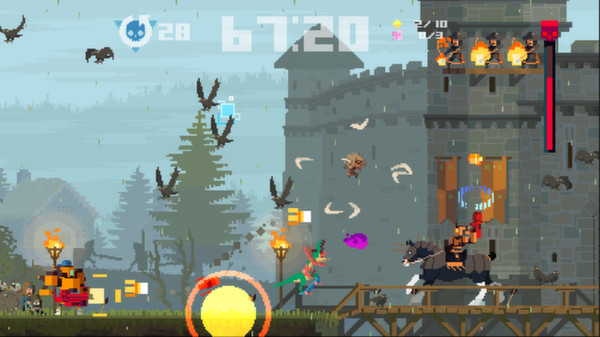
    The game starts off with the tutorial which instantly shows off all the games mechanics, some things are trivial, like the fact each character has different weapons/abilities, butt some things are extreme. Take for example the games core mechanic of rewinding time: this ability allows any character to press the B button to instantly start a rewinding mechanic. Wherever you choose, you can spawn a new character anywhere where the main character was, allowing for multiple shots on an enemy, or putting people in the paths of collectibles.

    This Time Out feature is the highlight of the whole game, and an ability that will take the whole game to master. When I first started playing Super Time Force Ultra I felt overwhelmed: the amount of bullets and enemies on screen can be astronomical at times, and the timer certainly doesn’t help to alleviate any stress you may have. Once you get used to the Time Out feature (which is limited to a generous 30 uses), you start to realise how easy the game is, but also how well each level has been designed to take advantage of these multiple characters on screen at any one time.

    It’s actually genius how a mechanic that brought me great stress at the beginning soon evolved into one of the most enjoyable parts of the game by far: I would genuinely hang around stages and waste time just to see if I could kill more enemies/get more loot whilst using as many time outs as possible.

    ss_27a8e2e8e1d3058896b20527190343658c0f1f1d.600x338

    As was said before, each character has their own abilities and weapons, allowing you to mix and match multiple characters until your hearts content or you’ve defeated a boss how you would like to. Pressing X once on the controller will fire a simple attack, with holding it down and charging it released the character in questions special attack. I’ll be honest, the vast majority of the game I never used the standard attack: it’s just too hard having to constantly press one button when you can hold it down for a more powerful attack.

    The story is somewhat funny, and involves a professor that has discovered time travel, and his future self, who has assembled a Super Time Force to make time adhere to what he wants it to (making the world more awesome as he says himself). Sergeant Repeatski (as he’s known – fantastic pun, if I may add), sets you and your team out to all manner of random and crazy points in time: one minute you’re fighting dinosaurs, the next you’re in a computer, and eventually you’ll even be ascending to heaven whilst fighting angels. It’s a ludicrous idea, but one that I thoroughly enjoyed; from start to finish I was wondering how the game was going to top it’s own humour. Suffice to say, it succeeded in making me chuckle quite regularly.

    The levels are well played out and offer enough variety that no two scenes ever feel alike. You’re constantly having to think on your feet, which is fantastic when you have so much leeway in how many time outs you have should you accidentally die. Each time-out on a stage feels refreshingly new, with enemies dying ahead of you (from your previous attempts) and secrets found that otherwise wouldn’t have been.

    STF_198X

    The boss fights are also absolutely fantastic, and take advantage of the time-out mechanic even more, making you repeat your fight against the boss over and over again until you get it perfectly using a combination of skill (from dodging the bosses attacks and placing your previous time-outs in the correct position) and firepower. I found the strategy of “place as many machine gunners around the stage as possible” a perfectly acceptable method that managed to get the job done consistently.

    There’s plenty of reasons to keep coming back to levels well after you’ve finished them too. Glorbs (the games collectible which also gives you more time-outs) are hidden throughout levels, both within enemies and breakable objects. When you kill an enemy or break and object they came flying out in a semi-random direction, and should they touch the floor they’re useless. This breaking mechanic ties in well with the Time-out abilitiy, as it means you’re constantly replaying levels not only to build up enough firepower to kill enemies, but also collect Glorbs as they’re ejected.

    It’s hard to nitpick anything bad about the game. I mean, after a while you could say the pacing and difficulty gets easy, but then the studio’s fixed this with their new ULTRA mode, where you need to save each time-out version of yourself otherwise you start a level again. If I really had to say a bad thing about the game, it would be that the basic three characters have plenty enough firepower and abilities to never use anyone else throughout the rest of the game. Yes, I messed with other characters; Cleo for example has an awesome boomerang ability which essential makes her untouchable, but for the most part I relied on my shooter, sniper, and shield.

    As I said at the start of this review, it’s annoying owning so many games! Yes yes, I know, that’s a proper #firstworldproblem right there, but as more and more indie developers saturate the market with fantastic games, it’s going to be hard for everyone to play the standout achievements like Super Time Force. It genuinely is a mental platformer, one that takes you to your limits both in stress, but also enjoyment. If you find that you have Super Time Force in your library, give it a go, you will not be disappointed.

    5/5

  • The Editing Room Floor: How a review transforms from a draft to being published

    The Editing Room Floor: How a review transforms from a draft to being published

    Warning: This is going to be a long one!

    Any piece of literature, be it books, magazines, blogs and even reviews go through several iterations before the editor and author are happy with the content. Whilst this is a fact of life for writers, it usually happens out of sight, leading many to believe the end result is what the author originally intended.

    Unfortunately, this has happened to me many times throughout my (limited!) experience within the games industry thus far, so today I’m going to go through my latest review (Doom – for those of you who don’t frequent here often) and compare it to my original piece that I submitted.

    I’m doing this article as I’m concerned about the state of play in games writing and games journalism. Too many times articles are edited to fit a narrative, and whilst that didn’t happen here (my editor keeps to gaming and gaming alone – he’s awesome like that) it’s nice to be able to show you all the changes that happen between what the author originally intended, and the final published piece.

    This article is going to be a learning experience for me too – writing only as a hobby in my spare time, I rarely have the time to chuck a piece back and forth between edits, meaning what’s changed by the editor before being published is accepted without me reading it. In an ideal world I would, but doing this in my spare time whilst also developing games and working full time rarely gives me time to read these pieces again.

    To make things easier, I’ll colour code the paragraphs, with the following being consistent throughout:

    VGChartz.com published review = Red
    My draft which was submitted = Blue

    So lets start with the opening paragraph, which reads as follows in the review published on VGchartz.com:

    “It’s been 12 years since Doom 3 graced computers and consoles worldwide. At the time it was an absolute stunner in terms of presentation, heralding in an era of more atmospheric shooters that was spearheaded by impressive real-time shadows tech, but many fans were left feeling hollow after completing the campaign; gone was the fast-paced, strafing combat of Doom and Doom 2, and in its place was an entirely story driven game. This identity crisis perhaps explains both why it’s taken so long for the series to receive another entry.”

    Not that bad. Granted, there’s a grammatical mistake in there that was not in my original (the “both” at the end is not neccessary), overall I feel it’s all a bit… disjointed. The opening sentence just doesn’t flow into the others, and as such, it feels weird. Here’s what I originally wrote below:

    “It’s been 12 years since Doom 3 graced our computers (and consoles) world-wide, and at the time, it was an absolute stunner in terms of presentation; with its heralding of fantastic real-time shadows in games being a major selling point. But there were many fans left feeling hollow after completing Doom 3’s campaign; gone was the fast strafing combat that played out in Doom 1 and Doom 2, Doom 3 was an entirely story and atmosphere focused game. Whilst some could argue this was a good thing (I personally enjoyed Doom 3), it was certainly the coming of a new age in FPS’, so much so that it’s taken 12 years for a proper Doom sequel to be released.”

    The heralding sentence could have definitely done with being tidied up, but by making the first sentence so long I felt it was natural to flow into what I felt was a good comparison.

    The next paragraph was basically not my doing. In fact, it’s only the last sentence of mine that’s kept between my draft and the end result, so like before (and throughout this article) I’ll do the VGChartz.com review first, then my original after.

    “DOOM is in many ways a love letter to the shooters of yesteryear and should appeal to many of the series’ original fans. Yes it’s been given a fresh coat of paint, and yes the control style and feature set has been updated to appease certain modern gaming sensibilities, but a real effort has been made to bridge the gap between that atmospheric, graphics-driven style of shooter that Doom 3 was the precursor to and the gameplay-centric style of earlier entries. The results of this balancing act won’t appeal to everyone, but for the most part DOOM is a great success for iD and a return to form for the series.”

    and my original paragraph:

    “I give this context as it’s worth remembering how games once were: with graphical fidelity being a limiting feature in games of yester-year, everything was centred around the gameplay itself. With graphics no longer being a worry, games are ever-more trying to strive towards realism, much to the detriment of gameplay. Doom is a love letter to these games of yester-year, albeit with a brand new shine to the graphics and a slightly updated control style that’s sure to make fans go crazy.”

    As can be seen, I was setting the review up by giving context about the state of the games industry right now. Whilst you could argue it’s not the time or place to discuss this change in games, I felt that it helped paint the reason why DOOM is so damn good. The published paragraph just feels like it’s putting words in my mouth that I don’t necessarily feel are true and didn’t say in the first place. Yes it does bridge a gap between new and old shooters, but I didn’t feel like that needed to be said this early when the rest of the review does a better job of explaining why.

    Onto the next paragraph:

    “The campaign starts off as it means to go on, providing little in the way of story or context; rather you pretty much get straight into the action. After a few seconds spent donning your suit, it’s time start demon killing. DOOM wastes no time in giving you plenty of demons to take on, either. The short thrift given to the narrative and any contextual background forces you to focus on the gameplay and the visual spectacle of combat (rather than the scenery), which is a fantastic change of pace compared to Doom 3. “

    Compared to:

    “The campaign starts off as it means to go on – giving relatively little story/context and getting you straight into the action. After a few seconds of donning your suit, it’s time start demon killing, and Doom wastes no time in giving you plenty of demons to take on. This short-hand way of giving you tidbits of story and background whilst forcing you to partake in the gameplay 90% of the time is a fantastic change from Doom 3, and means there’s rarely a moment where you calm down and take in the scenery.”

    I really like my editors way of changing up my last sentence, using “the short thrift” rather than my “short-hand way”. I write like I talk at times, and don’t really have the vocabulary of many writers out there, so these edits are always greatly appreciated.

    Next!

    “One of the first things you notice when you begin navigating DOOM’s corridors is its incredible sense of pace. After years of shooters gradually slowing down, becoming more and more realistic, DOOM’s fast pace feels like a breath of fresh air. This speed works really well in combination with the game’s large levels, especially the more open ones that give you a large sense of freedom with how you approach combat with the demon hordes. You traverse the environment so quickly that it almost causes you to overlook the beautiful levels and art that are on display.”

    and the original:

    “One of the first things that’s apparent when you first start navigating Doom’s corridors is it’s insane speed. After years of FPS’s getting slower due to “realism” Doom feels like a breath of fresh air. This speed not only works in conjunction with how large the levels are, but also in the large open expanses where you get to battle demons without being constrained to tiny corridors. It’s fantastic, and allows you a sense of freedom as you decide how to go about destroying a horde of demons within an arena. You traverse the environment so fast in fact that it feels like a shame that we’re ignoring the beautiful levels and art on display.”

    My use of the word “insane” and other terms was to push the point home that DOOM’s speed and level design truly stands as a testament to how good the game is. Changing this to “this speed works really well” takes away from my awe at what iD and Bethesda have done.

    The next two paragraphs were cut down and shortened, so I’ll paste both together here:

    “It’s not long before you’ll also start ‘glory killing’ demons that you’ve weakened enough to stammer. These brutal animations split up the action somewhat, allowing you to witness the brutal and gory destruction of demons close up. At first this seems like mindless violence for the sake of violence, but it’s actually an essential gameplay mechanic because each time you kill an enemy this way you’re rewarded with health (the amount depends on the size of the demon you kill). However, if you glory kill in the middle of a fight then once the animation finishes you’ll briefly be vulnerable to attack from other enemies, which creates an inherent risk/reward element with the mechanic.

    DOOM also has a great sense of rhythm and flow; you emerge in a new area, then proceed to run in circles, strafing out of the way of incoming imp fire while pelting out your own.”

    and my own:

    “It’s not long before you also start “glory killing” demons that you weaken enough to stammer. These brutal animations take 3-4 seconds away from the madness, and in return gives you a close up of demons getting destroyed by your own hands. What at first seems like mindless violence for the sake of violence, soon becomes apparent that it’s actually a gameplay mechanic, and an essential one at that. Each time you kill an enemy in this way you’re rewarded with health (the amount depends on the size of the demon you kill). This risk/reward mechanic really helps to keep combat entertaining, but also a puzzle. I found myself consistently having the thought pattern of: “if I glory kill this enemy at the side, it’ll allow the other imps chasing me a chance to hurt me the second I get out of the animation, but I’ll get much needed health” – which is an insanely difficult decision to make given the speed of the game. 

    Before long you’ll be getting into a rhythm of how to take on demons; run to a new area, and proceed to run in circles, strafing out of the way of fire from imps, and proceeding to mow everything in sight down. It’s when you’ve started to master the combat that the true genius of Dooms design becomes apparent; it’s level design.”

    In these two paragraphs the biggest changes are my internal monologue towards the end of the first paragraph, and the second paragraph being chopped in half. First up, my internal monologue. I can understand why it was taken out; it’s rare that a review would do things like this. I wrote it because I thought it would be a fantastic way of presenting the thought processes a player will entail whilst playing DOOM, and how fast and difficult it is to judge those thoughts on the fly.

    The next paragraph’s edit just feels disjointed to the rest of the article. My intention was for this paragraph to foreshadow the next one, giving a nice flow to the review as a whole. Unfortunately, the edited version just makes the sentence stick out like a sore thumb; it has no context, and doesn’t feed nicely into the next paragraph at all.

    Onto the next one!

    “As with classic Doom games, DOOM contains plenty of secrets. There are also side objectives and enough bonus loot to drive you insane. Each side objective can relate to either combat or map searching, for example some may require five different imp glory kills, with others require you to find three secrets on the map.”

    And my original:

    “Like classic Doom games, Doom has plenty of secrets throughout the levels, along with plenty of side objectives and enough bonus loot to drive you insane. Each side objective can relate to either combat or map searching, for example some may require 5 different imp glory kills, with others being to find 3 secrets on the map. These were enjoyable in their own right, and had me staying on a level well past killing everything in sight, backtracking and platforming (yes! A FPS has platforming sections!) through parts of the levels that I thought I had explored to their utmost, only to find a lever I never saw the first time round. It’s exciting and clever in an age where levels are frequently used as decoration rather than actual things that have an impact on gameplay.”

    Now from here you can clearly see that the paragraph has been tidied up. I don’t blame my editor for that, I can indeed ramble, but I felt this entire section was justified in the features it explained to readers. It’s one of the only times that I mention the platforming, which is something I really wanted to do a paragraph on, but couldn’t find a way to make it fit, so proceeded to add a little note into an already existing sentence. I felt it got the point across whilst not being offensive, and maintained the flow of the review as a whole, so it’s a shame this section was edited in this way, as it throws off the rest of the review.

    Onto the next couple of paragraphs!

    “Where most modern shooters have you focussing on the weapon with the left trigger, in DOOM there’s no need to zoom in. There’s no need to reload either. Instead there’s a new ‘gun mode’ system in place of the traditional left trigger zoom which activates a second mode on the currently equipped gun. For the assault rifle, for example, pressing the left trigger activates a missile mode which uses twice as much ammo but mows down demons like it’s nobody’s business. 

    These weapon mods can be acquired from utility robots that are scattered throughout the game and can be upgraded using points unlocked by either defeating enemies or completing the aforementioned side objectives. Each mod has an upgrade tree which accumulates to a ‘master’ unlock, which naturally makes the weapon even more powerful. The upgrade tree also applies to your suit, should you find the necessary upgrade parts hidden in levels – from health and armour boosts to increased explosion resistance.”

    And my original draft:

    “The weapons you can use are a breath of fresh air in our current gaming world where every shooter is pushing us to “focus” on the weapon (including Halo!) by pressing the left trigger (on controllers). Not so with Doom, where every gun doesn’t need to reload (ever!) and there’s no need to zoom in. Given the speed you run throughout the levels, it would be crazy to have a smart zoom system, even so, it’s absence feels fantastic. In it’s place is a new “gun mode” system, when by pressing the traditional left trigger activates a second mode on the currently equipped gun. For the assault rifle for example, pressing the left trigger activates a missile mode which uses twice as much ammo, but my god does it mow down demons like nobodies business. 

    These weapon mods can be found from utility robots throughout levels, and can be upgraded using points unlocked through either defeating enemies, or completing the aforementioned side objectives. Each mod has an upgrade tree which accumulate to a “master” unlock, which in all cases makes the weapon even more powerful. The upgrade tree also applies to your suit should you find the right upgrade parts hidden throughout levels – from health to armour to explosion resistance it all can be upgraded doing so makes for an overpowering feeling whilst taking on demons.

    Yet again, the first paragraph is almost half as long, which, again, is fine if that’s what you like, but I feel there’s a lot of chopping were there doesn’t need to be. I was trying to put the fantastic mechanics of DOOM into a greater context of the industry at large, giving examples of the fact even Halo has gone down this “focus on the weapon” path. I also added the sentence about the speed of the game being at odds with a smart zoom feature, something I think players could do with knowing, as this gives context to an action they’re used to doing in other games, and one which isn’t present in DOOM.

    The second paragraph in the above two examples thankfully doesn’t change much, and is a perfect example of editing done right – I rambled towards the end, and as a result the sentence was tidied up in the published version.

    As before, I’m going to link the next two paragraphs together once again:

    “Naturally, the campaign isn’t the only mode DOOM has to offer; there’s the obligatory multiplayer mode present and more interestingly a new ‘SnapMap’ mode. The former is what you’d expect from an iD title – fast, hectic, free-for-all multiplayer across numerous maps and game modes. Strangely, though, the multiplayer doesn’t feel as fast as the campaign or SnapMap modes, with the ‘hacks’ and weapons all feeling clunkier and more akin to other modern shooters. It is not DOOM at its best and is a case I fear of the developer shying away from the approach it took with the campaign

    SnapMap mode is more appealing to me personally and I expect this will hook a great many players in the coming months and years. In this mode people can make their own custom maps and game types by utilising contextual information and most (though not all) of the assets from the campaign. Current early offerings from the community are raw but packed full of potential, from boss rushes, to story modes, and time trials, all with the same gameplay from the campaign but played with friends should you so wish. It reminds me somewhat of Left 4 Dead’s hectic and frantic mod scene on PC, where all-new stories and modes were crafted by the community.”

    And my original draft of these very same two paragraphs:

    “The campaign isn’t the only mode Doom has to offer, with a Multiplayer mode present and a new “snap map” mode. The former is what you’d expect from an ID title – fast, hectic crazy free-for-all multiplayer across multiple maps and multiple game modes. My only gripe with this mode is that it doesn’t feel as fast as the campaign or snap map mode, with the “hacks” and weapons all feeling clunky and more like modern FPS’s than a true representation of Doom in all it’s glory. It’s still enjoyable, don’t get me wrong, but the multiplayer doesn’t hold a candle to the campaign.

    As for the snap map mode, holy crap can I foresee this being something players come back to time and time again for the next few years. Put simply it’s a mode where people can make their own custom maps/modes, with contextual information and most (not all!) assets from the campaign being available. Current early offerings from the community include boss rushes, story modes, and time trials, all with the same gameplay from the campaign – albeit with friends should you wish. It reminds me of Left 4 Dead’s hectic and frantic mod scene, where all new stories and modes can come up from the community, and for that reason alone I look forward to seeing what comes of it.”

    In the first paragraph I like how my editor has taken the entirety of what I was trying to say, and tidied it up into something more presentable. In doing so, we get the point the the multiplayer is still competent, but no where near as good as the campaign.

    It’s in the second paragraph where I feel edits have been made that weren’t needed. My reasoning of putting “holy crap” was to truly show how mind blowing and fantastic the snap map mode truly was, something “is more appealing” fails to portray. Also, towards the end I really liked putting my personal feeling into the mode once more by saying I look forward to it’s future, giving readers good reason to believe that DOOM has legs that’ll carry it for years. It being taken out feels like I’m merely reading off a checklist.

    This is where things become trick yin the comparison: I submitted another 4 paragraphs in my draft, but the published version only has another two. The next paragraph is my own, but was never put into the end review:

    “It’s hard to state how damn additive this complete package is. Even before completing the campaign, I was quietly hoping that there would be a new game + so that I could jump straight back into the campaign on a hard difficulty and take on everything Hell had to throw at me with all my upgraded weapons. The satisfaction you get whilst traversing the world is genuinely enthralling, and whilst I got most collectibles during my initial play-through, I still wanted to go back to find more.”

    I can kind of understand why this was taken out; what was said in this paragraph had already been said (in different ways) throughout the rest of the review thus-far. My intention in writing it was to drive the point home that the campaign and game as a whole was so exhilarating, so fantastic, and so damn addictive that even before finishing it I was hoping for more. It’s a shame its missing, as I feel it’s absence makes the next paragraph seemingly come out of nowhere:

    “DOOM is also absolutely stunning. Everything is pristine and sharp, demons look beautifully gory, and the environments feature some fantastic particle effects which really help bring the action to life. It can get a little overwhelming at times; the fast action and explosions galore make for an extremely active screen, but it’s all planned destruction rather than random effects. The weapon sound effects are stand-out too, giving you a great sense of feedback. Finally the soundtrack, whilst actually quite sparse, is especially entertaining during intense battles when heavy metal booms out of your speakers.”

    And the original draft (two paragraphs):

    “Presentation wise, Doom is absolutely stunning. On PC at Ultra settings, everything is pristine and sharp, with demons looking as gory as ever, and environments having fantastic particle effects which really brings the action to life. It can get a little overwhelming at times; the fast action & explosions galore do make for a very active screen, but its all planned destruction rather than randomness, and makes for an entertaining adrenaline filled action sequence everytime you get into a fight with demon hordes.

    On the topic of presentation, we also have the sound, which in Doom’s case is absolutely stellar. Every weapon’s sound effects are awe-inspiring, adding to the weapons feel and feedback. The music, whilst sparse, also helps to keep you entertained during intense battles, with heavy metal booming out of your speakers whilst you’re running around punching demons.

    Here I am definitely not a fan of the removal of “PC at ultra settings” in the first paragraph of my draft. I included this tidbit, not to show of my machine, but to clarify that I was definitely playing on PC, and whilst I think the presentation is absolutely stellar, I was playing with specific settings.

    As for the fact the two separate paragraphs were combined into one; I am not impressed. I felt DOOM’s intense sound and graphical prowess deserved a statement by themselves, something the published article subtracts from. As a result, the published paragraph just makes it feel like I added it purely to fill up space, when in fact I wanted to make valid points about how amazing DOOM’s graphical fidelity was in adding to it’s overall feel.

    Finally we have the conclusion:

    “DOOM is a more authentic Doom experience than many will have expected; it pays careful homage to shooters of yesteryear while – for the most part – only making minor concessions to the modern shooter era that most new players will be much more familiar with. It all then comes together to form a package that’s worthy of any gamer. The high-octane action will take some getting used to if you weren’t born and raised on old school shooters like most older Doom fans but it’s well worth the plunge regardless because DOOM really is great fun.”

    and my draft version:

    “Doom is a love letter to fans of the games from yester-year, taking the best advancements of the last 12 years, and putting them into a package worthy of any gamer. Should you take the plunge and buy Doom, be warned that the high-octane action will take some getting used to, but it’ll be worth it by the end. Given how much fun this “classic” form of gameplay has been, I’m concerned I may not be able to enjoy current FPS’ on the market, a testament if any to how grand and ridiculously fun Doom is.”

    Here it seems my editor has gotten rid of my grandiose statements (I truly stand by my last sentence, playing DOOM has altered my perception of what makes a good FPS), and whilst a review is always going to be subjective, I hugely disagree with the direction the review took.

    I’ll say it here and I’ll say it proud: DOOM is easily my GOTY of 2016 (so far). It is a genuinely amazing FPS, and has made me so excited for games again that I went around my family and friends telling them that they must play this just after completing it.

    I wrote my draft with that excitement in mind, trying my best to portray that excitement through the medium of writing. Unfortunately, the edits toned my excitement down dramatically, meaning the end result, whilst fair, didn’t come across anywhere near as revolutionary as I believe DOOM is.

    Anyway, if you’ve made it this far, thank you! This has been a learning experience for myself, and I hope for you too. As can be seen throughout this article, small changes that one perceives to make the sentence work better can have a massive impact on the general tone of a review. When writing my draft, I wanted each paragraph to flow into each other, but with small cuts here and subtle sentence changes there my overall flow was completely disregarded.

    If you take one thing away from this article, please let it be this:

    What you read on a site is not necessarily what the original author intended. Subtle changes can have huge implications on the final message/tone of a written piece of work, so bear that in mind the next time a review enrages you or a news article takes on a political statement of it’s own.

    I will always strive to be as transparent as possible when writing about games, and I hope this article helps in showing that.

    Anyway! Massive thanks for reading, and especially to my editor who allowed me to do this.

    Til next time!

    -Dan