Category: Weekly Gaming/Media

  • Gaming Week 39: Kingdom Hearts 1.5 HD Remix (PS3)

    Gaming Week 39: Kingdom Hearts 1.5 HD Remix (PS3)

    FUCK THE TITLLLEEEE
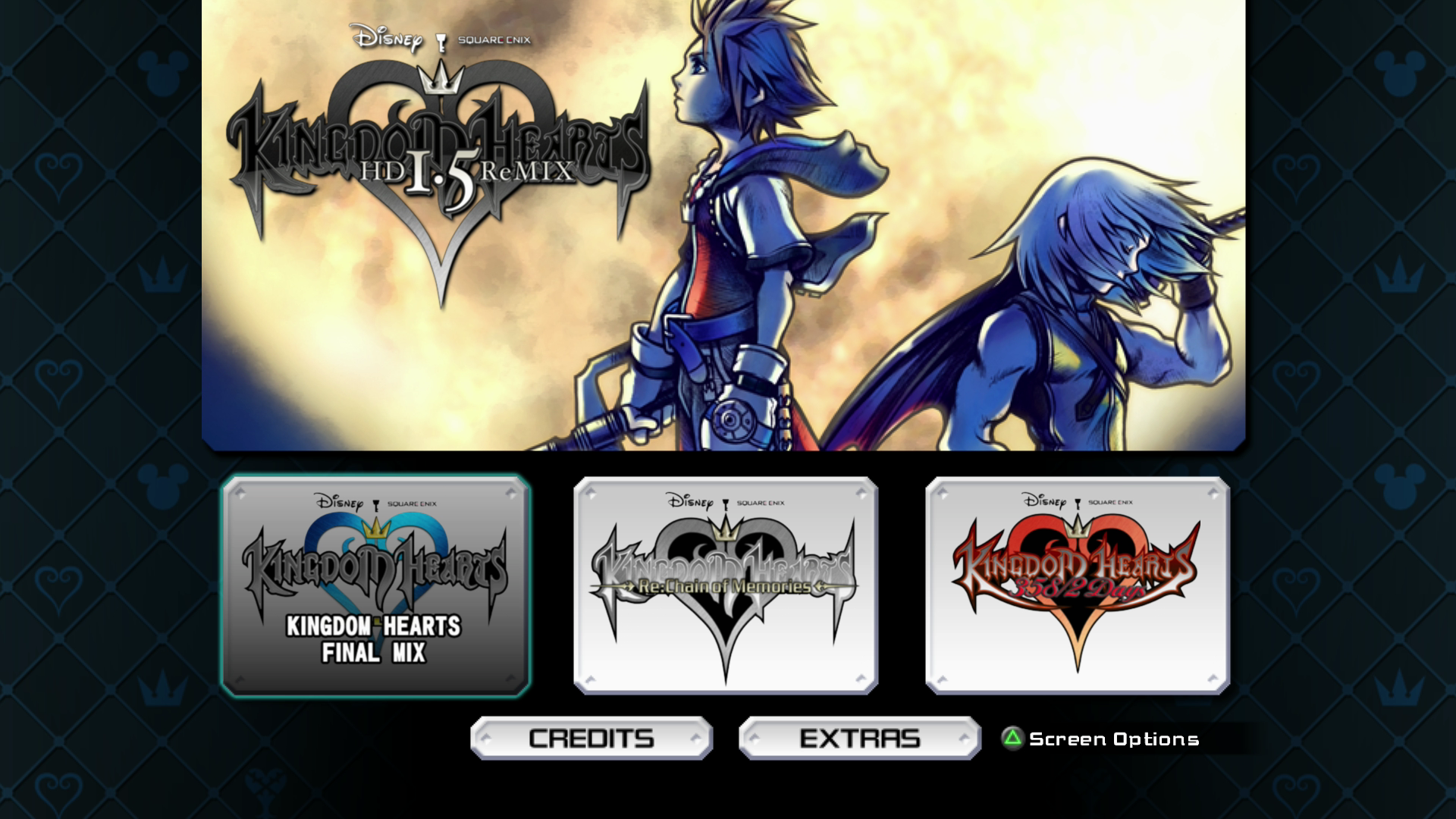
    Before you get into any game, you need to select the title you’d like to play. This screenshot may look like you get 3 games for the price of 1, but you instead get 2 full games and a “film” of all the cutscenes from 358/2 days.

    Kingdom Hearts was released back in 2002, to critical acclaim. Finally, a game where one of the biggest developers of the time (Squaresoft) joined up with one of the biggest entertainers in the world (Disney). It became a hit success, and multiple spin-offs came a plenty for every platform on the market. Kingdom Hearts 1.5 HD Remix is the latest release from Square Enix, grouping many of the titles into one blu-ray disc, many of the titles for the first time outside of Japan. I got the collectors edition for £28, a fantastic deal for the amount of content on board, and considering I never got the chance to play the original, it’s a great start.

    After a few scenes in which the game asks you a few questions to get you started (Do you prefer the sword, wand, or the shield?), Kingdom Hearts starts you off on a island, seemingly in the middle of nowhere. You play as a guy with brown hair named Sora, a 13/14 year old teen who lives with friends and family, but dreams of adventuring off the island one day along with his closest friends, Riku and Kairi. Eventually this dream of his comes true when suddenly, darkness invades the island and sucks it up, separating the trio and leaving Sora alone in a new, unfamiliar world called Traverse Town. Whilst all of this is happening with Sora, cut-scenes ensure you know whats happening with Goofy and Donald in their world, and it just so happens that King Mickey has gone missing, and his only advice is to find the key-bearer. Goofy and Donald’s first port of call is Traverse Town, and so starts our epic adventure.

    FUCK THE FIGHTINGGGGG
    Fighting was certainly original for the time, blending action and RPG gameplay into one. Whilst no longer original (RPG elements are in every game nowadays), the action is certainly involving, allowing you to be a part of the fight, and not just a passive observer.

    Graphics have dramatically improved since the original, with characters and worlds looking sharp from any angle. There are some levels where you may notice it’s an old game, for example wonderland has a lot of flat, 2D textures that stick out like a sore thumb compared to the rest of the objects you encounter, but overall the graphics are sharp and you’d be forgiven for thinking it’s a modern game.

    The soundtrack is absolutely fantastic, with tunes that’ll stick with me for the rest of my life. For those of you that watched me play this on my livestream, you’ll have noticed me humming most of the tunes by the end of the levels, showing how much they had engrained in my memory. What adds to this soundtrack though, is the fact all of the songs were all remastered using a Orchestra, so fidelity is astounding. This is one soundtrack I will certainly be buying and listening too at the gym in the coming years. (If it ever becomes available)

    Once you’ve finished Kingdom Hearts 1 Final Mix, there’s still more here to keep you entertained. Kingdom Hearts re:chain of memories is a port of the 2004 GBA game, remade using the PS2, and re-released in HD on the PS3. It incorporates a 20+ hour story where you use cards to control your character, anything from slicing with your keysword, to summoning magic, all requires cards. It’s a neat mechanic that was introduced due to the GBA’s graphic limitations, but works surprisingly well rendered in 3D on the same graphics engine as the original game.

    FUCK THE POOOOOHHHHH
    Each world is lovingly rendered, with Disney character’s personality accurately represented on screen. It’s made me miss spending time playing through this game, and I can’t wait to play KIngdom Hearts 2.

    The final piece of this wonderful package is Kingdom Hearts 358/2 days, the Nintendo DS game. This isn’t the full game though, and is instead all of the cinematics rendered in HD and can be viewed in one sitting. It’s a nice way to sum up all the events of what happened between Kingdom Hearts 1, and Kingdom Hearts 2, for all those players who maybe never owned a Nintendo DS, or a GBA.

    The only gripes I have with this HD Remix is some of the gameplay. Being a remastering of a 11 year old game, I understand I can’t expect everything to be fixed, but there are some parts that really stick out in our modern gaming environment. Take for example, the games lack of any direction, it hurts for a first time player like myself, and is reminiscent of a time long since gone. This could of been fixed by some simple text boxes to make sure you’re going in the right direction, or even a hints system. I had many times where I was running in circles, exploring every room of a given world, just to realise I had to initiate a sequence to move on. There was no dialogue or help to tell me this had to be done, which led to frustration and anger. Maybe I’ve just been spoilt by todays gaming mechanics and tutorials, but they’re there for a reason.

    Overall, Kingdom Hearts 1.5 HD Remix is a fantastic buy for fans of the series and newbies alike. If you’ve never played the games like myself, you’ll get a lot of enjoyment from getting the complete experience in HD. For £28, the limited edition version (with art book) is a fantastic collection of games at a great price point. You’re bound to get at least 50 hours+ of enjoyment from this, just make sure you don’t get too hooked, we’ve got a while to wait for Kingdom Hearts 2 HD or even 3.

    4/5

    P.S. I made a quick look of the game, which can be found below:

  • Gaming Week 38: Plants vs Zombies 2 (iOS)

    Gaming Week 38: Plants vs Zombies 2 (iOS)

    FUCK THE FACEBOOKINGGGG
    From the get go, PvZ 2 wants you to make a new profile, and instantly suggests you connect to Facebook. You’re given no additional features for connecting, EA just wants your information.

    Plants vs Zombies 2: It’s about time, is the sequel to the hit franchise, Plants Vs zombies, a game that came out of nowhere but left a lot of gamers, casual and hardcore alike, wanting more. PvZ 2 has already changed in big ways compared to its predecessor, being a iOS exclusive for the foreseeable future, and changing the way the game is bought, and in turn, played. Is this sequel a fantastic instalment in Pop caps ambition to become the best casual developer out there? Or have they over-reached their mark?

    The premise of PvZ 2 is simple: Zombies continue to bombard your house, wanting to eat brains, but the main antagonist this time is Dave, the crazy shop merchant from last time. Dave just ate the best taco he’s ever eaten, and instead of making another, decides it’s easier to travel back in time to eat the exact same taco again. It sets up for a variance of different locales and different enemies to keep users entertained, and allows for some creative freedom from the artists. If you’ve ever played PvZ or any tower defence game for that matter, than you’ll know exactly how to play PvZ 2. You collect sun which randomly appears or is generated by sunflowers, and use this sun to create a defensive line to your house, using different plants to maximum efficiency depending on the zombies that are attacking. Each round is different, so you should think about the best combination of plants to take on the given zombies in any scenario, sometimes, I’d find myself in a awkward situation, thinking I’d found the perfect combination from an earlier level, just to be screwed over when a new type of zombie comes along which destroys my plans.

    FUCK THE DRAGGOONNNSSSSS
    New enemies certainly add a new level of difficulty to the game, and give variety to an otherwise familiar game.

    Sooner rather than later, the game gives you access to plant food: a new perk that allows a single plant that is fed this wonderful item extreme abilities; place it on a sunflower, and you’ll get 150-200 sun instantly, place it on a pea-shooter, and it’ll become a machine gun of a plant, easily able to take down a menacing line of enemies. Plant food is readily available throughout a level, being given to the player quite generously through killing green zombies, and given that it feels like cheat, it makes sure that you have some risk/reward scenarios where you’re not sure when or where to use your plant food. Another new set of perks are the three gestures in the bottom right corner: pinch, swipe and touch. Each perk allows the player to kill zombies on the screen using a different gesture, the pinch one is cheapest, but you have to pinch each individual zombies head to kill them. All these gestures come at the expense of your hard earned cash: a rare commodity in this game, and a asset you can buy from the store using real world money at any time. I’ve found that I haven’t needed to spend real world money yet, but repeating levels is certainly getting harder, and eventually, I will need to use those coins I’ve so desperately held on to.

    For a casual game, PvZ 2 certainly pushes you to experiment at the risk of failing; sometimes you’re lucky and can screw up your placements but still pass a level, other times PvZ 2 will punish you for even a second of missed opportunity to spend your sun. It’s a unforgiving system, and one that adds to peoples frustration and can be seen as a cash grab by EA to make you buy more perks in the level. Now some people may see this as a attempt to get you fishing into your wallets for cash to buy short term perks, which can be used during a mission, and I can’t blame people for thinking that way, but it is just randomness. I’ve done levels multiple times, sometimes I do it no problem using the resources I have, other times I genuinely do need to use the perks otherwise I wouldn’t stand a chance in hell. Overall, it’s a nice balance, Popcap have managed to balance the difficulty to make it hard enough for hardcore players, whilst also being difficult enough to push pennies out of casual folks.

    FUCK THE MICROTRANSACTIONSSSSS
    The store is where you really see why PvZ 2 is a free to play game. Next to everything has been monetized, from the gameplay itself, through to the locking of doors that hold power-ups, or even some amazing plants from the original. It’s a shame that EA see’s us consumers as cash cows, and treat us as such.

    Worlds are varied, and Popcap looks set to release more as the months go on. As of writing, there’s only 3 worlds available: Egypt, Pirate and Wild West, with the future land locked until a later date. They give a nice variety to an otherwise stationary game, and push your strategy to it’s limits, constantly pushing you back on your arse if you don’t mix things up at all. Take, for example, the Wild West world, where train tracks are put on the levels with a cart, so you can only plant one plant on that row (with the added advantage of moving it up and down), If you place one lone pea-shooter in one of these in the start, then you’re pretty screwed for the rest of the level. One frustration most players will find is the constant grinding needed in order to get from one world to the next. This all starts when you think you’ve finished a world by getting to the end, but no no no, this wouldn’t be a F2P game if it were that easy. Instead, once you reach the end, stars appear under every level you’ve already finished, allowing you to go back to previously finished levels and do challenges on them in order to achieve enough stars to progress onto the next world. It’s an annoying system, one which really makes a player grind just to see a glimpse of the rest of the game. Putting barriers up like this is a common trope of the F2P model, it stops the players progress to tempt them into paying to continue, something which in my opinion, shouldn’t exist at it stops a players immersion.

    FUCK THE DOORSSSS
    Special plants or abilities are hidden behind walls that require keys. These keys are appear from killing zombies within levels and are dropped at random, but with all things in PvZ 2, you can pay to get rid of these doors and have access to the prizes behind them!

    Pros:

    • It’s free
    • Graphics and animations are as smooth as ever
    • Just as charming as the original

    Cons:

    • Constant hindrances to your progression makes for a frustrating experience
    • “Pay to Win” model really doesn’t suit a Plants vs Zombies game

    It’s hard to come up with too many disadvantages for PvZ 2, it’s a bloody good game in it’s own right, from graphics to gameplay, it’s as good as the first, and even better in some places. Where the game falls short though is the constant hindrances to remind you that you should and could pay for everything in the game. If EA/Popcap had just made this another £15 game for every platform and maybe added the tropes for iPhone, it’d have been a lot better received, but alas, selling a game like this takes the soul out of PvZ, which once that’s gone, what does PvZ have left? Nothing but a shell of its former glory.

    3/5

  • Gaming Week 37: Game Dev Tycoon

    Gaming Week 37: Game Dev Tycoon

    FUCK THE SCREEENSSS
    The title screen updates to include your company name after playing the game once, giving a nice touch to an otherwise boring screen.

    Game Dev Tycoon has been out for a while, but it only came out on Steam on August 29th, meaning it now has full Steam integration. Achievements, steam in-game layout, means that the popular game for pirates has now become a official down to earth proper game. I’ve been looking forward to this version of the game for a while, and finally getting it on release day I spent the next 2 days playing 8 hours of the game.

    Game Dev Tycoon gives you control of a lone man who must make games for a living from his garage to start becoming a major part of the games industry. As you make more and more games, you can start renting out bigger buildings and more employees, which in turn makes bigger and better games for reviewers to give great reviews. It’s an endless cycle, one which’ll span 35 years of the industry, and will start with the G64 (the games name for the Commodore 64) and will end with the Xbox Next. You develop games by clicking anywhere on the screen to start a new project, this gives you a number of boxes to choose from which help you decide on what game you’d like to make (including the ability to name your title). Once you’ve decided on the game you’re going to make, your person starts getting to work on creating 4 different points that go towards to quality of the game: Bugs, Design, Technology and research. Generating these points to create the game takes approximately 2 months, in which time you’ll lose monthly costs (making your available cash drain all the time) and be given the choice on what parts of your game you wish to concentrate on. (e.g. do you want to invest more time into the development of the engine or the story? This choice differs for each game, and is completely up to you how you micro-manage employees time effectively.) Once you game is complete, publications review your game, and then it goes up for sale on the market, giving you the income needed to start work on your next game. It’s a neat little system that constantly keeps you entertained, ensuring that you don’t go a few seconds without having to manage a component of your company.

    FUCK THE PONGGGGSSS
    You begin Game Dev Tycoon in your garage, toiling away for hours at new and exciting game ideas until you one day get enough money to move into a proper office.

    Game Dev Tycoon’s use of real world brands is fantastically comical, including the history of the products themselves. Due to copyright laws, Green Heart Games couldn’t use the exact names of consoles and companies, so chose to be creative with their terminology. Nintendo is Ninvento, Sony is Vonny, and Microsoft is Micronoft. It’s funny a funny look at the industry, and helps to put our industry in perspective as a strange and wonderful place. What also helps to fill Game Dev Tycoon with joy and glee is the offices you inhabit, each having little easter eggs or memorabilia that will certainly make any fan of the gaming industry squeal with joy. It all gives Game Dev Tycoon a certain charm that resonates throughout most of the game, a parody of real life, but a loving one.

    FUCK ALL THE GAMMESSSS
    This is the closest I’ve ever gotten to a perfect game. It’s a shame “All Games” is such a judgemental publication.

    Game Dev Tycoon isn’t without its flaws, especially when it comes down to what games you should make. You’d think that making your own Game studio in a alternate universe would allow you to make whatever game you please, this is definitely not the case. Take for example if you wanted to make a turn based superhero game, you’d think that given enough resources and points in the right direction, this game would be successful with the market? Nope, Game Dev Tycoon ensures you stay within the confines of what happened in the real world in regards to games that were successful. The only way I was able to reach the end game was to have prior knowledge of the games that have been successful in the last few years, so a military action game aimed at the mature market (as close to Call of Duty as I could get) would sell a bucketload, but a school strategy game for everyone sells next to nothing. It’s a shame, as it requires prior knowledge of the games industry, and also stops players from experimenting with new types of games, which is never good for a game all about creating new things.

    Overall, Game Dev Tycoon is a fantastic first foray into the games industry for developers Green Heart Games. It’s a game that’s generous on value, and certainly has a lot of replay-ability. If you’re the type of gamer who loves micro-managing strategy games, Game Dev Tycoons for you.

    4/5

  • Gaming Week 36: Trauma (PC)

    Gaming Week 36: Trauma (PC)

    FUCK THE HIDDEEENNNNSSS
    The main menu of Trauma shows the main 4 stages of the game. Each stage isn’t too long, but has many hidden collectibles to discover, encouraging replay and exploration.

    Trauma is a strange and uniquely beautiful game that has you solving problems of a lady who’s been in a car crash and is experiencing trauma. It’s a wonderfully original concept, and one that has you trawling through as much of the game as possible to explore every nook and cranny the games levels have to offer.

    Trauma starts with a cutscene of a lady and a man walking down a ordinary street and getting into a car. After some lovely art work, the game makes a crashing noise, indicating that the couple have been in a car crash. The game takes place around the red haired girl recalling her life and moments through puzzles relating to the traumatic experiences in her life whilst she is in hospital undergoing treatment with a psychologist/doctor.

    FUCK THE WEIRDNESSSS
    Levels become a bit scarier as the game progresses, this isn’t because of anything you actually see, but the feeling of the surroundings pulls you in to a confusing and weird place.

    The gameplay of Trauma is akin to that of a point and click adventure game, one that has you exploring a whole level to click on everything you see that can resemble relevance to the level at hand. You’re given one 2D picture taken in the real world, that you must click around to explore the level. Clicking to the left will bring up a new side of the current scene, and its through this mechanic that you explore the given stage. Occasionally you’ll have to create shapes in order to finish the level, or to navigate around the world further than clicking will allow alone. Shapes like a ? will make things levitate, where as a straight line backwards will make the camera zoom out. It makes for some interesting mechanics, and although each symbol can only be used in certain contexts, its definitely adds to the exploration mechanics of the game.

    FUCK THE TUTORIALLLLSSSS
    Collectibles come in the form of photographs that you find throughout the levels. Each photograph either adds to the narrative of the game, or teaches you new ways to control the players perspective throughout the levels.

    Collectibles are hidden throughout each stage, enabling a player to continually go back and explore each stage to its fullest, which means Trauma has fantastic replay-ability. On top of collectibles, there are multiple ways to finish levels, leading players to go back to levels already explored trying to figure out how to see all the different ways a level will end. Some solutions to how to finish a level might not be taught until later levels, but this is a good way to get a player to replay the game without feeling that they’re repeating the same things, that is to say, they’re at least seeing something new each time.

    As the game goes on, later levels become more abstract leading to more questions about the main narrative. The formula of using high quality camera shots is still used for the levels, but objects/whole scenes start to become weirdly rendered, enabling Trauma to really flex it’s muscles as a mind-bend of a game. The end of each level also shows a cutscene, which in turn gives a little bit of explanation about what the woman (patient) is going through internally.

    FUCK THE NARRATTTIONNN
    Cutscenes happen at the end of every level, narrating a story worthy of competing against bigger games.

    For all of the praise I’m giving Trauma, it isn’t without its flaws. The game is extremely short, meaning I completed the game and found everything the hour mark. It is also very abstract, requiring the player to piece together the mystery and puzzle of what all the narrating means in the bigger context, which for me is fine, but for many casual players this may come across as pretentious/confusing.

    Below is a recording I made of the first level, whilst trying to find all the collectibles:

    To conclude, Trauma is a fantastic outing for Krystian Majewski, and I’m looking forward to playing more of her titles in the future. If you find the game on sale, it’s a fantastic purchase, but at base price the value proposition may not be to everyones liking.

    3/5

  • Gaming Week 35: Kairo (PC/Mac)

    Gaming Week 35: Kairo (PC/Mac)

    FUCK THE ABSTRACTION!!!
    Kairo doesn’t have a main menu per se, but pausing the game will give you the necessary information you need to get on your way in this weird and wonderful world.

    Kairo intrigued me purely from the screenshots on Steam alone. I was in America and needed some games (preferably indie titles) to play on my Mac to continue my one game review a week New Years resolution. Needless to say, I was absolutely blown away by Kairo and as Thomas Was Alone proved a while back, graphics have nothing to do with how deep and involving a game can be.

    Kairo starts as it means to go on: it gives you no context of anything and gives you the world itself to explore; for you to find your place and reason for why you’re there. You start on an island with a throne to your back, with nothing but white all around you. Walk forward a bit and you can see a glimpse of another island in the distance. You explore, hoping that this next island will give some meaning as to why you’re there, for a bit of perspective or narrative, or to hint at what your purpose is, but you venture on to realise it doesn’t. Instead of answering any questions you may have, this new island makes you ask more questions, constantly luring you deeper and deeper into a rabbit hole, furthering your anxiety and excitement.

    FUCK THE GRAVES
    Some, if not all scenes in Kairo can come across as very creepy. This room is one such example. The music certainly doesn’t help in making your experience comforting.

    The world of Kairo is an unnerving place, something which the music constantly reinforces. It pushes you into stronger immersion with each second of play; you’re not quite sure you want to progress, but you feel compelled to since it’s the only way to discover the answers you desire. The game is split up into 3 different worlds, each with their own hub that’ll take you to each room with a problem to solve. This all ties into a bigger narrative, ensuring everything you’re doing is tied together and keeps you going to solve the game’s mysteries.

    FUCK THE PUZZLESSSS
    Puzzles are abstract, giving no hints or clues as to what needs to be done to solve them. It’s through trial and error that puzzles are solved and results are seen for your effort.

    It’s hard to speak about the story of Kairo without spoiling anything. The only thing I can say for certain is that Kairo plays with you, ensuring you make assumptions as to where the plot is going, just to give you new clues that ruin your predictions. It’s a game where you kind of make your own story, and hence your own experience. It may sound counter-intuitive, but the game is fairly re-playable (within reason that is). Collectibles are hidden all throughout the world, ensuring that you keep on coming back to sleuth every nook and cranny this game contains. The game even accommodates this through a teleport system that you unlock through completion which will take you to key locations throughout the world; it’s a great way to still keep you in awe whilst also being convenient for the player. Although, once everything is found and the game gives you its secret ending, I don’t believe a person would find much value in playing through again. The world leaves an imprint on you, but one that can’t be repeated.

    FUCK THE CUBESSSSS
    Rooms and landscapes, although simple in geometry, are absolutely breathtaking. Who says you need to have good graphics to be immersed?

    In playing Kairo you’ll be taken on a journey, an emotional one that constantly keeps you on the edge of your seat, waiting for something to warrant the fear you feel playing through Kairo’s world. This experience isn’t going to be for everyone; some may find it boring or pointless, many may even say it’s not very pretty, but for those that do like all the little quirks that make Kairo unique, they will be far from disappointed.

    4/5

    (If you play Kairo and would like to know some theories about what it all means, check out this guy’s site:

    The Secret of Kairo

    it’s a fantastic break down from start to finish of everything in Kairo, and although it may not be 100% accurate/true, it certainly helps to put a lot of Kairo into perspective)

  • Gaming Week 34: The Wonderful End of the World (PC)

    Gaming Week 34: The Wonderful End of the World (PC)

    FUCK THE RED HAIR
    The main menu that welcomes you when you boot up The Wonderful End of the World. The woman has something to do with the game (I think).

    I bought The Wonderful End of the World on the Steam Indie sale a few months back as it reminded me of Beautiful Katamari from the Xbox 360. This, coupled with its cheap price made it so appealing that I bought it in a heartbeat, without really reading anything about the game and mainly judging by the screenshots alone. This past week, I managed to play the game from start to finish, and got every achievement, making sure I explored every nook and cranny this game had to offer, so without further ado, here’s what I have to say about The Wonderful End of the World.

    You start the game with the main menu screen (see above). From here you can change the settings if you desire, check out your trophies (they’re the same as the steam achievements), or play the game. Once you start the game, you’re presented with all the levels in the game, most are locked, but its up to you to decide how you go about progressing through them and which level you choose next. The first level you choose gives you a quick and brief tutorial, which sets the tone that this game is a carbon copy of Beautiful Katamari. You get dropped into the level, and have to instantly start collecting items to slowly make yourself bigger, trying to pick up everything in the level before the timer runs out. It’s a nice mechanic, and one that certainly makes you replay levels over and over to try and find the best route possible, but in doing so, it makes the whole game rather short. In some instances during play, it’s hard to determine whether you’re big enough to pick up a item, something the arbitrary score in the top right hand corner doesn’t help resolve. Once your timer is finished or you become big enough to finish the level (whichever comes first), you get a score screen with a rank at the bottom. This rank is determined by the final size you grew to, but is a bit vague when it comes to pinpointing exactly what you need to do for each rank.

    FUCK THE SHAPPPESSSS
    This is your character you will control throughout The Wonderful End of the World. This mass of random balls slowly absorbs items which it eventually incorporates into its own shape and size. Controls are simple, as can be seen at the left hand side.

    Levels are unique, each having its own taste and design aesthetic, which really adds to the charm and personality of the game. You go from a shopping centre, to a café, all the way up to gobbling up a city, getting bigger and more ambitious as each level is finished. One of my favourite levels is of a 2D billboard town using vector graphics; It’s aesthetically very pleasing and unique, (if not a little bit sickening too) and makes it stand out compared to the game it’s imitating: Beautiful Katamari. One major pitfall of the levels is their size. They’re all very tiny, meaning the 3 minutes you’re given to collect as much as possible is trivial and easy to finish. I found that on my second playthrough I was getting A+’s on every level without trying, and finishing a level well within the time limit.

    FUCK THE BILLBOARDING
    This was easily one of my favourite levels. It’s 2D billboard system was both unique and charming in how it was presented.

    Past the fun and simplicity of it all, The Wonderful End of the World isn’t without it’s flaws. The game has no narrative, meaning that if you’ve never played a Beautiful Katamari game, you almost certainly won’t understand the purpose of the game. You keep seeing pictures of a woman with red hair (seen in the pics I’ve posted), but no context is given as to who she is or of what value she plays in the game. The total game time as well is extremely short, meaning I completed the whole game (100% achievements) in a little over 2 hours (This included restarting my progress and playing the whole game a second time).

    FUCK THE RANDOMNESSSSS
    As with Beautiful Katamari, there are very random items in the world to collect. This gentleman in the corner certainly stands out, and doesn’t belong in a construction site.

    In conclusion, I can’t help but say that The Wonderful End of the World feels more like a college students final year project than an actual full retail game. It’s fantastic proof of the concept that they can program this all from scratch, but the game leaves a lot to be desired, coming across as an unfinished mess rather than a brilliant take on an underrated genre it had the potential to be (much like Beautiful Katamari).

    2/5

  • Gaming Week 33: Torchlight 2 (PC)

    Gaming Week 33: Torchlight 2 (PC)

    FUCK THE SERVERSSS
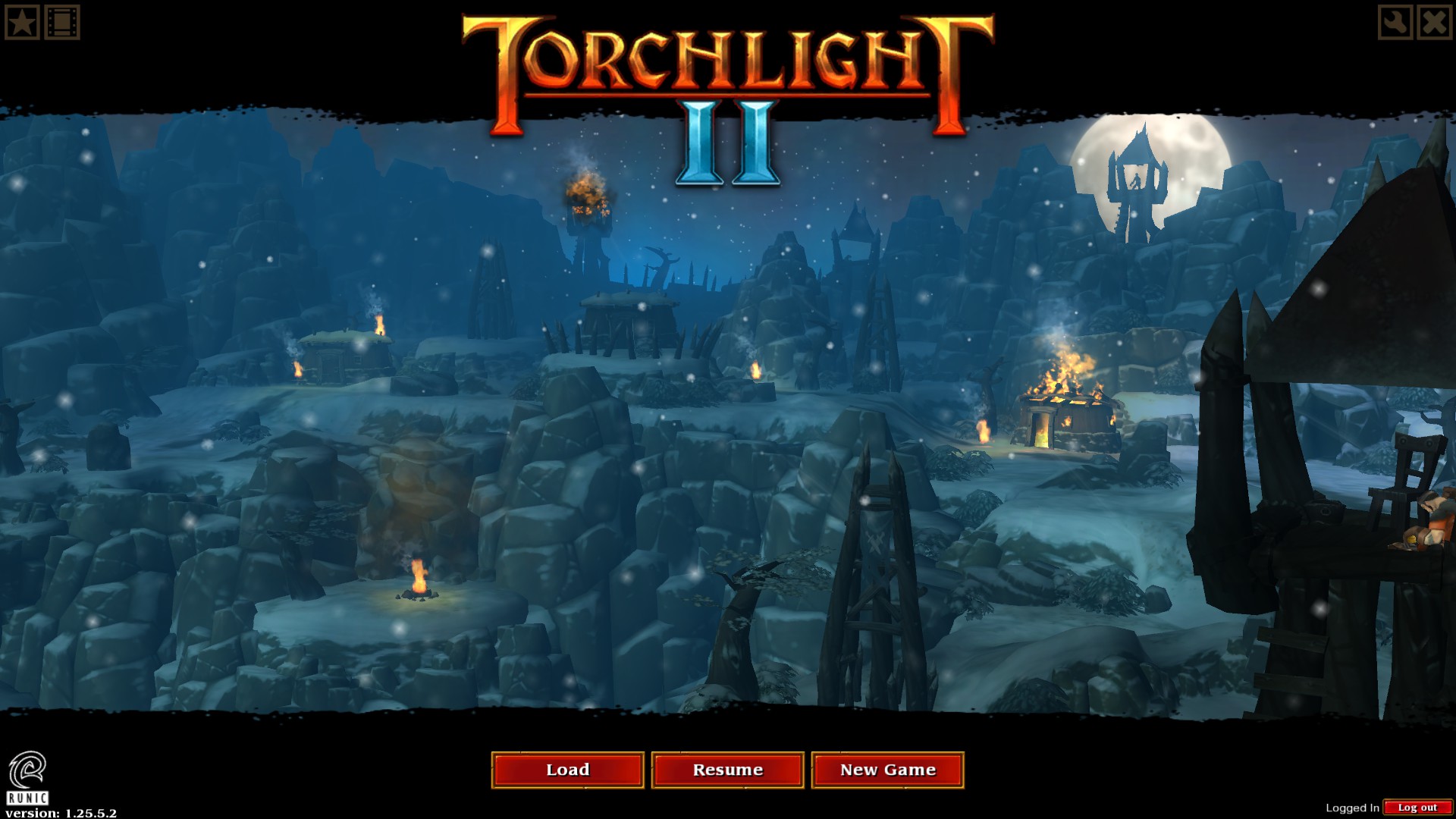
    This is the screen you’re greeted with every time you start up Torchlight 2. You have to log into Runic’s servers in the bottom right corner to play online with others.

    I have fond memories of Torchlight on the 360, but after playing it for 14+ hours and 100% the game, I couldn’t help but feel a little deflated that there wasn’t more. Torchlight 2 came out 6 months after my first review, but due to other games and other things happening in my life, I gave it a pass as I knew I wouldn’t be able to give it the time and attention it deserved. Finally, I got Torchlight 2 for £4.99 when it was on sale in March, but even then I put playing it off until I had someone else to play with. I can safely say, that as of this week, I have played Torchlight 2 from start to finish.

    FUCK THE GIBS
    Battles can get quite intense, making it difficult to see your own player amongst all the fireworks and gibs.

    You start Torchlight 2 as you did the first game: selecting a class and a pet to go on your adventure with. From here, you get introduced to the main narrative that’ll keep you adventuring throughout the campaign, which consists of a very strong, evil Alchemist (the same one you could play as in the first Torchlight) being overwhelmed by the same evil that corrupted the caves under the original town of Torchlight. You start your epic quest just after Torchlight is destroyed, and you must embark on a adventure trying to put a stop to the alchemist as he makes his way across the world disturbing the peace. Not a bad set up by any means, I just wish the cut scenes were better narrated and higher fidelity to properly portray the story, as it stands, the cut scenes feel disconnected to the main campaign.

    One of the biggest differences you’ll find with Torchlight 1 and 2 is the new addition of multiplayer. You can’t miss it, a runic account being the first thing Torchlight 2 asks you to create when you first get into the game, it ensures that all players are able to connect to multiplayer if they so wish. I’d hugely recommend it if you have a internet connection, as without other people, torchlight 2 feels a bit empty and joyless. Levels are huge and vast, with plenty of enemies to take on and kill for all that sweet XP, but without someone to share this XP and experience with, Torchlight 2 feels like a empty shell of a game that could of been so much more. Multiplayer works by wondering the whole world with each other, players are able to go into separate areas, and play the game as if they were alone, with the addition of trading and XP sharing to add (XP sharing only happens if you’re both in the same area, kill enemies in separate areas, and the other player doesn’t get anything.)

    FUCK THE ITEMS
    The fantastic method of storing items with your pet has returned, even allowing you to send them back to town with the junk you want to sell, it was innovative back in Torchlight 1, and it continues to be a fantastic idea in Torchlight 2.

    Item management is still a pleasure in Torchlight 2; It’s very fast and easy to sort through all the junk you get on an adventure, and certainly helps you turn items into gold as and when you’d like. Most items can be worn by all classes, which means its very rare to get items that you can’t use. This feature was great for trading, as I was a berserker, and my brother was a mage, so we traded back and forth with staff’s and melee weapons. I can imagine playing this alone may make item drops a bit more boring, but as a whole, the item system works fantastic for a loot game like Torchlight 2.

    Combat has changed slightly from the old Torchlight 1, with the control system becoming more akin to Diablo than a third person game. This may be in part, due to the fact Torchlight 2 is PC only, requiring a mouse to move your character around, and for every action in the whole game. If needed, you don’t even need to use your keyboard to perform actions; a single click on the bar at the bottom will cast a spell or skill. It’s a small change, and one I’m still not sure I like yet, but is a move in the right direction to becoming less of a action/adventure game and more of a RPG. Combat entails using the mouse to click on anything you want doing: be it clicking on an enemy to continue attacking them, to clicking on loot to pick it all up, its simple, and brings the RPG game back to it’s roots. My berserker character was certainly equipped and ready for what the campaign had in store for him, meaning I only died a handful of times throughout the campaign. Skills were powerful, but not too powerful to break the gameplay, inviting for some creative ways to take on bosses towards the end game. (My favourite ability was to freeze a enemy which would increase my attack on them by 34% for 4 seconds.)

    FUCK THE QUESTSSS
    Quests are narrated, giving a nice feel to Torchlight 2. Most of the story and quests are boring, but for most people, that’s not the reason they’re playing Torchlight 2.

    In conclusion, Torchlight 2 is more of the same, but with elements that have transformed the feel to appeal to a wider audience. Is it worth the £14.99 asking price? My 20 hours of gametime is certainly a testament to how engaging it can truly be, albeit make sure to experience this with friends, playing alone I could only muster an hour or two before getting quite bored.

    3/5

  • Gaming Week 32: Reus (PC)

    Gaming Week 32: Reus (PC)

    FUCK THE GIANTS
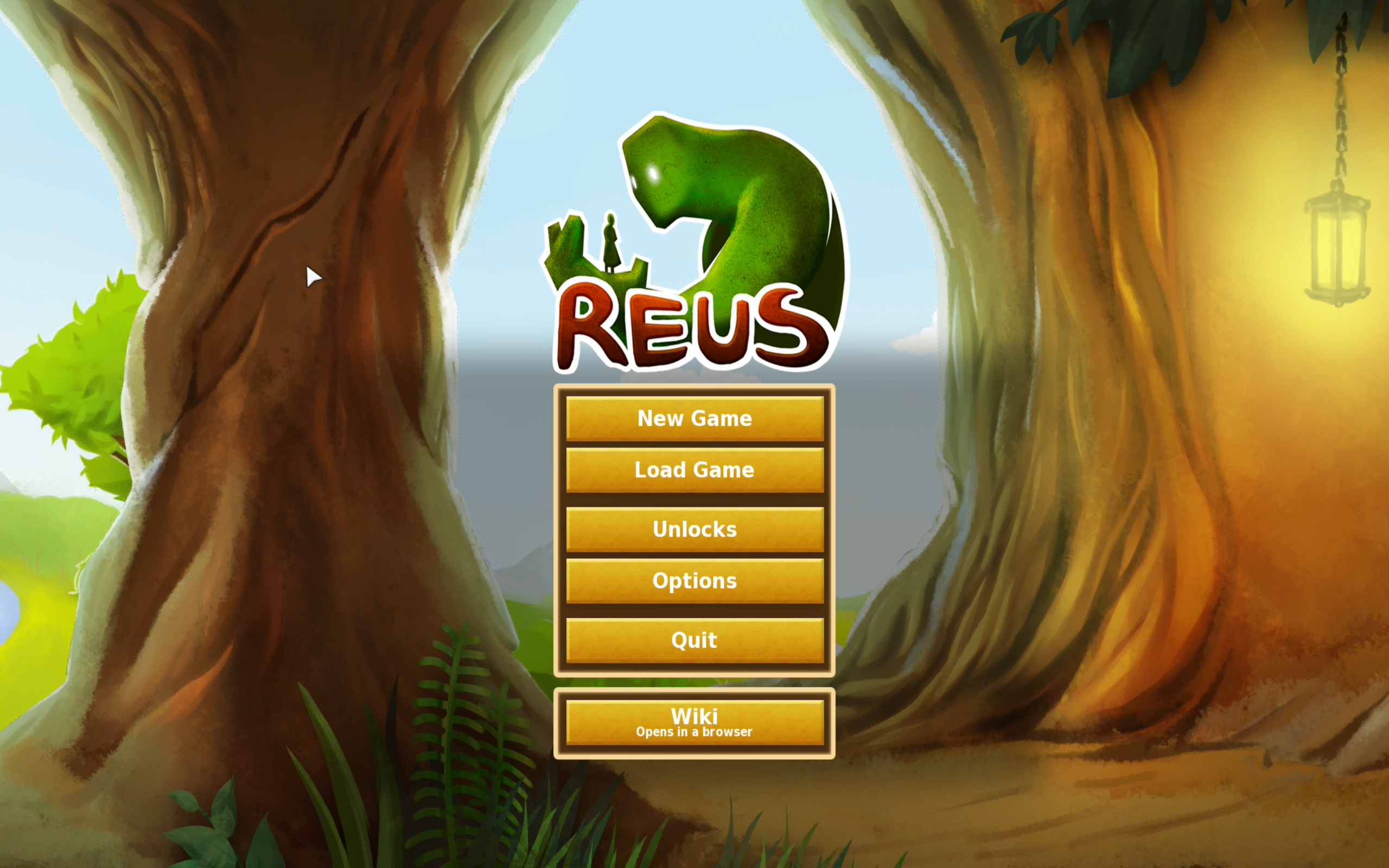
    I think the logo of Reus sums the game up perfectly, with the giant in awe at the human whilst simultaneously caring for him.

    I started Reus with an open mind; I was never into God sims as a kid, and could never get into Black and White, the absolute king of the genre. But something about the promotional material and friends playtime peeked my interest in Reus, and in turn made me give the God Sim genre another go. I’m glad I did.

    You start of Reus with a  few tutorials to get you used to the basics of the game. You control giants which all have special, unique abilities, and you must use these abilities to the benefit of the humans inhabiting your world. There are 4 giants in total, which are as follows: The Ocean giant, swamp giant, rock giant and forest giant. Each of the giants have abilites that are quite self explanatory (£100 to anyone that can guess what each giant specialises in) but also have abilities that compliment and help each other. The ocean giant creates oceans, but is also used to make animals, making sure to not get ignored/sidelined compared to the other giants in the later game, I’d class him as the support character for all other giants. The forest giant on the other hand creates forests and fruit, making him good for food production for civilisations, and very good in the early game. Your challenge is to experiment with each giants abilities and find a solution to the needs of the humans that inhabit your land.

    FUCK THE ROCKKKKK
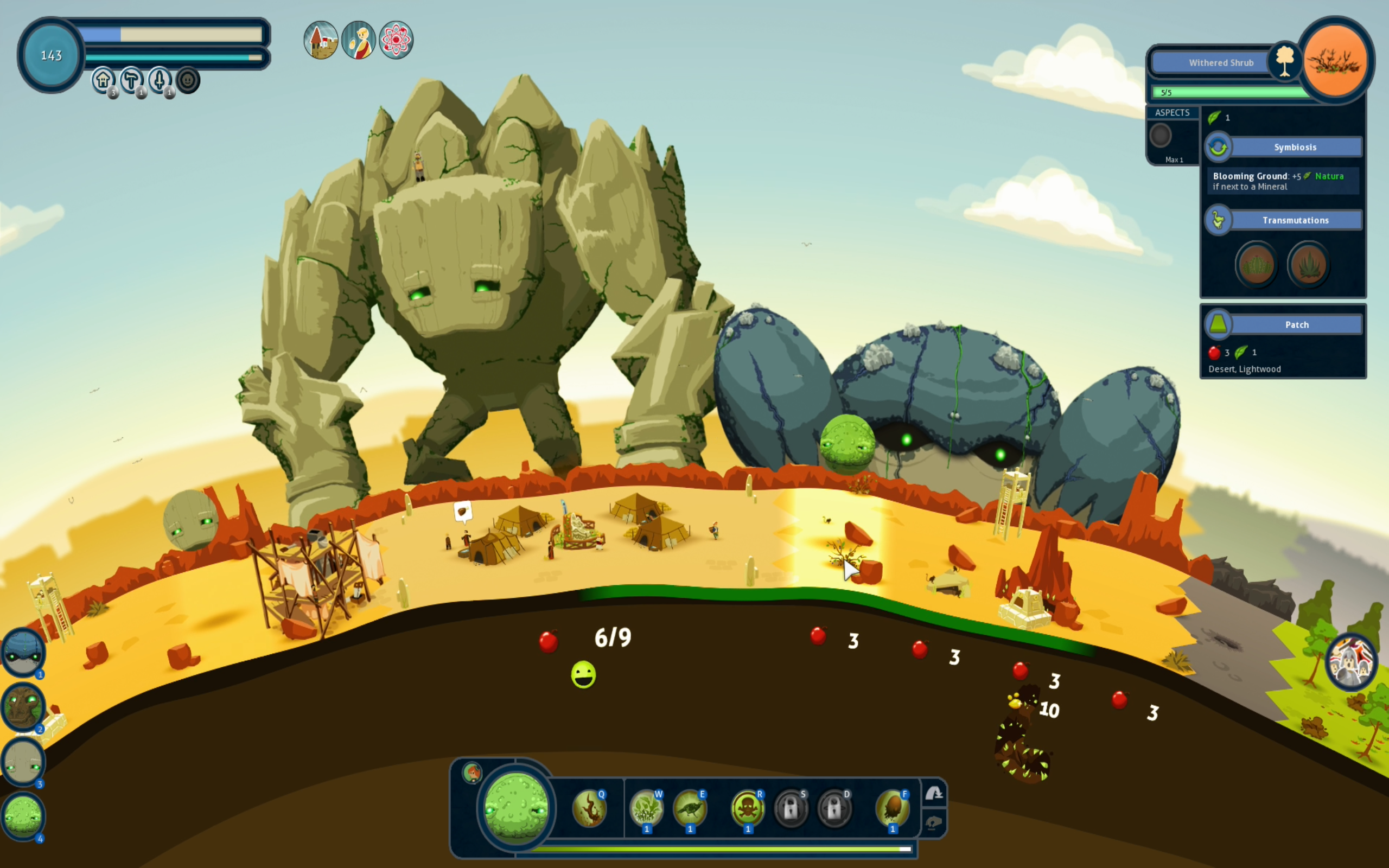
    The rock giant makes mountains and minerals to increase the wealth and technology of a village. His mines are definitely a harder ability to master than any other.

    Each section of land can have one giants ability in its place, and this is how you make resources for the villages/land throughout the game. Get the forest giant to make fruit on a section, and berries will spawn, providing food in that area surrounding the section of land. Make the Ocean giant place animals next to the berries, and food will significantly grow due to the animals eating the berries.

    The giants of Reus aren’t just static objects that occasionally make land, far from it. In fact, as the era progresses, you will fulfil more and more human requests, giving you ambassadors to collect and use. A human ambassador helps out a giant by augmenting their powers, enabling a giant have more abilities to help the humans on the land. For example, giving the forest ambassador (achieved by fulfilling a forest villages requests) to the forest giant allows him to transform/upgrade plants with the fruit ability, turning the blueberries bushes into apple trees. This doesn’t sound like much, but apple trees produce more food if animals are around, which in turn could help the animals themselves to produce more food. Its a great cycle that allows for the player to experiment and see what combinations work in each area.

    FUCK THE DESERT
    Here we have the rock and ocean giant help each other with their segments of land. Animals in the desert produce more food when put next to a mineral mine.

    “Wait!” I hear you ask, “is there a main narrative or challenge to this game to give you a purpose for helping the humans?”, and there is indeed. Before starting a game, you get to choose what era you would like to participate in. A normal era is a 30 minute game, a bigger era is 60 minutes, and finally you can make a single game last 2 hours. Before you start your game, Reus will remind you of the developments/objectives you can work towards in this era. Some of these objectives are simple, e.g. completing 3 village requests, but others are challenging, and may be so specific that you end up only making one village for an entire 30 minutes and catering to their every command. These developments make sure you work towards a common goal, and help to add to the longevity of Reus.

    FUCK THE VILLAGERS
    Here, the swamp giant is trying to experiment with different herbs, making as much tech as possible for the village that occupies this land.

    In conclusion, Reus is a fantastic game that tests your knowledge and multitasking skills to their limits. In the later game it becomes a lot harder when trying to make your land as efficient as possible,  but the outcome is worth it when you see all the developments popping up to show how well you’ve done. I admit, this isn’t going to be everyones cup of tea, especially with a lack of direction in the game, but for those that like pushing their multitasking skills to the limits, this is for you.

    3/5

  • Gaming Week 31: Organ Trail (PC/Mac)

    Gaming Week 31: Organ Trail (PC/Mac)

    FUCK THE TITLESSSS
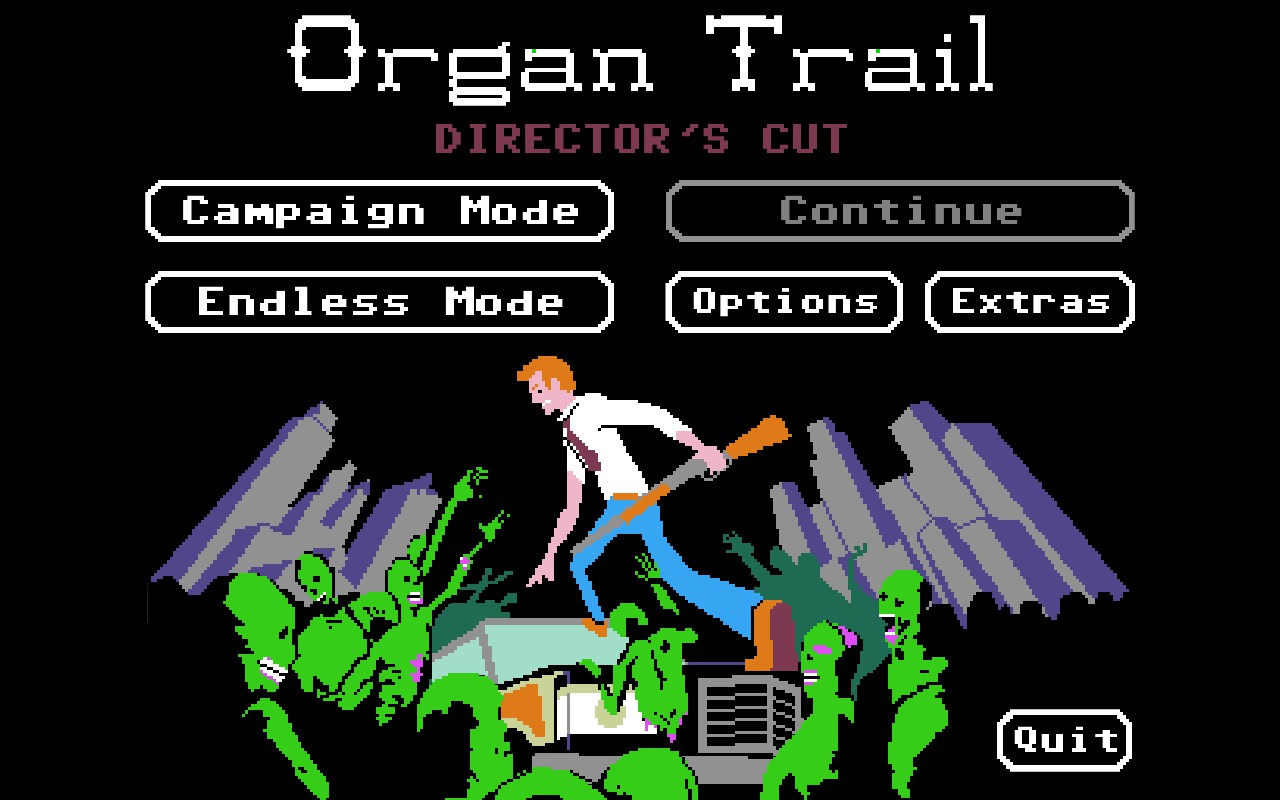
    Organ Trails retro graphics perfectly fit with the inventory management sim this game portrays. It ensures you’re not dazzled by the graphics and instead focus on the gameplay itself.

    Organ Trail is a fantastic inventory management sim, one that scales back all graphics and polish to be as raw as possible.  It’s a strategy game at it’s best, making sure you’re not distracted by anything else but the task of keeping your party alive.

    You start Organ Trail shooting down zombies from the safety of a sandbag wall, mowing them down one by one until you run out of ammo. This triggers for a man to come out of the shadows and help you run down the last of the danger. You’re told that he can help you get to Washington DC, a place where your friends probably are. (A lovely side note here, you get to name your friends, which is hilarious further down the road when things start happening.) Once there, you’re tasked with scavenging items that will try and last you the rest of the game, travelling from east coast to west. This is not a easy task, as you’re told from the gentleman’s journal that everything is pretty essential, for example, food is consumed at a regular rate to keep the party alive over the rest of the game. allowed your party only 1oz of food an hour will make your supplies last longer, but causes your party to lose more health by the hour. Once you’ve decided on your resources, you set out without the gentleman who helps you, killing him due to being bitten and infected. He has served his purpose and has helped you start your journey.

    FUCK THE BAND WAGGON
    This is what the town screens look like when you reach a new area. From here you can decide what you’re going to need for the next leg of your journey, and equip yourself appropriately. The town screen also gives you the chance to earn more money through jobs, or upgrade your car to ensure it survives longer.

    From here, the rest of the game is relatively similar. You travel along in your station wagon from town to town, having random encounters along the way. These encounters can be nice, giving you a new upgrade part for example, or very, very annoying (I once lost all my spare tyres and mufflers in one trip, whilst also having a team mate incapacitated). This is where the inventory management comes into action; you’re constantly having to manage healing squad mates, with ammo, and spare parts for the car to ensure you get to the next town in one piece. I must say one thing, for a post-apocolyptic society, a lot of people want cash, to the point I found myself far too short on the resource too many times to count, so keep that in mind when you start this game yourself.

    FUCK THE ROAD
    This is what happens along the road. I assure you, this is the start of the game as I certainly didn’t do this good a few minutes in.

    For as much fun Organ Trail is, it’s not without its flaws. The aiming for example during stand offs isn’t fantastic, but this could jus be a conscience decision for the developers to ensure the game stays hard. Another problem is the games simple mechanics; past the inventory management and player management, there isn’t much originality to the towns and encounters. It means you get into a routine and generally do the same thing over and over.

    FUCK THE TIMSSSSS
    Tim was incapacitated, and I didn’t want to feed him anymore, so I done this. (I was very tempted to tweet about it)

    In conclusion, I would compare Organ Trail to FTL: Faster Than Light. Its game mechanics make sure you’re constantly managing a set crew and vehicle down to the nitty gritty, and events make sure it adds some randomness into the mix. Add this to the fact that like FTL, Organ Trail is a hard but addictive game,  and it becomes impossible not to recommend Organ Trail. Its graphics and play style might not be to everyones taste, but if you’re a fan of strategy and hard games, Organ Trails right up your street.

    4/5

  • Gaming Week 30: The Walking Dead: 400 Days (PC/Mac)

    Gaming Week 30: The Walking Dead: 400 Days (PC/Mac)

    FUCK THE SELECTION
    These are the characters you get to chose from, each one with their own unique story.

    I was blown away by the Walking Dead back when I played it in January, as I’m sure many of you have heard from many publications, its a landmark game for story telling, and certainly has a uniqueness to it that’s hard to find elsewhere. 400 days is a piece of DLC to go on top of the walking dead, and is seen as a separate chapter on the chapter select screen. Each story is about 20 minutes in length, with a Epilogue that follows after completing each characters story. So for £3.99, its a nifty price for an adequate amount of content.

    FUCK THE WALKERS
    As with the previous Walking Dead chapters, zombies are still a part of the story, but it’s the characters and relationships which really makes the game come to life.

    Each story feels like a fully realised game in itself, with characters feeling extremely rich and deep. It makes you wonder what other game studios are doing with their writing staff, or whether Telltale Games have stole all the good writers of our time. When you select a character from the billboard, you play as that character, and undergo the traumatic experience they did on a certain day within the 400 days after the initial outbreak. Having the characters’ stories broken up into different days really helps to tell completely different stories, and helps to make you face different scenarios as time goes on. For example, a whose story begins a few weeks after the outbreak may be fine for food, but may have relationship or bandit problems, where as a character at 300 days may have food problems, therefore tensions would break out about rations. It makes for some very different scenarios, allowing characters to flourish under these intense situations.

    FUCK THE DECISIONS
    Multiple choice is back in this DLC, with decisions seeming to have a greater impact on the story than in the original game.

    Graphics and gameplay haven’t changed, with the game turning to multiple choice and conversation options to tell a story rather than action sequences. That isn’t to say that the original game had a lot of action pieces, but this DLC certainly has a lot less, making it a lot more laid back than previous chapters. Decisions you make seem to have a lot more impact than previous chapters, now this may be because you aren’t as attached to the characters (how attached can you become in 20 minutes?), but things are definitely a lot more drastic than before.

    FUCK THE DIALOGUE
    Dialogue is fantastically written, as it was in the original, there’s just not as much to do this time round.

    Pros:

    • Amazing stories make the Telltale writing staff some of the best in the business
    • Plays to the engines strengths by making sure there’s next to no action involved

    Cons:

    • If you’re looking for action, it’s not here

    So in conclusion, The Walking Dead: 400 Days gives you more of what you want, and less of what you didn’t want from the original 5 chapters. Its shortness does stop you from getting as emotionally involved as the original game, but each story has enough depth to make sure you’re satisfied.

    4/5


  • Gaming Week 29: McPixel (PC/Mac)

    Gaming Week 29: McPixel (PC/Mac)

    WOOOO ALL THE ZOMBIES
    Each level starts like this, I only realised after 4 hours of play time that you could right click to skip it.

    McPixel was raved about years ago due to the developers choice to help and support people who had pirated the game through the Pirate Bay, and after it being on the Steam Summer Sale for only £0.59, I really couldn’t miss the chance to give it a go.

    McPixel starts as it means to go on: by making you click all over the screen in order to progress through the game. It’s the same as how you’d play a classic adventure game, so it’s pretty simple to grasp. McPixel is a bomb expert that needs to save the day in many different circumstances. Sometimes the bomb is in plain sight, other times it’s hidden, at the end of the day your job is to find the bomb and defuse it within 20 seconds.

    FUCK THE LEVEL
    This is all you’re given at the start of this level, so not knowing where the bomb is, what do you do?

    I didn’t mention that McPixel is hilarious and damn right random. Some solutions require you doing things that you’d think have nothing to do with the bomb, others are just down right rude or silly. The example above with the acid, poo and woman at the end,  is solved by picking up the acid, and throwing it on the woman. It may sound random, but the bomb is inside her, and by doing what I just said makes sure that the explosion stays just within her belly, saving the supermarket. It’s all very silly and random, and makes for some very funny results.

    FUCK SPACEEEE
    This is what happens if you fail a level (which will happen a lot). It’s fine though, as you get to keep on trying until you figure it out.

    The game takes around 4 hours to complete to 100% on every level and round, which is a decent amount of time for a game this cheap. This can be extended with free DLC, which can be accessed by the main menu. I haven’t had a chance to try any of this DLC out yet, but I can imagine it’d be just as good as the rest of the game. There is also a mode for making and designing your own levels, which seems pretty intense and just as flexible as the main game.

    Pros:

    • Easy control system
    • Hilarious levels
    • Very catchy music which I’ll be humming for ages

    Cons:

    • A bit too simple for some peoples taste

    Overall, McPixel is a fantastic game from developer SOS, and I recommend it to everyone, especially right now whilst it’s on sale on Steam. For it’s price, I believe a lot of people will enjoy themselves, and if they don’t, well it’s the price of a Mars bar, so get over it.

    4/5

  • Gaming Week 28: The Last of Us (PS3) Part 2:

    Gaming Week 28: The Last of Us (PS3) Part 2:

    This is part two of my weekly review for The Last of Us, where I will break down it’s level design, gameplay, and give some conclusions of my own on how I feel about the game.

    FUCK NO EXITS
    The level design is fantastic, albeit game-y at times when you want to explore and get blocked off at doors/exits when you see no logical reason why your character can’t jump over it.

    The levels in The Last of Us are absolutely beautiful, giving a really immersive and realistic surrounding that really helps to immerse oneself in the world. Forests are wonderfully built to allow a bit of exploration, whilst also being linear  to make sure a player does not get lost and stays on the right path. The level design can be a bit predictable at times, meaning if you’re exploring with Ellie and you all of a sudden see some bottles and bricks scattered around, you know that an enemy encounter is about to go down. I found this annoying to my game experience, as it broke my immersion whenever I would be happily exploring the beautiful environments. This immersion breaking level design would also happen when you started levels, for example having just drove hundreds of miles, you can control Joel to walk back at the start of a level, only to find there’s nothing but rocks or a bus blocking your path. It’s a bit gimmicky and takes away from an otherwise good design.Overall I would say these are some of the most well realised cities/worlds I have ever seen in a game, which really help to portray the fact that humanity has been on the edge of extinction for 20 years.

    As for how you play The Last of Us, it’s classed as a survival Action Adventure, meaning that it’s a third person adventure game but it employs survival elements where you don’t get much ammo or resources. During the game you’ll come across cloth, alcohol and many other miscellaneous items hidden throughout the world. You use these items to craft better items such as molotov cocktails, or medkits. This does result in a management of materials, as the examples I just used require the same materials, so you really have to decide whether to go on the offensive with molotovs, or to make medkits to survive for longer. During my playtime on normal difficulty, I didn’t have any of these problems as resources seemed to be plentiful. That isn’t to say it’ll be the same on harder difficulties, but from my experience, survival wasn’t  problem. Most encounters you have in the game allow you to bypass by staying in stealth mode and making your way past the enemies. I found this great to start off with, but as the game went on and I got closer to the end where it was just bandits galore, sneaking past just took too much time and effort, so I took them on with guns. Overall the action in The Last of Us is effectively no different than Uncharted 3’s combat, the only difference being that ammo isn’t chucked at you willy nilly, meaning you have to ration resources a bit more. It’s ok, but definitely could of been done a lot better. Ellie may be your companion, but you don’t notice her at all through your playing, she has no influence on the game, and is merely there as a plot device. If you’re sneaking around men or infected, they will literally walk right through Ellie, which is both jarring and silly for such a serious game.

    Pros:

    • Gorgeously realised world that really looks and feels like 20 years have passed.
    • Fantastic characters that really do evolve throughout the main story.

    Cons:

    • Too many human encounters for my liking.
    • Ellie has no impact on the game mechanics of the game.

    Overall, The Last of Us is definitely a step in the right direction for action games, I just worry about whats happening at the same time. This game feels like a re-skinned Uncharted, but where Nathan Drake would kill hundreds of people and in the cutscenes he’d brush it off, The Last of Us has changed the main character to be immersed in this world of violence, making it so your character has no other choice. It seems that developers are no longer trying to justify the actions of their protagonists, and are now just allowing them to be violent for the stories sake. By all means play The Last of Us, the whole world is raving about it, but I don’t think it deserves all the 10/10’s its been getting. Maybe it’s because The Last of Us was hyped as the game of the decade, but something about it didn’t sit right with me, it’s not different than any game that came before it, it just had a good story and characters. I was hoping the story would effect the game mechanics, which it didn’t.

    4/5

  • Gaming Week 28: The Last of Us (PS3)

    Gaming Week 28: The Last of Us (PS3)

    MEH
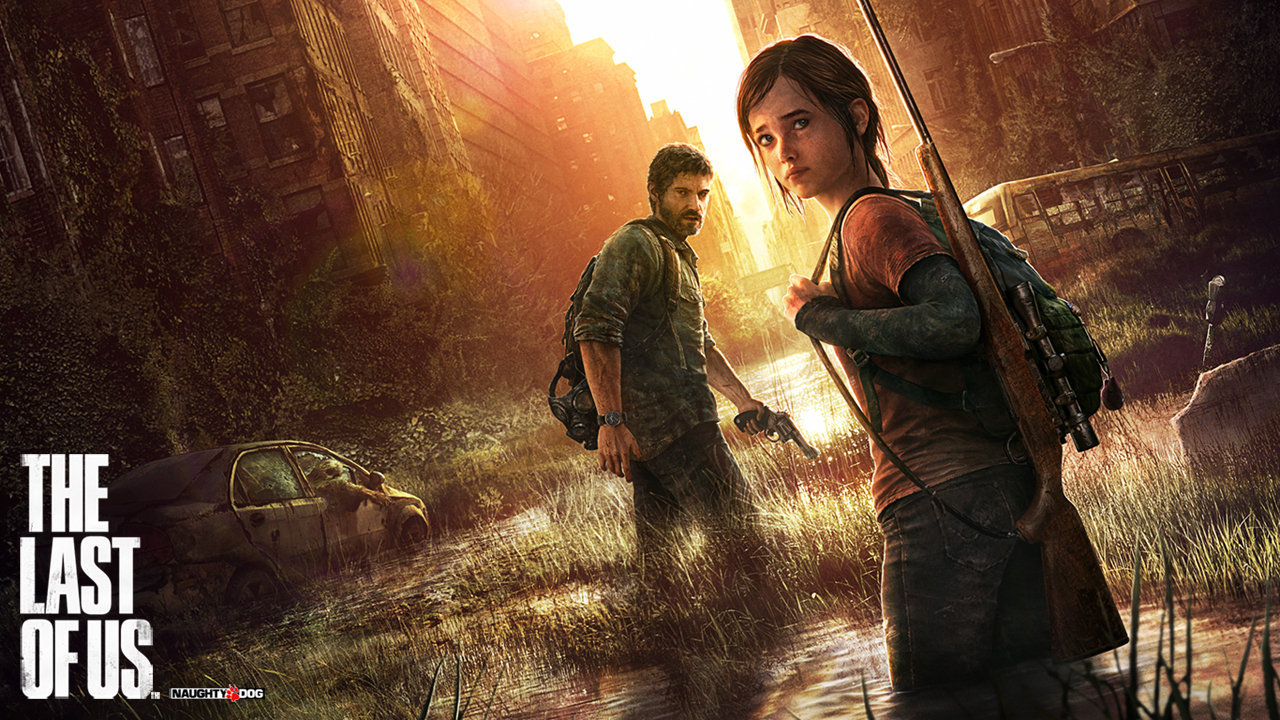
    You’ll grow to love these two characters, Joel and Elli, as you progress through the story of The Last of Us.

    This weeks review is on a game that has received a lot of attention recently, with many people calling it the game of the decade. I decided I had to see this for myself, so I popped down to Gamestop, and bought myself a copy for $60. (It’s still strange to write that, and $60 is the same price as back home so I was all good for it). For the purposes of length, this review will be split into two, with the first part today concentrating on premise, story and characters, and tomorrows part focusing on the gameplay, level design and conclusions.

    So, The Last of Us is based in a post apocalyptic world where zombies roam the earth. These aren’t normal zombies, they’re infected, which is slightly different and more believable than zombies; the first stage of transformation is crazed “runners”, who will beat and bite ordinary people like a traditional zombie. The next stage is “clickers”, this transformation entails a fungus exploding from the infected’s face, meaning they can no longer see, but click their tongues to see like a bat using sonar. The final transformation is the Boomer, a gigantic foe who will throw his fungal protrusions at enemies. Past these transformations an infected person will finally mould into a wall and give out spores to infect more people. It’s a nice concept that is different than the typical “zombie apocalypse” scenario, albeit all the familiar as well. Naughty God didn’t have to make the runner zombies, but to make the game play interesting they had to have multiple enemy types, and so it was a good fit.

    FUCK EM
    This is a clicker, which is what people who have been infected for a while turn into.

    The story starts with you controlling a little girl who wakes up to a phone call asking for her dad. The man on the phone sounds out of breath and scared, so the girl you control (Sarah) gets scared and has to find her dad (Joel). It’s a great scene that sets up the rest of the game fantastically, allowing you to see the world turning to chaos right before your eyes in a unique perspective. Once the screen fades to black, the player takes control of Joel 20 years later in Boston. In this time the infection has spread throughout the world, and special quarantine zones have been set up with military overlooking civilians. Rations are low, and the whole zone feels very much down in the dumps. As Joel and his companion (Tess) are smugglers, they need to get to the other side of the quarantine zone in order to get a “shipment”, and this is when you’re first introduced to the conflicting factions in this post-apocalyptic world. There’s the army, which is trying to take care of everyone in a harsh way, and the fireflies, a group of rebels that want to overthrow the army and feel they’d do a better job of protecting civilians than the government. Once Joel and Tess reach their shipment, the games true purpose is shown; in order to get their shipment, they must smuggle and deliver a child (Ellie) to the fireflies just outside of town. What seems like a simple task soon turns into having to traverse the whole USA, from Boston in the east to Salt Lake City in the west, which is a good set up for a game. The clans coupled with the new infected make for a very interesting take on the post-apocalyptic world, if not 100% original, it’s definitely a different take on a already popular genre of media. The story itself was ok, with cutscenes shinning light on the current circumstances characters found themselves in, but I found it all a bit too predictable, meaning that apart from the ending, I knew where the game was going. This is mainly because the story is based on the characters themselves, and not necessarily on the world around them.

    WOOOO BILLL
    Bill and Ellie certainly don’t see eye to eye, which can make for some very tense and funny cut scenes as their personalities rub each other up the wrong way.

    The characters are brilliantly filled out, with Joel and Ellie having a dynamic that makes you want to continue playing, just to see how their relationship changes. Throughout the campaign, Joel and Ellie will encounter many other characters on their travels, with each of these people being just as fleshed out and detailed as the main protagonists. Joel has been through a lot and is cynical of the world around him, meaning he’s a hardened veteran that doesn’t want hassle. Ellie on the other hand is a hard ass teenager who doesn’t want to be a burden on Joel, so tries to be independent, which causes more trouble for Joel. One example of the fleshed out characters is a man called Bill, who owes Joel a favour, to which Joel uses to try and get a working car to drive across the country. Bill is a very distrustful person who doesn’t like change, which really doesn’t go well with Ellie being a independent and strong woman, resulting in some very funny scenes between the two conflicting personalities. Overall the characters are amazingly thought out, which makes for a lot of believable relationships throughout the main story, meaning it’s not necessarily the story or the world that appealing, it’s the way the characters change and evolve throughout their time together.

  • Gaming Week 27: Poker Night 2 (PC)

    Gaming Week 27: Poker Night 2 (PC)

    FUCK THE GORILLAAAAA
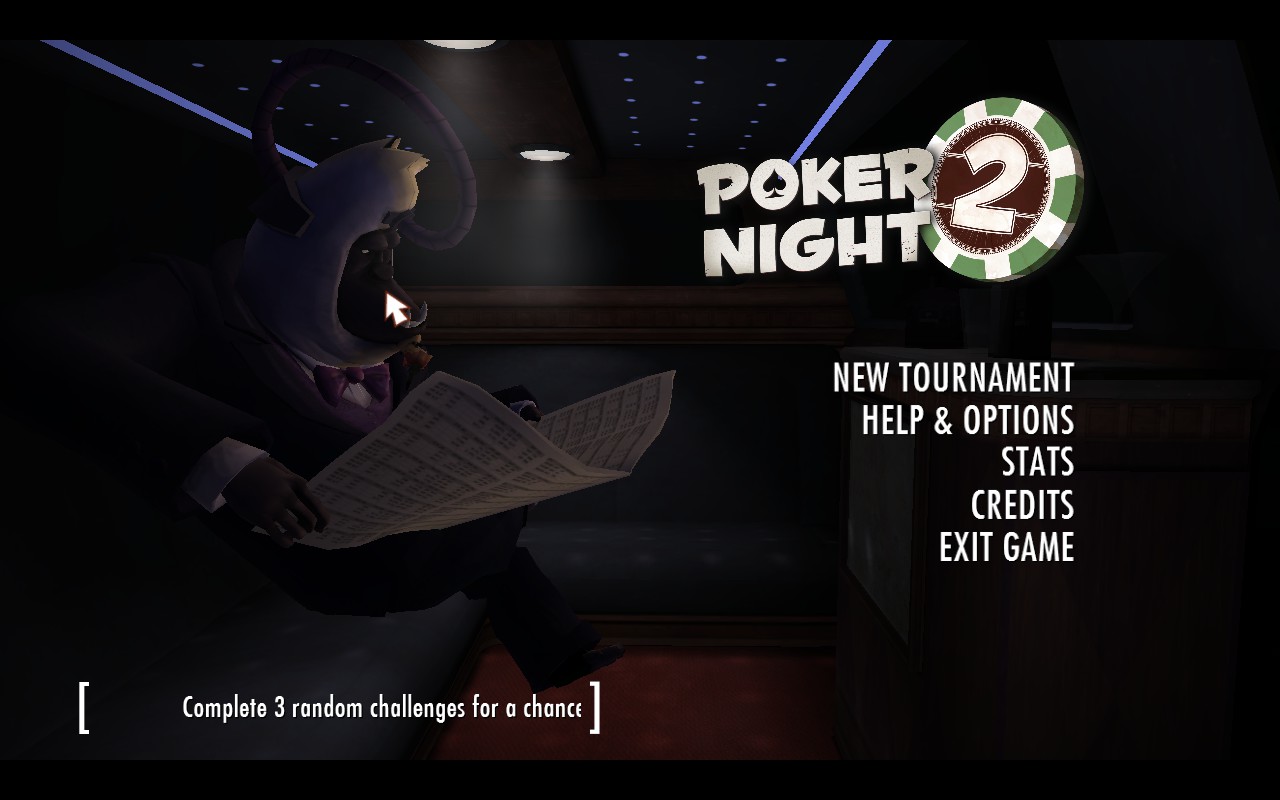
    I don’t know who this bloke is, but he seems pretty cool, and giggles every now and then, so I’m happy.

    For this week I wanted to review Poker Night At The Inventory, the first Telltale Games poker game, but I found that everytime I went to start a new tournament, the game would crash on my Mac, and since I have no access to a PC at this moment in time, I had to make do and play the second game in the series. This isn’t a bad thing at all, in fact I’ve heard the second game is definitely a lot better than the first, it’s just that I wanted to see the evolution of the series for myself, not take other peoples word on it. So without further adue, here are my impressions of Poker Night 2 by Telltale Games.

    YEAH BOIIIII, GLADOS
    So this is the whole crew of Poker Night 2, with GLaDOS being the dealer. It’s a nifty team, with personalities mixing to make a great atmosphere for Poker. From left to right: Brock Samson from Venture Brothers, Claptrap from Borderlands 2, Ash Williams from The Evil Dead and Sam from Sam and Max.

    So as you can tell from the title of the game, Poker Night 2 is a game about poker, with a sprinkling of recognisable characters as your rivals.This adds a nice spin to the traditional poker game as you enjoy listening to characters converse about a range of subjects, from what it’s like to be a Dog (Sam has some good answers) to what it’s like having your face plastered all over signs across Pandora. (Claptrap is pretty witty in his response).

    Theres not much to be said about the game of poker itself unfortunately. Poker Night 2 gives players the choice of Texas hold ’em, or Ohama rules, which is all fine and good for a poker game, although more rule sets could have been chosen. You’re always given $20,000 to start a tournament, and this money is completely imaginary, none of your own money (bar the purchase of the game itself) is used. It would have also been hilarious to have a strip poker version, as the money has no value, and it would have been fantastic to hear Brock or Sam get annoyed at losing a hand.

    WOOOO MOXXI
    You can buy characters drinks using tokens you earn by winning tournaments. The drunker a character gets, the more tells they have for when they’re bluffing. Also shown is the Borderlands deck of cards.

    What really differentiates Poker Night 2 to other poker games is it’s unlock system, in which there are 2 different types of unlocks. The first is when you win a normal tournament , which gives you tokens to spend as you please. These tokens can go towards buying new decks of cards, new chip designs, new boards to play on, and finally, drinks for characters whilst you’re playing a tournament (in-game unlocks). The second type of unlocks are rare and happen when a character bets a valuable object of theirs for the winner of the tournament. These unique objects allow the player to unlock content in other games, for example costumes in Borderlands 2 and Team fortress 2. From my point of view, the latter unlocks seem to be a purely commercial part of the game, an incentive if you will, of players who are huge fans of other games getting as much content as they can for the games they love. The £3.99 price tag then is really a piece of DLC for Borderlands 2 and Team Fortress 2.

    Pros:

    • Great atmosphere and charm from the characters you are pitched against
    • A solid poker game for those who like poker

    Cons:

    • Fairly short
    • Character conversations can become repetitive, I’ve heard Claptrap ask Sam what it’s like to be a dog 3 times in 6 tournaments


    By itself, the game is OK, it doesn’t break any new ground when it comes to Poker, and definitely has charm, but I can’t help but feel the only players who are going to find the best value in the game are those who own both Borderlands 2 and Team Fortress 2 in steam and want more content for them. Otherwise I don’t think the characters alone are enough to detract hardcore poker players away from the hundreds of free online poker games, and with a £3.99 price point, I think Telltale Games know this too.

    3/5

  • Gaming Week 26: Evoland (PC)

    Gaming Week 26: Evoland (PC)

    FUCK RPG'S
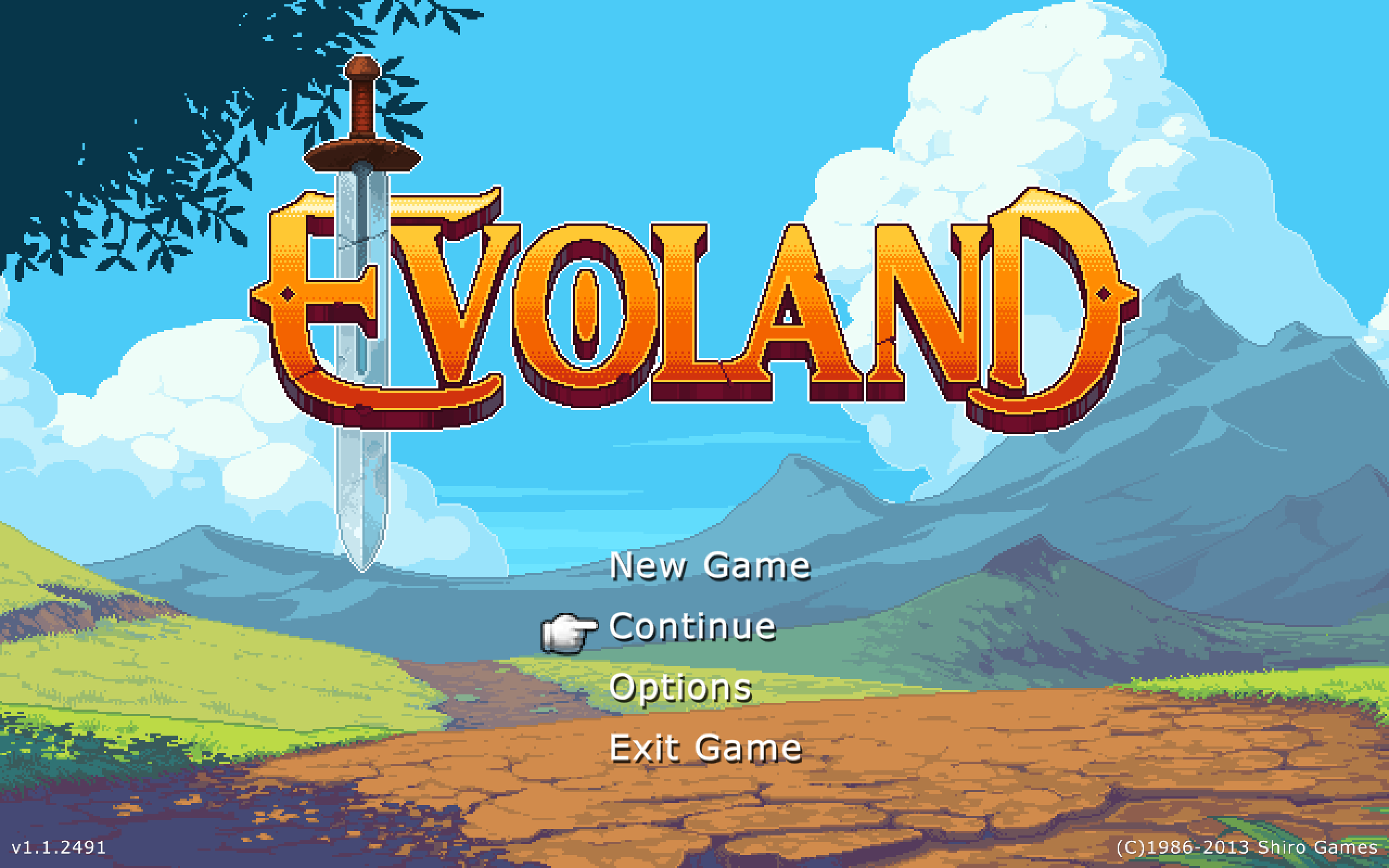
    From the get go Evoland looks like a RPG.

    Evoland has peeked my interest ever since I first laid my eyes on it. Similar to DLC quest, you travel through the world of a RPG, constantly upgrading the gameplay/graphics as you progress. This was enticing as DLC Quest was a very short game taking the mick out of the DLC culture, so I wanted to see what Shiro games brought to the table with Evoland, as their marketing approach was definitely different to say the least.

    You start the game as a 2D RPG, reminiscent of Final Fantasy games of yester-year. Only able to move in certain directions, you plod along opening chest after chest. Each chest gives the game a new look or feel, one chest gives the game colour, the other, the ability to move in all directions. It all quickly adds up, and soon you’re walking around the world like you’re in a Zelda game.

    ALL THE TIME CRYSTALS
    I kid you not, this is definitely Evoland you’re looking at, and not Zelda.

    The game doesn’t end there, making sure to keep evolving the graphics and gameplay to the point you’re using different systems for different locations. In dungeons you’ll fight like Zelda, pushing blocks to open doors, killing enemies to unlock levers, it all is very familiar, where as in the main world map, you’ll fight creatures like in a Final Fantasy game; a turned based system where you also level up and acquire gold.

    FUCK GOOMBAS
    Attention to detail is pretty cool here, Evoland loves to flaunt so many recognisable franchises with a little twist.

    All of this alone wouldn’t be enough to keep a player enticed for 3-4 hours, so Evoland does have a plot, but I use that word loosely. The plot is only introduced after 20 minutes of playing the game, and even then it’s a sentence or two. This means players will spend the first 20 minutes walking around for the sole purpose of seeing the world around them evolve, which isn’t bad, its just schizophrenic that the game seems to take both the world and the plot seriously, without ever intertwining the two. The plot feels separated from the game itself, so you end up not knowing whether the story is a joke or a serious tale.

    FUCK PRE-RENDERING
    The Final Fantasy rendered town is pretty cool, and definitely gave me nostalgia for FFVII.

    Gameplay was fine and enjoyable for the most part, but there were times when the dungeons would become frustrating and dubious to finish. Such times relied too heavily on the Zelda mechanics of the game, which was a fairly flawed fighting system, and after dying meant you’d have to start the dungeon again and again. It became annoying, but persistance prevails is the only advice I can give to those wanting to give this game a go.


    FUCK THE AI
    Loved this shout out to the FFVIII card mini game. Cards can be collected through the main campaign and used to verse the AI in one town.

    Pros:

    • Great little history lesson in RPG’s
    • Great graphics for each style

    Cons:

    • Plot doesn’t live up to the standards set by the gameplay
    • Certain dungeons/levels aren’t well thought out, resulting in numerous retries

    Overall, Evoland is a good game for a first time studio, and certainly lives up to its trailers and hype for showing the world the Evolution of RPG’s. Where the game falls short though is in its ability to become more than DLC quest’s mick take of the DLC phenomenon, and become a real game in its own right.

    Evoland is on sale at the moment on Gog.com for only $5, so I’d say its worth a play for its price.

    3/5