Tag: Indie

  • Weekly Gaming: Jettomero (PC)

    Weekly Gaming: Jettomero (PC)

    Hey all,

    Apologies for this, but it appears I forgot to publish a review on the 20th of October, so this post is for that! Please find below my review for a game I haven’t talked about on my own website just yet: Jettomero.

    You can read the full review over at VGChartz.com below:

    http://www.vgchartz.com/article/269731/jettomero-hero-of-the-universe-pc/

    Thanks for coming back again! I’ll post another catch up for Friday the 3rd soon, with regular schedule commencing Friday the 10th 🙂

    Til next time!

    -Dan

  • Weekly Gaming: Songbringer (PC)

    Weekly Gaming: Songbringer (PC)

    Hey all,

    Bit late with this one (I apologise!) but for this week I’m linking to my review on Songbringer – a fantastic procedural dungeon crawler that really did remind me of the early days of Zelda. It had a few issues (more bug related), but otherwise I thoroughly enjoyed the game and am going to definitely go back to it in the future.

    You can read my full review at the link below:

    http://www.vgchartz.com/article/269312/songbringer-pc/

    Until next week!

    -Dan

  • Weekly Gaming: Submerged (PC)

    Weekly Gaming: Submerged (PC)

    It’s been a while since I’ve played an incomplete, rough indie game, and weirdly enough, I wasn’t actually going out of my way to do that. But that was the case with Submerged – a weirdly ambitious indie platformer that proceeded to push the boat (literally) in the graphics department, but also felt so rough that I ended up almost quitting the game. Lets take some time to disseminate why.

    Submerged has you playing as a teen who is looking to help her injured brother. The very start of the game makes you know this is a world unlike our own, as the whole world is “submerged” in water, with only the tops of skyscrapers being accessible for humans. Playing as the unnamed girl, you proceed to sail the sea hoping from one building to another finding collectibles and old medical equipment for your ill brother.

    With that context out the way, let’s talk about the good things Submerged brought to the table.

    Graphically, Submerged is both one of the prettiest indie games I’ve seen in a while, as well as the roughest. Some scenes took my breath away, especially the dynamic weather on display through your travels throughout the world. Having the absolutely stunning skies, sunsets and sunrises follow your main character as you explore the world was fantastic, and had me more often than not standing still and watching as the world passed me by.

    Another thing submerged done right was its UI, or to put it another way: its ability to say a lot without saying anything at all. There is very little text used throughout the game, with most story points, as well as objectives told through simple symbology or animations. I was surprised and excited at how much I was able to understand the world and it’s backstory based on nothing more than simple abstract cards that are collected throughout the game. It gave me true inspiration for my own games in the future, and is definitely a highlight of how well games can do when they try their best to portray elements to players of many different walks of life through simple human-understandable images.

    Collectibles was another strong point that kept me playing far longer than the game required just so I had everything the game had to offer. The world is vast, and as such, has many islands that hide collectibles throughout, as well as powerups for your boat within the

    On the rough side is the absolutely atrocity that is the textures, repeating of assets, and just simply flat world the developers at Uppercut Games have conjured up. Terribly detailed and bump mapped lion textures adorn every surface, with their intention meaning to bring more detail to the world, but instead detract from the beauty of the environmental effects. Textures were so flat and dull that even my girlfriend pointed it out, saying it looked terrible. Considering my other half usually doesn’t care about graphics, it shows how bad they really are.

    The animations too are lacklustre and provide no life to the characters you’re meant to care about. Every morning your female player discovers that she is increasingly getting more moldy, with green spores covering her arms – but I just don’t believe that she’s actually worried. Each day her animations for climbing are exactly the same, and just don’t give the feeling that she’s pushing through pain to save her brother.

    Then there’s the gameplay of getting to the main game objectives themselves. For one, your character cannot walk, jump, or in fact, do any of the things you would expect in a platformer. Instead, you simply walk up to a wall, continue to press forward and have your character traverse the environment like you would in Assassin’s Creed – all without any button prompts. It’s weird, but the lack of actual control of my character made the actual traversal of the world extremely boring – I simply felt like a bystander willing the character to their next inevitable position.

    It seems that in striving for simplicity, Submerged becomes all but mundane, making me bored when traversing environments, and requires so little input from the player that I was able to play a lot of the game one handed.

    The buildings you traverse weren’t exactly exciting either – there are multiple paths to take usually, with some resulting in dead ends, and others leading to collectibles. If anything I found the map design of the buildings the most frustrating part of Submerged: 5 minutes of slow traversal could result in nothing in you took the wrong path, with no way of getting back to the start of the building in any timely fashion, yet again resulting in more wasted time.

    Despite the rough edges, there is some charm to be had in Submerged. I may not believe it’s anywhere near as good as some of the reviews I recall reading when the game was first released, but it was still a nice way to kill some hours, and a great way to find collectibles across a whole map. By all means give the game a go if you like finding lots of collectibles, just be warned that the graphics, gameplay and even controls are a little rough, and as such, you should know about that before going in.

    3/5

  • Weekly Gaming: Refunct (PC)

    Weekly Gaming: Refunct (PC)

    I’ll tell you what, it’s been a while since I’ve gone out of my way to find an indie game. Given how much work I find myself doing these days, that’s a massive shame; it’s always good to see what’s on the market and what your fellow developers are up to. So with it being the Steam Summer sale, I saw one game that peaked my interest: Refunct.

    The minimalist trailer certainly done it justice, and showed off how simplistic the game truly is, so I’m sorry if this review is a little on the short side. Regardless of length, it’s 64p pricetag interested me so much, that I immediately downloaded the game and proceeded to play through all it had to offer.

    Refunct is a parkour platformer that has you jumping across many 3D cubes on water, both to turn them green and give them life, but to also press switches across the stage to make more of these blocks appear. It sounds simple, but that’s because it is. That sentence above is the game in its entirety, and it’s bloody beautiful.

    Jumping around the world feels natural and seamless, more so with an xbox controller plugged in. The controls are simple to learn; simply press RB to jump, and LB to slide, and you’re basically good to go! You’ll pick up new tricks as you progress towards revealing every single cube on the map, such as wall jumping and climbing, and everything just feels well thought out and right.

    It’s even more splendid that there’s no text or tutorials in Refunct – simply start running around and the platforms you need to make your way to will teach you all you need to know. It’s charming how damns simple the game is, and has even made me rethink how I approach game design – if you can have this much fun in something so simple, do I really need to be spending ages making systems users may never use?

    As you progress in pressing more switches, the platforms get harder to climb, with switches moving further and further away. Refunct has a progression so to speak, but one that doesn’t exclude anyone – the game is easily completable by anyone.

    When I say completable by anyone, I truly mean it: ensuring I went out of my way to collect everything the game had to offer (e.g. touch each cube, making sure the whole world was coloured in), I completed Refunct within 25 minutes. Some may complete it even faster, and news may take a little longer. Regardless of your skill level, Refunct is short, but certainly makes an impression in it’s limited time.

    Graphically, the game is pretty, and has a dynamic lighting system which blends between night and day, but at the end of the day, all you’re looking at is pretty cubes. It’s nice to look at, don’t get me wrong, but you are literally just looking at cubes, and anyone can make cubes look pretty, right?

    So what more is there to say? One negative that could be thrown its way is the lack of any story, as all you’re doing is running around cubes on the water. Why are the cubes there? Why are you pressing these switches? Whilst I personally feel the lack of story is that much of a big deal, it could have helped Refunct have more staying power with players, giving them a much more memorable experience with maybe a surprise ending rather than just not knowing when you actually finished.

    That’s definitely one negative in my opinion; the endgame. Once I’d coloured everything in and pressed every button, I proceeded to run around the map changing the colours of all the cubes for fun. Thinking this was a new mode, or a new section of the game I ran around the environment for 5-10 minutes, wondering if anything would happen. Pressing start eventually, I found that nope, I had 100% the game, meaning my wondering around was for nothing. The end of the game could have definitely been choreographed better, that’s for certain.

    So all in all, I thoroughly enjoyed Refunct. It may be simplistic, and short, but it certainly left an impression, and has made me think about how I create games myself. Should you have a spare half an hour, and want to enjoy yourself for that entire time, you can’t go wrong with Refunct.

    4/5

  • Weekly Gaming: Abzû (PC)

    Weekly Gaming: Abzû (PC)

    Hi all!

    For this week, I’m going to link to a review I done back in August. Whilst I thoroughly enjoyed Abzû, I couldn’t help but think that it was a little too similar to Flower and Journey. Not that this is a bad thing, it just made me feel a little… cheated?

    Anyway, if you wanna give it a read, click the link below:

    http://www.vgchartz.com/article/265432/abz-pc/

    And as always, I’ll see you next week!

    -Dan

  • Weekly Gaming: Nidhogg (PC)

    Weekly Gaming: Nidhogg (PC)

    It’s rare that a game truly encapsulates the mantra “Keep it Simple, Stupid”, fortunately, Nidhogg is one such game. Don’t let it’s simplistic retro art style throw you off, for all of it’s simplicity in the aesthetics departmenr, Nidhogg is one deep and lovely game.

    First off, the main appeal of the game: The combat. Being a simple 2D platformer, you’d expect for me to just say there’s 2 buttons to attack, wouldn’t you? Well… technically that’s correct, but its the manner in which Nighogg combines these buttons along with your analogue stick that truly makes the combat come alive.

    You see, whilst there’s only two buttons to master (A to jump and X to punch/slash with your sword) Nidhogg has multiple ways to chain these buttons together and give them different uses depending on the context of your movement. Jump and pressing X? Why not dive kick to knock the opponent back. Holding a sword? Pressing up on the analogue stick will easily change it’s position, allowing you to disarm hostile attackers with relative ease. Opponent running away? Just press up and x at the same time to throw your sword at them.

    These devilishly simple but hard to master techniques wouldn’t be as fun as they are if it were not for the fantastic presentation for such a simplistic game. Every death has a fantastic new and varied scream, truly helping to push forward the narrative that these two fighters are well and truly fighting to the death with everything they have. The amount of gore present is also insane, with each death of your character sending hundreds of blood particles across the stage, making for a truly colourful level once you and your opponent have died plenty of times.

    The objective of Nidhogg is simple. Kill your opponent, and then proceed to continue killing (or avoiding) them rushing to their side of the screen. Being player one, you start on the left, so it’s up to you to kill the AI, and rush to the right. The second the other player gets a kill in on you though it’s time to hunt them down, as it’s now their chance to run three scenes to the left. This back and forth is truly amazing, and helps for the game to truly feel alive, especially when you’re hunting somebody down and worrying you’ll fail to successfully counter their attack the next time you encounter them.

    nidhoggjpg-d28e87_1280w

    But it’s the skill and the feeling of ecstasy from triumphing over your opponents that truly sets Nidhogg apart from other indie games on the market. You see, the plethora of different combinations you can pull of in fighting your opponent never ceases to astound me, especially when an AI character manages to pull off a combo you would have never dreamed of. I’d be constantly on the edge of my seat, wondering whether I’d get the upper hand over my opponent, or him, me. It’s nail biting stuff, but extremely gratifying when played, and hugely satisfying once you finish the games campaign against it’s ever increasing difficult AI.

    So overall, I’m thoroughly impressed by Nighogg and it’s attention to detail. Don’t get me wrong, the game’s short, with it’s $15 asking price being a bit much in my opinion, despite how much replayability there is. If you ever find the game in a sale, get it in a heartbeat, you will not be disappointed.

    4/5

  • Weekly Gaming: Hohokum (PS4)

    Weekly Gaming: Hohokum (PS4)

    I remember seeing Hohokum announced for the PS4 before the consoles inevitable release. It was charming to watch in action, but I couldn’t help but feel confused as to what the game was actually about. Here was a tadpole-like creature that was going around weird but colourful worlds in a seemingly random fashion. Needless to say, I had to give the game a go, so when I got it as a part of Playstation Plus many months ago, I decided to finally sit down with Hohokum and see what it was all about.

    2042312-714468_20130610_004

    The game starts off in an abstract black circular area. You proceed to move your “tadpole” around the black circular area whilst button prompts come up showing you how to move your tadpole through the world. Pressing X speeds up your character, whilst O slows it down, and Square closes your tadpoles eye. That’s it, simple controls for a seemingly simple game.

    During this black section you’re also introduced to your main characters friends. These other “tadpoles” all have unique shapes and colours, and when you go near them, you find that they follow your every move. This makes for some simply stunning art when you have the ability to move them all around in spiral and gorgeous patterns.

    Eventually, the game start proper when an incident tears apart the fabric of your black world, and in doing so, makes you lose your 18 friends, and so the adventure starts proper. You go into the only hole left behind, and discover a hub world full of awesome abstract creatures, with all manner of obstacles that lovingly animate with your characters touch. There’s easter eggs galore all over this first land too, with statues adorning a lot of the stage hinting at a history where the inhabitants of this land hated the tadpoles. It’s all for naught though, as the entire game of Hohokum allows you to interpret anything you see anyway you want, as it never actually explicitly tells you anything. It occasionally hints at little story tidbits throughout, but this is purely to prod your imagination into conjuring up fantastic stories.

    Once you’ve explored the first world enough, you’ll notice that you can create these portals to other realm by hovering over specific groups of circles. Each portal you enter will take you to a brand new and seemingly random world. It’s in the exploration of these worlds that you truly start to realise how damn charming Hohokum really is. Every abstract interpretation of real-life animals and activities looks and feels different, with each dimension also seemingly having different rules to follow. In one area you may meet an “elephant” that for all intents and purposes acts and behaves like one, but otherwise look nothing like a real life one. These abstract representations are at first confusing, but eventually, endearing. I found myself towards the end of the game enjoying soaking up every new creature and person I saw, taking in this weird and wonderful world in all it’s glory, and not wanting it to end.

    hohokum-screen-9-us-10jun14

    Each world will have a new puzzle to solve, which will always involve interacting with the environment in weird and wonderful ways. One world for example is a theme park, with multiple people spread throughout. When you hover over them, they jump on your back, ready to be put somewhere around the theme park, maybe on a ride, or even in a cannon to shoot them anywhere randomly. Once mini-puzzles are solved (like starting a ride back up), bigger pieces of the puzzle are given, which in turn finally reveals one of your missing friends from the start of the game.

    These puzzles are the bread and butter of Hohokum, and contribute to the games seemingly impossible learning curve as you first venture around levels. Eventually you’ll get used to how weird the game is, and it’s at this point that you’ll truly start to love and adore everything you see on screen. Every character is so seemingly simple on the surface with their big bold colours, but also so stylised and complicated that it throws you off frequently. I genuinely loved feeling confused throughout, as it allowed me to take Hohokums style and substance in all it’s glory. This sense of confusion may not be to everybody’s taste: those of you who like a more linear game may get frustrated at the games seemingly random logic, but for those of you who like a challenge, Hohokum is a genuine delight.

    When a friend is found, a new cutscene/story piece is given for how that friend lived in the time you were gone, and it’s also here that I found myself loving Hohokum even more. These charming tidbits of information really give character to these string-like creatures, which makes the game even more endearing. It’s weird really, but an absolute delight to experience when you first laugh out loud at how a character was trapped for years with people in the world thinking it was a hose.

    hohokum-screen-14

    The music, whilst sparse is also a delight, which, when combined with the sound effects produced when your tadpole interacts with the world, makes for a captivating experience. I found myself humming tunes regularly as I re-entered a world I had been in previously, a brilliant way to show how lovely and charming the music truly was.

    If I had to say some negatives about Hohokum, first it would be that it’s pretty short. At 3 hours and 50 minutes, I felt I had seen everything the game had to offer, and whilst there were more collectibles to find, I didn’t really feel like staring at abstract shapes until my eyes went blurry.

    Second, the “story” doesn’t really have a beginning, middle or end. For some this could be seen as a positive, as you’re exploring at your own pace and for your own reasons, but I felt the fact that there was no proper conclusion detracted from character Hohokum gave to it’s seemingly sentient tadpoles.

    Overall though, these negatives are tiny in the grand scheme of things, with myself and my other half thoroughly enjoying the richness of the world that is Hohokum. Should you have picked the game up for free in the past using Playstation plus, give it a go, you will not be disappointed.

    4/5

  • Weekly Gaming: Her Story (PC)

    Weekly Gaming: Her Story (PC)

    Given how many awards Her Story has received this year (some from BAFTA for example), I felt it was time to give the game a go, and see what all the fuss was about. I recall walking past the game at EGX Rezzed 2015, but didn’t think much of it due to its lacklustre appearance. I mean, who wouldn’t? You’re in a tiny room with hundreds of other games making loud noises and packed full of action and explosions, and all you see on this one monitor is an artistic impression of an old CRT monitor, complete with scaliness and reflections, with nothing more than a lady talking on it. I’m sure many others would walk past too.

    But boy ‘ol boy was I a fool. After spending the best part of an entire evening with my other half playing through Her Story, I can say I’m a fool for not giving it a look sooner.

    her-story-script-01.jpg

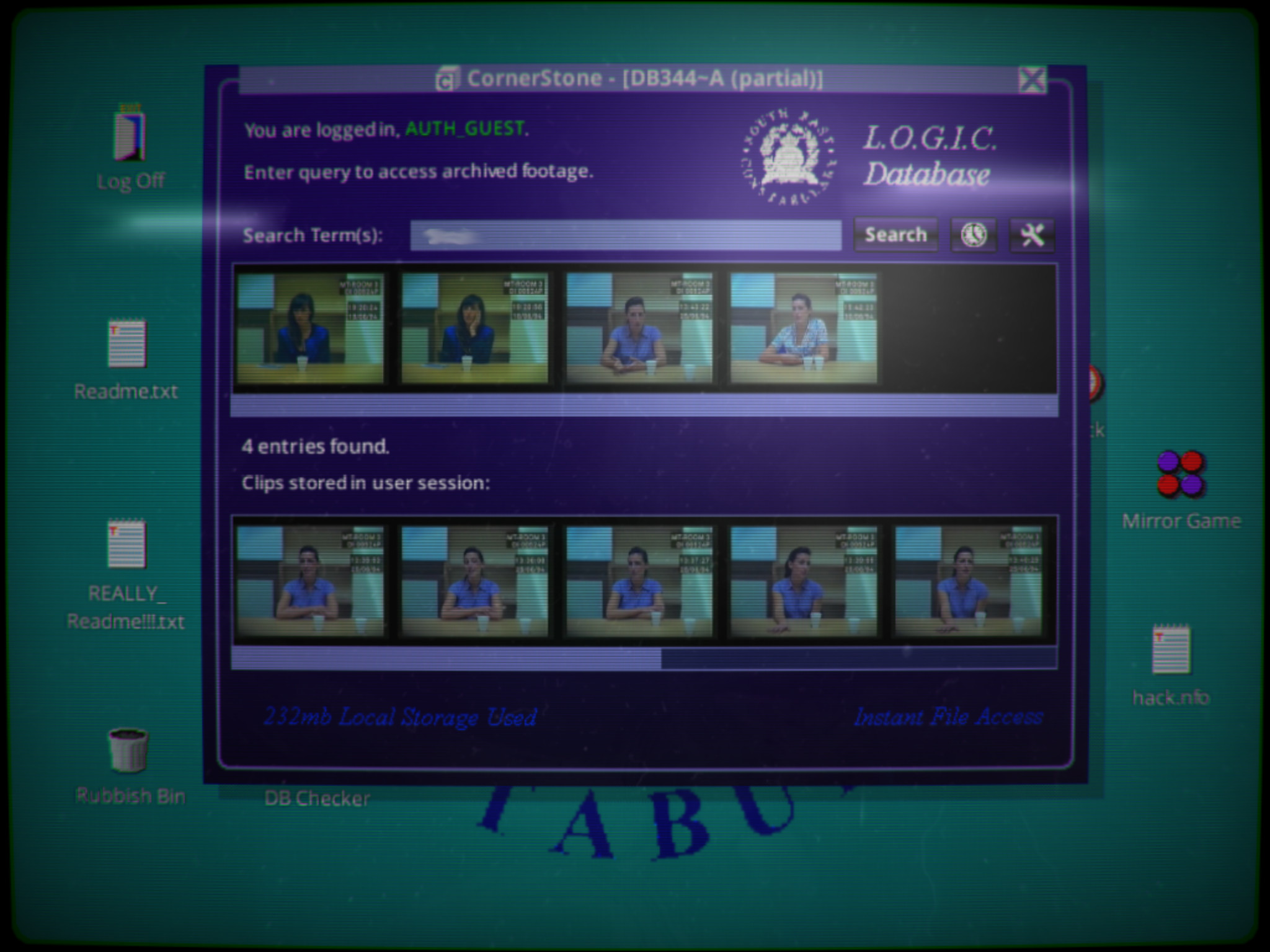
    Her Story revolves entirely around a series of police interviews with a suspect. You’re given no context about the reasons the person in question is a suspect, or even what has happened for their to be an investigation, you’re just presented with a PC monitor, a database piece of software, and some instructions on how to use it.

    You proceed to watch the first 5 videos already brought up within the database, and from there you start to build up a picture of what has happened. From these tidbits of information recovered from the tapes you just watched you can proceed to search for new terms in the database. A lot of the recordings you find may lead nowhere – sometimes they’re not giving more context on the current line of thinking you may have, other times they’re 2-3 seconds long and only contain a recording of the lady saying “yes” or “no”.

    Her_Story_screenshot_06

    But it’s in this mystery and lack of context that Her Story really stands out from the crowd. My other half really got into the idea of being a detective, picking apart everything the lady said to try and distinguish what we should search for next. Some clues may lead nowhere, but others feel like going down the rabbit hole, revealing a whole new point to the investigation you had never thought of before.

    The lack of hearing questions pushed at the lady also helps to keep a sense of mystery throughout, with your own mind having to be the conduit for which you try and order everything together. Tapes are mixed, and depending on which search terms you use, convoluted, making for an interesting and ever lasting hunger for more information.

    I’m not going to spoil anything about the story or the game, as that’s a huge part of what makes Her Story so incredible to experience. Should you already know terms or story points before you go in, you lose the mystery and as a result, are able to separate yourself from the investigative experience Her Story so greatly encapsulates. Suffice to say, what you get from the story is certainly fantastic, with many plot points giving you aha! moments that expand your understanding of the events that happened.

    main

    The acting of the actress was fantastic, with me an my other half truly getting a sense that these were real tapes with real questions being asked. The story, too has done an absolutely fantastic job of building this world up from scratch just through this ladies answers to questions we never hear. It’s insane to think these places and people don’t exist in real life, as the attention to detail about everything is staggering.

    One touch I did like was that Her Story is open ended; there is no conclusion to the story, no grand cut-scene that explains everything in chronological order, you’re simply asked if you’ve seen enough to understand what happened. It’s up to you, yourself to determine if you’ve seen enough of the tapes and have enough context to know what happened in 1994.

    You know what? I’ve been racking my brain for the last 15 minutes trying to think of a negative for Her Story and genuinely can’t come up with one. It knows what kind of game it wants to be, and never deviates from the course, creating one of the most sophisticated and brilliant games of the last few years. Because of this paragraph alone, I’m pushing the 4/5 I originally gave it up to a 5/5.

    ss_47f0e58df778d9f10b3df40ddce8bba8e592b1fb.600x338

    So, Her Story is genuinely fantastic. I can say without doubt that the game has won me over, and I can understand why it won as many awards as it did. Should you have 3-4 hours free one evening, and have a PC, iPad or Android tablet, give the game a download; you won’t be disappointed.

    5/5
  • Weekly Gaming: Cibele (PC)

    Weekly Gaming: Cibele (PC)

    Losing your virginity; it’s a deeply personal experience, and one which rarely gets mentioned in all forms of media. There’s a reason; this awkward first time is meant to prepare you for a lifetime of sexual encounters, so it’s hugely intimate and infinitely personal. So imagine my surprise when a game is made that goes through a girls first sexual encounter, and online relationships in general. I was interested, don’t get me wrong; indie games really do push the boundaries when it comes to what can and cannot happen within an interactive medium.

    cibele_004

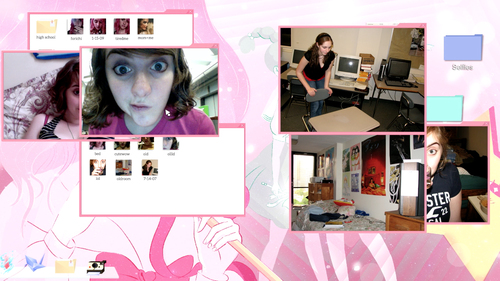
    So how does Cibele go about explaining it’s developer’s (Nina Freeman) first experience? Through a simulated desktop of what Nina would have said and done during this time. You’re able to click around this desktop, looking in Nina’s files and folders, exploring her most intimate poems and pictures. It’s this freedom to explore the game at your own pace, and to see as much or as little as you’d like which truly sets the tone here. You really feel like you’re actually exploring someones computer, which, as many of you may know, can be a hugely personal and scary thing (I know I certainly wouldn’t want someone free roam of my PC).

    Once you’ve explored Nina’s desktop as much as you’d like, you can proceed to boot up and play the online multiplayer game Nina is playing. This game (Valtameri) has you defeating enemies on the screen whilst dialog plays in the background between Nina and Blake. The game isn’t fun, and is merely there as a backdrop/scene to the actual depth of the story; Nina and Blake’s long distance relationship.

    udw390L

    The dialog is down right cringe-worthy in spots, but as a whole took me back to my teenage years of chatting up girls online. It’s authentic, and generally does a good job of showing how a relationship can manifest from terrible flirting between two awkward participants.

    The dialog plays out seemingly separate to the game being played itself, a fact that took my other half by surprise whilst we were playing. It wasn’t until I explained to her that multiplayer games are more of a backdrop to you catching up and socialising with others that the story made more sense to her. To put it in perspective, I explained all the times I would play Halo Reach or Call of Duty with friends at uni over Xbox Live just to catch up on the day’s events.

    Once you’ve finished the boss on each level within Valtameri, you’re rewarded with a new cut-scene which further expands on Nina and Blake’s relationship. This may be in the form of Nina taking revealing photos, or even her searching for flights to California (Blake lives on the west coast – Nina the east). These cut-scenes themselves can make you extremely uneasy also – the intimate detail Nina proceeds to show throughout Cibele is definitely not for the faint hearted, something which may put many players off. It’s tasteful though – nothings inherently sexual here. Yes, Nina’s in her underwear and taking awkward sexy photos, but you know the context, and can see how awkward it all is, giving precedence to the story at large.

    Once the cut-scenes over you’re introduced to a new date (sometime in the future) and proceed to start again, looking through Nina’s desktop files before proceeding into Valtameri again. This continues for 3 acts until you finally get the conclusion – Blake visits Nina in New York. In the conclusion, Nina and Blake lose their virginity together, but end up going their separate ways, with no future relationship manifesting from this encounter. It’s not a spoiler to say this, that’s the whole point of this game, it’s just jolting when it happens; we’re all used to game’s and narratives as a whole giving a fairy tale ending – with Cibele it shows the awkwardness of real-life, and how everything is a shade of grey rather than black or white.

    images_cibele_03

    As a consequence of the “narrative” Cibele pushes, there are going to many that refute it being called a game. I can kind of see why; the interactivity of Cibele is limited merely to the desktop portion of the game – here, you can see as much, or as little as you’d like about Nina’s life. Snooping around her personal files will certainly give more context about her current feelings on different matters, but there’s no way to actually influence the story being told. You are just an observer into this girls adolescence.
    Cibele is a great narrative experience, one that brings to life the awkwardness of our teenage years of flirting, and one which truly helps to evoke feelings of awkwardness and cringe-eyness. As I said before, it was weird seeing so many chat up lines or conversations I once had growing up, and especially to see it from the other side (from the girls perspective). Whilst Cibele doesn’t do much as a game in that you don’t do much at all (think like walking simulators), it still does a good job of reflecting that one weird period in our life we’re all going to experience.

    3/5

  • Weekly Gaming: Lumo (PC)

    Weekly Gaming: Lumo (PC)

    Hi all!

    I hope you’ve all been well. This ones a bit late, as I forgot that I had reviewed the game but never published it on here! So for this week, enjoy my video and written review for Lumo, a classic isometric platformer that I enjoyed, but felt was quite flawed.

    http://www.vgchartz.com/article/264425/lumo-pc/

    Apologies if this reviews a bit over the place, I must admit I felt my words were certainly convoluted and all over the place whilst writing the review and the script.

    Anyway, until next week, have a great one!

    -Dan

  • Weekly Gaming: Wailing Heights (PC)

    Weekly Gaming: Wailing Heights (PC)

    Hi all!

    Thanks as always for returning to another week of Weekly Gaming. This week, I take a look at Wailing Heights, a fantastic indie adventure game from Outsider Games – a Northern Irish developer of which this is their first game.

    Overall, the game was fantastic, with even it’s flaws (jumpiness in the intro, weird animations at times etc.) contributing to the genuine charm the game emanated. If you’re a fan of adventure games with a unique aesthetic, give the game a go.

    You can read my full review below:

    http://www.vgchartz.com/article/264197/wailing-heights-pc/

    Til next week!

    -Dan

  • Weekly Gaming: Furi (PS4)

    Weekly Gaming: Furi (PS4)

    Hi all!

    So this week I review Furi, The Game Bakers epic boss-rush game that’s a staggering success by my standards. The game both infuriated me and delighted me, and I have to give it a massive thumbs up, especially for those of you who fancy a challenging game.

    As always for my articles that are published over at VGChartz.com, you can find the full review here:

    http://www.vgchartz.com/article/264984/furi-ps4/

    As always, thanks for visiting, and until next week, have a good ‘un!

    -Dan

  • Weekly Gaming: CounterSpy (PS4)

    Weekly Gaming: CounterSpy (PS4)

    Being in the mode for some stealth games is rare for me, but it does happen, occasionally. The last time I played a stealth game was Mike Bethel’s Volume, and even that didn’t really quench my thirst for the stealthiness. This week I was browsing through my PS4, to see what games I could maybe complete in the spare afternoon I had, and happened across Counterspy in my library. I gave it a quick download and decided to get on with playing it.

    CS_PS4_016.0

    Right out of the gate Counterspy warns you that it’s randomly generated, so not all players experiences are going to be the same. Nice, I thought to myself, this should make for an adventurous play through. So off I set on being a stealthy spy.

    The game takes place at the height of a nuclear war between the soviet state and the imperialists (USA). Both states are wanting to make nuclear bombs to explode into the moon, causing it’s orbit to shift in such a way that it would destroy all life on Earth. You’re a spy who works for COUNTER, an organisation that has tasked itself with making sure this never happens by collecting plans for the nuclear weapons, and in turn, their launch codes and flight telemetry.

    counterspy-3

    Because you don’t work for either side, you’re able to pick and choose which state you spy on to get these plans. Each state has a “Defcon” level, which goes up should you ever be seen in missions or should people phone in help. Think of this level as lives, and it makes a whole lot more sense. Being able to pick which state you spied on between missions was great, and added a layer of tact to an otherwise boring stage selection screen.

    The Defcon level isn’t the only thing you’ll be looking out for when choosing which missions to go on, as each state will have different collectibles to unlock. The imperialists usually have loads of weapon blueprints to collect, with the soviets having lots of formula blueprints. Once enough blueprints have been collected in each area, you can unlock new weapons to use between missions, and new formula’s (think of the formula’s as perks).

    So, enough about the interface and the meta game of picking where to play, how does the gameplay itself actually hold up?

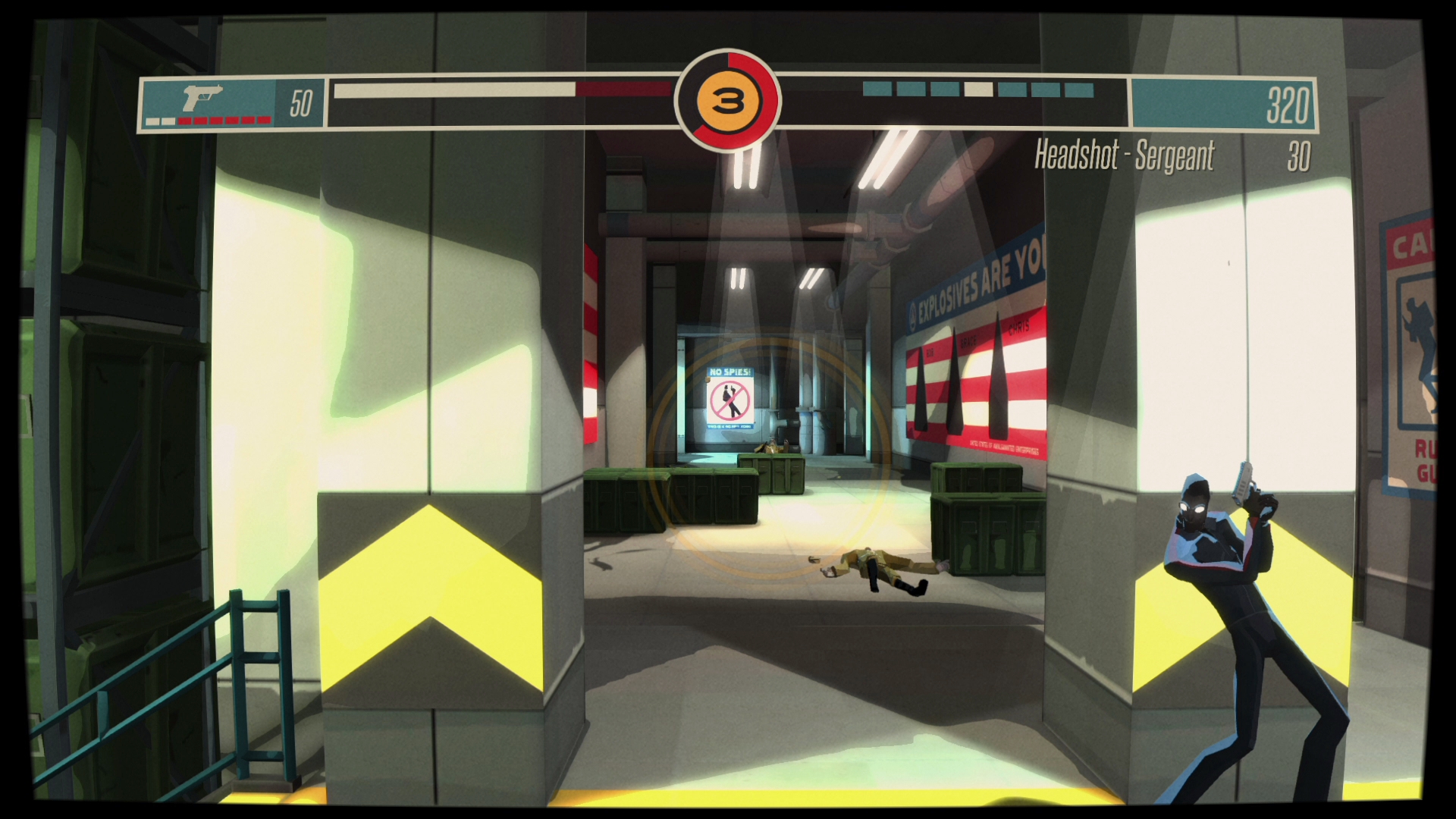
    Well for one, for a game that bills itself as a stealth game, I didn’t find it all that stealthy. Yes, you can sneak up on guards and knock them out stealthily, and yes, you can get around security cameras by sneaking past their vision cones, but for the most part, Counterspy pushes you into violence at every turn. There are so many occasions where you’ll have a room full of enemies and the only way past is to shoot them all. There were times that I was able to shoot the enemies in a nice order so that not one was alarmed at the others falling, but due to the AI’s walking patterns, these stealth kills are few and far between.

    2631458-2014081911271510

    Each level is adorned with multiple layers, which is a good thing for a 2D platformer. being able to get behind a guard by passing above or below him is always great fun, and helps to keep a stealth game interesting like a puzzle. The problem is these moments rarely occur within Counterspy, due to it’s very random nature. There are just so many rooms where the only way forward is through 3 guards all facing each other, with no way above or below them, meaning starting a firefight is your only option.

    It’s in options that the game truly falls apart. Whilst you have quite a few options about what level to select and what weapons you’ll be taking into a level, you have next to no options when in the levels proper. Stealth is all about options: “should I stay where I am and wait for the enemy to come to me? Or should I shoot the explosive, wait for the carnage, and then pick the guards off one by one?” Options like these were plentiful in Volume, but are lacking in Counterspy, where I felt that I constantly had to take cover and shoot my way through almost every section in the game.

    I tried being stealthy as much as possible, even going so far as to get myself killed should I have been spotted time and time again, but the game just still corners you into action. There are sections of levels that are no longer 2D, and instead have depth to them with lots of enemies patrolling in the background. These sections are nigh on impossible to get past unless you kill all the enemies; not something a spy would necessarily do when they’re trying to be quiet.

    Regardless of the gameplay (and lack of stealth) at least the weapons are varied and help to keep you in stealth mode for as long as possible. I found myself using the silenced shotgun and silenced pistol as much as possible, otherwise guards nearby would be alerted by my arrival. When all else fails and there was an all out firefight, I’d use my hypnotising gun to hypnotise a guard in fighting for me; a brilliant tactic for running away from a firefight without having to deal with he rest of the guards.

    counterspy-screen-01-us-17jun14

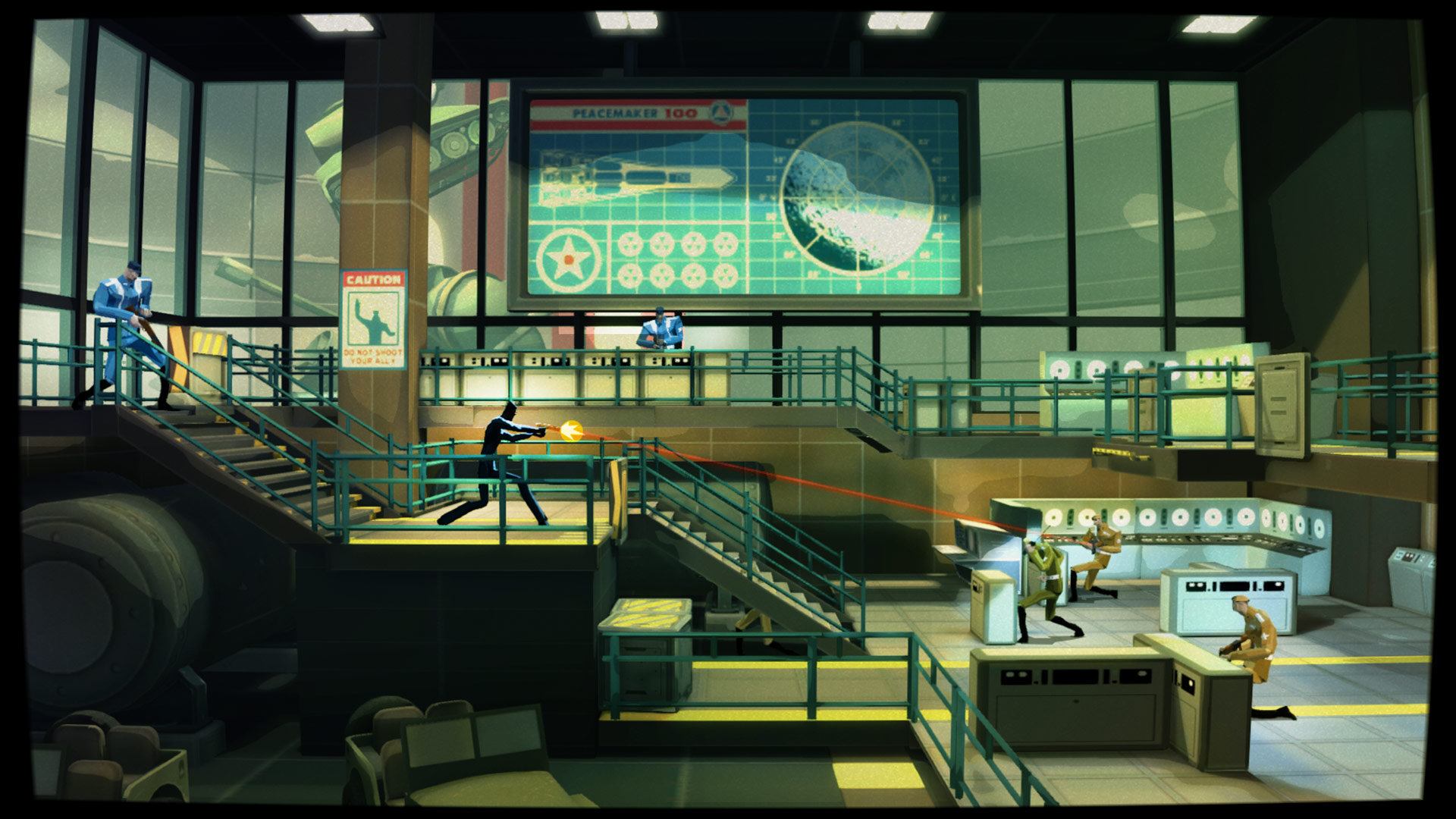
    The aesthetics are generally lovely to look at, with soviet and imperialist posters scattered throughout areas both being funny, and great in achieving a cold war-era feel. Soviet missions will take place in hard concrete rooms with great towering statues adorning most rooms, whilst the Imperialist rooms are generally more metallic and useful. This contrast between both states is fantastic, and really helps to give the game a charming look and feel throughout.

    After 2 and a half hours of fighting, I finally come to the stories conclusion, and whilst it wasn’t a great ending, I still enjoyed my time with the game. As a stealth game, I feel Counterspy is a failure; it’s own random levels push you out of stealth rather than encouraging it. But as a polished product that manages to make you smirk and smile at it’s aesthetics, Counterspy is enjoyable. Give it a go if you already own it, and if you don’t, download the game on Android; it’s cheaper, and you’re bound to find more than 2 hours of enjoyment out of the game.

    3/5

  • Weekly Gaming: Downwell (PC)

    Weekly Gaming: Downwell (PC)

    If I had to describe Downwell with as few words as possible, I’d have to say the following: The Binding of Isaac but as a platformer. Those words don’t come lightly, as I absolutely adore The Binding of isaac; a game that has easily taken hundreds of hours of my productive life away. So what about Downwell makes me sing its praises so loudly? Mainly everything about this addictive little shooter/platformer/rogue-like/endless runner has something to be fascinated by.

    animated2-feb

    As may have been ascertained from my last paragraph, it’s hard to clump Downwell into one genre. It’s an endless runner with levels, it’s also a shooter, as well as a rogue like, and finally, it’s also a platformer. All these elements fit strangely well together, mainly due to the simplicity of the game, and the fact you only need to know 3 button presses.

    Left, right and A. That’s everything you’ll need to traverse the bottomless pit that is Downwell. The A button isn’t only for jumping from platform to platform, but also for shooting your weapon whilst falling or in the air. It’s stunningly simplistic, but hard to master, and makes for every jump in the pit just as exciting as the last time. what also helps is the controls’ accuracy; we’re talking Super Meat Boy levels of twitching-ness here, which certainly helps to bring the blame of deaths and hits onto yourself. Not once in my time with Downwell did I ever feel like the game was ripping me off; if I take a hit of damage or die, that’s my own fault, not the games.

    7b1cbe2604c4881ff0c1102bfe97520cfe5f0e3d

    The rogue-like nature of the game also works in its favour, ensuring that everytime you die you’re bound to come back. The short, repetitive levels never feel overused, and with each new stage and new enemy that is spawned the difficulty increases, helping you to truly always feel challenged, but never outgunned.

    To help with the rogue-like feel of the game are power-ups given between each stage. These power-ups can range from the trivial (like extra gems from enemy deaths), to the extreme (every rock exploded produces shrapnel that’s fired upwards at enemies). Along with the power-ups between levels, you have the chance to purchase new ones at a shop which randomly generates throughout stages. Using gems collected by killing enemies, you’re able to buy ammo upgrades, or health, ensuring you’re constantly well stocked and ready to face the well again. Regardless of how lucky you are on a run, you never feel cheated. Each power-up, no matter how trivial, at least serves some purpose, and helps to make the game feel more engaging as a consequence.

    Downwell-PC-3

    Enemies throughout the stages are also varied enough to make sure you’re always kept on your feet whilst progressing downwards. Skeletons and jellyfish may not seem threatening whilst alone, but should you avoid some and let them accumulate with others on the screen, you’re bound to get into trouble. It means that not only are you trying to manage your risk throughout every section of the map, you’re also trying to get to the bottom of the screen as fast as possible should you miss an enemy, as you may be able to deal with threats below you, but you can never deal with something above (not unless you’re a mentalist that’s able to trick enemies into somehow going below you).

    The platforming if anything is a hindrance to playing Downwell: landing on a platform breaks the flow of immersion you get by scaling the games levels. The only time they’re somewhat useful would be when they lead to timefree zones; areas that have hidden power-ups within and allow you to pause the world outside the timeframe bubble temporarily, which is a good chance to get back to your senses and progress again.

    Whilst the game may not be much to look at, it’s certainly stylized fantastically, and really gives the vibe of an old/retro game. If it wasn’t for the smooth and consistently fascinating animations anyone would genuinely think the game was released 30 years ago. The music too isn’t too great, but when you’re concentrating so hard on the gameplay at hand, it’s good to have no distractions.

    Given Downwells cheap asking price (£1.99 full price, £0.99 at time of writing) you can hardly go wrong with this absolutely mechanically smooth game. I had friends telling me how good the game was, and I should have listened to them sooner: Downwell is an absolute joy, and completely deserving of your hard earned cash. Upon playing the game for a few hours I went and purchased two more copies for a couple of my brothers, just so I had someone to talk to about my experiences and theirs. If you loved The Binding of Isaac, and are looking for a quick fix, you can’t go wrong with Dwonwell.

    5/5

  • Weekly Gaming: Super Time Force Ultra (Xbox One)

    Weekly Gaming: Super Time Force Ultra (Xbox One)

    Having both Games with Gold and Playstation Plus is a genuine nightmare should you make sure to get each of their games monthly. That’s (at the minimum) 9 games every month constantly added to my overwhelming collection, and thats ignoring my PC collection where I also subscribe to Humble Monthly, and buy multiple Humble Bundles as and when they’re released. Why do I bring this up? Well, as a consequence of so many games being stockpiled, great games manage to slip through my hands, meaning that although I got them for free months, even years ago, I never get around to playing them.

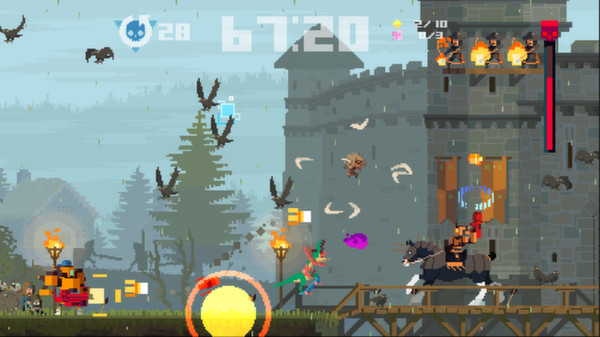
    Super Time Force Ultra just so happens to be one of those great games that slipped through. I recall playing just the tutorial when I first got my Xbox One almost 2 years ago now, and whilst I wasn’t necessarily hooked on the game in that short time, I was still intrigued. This week, I decided to give it a go, after hearing many players online say that they completed the game in around 4-5 hours. I had an afternoon spare after programming and cleaning, so why the hell not?

    SuperTimeForce_Screenshot

    The game starts off with the tutorial which instantly shows off all the games mechanics, some things are trivial, like the fact each character has different weapons/abilities, butt some things are extreme. Take for example the games core mechanic of rewinding time: this ability allows any character to press the B button to instantly start a rewinding mechanic. Wherever you choose, you can spawn a new character anywhere where the main character was, allowing for multiple shots on an enemy, or putting people in the paths of collectibles.

    This Time Out feature is the highlight of the whole game, and an ability that will take the whole game to master. When I first started playing Super Time Force Ultra I felt overwhelmed: the amount of bullets and enemies on screen can be astronomical at times, and the timer certainly doesn’t help to alleviate any stress you may have. Once you get used to the Time Out feature (which is limited to a generous 30 uses), you start to realise how easy the game is, but also how well each level has been designed to take advantage of these multiple characters on screen at any one time.

    It’s actually genius how a mechanic that brought me great stress at the beginning soon evolved into one of the most enjoyable parts of the game by far: I would genuinely hang around stages and waste time just to see if I could kill more enemies/get more loot whilst using as many time outs as possible.

    ss_27a8e2e8e1d3058896b20527190343658c0f1f1d.600x338

    As was said before, each character has their own abilities and weapons, allowing you to mix and match multiple characters until your hearts content or you’ve defeated a boss how you would like to. Pressing X once on the controller will fire a simple attack, with holding it down and charging it released the character in questions special attack. I’ll be honest, the vast majority of the game I never used the standard attack: it’s just too hard having to constantly press one button when you can hold it down for a more powerful attack.

    The story is somewhat funny, and involves a professor that has discovered time travel, and his future self, who has assembled a Super Time Force to make time adhere to what he wants it to (making the world more awesome as he says himself). Sergeant Repeatski (as he’s known – fantastic pun, if I may add), sets you and your team out to all manner of random and crazy points in time: one minute you’re fighting dinosaurs, the next you’re in a computer, and eventually you’ll even be ascending to heaven whilst fighting angels. It’s a ludicrous idea, but one that I thoroughly enjoyed; from start to finish I was wondering how the game was going to top it’s own humour. Suffice to say, it succeeded in making me chuckle quite regularly.

    The levels are well played out and offer enough variety that no two scenes ever feel alike. You’re constantly having to think on your feet, which is fantastic when you have so much leeway in how many time outs you have should you accidentally die. Each time-out on a stage feels refreshingly new, with enemies dying ahead of you (from your previous attempts) and secrets found that otherwise wouldn’t have been.

    STF_198X

    The boss fights are also absolutely fantastic, and take advantage of the time-out mechanic even more, making you repeat your fight against the boss over and over again until you get it perfectly using a combination of skill (from dodging the bosses attacks and placing your previous time-outs in the correct position) and firepower. I found the strategy of “place as many machine gunners around the stage as possible” a perfectly acceptable method that managed to get the job done consistently.

    There’s plenty of reasons to keep coming back to levels well after you’ve finished them too. Glorbs (the games collectible which also gives you more time-outs) are hidden throughout levels, both within enemies and breakable objects. When you kill an enemy or break and object they came flying out in a semi-random direction, and should they touch the floor they’re useless. This breaking mechanic ties in well with the Time-out abilitiy, as it means you’re constantly replaying levels not only to build up enough firepower to kill enemies, but also collect Glorbs as they’re ejected.

    It’s hard to nitpick anything bad about the game. I mean, after a while you could say the pacing and difficulty gets easy, but then the studio’s fixed this with their new ULTRA mode, where you need to save each time-out version of yourself otherwise you start a level again. If I really had to say a bad thing about the game, it would be that the basic three characters have plenty enough firepower and abilities to never use anyone else throughout the rest of the game. Yes, I messed with other characters; Cleo for example has an awesome boomerang ability which essential makes her untouchable, but for the most part I relied on my shooter, sniper, and shield.

    As I said at the start of this review, it’s annoying owning so many games! Yes yes, I know, that’s a proper #firstworldproblem right there, but as more and more indie developers saturate the market with fantastic games, it’s going to be hard for everyone to play the standout achievements like Super Time Force. It genuinely is a mental platformer, one that takes you to your limits both in stress, but also enjoyment. If you find that you have Super Time Force in your library, give it a go, you will not be disappointed.

    5/5