Tag: Indie

  • Weekly Gaming: Monument Valley DLC Forgotten Shores (Android)

    Weekly Gaming: Monument Valley DLC Forgotten Shores (Android)

    MV_20150506_150409Having loved the original monument valley when I played it a year ago on this very blog and with my new android phone, I had been wanting to buy the DLC for ages, but had never gotten around to actually downloading it due to time constraints. So, with my blog backlogged with content until August (yep, I’m that ahead of time in regards to weekly gaming), I decided to take the plunge and buy the £1.49 Haddon to the game I loved so much this time last year. So what’s been brought back to the fray, and what’s new in this £1.49 expansion?

    One of the first things that will be apparent the second you start up the DLC is the increased difficulty of the game, something many won’t be accustomed to considering the relative ease many were able to complete the original with. For starters, one of the first levels has you twisting geometry to make your princess go from one side of the world to another, a confusing feat for any player, both new and old. Once you’ve wrapped your head around this increased difficulty from the offset, the game continues to get harder with each level bringing new and interesting challenges to throw at you.
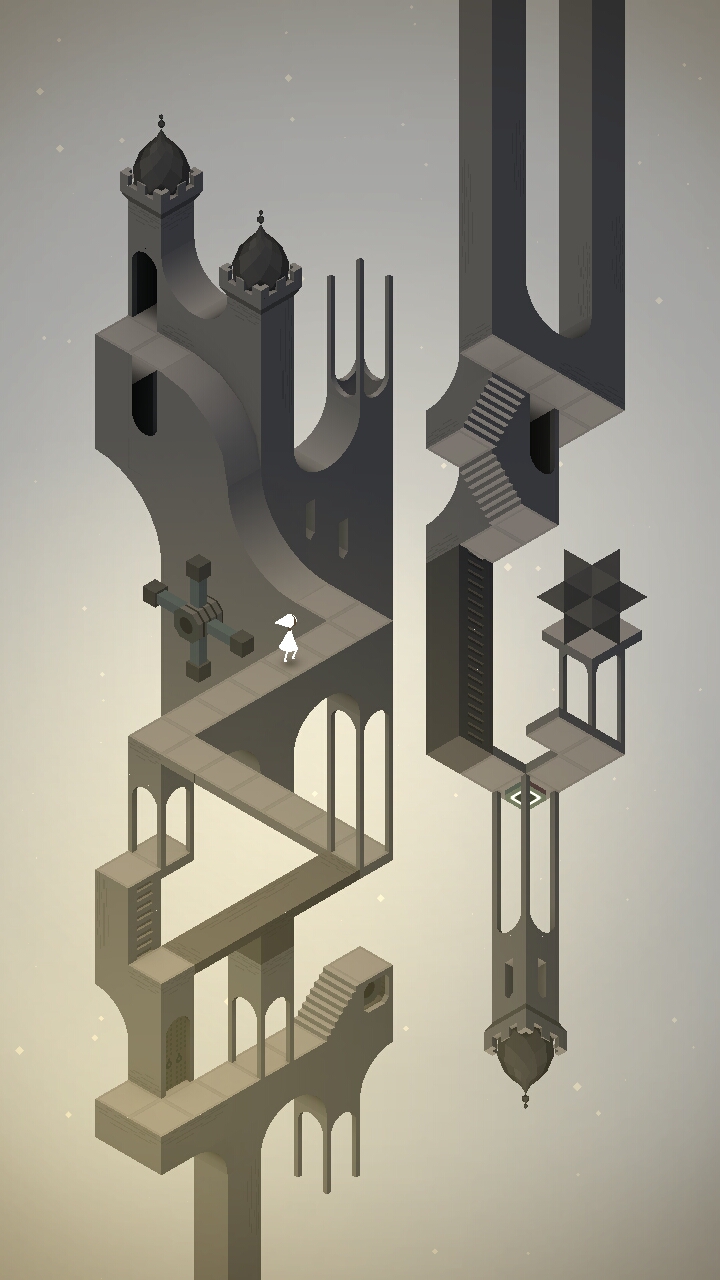
    MV_20150509_112403Your ally from the first game, the totem block, is back, and this time, you’ll need to use him in weird and wonderful ways that had me scratching my head for ages. From twisting him to breaking him to get through certain areas, you can be sure that every level with him involved will push you to you limits in how to proceed, something I loved when playing through the levels. It’s strange how so many people have such a strong emotional attachment to the totem block, despite it having no personality and no speech. This is probably due to the fact it helps you out and expects nothing in return, like a cherished pet.

    Add the increased difficulty together with the return of the totem block, and in turn the new ways you’ll use him, and you have a challenging but rewarding game on your hands. One that doesn’t hold your hand, and rewards creativity in the way you look at the levels. Later levels for example start twisting walls and the angle of your princess, making it difficult to determine how she’s positioned and whether she can progress through doors on the same level. It’s through trial and effort that you’ll pass some stages, which always allows you to feel accomplished at the end of each stage.
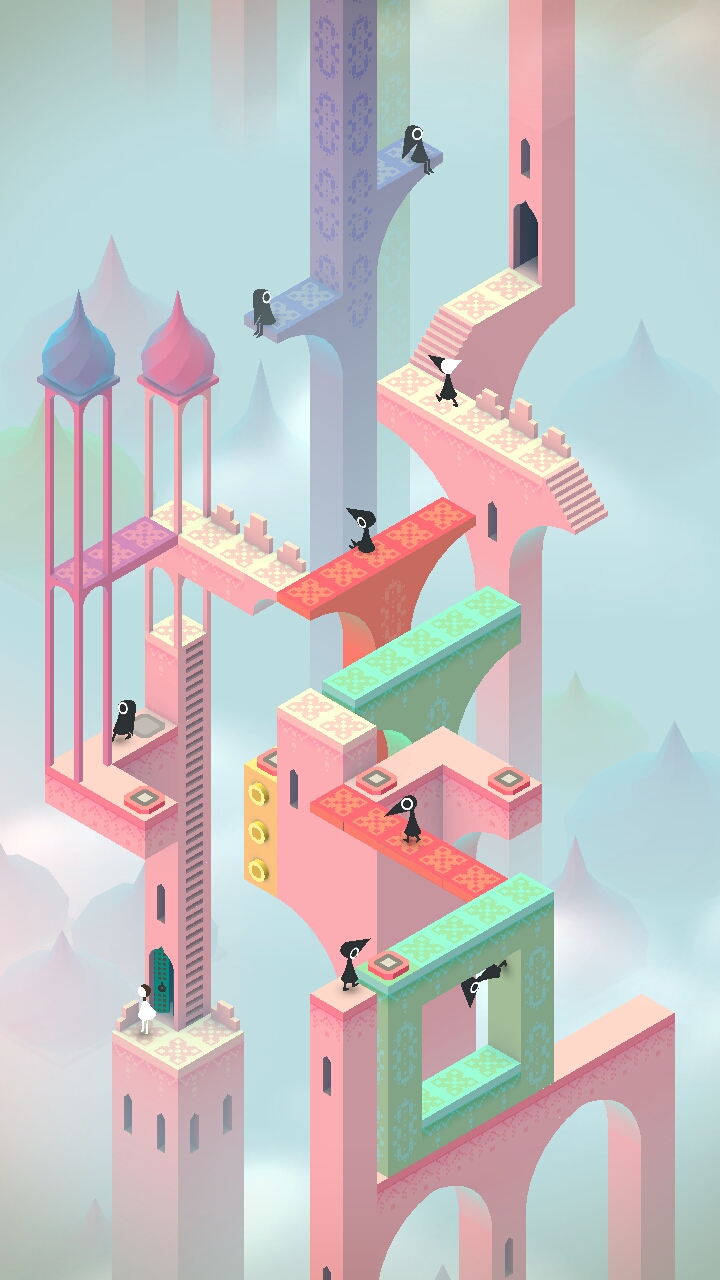
    MV_20150506_151334One of the most creative stages was one where you lost your hat (the source of the princesses power which in turn allows her to fix the world). It happens to fall on a birds head, which leads to a brand new way to look at the world and the puzzles within, as you’re not only moving the princess around, but having to guess and control where the bird is going, or even manipulating it into pressing switches for you just by knowing it’s movements. It’s interesting, and a good twist on the fantastically simple but hard gameplay that comes before it.

    I praised Monument Valley for it’s fantastic art direction and simple mechanics, with that not changing in the slightest for it’s DLC. Levels are gorgeous, fitting perfectly on a mobile phones display in portrait orientation, with even bigger levels showing extreme amounts of detail in their surroundings. UsTwo are a force to be reckoned with when it comes to design, something their recent contract with BMW (yes, they’re now designing BMW’s dashboards) shows off.

    So, was Monument Valley worth the £1.49 entry fee? HELLS YEAH IT IS! It’s seriously one of the best games for mobile, but easily one of the most creative too. The simplicity of the movement and concept it fantastic, and the developers at UsTwo have gone to great lengths to push the boundaries of what can be done with such a simple premise, whilst still making it challenging and rewarding to overcome. If you’re anyone that has a smartphone (AKA every single person on this earth at this rate), then you owe it to yourself to own Monument Valley, and in turn it’s DLC Forgotten shores.

    4/5

  • Weekly Gaming: The Silent Age (PC)

    Weekly Gaming: The Silent Age (PC)

    the-silent-age-pc-832658_expanded

    Hi all!

    So this week I introduce to you The Silent Age, a point and click adventure game that concentrates on time travel as an extension to the puzzles, with a fantastic story that’s sure to captivate. If you’d like to give the review a read, please by all means click the link below:

    http://www.vgchartz.com/article/259456/the-silent-age-pc/

    As always, thanks for reading and supporting me!

    -Dan

  • Weekly Gaming: Life is Strange Episode 3: Chaos Theory (PC) Review

    Weekly Gaming: Life is Strange Episode 3: Chaos Theory (PC) Review

    life-is-strange-episode-3-chaos-theory-pc-725372_expanded

    Hi all!

    Thanks for checking back and coming to caesoose.com! This week, I reviewed Life is Strange Episode 3: Chaos Theory for VGChartz.com. As always, my editor (Craig Snow) done a fantastic job of cleaning up my review, albeit with deleting many parts I had already spent time writing. Alas the end result is amazing, so I’m not too concerned. If you want to give it a read, click the link below:

    http://www.vgchartz.com/article/259177/life-is-strange-episode-3-chaos-theory-pc/

    As always, thank you for coming back!

    -Dan

  • Weekly Gaming: Not a Hero (PC) Review

    Weekly Gaming: Not a Hero (PC) Review

    not-a-hero-pc-085218_expanded

    Hi all,

    This week I’d like to show you the game I recently reviewed for VGChartz.com, called Not a Hero, a game about a purple Bunnylord that wishes to become Londons next mayor (crazy premise I know, but seriously, it’s awesome).

    You can read the review below:


    http://www.vgchartz.com/article/259030/not-a-hero-pc/

    The game’s fantastic, and it’s seriously on my top 10 games of 2015 list.

    Hope you enjoy!

    -Dan

  • Weekly Gaming: Ittle Dew (PC)

    Weekly Gaming: Ittle Dew (PC)

    2015-02-16_00002

    I recall seeing Ittle Dew years ago whilst I was in America, having just bought a Ouya on release day and browsing it’s store, I happened across Ittle Dew and decided to download it (since the Ouya had a try before you buy model). It looked interesting, and definitely unique, but I just wasn’t ready to splash $14.99 on an indie title which, from the sounds of things, “only lasted 3 hours”. I gave it a pass, and lo and behold, I haven’t really touched my Ouya since. Ittle Dew went forgotten for a year then, until that is, I happened to get a copy from Steam for a few pounds. That was a lot better for my wallet, and for the supposedly short playtime of the game. So, given that I bought the game 8 months ago, what made me finally get round to playing it? Well, this blog for one, but also the fact that I’m currently writing 5 weeks worth of reviews within a week to ensure I can spend those 5 weeks programming non-stop to finish my new game (which should be released by the time you read this). Given that Ittle Dew was meant to be short, I gave it a go.

    FUCK THE NARRATIVEEEE
    It’s rare that you talk to other characters on the island, with most of the game taken up by puzzles and dungeons. The story (if you could say Ittle Dew has one), could be summed up in a sentence, so not much is done to tell it.

    Ittle Dew starts out with a few postcards showing the story of how Dew happens upon the island you’ll be spending the whole game on, and why she stays. “I’m a pirate that seeks adventure”, she says, as you are then prompted to get on with the game and go into the first cave. There could have been more of a tutorial, but considering we’ve all played the dungeon adventure like Zelda before, it was appreciated that as a player I was able to just get on with the game.

    The first dungeon explains the basics, with switches on the floor and blocks to move being a staple of the genre, but as the game progresses these basics become a lot harder, with blocks becoming icy, meaning moving them pushes them across the whole stage, or multiple switches requiring clever skills to move everything into place. After leaving the first dungeon, you’re introduced to the core plot of the game: You must find enough gold to buy different items, which will be used to solve more complex dungeons in order to finally take on the final boss in the castle to get a raft off the island. It’s with this core plot that the game becomes repetitive, with each push to the castle resulting in getting slightly further, only to come back to the gentleman to buy a new item.

    FUCK THE MAPPPP
    In this single picture you can see the three item dungeons the game has to offer, with the castle in the middle. Each purchase of an item pushes you to either the volcano, swamp or forest, ensuring you master a item before you can proceed back to the castle in the middle to put it to good use.

    Each one of the three items bought has it’s own dungeon to solve before you can claim the item as your own for good. Whilst this sounds trivial, it’s actually done pretty well, ensuring the player is adequate with an item before taking it back to the main castle. The three items are: The flaming sword, a sword which has the ability to set things alight (it will set logs alight and will destroy anything ice), the Transportation/block making staff (this is hugely useful and allows you to create the very blocks you usually push), and finally, the ice staff, allowing you to extinguish flames and freeze blocks, making them more mobile. This loop pushes you to think quite creatively when harder puzzles come into play, ensuring I was constantly on my toes whenever confronted by a new cave.

    The graphics/art style are charming, and definitely a plus for the game. It feels very personal, making your time spent exploring the dungeons and island all the more enjoyable. You will encounter enemies throughout the game, but given the limited amount of mobility you have as a character, you will not enjoy the combat, so fights are few and far between. There are also boss encounters, but as I said before, they won’t be based around combat so much as they’re all mini puzzles in themselves. Irregardless, the style and controls were perfect for a game like Ittle Dew, where the core mechanic and core premise is all about the puzzles.

    FUCK THE COINSSSS
    All the coins means all the prizes. The loop of getting coins and buying items can last as long as you like, with the game having multiple achievements for finishing it with only two items instead of the whole three you can buy.

    So, is the game really as short as people say it is? Well, yes and no. Yes, because I genuinely completed the game within 3 hours and got an achievement for doing so. No, because there’s a damn lot of content to find on the island (I literally only had two heart pieces when I guess there’s a lot more). I barely scratched the surface when it came to replayability for the game, with multiple achievements for completing the game within 15 minutes, completing it with only 2 items instead of three etc. It all makes for an interesting premise, but one thats sure to be good enough to come back to.

    So, was Ittle Dew worth the wait? It was certainly enjoyable in the few hours I played it, and I can’t help but think I missed a lot of content, so am really tempted to go back for more. Should you sink your money into Ittle Dew though? Well, if you’re a Zelda or Metroid fan who loved the puzzle elements more than the action, then Ittle Dew is perfect for you, with puzzles clicking into place after minutes of looking at them. Ittle Dew is dungeon puzzles (almost) perfected, so you really can’t go wrong.

    4/5

  • Weekly Gaming: The Vanishing of Ethan Carter (PC)

    Weekly Gaming: The Vanishing of Ethan Carter (PC)

    maxresdefault

    It’s a shame I didn’t get a review copy of The Vanishing of Ethan Carter months ago when it was released, the game seemed right up my street considering it was similar to games like Ether One. I wanted to play it, but not so much that I sunk £15 on the game considering it was around the time I was releasing my first game. I finally managed to purchase the game just the other day when it was £7.49 on the Steam store, and considering I’m between project at the moment, I decided I needed to see what all the fuss was about.

    The game starts out with a with little introduction of the character you’ll be playing as, private detective Paul Prospero, a super natural detective from the sounds of things, as he instantly tells you that Ethan is seeing things that he shouldn’t be. You enter a forest from a tunnel, and so begins your journey through this strange and wonderful world that is Red Creek Valley. It’s not long before you come across the first hint as to what The Vanishing of Ethan Carter will entail, with a trap springing up from nowhere. As you approach it, you’re given the prompt to press and hold A on it to “sense” the item, a method of being teleported into a different realm, where things of the past can now be seen.

    FUCK THE PORTALLLSSS
    Portals appear many times throughout the whole campaign, allowing you to explore the world as it was in the past to make sense of the present.

    The past doesn’t just reveal itself though, and objectives must be adhered to in order to get the portal open in the first place. Most of the time, this will just be a case of putting things back in their respective places before they were picked up and used as a murder weapon, but occasionally things will be mixed up. Once everything is in place, you’ll be able to travel through the portal and see the past events that lead up to the new persons murder, using snapshots of people as a timeline, it’s up to you to guess in which series of events led up to the murder, and order them in the correct manner to see the scene unveil itself before your eyes. It’s an interesting mechanic, one which allows you to get a better picture of the world without throwing anything in your face needlessly, with all the story being realised as you put the puzzle together.

    FUCK THE PASTTTT
    The past in which you see scenes played out before you is fantastic, and reminds me of media like Sherlock Holmes as he imagines what happens in a room before coming to a conclusion. Sometimes the order of events can get a little confusing, but a little bit of trial and error is enough to suffice.

    The game would be boring with the mechanic alone, so The Vanishing of Ethan Carter goes one step further and has mini-stories all throughout the world, each so vastly different from each other that it really messes with you as the player, but also makes the world feel so alive. An early example of this has you chasing a astronaut in the middle of a dense forrest, with dinosaur noises surrounding you. As you chase the astronaut, he disappears and reappears further away, pushing you to chase him even more. Eventually, his shuttle will appear, with a bright teleportation light appearing, taking him away. You run into this light to be then transported into outer space, a random occurrence for such a grounded game, but one that genuinely made me say “wow” out loud upon seeing it. Finally, you’re transported back to the forrest, but this time, with a voiceover of Ethan being shouted at by his brother, telling him that his stories are terrible and he should stop. A single page fills the screen, with a description of what you just done; you were just acting out Ethans story about a dinosaur chasing a light and never being able to use it’s claws again.

    FUCK THE HORRORRRRR
    Strange rooms like this will always conjure up horror in The Vanishing of Ethan Carter, but for the vast majority of the game, your experience will be calm and adventurous.

    Whilst The Vanishing of Ethan Carter may look like a big open world where you can tackle each puzzle as you come across it, this isn’t the case, as it’s actually fairly linear. Trying to skip ahead a few puzzles leaves you stumped for how to progress, for example how do you get past the gated entrance to the mines? If you follow the path the developers (The Astronauts) have made from puzzle to puzzle, you’ll easily be able to progress through the world, but deviate from it, and you’ll find it impossible to advance. That may sound annoying to some players who look at the marketing material and think the game is something it isn’t, but having a lovely big world like Red Creek Valley, where you can explore everything you can see, is actually a fantastic experience, one where I would get lost in the woods plenty of times because of my innate curiosity to explore large expanses.

    It’s in the exploring of the big world that you’ll really feel a part of it, with gorgeous vistas and fantastic textures making the world feel alive, surreal, and certainly a graphical beast. There may not be much in the trees of the forest, but you won’t feel cheated for having walked through it to see a stunning sunset over a sublime town.

    FUCK THE VISTAASSSSS
    The vistas you’ll uncover whilst exploring the world of Red Valley Creek will sometimes leave you speechless, with horizons as far as the eye can see, and detail so magnificent it has to be seen to be believed.

    I cannot finish this review without saying the following: I regret not buying The Vanishing of Ethan Carter when it was first released (despite not getting a review copy), because if I had, it would have easily been on my personal top 10 games of the year, and I would have personally championed it for GamrReview’s Game of The Year awards. The gameplay was fantastic, and whilst many people may not enjoy wondering around a world without much happening for 4-5 hours, I absolutely adored every minute I spent in Red Creek Valley, and would gladly do it again should The Astronauts develop something similar in the future. The Vanishing of Ethan Carter is easily one of the most polished narratively driven “walking simulators” I have ever play, and I would beg anyone who wants to know anything about games design and narrative to give the game a play. You will not be disappointed.

    5/5

  • Weekly Gaming: Hektor (PC) Review

    Weekly Gaming: Hektor (PC) Review

    hektor

    Hi all!

    So this week I finally managed to get around to reviewing Rubycone Games’ first title: Hektor. It took so long to be published as I was waiting for GamrReview to finally get merged with VGChartz.com, meaning the review should potentially get more hits as a result (this seems to be the case so far, with 1400 views on an indie game).

    If you want to read up on my impressions of Hektor, go ahead and click the link below:

    http://www.vgchartz.com/article/258610/hektor-pc/

    Hope you’re all well!

    -Dan

  • Weekly Gaming: Ori and the Blind Forest (PC)

    Weekly Gaming: Ori and the Blind Forest (PC)

    Hi all,

    So this week I wanted to show you all something I’m very proud of reviewing: Ori and the Blind Forest for PC. It was a thoroughly joyful experience, one which I’ll definitely come back to time and time again in the near future when I want enthusiasm for games development.

    The games review can be read below:

    http://www.gamrreview.com/review/92611/ori-and-the-blind-forest-pc

    I hope you enjoy reading it as much as I enjoyed writing it!

    -Dan

  • Weekly Gaming: The Deer God (PC)

    Weekly Gaming: The Deer God (PC)

    Hi all!

    So this week I managed to get a copy of The Deer God a week before it’s official release, so went about reviewing it as soon as possible. Whilst original in it’s aesthetic, I thought the game was rather hollow considering how amazing it could have been given the mechanics involved.

    You can read my review and thoughts on the game below:

    http://www.gamrreview.com/review/92496/the-deer-god-pc

    Lots more reviews coming in the next few weeks, and expect some games development articles over at gamrReview.com/VGchartz soon!

    -Dan

  • Weekly Gaming: OlliOlli 2: Welcome to Olliwood (PS Vita/PS4)

    Weekly Gaming: OlliOlli 2: Welcome to Olliwood (PS Vita/PS4)

    Hi all!

    Apologies for the look of the site at the moment, I need to go back through it and reupload all the images that are missing due to the amount of space everything was taking on the server.

    Regardless, I managed to get a review copy of Roll 7’s latest game, OlliOlli 2, and went about reviewing it so fast that my review was up on release day at the same time as all of the big publications, GO ME!

    You can read the review below:

    http://www.gamrreview.com/review/92515/olliolli-2-welcome-to-olliwood-psv

    I hope you enjoy it, and apologies again for the look of Caesoose Studios for now, it’s only temporary whilst I reupload everything!

    -Dan

  • Weekly Gaming: The Unfinished Swan (PS4)

    Weekly Gaming: The Unfinished Swan (PS4)

    The Unfinished Swan_20150122221821Carrying on with my moniker of playing old games I’ve always wanted to, I found the Unfinished Swan had been released on Playstation Vita and PS4. At £5, I couldn’t miss the offer of finally giving the game a go in stunning 1080p 60fps, considering I’ve always heard it’s an artistic game. Having completed the game and collecting majority of the collectibles, I feel I should give some opinions on the quality of the game and how I felt my time with it went.

    The story of The Unfinished Swan was unique and lovely, comprising of a little boy who’s mother has recently passed away, and is only able to take one of her many unfinished paintings with him. The painting he chooses is the Unfinished Swan, a painting thats beautiful, but with a missing neck. It’s through these paintings that the story of The Unfinished Swan will unravel, with the whole game feeling like you’re playing through a children’s fairy tale book. It’s charming, and certainly keeps you hooked for the 2-3 hour long campaign it has, and offers enough variety as to make sure you’re never bored by it’s splendid presentation.

    FUCK THE PAINTINGGGGG
    The first stage in the game has you painting an entirely white world with black paint. It’s a fantastic mechanic, one which looks rubbish at first as you can’t see detail on items, but takes on the looks of a painting once you stand back and see what you’ve done.

    Each level in the game has it’s own mechanic all tied around the capacity to shoot little balls of paint or water wherever you go. The first level for instance compromises entirely around the mechanic of seeing where you’re going by painting the pure white world black. The second stage takes this one step further by giving you blue water balls, by which you can then interact with vines and grow them wherever you’d like to help you with your progress. The third stage has balls which can create “blueprints”, giving you the ability to make cubes of varying sizes depending on where you fire the balls. For a game whose advertising seemed to be based around the painting mechanic, the developers at Santa Monica managed to pull of some unique mechanics.

    The Unfinished Swan is stylish in every sense of the word, with detailed and lovely environments brimming with life, it’s no wonder I found so much good coverage for the game around it’s original release. Frogs and animals you encounter look strikingly abstract, but alive, ensuring you’re constantly on your feet as to when you’ll next encounter another living thing. Throughout all of the story you’ll be chasing the swan from your mothers painting, with it’s gawks seemingly coming from nowhere at times, it leads you through the marvellous world the game has to offer.

    FUCK THE VINNESSSSS
    The vines levels were some of my favourite, with the game giving you freedom on how you wished to proceed across an obstacle. Although there was only one solution, it still gave you the freedom to find the solution on your own.

    Most of the game is fairly linear, with most levels just compromising of a series of corridors getting you from point A to point B. Where The Unfinished Swan deviates from this linearity though is in its ability to make each players experience different and unique purely from the fact the mechanics like the paints aren’t constrained so to speak. Granted, the mechanics are constrained within the confines of the stage as a whole, but how players paint the level or obstacles is different with each play-through. This in turn could show some similarities to real painting, with each brush stroke being different from person to person, with the end result always looking different as a result of that work.

    Once you’ve finished the main story, there are always reasons to revisit, with collectible balloons hidden throughout the world you’re bound to come back a few more times. Collecting these balloons also counts as currency to use in buying abilities used throughout the story/chapters. Most abilities aren’t available until you’ve completed the game once, but given that they’re fairly game breaking in nature (e.g. you’re able to summon the cube making balls anytime in the game, by-passing massive obstacles on your way) you can understand why. Once completed I bought the ability to travel to any chapter, along with a hose for the water levels and the balloon hunter, which tells you when you’re close to a hidden ballon, making it easier to find the last few.

    FUCK THE CITIESSSSS
    Environments are gorgeously rendered in The Unfinished Swan, with massive cities just as awe-inspiring as little woods and houses.

    So, should you play The Unfinished Swan? I believe so. Given its game length (easily completable within a few hours) and unique story and style, I’d be hard pressed to tell you any reasons why you shouldn’t buy or even play the game. It’s shortness may deter some players who aren’t willing to fork out upwards of £10 for it’s RRP, but if it ever goes on sale again I’d recommend it. I thoroughly enjoyed myself, and see what all the fuss is about.

    4/5


  • I Done My First Interview!

    I Done My First Interview!

    Hektor

    Hi all,

    So, in writing on my blog for 2 years now and writing for gamrReview.com for almost a year, I had never actually gotten around to interviewing a developer in what it took to make their game, and other questions consumers may have in mind for making a viable purchase of said product. Thankfully, out of nowhere I got an email from a PR representative on behalf of Rubycone Games who wanted to see if I’d be interested in an interview. I said yes and jumped at the chance to do this, and below, you can go to the published end result:

    http://www.gamrreview.com/preview/92387/reinventing-the-horror-game-with-rubycone-games-hektor

    A few things I’ve learnt for future interviews though:

    • Make sure the software you use doesn’t corrupt any recordings you make, you’ll want to come back to the interview time and time again to ensure accuracy, or even a written transcript, something I couldn’t do in this example due to software problems.
    • Prepare well ahead of time, and give yourself half an hour of relaxing time before the interview to ensure you’re clear headed to ask the correct questions (Skype fucked up for me and had a problem signing in, meaning I was running around worrying for half an hour).
    • Write all questions well in advance, ensuring if you need to add to them you can.

    All in all it was a fantastic first interview, the first of many I hope. Time will tell if this becomes a regular occurrence.

    This Friday, expect a review of The Unfinished Swan for PS4.

    -Dan

  • Weekly Gaming: Race The Sun (PC)

    Weekly Gaming: Race The Sun (PC)

    FUCK THE SUNNNNN
    The whole game is summed up in the title. It’s genius really.

    Having seen Race the sun ages ago, I was interested at the offset. Here was a stylistically simple game, but with what looked like a complex and tough gameplay implementation. I didn’t buy the game straight away, and if I’m honest, I wish I would have kickstarted it, but alas, I waited a while and finally brought it on the humble store when it was on sale this past Christmas. Am I glad I bought the game? Hell’s yes I am! Flippfly deserve every penny of what I spent on Race the Sun, something I wouldn’t say all too often with most of the game I play. Read on as I explain what about Race the Sun drives me to this conclusion.

    The game is centred around a plane that is powered by the sun, constantly moving forwards whilst avoiding obstacles. Speed increases to a certain point (dictated by how long you’re in the sunlight), to which the game stays strikingly hard until you crash into an obstacle and die instantly. This instant death mechanic keeps the player coming back for more, knowing that the game isn’t fobbing them off and it was actually their own fault they died. It’s a hooking mechanic, one which kept me playing for hours after I should have stopped many nights.

    FUCK THE SUNSETTTTT
    When the Sun’s like this, you better get your arse in gear, cause you’re next to death son. Only yellow star items can help you out in these situations.

    Since your plane is powered by the sun, Flippfly studios wouldn’t want to make it too easy for you to play their game, so the sun that powers you is constantly setting into the horizon, making shadows on the stage longer (shadows limit your speed and kill you should you stay in them long enough) along with making it harder to avoid obstacles or get a higher score. It’s a lovely mechanic, one which keeps you not only on your toes with the obstacles, but also on your toes looking out for the items you can get to help you on your way through this weird and wonderful world.

    You see, items help to not only improve your game, but to also keep the game going and making it interesting. . You have blue pyramids that you can collect to multiply your constantly increasing score, Yellow star shaped items that increase the amount of time the sun is up in the sky whilst also giving your plane a boost in speed, a green crown shaped item that allows your plane to jump. and finally a purple shield that can be otherwise known as an extra life. All these items ensure you’re constantly aware of whats around you, not only trying to avoid your imminent death, but also checking to see if you can grab any items that are nearby to give you the advantage.

    FUCK THE OBSTACLESSSS
    Dodging all the obstacles can somethings feel impossible, but thankfully the developers usually give multiple ways out of any situation, helping you out greatly if you can think fast enough to react.

    So far I’ve only talked about the mechanics, and that’s because the Race the Sun is all about the mechanics. Even the objective system, which is reminiscent of mobile games like Tiny Wings on iPhone, helps to create a feedback loop where the player is pushed to achieve the objectives (e.g. jump 20 times in one run), only to be given more items or skills in playing the game again. It’s a perfect loop, where players are encouraged to play more to unlock more to then progress further. It’s highly addictive.

    Once you’ve played the game enough and gotten to a high enough level, Race the Sun will give you a new stage called “Apocalypse”. This new stage is extremely hard, being twice as fast as the original, with all manner of the hardest obstacles appearing from the offset. It’s not for the faint hearted, but was certainly challenging and fun once you start to master it on a given day.

    The reason I say “given day” is due to the very way levels are built in Race the Sun. Although the stage is randomly generated, it’s generated from a seed that the developers push out to everyone’s machine daily. This seed will determine what each region will hold, so you can at least start to master the patterns of obstacles you’ll encounter. I found this aspect of the game just as intriguing as the rest, as I could never really feel comfortable, having to constantly change my tactics due to new layouts. It was refreshing.

    FUCK THE APOCOCALYPSEEEE
    The Apocalypse level was ridiculously hard but addictive, ensuring I came back time and time again just to master this fiendish stage.

    So, with Race the Sun being made available on most platforms now (PS4, PC, Linux, PS3 and PS Vita), should you part with your money to play it? Well I for one completely understand some people being hesitant about paying $9.99/£6.99 for a game thats essentially a ported mobile game, but I can’t help but feel to surmise Race the Sun to it’s core mechanics is missing everything else it does so well. The feel of the craft and the precision gaming are fantastically hooking, so much so that you’d be hard pressed to find this simplicity elsewhere on the market. Should Race the Sun ever drop in price, either permanently or for sales, buy it, as I feel you won’t regret the time you spend with it.

    4/5

  • Weekly Gaming: The Old City: Leviathan (PC)

    Weekly Gaming: The Old City: Leviathan (PC)

    Hi all,

    This week I take a look at postmodsoftworks latest and greatest narrative driven game, The Old City: Leviathan. I was hugely impressed with what I played, and will continue to come back to it time and time again. You can read my review below:

    http://www.gamrreview.com/review/92218/the-old-city-leviathan-pc/ 

    As always, thank you all for your continued support, as of next week I’ll have been doing this for 2 years, which is crazy! Here’s to hoping it continues for many more.

    -Dan

  • Weekly Update: The Hell That is Steam Greenlight

    Weekly Update: The Hell That is Steam Greenlight

    FUCK THE HATERSSS
    After 5 days on Steam Greenlight, these are my stats so far. I’ve got a long way to go, and I feel my trailer certainly isn’t helping.

    Hi all,

    I do apologise, but I think for the first time in almost 2 years I am not going to be writing a review for this Friday (SHOCK HORROR!) due to the recent release of Twixel on Steam Greenlight. Because of this gargantuan undertaking I am putting myself through, I thought I’d share some thoughts and feels on the whole process, and what I hope to do from here.

    So, on Sunday I done it, I pushed the button to share Twixel with the gaming community that is Steam. I had been considering doing this for a while, but was concerned about the state of some of my promotional material and whether the game was actually finished enough yet to apply for greenlight. In the end, I decided that the sooner I get my game shown to millions of potential customers the better.

    Alas, as you can see from the picture at the top of this post, I may have made a mistake. My trailer for the game (which can be viewed below), was one quick draft to at least show each level and 1 obstacles in each level in both 2D and 3D perspective. As it currently stands, I feel this is my greatest downfall in all of my marketing material, with the trailer making the game out to be really simple and all symmetrical. This isn’t the case, as I’ve spent the last few weeks working hard on over 50 new obstacles that will be completely random on both sides of the screen to push players to the max when it comes to difficulty.

    In the coming weeks I really need to redo this trailer, as it really doesn’t represent the game well.

    Since the launch of the Greenlight campaign I decided it was time to release a beta of the game, one that could be played by many testers so that I could get as much feedback as possible on what they felt were the shortcomings. I’ve given the game out to 30 people so far, and out of those 30 I’ve had a fantastic response of…. 6. Whilst this isn’t amazing, I’ve had some great comments from those testers, with 2 of them asking for in-game volume controls (which I’ve now implemented), as well as highlighting many bugs on the obstacles themselves (some weren’t aligned correctly causing “glitches” to appear in the level). I also asked these testers what would be the price they feel would suit the game, with the average price so far sitting at £2.99, exactly the price I was looking for. Needless to say, I’ll continue sending out test builds of my game to these testers, and will take their feedback seriously so that I can make the best game I possibly can.

    I call Steam Greenlight hell because no one ever warned me of the amount of arseholes on the internet. Not only does my no votes continue to increase at a worrying pace compared to my yeses, but some people decide to go out of the way to put you down for even working on something. I’ve had some commentators say things like “congrats you learned how to put cubes and squares on a screen thumbs down”, or “This took 10 months of development? Are you kidding me?”. Whilst harsh, they don’t compare to one person making a group of games called “The trash of Greenlight” where he’ll sort through the trash of greenlight so you don’t have to. In every instance of these comments I think the end commentator forgets that there’s a person behind this project, someone who is currently doing this all in his spare time whilst also working a 9-5 job and writing reviews at GamrReview. It hurts, but I’ve also had a lot of positive comments, so I must push through and ignore the haters. how can I improve this and hopefully get less haters? The trailer needs to be redone so badly, I feel it’s the thing people watch and then instantly judge the game on.

    Over the coming days, and hopefully by the end of this weekend I should have a second test of the game available, one that will actually increase the speed of the stage on harder levels, as well as adding 3 additional levels for randomisation (rather than the obstacles appearing all in the same stages, so one stage can be seen as a practice stage and another the real test of skill).

    Thanks for keeping updated with Twixel!

    Dan